PERHAPS a word from Kolo would not be out of place. For some months past we have had quite a good spiritual interest among some of the older students in the mission school, and recently there has been considerable interest among a number of the young men in the surrounding villages.
One young man who is the son of a chief and himself a petty chief is very much interested in the truth, and comes weekly for Bible studies, besides coming regularly to Sabbath school and church. The strong drink habit is the principal barrier which holds him from asking for baptism at once.
Another young man who is the son of a chief and quite well-to-do and who is a teacher in another mission school, is also taking Bible studies occasionally, and is quite interested; we are very hopeful that he will accept the truth in the near future. He is an intelligent young man, and would make a good worker in Basutoland.
Another teacher in still another mission school, with his friend, is also taking Bible studies, and wonders at the plainness of the Scriptures regarding the different points of faith.
We are giving from ten to fifty treatments a month, including simple-remedy treatments; most of these are given by Mrs. Silsbee. This department of the work is not without its encouragement, even though the work is quite taxing at times. Last week a man came for medicine for a friend, then asked for a Bible study on several points of present truth. He had heard of the studies we have been having with some of his neighbors. He seemed well pleased with the study, and voluntarily promised that he would come again.
We were greatly pleased and spiritually refreshed by the visit of Pastors W. B. White and W. S. Hyatt last Sabbath. The little mission church was crowded to its utmost capacity, only a few of the audience being children. Among those present were no less than four prominent chiefs in this district, and many more so-called petty chiefs and sons of chiefs. We were also glad that a number of teachers in other mission schools were present to hear the presentation of the truth from these baruti ba baholo, or chief missionaries. It is seldom we can get these native chiefs to come to meeting, and so we were glad for this opportunity to invite them to this special service, and more glad to see them come.
The Spirit of the Lord was present and helped both the ministers to give a simple, plain, and effective gospel message, and impressed it upon the hearts of the people, as was proved by the grateful expressions heard from many at the close of the meeting.
The manual work on the mission, while not extensive, is used of the Lord as an object lesson to the people in industry, as well as to show them the true Sabbath by example. Recently we were working in the garden on Sunday, and a visiting chief who was staying at a near-by village saw us, and inquired at once of the local chief why we were doing it, upon which the local chief brought him over to get an answer from us.
This we gave him from the Scriptures, and he seemed quite fully satisfied. A little later, however, a friend of this visiting chief came to Brother Lazarus and sternly demanded of him his reasons for such conduct as working on Sunday. He also received his answer calmly from the Scriptures. Answers to similar questions on other points were sternly demanded by this imperative chief, until finally the answers were given him in the authority and name of Jehovah our God, Ruler of the universe. "Very well," said the chief, "then if you have the truth of Jehovah from his Word, why do you not come and teach the people of my villages?"
Pray for us that the word of Jehovah may soon be taught in every village in Basutoland.
In the North Hungarian Mission
By Guy Dail
GUY DAIL
At the close of our general meeting in Temesvar, Brethren J. T. Boettcher and J. T. Huenergardt and I started for Kassa, where the first annual session of the North Hungarian Mission field had been appointed, November 27-30. En route, Brother Boettcher spent Monday night with the believers and friends at Gyula, while Brother Huenergardt and I visited our Slovakian church at Bekes-Csaba.
It was at the Arad meeting, in 1904, that the first convert from among this nationality was baptized into the third angel's message—a modest but courageous young woman, who afterward became a missionary nurse, and acted a leading part in establishing our nurses' home at Kassa, which did good pioneering work in raising up our church there.
The deacon of the Bekes-Csaba church met us at the station. He took us to his home, where we were refreshed with bread and honey. The brother had done much to spread the truth among his people. He was formerly in correspondence with Mr. Tolstoi, the famous Russian author. Glad, indeed, were we to see the change wrought by the message in the homes, environment, and ambitions of our Slovakian brethren, which are in marked contrast to the cottages, surroundings, and desires of their neighbors. There was a good, full, attentive house at the evening meeting, and we left this place with feelings of real gratitude for the privilege granted us of being permitted to witness the evidences of the triumphs of the gospel for these last days among this people.
There were about fifty of our people together at the Kassa conference, more than half the membership of the North Hungarian field. Although this was the smallest of our local gatherings in the Danube Union Conference, yet it was in some ways the very best. Especially remarkable was the spirit of self-sacrifice and liberality we found there, not only when the needs of our world-wide field were presented, but also throughout the entire meeting, for people kept bringing their gifts, just as the children of Israel contributed for the erection of the tabernacle, until at last twelve hundred and thirty-two crowns were given for missions. In addition to that, after Brother Huenergardt had compared our world-wide system of Sabbath school donations to many rivulets uniting to form the mighty Danube, forty-one crowns made up our first general meeting Sabbath school donation in this field.
In the Sabbath morning preaching service, the Spirit gave freedom to Brother Boettcher. All reconsecrated themselves to God. Three publicly manifested their desire to unite with us. All felt the need of putting on the wedding garment, referred to in Brother Boettcher's remarks.
The evening lectures, which were held in a large hall not far from the railway station, were well attended.
One incident reminded us again of the cost entailed upon God's people in carrying on his work: for Sabbath morning Elder Boettcher and I visited the large cemetery on the hill overlooking the valley and the historic city of Kassa, and there a brother pointed out to us the grave of Sister Lydia Brefin, our nurse, who also aided in establishing the Kassa church, and who we trust will soon hear the voice of the Archangel calling her and all who have labored for the Master with like devotion, to their immortal reward.
We were glad to greet some of our Russian brethren at the meeting, true-hearted men who have had to endure much persecution in Hungary on account of their religious belief. But they were of excellent courage, and felt that the suicide of their most relentless persecutor—a priest who had killed himself within the walls of his own church—had been utilized of the Lord for the mitigation of their sufferings, for, since this happened, the members of the community have shown respect and even outward110courtesy to their formerly persecuted neighbors, evidently coming to look upon the Seventh-day Adventists with a certain degree of favor and good will. The way now seems open for more aggressive missionary work in the neighborhood.
The North Hungarian Mission has had its separate existence for about eleven months, being cut off from the Middle Hungarian field from Jan. 1, 1913. The first three quarters' report shows thirty-one gained by baptism and vote, bringing up the membership to ninety-six. There has been a good, vigorous increase in the financial strength of the field, and the canvassing work has made substantial progress.
We wish for Brother Fr. Kessel, the superintendent of the field, and his associate laborers (there are eight of these) a very successful year in their labors among the seven churches we have here, and in behalf of the four million Hungarians, Germans, Slovaks, and Ruthenians in their territory.
Budapest.
New Buildings at Soonan, Korea
By C. L. Butterfield
C. L. BUTTERFIELD
During the month of October we held two general meetings in Korea. The first was at Seoul. We began work in the city of Seoul four years ago and at that time we had no believers in central Korea, where Seoul is located. Outside of the city we have done, even to the present time, almost no work at all, yet at this meeting there were one hundred present. Nearly one third of those in attendance had first heard of the truth through the printed page that had been scattered by the canvassers.
It was a four-day meeting, and the various subjects showed the time in which we are living and the great work before us of quickly giving the message to our neighbors and friends. To assist in this work, bundles of tracts on present truth had been prepared at reduced prices, and sixty-five yens' worth was purchased by those present, to use in missionary work during the winter months. In this way we believe that many others will be brought into the truth.
Forty-nine believers were baptized at the meeting, and a church of fifty members was organized here at our headquarters, known as the Dok Jong Kore church, which is the name of the district where we are located, just outside of the east gate of the city. Including the members of the church in the city, we now have a little over one hundred members in central Korea, and we hope that this number will be greatly increased in the near future.
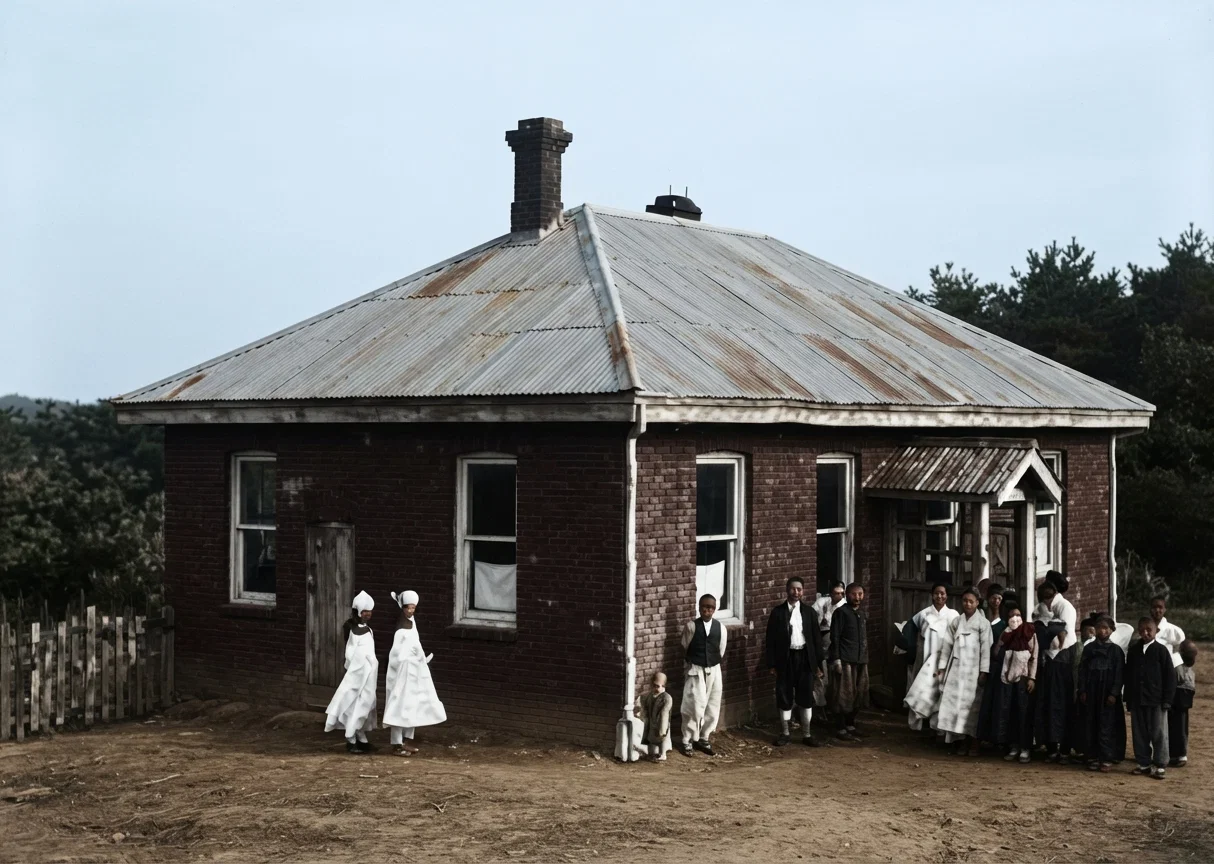
Photo by C. L. Butterfield NEW DISPENSARY AT SOONAN
The second meeting was held at Soonan, in northern Korea. It was not far from Soonan that the work first started in Korea, about nine years ago. Among the two hundred attending that meeting it seemed good to meet some of those who were among the first here to accept the truth, and to hear their testimonies of courage and of joy as they saw how the message is going. At that meeting one hundred yens' worth of tracts was sold to those attending, which will be distributed during the winter months. Six were baptized and united with God's remnant people.
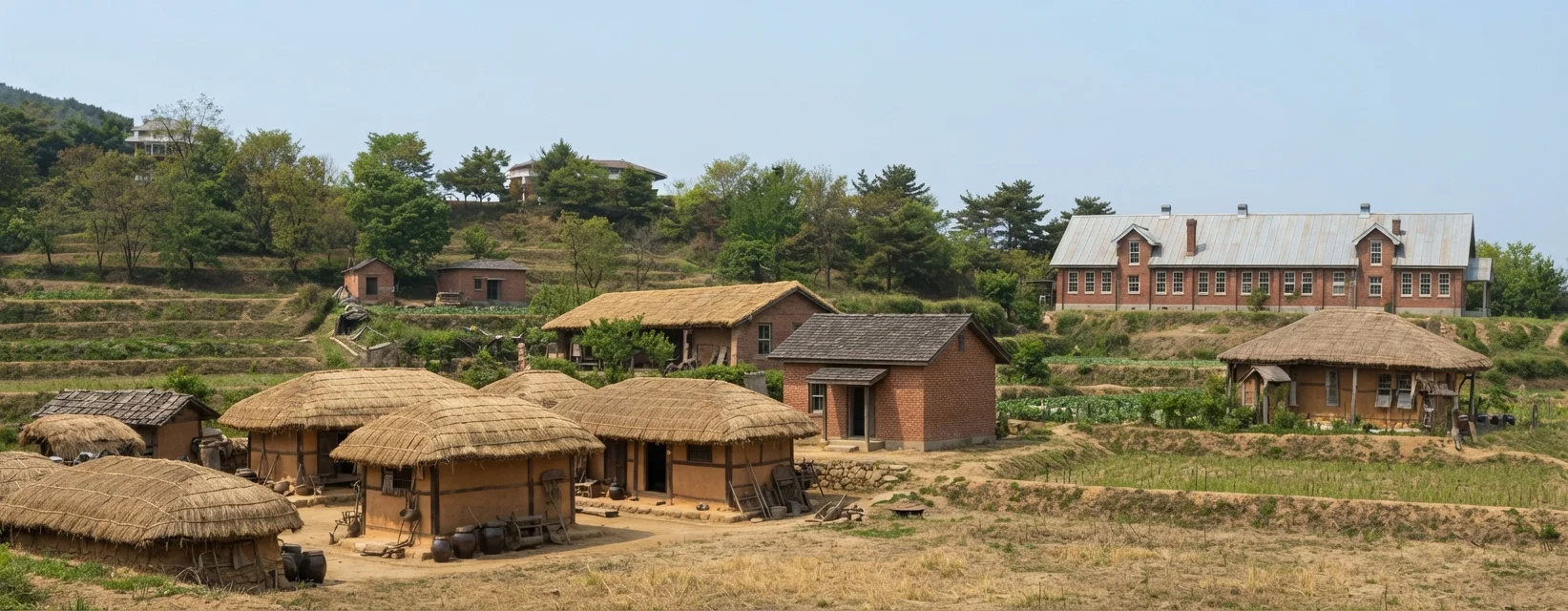
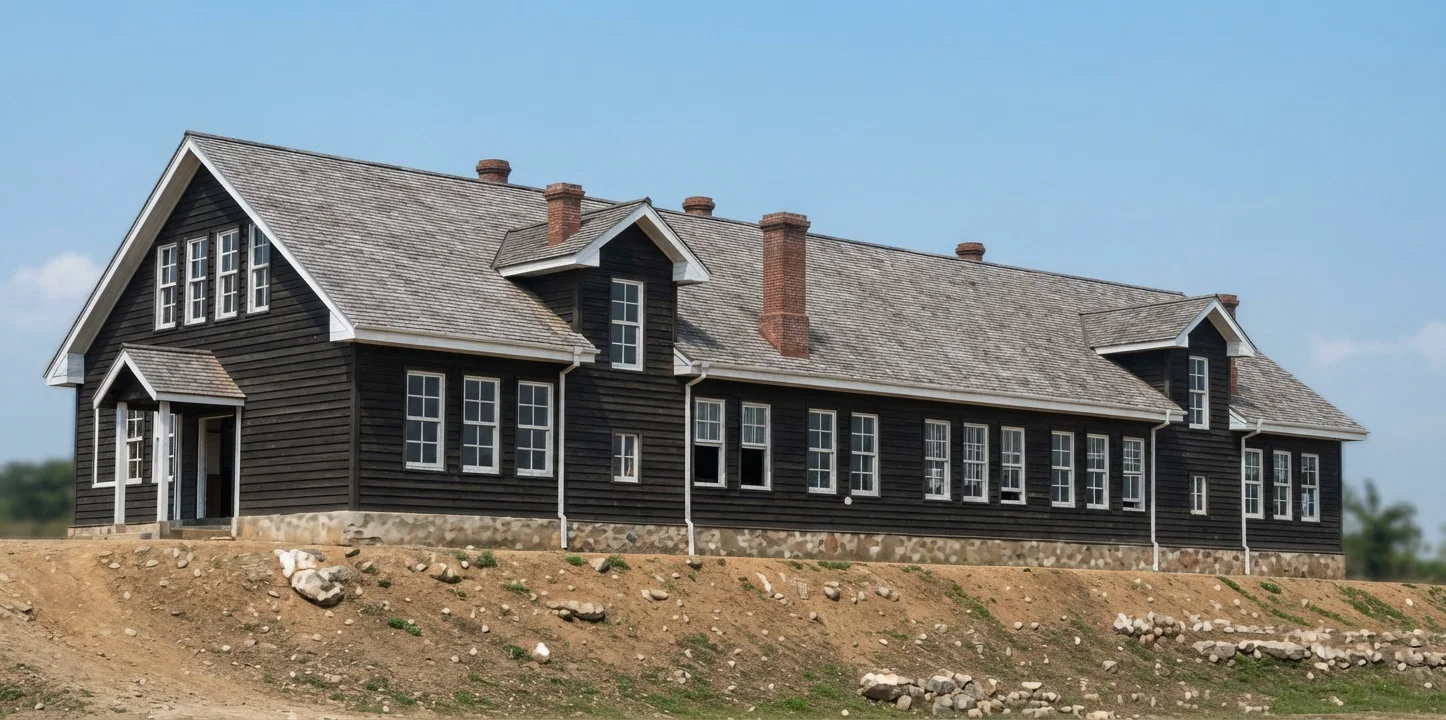
All hearts were made especially glad at this meeting in Soonan, as it was the occasion of the dedication of the new chapel that had been built this past summer. The chapel is in the school building between the recitation rooms for the boys and the rooms for the girls. It is the largest assembly room that we have in Korea, having seating capacity for about three hundred. This building, and the ladies' dormitory, with rooms for Miss May Scott, who is in charge of the girls' school, and the new dispensary, greatly improve the appearance of Soonan hill. But that is not all. These buildings stand as memorials to the truth in this great heathen field, and for the finishing of this rapidly closing work. They were built from the Thirteenth Sabbath Offering of the first quarter of 1913; and I am sure that if all those who had a part in that offering could see and realize the great help that it has brought to the work here, they would praise God for the opportunity that had been theirs.
At the Soonan meeting God came near to his people. Many confessions were made, and wrongs were made right. There was a seeking after God that we have not seen before. We believe that the message is going in this field from this on with greater speed than ever before.
Tomorrow, in company with Brother H. M. Lee, of Soonan, I shall start for Wonsan, on the east coast, to assist in a general meeting for that part of the field. We are all well and enjoying our work.
Photo by C. L. Butterfield
GENERAL VIEW OF BUILDINGS AT SOONAN, KOREA
Photo by C. L. Butterfield SOONAN (KOREA) SCHOOL BUILDING AND CHAPEL
Haiti, West Indies
By Albert F. Prieger
ALBERT F. PRIEGER
Since my last report to the REVIEW I have visited twelve churches and companies. In July I visited Grande Riviere, where we have our largest church. The next day I started for Beau Joint, a little settlement on the top of one of the high mountains, and, strange to say, right on the peak the brethren leveled the ground and are building a little church.111While there, I organized the company into a church of thirty-three members. A Sabbath school and a Y. P. M. V. Society were also organized.
Our next visit was at Trou, where I baptized one candidate, who left the Roman Catholic Church. This fact enraged the priest to such an extent that he went to the place of baptism, and concealed himself near by, and while one of our native missionaries was delivering the sermon and speaking of the nearness of the coming of the Lord, the priest could control himself no longer. He burst forth in a dreadful denunciation, claiming that Christ would not dare to return to this earth, and that we are false prophets. As most of the congregation were Catholics, the people dispersed in every direction, calling, "The father, the father." But when they saw how we stood our ground, they returned. The priest went on his way grumbling and murmuring, being completely defeated in his arguments. We had no more trouble at that place.
My next visit was at Limonade, where I found a number of candidates; but as they were not fully instructed, the baptism was deferred. I returned to Cape Haitien, and a few days later my wife and I, with the interpreter, went on a small sailboat to Port de Paix, where we remained about two weeks, and I baptized nine believers. We rode seventy-five miles overland on our return home, visiting some of our brethren at Limbe and other places.
From August 30 to September 6 we held an institute for church and Sabbath school officers. The Lord came near in these meetings, and we were much pleased to see the earnestness with which the brethren received the instruction given. About two hundred of our brethren and sisters attended from all parts of this country, some traveling on foot and some on horseback seventy or eighty miles. At the close of the meetings seven were rebaptized, also nineteen new candidates.
From Grande Riviere we started for the interior, visiting a number of places on the way to Hincha, a town near the Santo Domingo border, where several Protestant churches have been unsuccessful in their efforts to gain a foothold. One of our native laborers held a course of meetings there, and as a result I have baptized six and organized a Sabbath school.
During the last half of 1913, ninety-nine persons have been added to the different churches and companies. We now have thirteen canvassers in the field selling our books and tracts. One young man baptized only a few months ago, left Haiti for Oakwood School, at Huntsville, Ala. He is not able to speak a word of English, but through the assistance of kind brethren he arrived safely at his destination. He is the first fruit, but before another year has passed we expect, by the blessing of the Lord, there will be several more students in that school from this place. We still request the prayers of our brethren and sisters in the homeland.
Notes of Victory From the Boston Field
By R. D. Quinn, D. H. Kress, K. C. Russell
DURING the past week we have been holding meetings with the Boston churches and at Melrose. We are glad to report that these services have been characterized by the same deep, transforming power of the Holy Spirit that has been witnessed in all the meetings that have been held in this vicinity since the close of the ministerial institute.
A series of four evening meetings was held in one of the leading churches in Boston, where serious differences had existed between brethren for two years. From the very beginning, the Spirit of God was present in every service. The last meeting did not close until nearly midnight, but victories were won that resulted in bringing a spirit of love and unity among the brethren in two churches.
The following Sabbath a beautiful service was held with this company, in which every one in the church came forward when a call was made for those who wished to make an entire consecration to God and to pray for the outpouring of the Spirit in the latter rain. We all felt that it was one of the sweetest and most joyful meetings we had ever attended.
In the afternoon we met with our people in Tremont Temple, and the same power attended the preaching of the word, and scores came forward to seek power for obedience and for service. One young man, a Catholic who had not been in church for two years, with his wife arose and gave himself to God, coming forward with others. It was nearly six o'clock in the evening when this meeting closed, and every one seemed to be joyful and happy. It was a new experience to many. Dr. Kress read from the one hundred and twenty-sixth psalm: "When the Lord turned again the captivity of Zion, we were like them that dream. Then was our mouth filled with laughter, and our tongues with singing." Extracts were also read from the chapter in "Early Writings" on the shaking time, where a description is given of those who obtained the victory, calling forth from them the "deepest gratitude, and holy, sacred joy."
At the Friday night meeting of the Melrose sanitarium family every one in the assembly room came forward, and all knelt while effectual prayer was offered to God for the baptism of the Holy Spirit. It was wonderfully inspiring to listen to the heartfelt confessions and testimonies of the doctors, managers, nurses, and all the helpers, and then to see them all bow together in earnest prayer.
There has been no sermonizing in the meetings that have been held. Short talks have usually been given first, based on Rev. 3: 14-22 and on the chapter in "Early Writings" on the shaking time. From these statements it would seem that the straight testimony called forth by the counsel of the True Witness to the Laodiceans is the message at this time to God's people. This message has an effect upon the heart of the receiver, and deep repentance and reformation follow. When by repentance and confession sin is put away and forgiven, there comes upon the believers a great hungering and thirsting for the Spirit of God to keep them from falling back into their old sins, and to give them power to go forth and tell to others what great things God has done for them. This is, we believe, as it should be.
The lives of the apostles, before and after Pentecost, have been studied with a new interest. It has seemed to us that when we have put away all known sins, and have unconditionally surrendered our lives to God for service, we should pray as earnestly for the outpouring of the latter rain as the disciples prayed for the former rain upon the day of Pentecost. "After the outpouring of the Holy Spirit thousands were converted. Angels that excel in strength, clothed with the brightness of heaven, came to the112help of the church, and swept back the forces of Satan. The work of the Spirit is not limited to apostolic days; it is not confined to any church, large or small. The field of his ministration is the world. 'He will convince the world of sin, and of righteousness, and of judgment.' The Spirit of God, as it comes into the heart by faith, is the beginning of life eternal. What promise is less fulfilled in the church than that of the endowment of the Holy Spirit? HEREIN IS OUR GREATEST NEED. Let the spirit of controversy be put away, and let us seek for the living testimony of the Spirit of God."—Special Testimony.
"With the great truth we have been privileged to receive, we should, and under the Holy Spirit's power we could, become living channels of light. We could then approach the mercy seat, and, seeing the bow of promise, kneel with contrite hearts and seek the kingdom of heaven with a spiritual violence that would bring its own reward. We should take it by force as did Jacob. Then our message would be the power of God unto salvation. Our supplications would be full of earnestness, full of a sense of our great need, and we should not be denied. The truth would be expressed by life and character and by lips touched with the living coal from off God's altar."—Mrs. E. G. White, in Review, Feb. 14, 1899.
R. D. QUINN,
D. H. KRESS,
K. C. RUSSELL.
A Thousand Years of Rest
By L. D. Santee
L. D. SANTEE
"And they lived and reigned with Christ a thousand years." Rev. 20: 4.
For the Saviour their lives were given;
They said, "Let his will be done."
They were true to the One in heaven;
They have fought with the "beast,"
and won;
And now, in the realm of gladness,
That country where all are blest,
They have laid aside all sadness,
For a thousand years of rest.
They were loyal to him who called them,
They gave their lives for his word;
And now, where no ills befall them,
They reign with their risen Lord.
To him was their worship given,
To him were their sins confessed,
And they enter the joys of heaven
For a thousand years of rest.
In the beauty of life immortal,
Where death cannot reach them more,
They cross through the pearly portal
To their home on the shining shore,
Where lilies of peace are twining,
And no heart is with woe oppressed,
Heaven's radiant light is shining,
For a thousand years of rest.
They dwell with Christ in his beauty,
In a region all free from pain;
Their lives have been true to duty,
And they'll never die again.
Friends will meet no more to sever,
And their joy none can molest;
Ushers in the glad forever
With a thousand years of rest.
Moline, Ill.
The Southern Union Conference
By R. W. Parmele
THE seventh biennial session of the Southern Union Conference was held in the Memorial Church in Nashville, Tenn., January 2-11. This church building was purchased a few years ago with money given by our people in response to a general call through the Review and Herald. It has been a great help to the work in Nashville, and furnishes an ideal place in which to hold such general gatherings as the one just closed.
The brethren and sisters of the Nashville church welcomed all the workers to their homes for lodging and breakfast, and a cafeteria was conducted in the basement of the church by the managers of the Nashville Sanitarium Food Factory, where were served good, hygienic meals. This arrangement enabled all to remain at the church from 9 A. M. to 9 P. M., this time being quite fully occupied by general and department meetings.
A ministerial institute was conducted during the first six days of the meeting. The instruction given in all lines was very practical, and met a hearty response from all present. In the first meeting Elder I. H. Evans gave some very startling figures showing a lack of fruit from the labors of the workers in this cause. While our numbers have increased, the amount of our numerical net gain seems far below what it should be in view of the money expended and the efforts put forth. These facts stirred all present, and prepared our hearts for the earnest call to prayer made by Elder Thompson in the hour that followed.
This meeting sounded the keynote for the entire session. Hearts were made tender as our unproductiveness was recalled, and the power necessary for the finishing of the work was earnestly sought. In the consecration meetings all the laborers responded. A firm conviction was freely expressed that success in soul winning must attend our labors, or we shall not be content to continue to consume the funds supplied by our loyal brethren for the work of God. We can surely look for greater power to attend the labors of the workers in this Southland, as a result of the firmer hold on God obtained by his servants during these meetings.
Truly the Lord visited his people at this time, and the workers have returned to their fields with renewed courage, and we believe with renewed power. We may confidently expect to see the result of this meeting in increased fruit from the labors of our workers in the Southern Union Conference.
R. W. Parmele.
All for a Purpose
By G. C. Hoskins
THE art of printing was brought to its present high state of perfection at this time for a specific purpose. It was no chance occurrence. The great Jehovah had in mind the needs and the times.
He saw his children, few in number, as compared with those to whom they were to proclaim his message; his hundreds of ministers, too, but far too few to reach the masses in ignorance of his plans for their future; and his churches, too scattered to accomplish all that is demanded in such a gigantic undertaking. He saw his missionaries in vast foreign fields of teeming millions, unable to cope with the enormous problems that confront them; and the great cities, with their seething masses, whose lives seem too strenuous for them to listen to the living speaker. He saw armies of young people, not trained for preaching, but real Gideons and Jonathans, when armed with proper weapons; and his children, willing and anxious to do something in enlightening the world as to his soon coming and the glorious triumph of his kingdom, but timid of action and slow of speech.
He saw it all, and knew that every believer, high and low, rich and poor, old and young, would need help; would need a coworker,—something that every one could cooperate with; something that could supply the lack in number, in speech, and in activity; something that would equip all as living preachers of talent and power.
He saw it all, and brought forth the printed page by the million. And now our most intelligent speakers can, in a few minutes, speak the word; the press, in a few minutes more, puts it in the hands of our people in printed form, and they for only a few cents can place the words of life in the homes of the people. What an agency!
"The great and wonderful work of the last gospel message is to be carried on now as it has never been before. The world is to receive the light of truth through an evangelizing ministry of the word in our books and periodicals."—Testimonies for the Church, Vol. IX, page 61.
"Our publications should go everywhere. Let them be issued in many languages. The third angel's message is to be given through this medium and through the living teacher."—Id., page 62.
"Our books and papers are to be brought before the notice of the people; the gospel of present truth is to be given to our cities without delay."—Id., page 63.
"When we follow plans of the Lord's devising, we are 'laborers together with God.'"—Id., page 86.
"And one of the principal agencies he has ordained for our use is the printed page. In our schools and sanitariums, in our home churches, and particularly in our annual camp meetings, we must learn to make a wise use of this precious agency."—Id., page 87.
"Let the workers go from house to house, opening the Bible to the people, circulating the publications, telling others of the light that has blessed their own souls. Let literature be distributed judiciously, on the trains, in the street, on the great ships that ply the sea, and through the mails."—Id., page 123.
"Our publishing work was established by the direction of God and under his special supervision. It was designed to accomplish a specific purpose."—Id., Vol. VII, page 138.
Let us value this precious agency, and plan a large place for it in quickly closing up the work given us to do.
G. C. Hoskins.
Using the Newspapers in the Southern Union Conference
By W. L. Burgan
ThE meeting of the Southern Union Conference held in Nashville, Tenn., January 1-11, was widely advertised through the two large daily newspapers published in that city. Beginning with the opening day of the ministerial institute and continuing on until the last Sabbath of the meeting, daily reports were furnished to the newspapers, and the editors of each very gladly published them.
During the institute, efforts were centered on giving extracts of the studies on "The Call to the Ministry," in daily reports, and the papers published practically everything contributed to them. The excellent thoughts and advice given in these studies certainly attracted the attention of the editors, as was evidenced by the prominent headings placed on them. It is impossible even to surmise how many thousands of residents of Nashville read these articles, and who can tell how many will eventually be among those redeemed as the result of the reports of these studies printed in the newspapers?
Reports of the business sessions, in which were incorporated particulars from the reports given by the president, secretary-treasurer, secretaries of the different departments, and conference presidents, were also given prominent space. Notices announcing the holding of the meeting were published in the various States in the union conference, according to statements to this effect given by workers from these States. Extracts of the report given by presidents of the local conferences were also sent to leading newspapers in these States.
The brethren in the Southern Union Conference are enthusiastic over the possibilities of spreading the message through the newspapers, and the press department, with Elder C. P. Bollman as secretary, was established during the session. Many words of encouragement were heard from workers who have been using the papers for the reporting of sermons during tent meetings, and also from others who reported the camp meetings113last season. They all told of the courteous treatment they received from the editors, and said they appreciated the importance of this medium as an aid in sounding the gospel warning in this generation. They expressed their determination to use this effective agency at every opportunity. W. L. BURGAN.