Your ShelfYour Projects

Signs of the Times, Vol. 25, No. 10.

THE SOLDIER'S DREAM

Signs of the Times

Mar 8, 1899

Pacific Press Publishing Company · Oakland, California · Mar 8, 1899

THE SOLDIER'S DREAM.
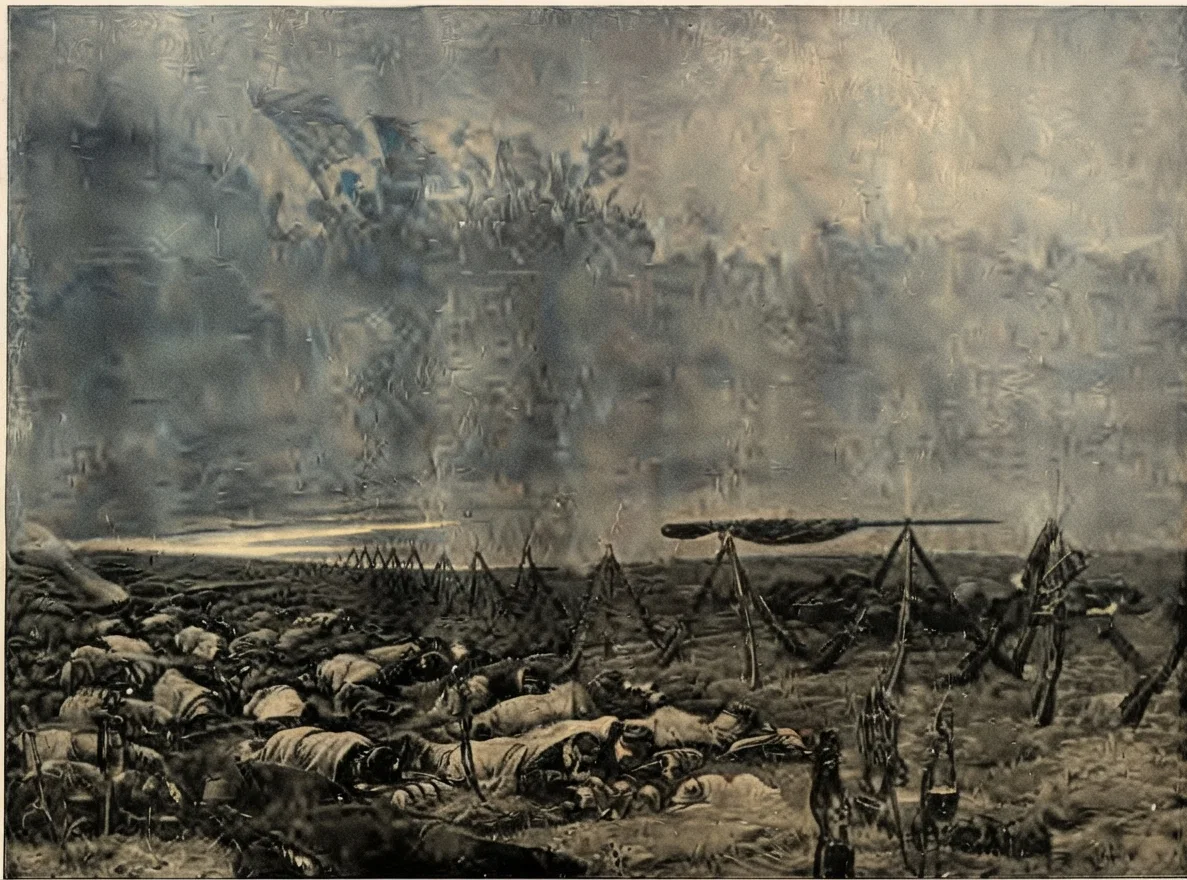
THE United States is increasing both her army and navy. England has about a hundred war ships of the various classes in process of construction, and is also increasing her army. Germany, Russia, and the other leading nations of the world are striving to keep pace with the military extensions and establishments of the time.
The czar has called a peace congress, to be sure, but no one seems to think it will amount to much. All applaud the beautiful idea of a general peace, but none seem to seriously look upon it as being practical or attainable under present conditions. Each nation thinks that there would be more security if there was not so much attention given to military matters, but no country has been found that will take the initiative in ceasing to increase and improve their army and navy.
The soldier is being taught now that he must have high ideals and fight for the sake of pure love of humanity. This is particularly the case here in the United States. Thus when it is so manifest that war is one of the prevailing passions of the age, the attempt is made to show that it is also most noble, and that the great good of mankind is the underlying spirit that actuates it. This may be a very beautiful and possibly a pleasing sentiment. But what are the facts that warrant it? War is brutal and demoralizing, and it would not be a necessity if the high ideals of "Christian civilization" were a reality instead of mere bombastic boasting.
THE SOLDIER'S DREAM.
The world has been treated to a great deal of talk about our civilization being too far advanced to resort to the barbarities of war. But we see that the actual facts are that men go to war nowadays just as readily and just as cruelly as ever. So some explanation must be given; hence the idea has been set afloat that "great civilized nations wage war now for the betterment and the uplifting of humanity."
All of this sounds very well when proclaimed from the platform or the press. But there is no word of truth in it. Some individuals may be sincere in this idea, and may be aiding the cause of war with that end in view, but they are under a delusion and need to be undeceived.
The recent war with Spain was urged on by many honest-hearted and liberty-loving Americans, because their sympathies had been set aflame by the harrowing stories of the suffering Cubans. It was trumpeted everywhere that this was a war for the sake of distressed humanity. A great and noble and strong people had taken up the cause of the weak from no other motive than pure love for their fellow-men. These ideas were fully talked to the soldier, and it was his dream in camp and on the battle-field that he was fighting the cause of freedom from oppression.
But, the war once begun, how quickly this beautiful ideal is transformed into a monster of despotic usurpation! The country that begun its war for "the sake of humanity," ends it by grasping a lot of islands scattered all the way around the globe. And what is nowurged as one of the strongest reasons for holding them?—O, it is commerce—the advantages to trade—and also the idea of having strategic naval stations all over the world in case of foreign war. Thus in the final round-up of the war the great humanitarian ideas are swallowed by the selfish greed for commerce and the military ardor for better vantage-ground in the contest among the nations.
The soldier on the tented field may dream of a time of peace, but there will be no peace for him in this world unless he comes to the Prince of Peace and learns His ways. He may dream of fighting battles for the sake of freedom and humanity, but he will find that the insatiate thirst for wealth will turn his supposed victories into the channel of commerce, only that the shackles of poverty may be bound about men all the tighter. The leaders in politics are also the guides in military matters. And any one who looks into the political cesspool—for it could hardly be compared to anything else to-day—would hardly expect that such corrupting frauds as exist there could form a foundation for anything good.
Many dreams that appear beautiful indeed to the dreamer are vaguely floating through the minds of men and women to-day. But they will not be realized. The soldier, and all others, should be awakened from these dreams to a realization of the fact that the armies of the world are being gathered for Armageddon. The “battle of that great day of God Almighty” is about to be fought. And after it is over there will be, most truly, a universal and an eternal peace, but it will be brought about by the coming of the Prince of Peace in the clouds of heaven, according to His promise.
When that supreme and glorious moment is reached, and every eye will be upturned to behold the coming of the Lord, those who are ready to greet Him gladly will have learned beforehand His principles of peace. They will have been walking in harmony with His instruction, “Put up again thy sword into his place; for all they that take the sword shall perish with the sword.” Matt. 26:52.
If we would learn the lessons of Him whose mission to earth is to bring “peace, good-will toward men” (Luke 2:14), we should not take up the sword and musket and drill in the arts of slaughter and war; we should not chant the savage glories of bloodshed and carnage, but we should come to the Prince of Peace, and by meditating upon His tender mercies learn that truly “God is love.”
There are two camps to-day. In the one are the armed legions who are being inspired and driven by the evil power to use every faculty to invent new engines of death and destruction and also to reach the highest degree of proficiency in their use. In the other camp are found those who are studying the ways of the Prince of Peace, and who are guided by the light of His Word to the certain knowledge of the fact that the awful day of Armageddon lies right before us. Where are you? Where will you be in that great day? T.

SERMONETS.

DECIDE now.
Are you watching?
Consecrate your pen.
One sin means many sorrows.
Broken pledges are a poor monument.
When the heart is right, the clothing will be right.
We must know God's will to ask aright.
The foe of truth will meet defeat and disgrace.
God's wise man is the world's fool.
Your refusal to believe condemns you, not the Book.
Be dignified. Your message is one of authority.
When you find yourself growing cold and stiff, pour on the "oil of gladness."
Prayer is the door to the power-house.
Yield to duty and you will not yield to temptation.
There are no "bad times" for the child of God.
Pride is but another name for suicide.
The best place to overcome self is on the knees.
The narrow way has no saloons, card-tables, or ball-rooms. C. F. LADD.

THE PARABLE OF THE HOUSEHOLDER.

No. 2.

TRUTH constantly enriches the receiver. Every truth received is a refining power.
The minds of those who receive truth increase in activity. By the God of heaven they are imbued with a power corresponding to the origin and importance of the truth. As men exercise their talents, seeking to improve every capability, their mental and spiritual powers strengthen; for where there is spiritual life, there is development and growth. There is no possibility of the treasures of the householder diminishing, if rightly used. Mighty truths have been buried beneath the sophistry of error, but they will be found by the diligent searcher. As he opens the treasure-house of the jewels of truth, it is no robbery; for all who appreciate these jewels may possess them, and then they too have a treasure-house to open to others. He who imparts does not deprive himself of the treasure; for as he examines it, that he may present it in such a way as to attract others, he finds new treasures.
The talents lent us on trust are to be used to benefit and bless others. They are lent to be improved. Their value is in themselves. Whether or not the one to whom they are intrusted realizes their value, they remain the same. But if he does not appreciate them, they are of no value to him. Money may be locked up in various ways. It is still money, but it is of no special benefit to any one. But money wisely invested brings money in return, which may be used to gain more money. Thus it is with the householder's treasures, the Word of the living God. The use made of the gems of truth determines their value to the possessor. They are to be used to help and bless and save those for whom the Lord gave His only-begotten Son. Then they are of the highest value to us. In this way we may increase our talents, adding jewel to jewel.
The apostle Paul charged Timothy: "Thou therefore, my son, be strong in the grace that is in Christ Jesus. And the things that thou hast heard of me among many witnesses, the same commit thou to faithful men, who shall be able to teach others also." "Hold fast the form of sound words, which thou hast heard of me, in faith and love which is in Christ Jesus. That good thing which was committed unto thee keep by the Holy Ghost which dwelleth in us." "Study to show thyself approved unto God, a workman that needeth not to be ashamed, rightly dividing the word of truth." What height and depth and breadth there is in these words! Paul understood that those who have been enlightened by the Holy Spirit have a most important talent in their keeping. His words teach the same lesson taught in Christ's words, "Every scribe which is instructed unto the kingdom of heaven is like unto a man that is an householder, which bringeth forth out of his treasure things new and old."
"I am not ashamed of the Gospel of Christ," Paul writes again; "for it is the power of God unto salvation to every man that believeth; to the Jew first, and also to the Greek. For therein is the righteousness of God revealed from faith to faith; as it is written, The just shall live by faith. For the wrath of God is revealed from heaven against all ungodliness and unrighteousness of men, who hold the truth in unrighteousness."
The faith professed must be the faith acted. Those who have received the light of truth are in the possession of knowledge which they must impart to others. Those who would teach God's Word must themselves receive the divine treasures. They must not be satisfied with repeating set discourses, depending on notes. They are to add to their treasure, constantly improving in their manner of presenting the truth. They are not to be dwarfs in religious knowledge, but are to open their hearts at the first knock of Christ. "If any man hear My voice," He says, "and open the door, I will come in to him, and will sup with him, and he with Me."
To those who welcome Christ as an honored guest, He will communicate precious things. In their turn they are to open their treasures of light and blessing to other souls. Thus an endless variety of good results will be obtained.
But all the praise and glory are to be given to God. No human being is to seat himself on the highest seat, accepting the praise of others, and forgetting that his treasures belong to God. God's blessing is promised to those who hunger and thirst after righteousness, but nothing is so offensive in His sight as to hunger and thirst after the praise of men. When the Lord weighs in the balances of the sanctuarythe actions of those who have striven to be first, when they see how He regards such strife, they will bow low at His footstool, ashamed of their course of action.
All can not be first; all can not be masters. It is a great misfortune to be unable to see in others higher excellences and powers of greater usefulness than in yourself. Let us walk humbly before God, acknowledging Him as the great Master. If we will partake of the divine nature, God will fit us to find happiness in activity, and rest in wearing Christ's yoke. If we use aright the powers God has given us, praying, waiting, watching, and working, wearing Christ's yoke and learning daily of Him to be meek and lowly in heart, great joy will be brought into our lives.
Were it not for God's gracious gifts and blessings, we should be bankrupt for eternity. Then let no one sound his own praises, feeding upon his own supposed wisdom. If his talents were of his own manufacture, there would be some consistency in self-praise. But man has nothing of his own. Let us not reveal our lack of true wisdom by exalting self. Let us bow low in humility at the feet of Him who has intrusted to us our talents. Let us use and improve these talents, handing principal and interest back to the Giver.
Jesus Christ is the great truth for this time. In Him are bound up all the truths that concern our salvation. "Behold the Lamb of God, which taketh away the sin of the world." Christ died for the whole world, yet how few fill the place God has assigned them as householders! The Lord expects His householders to prepare the way for His second advent by helping in every possible way those for whom He gave His life. The signs of His second coming are clearly pointed out in prophecy. When He came to the world the first time, divinity and humanity were blended. This is our only hope. The Son of man is fully qualified to be the originator of a humanity that will blend with divinity by partaking of the divine nature. He offers to make us golden threads in the web of humanity. He would have us act our part by co-operating with Him in healing the springs of life which have been perverted, and setting them flowing in sanctified channels.
As a sacred trust, every talent is to be employed aright. Those whom God has made His stewards are to search the Scriptures earnestly, that they may communicate truth to others, leading them to the path which has been cast up for the ransomed of the Lord. By precept and example we are to teach others that through the grace of Christ they may be obedient to all God's commandments, and be clothed with Christ's righteousness. This is the work God requires His servants to do. We are not to follow our own perverse nature, but are to be like little children. We are to lay aside our own will, following implicitly the dictates of God's will. "Blessed are they that do His commandments, that they may have right to the tree of life, and may enter in through the gates into the city."
The treasures of truth in our possession must be given to the world, that others may have an opportunity of learning the value of truth. The necessities of those who are suffering from spiritual poverty must be relieved. When this is done, not only will the minds of those helped be impressed, but the mind of him who does the work will be quickened by the power of the Holy Spirit. By the power that comes from God alone, he will be enabled to make the truth plain to others. The truth is the power of God unto salvation to all who receive it, and it sheds a flood of light into the heart, and exerts a convincing influence upon the mind, stimulating and strengthening the one who is communicating the treasures of God's Word.
MRS. E. G. WHITE.

A PARABLE.

THE wrecker’s beacon had wrought havoc there— A faithless faith, and the false wisdom given To men to be a delusion and a snare Clouded his world and robbed the light from heaven. Now at the altar rail, the narrow path To God, again his wandering feet would feel, And, nervous in doubt’s anxious aftermath, The quavering voice made eloquent appeal.
“Out of the deep I call—the dark, dread deep. Hear me, Thou unknown God, Thou Infinite. Round my lost soul the furious waters leap And clamor in demoniac delight; O Thou that stillest the tempest, pitying God, And loving Son of man, send swift relief, Still every doubt, spare, spare Thy chastening rod! Lord, I believe; help Thou my unbelief.”
And in the maelstrom of an agony Unbearable, Oblivion touched the brain, Compelling toll of frail mortality, And, lo! from the abandonment of pain The soul awoke to new-born consciousness— A consciousness that knew the Presence near, With wounded hands forever raised to bless, And whose sweet voice thrilled and caressed the ear.
“Child, thou hast called; behold, I come to thee; Art anguished? Thus My heart hath riven been; My soul as thine endured Gethsemane. Peace, ravaged heart! Be clean, O thou unclean! Ah! come to where Unutterable Love Sweetens with joy life’s bitter water springs; According as thy faith shall henceforth prove, Thy stay, thy strength shall be the King of kings.”
The moments passed, and from the sinking sun One shaft, escaping, pierced the tinted pane And glorified that face, ere it was gone, With raptured radiance. Need I now explain? Christ’s unknown love is borne on every ray That travels earthward from the firmament; His presence meets us daily as we pray; To striving souls self-answering grace is sent.
F. T. ELKIN. Denver, Colo.

STUDIES IN GALATIANS

THE ADOPTION OF SONS.

IT is absolutely impossible to exhaust any portion of the Scripture. The more one studies it, the more one sees in it, and not only that, but the more one becomes conscious of the fact that there is much more in it than appears to view. The Word of God, like Himself, is absolutely unfathomable. It can not therefore be wearisome if in this study we frequently review that which we have previously passed over. Indeed one's understanding of any given portion of the epistle depends on the thoroughness of his knowledge of what precedes it. Let us therefore give a little further attention to that portion of the third chapter which treats of

The Seed.

First of all it must be borne in mind that Christ is the Seed. That is plainly stated. But Christ did not live for Himself, and He is not heir simply for Himself. He has won an inheritance, not for Himself but for His brethren. God's purpose is to "gather together in one all things in Christ." He will finally put an end to divisions of every kind, and He does it now in those who accept Him. In Christ there are no distinctions of nationality, and no classes and ranks. No Christian thinks of any other man as English, German, French, Russian, Turk, Chinese, or African, but simply as a man, and therefore a possible heir of God through Christ. If that other man, no matter what his race or nation, be also a Christian, then the bond becomes mutual, and therefore still stronger. "There is neither Jew nor Greek, there is neither bond nor free, there is neither male nor female; for ye are all one in Christ Jesus." It is for this reason that it is impossible for a Christian to engage in war. He knows no distinction of nationality, but regards all men as his brothers. But the chief reason why he can not engage in warfare is that the life of Christ is his life, for he is one with Christ; and it would be as impossible for him to fight as it would be for Christ to seize a sword and wield it in self-defense.
But we are not now engaged in discussing war. We referred to this simply to show the absolute unity of believers in Christ. They are one. There is therefore but one seed, and that is Christ; for however many millions of true believers there may be, they are only one in Christ. Each man has his own individuality, but it is in every case only the manifestation of some phase of the individuality of Christ. With those who have put on the new man, which is renewed in knowledge after the image of Him that created him, "there is neither Greek nor Jew, circumcision nor uncircumcision, barbarian, Scythian, bond nor free; but Christ is all, and in all." Col. 3:11.
In Christ's interpretation of the parable of the tares and the wheat, we are told that "the good seed are the children of the kingdom." Matt. 13:38. The man would not allow the tares to be pulled out of the wheat, because in the early stage it would be difficult to distinguish in every case between the wheat and the tares, and some of the wheat would be destroyed. So he said, "Let both grow together until the harvest; and in the time of harvest I will say to the reapers, Gather ye together
first the tares, and bind them in bundles to burn them; but gather the wheat into my barn." It is in the harvest that the seed is gathered. Everybody knows that. But what the parable especially shows is that it is in the harvest that the seed is fully manifested; in short, that the seed comes at harvest-time. But "the harvest is the end of the world." So the time when "the seed should come, to whom the promise was made," is the end of the world, when the time comes for the promise of the new earth to be fulfilled. Indeed, the seed can not possibly be said to come before that time, since the end of the world will come just as soon as the last person who can be induced to accept Christ has done so; and the seed is not complete as long as there is one grain lacking.Read now, in the nineteenth verse of the third chapter, that the law was spoken because of transgression, "till the Seed should come to whom the promise was made." What do we learn from that?—Simply this, that the law as spoken from Sinai, without the change of a single letter, is an integral part of the Gospel, and must be presented in the Gospel until the second coming of Christ, at the end of the world. "Till heaven and earth pass, one jot or one tittle shall in nowise pass from the law." And what of the time when heaven and earth pass, and the new heaven and the new earth come? Then the law will not be needed written in a book, for men to preach to sinners, showing them their sins, for it will be in the heart of every man. Heb. 8:10, 11. Done away?—Not by any means; but indelibly engraved in the heart of every individual, written not with ink, but with the Spirit of the living God.
With the truth concerning the seed before us, and the parable of the wheat and the tares fresh in our minds, let us proceed in our study.

The Text for Study.

"But I say that so long as the heir is a child, he differeth nothing from a bond-servant, tho he is lord of all; but is under guardians and stewards until the term appointed of the father. So we also, when we were children, were held in bondage under the rudiments of the world; but when the fulness of the time came, God sent forth His Son, born of a woman, born under the law, that He might redeem them which were under the law, that we might receive the adoption of sons. And because ye are sons, God sent forth the Spirit of His Son into our hearts, crying, Abba, Father. So that thou art no longer a bond-servant, but a son; and if a son, then an heir through God." Gal. 4:1-7, R.V.
A Statement of Fact.—The first two verses explain themselves. They are a simple statement of fact. Altho a child may be heir to a vast estate, he has no more to do with it until he is of age than a servant has. If he should never come of age, then he would never actually enter upon his inheritance. He would have lived all his life as a servant, so far as any share in the inheritance is concerned. Now for
The Application.—"So we also, when we were children, were held in bondage under the rudiments of the world." If we look ahead to the fifth verse, we shall see that the state here known as "children" is that before we receive "the adoption of sons." It represents the condition before we were redeemed from the curse of the law, that is, before we were converted. It does not therefore mean children of God, as distinguished from world-lings, but the "children" of whom the apostle speaks in Eph. 4:14, "tossed to and fro, and carried about with every wind of doctrine, by the sleight of men, and cunning craftiness, whereby they lie in wait to deceive." In short, it refers to us when we "were by nature the children of wrath, even as others."
The Bondage.—When we were children we were in bondage under the rudiments of the world. No one who has read the Bible needs to be told that this bondage to the rudiments of the world is "not after Christ." Col. 2:8.
It is "after the tradition of men," wholly fleshly, the life of the natural man who receives not the things of the Spirit of God, neither knows them. It is the same bondage that is described in Gal. 3:22-24, before faith came, when we were under the law, "under sin." It is the condition of men "without Christ, being aliens from the commonwealth of Israel, and strangers from the covenants of promise, having no hope, and without God in the world." Eph. 2:12. "For all that is in the world, the lust of the flesh, and the lust of the eyes, and the pride of life, is not of the Father, but is of the world. And the world passeth away, and the lust thereof." 1 John 2:16, 17.
All Men Possible Heirs.—It may be asked, "If such is the condition of those here referred to as ‘children,’ how can they be spoken of as heirs?" The answer is plain. It is on the principle that it is not manifest who constitute the seed, until the harvest. God has not cast off the human race; therefore since the first man created was called "the son of God," it follows that all men are heirs in the sense that they are in their minority. As already learned, "before faith came," altho wanderers from God, we were kept under the law, guarded by a severe master, "shut up," in order that we might be led to accept the promise. What a blessed thing it is that God counts even the ungodly, those who are in the bondage of sin, as His children! Wandering, prodigal sons, but still children. This probationary life is given us for the purpose of giving us a chance to acknowledge Him as Father, and to become sons indeed.
"The Fulness of the Time."—Christ came in the fulness of time. A parallel statement to this is found in Rom. 5:6, "When we were yet without strength, in due time Christ died for the ungodly." But the death of Christ serves for those who live now and for those who lived before He was manifested in the flesh in Judea, just as well as for the men who lived at that time. His death made no more change eighteen hundred years ago than it did four thousand years ago. It had no more effect on the men of that generation than on the men of any other generation. It is once for all, and therefore has an equal effect on every age. "The fulness of time" was the time foretold in prophecy, when the Messiah should be revealed; but the redemption was for all men in all ages. If it had been God’s plan that He should have been revealed in this century, or even not until the last year before the close of time, it would have made no difference with the Gospel. "He ever liveth," and He ever has lived, "the same yesterday, and to-day, and forever."
"Born of a Woman."—God sent forth His Son, born of a woman, and therefore a veritable man. He lived an average lifetime on this earth in the flesh, and suffered all the ills and troubles that fall to the lot of "man that is born of woman."
"Born under the Law."—Being born of a woman, He was necessarily born under the law, for such is the condition of all mankind, and "in all things it behooved Him to be made like unto His brethren, that He might be a merciful and faithful High Priest in things pertaining to God, to make reconciliation for the sins of the people." Heb. 2:17. He takes everything on Himself. "He hath borne our griefs, and carried our sorrows." "All we like sheep have gone astray; we have turned every one to his own way; and the Lord hath laid on Him the iniquity of us all." He redeems us by coming into our place literally, and taking our load off our shoulders. "Him who knew no sin He made to be sin on our behalf; that we might become the righteousness of God in Him." 2 Cor. 5:21, R.V. In the fullest sense of the word, and to a degree that is seldom thought of when the expression is used, He became man’s substitute. That is, He permeates our being, identifying Himself so fully with us that everything that touches or affects us touches and affects Him. If we will but recognize and acknowledge the fact, then we drop out entirely, so that it is "not I, but Christ." Thus we cast our cares on Him, not by picking them up and with an effort throwing them on Him, but by humbling ourselves into the nothingness that we are, so that we leave the burden resting on Him alone. Thus we see already how it is that He came
"To Redeem Them That Were under the Law."—He does it in the most practical and real way. Whom does He redeem?—"Them that were under the law." We can not refrain from referring for a moment to the idea that some have that this expression, "to redeem them that were under the law," has a mere local application. They would have it that it means that Christ freed the Jews from the necessity of offering sacrifices, etc. Well, suppose we take it as referring only to the Jews, and especially to those who lived at the time of His first advent; what then?—Simply this, that we shut ourselves off from any place in the plan of redemption. If it was only the Jews that were under the law, then it was only the Jews that Christ came to redeem. Ah, we would not like to be left out, when it comes to the matter of redemption! Then we must acknowledge that we are, or were before we believed, "under the law;" for Christ came to redeem none but those who were under the law. "Under the law," as we have already seen, means condemned by the law as transgressors. But the law condemns none but those who are amenable to it, and who ought to keep it. Therefore since Christ redeems us from under the law,—from its condemnation,—it follows that He redeems us to a life of obedience to it.
"That We Might Receive the Adoption of Sons."—"Beloved, now are we the sons of God." 1 John 3:2. "As many as received Him, to them gave He power to become the sons of God, even to them that believe on His name." John 1:12. This is altogether a different state from that described in the third verse as "children." In that state we were "a rebellious people, lying children, children that will not hear the law of the Lord." Isa. 33:9. Believing on Jesus, and receiving the adoption of sons, we are described "as obedient children, not fashioning yourselves according to the former lusts in your ignorance." 1 Peter 1:14. Christ said, "I delight to do Thy will, O My God; yea, Thy law is within My heart." Ps. 40:8. Therefore since He becomes our substitute, as described in the last paragraph but one, literally taking our place, not instead of us, but becoming us, and living our life in us and for us, it necessarily follows that the same law must be within our hearts when we receive the adoption of sons.
The Spirit the Badge of Sonship.—Christ as the only-begotten Son of God was filled with the Spirit. If we yield to the same Spirit, then we are His brethren indeed; for the Spirit is the life; "there are three that bear witness in earth, the Spirit, and the water, and the blood; and these three agree in one." Then if we have the Spirit, we have the blood; and if we have the same blood, then we are blood relations—sons of God.
"If a Son, Then an Heir."—When the prodigal son was wandering from the father’s house, he differed nothing from a servant, because he was a servant, doing the most menial drudgery. In that condition he came back to the old homestead, feeling that he deserved no better place than that of a servant. But the father saw him while he was yet a long way off, and ran and met him, and received him as a son, and therefore as an heir, altho he had forfeited all right to heirship. So we have forfeited our right to be called sons, and have squandered away the inheritance; yet God receives us in Christ as sons indeed, and gives us the same rights and privileges that Christ has. "Because ye are sons, God hath sent forth the Spirit of His Son into your hearts: crying, Abba, Father." He is doubly "our Father." "And if a son, then an heir of God through Christ." "Heirs of God, and joint-heirs with Christ." "Thanks be unto God for His unspeakable Gift."
E. J. WAGGONER.
STUDIES IN GALATIANS

DIVINE HEALING.

SOME one asked me some time ago if I believed in divine healing, and I answered that I knew of no other kind of healing. If God does not keep a man well, it is because that man is working hard to make himself sick. The actual fact is that men work as hard, sometimes, to make themselves sick as students toil in the universities to get their diplomas. When they are so persevering in planting the seeds of disease, how can they expect anything else but a bountiful harvest. Disease is not a matter of inheritance any more than education is. Children may inherit an aptitude for readily acquiring knowledge, but they never inherit an education. In the same way, people may inherit a tendency to disease, but not the disease itself.
Yet God does not hold a grudge against a sick man any more than He does against a sinner. Of course both are sinners in reality, for it is as much a sin to transgress natural law as it is to transgress any one of the moral laws. But God does not hold ill-will against any man. He is simply grieved because men are injuring themselves and destroying their happiness. “My people are destroyed because of lack of knowledge.” It follows, then, that as soon as the sick man begins to sow for health God will co-operate with him in securing a harvest of health; for “whatsoever a man soweth that shall he also reap.”
In my experience with patients I have found the greatest difficulty has been in their unwillingness to co-operate with God, and thus make it possible for Him consistently to restore them to health.
God is wholly loving, and tender in His dealings with men. A patient said to me, while I was examining him the other day, “There is not much hope for me; I am a broken stick, too far gone to be helped.” I was so glad to assure him that he had a Saviour of whom it is said, “A bruised reed shall He not break, and the smoking flax shall He not quench.” Man may have fallen very low, but God is ready to help him and lift him upagain. Let us have larger views of the goodness of our heavenly Father.
It will give us new power in our work. The world is hungry for a true knowledge of God, and it is our privilege to give it.
DAVID PAULSON, M.D.
Continue reading: The Mystery of the Unseen
