Your ShelfYour Projects

Review and Herald, Vol. 85, No. 25.

How Others Regard It

Review and Herald

Jun 18, 1908

Review and Herald Publishing Association · Takoma Park Station, Washington, D. C. · Jun 18, 1908

How Others Regard It

Liberty, No. 2

“A Nice, Orderly, Logical Exponent for a Good Cause,—Separation of Things Civil and Religious”
Filled with some of the best things written upon the proper relation of the church and the state, and containing some rare illustrations.

How Others Regard It

As an illustration of how others regard this issue, we quote the following from the Sabbath Recorder (S. D. Baptist):—
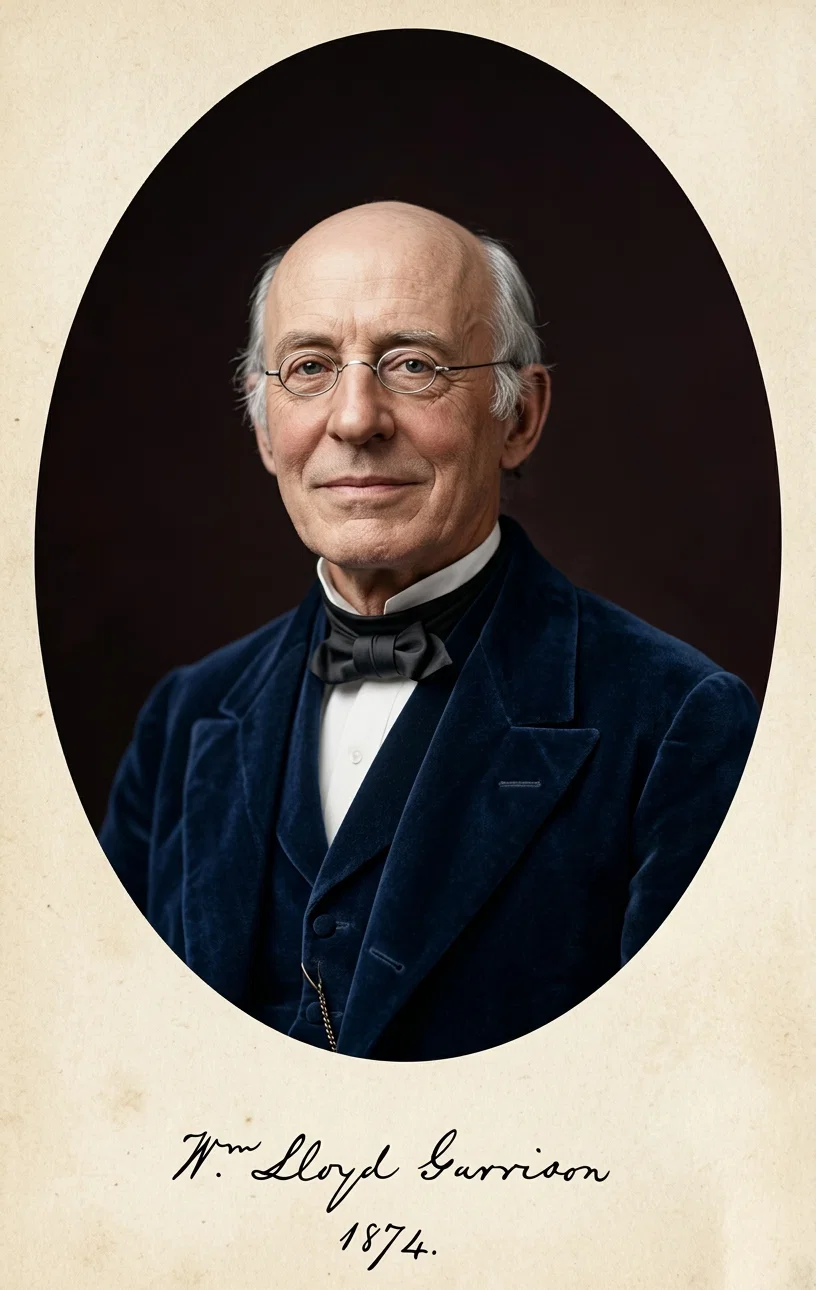
“The last number of Liberty is of special value. It contains an address by William Lloyd Garrison made in 1848 on Sunday Laws and Liberty of Conscience; an address by W. W. Prescott before a committee of the United States Senate on the fifteenth of April last; and the memorial of the Seventh-day Baptists presented to the United States Senate in behalf of the American Sabbath Tract Society, on the third of March, 1908, together with other valuable matter. The magazine is well illustrated, with pictures of senators, Mr. Garrison and others, including Stephen Babcock and A. H. Lewis. A copy of this issue of Liberty should be in the hands of all those who seek information, or desire information for argument, in favor of full religious liberty.”

New Religious Liberty Tracts

Tersely written tracts on the timely questions of religious liberty. Envelope size. Just the thing to enclose with your correspondence. Every Seventh-day Adventist should have a good supply on hand. Order the tracts by number. Sent, post-paid, on receipt of prices given.
NO. NO. OF PAGES PER 100
1. Principles Too Little Understood... 8 $.50
2. Sunday Laws ...................... 8 .50
3. Logic of Sabbath Legislation...... 8 .50
4. The Civil Sabbath................ 12 .75
5. Civil Government and the Church. 4 .25
6. Religious Liberty—What Eminent Authorities Say 12 .75
7. The Church’s Greatest Need To-day 4 .25
8. Church Federation................ 12 .75
9. Limits of Civil Authority........ 4 .25
10. A Vital Question—Is the Sabbath a Civil Institution? 8 .50
11. What Are Works of Charity and Necessity? 4 .25
12. “Backward States”............... 8 .50

A Rare Opportunity

We have on hand a few sets of the Religious Liberty Library containing such valuable pamphlets as “Civil Government and Religion,” “Rome’s Challenge,” “The Legal Sunday,” “National Sunday Law,” etc., invaluable to those who are alive on present-day issues. Many of the tracts and pamphlets are now out of print, and can be had only in this form. The three cloth volumes which make up this set will be sent, post-paid, to any address on receipt of $1.25.

The Struggle for Religious Liberty in Virginia

by Charles F. James, D. D., president of the Roanoke Female College, is a complete record of the famous effort in which truth was finally victorious, and religious liberty was established. It is a splendid text-book for religious liberty workers, and is also an important reference volume for every one who is interested in the cause of religious freedom. Send for one to-day. Post-paid, $1.25.
LIBERTY, Takoma Park, D. C.

Editorial

WE can now see with clearness that the ultimate goal of the evolution theory is the destruction of faith in revealed truth. Demanding recognition first in the field of science, it has extended its sphere of influence until it now dominates the field of theology. Having for its basic principle the proposition that in every field of activity, whether of material or spiritual agencies, there is constant progress toward a higher plane, this theory is bound to ignore all evidences of deterioration; and this seems to be most emphatically true in the interpretation of present conditions in the religious world. In the face of such revelations of moral turpitude as almost stagger conservative observers, the assertion is confidently made that this is merely an incident preliminary to thorough purification, the dust which accompanies a spiritual house-cleaning. In direct contradiction of such a view is the forecast made in the Scriptures: “Evil men and seducers shall wax worse and worse, deceiving and being deceived.” “In the last days perilous times shall come. For men shall be lovers of their own selves, . . . having a form of godliness, but denying the power thereof.” If we accept the inspired utterances concerning existing conditions, we must reject those roseate explanations which make the worse appear the better. The fundamental mistake is in substituting human authority for divine authority, and human philosophy for divine revelation. The only certainty is found in the Word of God.
THERE is a demand now for men who can properly appreciate the present situation, and who are willing, at any cost to themselves, to be the instruments in the hands of God for accomplishing the divine will. There is such an opportunity now for the effacement of self and the exaltation of God and his truth, as comes but few times in the history of a world. John the Baptist, the preacher of the wilderness, with his heart open to the light of God, stood against the current of religious sentiment which flowed so strongly in his day, rejected the traditional views of the recognized leaders, and became “the voice” to proclaim present truth to the people. In him the words of the prophets became personality among men confused by leaders ambitious for place and power. Sacrificing himself on the altar of zeal for the cause of the Messiah, despised and rejected of men, he accomplished the work required to fulfil the divine program, and obtained the approval of heaven. The same condition has again come around, and the same opportunity is again offered, at the same cost to those who embrace it. Faith in the fulfilment of the prophecies, faith in the work which God is doing at this time, and faith in the triumph of the truth in this generation, must conquer all doubts, and nerve the successful worker for the conflict. There is now a wonderful field for the exploits of a holy ambition.

“Modernism” Explained and Condemned

THE tendency toward liberalism in theology has not been confined to the Protestant churches. The movement has appeared in the Roman Catholic fold as well, and there it is creating no little stir. What is termed “New Theology” among Protestants has been defined as “Modernism” in Roman Catholic circles, as being the best English equivalent of the Latin word used by the pope in his well-known encyclical upon this subject.
Those who desire to understand both sides of this controversy in the Roman Catholic Church will find a clear statement of the views of the pope and his opposers in a recent book which will doubtless have a wide reading, as it deals with a problem of great interest to all the different denominations. In this book there is a statement of the views of the so-called “Modernists” in the form of a reply to the recent encyclical of Pius X, which is printed in full in English. This document is declared to be a deliberate attempt “to present ‘Modernist’ views to the public under a false and unfavorable light,” and the writers of the reply therefore deem it both their right and their duty “to expose the unfair attack which the encyclical seems to make” upon them, and to present from their own standpoint the teachings for which they have been condemned.
That “Modernism” and “New Theology” stand on common ground in denying the inspiration of the Bible is shown from this paragraph taken from the “Explanation of the Modernist System:” —
The common and traditional notion is that in the Bible we possess an orderly and complete history of the revelation of the Old and New Testaments, guaranteed true in every part by the authority of God, who, as he has inspired the Bible, may be called the principal historian; and also by the secondary historians, who were more or less immediate witnesses of the facts they record—such as Moses and Joshua for the Old Testament, Matthew, Mark, Luke, and John for the New. But this conception has been shaken to its foundations by literary criticism applied to the historical books of either Testament.
As we repudiate this fundamental claim of “Modernism,” we can of course have little in common with the various arguments which are adduced to prove that the “Modernists” are the real conservers of the truth, the truly spiritual interpreters of all times; but we do commend, in a general way, the attitude of these men on the question of church and state. Their views are presented in the following paragraphs:—
Finally, the encyclical reprehends our desire to separate church and state. Here, again, the official church counts as a fault what is one of our best aspirations—one which she herself would welcome, were it not that her vision of facts is clouded by her ties and attachments to the worldly splendor which she enjoyed in a past age that can never come back again.
We quite understand those decisive practical reasons that moved the church in the Middle Ages to take to herself a political power which, however it may at times have hampered her spiritual influence, did, nevertheless, further thedevelopment of medieval Europe in some ways. But the historical conditions which induced the church to assume a political responsibility separable from, if not quite incompatible with, her spiritual power, have long ceased to exist. The modern state is accepted as the instrument designed to regulate the development of the community in material and moral interests, so far as these affect the public life. It has a well-defined program and ample means of government. Things being so, the church should be only too glad to be able to lay down every sort of political preoccupation, and to retire back into the sphere of her spiritual dominion, confining herself to the religious guidance of souls. For her specific aims she has everything to gain from this separation of powers. What sort of sympathy is she likely to win from the best spirits of the age by those wretched remnants of a power that she has lost, or by her vain efforts to re-acquire it? What sort of popularity can these dwindling and decrepit aristocratic oligarchies confer upon her which, in exchange for a little paltry grandeur, would tie her to customs in open discord with modern tendencies? One thing we know, and we say it openly: we know that we are weary of seeing the church reduced, for all practical purposes, to a bureaucracy jealous of its surviving scraps of political power, and hungering to get back all it once had—to a group of idle men, who, having dedicated themselves to a priestly and apostolic calling, and having afterward attained the highest ecclesiastical grade, enjoy the most fabulously wealthy benefices as absentee incumbents. We are weary of seeing her reduced to a sterilized force, which, notwithstanding an apparent grandeur that wins the facile and unintelligent adulation of the multitude, acts as a brake on social progress; to an institution which squanders its vital energy in idly dreaming of what it used to be in ages gone by. We see no other effectual way of ending this miserable state of things than the entire separation of the church from political functions; the return to the simpler religion that will throw open the doors of the church to the excluded democracy, and enable her to pour out upon it those treasured riches of spirituality which the Christian tradition has stored in her bosom. Away, then, with all these empty political ambitions; away with all this plotting to reconstitute, on different but equivalent lines, that civil power which the church exercised in the Middle Ages. Let the church learn to be once more that great moral force which she was in her less imposing but more fruitful periods, and especially in her primitive days, and her history, which to-day traces the course of a parabolic descent, will receive a new and vigorous upward impulse.
Although we can not agree with these claims in behalf of the Roman Catholic Church, yet it is refreshing to read so clear a statement of the benefits arising from the separation of church and state.
In the closing part of the encyclical all the power of the church is invoked against the “Modernists,” and their writings and their teachings are condemned in the strongest terms. It remains to be seen whether these measures will be effective.
The full encyclical in English will be both interesting and valuable to those who wish to understand at first hand the position of the Roman Church on the various topics treated upon in it.

The Rise and Fall of Religious Liberty in America

Anabaptist Influence in England and America

It will not be out of place at the beginning of this article to take a glance at the conditions prevailing in England at the time when Anabaptist principles (and incidentally the principles of soul-freedom) were being promulgated on the Continent in the face of persecution.
Anabaptists fleeing from the bitter persecution of Catholic and Protestant alike on the Continent, crossed the English Channel by thousands, and settled in the eastern and southern counties of England. They were not received with open arms. Their doctrine, so inoffensive, so righteous, was looked upon by the state church, by the rulers, and by a great portion of the people, as a dangerous and revolutionary heresy. James I declared: “I will make them conform, or I will harry them out of England.” Richard Hooker denominated freedom of conscience “a loose and licentious opinion of the Anabaptists.” The Westminster Confession, which was adopted in 1647, set forth the illiberal principle that “civil government is designed to support the external worship of God, to preserve the pure doctrine of religion, and defend the constitution of the church.” It further declares that any one who maintains or publishes erroneous opinions, contrary to the teachings and practises of the church, “may be lawfully called to account, and proceeded against by the censures of the church and the power of the civil magistrate;” that “the magistrate hath authority, and it is his duty to take order that unity and peace be preserved in the church, that the truth of God be kept pure and entire, that all blasphemies and heresies be suppressed, all corruptions and abuses in worship and discipline prevented or reformed, and all the ordinances of God duly settled, administered, and observed.”
A more perfect uniting of civil and ecclesiastical powers and functions could not have been presented by the Roman hierarchy itself. Whatever Rome did, the Westminster Confession authorized the church and the state officials in England to do. Forty-two years after the adoption of the Westminster Confession, 1689, the Toleration Act of William and Mary was passed. Toleration is always less than liberty; but this toleration act was not even full toleration. Quakers and Protestant dissenters were tolerated, but Catholics and anti-Trinitarians were outside the scope of its beneficence. Hallam, in the “Constitutional History of England,” Vol. III, page 170, says that the passage even of this kind of toleration act was not accomplished “without murmurs of bigoted churchmen.”
With such a condition obtaining as late as 1689, it can readily be seen that there was little inclination to make it easy for the Anabaptists when they began to emigrate to England, more than a hundred fifty years before. But we do not need to infer what those conditions were. The same year that Henry VIII became head of the English established church, he issued two decrees against the Anabaptists, which show, first, that the Anabaptists were refugees from another country; and, second, that the spirit of the times was intolerance personified. King Henry’s decrees were filled with invective and a cruel purpose to rid his realm of these dissenters, taking the harshest measures if necessary. All were to depart within ten days from the date of the decree, “on pain to suffer death, if they abide and be apprehended and taken.”—“Wilkin’s Concilia,” Vol. III, page 776. Their only crime was “wicked errors and abominable opinions.” “Cranmer and eight other bishops and clerics were subsequently commanded to proceed inquisitorily against the Anabaptists, to search for their books, and to scrutinize with all diligence their letters. Martyrdoms followed. The fires of Smithfield were kindled.”—“Religious Liberty” (King), page 34. Thus a veritable Inquisition was established as a result of these decrees. Thus was demonstrated the fact that persecution does not depend upon what church is established, but upon the fact that a church is established. Church establishment and liberty of conscience can not dwell together in the same realm.
In spite of the cruel persecutions from which they suffered, the principles which the Anabaptists held continued to be disseminated throughout the realm. One of their principles, which was most obnoxious to the officials of the government and of the established church, was that “civil government had no concern with religious matters.” Strange, is it not, that for holding such opinions, and promulgating them, Christian men should be hounded, exiled, tortured, drowned, and burned, and that by other men professing allegiance to the same Lord? But such was the ignoble inheritance from that black-cowled power regnant during the Dark Ages. It was an inheritance difficult to outgrow,—impossible to outgrow entirely where the condition that fostered it was continued,—and that condition was a union of church and state. Wherever the Anabaptists (or Mennonites) went, they found that condition; and wherever they found it, they opposed it, and taught the opposite principle. The influence of their persistent teaching in the Netherlands resulted in the establishment of religious liberty in that country when its independence was secured; and there is not the least doubt that the measure of tolerance achieved in England in the time of William and Mary was due to the diffusion of the principles of soul-freedom which the Anabaptists were promulgating throughout the land. Some of the tracts which they published were written in prison—not written in ink, for this was denied them; but written in milk on white paper, which, when heated, revealed the words of their arguments. Said one, “Their arguments were written in milk and answered in blood.” There comes down to us from that people a phrase that has become familiar to American ears. They taught, says Motley, that “every man was to worship God according to the dictates of his own conscience.” We have used that expression until we have come to feel that it is a product of American thought; but it comes to us out of the bitter experiences of a despised people, who paid with their lives for advocating it.
The relations between the immigrant Dutch Anabaptists and the common people of England became very close in this way. The Dutch immigrants were a people skilled in manufacture, and carried on their business in England. But it was required of them that each manufacturer should educate a certain number of English lads in the business which he was conducting. The enforced apprenticeship system opened a field for the Anabaptists, which they were not slow in improving, and operated perhaps as extensively as any other factor in bringing about toleration for dissenters.
The Dutch Anabaptists thus planted in many English minds the idea of soul-freedom; and from a people thus educated, there came to the New World some who would carry on the struggle for freedom to worship God untrammeled by oppressive laws. There came others also seeking freedom to worship God, but unwilling that those who differed from them should enjoy the same freedom which they demanded for themselves. Concerning these two parties and their attitude toward freedom of conscience, we will study in our next article.
C. M. S.

Light for the Blind

As showing how God's providence is sending the light of his Word into the darkest corners, note the fact that the British Bible Society is supplying the Gospels in raised Braille type for the blind in the following languages of India: Bengali, Tamil, Telugu, Marathi, Malayalam, and Gujarati.
In China, blind colporteurs are employed to scatter the Scriptures, gathering a crowd by reading aloud with their fingers upon the raised print, and then selling the ordinary Scripture portions. Blind Chinese Bible women read in the mission hospitals. “The Chinese blind,” says the Society’s report, “can learn to read Braille much more rapidly than the sighted can master the intricate native characters.”
The Society’s English Bible, in raised Braille type, “fills thirty-nine volumes, which occupy a shelf seven feet long.” It is an expensive book to produce, but is sold much below cost. It costs about seventy-five cents a volume, and is sold for twenty-five cents; in fact, portions are given away if need be.
Thus the word of the kingdom, whose glories “eye hath not seen,” is brought near to the blind in these last days. How many among us are aware that every year, of late, numbers of blind persons have been brought to the full acceptance of the precious light of the third angel’s message by reading our own paper for the blind, the Christian Record?
The recent council of the General Conference Committee took action especially urging our people to help circulate this paper among the blind in every State. The paper costs two dollars a year, and for this amount sent to your tract society office or to the Christian Record, College View, Neb., the publishers will send this paper, bearing the light of present truth, to some blind person for one year.
Thank God for the gift of sight granted you, and do not forget this way of helping those who are denied the joy of looking upon the beauties of this world, but who may be brought to rejoice in the hope of the world to come, where the eyes of the blind will be opened. W. A. S.

Helping Others in Christian Life

To improve every opportunity to help others is one of the best means of insuring success in the Christian life. “Even the Son of man came not to be ministered unto, but to minister.”

A Good Number

THIS is what can be truthfully said of the Temperance Number of the Watchman. And it should also be said that this special should receive a very large circulation. The number is clean, neat, and artistic in appearance. Its articles are short and interesting, and they deal effectively with the most vital features of the temperance question. One of the articles is from the president of the National W. C. T. U.; another is from the president of the W. C. T. U. is not of Tennessee.
The first item on the publishers’ page appropriately states that “this issue of the Watchman voices the mind of the denomination which owns and publishes it,—that is, the Seventh-day Adventists,—on the temperance question. We stand uncompromisingly for the prohibition of the liquor traffic in city, county, State, and nation.”
That is right. We are a temperance people, and we should be more earnest in our work in behalf of the temperance movement.
This is a very opportune time for our people to bring out a Temperance Special. And now that it is out, we should give it a great circulation. A tremendous effort is being made in the South to free the people from the terrible curse of the saloon. We should be to the front in a good work of this kind. This Temperance Special will do good work, and it will place us on record on the temperance question just to the extent that we place it in the hands of the people. Then let all respond promptly and most earnestly to this opportunity.
A. G. DANIELLS.

Heavenly Treasure

WHEN Christ uttered the words, “Where your treasure is, there will your heart be also,” he made a statement which has been repeated in all succeeding ages. Our own experience has verified its truthfulness. The lives of all our friends and acquaintances demonstrate in its behalf. The whole realm of human knowledge bears testimony that, “Where your treasure is, there will your heart be also.” Christ did not wish his people to set their affections upon this earth. Here are thieves and moth and rust. Here riches take to themselves wings and fly away. These things are not worthy the affections of God’s children.
Said the Master, “Lay not up for yourselves treasures upon earth, where moth and rust doth corrupt, and where thieves break through and steal.” On another important occasion he said, “Take heed, and beware of covetousness: for a man’s life consisteth not in the abundance of the things which he possesseth.” To the rich young man, who asked the way of eternal life, the Master said, “If thou wilt be perfect, go and sell that thou hast, and give to the poor, and thou shalt have treasure in heaven: and come, follow me.” Again, he said, “And whosoever shall give to drink unto one of these little ones a cup of cold water only in the name of a disciple, verily I say unto you, he shall in no wise lose his reward.”
These texts show two things,—the vanity of earthly riches when one’s heart is set on them, and the value of treasure laid up inThe heavenly treasure seems to be partly, at least, like the treasures of earth. Earthly treasures properly used prove to be treasures laid up in heaven. It is impossible for us to take our money there, and make an actual deposit in the bank of heaven. This God neither expects nor requires. But a way of transferring the treasures of earth to heaven has been provided by the Lord. Here on earth we are to care for God’s poor, the orphans, the aged, the widow, and the unfortunate. What we do for our fellow men is reckoned as treasure laid up in heaven.
The gospel message is the greatest boon God ever gave to mortals. The blessing which the third angel’s message has been to us, it may be to others. It has made us a temperance people. It has dimmed the present enjoyments of earth, while the future, eternal glory is radiant with hope.
The treasures of earth are prized only as they supply our daily needs, and can be transferred to heaven. God’s people should be rich in heavenly treasure. No thief can steal that treasure, no fire destroy, and time will never cause it to decay. Week by week we are earnestly entreated to send a portion of our earthly treasure on to heaven. Ten cents a week is not much, but it is something, and God’s blessing can make it more.
The midsummer offering is at hand. July 4 will be another ingathering day, when each can do something in laying up treasure in heaven. How much will you place in heaven’s store-house? God lives, and his eye is over his work. Let us bring an offering such as we wish placed to our account in glory. I. H. EVANS.

The Foreign Mission Seminary Endowment Fund

It has been only one short year since the General Conference Committee, in council at Gland, Switzerland, decided to turn the Washington College into a Foreign Mission Seminary for the purpose of giving special instruction and training to volunteers for mission fields. This decision met with the most hearty approval of our people everywhere. Such a school seemed to be just what every one wanted; and from the time the plans for the Seminary were made known, we received the warmest sympathy and co-operation of all in our efforts. This helped us to make the change without delay, and to secure a fairly good attendance of prospective missionaries for the first year.
The experiences and results of our efforts thus far in carrying out the plans for such a school have been very encouraging, and have, we believe, given ample evidence of the wisdom of the enterprise.
Nearly one third of all who attended the Seminary have been selected by the Mission Board for service in foreign lands. Others will continue in the school for better preparation. The acquaintance the members of the Mission Board have formed with the young people in the Seminary has been a great help in making intelligent selections for various openings in distant lands. This one great advantage alone, to say nothing of many others, will fully justify us in maintaining a school of this kind at our headquarters.
But our experience thus far has led us to see that we shall find it somewhat difficult to secure the attendance of the very class of students for whom the school is intended; namely, those who have secured a general preparation in our regular colleges and academies for service somewhere in the cause. We find that the majority of our young people who have spent a number of years in our other schools have about exhausted their resources, and are unable to provide immediately the means to take a special course in the Seminary before going to foreign fields. The calls are so pressing, the work to be done is so great, and the time in which to do it is so short, that we can not afford to have these young people spend a year or two earning money to pay their way through the Seminary. Much, every way, would thus be lost.
In view of this it is felt by many of our conference officers and ministers that steps should be taken to aid these volunteers for mission fields in taking the special course they need at the Seminary. Among other things it has been suggested that our young people might give substantial aid in this direction. This suggestion has been heartily seconded by our young people's workers, and a plan has been devised whereby the Young People's Missionary Volunteer Department of the denomination shall provide a permanent scholarship fund, to be lent to students who have not the means to pay their way at the Seminary.
The details of the plan agreed upon are as follows: that a scholarship be placed at $150, and that this scholarship be divided into shares of $2.50 each. To every person or Missionary Volunteer society contributing one or more shares, or a full scholarship, will be given a certificate showing the amount given, and the purpose for which the gift is to be used.
The money raised by this plan will constitute a permanent scholarship fund, and will be under the control of the board of trustees of the Washington Foreign Mission Seminary, in council with the officers of the General Conference Committee and of the Young People's Missionary Volunteer Department.
As we considered how to raise this fund, we could think of no way which seemed so appropriate as to place this work in the hands of the Young People's Missionary Volunteer Societies. The Foreign Mission Seminary and the Young People's Missionary Volunteer Department were both brought into existence at the same council, and that council was the first ever held by the General Conference Committee in a foreign country. It has accordingly been decided to give the young people of the Missionary Volunteer Societies the privilege of soliciting the scholarship endowment fund. The officers of the general, union, and local Missionary Volunteer departments have been requested to take the entire management of this enterprise.
And now we earnestly request all our young people to join in this good work. Every one should be able to secure from friends at least $2.50—the value of one share. Six thousand shares would provide the one hundred scholarships that should be raised. This will help a large number of young men and women of ability, culture, and consecration to secure the special training they need before going to the mission fields. How can money be put to better use in this world than in preparing young people for valiant service in the Master's vineyard? Here is a most excellent opportunity for our people to render great service to the cause they love so dearly.
To all our young people who shall take part in the work of raising this endowment fund we extend a hearty Godspeed.
A. G. DANIELLS.

Note and Comment

Waning Regard for the Scriptures

At Boston a short time ago, Cardinal Gibbons was asked whether he believed the people of America were growing better, from a religious point of view. His reply is worthy of note:—
In their respect for religion I am afraid the people of America are not what they were fifty or sixty years ago. For instance, our statesmen of America fifty or sixty years ago showed a familiarity with, and a regard for, the Holy Scriptures and the Word of God, which I am sorry to say does not present itself to-day. I remember one speech of Daniel Webster, which contained fourteen quotations from Holy Scripture, which showed Mr. Webster's study of the Holy Word, and his respect for its spirit. Indeed, Webster dovetailed his speeches with appropriate quotations from Scripture, showing his innate respect for the Word of God. This practise, I repeat, is neglected by the public speaker of the present day.
We naturally gather from this reply that familiarity with the Scriptures on the part of the layman is a good thing, approved of by the cardinal, and indicative of a good religious conditionamong the people; and further, that ignorance of the Scriptures is indicative of decline or retrogression in the religious life of the people. The Bible with which Daniel Webster was familiar was the King James Version. In view of the help of the Bible in bringing about better religious conditions among the people, as thus acknowledged by the cardinal, it can but seem a pity that so many copies have been committed to the flames by Roman Catholics, and that, too, in the avowed interests of the church.

A Well-Grounded Suspicion

In an article in the May number of Unity (Chicago) Prof. Charles B. Clark, of the chair of philosophy and education in Alfred University (Seventh-day Baptist), treats of the subject of religious life in colleges and universities. The lack of restraint which prevails in these institutions at present will, as he thinks, “in the course of evolution give us a higher type of self-control on the part of those who exercise voluntary self-discipline, yet we are purchasing the results at a fearful cost of ruin.” It is a serious question with us, however, whether the seeds of lawlessness will yield a crop of self-control. Professor Clark further says:—
There is a more or less general feeling, too, among a large proportion of our population, that our colleges and universities are hotbeds of infidelity. There is considerable feeling that the average college professor teaches a more or less disguised form of infidelity, insinuating with his regular instruction more or less irreligion and spiritual poison. It is needless to say, here, that the suspicion that the religion of an educated man is bound to be of a questionable character is absolutely unwarranted and unfair. No more genuine or sincere Christians can be found anywhere than among our college professors and instructors. These men are, to be sure, sometimes not altogether orthodox, but that is no reproach to their religion. As a class, our university and college professors are thoughtful, reflective men, and it is their very sincerity in religious expression that gives rise to the suspicion that they are irreligious.
We do not have to seek far to find the reason why the colleges and universities, both in this country and in Europe, are held in suspicion by conservative Christian believers as either encouraging infidelity or at least not exerting any strong influence against it. The marked rationalistic tendency and the growing inclination to adopt the results of scientific research as of more authority than revelation, have furnished abundant ground for such a suspicion. Furthermore, we can not excuse a denial of faith in the fundamental things of the gospel as being due simply to “their very sincerity in religious expression.” There is the sincerity of belief and unbelief, and there is no need of confounding the two. It is absolutely certain that not many modern college professors are contributing anything toward staying the tide of unbelief and infidelity which is sweeping the young men of the country over the bar and out into the sea of uncertainty, agnosticism, and moral ruin. The responsibility for inaction in this time of grave danger must rest where it belongs.

Political Christianity

An effort was made to secure the recognition of Jesus Christ as “our leader” at a State prohibition convention recently held in Washington State. After creating considerable stir the proposition was voted down. In its comment on this incident the Chicago Israelite said:—
The ministers who opposed the insertion of the acceptance of Jesus Christ in the prohibition platform of Seattle were right when they declared that it would arouse the hostility of the Jews, but not on the ground that they put it. Jews and all other good citizens of this country should oppose the recognition of any distinct religion in any platform. It has no place there. The Jew objects to it not on the ground that he is a Jew, but on the ground that he is a citizen of this country, and it is one of the fundamental principles of this country that church and state should be kept separate. To drag the name of Jesus into a political platform is a reflection on Jesus as well as on the platform.
The misrepresentations of Christianity ought not to be charged up to the account of Christianity, although it is almost inevitable that it will be done. Any attempt to unite church and state is a repudiation of one of the fundamental principles of Christianity, and it is a pity that Jews should be compelled to maintain this principle against the aggressions of professed Christians. To the average Jew Christianity stands for a false sabbath, a false diet, and a false idea of the sphere of civil government; it is therefore no wonder that few Jews are converted to Christianity. Genuine Christianity stands for the true Sabbath, the true diet, and the true idea of the sphere of civil government. The Jew ought to have this kind of Christianity presented to him.
Continue reading: Saving the Nation