Your ShelfYour Projects

Review and Herald, Vol. 88, No. 17.

Forth From Your Past!

Review and Herald

Apr 27, 1911

Review and Herald Publishing Association · Takoma Park Station, Washington, D. C. · Apr 27, 1911

Forth From Your Past!

Forth from your lowly past! In humble-wise Up to the highest heaven lift your eyes, No glories that the heroes ever knew But God has placed them waiting there for you.
Forth from your evil past! The shame and sin — Dare now to live as they had never been, In Jesus cleansed and in his sureness sure, Know that the years to come are sweet and pure.
Forth from your troubled past! How dark the days, How dreary and perplexed your wandering ways! Forget those fears and tears and scenes abhorred, And enter all the joyance of your Lord.
Forth from your lonely past! No comrade knew Your inner warfare for the good and true; But in the time to come, till time shall end, You shall not lack a Comrade and a Friend.
Forth from your past! ’Twas given you to build A future from it, all with blessings filled, Enter its open gate, its liberal door, And live its happy lord forevermore.
—Amos R. Wells, in Christian Advocate.

Life and Health for May

A PRACTICAL HOME NUMBER

Home Care of Consumptives; Home Gymnastics for the Middle-Aged; Home Vacations—How to Take Them; Home Water Treatments for a Large Number of the Common Diseases; Home Suggestions on the Treatment of Nervous Children; Home Rules for Correcting Bad Habits in Living; besides many of the best things successful practising physicians and others have written on health topics.

Good for Everybody

PRICES: Single copy, 10 cents; 5 to 40 copies, 5 cents a copy; 50 or more copies, 4 cents a copy.
Order through the Conference Tract Societies
Life & Health, Takoma Park, Washington, D. C.

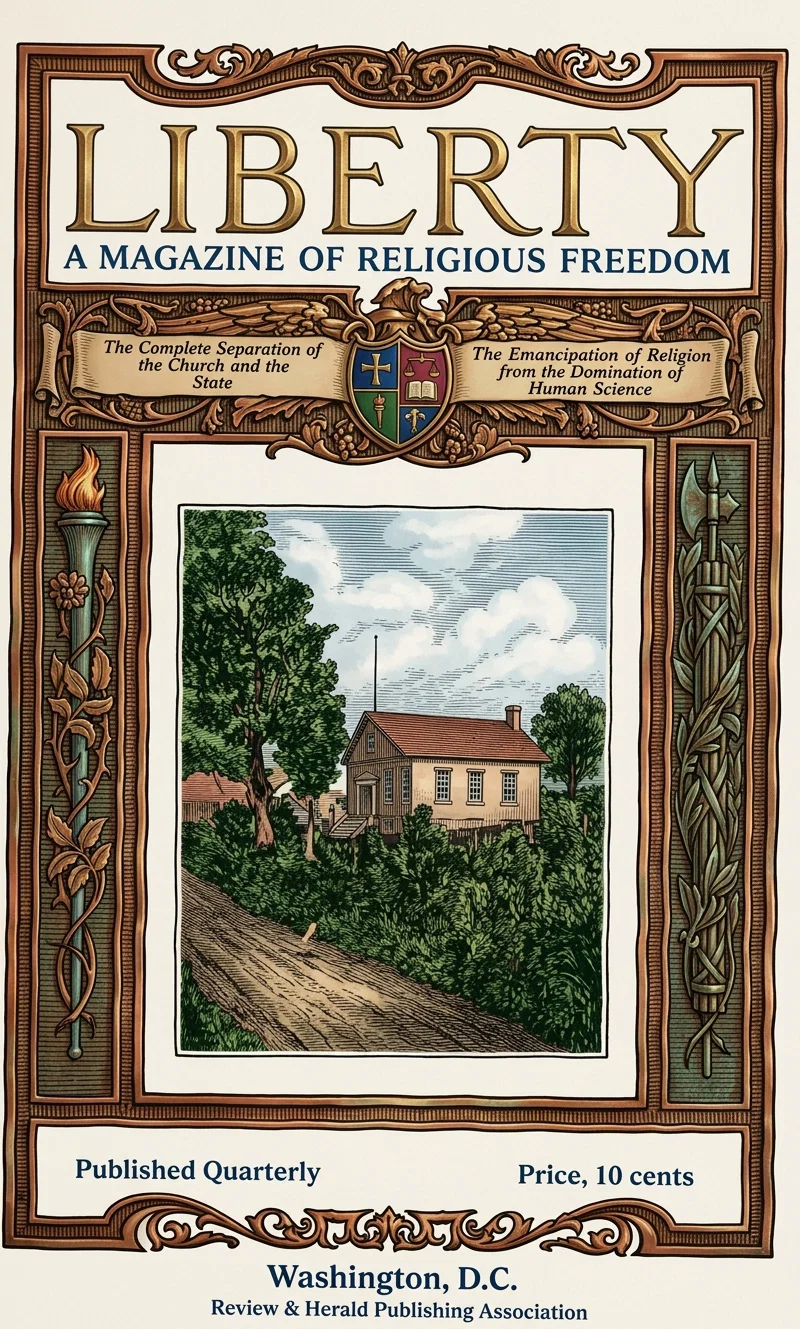
Second Issue Liberty for 1911

A TEACHERS’ NUMBER

Profusely illustrated, and especially adapted to the needs of public-school teachers. It takes up religious liberty topics in connection with school questions which will readily appeal to teachers, and the discussion of which will bring out in a convincing way the simple foundation principles of religious liberty, that have been neglected for many years. “The Public School Teacher and the Christian Religion,” “Should Religion Be Taught in the Public Schools?” and “Religion in the Public Schools,” are among the subjects considered. Who will help take this number of Liberty to public-school teachers everywhere?
Prices: Single copy, 10 cents; 5 to 40 copies, 5 cents a copy; 50 or more copies, 4 cents a copy.
Order through the Conference Tract Societies
Liberty, Takoma Park, Washington, D. C.

The Deliverance of Peter

MRS. E. G. WHITE
“Now about that time Herod the king stretched forth his hands to vex certain of the church.”
At this time the government of Judea was in the hands of Herod Agrippa, subject to Claudius, the Roman emperor. Herod also held the position of tetrarch of Galilee. He was professedly a proselyte to the Jewish faith, and apparently very zealous in carrying out the ceremonies of the law. He was desirous of obtaining the favor of the Jews, hoping thus to make secure his offices and honors. He therefore proceeded to carry out the desires of the Jews by persecuting the church of Christ, spoiling the houses and goods of the believers. He then began to imprison the leading members of the church. He cast James into prison, and sent an executioner to kill him with the sword, as another Herod had caused the prophet John to be beheaded. Seeing that the Jews were well pleased with his acts, he imprisoned Peter.
It was during the Passover that these cruelties were performed. While the Jews were celebrating their deliverance from Egypt, and pretending great zeal for the law of God, they were at the same time transgressing every principle of that law by persecuting and murdering the believers in Christ.
James was one of the three disciples who had been brought into the closest relationship with Christ. With Peter and John he had witnessed the transfiguration of the Saviour, and had been with him in Gethsemane during the night of his agony. It was to James and John that Jesus had put the question, “Are ye able to drink of the cup that I shall drink of, and to be baptized with the baptism that I am baptized with?” When James was brought to prison and to death, he understood more fully than ever before these words of the Saviour.
The death of James caused great grief and consternation among the believers. When Peter also was imprisoned, the entire church engaged in fasting and prayer.
Herod’s act in putting James to death was applauded by the Jews, though some complained of the private manner in which it was accomplished, maintaining that a public execution would have more thoroughly intimidated the believers and those sympathizing with them. Herod therefore held Peter in custody, meaning still further to gratify the Jews by the public spectacle of his death. But it was suggested that it would not be safe to bring the veteran apostle out for execution before all the people then assembled in Jerusalem. It was feared that the sight of him being led out to die might excite the pity of the multitude.
The priests and elders also dreaded lest Peter, when brought out for execution, might make one of those powerful appeals which had frequently aroused the people to investigate the life and character of Jesus,—appeals which they, with all their arguments, had been totally unable to controvert. The Jews feared that, should Peter make such an appeal, his release would be demanded at the hands of the king. Peter’s zeal in advocating the cause of Christ had led many of the Jews to take their stand for the gospel, and the rulers stood in great dread of his having an opportunity to defend his faith in the presence of the multitude who had come to the city to worship.
To guard against all chance of his release, the apostle was placed under the charge of sixteen soldiers, who, in different watches, guarded him day and night. But it was in vain that the puny arm of man was lifted against the Lord. By the putting forth of his might, God was about to save the precious life that the Jews were plotting to destroy.
While, upon various pretexts, the execution of Peter was being delayed until after the Passover, the members of the church had time for deep searching of heart and earnest prayer. They prayed without ceasing for Peter; for they felt that he could not be spared from the cause. They realized that they had reached a place where, without the special help of God, the church of Christ would be destroyed.
Meanwhile worshipers from every nation sought the temple which had been dedicated to the worship of God, and which to all appearance remained the same as when the Shekinah had glorified it. Glittering with gold and precious stones, it was a vision of beauty and grandeur. But God was no longer to be found in that palace of loveliness. Israel as a nation had divorced herself from God. When Christ, near the close of his earthly ministry, looked for the last time upon the interior of the temple, he said, “Behold, your house is left unto you desolate.” Hitherto he had called the temple his Father’s house; but as the Son of God passed out from those walls, God’s presence was withdrawn forever from the temple built to his glory.
The day of Peter’s execution was at last appointed, but still the prayers of the believers ascended to heaven; and while all their energies and sympathies were called out in fervent appeals for help, angels of God were guarding the imprisoned apostle. In the prison Peter was placed between two soldiers, and was bound by two chains, each chain being fastened to the wrist of one of the guards. He was therefore unable to move without their knowledge. Theprison doors were securely fastened, and a strong guard was placed before them. All chance of rescue or escape by human means was thus cut off. But man’s extremity is God’s opportunity.
The apostle was not intimidated by the situation. Since his reinstatement after his denial of Christ, he had unflinchingly braved danger, and had shown a noble courage and boldness in preaching a crucified, risen, and ascended Saviour. As he lay in his cell, he called to mind the words that Christ had spoken to him: “Verily, verily I say unto thee, When thou wast young, thou girdedst thyself, and walkedst whither thou wouldest: but when thou shalt be old, thou shalt stretch forth thy hands, and another shall gird thee, and carry thee whither thou wouldest not.” Peter believed that the time had come for him to yield up his life for Christ’s sake.
The night before the day set for the execution, Peter, bound with chains, slept as usual between two soldiers. Remembering Peter’s former escape from prison, Herod on this occasion took double precautions. In order to secure extra vigilance, the soldiers on guard were made answerable for the safe-keeping of the prisoner. Peter was confined in a rock-hewn cell, the doors of which were strongly bolted and barred. But the bolts and bars and the Roman guard, which effectually cut off from the prisoner all possibility of human aid, were but to make more complete the triumph of God in the deliverance of Peter from prison. Herod was lifting his hand against Omnipotence, but he was to be utterly humiliated and defeated in his attempt upon the life of God’s servant.
(Concluded next week)

I Know My Sheep

“I KNOW My sheep.” Across the mighty distance Of twice a thousand years Those glorious words of love are ever sounding To chase away our fears.
“I know my sheep.” O, think of it, poor stumbler On life's uneven road— You have a Friend who marks your weary footsteps Along the way he trod!
You have a Friend who knows your spirit's travail, Knows your heart-loneliness; And when no human friend is near to help you, He draweth nigh to bless,—
A Friend who knows the evil that is in you; But then he knows as well The good that ever striveth with the evil; Your longings he can tell,—
A Friend who sees and counts your every failure; But not one true success, However small, escapes his loving notice Who only lives to bless.
“I know my sheep.” I think in this short sentence Lies half of heaven's joy, The faint, far echoes of whose sweetest music Sound e'en through earth's annoy. — Francesca.

A Little Sin

G. B. THOMPSON
“Be sure your sin will find you out.” Num. 32:23. Sin can not be hidden. We may cover it for a time; but sometime, perchance when we least expect, it will rise up to taunt us. We may entomb it in the heart, where no mortal eye can see it; but the eye of the omniscient God beholds it, and at the Judgment, if not sooner, it will be there to condemn us.
To us the sin may seem small, hardly worth mentioning; but the important question is not how it looks to us, but how God regards it. There is grave danger in the little sins which lurk around seeking a place in the heart. It is the “little foxes that spoil the vines.” Be the worm ever so small that gnaws at the roots of a plant, the effect will be seen in the barrenness of the harvest. It is even so in Christian experience.
A little sin may unconsciously change the whole course of life, and land us at last on some hidden rock or shoal. Many wrecks lie bleaching on the barren sands of time from this cause. We see men forsake the gospel, give up God’s truth, and seek to tear down the faith they once labored to build up. We wonder why men with such keen minds do these things. Some hidden thing in the heart, some sin unsurrendered to God, tells the story. It blinded their eyes, deflected their spiritual compass, and wrecked them spiritually.
“A ship was once wrecked on the Irish coast. The weather had not been so severe as to account for the divergence of the ship from its course. The master was competent. No proper explanation could be given of the disaster.
“A diver was sent down to bring up the compass, to see if any reason could be found in it, and on examination a bit of steel was detected, which looked like the point of a pocket-knife blade.
“It was learned that the day before the wreck, a sailor had been set to clean the compass, and had used his pocket-knife in doing so. Unknowingly, he had broken off the point, and left it in the box. That bit of steel had deflected the needle, and so made the compass unreliable. That little bit of steel wrecked the vessel.”
This incident contains a lesson for us. Our prayer should ever be: “Search me, O God, and know my heart: try me, and know my thoughts: and see if there be any wicked way in me; and lead me in the way everlasting.” Ps. 139:23, 24.
Takoma Park, D. C.

G. W. WHITE

Gilgal

G. W. WHITE

“And the children of Israel encamped in Gilgal.” Joshua 5:10. What a memorable time in the history of God’s ancient people! For thirty-eight years they had been lost to view in the obscurity of the desert, constantly reminded that they were under the divine rebuke for their apostasy and rebellion at Kadesh-barnea.
But now the long years of their wilderness wanderings are ended, they have crossed the Jordan, their feet at last tread the promised land, and they encamp in Gilgal. Here occurred some of the most notable events in their history. It was at this place that the rite of circumcision was renewed. For nearly forty years they had been denied this sign of devotion to the service of God. So tenaciously did the sin of Kadesh-barnea cling to them that it seemed as if it might never be shaken off. But now, in this rite, their pledge to remain separate from idolatry, obey the law of God, and remain devoted to his service, was accepted.

The Next Step

“And the Lord said unto Joshua, This day have I rolled away the reproach of Egypt from off you.” Verse 9. Wonderful words! With a word Israel’s long record of shame is wiped out, so far as their relation with God is concerned, and they stand forth radiant in imparted righteousness, and ready for the severest tests of sublime faith,—ready to move in any direction at the command of the Lord. Soon the nations round about were seized with consternation as they heard of the wonderful results of their faith.
Having put away their sins, and pledged allegiance to God, and with the “reproach of Egypt” rolled away, the people were prepared for the third step in their wonderful experience at Gilgal: “They did eat of the old corn of the land,” and “the manna ceased on the morrow.” Verses 11, 12.
During all the previous years the people of Israel had been as children, their every need supplied without effort,—fed on dainties from the King’s table, with no care and no burden of responsibility,—but now, in a day, they spring into manhood and womanhood, and must share the responsibility of supplying their own needs. In other words they became, upon that day, a company of full-grown, self-supporting men and women, with their own responsibilities to carry and their own work to do. “They did eat of the old corn of the land,” and “the manna ceased on the morrow.”

What Is the Lesson for Us

in these types, or “ensamples”? Is not God, through them, speaking a message direct to our churches at this time? Are there not scores of our churches which, year after year, are failing to carry their own responsibilities,—which fail to do the work assigned to them by the Lord of the harvest,—which live, if you please, on “manna,”—conference manna? How many there are which, instead of warning the multitudes, instead of “visiting every home in the neighborhood, and learning the spiritual condition of every family,” and reaping a great harvest of souls, plead for the conference to send a paid laborer to do their work and carry their burden of responsibility. How many are doing practically nothing but going to church to hear sermons every Sabbath,—living on manna,—and, sad to relate, instead of developing into spiritual giants, are becoming weaklings.
We are told that the Lord will do great things for us if we will by faith co-operate with him; but, on the other hand, we read: “It weakens those who know the truth for our ministers to expend on them the time and talent that should be given to the unconverted. In many of our churches, . . . the minister preaches Sabbath after Sabbath, and Sabbath after Sabbath the church-members come to the house of God with no words to tell of blessings received because of blessings imparted. They have not worked during the week to carry out the instruction given them on the Sabbath. So long as church-members make no effort to give to others the help given them, great spiritual feebleness must result. . . . Let church-members, during the week, act their part faithfully, and on the Sabbath relate their experience. The meeting will then be as meat in due season, bringing to all present new life and fresh vigor.”—Testimonies for the Church, Vol. VII, pages 18, 19.
“Instead of keeping the ministers at work for the churches that already knowthe truth, let the members of the churches say to these laborers: ‘Go work for souls that are perishing in darkness. We ourselves will carry forward the services of the church. We will keep up the meetings, and, by abiding in Christ, will maintain spiritual life. We will work for souls that are about us, and we will send our prayers and our gifts to sustain the laborers in more needy and destitute fields.’”—Id., Vol. VI, page 30.
This is God’s plan,—self-supporting, self-dependent churches, eating the “old corn of the land,” and growing stalwart thereon, instead of depending on the manna from conference headquarters.
In contrast to this, it is surely distressing to read some reports submitted by our missionary secretaries. For example, the writer has before him a monthly report of one of our churches, which reads as follows:—
“Letters written, 2; friendly visits for encouragement, 2; Bible readings held, none; cottage meetings held, none; papers distributed, 76; pages of books and tracts sold, none; pages of books and tracts loaned, none; pages of books and tracts given away, 314; hours of Christian Help work, none.”
This report, from a church of nearly fifty members, is an average record, and comes from a company of believers who feel that they are badly neglected because the conference does not supply them with a paid laborer.
God is calling on the individual churches to arouse and do their part faithfully,—to attend to the souls around them, that every laborer may be free to carry the message into places where it has as yet no representatives.
O, what divine power would be revealed if our churches would thus adopt God’s plan!—if they would arouse themselves to a sense of their responsibilities, shake off the reproach of indolence and slothfulness, and send this message to conference headquarters: “Let the manna cease; we will eat of the old corn of the land, we will attend to the Lord’s work here, we will labor for the souls that are about us; and you shall have our prayers and our gifts to send to the regions beyond.” What would take place then? Let us read:—
“When God’s people are truly converted, when they realize the obligation resting on them to labor for those within their reach, when they leave no means untried to rescue sinners from the power of the enemy, the reproach will be removed from our churches.”
And when the “reproach” is removed, “the Spirit of the Lord will be graciously manifested. Divine power will be revealed. The church will see the providential working of the Lord of hosts. The light of truth will shine forth in clear, strong rays, and as in the time of the apostles, many souls will turn from error to truth. The earth will be lighted with the glory of the Lord.”
“Then the latter rain will fall on us as the early rain fell upon the disciples on the day of Pentecost.”
Beatrice, Neb.

Who Will Receive the Mark of the Beast

A Study of Principles—No. 8

Who Will Receive the Mark of the Beast

D. E. ROBINSON
A CAREFUL study of the writings of Mrs. E. G. White will bring to the student convincing evidence that she has consistently taught through the years that the receiving of the mark of the beast involves a serious transgression of God’s law, not a mere refraining from ordinary labor on the first day of the week. In many places in her writings it is so clearly pointed out that the sin is in the disregard of the true Sabbath, or a wilful disobedience to the law of God, that it is manifestly unfair for any one to single out a few instances where “Sunday observance” is mentioned by itself as the mark of the beast, and make these passages appear to be contradictory to other statements which more fully and clearly state the issue.
We have endeavored to group a sufficient number of references to the great conflict over the binding claims of the law of God, so that the reader may see how, when, and by whom the mark of the beast will be received. The first reference is from an unpublished manuscript written in 1899:—
“It is for the interest of all to understand what the mark of the beast is, and how they may escape the dread threatenings of God. Why are men not interested to know what constitutes the mark of the beast? Ex. 31: 12-17. The Sabbath question will be the issue in the great conflict in which all the world will act a part. Rev. 13: 4-17.
“Christ died to save sinners, not in their sins, but from their sins. The warning given in Revelation shows us the terrible consequence of transgression. By lips that will not lie, God’s law is declared to be holy, just, and good. Our duty to obey this law is to be the burden of the last message of mercy to the world. God’s law is not a new thing. It is not holiness created, but holiness made known. It is a code of principles expressing mercy, goodness, and love. It presents to fallen humanity the character of God, and states plainly the whole duty of man.
“‘Thou shalt love the Lord thy God with all thy heart, and with all thy soul, and with all thy mind, and with all thy strength.’ This command contains the principles of the first four precepts. And ‘thou shalt love thy neighbor as thyself.’ Upon these two great principles, the Word of God declares, hang all the law and the prophets.
“‘These principles are made known by the third angel’s message, which declares that the Creator has always required and always will require obedience to his royal law. But this law has been disregarded and transgressed, and is now being ignored by the churches. Human enactments are placed where God’s law should be. Sunday, a child of the Papacy, has taken the place of God’s holy Sabbath. As Nebuchadnezzar made a golden image, and set it up to be worshiped by all, so Sunday is placed before the people to be regarded as sacred. This day bears not a vestige of sanctity, yet it is held up to be honored by all.
“‘By doing this, men are doing just what Satan wishes them to do. When those who claim to love God refuse to obey his word as plainly stated in the fourth precept of the decalogue, and accept a common working-day as the Sabbath, they show respect to a day exalted by the enemy of God. But notwithstanding this, God’s law still stands firm. The man of sin has thought to change this law; . . . but not while God holds his throne will he be able to change one jot or tittle of his law. . . .
“‘God gave the Sabbath to man as a memorial of the work of creation; and the Lord of heaven will not hold him guiltless who sets aside his commands, and teaches others in their place. He will reward every one according to his works.’”
The following from “Testimonies for the Church,” Vol. I, pages 353, 354, also clearly points out that the real test will involve the “disregard of the Sabbath of the fourth commandment:”–
“‘I saw that God will in a wonderful manner preserve his people through the time of trouble. As Jesus poured out his soul in agony in the garden, they will earnestly cry and agonize day and night for deliverance. The decree will go forth that they must disregard the Sabbath of the fourth commandment, and honor the first day, or lose their lives; but they will not yield, and trample under their feet the Sabbath of the Lord, and honor an institution of Papacy.’”
Again, we read, in “Testimonies for the Church,” Vol. VIII, page 117:—
“‘The sign, or seal, of God is revealed in the observance of the seventh-day Sabbath, the Lord’s memorial of creation. . . . The mark of the beast is the opposite of this,—the observance of the first day of the week. This mark distinguishesthose who acknowledge the supremacy of the papal authority from those who acknowledge the authority of God.’”
“‘A refusal to obey the commandments of God, and a determination to cherish hatred against those who proclaim these commandments, leads to the most determined war on the part of the dragon, whose whole energies are brought to bear against the commandment-keeping people of God. ‘He causeth all, both small and great, . . . to receive a mark in their right hand, or in their foreheads.’ Not only are men not to work with their hands on Sunday, but with their minds are they to acknowledge Sunday as the Sabbath. ‘And that no man might buy or sell, save he that had the mark, or the name of the beast, or the number of his name.’”

A Fearful Issue

The reader will find the issue clearly stated in “Great Controversy,” pages 604, 605:—
“‘Fearful is the issue to which the world is to be brought. The powers of earth, uniting to war against the commandments of God, will decree that all, ‘both small and great, rich and poor, free and bond,’ shall conform to the customs of the church by the observance of the false sabbath. All who refuse compliance will be visited with civil penalties, and it will finally be declared that they are deserving of death. On the other hand, the law of God enjoining the Creator’s rest-day demands obedience, and threatens wrath against all who transgress its precepts.
“‘With the issue thus clearly brought before him, whosoever shall trample upon God’s law to obey a human enactment, receives the mark of the beast; he accepts the sign of allegiance to the power which he chooses to obey instead of God. The warning from Heaven is: ‘If any man worship the beast and his image, and receive his mark in his forehead, or in his hand, the same shall drink of the wine of the wrath of God, which is poured out without mixture into the cup of his indignation.’ . . .
“‘The Sabbath will be the great test of loyalty; for it is the point of truth especially controverted. When the final test shall be brought to bear upon men, then the line of distinction will be drawn between those who serve God and those who serve him not. While the observance of the false sabbath in compliance with the law of the state, contrary to the fourth commandment, will be an avowal of an allegiance to a power that is in opposition to God, the keeping of the true Sabbath, in obedience to God’s law, is an evidence of loyalty to the Creator. While one class, by accepting the sign of submission to earthly powers, receive the mark of the beast, the other, choosing the token of allegiance to divine authority, receive the seal of God.
“‘Heretofore those who presented the truths of the third angel’s message have been often regarded as mere alarmists. . . . But as the question of enforcing Sunday observance is widely agitated, the event so long doubted and disbelieved is seen to be approaching, and the third message will produce an effect which it could not have had before.’”
This last statement being true, it is clear that at such a time, when the proclamation of the third message will be especially effective, such a course should be pursued as will not arouse unnecessary prejudice; and every loyal believer should be aroused to act a part in sounding the warning. The following statements indicate that the height of the controversy is not reached by the mere passage of Sunday-rest laws. We read further, on page 607:—
“‘As the controversy extends into new fields, and the minds of the people are called to God’s downtrodden law, Satan is astir. The power attending the message will only madden those who oppose it. The clergy will put forth almost superhuman efforts to shut away the light, lest it should shine upon their flocks. By every means at their command they will endeavor to suppress the discussion of these vital questions. The church appeals to the strong arm of civil power, and in this work papists and Protestants unite. As the movement for Sunday enforcement becomes more bold and decided, the law will be invoked against commandment-keepers. They will be threatened with fines and imprisonment, and some will be offered positions of influence and other rewards and advantages as inducements to renounce their faith. . . . Conscientious obedience to the Word of God will be treated as rebellion.’”
Again, in “Great Controversy,” pages 448, 449, we read:—
“‘The enforcement of Sunday-keeping on the part of Protestant churches is an enforcement of the worship of the Papacy—of the beast. Those who, understanding the claims of the fourth commandment, choose to observe the false instead of the true Sabbath, are thereby paying homage to that power by which alone it is commanded. . . .
“‘When Sunday observance shall be enforced by law, and the world shall be enlightened concerning the obligation of the true Sabbath, then whoever shall transgress the command of God, to obey a precept which has no higher authority than that of Rome, will thereby honor popery above God. . . . As men then reject the institution which God has declared to be the sign of his authority, and honor in its stead that which Rome has chosen as the token of her supremacy, they will thereby accept the sign of allegiance to Rome—‘the mark of the beast.’ And it is not until the issue is thus plainly set before the people, and they are brought to choose between the commandments of God and the commandments of men, that those who continue in transgression will receive ‘the mark of the beast.’’”
The receiving of the “mark of the beast” is thus defined in an article by Mrs. E. G. White, entitled “God’s Holy Sabbath,” published in the REVIEW AND HERALD for July 13, 1897:—
“‘To receive this mark means to come to the same decision as the beast has done, and to advocate the same ideas, in direct opposition to the Word of God. . . .
“‘If the light of truth has been presented to you, revealing the Sabbath of the fourth commandment, and showing that there is no foundation in the Word of God for Sunday observance, and yet you still cling to the false sabbath, refusing to keep holy the Sabbath which God calls “my holy day,” you receive the mark of the beast. When does this take place?—When you obey the decree that commands you to cease from labor on Sunday and worship God, while you know that there is not a word in the Bible showing Sunday to be other than a common working-day, you consent to receive the mark of the beast, and refuse the seal of God. If we receive this mark in our foreheads or in our hands, the judgments pronounced against the disobedient must fall upon us. But the seal of the living God is placed upon those who conscientiously keep the Sabbath of the Lord.’”
The following words from “Testimonies to the Church,” Vol. V, page 81, are worthy of consideration, as we seek to prepare ourselves for the great test:—
“‘The time is not far distant when the test will come to every soul. The mark of the beast will be urged upon us. Those who have step by step yielded to worldly demands, and conformed to worldly customs, will not find it a hard matter to yield to the powers that be, rather than subject themselves to derision, insult, threatened imprisonment, and death. The contest is between the commandments of God and the commandments of men.’”
For a further study of this phase of the subject, see “The Seal of God,” in “Testimonies for the Church,” Vol. V, pages 207-216; “The Coming Crisis,” Id., pages 449-454; and “Mark of the Beast,” “Early Writings,” pages 64-67.
Sanitarium, Cal.

Rejoicing in Hope

PEARL WAGGONER
JUST a little way ahead It is waiting, Weariness of heart and head Compensating,— Deepest joy unknown as yet, Just beyond earth's care and fret, Past its longing and regret And the waiting.
Every moment as it flies Brings it nearer, And the vision to our eyes Seemeth clearer; All along our pilgrim way We can sing, though skies be gray; For our hope from day to day Growth dearer.
We shall see Him as he is, Kind and tender; Not ashamed to call us his, Our Defender! Then to him who dried our tears, Saved us from our doubts and fears, Praise through never-ending years We shall render.
Hinsdale, Ill.

The Gospel Plowshare

A COMMON, every-day farm plow was used recently in unloading a cargo of niter from the hold of a vessel as she lay at a San Francisco dock. The entire fifteen hundred tons of niter had frozen into one solid mass, which was very hard. Explosives could not be used, and picks and shovels were too slow. As a joke, a bystander suggested using a plow. A good-sized plow was secured, and it loosened the niter as fast as a big gang could shovel it into the steel bucket. This is probably the only instance on record where a ship's cargo was discharged in this way.
So there are sins which have hardened and frozen deep down in the hold of the human heart. The ordinary processes of moral reform are too slow to make any headway at reformation. The only instrument with which to uproot them is the keen plowshare of the gospel.—Selected.
Continue reading: Sabbath-Keeping in the Home