Signs of the Times, Vol. 41, No. 11.

ENGLAND'S STATESMEN IN PERPLEXITY

Signs of the Times

Mar 24, 1914

Pacific Press Publishing Association · Mountain View, California · Mar 24, 1914
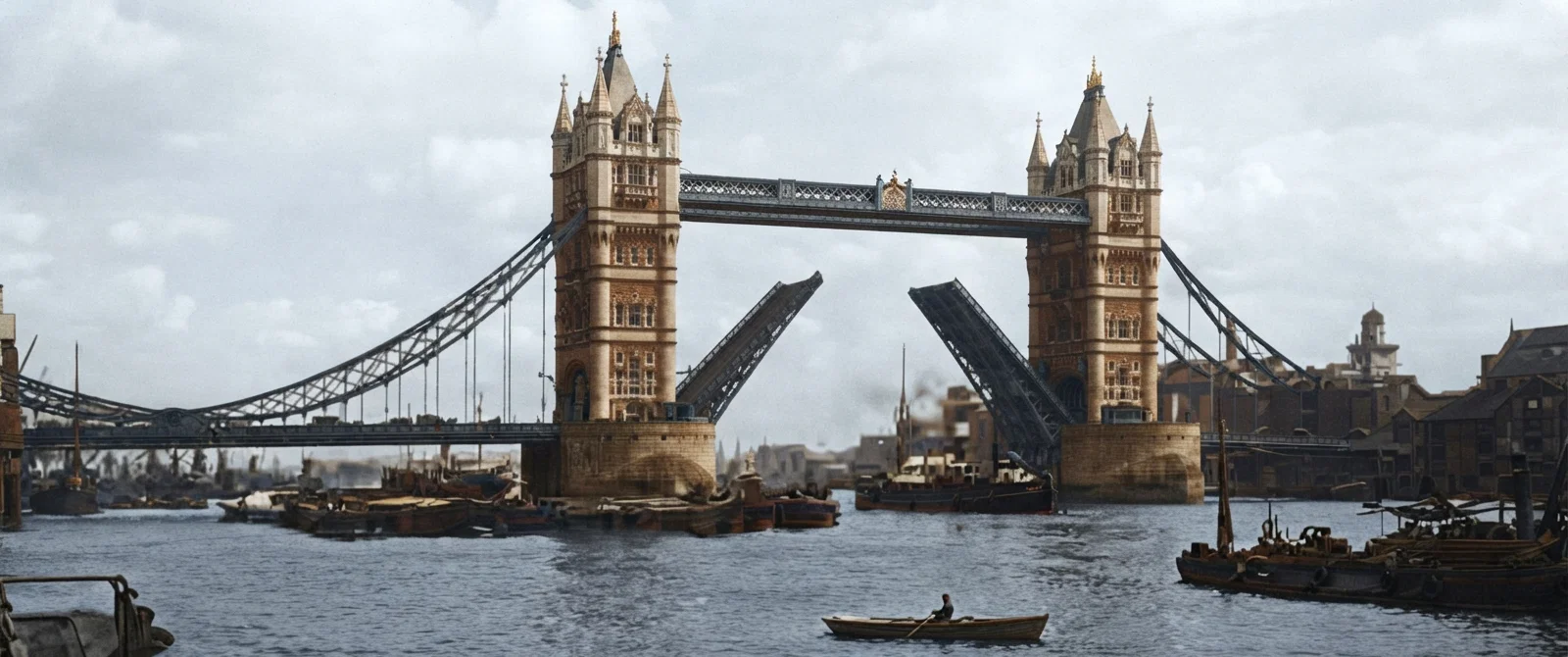
TOWER BRIDGE
TOWER BRIDGE

ENGLAND'S STATESMEN IN PERPLEXITY

The Unsettled Condition of Labor — Opposition to the Large Naval Expenditures — Leaders Are Powerless Before the War Craze — Strenuous Discussions Among the Churchmen

By W. T. BARTLETT
THIS is an interesting period in human history. Apart entirely from the light thrown upon it by the "sure word of prophecy," to tell us that we are passing through the final stages, the movements of the present day have an interest of their own. Tennyson felt, "Better fifty years of Europe than a cycle of Cathay"; and Europe since his time has certainly not ceased to spin with increasing velocity "down the ringing grooves of change."

IN FACE OF THE VESTED INTERESTS

The next session of Parliament promises to be one of special importance. It will show whether or not the Parliament Act, carried by Mr. Asquith's government three years ago, has indeed introduced a new era in English political life, and whether verily there is now possibility that the Radical party may pass its measures into law in the face of the determined opposition, of the House of Lords, representing the great vested interests of the country.
True, the passage of the Parliament Act was supposed to have settled this question, but it now remains to be seen whether the Conservative party and the House of Lords in combination will be able to reduce the act to a nullity. The issue will be fought out over the Home Rule Bill. This, as required by the Parliament Act, has been submitted to the House of Lords in two consecutive years by the Liberal majority, being each time rejected. Now, under the Parliament Act, it is only necessary for the House of Commons once more to pass the Home Rule Bill unchanged, for it to become law without further reference to the House of Lords.
Judging by the language used by prominent Conservative leaders, they will leave no stone unturned to prevent the third passage of the Home Rule Bill through the House of Commons. Some of them are counseling a policy of disorder that will make impossible the transaction of the necessary financial business, thus compelling the government to dissolve Parliament and appeal once more to the electorate.

SWORN NOT TO SUBMIT

Even though the bill become law, the Unionists of Ulster are sworn not to submit to an Irish parliament in Dublin, and to fight to the death for their cause if need be. Appeals have been addressed to officers of the British army to resign their commissions if they are called upon to put down a Unionist revolt in Ulster, and not a few officers have expressed their sympathy with the Ulster movement.
A few months will show how formidable is this opposition to the Home Rule Bill, and whether or not the pushing through of the bill under the Parliament Act will mean the inauguration of a civil war.

DISESTABLISHING THE CHURCH OF WALES

Another bill that is also to become law during next session under the Parliament Act is the one disestablishing the Church of Wales. The clergy of England have tried hard to organize public opinion against this measure; but either because the public is not greatly interested, or because the question has been overshadowed by the home rule controversy, it has not attracted a great deal of notice. The only possible escape for the Church of Wales from disestablishment is that the government may be overthrown before the Welsh bill is brought forward for the third time.

THE LABOR PARTY AND NAVAL EXPENDITURE

If the Irish party can keep the present government in office until the Home Rule Bill is passed, they will do so; but the government is now threatened with the defection of the Labor party, and also with a split in its own ranks, over the very heavy naval expenditure.
The Labor party is also indignant at the policy pursued in South Africa, where a general strike has been crushed by the application of martial law. They blame the home government for permitting this without protest. If the Labor party should vote with the Conservatives, this would mean a turnover of eighty votes on a division, which would practically wipe out the present majority.

GENERAL BOTHA AND THE SOUTH AFRICAN STRIKE

In a large portion of the English press, General Botha, premier of the South African Union, has been the hero of the hour for his prompt and vigorous action in putting down the general strike. He has taught England, say some, how she should deal with the agitators who organize strikes. Such newspapers recount with exulting admiration the speedy and resolute action taken in calling out the Boer commandoes, arresting the leaders of the men, and deporting those who were most prominent in the movement.
On the other hand, the Labor party in England is burning with indignation that, in a part of the British Empire, white men should be denied the right of free speech and liberty to strike for higher wages. Says the Daily Citizen:
"Martial law is a monstrous weapon, and we have yet to learn that it can be used in British territory for the purpose of crushing an orderly strike of white men. The matter can not rest where it now is, either in South Africa or in this country. We must punish the offenders, and we must make military despotism impossible for the future in any part of the British dominions. Organized labor must see to that."
It is planned to give the deported strike leaders from South Africa a rousing welcome when the ship bearing them arrives at an English port. The resignation by Lord Gladstone, of his office in South Africa, adds significance to the situation.
It may easily be that this movement will constitute a notable epoch in the war between capital and labor, and that both sides will henceforth harden themselves for a sterner battle than has hitherto been fought.

HAD HER SHARE OF STRIKES

England has had her share of strikes during recent months. The coal carters of London came out during the severe winter weather, but soon went back with only a partial victory. Unfortunately for them, the weather turned milder at once, and thus robbed them of their main dependence for victory. The post-office employees have been on the verge of striking, but decided not to take this step for the present. There is now going on a conflict in the building industries in London, and another among the schoolteachers in the County of Hereford. Some five thousand children are unable to attend school, because teachers can not be found to instruct them. After a long and dreary struggle, the strike in Dublin finally collapsed. Mr. Larkin, its famous leader, is now a discredited man. The people who were led by him suffered severely and gained nothing.
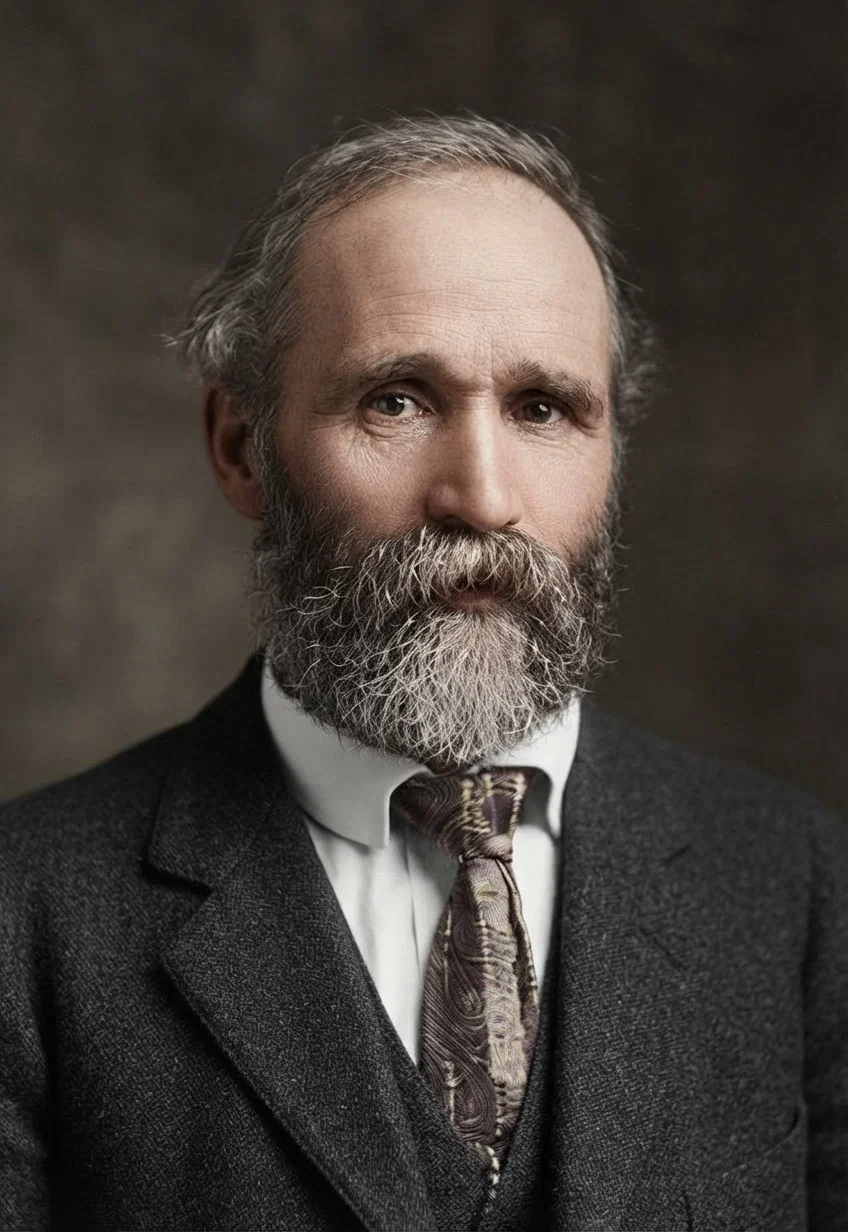
MR. KEIR HARDIE
MR. KEIR HARDIE

LABOR LEADERS NOT JUBILANT

The labor leaders in this country are by no means jubilant over the prospect confronting them. Last year was one of abounding prosperity for trade. The volume of the national business arose to $3,845,000,000 imports, and $2,625,000,000 exports. During the last thirteen years, the exports have almost doubled. Yet during the year, the number of trade disputes was the highest recorded for the last twenty-four years. Commenting on this fact, Mr. Philip Snowden, M.P., wrote:
"There are, in truth, very few things to encourage a hopeful feeling. When we consider how very little labor has been able to do for itself, during the quite exceptionally favorable times of the last two and a half years, by industrial action, and when we bear in mind the unwillingness of the employers generally to make concessions to labor when they can very well afford to do so, we can not reasonably expect that things are likely to be better under less prosperous trade conditions."
Mr. Keir Hardie, M.P., perhaps the most prominent of all the labor leaders, shares this pessimism. He questions whether any of them are accomplishing real good. A few weeks ago, at a public meeting, he said:
"I often feel sick at heart with politics and all that pertains thereto. If I were a thirty years younger man, with the experience I have gained during the past thirty-five years, I would, methinks, abandon house and home, and wife and child if need be, to go forth among the people to proclaim afresh and anew the full message of the gospel of Jesus of Nazareth. We are all of us, somehow or another, off the track."

MILITARISM STANDS IN THE WAY

The Labor party can see, from the defeat sustained in South Africa, that militarism everywhere stands between them and the goal for which they are striving. For this reason they are strongly opposed to the heavy increase in expenditure on the navy which is called for in England. While naval bills go up by several millions each year, the government will always find itself unable to respond to the demands for social improvements.
The advocates of retrenchment in shipbuilding point to the many desirable objects that could be realized if only the money now spent on battle-ships were available for improving social conditions. Mr. John Burns has stated that the money spent on the British army and navy in the last ten years is equivalent to what has been spent upon the relief of the poor during the past eighty years.

FOOLISH PANIC AND POLITICAL INSANITY

The members of the government, notwithstanding their request for ever larger sums of money for the navy, freely acknowledge that the expenditure is necessitated only by foolish panic and political insanity. Mr. Asquith said at Leeds, November 27, 1913, "We — and when I say 'we,' I mean my colleagues in the government and myself, every one without exception — lament this huge diversion, all over the world, of national wealth into non-productive channels." At the Guildhall, on the ninth of the same month, he said that the growth in armaments "will more and more impose a severe and even dangerous strain upon the taxable capacity and credit of the nation, which in turn must react upon the springs of industry and upon the general progress of material well-being."
Mr. Winston Churchill also spoke, during the same month, of the nations of Europe as "held and gripped in the thralldom of armaments on a scale unexampled since the beginning of time, on a scale which far surpasses the most ferocious and barbarous ages of the world."

ON DOWNWARD PATH LIKE GADARENE SWINE

Lord Rosebery has also lamented the situation in striking terms. To his view, "all the great countries are hurrying down a steep and downward path, like the Gadarene swine."
At the beginning of the year, Mr. Lloyd-George used language, in a public speech, that seemed to give official promise of better things. He said, "The common sense of the industrial classes, be they capitalist or labor, has risen against this organized insanity." He believed that the present was the most propitious moment in twenty years to call a halt and reconsider the position. He said,
"Unless Liberalism seizes the opportunity, it will be false to its noblest traditions, and those who have the conscience of Liberalism in their charge will be written down for all time as having grossly betrayed their trust."

EXCESSIVE NAVAL DEMANDS

As, however, the time draws nigh when the naval budget must be presented, the fact transpires that not only will the next demand for naval purposes be raised by several millions, but the expenditure for 1913 exceeded the naval estimates by some fifteen million dollars.
Mr. Asquith himself has said that he sees no hope of a halt in the headlong rush unless the people themselves, the business men, are able to assert themselves and demand that the folly be brought to an end. This is a striking confession of the helplessness of the ministers who are supposed to be in power and controlling the destinies of the country.
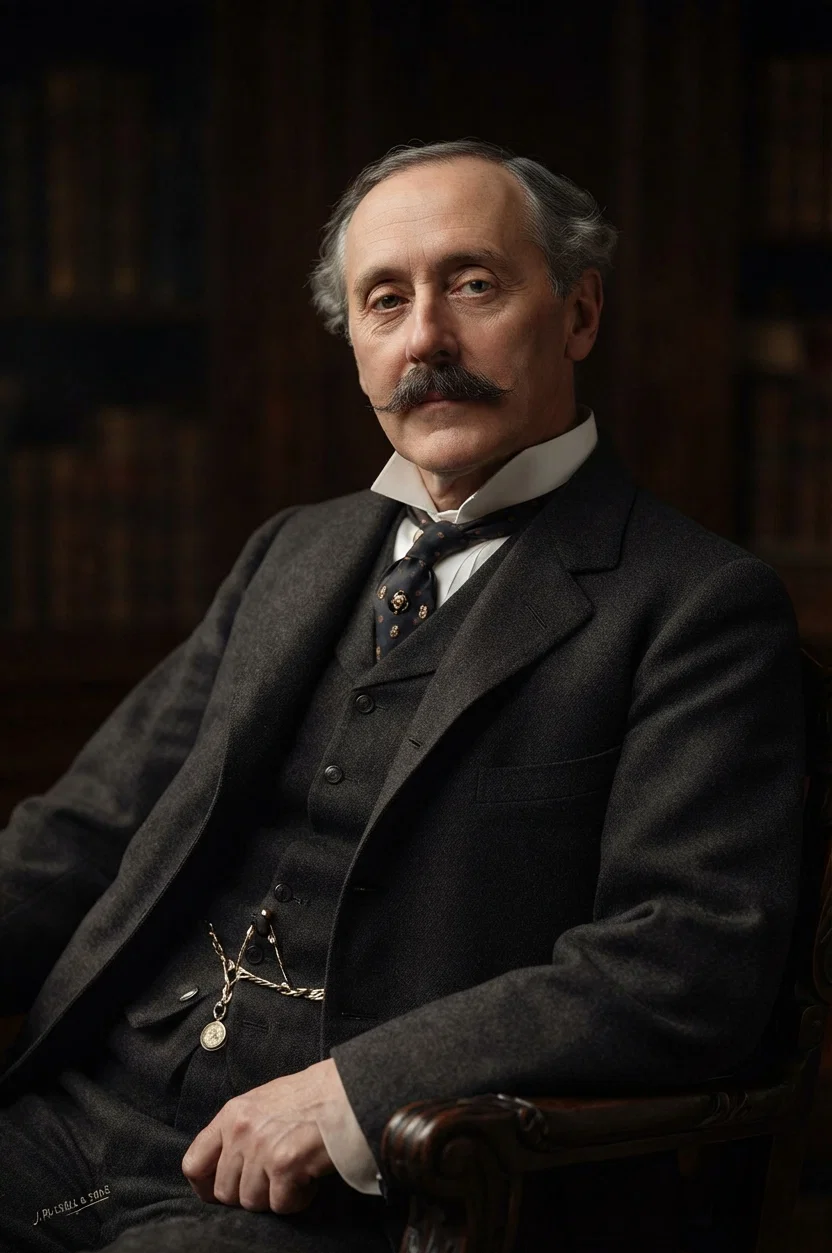
VISCOUNT GLADSTONE
VISCOUNT GLADSTONE
Lord Courtney, speaking at a peace meeting the other day, said:
"What is the use of appealing to the government to reduce the naval expenditure? The government is appealing to us in conscious helplessness."

THE CENTRAL POINT OF RELIGIOUS DISCUSSION

In the religious world, the discussion over the Kikuyu conference in British East Africa still occupies the central place. There is a growing feeling, however, that the Church of England will manage to avoid taking a definite stand on either the evangelical or the Romanizing side. The bishop of Zanzibar has just arrived in England to lay his case before the archbishop and urge his demand for a definite decision as to where the Church of England stands.
It is perhaps partly with a view to side-tracking this question, that the archbishop of Canterbury has just appointed a commission consisting of ten of the principal clergy and sixteen well-known laymen, with the earl of Selborne as chairman, to inquire "what changes are desirable in order to secure, in the relations of church and state, a fuller expression of the spiritual independence of the church, as well as the national recognition of religion." The design is to secure greater freedom for the church from state control, without at the same time relinquishing any of the material advantages of the state establishment.
The delegates who are here from America to prepare the way for the World Conference on Faith and Order, have met a cordial reception, but thus far the churches seem more impressed with the difficulties of the undertaking than with the idea that it will bring about any real approach to union.

CHURCHES DECLINING IN MEMBERSHIP

For several years past, the Free Churches in this country have shown a steady decline in membership. The publication of the annual statistics reveals the fact that this decline continues in the case of the Baptist Church, which has sustained a further loss of about 200 in membership, and over 6,000 in Sunday-school scholars. The Congregationalists, however, have ceased to fall back, and report this year an increase of 541 members. On their total membership of 491,263, this represents a gain of .001 per cent — not a heavy showing for the labors of 3,135 ministers and 5,293 lay preachers.

THE TURKISH PROBLEM STILL DIFFICULT

Although the powers of Europe were able to go through the troubles of 1913 without coming to blows over their conflicting interests in the East, the Turkish problem still remains for them a difficult one. Germany, which, to the annoyance of Russia, has succeeded in getting control of the Turkish army, will doubtless use this great advantage for the furtherance of her schemes in the near East. The Frankfurter Zeitung speaks thus freely of German designs in Asia Minor:
"The Triple Alliance countries, which are compelled to have recourse to large armies, can not hope to compete successfully with the fleets of England and France on the high seas. In the event of a struggle, therefore, our oversea imports would, in a short time, be done away with, and our industries would languish for want of raw material.
"As things stand to-day, it is not merely the lack of wheat and meat that would drive the country to destruction. Coal and iron, and Heaven knows what else, have also become essential to us. Where, then, shall the Triple Alliance countries look for their raw material if the sea routes are cut off? There is only one means of land communication, and it leads through Rumania, Bulgaria, and Turkey, into Asia Minor. It follows that the Triple Alliance can never see this route barricaded by hostile states; the Triplice must keep this route open at all costs.
"The German military mission in Constantinople is not merely helping to reorganize the Turkish army out of pure joy; it must, at the same time, serve both Turkey and the German Empire."
An English paper, the New Age, commenting on the above, says:
"Germany has now the concessions for a network of railway lines throughout Asia Minor, of which the Bagdad railway is only the main line. All the Asia Minor trade in the neighborhood of the railway, so far as it is now in operation, is being rapidly developed; forests are being cut down, the Euphrates shipping service is being improved, the cultivation of fruit and wheat is being carefully inquired into, experiments are in progress with a view to discovering petroleum wells, attempts are being made to open up the mineral wealth of the country."
France also has her mind set upon a portion of the Turkish dominions in Asia. Sir Harry Johnston wrote a few weeks ago in the Westminster Gazette:
"France obtained years ago the first concessions for carriage roads, and later for railways, in Syria and Palestine. Twelve months back, when the first great victories of the Balkan confederation seemed likely to lead to the dissolution of the Turkish Empire in Asia as well as in Europe, the French government made clearly known its intentions with regard to Syria becoming a French sphere of influence.
"The region of Syria over which, as delimited by other ambitions, France may aspire to exercise some kind of control, would have an area of about 100,000 square miles and a present population scarcely reaching to 3,500,000; but it will probably include the important towns or sites — important sentimentally and historically to-day, and still more by their population to-morrow — of Damascus, Beirut, Tripolis, Latakia, Antioch, Hamar, Tadmor, and Homs; and a desert area between Syria and the middle Euphrates inhabited by about 200,000 Arabs. But the area of 'French' Syria, though it has been shockingly devastated and depopulated since it came under the Turkish rule at the beginning of the sixteenth century, contains the wherewithal to become one of the wealthiest and most densely populated countries in the world. It has mines of hematite iron, petroleum oil springs, deposits of copper, silver, and lead, strata of coal and lignite, and quarries of pink marble. The climate, all things considered, is one of the best in the world."
So we may confidently expect that Turkey will enjoy no very great or prolonged opportunities to consolidate her empire in Asia Minor.

DANISH-NORWEGIAN SEMINARY

Paul and Barnabas on Foreign Mission Journey

THEY PREACHED THE OLD TESTAMENT PROPHECIES—THE GENTILES GLADLY HEAR THEIR MESSAGE—OPPOSED BY ENVY AND JEALOUSY OF THE ESTABLISHED JEWISH CHURCH—COURAGEOUS EVEN WHEN STONED TILL APPARENTLY DEAD
By MRS. E. G. WHITE
"SENT forth by the Holy Ghost," Paul and Barnabas, after their ordination by the brethren in Antioch, "departed unto Seleucia; and from thence they sailed to Cyprus." Thus the apostles began their first missionary journey.

ENCOUNTERING HARDSHIP, PRIVATIONS, AND DANGERS

From Cyprus, where "they preached the word of God in the synagogues of the Jews," the apostles continued their journey, going to Perga in Pamphylia. Their way was toilsome; they encountered hardships and privations, and were beset with dangers on every side. In the towns and cities through which they passed, and along the lonely highways, they were surrounded by dangers seen and unseen. But Paul and Barnabas had learned to trust God’s power to deliver. Their hearts were filled with fervent love for perishing souls. As faithful shepherds in search of the lost sheep, they gave no thought to their own ease and convenience. Forgetful of self, they faltered not when weary, hungry, and cold. They had in view but one object,—the salvation of those who had wandered far from the fold.
Paul and Barnabas visited Antioch in Pisidia, and on the Sabbath day went into the Jewish synagogue, and sat down. "After the reading of the law and the prophets the rulers of the synagogue sent unto them, saying, Ye men and brethren, if ye have any word of exhortation for the people, say on." Being thus invited to speak, "Paul stood up, and beckoning with his hand said, Men of Israel, and ye that fear God, give audience." Then followed a wonderful discourse.

APPEAL TO OLD TESTAMENT PROPHECIES

The Spirit of God accompanied the words that were spoken, and hearts were touched. The apostle’s appeal to Old Testament prophecies, and his declaration that these had been fulfilled in the ministry of Jesus of Nazareth, carried conviction to many a soul longing for the advent of the promised Messiah. And the speaker’s words of assurance that the "glad tidings" of salvation were for Jew and Gentile alike, brought hope and joy to those who had not been numbered among the children of Abraham according to the flesh.
The interest aroused in Antioch of Pisidia by Paul’s discourse, brought together, on the next Sabbath day, "almost the whole city . . . to hear the word of God. But when the Jews saw the multitudes, they were filled with envy, and spake against those things which were spoken by Paul, contradicting and blaspheming. Then Paul and Barnabas waxed bold, and said, It was necessary that the word of God should first have been spoken to you: but seeing ye put it from you, and judge yourselves unworthy of everlasting life, lo, we turn to the Gentiles. For so hath the Lord commanded us, saying, I have set thee to be a light of the Gentiles, that thou shouldest be for salvation unto the ends of the earth."
"When the Gentiles heard this, they were glad, and glorified the word of the Lord: and as many as were ordained to eternal life believed." They rejoiced exceedingly that Christ recognized them as the children of God, and with grateful hearts they listened to the word preached. Those who believed were zealous in communicating the gospel message to others, and thus "the word of the Lord was published throughout all the region."

INSPIRATION HAD TRACED IT CENTURIES BEFORE

Centuries before, the pen of inspiration had traced this ingathering of the Gentiles; but those prophetic utterances had been but dimly understood. And the Saviour Himself, during His earthly ministry, foretold the spread of the gospel among the Gentiles. In the parable of the vineyard, He declared to the impenitent Jews, "The kingdom of God shall be taken from you, and given to a nation bringing forth the fruits thereof." And after His resurrection, He commissioned His disciples to go "into all the world," and "teach all nations." They were to leave none unwarned, but were to "preach the gospel to every creature."
In turning to the Gentiles in Antioch of Pisidia, Paul and Barnabas did not cease laboring for the Jews elsewhere, wherever there was a favorable opportunity to gain a hearing. Later, in Thessalonica, in Corinth, in Ephesus, and in other important centers, Paul and his companions in labor preached the gospel to both Jews and Gentiles. But their chief energies were henceforth directed toward the building up of the kingdom of God in heathen territory, among peoples who had but little or no knowledge of the true God and of His Son.

THE GENTILES HEAR THEIR MESSAGE GLADLY

The hearts of Paul and his associate workers were drawn out in behalf of those who were "without Christ, being aliens from the commonwealth of Israel, and strangers from the covenants of promise, having no hope, and without God in the world." Through the untiring ministrations of the apostles to the Gentiles, the "strangers and foreigners," who "sometimes were far off," learned that they had been "made nigh by the blood of Christ," and that through faith in His atoning sacrifice, they might become "fellow citizens with the saints, and of the household of God."
From Antioch in Pisidia, Paul and Barnabas went to Iconium. In this place, as at Antioch, they began their labors in the synagogue of their own people. They met with marked success; "a great multitude both of the Jews and also of the Greeks believed." But in Iconium, as in other places where the apostles labored, "the unbelieving Jews stirred up the Gentiles, and made their minds evil affected against the brethren."

RESOLUTELY FACE OPPOSITION, ENVY, AND PREJUDICE

The apostles, however, were not turned aside from their mission; for many were accepting the gospel of Christ. In the face of opposition, envy, and prejudice they went on with their work, "speaking boldly in the Lord"; and God "gave testimony unto the word of His grace, and granted signs and wonders to be done by their hands." These evidences of divine approvalhad a powerful influence on those whose minds were open to conviction, and converts to the gospel multiplied.
"The multitude of the city was divided: and part held with the Jews, and part with the apostles." So enraged were the leaders among the Jews, that they determined to gain their ends by violence. Friends of the apostles, though unbelievers, warned them of the malicious designs of the Jews, and urged them not to expose themselves needlessly, but to escape for their lives. Paul and Barnabas accordingly departed in secret from Iconium, leaving the believers to carry on the work alone for a time. But they by no means took final leave; they purposed to return, after the excitement had abated, and complete the work begun.
Driven by persecution from Iconium, the apostles went to Lystra and Derbe, in Lycaonia. These towns were inhabited largely by a heathen, superstitious people, but among them were some who were willing to hear and accept the gospel message. In these places and in the surrounding country, the apostles decided to labor, hoping to avoid Jewish prejudice and persecution.

HEATHEN SEE GOD

The apostles endeavored to impart to these idolaters a knowledge of God the Creator, and of His Son, the Saviour of the human race. They first directed attention to the wonderful works of God,—the sun, the moon, and the stars, the beautiful order of the recurring seasons, the mighty snow-capped mountains, the lofty trees, and other varied wonders of nature, which showed a skill beyond human comprehension. Through these works of the Almighty, the apostles led the minds of the heathen to a contemplation of the great Ruler of the universe.
Having made plain these fundamental truths concerning the Creator, the apostles told the Lystrians of the Son of God, who came from heaven to our world because He loved the children of men. They spoke of His life and ministry, His rejection by those He came to save, His trial and crucifixion, His resurrection, and His ascension to heaven, there to act as man's advocate. Thus, in the Spirit and power of God, Paul and Barnabas preached the gospel in Lystra.

HEALING OF CRIPPLE

At one time, while Paul was telling the people of Christ's work as a healer of the sick and afflicted, he saw among his hearers a cripple, whose eyes were fastened on him, and who received and believed his words. Paul's heart went out in sympathy toward the afflicted man, in whom he discerned one who "had faith to be healed." In the presence of the idolatrous assembly, Paul commanded the cripple to stand upright on his feet. Heretofore the sufferer had been able to take a sitting posture only; but now he instantly obeyed Paul's command, and for the first time in his life stood on his feet.
Strength came with this effort of faith, and he who had been a cripple "leaped and walked."

SUPPOSED THEY HAD KILLED HIM

The labors of Paul and Barnabas at Lystra were suddenly checked by the malice of "certain Jews from Antioch and Iconium," who, upon learning of the success of the apostles' work among the Lycaonians, had determined to follow them and persecute them. On arriving at Lystra, these Jews soon succeeded in inspiring the people with the same bitterness of spirit that actuated their own minds. Yielding to the influence of evil, the Lystrians became possessed with a satanic fury, and seizing Paul, mercilessly stoned him. Covered with bruises, and faint with pain, he fell to the ground, and the infuriated mob "drew him out of the city, supposing he had been dead."
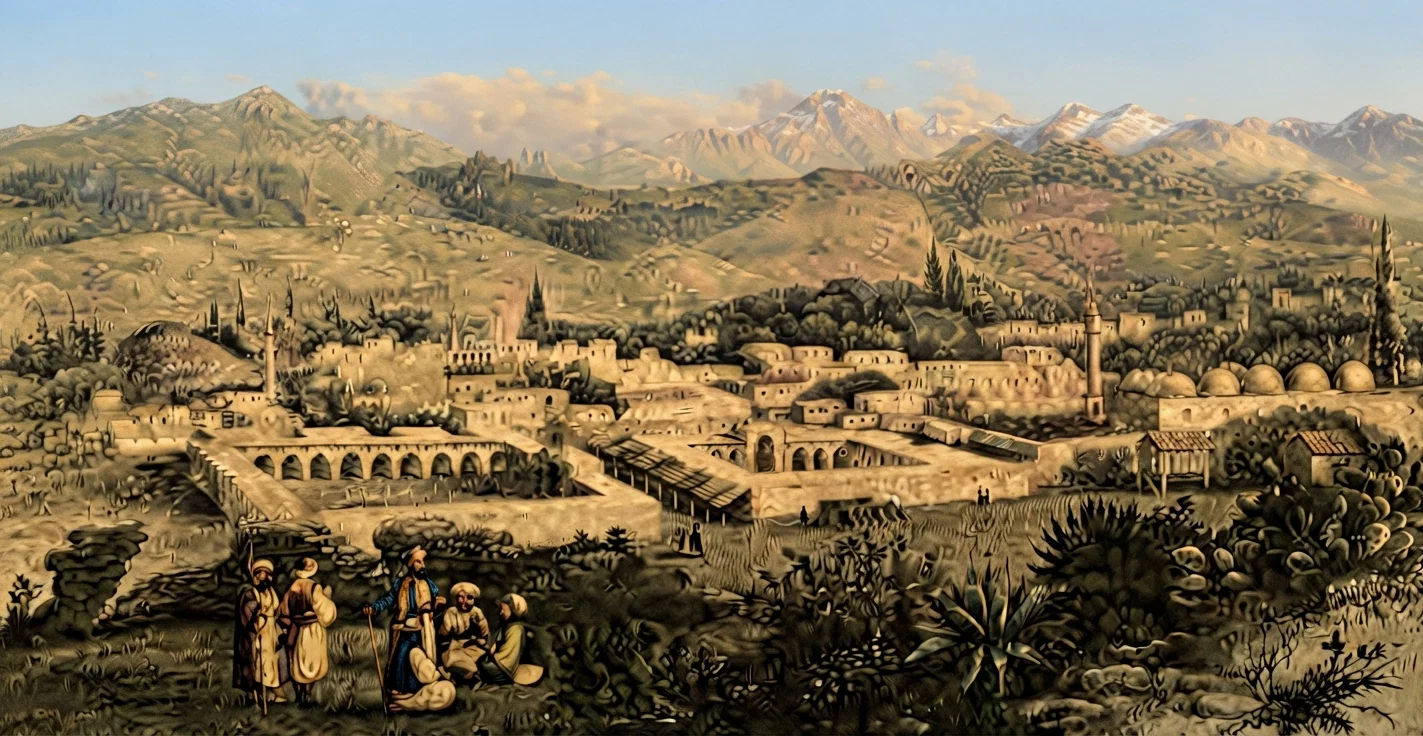
TARSUS, THE BIRTHPLACE OF PAUL
The observer is facing north; Mount Taurus is seen in the background.
TARSUS, THE BIRTHPLACE OF PAUL The observer is facing north; Mount Taurus is seen in the background.
In this dark and trying hour, the company of Lystrian believers, who through the ministry of Paul and Barnabas had been converted to the faith of Jesus, remained loyal and true. In the face of danger and scorn, they showed their loyalty by gathering sorrowfully about the form of him whom they believed to be dead.

REGARDED AS DIVINE MIRACLE

What was their surprise when, in the midst of their lamentations, the apostle suddenly lifted up his head, and rose to his feet, with the praise of God upon his lips. To the believers this unexpected restoration of God's servant was regarded as a miracle of divine power, and seemed to set the signet of Heaven upon their change of belief. They rejoiced with inexpressible gladness, and praised God with renewed faith.
Among those who had been converted at Lystra, and who were eye-witnesses of the sufferings of Paul, was one who was afterward to become a prominent worker for Christ, and who was to share with the apostle the trials and the joys of pioneer service in difficult fields. This was a young man named Timothy. When Paul was dragged out of the city, this youthful disciple was among the number who took their stand beside his apparently lifeless body, and who saw him arise, bruised and covered with blood, but with praises upon his lips because he had been permitted to suffer for the sake of Christ.

UNDAUNTED BY DANGER, THEY RETURNED

The day following the stoning of Paul, the apostles departed for Derbe, where their labors were blessed, and many souls were led to receive Christ as the Saviour. But "when they had preached the gospel to that city, and had taught many," neither Paul nor Barnabas was content to take up work elsewhere without confirming the faith of the converts whom they had been compelled to leave alone for a time in the places where they had recently labored. And so, undaunted by danger, "they returned again to Lystra, and to Iconium, and Antioch, confirming the souls of the disciples, and exhorting them to continue in the faith." Churches were duly organized, officers were appointed in each church, and proper order and system was established for the conduct of all the affairs pertaining to the spiritual welfare of the believers.
In all their missionary endeavors, Paul and Barnabas sought to follow Christ's example of willing sacrifice and faithful, earnest labor for souls. Wide-awake, zealous, untiring, they did not consult inclination or personal ease, but with prayerful anxiety and unceasing activity they sowed the seed of truth. And with the sowing of the seed, the apostles were careful to give to all who took their stand for the gospel, practical instruction that was of untold value. This spirit of earnestness and godly fear made upon the minds of the new disciples a lasting impression regarding the importance of the gospel message.

THEY TRAINED OTHERS TO THE WORK

When men of promise and ability were converted, as in the case of Timothy, Paul and Barnabas sought earnestly to show them the necessity of laboring in the vineyard. And when the apostles left for another place, the faith of these men did not fail, but rather increased. They had been faithfully instructed in the way of the Lord, and had been taught how to labor unselfishly, earnestly, perseveringly, for the salvation of their fellow men. This careful training of new converts was an important factor in the remarkable success that attended Paul and Barnabas as they preached the gospel in heathen lands.
The first missionary journey was fast drawing to a close. Commending the newly organized churches to the Lord, the apostles went to Pamphylia, "and when they had preached the word in Perga, they went down into Attalia, and thence sailed to Antioch."

Life's Rainbow

A few steps only down the days All plain the path before us lies; Then mists and shades fold out the view, And hide it from our anxious eyes.
Yet on we go — but not afraid, As one who walks at night alone; The mists will lift, the shadows flee, God's shelt'ring love will guard His own.
And when, far forward on life's road, The sun shines backward o'er the years, A miracle I seem to see — Life's rainbow from life's tears!
Adelaide Bee Evans.

Think on These Things

Whatsoever things are true, whatsoever things are honest, whatsoever things are just, whatsoever things are pure, whatsoever things are lovely, whatsoever things are of good report; if there be any virtue, and if there be any praise, think on these things.
— Paul.
Continue reading: A Sunday Ordinance and the Mayor's Veto