Your ShelfYour Projects

Signs of the Times, Vol. 28, No. 21.

THE KREMLIN

Signs of the Times

May 21, 1902

Pacific Press Publishing Company · Oakland, California · May 21, 1902

THE KREMLIN.

Russia and Its Beginnings.
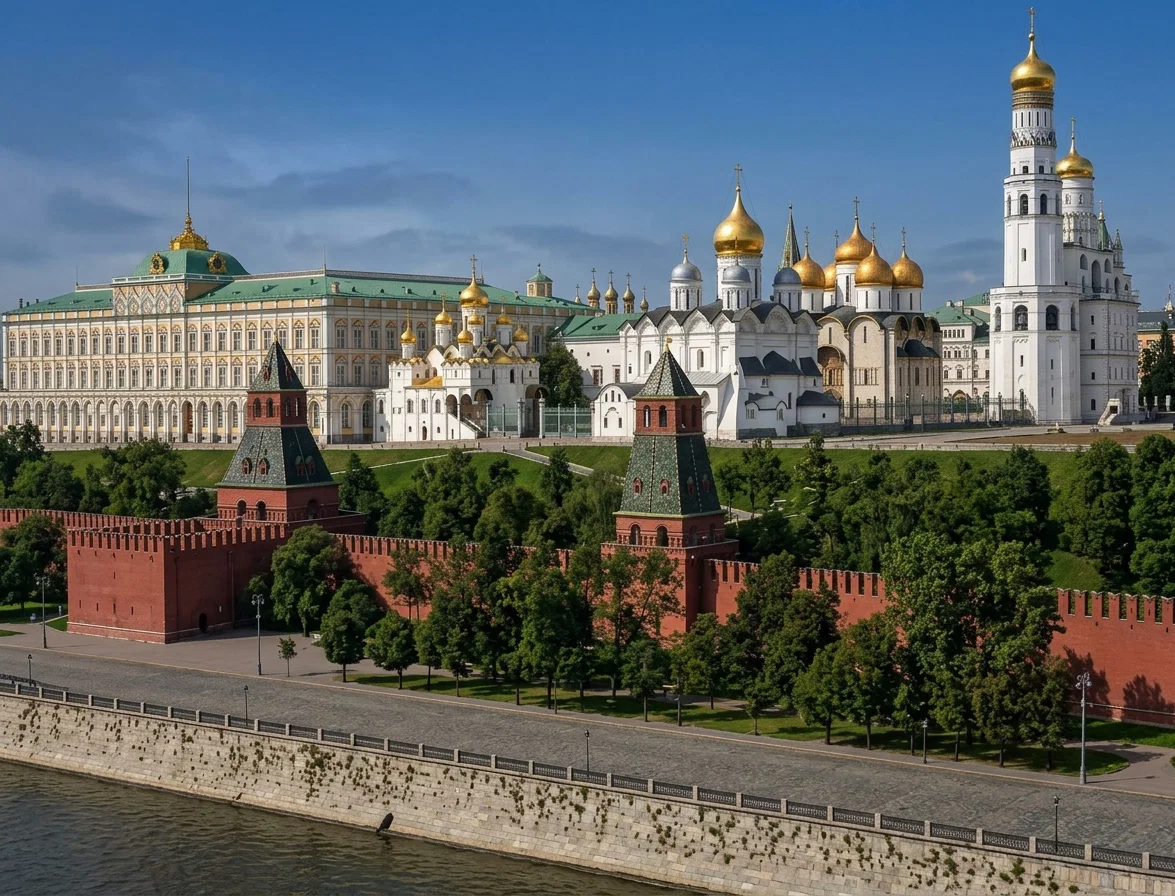
The empire of Russia extends over a seventh of the territorial surface of the globe, containing 8,082,970 square miles. It probably derived its name from Russalki, the supposed goddess of the waters and the woods. There is fitness in this name, as more than one-half of the empire is covered with forests and woodlands, oak, lime, maple, and ash trees predominating. The southern portion contains some of the richest grain land in the world. The population numbers about 90,000,000.
THE KREMLIN.
THE KREMLIN.
Church and State are united. Error and superstition reign on every hand, as in every land where men try to govern the consciences of other men, and dictate to them concerning matters which pertain alone to the worship of God. When man is left alone with God, the Lord guides him in his religion and worship, leading him into light and truth.
The empire was founded by Rurik, a Scandinavian, who settled at Novgorod about A. D. 862. The country had been inhabited for more than a thousand years by the Slavonians, from whom the present Russian people descended. They were savage and barbarous, and, in common with all savage nations, they regarded woman as the natural slave of man. Polygamy was allowed. When a husband died, his widow was usually put to death, that he might have his slave in the other world soon after his arrival. This naturally followed their faith in the continued conscious state in death.
Christianity alone gives to woman her true place. “There is neither male nor female; for ye are all one in Christ Jesus.” She is not the slave of a savage, nor a goddess for worship, as taught by infidel France in her “Reign of Terror.”
The Roman Catholic faith was early introduced into Russia, and the first church was built in A. D. 868 at Kieff. In this place Queen Olga reigned during the minority of her son. She became the first royal convert to the new faith, and went to Constantinople for baptism. Her life, both before and after baptism, was one of revenge and cruelty, showing little proof that the transforming power of God’s Spirit had ever been with her to the intent and purpose for which it is given. Nevertheless she is, by the church, still held to be a saint, the first native saint of all Russia. The native saints are regarded more highly than those who lived in other countries, as they are supposed to be more in sympathy with the wants of the people. Paul, Peter, James, John, and others are regarded as saints; but their portraits, or images, are seldom seen, while those of native saints abound.

How the State Religion was Adopted.

Choice of religion was made, for the empire, by Vladimir, the grandson of Olga. Judaism was rejected because it had no national temple or political status. Romanism involved the recognition of a pope who claimed civil as well as spiritual authority; therefore it was rejected. Mohammedanism was regarded with great favor, only that it prohibited wine. Said Vladimir, “Wine is the delight of the Russians; we can not do without it.” The Greek religion was then accepted, not because it wasthe truth, but because it best suited their desires and conveniences. How many others rest at least some portion of their faith on the same foundation,—desire and convenience.
Vladimir considered himself of too great importance to be baptized by any of the priests in his own kingdom, who were generally poor and ignorant. He was unwilling to acknowledge the necessity of going to some other kingdom for the baptismal rite. To help himself out of these difficulties, he made war on the Greek empire, that he might be able to take some prominent priests captive, carry them to his own city, and there be baptized by them.
Having taken the city of Cherson, he returned home with captive priests, and ordered all the people of Kieff, old and young, to be baptized.

Superstition.

Such superstition exists in Russia that the farmer does not consider the soil or weather with reference to plowing, but begins his work on St. George’s day. The cattle are turned to pasture on St. Stephen’s day without regard to the condition of the grass. The apples are not picked because they are ripe, but are gathered on the feast of Mary.
Every peasant has some hideous idol in his room; and the superstition is so great that, it is said, they sometimes cover the idol up, lest it see them do wrong.
Moscow, a city of 400,000 inhabitants, once the capital of the empire, contains the Kremlin, a massive pile of buildings, including the imperial palace, the archiepiscopal palace, the cathedrals of the Assumption and of Prorovskoi, and the churches of St. Michael and the Annunciation. Here is the belfry of Ivan Veliki, and the “great bell” of Moscow, which weighs 360,000 pounds. Tho it is broken, the people are not without a bell; for the city contains three thousand other church bells.
When Napoleon’s powder-wagons exploded near one of the gates of the Kremlin, the people claim that the picture of St. Nicholas, hanging on the wall, saved the place; that while the tower of the gate was shattered, the rent ceased as soon as it reached the saint’s picture. St. Nicholas is the patron saint of all Russia.
In the czar is vested the executive and legislative power in both civil and religious matters; he is the head of both Church and State. When he speaks, his word is law. When Vasilii in the 16th century lost half his army on the field of battle, the people were taught to maintain stoutly that not a man had been lost in battle.
The ignorance and superstition of the people were manifested when Ivan the Fourth reigned. One morning in the winter of 1565, the court of the Kremlin was full of sledges laden with furniture, crosses, images, and relics of saints. The people assembled, and gazed in wonder. Ivan and his family came from the palace, went to mass in the church of the Assumption, and, extending his hand as if to say farewell, drove away. The people were frantic, and wildly exclaimed, after this cruel tyrant, “The czar has forsaken us, and we are lost.” Having accomplished his purpose of frightening his ignorant subjects, he returned to the Kremlin.
This same Ivan, for the sake of plunder, made a charge against the people of Novgorod, and forged a letter to sustain it; and here put to death 60,000 men, women, and children, every one of whom he knew to be innocent of the charge made against them. In a moment of anger he smote and killed his son, and soon after died in misery and fear. And in the Kremlin, in the church of the Archangel Michael, lie side by side father and son, waiting that great, and to many, terrible day when Christ shall come and “render to every man according to his works.”
The blind slavish condition of the people may be seen by an inscription at the Kremlin which, after stating that Ivan died in 1584, the 19th day of March, calls him “the orthodox and Christ-loving lord.” Emperor Nicholas, who died in 1855, said, “Let there be no mind in Russia. I, Nicholas, the czar, so will it.”

Unrest and Conspiracy.

But with this despotic government, and the blind servitude of the people, there are continual intrigues, assassinations, and poorly planned rebellions, keeping the rulers in constant fear. And thousands of the people are marched across the wilds of Siberia, to work in the cold, damp mines, forever shut away from home and loved ones, because, perhaps, they have offended the czar, either in civil or in religious matters.
With all this blindness, how many hearts have yearned for just such truth and light as God is giving us. Who will be the light-bearers to carry the Word of God to this people? The law of the government does not permit one to teach any religion differing from that of the empire; but any one can hold his own views provided he does not teach them; therefore one can go and say, “What does the Bible say about images in Ex. 20:4-6? What does it say about the Sabbath in Ex. 20:8-11?” But it would not do to say, “Thou shalt not make unto thee any graven image,” or, “The seventh day is the Sabbath;” yet as a man reads for himself, he will soon see what the Lord requires.
Pray to the Lord of the harvest that He will “send forth more laborers into His harvest,” even into the Kremlin and to other parts of benighted Russia, that it may be said of the people there, “The people that sat in darkness saw great light.” W. M. HEALEY.

MERCY

God’s love for the fallen race is a peculiar manifestation of love,—a love born of mercy; for human beings are all undeserving. Mercy implies the imperfection of the object toward which it is shown. It was because of sin that mercy was brought into active exercise.
Sin is not the object of God’s love, but of His hatred. But He loves and pities the sinner. The erring sons and daughters of Adam are the children of His redemption. Through the gift of His Son He has revealed toward them His infinite love and mercy. He “so loved the world, that He gave His only-begotten Son, that whosoever believeth in Him should not perish, but have everlasting life.”

Receiving That We May Give.

“Be ye therefore merciful, as your Father also is merciful.” Mercy is an attribute that the human agent may share with God. As did Christ, so man may lay hold on the divine arm and be in communication with divine power. To us has been given a service of mercy to perform for our fellow-man. In performing this service, we are laboring together with God. We do well, then, to be merciful, even as our Father in heaven is merciful.
“I will have mercy,” God says, “and not sacrifice.” Mercy is kind, pitiful. Mercy and the love of God purify the soul, beautify the heart, and cleanse the life from selfishness. Mercy is a manifestation of divine love, and is shown by those who, identified with God, serve Him by reflecting the light of heaven upon the pathway of their fellow-creatures.
The condition of many persons calls for the exercise of genuine mercy. Christians, in their dealing with one another, are to be controlled by principles of mercy and love. They are to improve every opportunity for helping fellow-beings in distress. The duty of every Christian is plainly outlined in the words: “Judge not, and ye shall not be judged; condemn not, and ye shall not be condemned: forgive, and ye shall be forgiven: give, and it shall be given unto you: good measure, pressed down, and shaken together, and running over.” “As ye would that men should do to you, do ye also to them likewise.” These are the principles that we shall do well to cherish.

We Receive Mercy as We Bestow Mercy.

Let those who desire to perfect a Christlike character ever keep in view the cross on which Christ died a cruel death in order to redeem mankind. Let them ever cherish the same merciful spirit that led the Saviour to make an infinite sacrifice for our redemption. Let not those who themselves have sinned against God, refuse to forgive a repentant sinner. Just as they deal with a fellow-being who in spirit or in action has done wrong and has afterward repented, so God will deal with them for their defects of character. He who does not show mercy to his fellow-men, can not expect to be shielded by the mercy of God. He himself is dependent on the mercy that God has enjoined him to exercise in seeking to restore every unsaved soul brought within the sphere of his influence. If he refuses to cultivate this divine grace, he himself will suffer the result of his neglect. Sometime, when he is in need of the mercy of God and of his fellow-men, he will find himself beyond mercy.
The attributes of mercy and love are nearly lost from the hearts of many, many members of the church. We should remember that all make mistakes; even men and women whohave had years of experience sometimes err; but God does not cast them off because of their errors; to every erring son and daughter of Adam He gives the privilege of another trial. The true follower of Jesus manifests a Christ-like spirit toward his erring brother. Instead of speaking in condemnation, he remembers the words, “He which converteth the sinner from the error of his way shall save a soul from death, and shall hide a multitude of sins.”

The Need and Effect of Mercy.

In the church militant, men will be ever in need of restoration from the results of sin. The one who in some respects is superior to another is in other respects inferior to him. Every human being is subject to temptation, and in need of brotherly interest and sympathy. The exercise of mercy in our daily relations with one another is one of the most effective means of attaining perfection of character; for only those who walk with Christ can be truly merciful.
The merciful “shall obtain mercy.” “The liberal soul shall be made fat; and he that watereth shall be watered also himself.” There is sweet peace for the compassionate spirit, a blessed satisfaction in the life of self-forgetful service for the good of others.
He who has given his life to God in ministry to His children, is linked with Him who has all the resources of the universe at His command. By the golden chain of the immutable promises his life is bound up with the life of God. The Lord will not fail him in the hour of suffering and need. “My God shall supply all your need according to His riches in glory by Christ Jesus.” And in the hour of final need the merciful shall find refuge in the mercy of the compassionate Saviour, and by Him shall be received into everlasting habitations.
MRS. E. G. WHITE.

THE SIGNS OF THE TIMES

CORONATION NUMBER

Ready June 5, 1902 Order Early

Christian Greatness

It is not difficult to get away into retirement, and there live upon your own convictions; nor is it difficult to mix with men, and follow their convictions; but to enter into the world, and there live firmly and fearlessly according to your own conscience, that is Christian greatness.—F. W. Robertson.

PAUL AT LYSTRA.

[See Acts 14 and Sunday-school Lesson.]
HAVING been driven away from Antioch, Paul and Barnabas passed on to Iconium, a little to the southeast. Filled with joy and the Holy Ghost, they entered upon their work after the same manner as at Antioch, namely, by speaking in the Jewish synagogue. Here, as at Antioch, multitudes believed the message, but apparently a larger proportion of these were Jews than at the former place. It was not long, however, before the unbelieving Jews found means of stirring up hatred among the Gentiles against the evangelists. This, of course, divided the sentiment of the city, causing much contention among the people themselves. Having their own differences to attend to, they could not unite to drive out the brethren, and so they were privileged to remain there a long time, proclaiming the Word, which was attested by many miracles performed by their hands. Acts 14:1-3.
But as often happens, time helped to heal the animosities engendered between the people, and there came to be union of sentiment enough to attempt the expulsion of the evangelists. So forming a mob, the people of both classes, together with the rulers, prepared to stone them. But the brethren, hearing of the movement, fled from the place and went to Lystra a city of Lycaonia. Here, and in the country round about, they entered upon their work. At one of the meetings where Paul was speaking, he noticed a man with deformed feet, who had been thus from his birth, and had never walked. Paul looked steadily and earnestly at the man until he decided that he had faith enough to be healed on the spot. When satisfied on this point, he waited for no conventionalities, but stopped short in his discourse, and said loudly to the man, “Stand upright on thy feet.” Verse 10.
The result proved that Paul was not lacking in spiritual discernment, and that he had been prompted in his action by the Spirit of God. Immediately the man addressed jumped up and began walking about. This, of course, so astonished the crowd that they could not refrain from expressing themselves vigorously in their native language. All together they cried out, The gods have made themselves like men, and come down to us. Verse 11.

Worshiped as Gods.

With this state of feeling, it did not take long to decide which of their numerous gods had appeared among them. Barnabas was called Jupiter (the chief Greek and Roman deity), and Paul, because he did most of the preaching, was named Mercurius (their great patron of eloquence and trade). No sooner was the supposed identity of the strangers settled than another step was determined. The priest of Jupiter, from beyond the walls, brought oxen and wreaths to the gates of the city, and the people began to prepare to offer sacrifices to the apostles, as to their gods. Verses 12, 13.
At first the brethren apparently did not understand the demonstration; but upon hearing what it meant, they tore their clothes as if in great excitement of distress, and rushed into the crowd crying aloud: “Sirs, why do ye these things? We also are men of like passions with you, and preach unto you that ye should turn from these vanities unto the living God, which made heaven, and earth, and the sea, and all things that are therein.” Verses 14, 15.
At this the people waited a moment with expectancy, which gave the evangelists time to add another sentence or two showing the goodness and mercy of that infinite Creator whom they had set forth in the few words before. He it was, they said, who in bygone times had permitted all the heathen to go their own ways, yet had not omitted to give, in His kindly acts, evidence about Himself, sending rain from heaven, and harvest to satisfy the desire for food and good cheer. Verses 16, 17.

Fickleness of False Worship.

But even with this appeal they could hardly prevent the people from offering sacrifice to them. This was, however, done, and the people settled down in comparative quiet to listen further to the apostles. But even this proved to be but the temporary calm which precedes a violent tempest; for very soon afterward there came some Jews from Antioch and Iconium, who, after in some way winning over the people, stoned Paul, and dragged him out of town, thinking him to be dead. But when the believers gathered around him, he arose and went back into the town. Verses 19, 20.
This experience did not in any way discourage the intrepid Paul, altho he knew that for a time his work was done in Lystra. But the next day, in company with Barnabas, he went on to Derbe, where they remained sometime, and then returned to Lystra, Iconium, and, Antioch, confirming the souls of believers in each place, and exhorting them to be faithful even tho called to pass through tribulation to reach the kingdom of God.
The heralds of the cross in those days knew in whom they believed. Neither did they count their lives dear if they could but win souls for Christ. Would that more had the same mind now. Were this the case, the leaven of their enthusiasm would soon permeate all believers, and the world would soon be prepared for the return of the Master.
J. O. CORLISS.

THE LOST-DAY QUESTION.

In the minds of many there seems to exist a vague idea that somehow, in the progression of time, one or more days were lost out of the reckoning, and that we do not now know what day in the week is the true seventh day. Strange to say, this objection is generally resorted to only when the perpetual obligation of the Sabbath of the fourth commandment is advanced. This question is made clear and forever settled by “Olmstead’s College Astronomy” (pp. 52, 53, § 86, 87, 88):—

The Julian Calendar.

The period in which the sun passes from the vernal equinox to the same point again is called the “tropical year.” In that period the round of the seasons is exactly completed. The length of the tropical year is 365 days, 5 hours, 48 minutes, 46.15 seconds. This is so near 365.25 days that in the adjustment of the calendar made by Julius Cæsar (hence called the Julian calendar) three successive years were made to contain 365 days each, and the fourth 366 days; the additional day is called the “intercalary day.” In this calendar it was introduced by reckoning twice the sixth day before the Calends of March, and hence the year containing this additional day was called the “bissextile.” The intercalary day is now the 29th of February, and the year containing such a day is called leap-year.

The Gregorian Calendar.

By calling the tropical year 365.25 days, the Julian calendar makes it more than eleven minutes too long, and the intercalation of one day in four years is therefore too great. This excess amounts to more than eighteen hours in a century. Hence, by dropping the intercalary day three times in four centuries, the adjustment is nearly complete. The Julian calendar, thus amended, is called the Gregorian calendar, because adopted under Pope Gregory XIII. At that time, 1582 A. D., the vernal equinox, by the error of the Julian calendar, had fallen back to March 11th. To bring the equinox to its proper date, ten days [dates] were first dropped, the 5th being called the 15th, and then the following system was adopted: Every year not exactly divisible by four has 365 days. Every year divisible by four and not by 100 has 366 days. Every year divisible by 100 and not by 400 has 365 days. Every year divisible by 400 has 366 days. The Gregorian calendar will not be correct perpetually, but the error will not amount to one day in 4,000 years. Russia has not yet adopted the Gregorian calendar, so that there is now a discrepancy of twelve days between their dates and those of other nations.

How to Compare Days of the Month and of the Week in Passing from One Year to Another.

A common year of 365 days contains 52 weeks and 1 day. A leap-year contains 52 weeks and 2 days. Hence a year usually begins a day later in the week than the previous year, and generally any day of any month is one day in the week more than the same day of the preceding year.
These paragraphs settle the lost-day question. There was no time lost, but man’s calendar got out of harmony with God’s, and man had to adjust his calendar to God’s, or go farther and farther astray. Neither were the days of the week disturbed in their order by these changes of the calendar; simply the date of the day of the month was changed. While the dates of the days of the month are ever shifting along on the days of the week, the order of the days of the week remains unchanged, and is about the only unchangeable thing in the progression of time.
C. CASTBERG.

Adding to Human Happiness

I SEE in this world two heaps—one of human happiness and one of misery; now if I can take but the smallest bit from the second heap, and add it to the first, I carry a point. If, as I go home, a child has dropped a half-penny, and by giving it another I can wipe away its tears, I feel that I have done something.—John Newton.

THE FEAR OF GOD AGAINST UNBROTHERLINESS.
The time spent in the building of the wall of Jerusalem after the coming of Nehemiah, noted in the preceding study, was so far only about a month. Nehemiah’s attention had been so engaged in the work of pushing forward the work on the wall, and in warding off the schemes of the enemies, that he had not had time or opportunity to look into the individual and social conduct and condition of the people. And now there came to his knowledge that which was almost as surprising to him as was to Ezra the knowledge of the mixed marriages.
In the thirteen years that had elapsed between the coming of Ezra and that of Nehemiah to Jerusalem, tho the evil of the mixed marriages had been largely corrected, other wrong and weakening things had been indulged. And Nehemiah was surprised and greatly offended by “a great cry of the people and of their wives against their brethren the Jews. For there were that said, We, our sons, and our daughters, are many; therefore we take up corn for them, that we may eat and live.” That is, they had put to pledge the labor of their children, for the grain which, in food, they and their children must eat. “Some also there were that said, We have mortgaged our lands, vineyards, and houses, that we might buy corn, because of the dearth. There were also that said, We have borrowed money for the king’s tribute [the State taxes], and that upon our lands and vineyards. Yet now our flesh is as the flesh of our brethren, our children as their children; and lo, we bring into bondage our sons and our daughters to be servants, and some of our daughters are brought unto bondage already; neither is it in our power to redeem them; for other men have our lands and vineyards.”
Thus on the part of many there was the spirit and practise of speculating on the necessities of their brethren; for this money was not simply loaned, but loaned at interest and profit. This spirit, in the nature of things, only increased the natural selfishness of the heart, and cultivated hardness and oppressiveness of brother to brother. It really destroyed all true brotherliness, and supplanted it with the spirit of sordid gain; the whole thought became not, How can I do most to help my brother? but, How can I make most off of him? not, What can I do most to help him? but, What can I do most to help myself through his necessities?
For these reasons, this that they were doing was plainly forbidden by the Lord; and in it all they were going directly contrary to the Scriptures which they professed to obey. In the Word of the Lord it was plainly written to all: “If thy brother be waxen poor, and fallen in decay with thee, then thou shalt relieve him; yea, tho he be a stranger, or a sojourner; that he may live with thee. Take thou no usury of him, or increase; but fear thy God; that thy brother may live with thee. Thou shalt not give him thy money upon usury, nor lend him thy victuals for increase. I am the Lord your God, which brought you forth out of the land of Egypt, to give you the land of Canaan, and to be your God. And if thy brother that dwelleth by thee be waxen poor, and be sold unto thee, thou shalt not compel him to serve as a bondservant; but as a hired servant, and as a sojourner, he shall be with thee.” Lev. 25:35–40. “Thou shalt not lend upon usury to thy brother; usury of money, usury of victuals, usury of anything that is lent upon usury. Unto a stranger thou mayest lend upon usury; but unto thy brother thou shalt not lend upon usury; that the Lord thy God may bless thee in all that thou settest thine hand to in the land whither thou goest to possess it.” Deut. 23:19, 20. “If thou lend money to any of My people that is poor by thee, thou shalt not be to him as an usurer, neither shalt thou lay upon him usury.” Ex. 22:25. “Lord, who shall abide in Thy tabernacle? who shall dwell in Thy holy hill?—He that walketh uprightly, and worketh righteousness, and speaketh the truth in his heart. . . . He that putteth not out his money to usury, nor taketh reward against the innocent.” Ps. 15:1, 2, 5. “If a man be just, and do that which is lawful and right, . . . and hath not oppressed any, but hath restored to the debtor his pledge, hath spoiled none by violence, hath given his bread to the hungry, and hath covered the naked with a garment; he that hath not given forth upon usury, neither hath taken any increase, that hath withdrawn his hand from iniquity, hath executed true judgment between man and man, hath walked in My statutes, and hath kept My judgments, to deal truly; he is just, he shall surely live, saith the Lord.” Eze. 18:1–9, 12, 13, 16, 17. And among the “abominations” that had destroyed “the bloody city,” Jerusalem, and taken the people captive to Babylon, was this: “In thee have they taken gifts to shed blood; thou hast taken usury and increase, and thou hast greedily gained of thy neighbors by extortion, and hast forgotten Me, saith the Lord.” Eze. 22:2, 12.
All this was written in the Scriptures which these very people professed to believe, and in which they even boasted; and yet they disregarded it all, and made the poverty and necessity of their brethren only opportunity for traffic in loaning money and victuals for usury and increase! No wonder that the righteous Nehemiah declares, “I was very angry when I heard their cry and these words.” And, “Then I consulted with myself, and I rebuked the nobles, and the rulers, and said unto them, Ye exact usury, every one of his brother. And I set a great assembly against them. And I said unto them, We after our ability have redeemed our brethren the Jews, which were sold unto the heathen; and will ye even sell your brethren? or shall they be sold unto us? Then held they their peace, and found nothing to answer.”
“Also I said, It is not good that ye do; ought ye not to walk in the fear of our God because of the reproach of the heathen our enemies? I likewise, and my brethren, and my servants, might exact of them money and corn; I pray you, let us leave off this usury. Restore, I pray you, to them, even this day, their lands, their vineyards, their oliveyards, and their houses, also the hundredth part of the money, and of the corn, the wine, and the oil, that ye exact of them. Then said they, We will restore them, and will require nothing of them; so will we do as thou sayest.”
“Then I called the priests and took an oath of them, that they should do according to this promise. Also I shook my lap, and said, So God shake out every man from his house, and from his labor, that performeth not this promise, even thus be he shaken out, and emptied. And all the congregation said, Amen! and praised the Lord. And the people did according to this promise.”
Nehemiah could safely and consistently appeal to all the people upon this issue; for, tho he was an exceedingly rich man, and had the best of opportunities to lend money at big interest, and make gain of the people, he not only did nothing of the kind as a speculator, but he did not use nor even collect what was his due as governor. For twelve years he supported himself and his whole household and retinue as governor, also a hundred and fifty Jews and rulers, besides others, at his own expense from his own personal funds. So he says: “From the time that I was appointed to be their governor in the land of Judah, from the twentieth year even unto the two and thirtieth year of Artaxerxes the king, that is, twelve years, I and my brethren have not eaten the bread of the governor. But the former governors that had been before me were chargeable unto the people, and had taken of them bread and wine, besides forty shekels of silver; yea, even their servants bare rule over the people; but so did not I, because of the fear of God. Yea, also I continued in the work of this wall, neither bought we any land; and all my servants were gathered thither unto the work. Moreover there were at my table a hundred and fifty of the Jews and rulers, besides those that came unto us from among the heathen that are about us. Now that which was prepared for me daily was one ox and six choice sheep; also fowls were prepared for me, and once in ten days store of all sorts of wine; yet for all this required not I the bread of the governor, because the bondage was heavy upon this people.”
With such an example as this of mercy and brotherly kindness ever before them, those who had been trading upon the bondage and necessities of the people were enabled to keep their promise to quit it all, and to deal with their brethren as tho they were brethren indeed. This reform was a success. Nehemiah, because of the fear of God, had from the heart manifested the very spirit and essence of the divine principle, “All things whatsoever ye would that men should do to you, do ye even so to them.” Also in the same fear of God he could pray, “Think upon me, my God, for good, according to all that I have done for this people.” And that prayer would and will be certainly answered to the full, because it is also a divine principle that “with what measure ye mete, it shall be measured to you again.”
And now, as then, let all the people say, “Amen.”
[“The Wall Finished, and the Full Temple Service Restored,” is the title of the next article of this series.]

“BEHOLD, I COME QUICKLY.”

Enoch, the seventh from Adam, prophesied of this coming. Jude 14, 15. Job, looking forward from his night of suffering, exclaimed, “For I know that my Redeemer liveth, and that He shall stand at the latter day upon the earth.” Ch. 19:25. Likewise the psalmist prophesied, saying, “Our God shall come, and shall not keep silence. . . . He shall call to the heavens from above, and to the earth, that He may judge His people.” Ps. 50:3, 4.
The doctrine of the second advent is the key-note of Inspiration. That the dark shadow of sin should not forever obscure hope’s pathway, the children of faith have seen bright visions of a return to Eden, and a healing of the wounds of sin. The ushering in of the reign of righteousness, and the “restitution of all things, which God hath spoken by the mouth of all His holy prophets since the world began,” has been an inspiration to the true followers of Christ in every generation.
But why have not the faithful in the earlier ages, so far distant from this event, simply been instructed in the way of righteousness, and exhorted to be “faithful unto death”? Why has this hope, so long deferred, and which so many have desired in their day, been so faithfully kept before generations that must die, and for their part await the resurrection many centuries in the future? Is it not that when that day breaks every heir to immortality may open eyes on a scene familiar and long expected? God’s people will not then be amazed at what they behold, but they will be prepared to unite in the exclamation, “Lo, this is our God; we have waited for Him, and He will save us; this is the Lord; we have waited for Him, we will be glad and rejoice in His salvation.” Isa. 25:9.
To all who have died, the great event of Christ’s second coming will be their next conscious moment. Heb. 9:27, 28. This truth adds force to the Saviour’s declaration, “Behold, I come quickly.” For will not that be the realization of every soul who is redeemed? Every believer looks forward hopefully to the great consummation, and has only to wait the brief span of human life for the fulfilment so far as his consciousness is concerned. To every one who hears His voice at His second advent, notwithstanding he may have been waiting in the grave thousands of years, it will seem that this event has immediately followed his last earthly scenes.
So the reign of sin, until the long hoped-for dawn of the perfect day, will not be a tedious, wearisome waiting time to any of our race. But to each one it will seem that after living this life, which “appeareth for a little time,” and then “vanisheth away,” the next real experience, the next moment in his existence, is the change from corruption to incorruption, from the dusty beds of earthly graves to the glittering mansions of the kingdom of glory.
Many wonder that the Lord permits Satan and his followers to harass and persecute the righteous on earth so long; and to look back over our world’s history it seems a long period. But not so to Him who comprehends eternity. For the psalmist says, “A thousand years in Thy sight are but as yesterday when it is past, and as a watch in the night.” Ps. 90:4–6; 2 Peter 3:8–15.
To the righteous, from the death of Abel to the voice of the Archangel which wakes the sleeping saints, the waiting period is a brief one—only this short lifetime.
Let none of us who have the assurance that we live in the last generation say, “My Lord delayeth His coming,” but rather, “Even so; come, Lord Jesus.” E. E. GARDNER.
Cresco, Iowa.
Continue reading: THE LESSON OF DANIEL 2