Your ShelfYour Projects

Signs of the Times, Vol. 31, No. 23.

GOOD WORDS AND GOOD DEEDS

Signs of the Times

Jun 7, 1905

Pacific Press Publishing Company · Mountain View, California · Jun 7, 1905

GOOD WORDS AND GOOD DEEDS


WHAT is the most convincing proof of the truth of Christianity?—There is only one answer: The reformation it produces in the lives of people. It makes deceitful men honest. It makes the violent gentle. It makes the lecherous pure. The profane become prayerful. The drunken become sober. The revengeful become forgiving. The selfish are transformed into the benevolent and self-sacrificing. In a word, Christianity makes sinful men righteous—a work which no other religion ever has accomplished. These are transformations in character and conduct which all men can see. Seeing them they are compelled to admit that the religion which produces them must be true. The tree is known by its fruit. Men do not gather grapes of thorns, nor figs of thistles.
We make much of Christian evidences, and more books have been written on this subject than on any other. But only those evidences are convincing which appeal to the manifest fruits of Christianity in the lives of men. If obedience to the Gospel did not make men righteous, all its other evidences would be insufficient to produce conviction of its truth.
We regard preaching of the Gospel as essential, and rightly, if its preachers are examples of the truth they preach. If they are not, and it is known that they are not, all their preaching, however eloquent, learned, and logical, will have no power to convince men that their doctrine is true.
We lay great stress upon "the word of testimony," and rightly insist that the Christian should be able to give a reason for his faith in the Gospel by telling his own experience of its saving power. We should remember, however, that actions speak louder than words, and that they are usually the most reliable index to a person's character. Christ commands us to confess Him before men, but He does not mean verbal confession only. "Let your light so shine before men, that they may see your good works,"—not hear your good words merely, "and glorify your Father which is in heaven."
Good deeds are better than good words. The place for greatest emphasis is conduct. Acts of kindness and charity, perfect integrity in business, righteousness in all the relations of life, activity in the service of humanity—these are the things which count. That is to say, the most any man can do for the advancement of Christianity in the world is to live it. His life is the most eloquent preacher of the Gospel. He bears testimony to its truth more cogent than logic, and more convincing than any historical evidences. He is a living witness. His life talks. And what it says is not easily misunderstood.—Bishop Berry.

BRIEF BOOK MENTION

The Boy Puzzle. Does the conduct of your boy or girl puzzle you? If so, the puzzle may be solved by reading this masterly treatise of the subject, by a master in experience. 217 pages, illustrated, cloth bound, price 75c.
The Mutiny of the Bounty. A thrilling story of the settlement of the Pitcairn Island by the mutineers of the ship Bounty, and the working out of the problem of human life in this small dot in the Pacific, as told by a native daughter. 266 pages, illustrated, paper covers, price 50c.
The Yosemite Valley. A book portraying by pen and illustration the grandeur of this sublime spot, and world renowned, marvelous wonderland of the Sierras, also giving much interesting history of the early days in California. 500 pages, 150 illustrations, tourist's edition, paper covers, price 75c.; cloth bound, $2.75.
Education. The object of true education and how it may be realized by the youth, the parent, the teacher, the writer, the farmer, and the business man is the great theme of this book. Lays down sound principles, helpful to all classes. 321 pages, handsomely bound in cloth, price $1.25.
Health. How to find it when it is lost; how to keep it when it is found. A reliable treatise on the subject, giving valuable statistics, advice on foods and food combinations, and instruction in the home treatment of disease. 222 pages, thoroughly indexed, cloth bound, price $1.00.
At the Door. A new art booklet giving the prophetic history of the world as foretold by Christ, illustrated by fifty engravings, arranged with historical notes and comment. Price, plain cover, 15c.; fancy cover, 25c.
The Place of the Bible in Education. An appeal to Christians for Christian education, showing how the Bible may be used as the basis in the search for all truth. 250 pages, paper covers, price 25c.
Siberia and the Nihilist. A thrilling volume exposing the cruelties of the Russian Government, also containing a brilliant lecture on Nihilism. Intensely interesting. 160 pages, illustrated, paper covers, price 25c.
Modern Mysteries. A masterly treatise on the subjects of Hypnotism, Clairvoyance, Telepathy, Theosophy, New Thought, and Pantheism, from the standpoint of their moral aspect. Paper covers, price 15c.

A Few Bargains Left

We still have a few slightly damaged books left which we will mention once more. We would call particular attention to the Prophecies of Jesus, considered by many to be the best book written on the prophecies.
List Price. Net Price Postpaid.
6 Prophecies of Jesus, Cloth, Marble Edge $2.25 $1.10
13 Prophecies of Jesus, Library 3.00 1.45
5 Great Controversy, Plain 2.00 1.00
5 Heralds of the Morning, Gilt 1.50 .75
9 Christ's Object Lessons 1.25 .75
15 Vest Pocket Dictionaries, Leather .50 .25
5 Yosemite Valley, Paper .75 .35
4 Christ Our Saviour, Board .50 .30

New Tracts

Future Probation, B. S. L. No. 190, Price 2c. The Priesthood, B. S. L. No. 191, Price 1c. "Come, for All Things Are Now Ready," A. G. L. No. 87, Price 1c.

POINTERS TO SUCCESS

IN

Missionary Book Canvassing.

BY E. R. PALMER.
The Pacific Press have just issued a booklet of 72 pages with the above title, containing a systematic arrangement of helpful suggestions for our canvassers. The principles set forth cover every phase of canvassing, and are the fruit of long experience and observation in several countries and with many agents. It should be in the hands of every one entering the canvassing work.
Bound in heavy paper covers. Price 10 cents.
Address Publishers of this paper.

Renewing a Subscription to the Signs

So good of you to send me one number of the dear old SIGNS over time. It was through no neglect of mine that my subscription was not there on time, and I thank you so much. I don't like to miss a copy. It is the only access I have to present truth, except my Bible. I enclose seventy-five cents to renew subscription.
I want the paper for my neighbors after I read them. They are just splendid, and teach the people just what they should know at this time.

(ELDER) A. G. HAUGHEY

Surely, the SIGNS OF THE TIMES is doing a great work. Many souls are reached through this periodical that otherwise might never hear the message.

(ELDER) A. G. HAUGHEY

IX. MIRACLES OF CHRIST.

The World's Saviour.
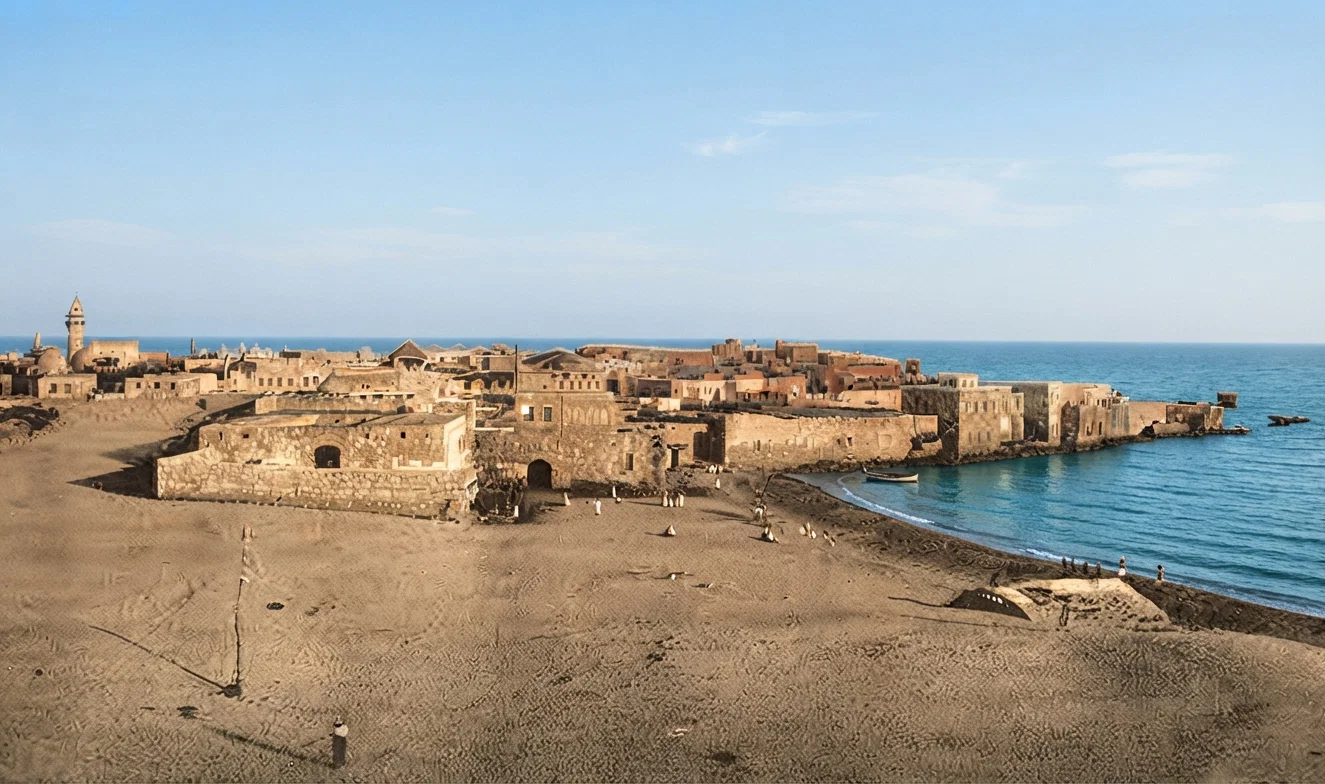
READ the account in Matt. 15:21-28; Mark 7:24-30. Jesus had been laboring in the vicinity of blue Galilee, where many of His mighty works had already been wrought. Nights and days had been full of praying, teaching, healing. All at once He calls His disciples, and with them starts on a journey toward the old cities of Tyre and Sidon. Why did He take that journey of forty to sixty miles? What object had the Master in mind?
THE disciples go with Him wondering. They wonder more that when they reach there, He enters into a house and "would have no man know it." Why after taking them so far, should He secrete Himself? What was the use of coming? Questions like these must have perplexed the minds of the disciples.
"But He could not be hid." You can not hide the flower with its sweet, strong perfume. You can not hide the bird when its heart must sing. The fulness of God in humanity, bursting to disclose His love, flowed out of every opening of the old house, pervaded the atmosphere, and its currents swept on till they reached the heart of a mother, bowed in an agony of grief over a sorely-afflicted child.
The City of Tyre as It Is To-day.
THEREFORE she came. "For a certain woman, whose young daughter had an unclean spirit, heard of Him, and came and fell at His feet. The woman was a Gentile, a Syrophenician by nation; and she besought Him that He would cast forth the demon out of her daughter." What mysterious wireless telegraphy had been in operation! Away down in Galilee the ear of Jesus had heard the woman's cry. His heart had felt her pain, and somehow she was assured that in some way her prayer for her child would be answered. God in His goodness heard her prayer, and when the Deliverer came she knew Him. Following Him she cried: "Have mercy on me, O Lord, Thou Son of David; my daughter is grievously vexed with a demon. But he answered her not a word. And His disciples came and besought Him, saying, Send her away; for she crieth after us." But He replies as tho a Jew, "I am not sent but unto the lost sheep of the house of Israel." Then He seems to have gone on and entered the house. And the woman still followed praying. There is nothing so persistent as the prayer of a loving mother. No strain is too great to endure. Rebuffs are nothing while hope offers fruition. No depth of humility can stay her steps if in their lowest depths of humility she can find hope. And, therefore, when Jesus said: "Let the children first be filled; for it is not meet to take the children's bread, and cast it unto the dogs," she was not offended. She was willing to be counted among the dogs, only so her child is healed; and she replied, "Yes, Lord; yet the dogs under the table eat of the children's crumbs."
HER faith is sufficiently tested, and a lesson is given to the disciples. He who gave the mother-love loved greater. To heal that child He journeyed the weary miles. To test the faith of the woman He seemed indifferent. To teach the disciples a lesson, He showed that the ministry of God's blessings reached outside "the chosen people" to all of every class; and that faith, humble, persevering faith was not alone a heritage of the Jews. Here also was one of the lost sheep pleading for the Shepherd; and
"Far out in the desert He heard its cry, Sick and helpless, and ready to die;" and He snatches the lamb from the demonwolf, and comforts the mother. “O woman, great is thy faith; be it unto thee even as thou wilt. And her daughter was made whole from that very hour.” And then after healing the body of the daughter and the heart of the mother, He returns to Galilee.
THERE are many sons and daughters to-day demon-possessed in mind and body. The demon of unrestrained pleasure binds some with cords as soft as silk, but strong as steel. Unreasoning temper and blind, fitful passion control others. The demon ambition dethrones the calm reason and best judgment of many, holding them back from usefulness and God. The unclean demons of intemperance, profanity, obscenity, and vice, chain myriads in the bonds of perdition. And there are many anxious mothers. Pray, mothers, pray. Pray humbly, pray earnestly, pray persistently. Never mind the obstacles Satan interposes between you and the Master. Never mind His seeming indifference. He hears; He loves; He sympathizes; He will deliver.

THE WAY OF PEACE.

THE theory of large armies and navies as a means of securing and maintaining peace between nations is not well sustained in municipal troubles. If large, well-equipped armies will tend to keep peace between hostile nations, why will not the same rule work between other classes having divergent interests? When one party of citizens becomes aroused against another class, why do not the authorities furnish both parties with arms and ammunition? The rule in such cases is to disarm as far as possible. If carnal weapons, with plenty of ammunition, and a skilful tact in the use of such implements, is conducive to peace, why not encourage everybody to carry arms and acquire a dextrous use of them?
In every-day affairs it is generally understood that the practise of carrying arms, and familiarity with their use, is dangerous to the peace of society; that men with fighting dispositions are none the less, but rather the more, disposed to quarrel when well prepared to fight with a possibility of winning. If it be commendable to teach our young men to be ready to fight and to kill for the aggrandizement of the nation, why not do the same thing for the interest of one municipality as against that of another, or for the aggrandizement of one's own self.
On one occasion some cadets were told by a “Christian” President that they should be not only ready, but anxious, to fight. Now suppose all the armies of the world are so instructed—and no doubt they are—and these armies are being continually strengthened; suppose also that the rulers of those nations are imbued with a like spirit; then what is there to inculcate the spirit of peace?
It is very likely to happen that large and growing armies, well prepared for war and anxious to fight, will some day find the opportunity. There is not a great nation on the earth that is not ambitious to extend its “sphere of influence,” which is to say, its control of territory and people, the accomplishment of which means the disadvantage, directly or indirectly, of some other nation or people. And this is why they are all trying to increase their military or naval forces, or both. These increases are not for peace; they are designed either to overawe or to conquer. Some day a general clash will come.
God is anxious to see universal peace. He sent His Son on a mission to earth which was proclaimed in these words: “Glory to God in the highest, and on earth peace, good-will toward men.” This announcement is called “good tidings of great joy, which shall be to all people.” But Christ did not raise an army equipped with carnal weapons. He even healed instantly the wound made upon an enemy by a rash disciple in supposed defense of his Master. And His most instructive apostle says: “The weapons of our warfare are not carnal, but mighty through God to the pulling down of strongholds.” Christ is our peace, not armies of hostile men equipped with deadly arms and missiles and “anxious to fight.”
“God hath called us to peace;” to “follow peace with all men,” but in the “whole armor of God” there is but one offensive and defensive weapon, and that is “the sword of the Spirit, which is the Word of God.” Of those who seek peace in any other way, the Lord says: “The way of peace they know not; and there is no judgment in their goings; they have made them crooked paths; whosoever goeth therein shall not know peace.” It is high time that at least professedly Christian rulers should know that “there is no peace, saith my God, to the wicked.” “Destruction cometh; and they shall seek peace, and there shall be none.”
Peace can only be found in the Lord’s way. “Acquaint now thyself with Him, and be at peace; thereby good shall come unto thee.”
G.

OUR VICTORY CERTAIN.

ONE of our most influential exchanges declares its belief that the kingdom of God can not triumph in the earth so long as the business that ruins the bodies and souls of men continues. It refers to the saloon business. Now, while the saloon business is one of the most nefarious businesses in the world, it is not a fact that the triumph of God’s kingdom in this world is dependent upon its suppression. We would gladly see it suppressed, and would do all in our power to help suppress it; but the triumph of God’s children—and therefore the triumph of God’s kingdom—is assured, whether men succeed in suppressing the liquor traffic or not.
If the writer referred to is looking for the establishment of a temporal kingdom in this present world, with Christ as its ruler, the observation would not be out of place; but no such thing is promised anywhere in the Word, and it could not be, without an entire remodelling of the teachings of the Scripture. We notice the matter here, simply because so much credence has been given the idea that Christians must work politically to bring about moral and religious changes in the nations. It is the belief of that writer, and many others, that the important work for the church just now is to influence the state to take steps to make all soul-destroying vices illegal, and then, afterward, resume its work of soul-saving. But, if the kingdom of God can not triumph until the business of wickedness in this world is stopped by legal enactment, then it must be indeed the work of the church to make politics its one work until that object has been accomplished.
We can not admit for one moment that such is the case. We would be the last to plead for the licensing of any kind of vice; but God will purify a people out of the midst of the darkest period of this world’s history, and they will be the subjects of His kingdom of righteousness. The kingdom of God will triumph over sin. The eternal reign of righteousness will be ushered in at a time when wickedness has reached its climax. There will be something for Christians to overcome up to the very time that they are declared to be overcomers. Here are the promises of God:
“To him that overcometh will I give to eat of the tree of life, which is in the midst of the Paradise of God.” Rev. 2:7.
“He that overcometh, the same shall be clothed in white raiment.” Rev. 3:5.
“Him that overcometh will I make a pillar in the temple of My God, and he shall go no more out.” Rev. 3:12.
“To him that overcometh will I grant to sit with Me in My throne.” Rev. 3:21.
“He that overcometh shall inherit all things.” Rev. 21:7.
Christ’s followers are to overcome, to conquer; and the earth, sin-soaked as it is, is the place where their battles are to be fought and won. The battle is not one-sided—both parties are on the field up to the time of the victory. Those who win, who overcome, do so in spite of the wickedness that is all about them; because the Gospel, whose ministers they are, “is the power of God unto salvation.” Rom. 1:16. The ministers of God are not to look for a reign of legal righteousness to usher in the consummation of their work. Those who do so will be found unprepared for that consummation when it comes; for the plain testimony of the Lord is against the existence of such a condition of things in the earth while His work is drawing to a close. He declares through Paul that “evil men and seducers shall wax worse and worse, deceiving and being deceived.” 2 Tim. 3:13. A reading of the chapter will show that Paul is telling conditions that would prevail in the last days; but, notwithstanding the discouraging conditions, “he that endureth to the end shall be saved.” Matt. 10:22.
Altho Paul saw that wickedness would continue to the end, he never for a moment lost hope that the kingdom of God would triumph; for he says:
“I have fought a good fight, I have finished my course, I have kept the faith; henceforth there is laid up for me a crown of righteousness, which the Lord, the righteous Judge, shall give me at that day; and not to me only, but unto all them also that love His appearing.” 2 Tim. 4:7, 8.
Through the smoke of the long battle Paul saw the glittering crown of the victors, and he who has the faith of Paul will look through the few remaining days of the conflict, and see what he saw. There is no provision for waiting till the state shall come to our aid, and make all wickedness illegal. The success of the kingdom of God does not hang on thetangled thread of political success; and if we have learned the teachings of Immanuel, we will not look for it nor slacken our labors in anticipation of it. God's call now to all who profess His name is, "Watch ye, stand fast in the faith, quit you like men, be strong." 1 Cor. 16:13.
We know that wickedness will augment its forces and its work; we know that no moral regeneration can be produced in the hearts of the people by law; but we also know that out of a world of wickedness the church of God shall come forth "without spot or wrinkle or any such thing;" that out of the whirlpool of destruction that is raging in the earth the people of the Most High will come forth "more than conquerors through Him that loved us." Rom. 8:37.
He who is looking for the conversion of the world, and considers that the triumph of God's kingdom, is forced to conclude that, as long as there is wickedness in the world, the kingdom of God can not triumph; for wickedness is the work of unconverted men. But God does not authorize the hope that the world will be converted. More than that, He teaches that it will not be. "Many shall be purified, and made white, and tried; but the wicked shall do wickedly; and none of the wicked shall understand." Dan. 12:10. "Then shall that wicked be revealed, whom the Lord shall consume with the spirit of His mouth, and shall destroy with the brightness of His coming." 2 Thess. 2:8. This certainly shows that there will be wickedness in the earth at the time of Christ's coming; that the great multitude, instead of turning to God, and giving Him glory, will utterly reject Him, and be smitten with His glory when He comes. Listen, also, to this testimony of Inspiration:
"And to you who are troubled rest with us, when the Lord Jesus shall be revealed from heaven with His mighty angels, in flaming fire taking vengeance on them that know not God, and that obey not the Gospel of our Lord Jesus Christ; who shall be punished with everlasting destruction from the presence of the Lord, and from the glory of His power." 2 Thess. 1:7-9.
Peace will one day reign upon the earth, and all who dwell in it will be righteous; but it will not be through the enactment of human laws. It will not be until God has cleansed the earth by the destruction of those who persist in working wickedness; until He "shall send forth His angels, and they shall gather out of His kingdom all things that offend, and them which do iniquity; and shall cast them into a furnace of fire." Matt. 13:41, 42. Then will peace reign, in the person of the Prince of Peace, and the history of sin will be finished. "Whatsoever is born of God overcometh the world: and this is the victory that overcometh [conquereth] the world, even our faith." 1 John 5:4. Have we been born of God? Then let us have faith—faith in God and the triumph of His kingdom, no matter how terrible the wickedness we may see in the earth to-day, or how great the numbers of them that know not God. S.

A MARKED DISTINCTION.

THAT the "Lord's day" and the "day of the Lord" are Biblical expressions of very different import, is evident from a contrast of certain Scripture texts:

The Lord's Day.

John says: "I was in the spirit on the Lord's day," etc. Rev. 1:10. That occurred about eighteen hundred years ago. What is the Lord's day?—Let the Lord Himself answer: "If thou turn away thy foot from the Sabbath, from doing thy pleasure on My holy day; and call the Sabbath a delight, the holy of the Lord, honorable; and shalt honor Him, not doing thine own ways, nor finding thine own pleasure, nor speaking thine own words; then shalt thou delight thyself in the Lord; and I will cause thee to ride upon the high places of the earth, and feed thee with the heritage of Jacob thy father; for the mouth of the Lord hath spoken it." Isa. 58:13, 14.

The Day of the Lord.

"Howl ye; for the day of the Lord is at hand; it shall come as a destruction from the Almighty. . . . Behold, the day of the Lord cometh, cruel both with wrath and fierce anger, to lay the land desolate; and He shall destroy the sinners thereof out of it." Isa. 13:6-9.
So the day of the Lord is yet future. See, also, Joel 1:15. Much confusion of doctrine is liable to follow a failure to note this distinction between the two expressions herein cited.
G.

THE APOSTLES AND THE SABBATH.

YES, Paul taught the seventh-day Sabbath to the Gentiles. He didn't make a message of it, because it was not necessary; the Sunday heresy had not yet found its way into the church. The disciples of Christ in Paul's time kept "the Sabbath according to the commandment," and when the Gentiles were converted they naturally followed the example of other Christians. There was no Sabbath issue at that time because there was no apostasy on that subject, as there is in these last days.
When Paul and Barnabas came to Antioch in Pisidia, and the Jews rejected their message, "the Gentiles besought that these words [of the apostles] might be preached to them the next Sabbath. . . . And the next Sabbath day came almost the whole city together to hear the Word of God." Acts 13:42-44. Now nobody claims that this Sabbath day was any other than the seventh day; for every Bible student knows that the first day of the week is never called the Sabbath in the Scriptures. If the apostles were proclaiming a change of the Sabbath day, here was an excellent opportunity to say something about it. In those days the Jews were bringing all sorts of accusations against the Christian Church, but in no instance is there a charge of Sabbath-breaking.
In Corinth the apostle Paul continued a year and six months, working at his trade and preaching on the Sabbath day. He preached in the synagog as long as the Jews would listen to him; and then, with some Jewish converts and the Gentiles who came to hear him, Paul held his meetings in a private house close by the synagog. Here was another excellent opportunity to make mention of the observance of another Sabbath day than that observed by the Jews; but the record is silent on the subject. Paul, on his arrival in Rome the first time, "called the chief of the Jews together," and, among other things, said to them, "I have committed nothing against the people, or customs of our fathers." This is proof positive that he did not observe any other Sabbath day than that observed by the Jews.
Yes, the Christian ministers in Paul's day all taught the observance of the Sabbath day, and all the moral law of God (See Rom. 3:31). The Jews condemned them for ignoring circumcision and the ceremonial law, but never a word against them for violating the Sabbath of the Lord; and on nothing would they have made so loud a noise had there been any occasion for it. The Lord had proclaimed that He had not come to do away with a jot or tittle of the law, and the apostles did not assume to make any change. They held to their commission and taught what He had taught them.

NOTES BY THE WAY.

WE left San Francisco Tuesday, May 2, by the Santa Fé Overland, and arrived in Kansas City Sabbath morning, three hours late. Never did we pass over this route, or any other transcontinental railway, more pleasantly. There was no dust to trouble us across the desert of Mohave, or the barren stretches of Arizona and New Mexico. We had more dust from Kansas City to Chicago than all the rest of the distance previously passed over, and the worst was not bad. Abundant rains have fallen in Arizona and New Mexico, and there was much more of living green in sight than usual. One gentleman told me that more rain had fallen this year than in all the eighteen years he had been in the territory.
THE plentiful rains on mountain and plain have softened the road-bed of the railway, and there have been many washouts. Of course this has necessitated slower running of trains, and during the spring they have generally been behind time. For this the railway management have been blamed when they should have been highly commended. The Santa Fé Railway company has shown that it prized life more than wealth or a fleeting reputation for great speed. While millions of dollars have been lost in property on account of washouts, the loss of life has been exceeding small, much less, we are sure, than on any other transcontinental road. And one always finds kind, courteous, generous treatment on the part of the employees of the road. A connecting road to the far East with the Santa Fé at Chicago, of which the same things can be said, is the Grand Trunk Railway.
AT Kansas City, a thriving town, a great railway center, a very busy city, we laid over a day. Here we spoke to a good regular congregation, from Zeph. 2:1-3, on the importance of seeking God for a deeper experience in spiritual things. Here also we met our branch superintendent, Brother James Cochran, at whose hospitable home we stopped while in Kansas City, and Brother Phillips, the district agent of our bookmen. The sales of religious publications in this district are excellent, the organization is good, and the future bids fare for a much greater work. The new branch office at 1109 West Twelfth Street is incomparably better in every way than the old office, and we were glad indeed to meet our brethren and workers, and many members of our SIGNS family in this city.
ONE day was spent in Chicago. The Teamster's strike was still on, and the day, as many other days,was marked by rioting and death. Policemen abounded everywhere, and around the great commercial houses employing many teams, were cordons of bluecoats. The helmeted, gloved, and starred men were on many wagons, and on both walls and wagons were posted the warning of Mayor Dunne. Not a few lives have been sacrificed, many more persons have been crippled, and millions of dollars lost; and all this because, as one Chicago paper states, twelve men could not agree with seven men. The "sympathetic strike" seems ever to be in sympathy with strife and violence against all who may seem to think otherwise, and it ever will tend to increase hatred and enmity between man and man.
CALLING at Battle Creek, Mich., on business, between the hours of 9 P.M. and 2 A.M., we reached Niagara Falls, Wednesday morning, May 10. Having a few hours before our train for Washington, the time was employed in witnessing once more one of the great wonders of the world, Great Niagara. Here for ages the mighty cataract has poured its thundering, awful flood, which speaks to the heart of the devout observer like the voice of Almighty God. No mere cursory view at a distance gives any just idea of the great mass of water which pours over the ledges of rock, thundering on its way to the ocean. The fall is no fleecy film of waters falling in lacy folds on the rocks or into the depths beneath; but great rivers of water which neither eye nor sunshine can pierce, as one may demonstrate by looking out upon—never through—the Horseshoe Fall from the back side. This can now be done on the Canadian side by passing down to that point through a tunnel 800 feet long, cut through the solid rock. It is a living shame to permit the great power companies to draw such immense quantities of water from Niagara. Unless this shall be prevented by government, it will not be long before the great falls are perceptibly diminished.
IN the evening we left for Washington over the Pennsylvania Railway, reaching the Capital City two hours late the next morning. We arrived at Harrisburg shortly after the fearful train wreck on the main line, caused by the explosion of the locomotive boiler, and the consequent explosion of two freight cars loaded with dynamite. Of the 169 passengers more than a score were killed outright, and more than 100 were injured. The marvel is that any were saved from the fearful wreck. Some of the escapes were miraculous. The whole city was shaken, and windows were broken at great distance from the wreck.

The Most Sacred Spots on Earth

“The most sacred spots on earth are those where earth’s sorrows brought us close to heaven’s strength.”

Sympathy for Baseless Sorrows

“It takes a noble spirit to sympathize with sorrows that are really baseless.”
Continue reading: Notes on the Conference