Your ShelfYour Projects

Signs of the Times, November 7, 1916

Driving Toward Armageddon

Signs of the Times

Nov 7, 1916

Pacific Press Publishing Association · Mountain View, California · Nov 7, 1916
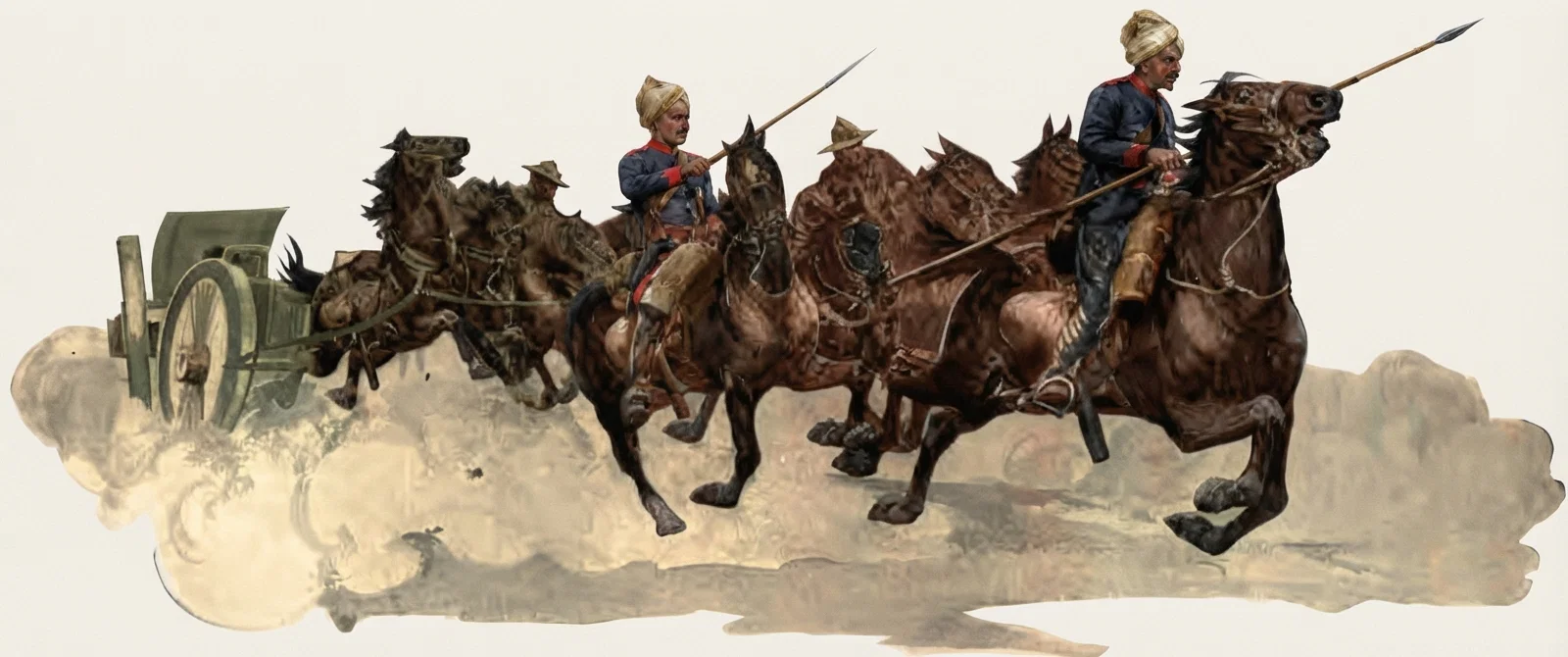
Driving Toward Armageddon

By ELMER E. ANDROSS
FOR years, the great nations of Europe have been standing, as it were, on the crater rim of a great volcano, which threatened every moment to belch forth its white-hot lava, and overwhelm them.
Statesmen and diplomats of the powers have seen in the Balkan peninsula and Asia Minor the key to world empire, and no nation has been willing that another should wrest this prize from the Turk. For some years, a keen diplomatic contest has been in progress at Constantinople, and this has resulted in increasing friction between the great nations.
Speaking of the calamity that would accompany the fall of the Ottoman empire, Lord Salisbury, in his Mansion House speech, in London, in 1895, said:
"It would not merely be the danger that would threaten the territories of which that empire consists; it would be the danger that the fire there lit should spread to other nations, and should involve all that is most powerful and civilized in Europe in a dangerous and calamitous contest."
In an article entitled "The Ominous Hush in Europe," by H. R. Chamberlain, appearing in the October number of McClure's Magazine, 1909, the following sentences occur:
"It is to the imperative interests of all peoples to take cognizance of the facts of the specific international situation, to recognize the crisis toward which the affairs of man are tending, and to seek to avert the almost equal evils of war or peace in the conditions that threaten to supervene."
Mr. Chamberlain quotes from a speech delivered by Lord Rosebery before the press delegates in June, 1909, as follows:
"There never was in the history of the world so threatening and so overpowering a preparation for war. That is a sign which I confess I regard as most ominous."
The same year, Sir Edward Grey, minister of foreign affairs in the British cabinet, speaking in the House of Commons regarding the enormous preparations for war, said, "The whole of Europe is in the presence of a great danger."
The editor of the North American Review wrote in the September, 1914, number thus:
"Well, the great conflagration has come at last, and to-day all Europe is wrapped in flames."
Careful Bible students have not been surprised that statesmen should thus express their fears; for more than twenty-five hundred years ago, Jeremiah in prophetic vision was permitted to behold conditions now prevailing in this world. In writing of this, he said:
"I am pained at my very heart; my heart maketh a noise in me; I cannot hold my peace, because thou hast heard, O my soul, the sound of the trumpet, the alarm of war. Destruction upon destruction is cried; for the whole land is spoiled." Jer. 4: 19, 20.
More than twenty-seven hundred years ago, the prophet Joel wrote of our times as follows:
"Prepare war, wake up the mighty men, let all the men of war draw near; let them come up: beat your plowshares into swords, and your pruning hooks into spears: let the weak say, I am strong." Joel 3: 9, 10.
For more than half a century, Seventh-day Adventists have taught publicly, from the pulpit and in their literature, that troublous times were before us; that eventually all the nations of earth would be involved in wars which would lead at last to the war of "the great day of God"—the battle of Armageddon.
In about 1890, Mrs. E. G. White, a very prominent Seventh-day Adventist writer and lecturer, wrote thus: "We are standing upon the threshold of great and solemn events. . . . Prophecies are being fulfilled, and stormy times are before us. Old controversies which have apparently been hushed for a long time will be revived, and new controversies will spring up; new and old will commingle, and this will take place right early. The angels are holding the four winds, that they shall not blow, until the specified work of warning is given to the world; but the storm is gathering, the clouds are loading, ready to burst upon the world, and to many it will be as a thief in the night. . . . All heaven is represented to me as watching the unfolding of events. A crisis is to be revealed in the great and prolonged controversy in the government of God on earth. Something great and decisive is to take place, and that right early."
As a further indication of the teaching of Seventh-day Adventists regarding the meaning of present world conditions, I quote from the same writer the following that appeared in print in 1909:
"The fast fulfilling signs of the times declare that the coming of Christ is near at hand. The days in which we live are solemn and important. . . . The calamities by land and sea, the unsettled state of society, the alarms of war, are portentous. They forecast approaching events of the greatest magnitude.
"The agencies of evil are combining their forces, and consolidating. They are strengthening for the last great crisis. Great changes are soon to take place in our world, and the final movements will be rapid ones.
"The condition of things in the world shows that troublous times are right upon us. The daily papers are full of indications of a terrible conflict in the near future."

Europe Sick unto Death

Careful students of prophecy have long foreseen the gathering of the storm clouds; and their voices have often been raised and their pens employed in forewarning, that all might know what to expect, and how to escape the general ruin which must shortly follow.
What do these things mean? Are they not symptoms of some serious malady that threatens the life of the nations, and that, unless cured, must end in their dissolution?
"Beneath this fair exterior of power and glory, a canker has long eaten into Europe's very heart—the canker of jealousy and internecine hatred, which threatens to put all in jeopardy, and which menaces its warring children with a sudden fall to the dead level of a common ruin. Europe has long been sick—perhaps sick unto death. The forty years' peace has been no peace, only a feverish truce, wherein national rivalries and racial hatreds have intensified and deepened until the day of reckoning was bound to come. That mad piling up of fleet upon fleet and army upon army against which so much rhetoric has been expended these later years has been but the most striking symptom of a disease curable only by a fundamental change in the European state of mind, a malady which no machinery of arbitration could reach—only the conversion of the European soul."

The Supreme Convulsion

"And of late, this disease has plainly been growing worse. Four times in the last nine years, Europe's feverish frame has been racked by an acute crisis portending the inevitable end. 1905, 1908, 1911, 1912: the crises have been becoming more frequent, more violent, more general. It really could not have gone on much longer. Therefore it is not at all surprising that the little war on the middle Danube should have sent all Europe forthwith into the supreme convulsion; the miracle would have been had it been put off another year."—"Europe at Armageddon," the North American Review, September, 1914.
Not only is Europe "sick unto death," but all the world is manifestly afflicted with the same deadly malady. The symptoms that have long been apparent in Europe are becoming more or less apparent in every quarter of the globe. The canker that has long eaten into Europe's heart is likewise eating into Asia's heart, into Africa's heart, and into the heart of the youngest child of the great family—America.
There is but one remedy that can ever cure this disease, and but one physician who can administer it. That remedy is the cross of Calvary, and that physician is Jesus.
Individuals in all nations are to-day accepting the remedy for the deadly malady of sin, and the great Physician is successfully treating their cases. The Redeemer is also preparing a kingdom where the deadly miasma of sin in any form will never enter, one that will stand through the eternal ages.

Unfailing Symptoms of Dissolution

The supreme convulsion into which so many of earth's nations have been thrown, as viewed in the light of the prophetic Word, is seen to be an unfailing symptom of approaching dissolution.
"For nation shall rise against nation, and kingdom against kingdom: and there shall be famines, and pestilences, and earthquakes, in divers places. All these are the beginning of sorrows." "And this gospel of the kingdom shall be preached in all the world for a witness unto all nations; and then shall the end come." Matt. 24: 7, 8, 14.
"And there shall be signs in the sun, and in the moon, and in the stars; and upon the earth distress of nations, with perplexity; the sea and the waves roaring; men's hearts failing them for fear, and for looking after those things which are coming on the earth: for the powers of heaven shall be shaken. And then shall they see the Son of man coming in a cloud with power and great glory." "When ye see these things come to pass, know ye that the kingdom of God is nigh at hand." Luke 21: 25-27, 31.
"And the nations were angry, and Thy wrath is come, and the time of the dead, that they should be judged, and that Thou shouldest give reward unto Thy servants the prophets, and to the saints, and them that fear Thy name, small and great; and shouldest destroy them which destroy the earth." Rev. 11: 18.
"I saw three unclean spirits . . . which go forth unto the kings of the earth and of the whole world, to gather them to the battle of that great day of God Almighty. Behold, I come as a thief. Blessed is he that watcheth, and keepeth his garments, lest he walk naked, and they see his shame." Rev. 16: 13-15.
As the gathering of the Roman armies about Jerusalem was an unfailing sign, to the Judean Christians, of its impending destruction, so to-day, to the student of the prophetic Word, the gathering of from twenty to thirty million men on the fields of carnage, from fourteen of earth's great nations, and the feverish haste manifested in the preparation for war, on the part of all nations not now engaged in conflict, point unfailingly to the speedy destruction of all the nations of earth, and the establishment of the eternal kingdom of righteousness and peace. We are driving toward the Armageddon of the Bible. Tremendous changes will soon take place.

Astronomy Verifies Prophecy

By George W. Reaser
THAT the year 1844 was a focal point around which clustered events that marked the beginning of the proclamation of Heaven's last gospel message to the inhabitants of our world, is one of the cardinal points of doctrine of the Seventh-day Adventist denomination. They base this view upon the period of 2,300 days given in Dan. 8: 14, and have held tenaciously to it for full threescore years and ten.
A careful study of the ninth chapter of Daniel forced them to the conclusion that the 2,300-day period of the eighth chapter was actually 2,300 years, a day being employed, in symbolic prophecy, to represent a year; and from an exhaustive study of Ezra 7, they were convinced that this time period began in the autumn of B. C. 457, and therefore terminated in the autumn of A. D. 1844. Further, they concluded that "the great advent movement," which reached its climax in the last named year, as foretold in Revelation 10, was, in the plan of God, to mark the conclusion of the 2,300-year period, immediately after which the threefold message of Revelation, chapter 14, was due to be proclaimed. Fastening their faith upon this line of proof, which seemed to them incontrovertible, they began the proclamation of that message on schedule time. For nearly three quarters of a century, they have acted consistently upon this view, devoting their time and energies to the work of evangelizing the world by the proclamation of "the everlasting gospel" in the setting which the prophetic outline of the movement called for. (Rev. 14: 6-14.)

Vouched for by Astronomers

So far as this people knew during that period, none of the accepted Bible commentators, and none of the recognized astronomers, concurred in their interpretation of this time period. Finally Dr. H. Grattan Guinness, D. D., F. R. A. S., brought out a book—"Creation Centered in Christ"—for the express purpose of aiding astronomers to fix dates readily in connection with certain historical events.
In this work of some 627 pages, he makes prominent the well-known fact that Sir Isaac Newton astronomically determined the date of "the going forth of the commandment to restore and to build Jerusalem,"—carried into effect by Ezra the priest when he formed a company, empowered to enact laws, and journeyed from Persia to Palestine, in B. C. 457. At this point, Dr. Guinness starts the computation of the 2,300-year period of Dan. 8: 14, and locates its termination in the year 1844.
He quotes the following eminent astronomers as vouching for the accuracy of his calculations: Dr. Downing, superintendent of the Nautical Almanac; Mr. Lynn, long connected with Greenwich Observatory; Dr. Dreyer, of Armagh Observatory; Mr. Marth, of Markree Observatory; De Cheseaux, the Swiss astronomer; and Dr. Chambers, author of "Handbook of Astronomy."
Nearly all these men are fellows of the Royal Academy of Science, and therefore of unquestioned standing in the scientific world.

Profound and Exact Agreement

Quoting from Mr. Chambers, he says: "Such are some of the adjustments which astronomy discloses between the prophetic times and the periods which affect the material universe. They are adjustments of such a character as only modern science, with its instruments of exact precision, could discover, and were of necessity unknown to the prophets of bygone ages. The periods which the prophets foretold as destined to measure cycles of moral harmonization are themselves cycles of material harmonization. There is a mutual adjustment between the material and moral worlds. The course of revealed redemption chronology, Levitical and prophetic, is in profound and exact agreement in all its details with the time order of the universe."
Mr. Guinness adds: "We will conclude with a sentence from De Cheseaux's treatise on the astronomical character of the prophetic times in the book of Daniel: 'For many ages, the book of Daniel, and especially these passages of it, have been quoted and commented on by numerous and varied authors, so that it is impossible for a moment to call in question its antiquity. Who can have taught the author of the marvelous relation of the periods he selected with soli-lunar revolutions? Is it possible, considering all these points, to fail to recognize in the Author of the book of Daniel, the Creator of the heavens and all their hosts, of the earth and the things that are therein?'"
Truth is divine, whether revealed in "the sure word of prophecy" or by scientific men. To the people who for these many years have based their faith upon the great prophetic period under consideration, it is naturally a source of satisfaction to find their interpretation confirmed by so large a group of recognized scientists; and this fact must have the effect of inspiring them to greater earnestness in the proclamation of the last gospel message.

HOME

BY ADELAIDE BEE EVANS
I LONG for home — beyond the sunset clouds That swim in light. Here darkness like a pall my spirit shrouds In evil night; Friends well beloved prove false, my trust seems vain, The road is long. When shall my feet the hills of heaven gain, My lips learn song?
I long for home — beyond the reach of ill Or sorrow's tear, Beyond the dread that haunts the night hours chill For those most dear. Oh, weak my love to cherish them and save them In cruel days, And powerless my feeble hand to guide them Through life's dark maze.
To be at home! No sin, no doubt, no fears, In that glad day! No aching hearts, no pain, no death, no tears To wipe away! But joys unending in those mansions fair, Love, peace, and rest! Who would not be at home, its bliss to share With all the blest?

The Faith of Our Fathers

By SANFORD B. HORTON
Canterbury, London
Canterbury, London

The only possible basis for true Christian catholicity is a return to the Bible for faith and practice.
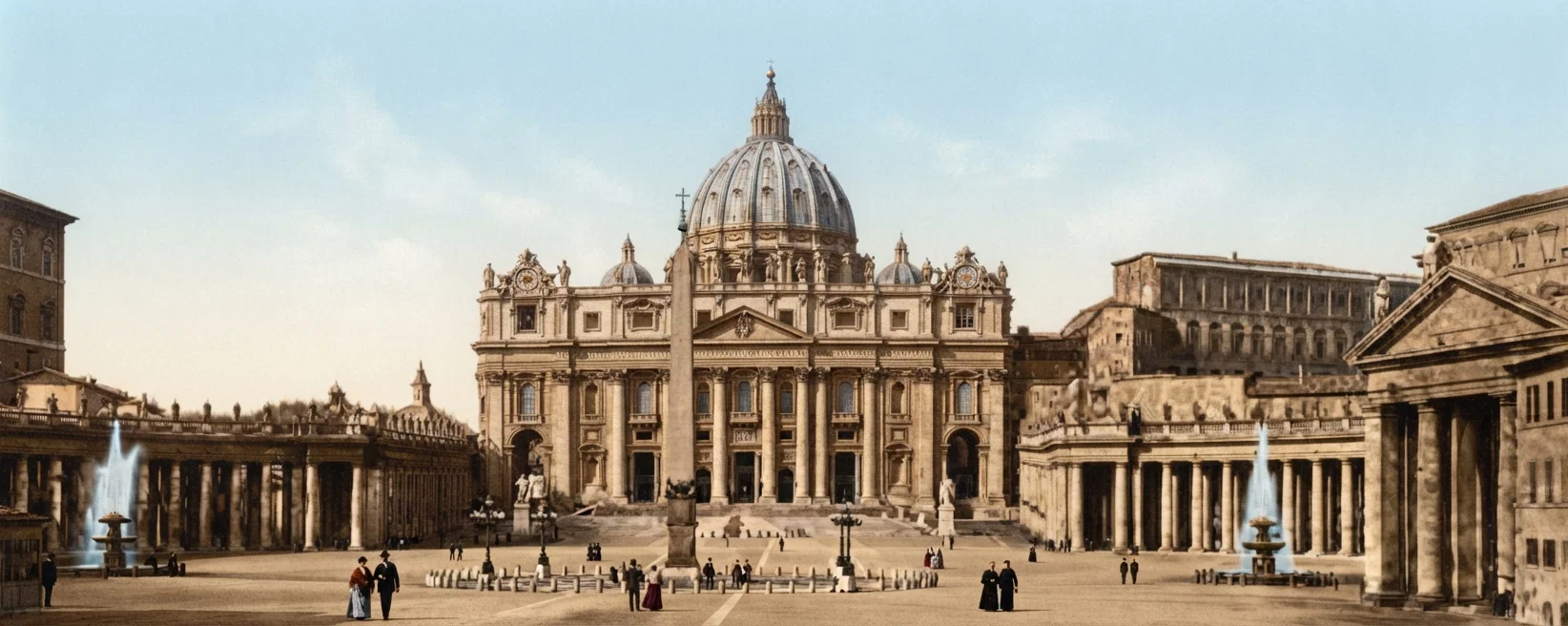
St. Peter's, Rome
St. Peter's, Rome
MANY plans have been suggested by which a catholicity of Christian belief and endeavor might be brought about. Some plans are devoted to theological harmony, while others propose unity of endeavor without reference to theological identity. Catholicity is at present assumed by the Roman Catholic hierarchy, while, on the other hand, the Protestant communions claim catholicity under the title of Holy Catholic Church, as stated in their creeds, "I believe in the Holy Ghost, the Holy Catholic Church," etc.
Perhaps the most recent utterance upon the subject is by the Rev. J. M. Lloyd Thomas, editor of the Free Catholic, in a sermon preached recently in Glasgow, Scotland, and quoted in the September Current Opinion, under the caption, "A Plea for a Free Catholic Church of International Fellowship." He fails to find in organized Protestantism and organized Roman Catholicism any prospect for free catholicity, concluding that "Romanism has collapsed for the modern mind." "But," says he, "is Protestantism in any better way? We cannot honestly affirm that it is." He points to the awful spectacle of present-day Europe as evidence of Protestantism's and Romanism's impotence.

The Basis of Catholicity

In his judgment, a free catholic church is possible without the necessity of identifying it with Canterbury or Rome, with Greece or Russia or Asia Minor. He maintains that inspiration for the movement is to be found in the union of two basic principles; namely: (1) the evangelical principle of Christ's abiding in the heart of the believer; (2) the Catholic principle of a historically given Jesus and of His visible church, "which safeguards Protestant subjectivism from running into anarchy or hardening into a secular Cæsarism." He then concludes:
"We can be Catholic by regarding the Christian heritage not as a system of ecclesiastical law or dogmatic formulations, but as a spirit and life that persists indivisibly through all its manifestations. . . . There is not a usage, not a liturgy, not a symbol, not a sacrament, not one precious thing in the past that has proved its enduring efficacy and value and fruitfulness, that we may not adopt.
"We have not to ask leave of any Vatican, or parliament, or convocation, any consistory, or presbytery, or conference, or association, or assembly. We have but to ask: Is this true? Is it helpful? Is it alive and stimulating and nourishing and consoling?"
There is no questioning the desirability of Christian unity, a catholicity of Christianity, if you please. The Redeemer desired it, praying, "That they all may be one;" and Paul and other apostles prayed, "Fulfill ye my
joy, that ye be like-minded, having the same love, being of one accord, of one mind." Phil. 2:2. Moreover, the catholicity of Christianity is and always has been possible of attainment; and the inspiration for it is to be found in Jude 3: "Beloved, when I gave all diligence to write unto you of the common salvation, it was needful for me to write unto you, and exhort you that ye should earnestly contend for the faith which was once delivered unto the saints."

Must We Go to Rome?

To whom shall we go to learn of "the faith which was once delivered unto the saints"? Shall it be to Canterbury, or Rome, or Greece, or Asia Minor? None of these can furnish us with that faith, except by traditional inference and assumption. Were these all that the wayfaring man had to depend upon for the faith which would make for Christian unity, he would indeed be in desperate straits; for they are not all one, "of one mind," "of one accord." But, thanks be to God, we may learn of "the faith which was once delivered unto the saints," from the Holy Scriptures.
The great Reformation was designed under God to return to that faith, and true Protestantism stands for just such a movement. If Protestantism had carried out the spirit of the Reformation, it would be prepared today to meet in satisfactory way Dr. Thomas's plea, by furnishing the only answer possible for Christian catholicity; that is, a return to the Bible for faith and practice.
Let us explain. The Saviour not only prayed for unity among His disciples, but indicated the means for perpetuating Christian unity. Listen to His prayer:
"I have given them Thy word; and the world hath hated them, because they are not of the world, even as I am not of the world. . . . Sanctify them through Thy truth: Thy word is truth. As Thou hast sent Me into the world, even so have I also sent them into the world. And for their sakes I sanctify Myself, that they also might be sanctified through the truth. Neither pray I for these alone, but for them also which shall believe on Me through their word; that they all may be one; as Thou, Father, art in Me, and I in Thee, that they also may be one in Us: that the world may believe that Thou hast sent Me. And the glory which Thou gavest Me I have given them; that they may be one, even as We are one: I in them, and Thou in Me, that they may be made perfect in one." John 17:14-23.

Unity Based on the Scriptures

All through the New Testament, we may discern the fact that the one thing preached was Christ "according to the Scriptures." In Paul's missionary work, he met some who, while respecting Paul as a great preacher, "searched the Scriptures daily, whether those things were so." Acts 17:11. Paul cautioned the young minister Timothy to "preach the Word." 2 Tim. 4:2. He warned the elders of the church at Ephesus that they should "feed the church of God, which He hath purchased with His own blood," knowing "that after my departing shall grievous wolves enter in among you, not sparing the flock. Also of your own selves shall men arise, speaking perverse things, to draw away disciples after them." He finally commended them "to God and to the word of His grace, which is able to build you up, and to give you an inheritance among all them which are sanctified." Acts 20:28-32.
Timothy was also reminded "that from a child thou hast known the Holy Scriptures, which are able to make thee wise unto salvation through faith which is in Christ Jesus," because "all Scripture is given by inspiration of God, and is profitable for doctrine, for reproof, for correction, for instruction in righteousness: that the man of God may be perfect, thoroughly furnished unto all good works." 2 Tim. 3:15-17.
We cannot therefore separate the word of God from "the faith which was once delivered unto the saints." But in preaching the Word, are we not preaching Christ and Him crucified? And when this is done, will not Bible doctrine, such as the Sabbath, the perpetuity of the law of God, the correct mode of baptism, the system of supporting the gospel work known as tithes and offerings, and kindred Biblical subjects, of necessity be taught and practiced? And will not the teaching and practicing of these doctrinal subjects be in effect the acceptance of "the evangelical principle of Christ's abiding in the heart of the believer"?

Back to the Bible

Furthermore, in teaching the Bible Sabbath (the seventh day of the week) and the proper mode of baptism, etc., will we not be presenting to the world "the historically given Jesus," who was baptized by John in the Jordan River, and who observed the Sabbath of the fourth commandment? And thus we would have the union of the "two basic principles" which Dr. Thomas rightly believes will make for a catholicity that he would like to see manifested.
The truth is, the multiplicity of religious sects, the awfulness of man's inhumanity to man in present-day Europe, the anarchy and selfishness abounding in the world, arise from the fact that the Bible does not, as a rule, hold its rightful place in the home or the pulpit. The church to-day is largely controlled, theologically and ecclesiastically, by traditional teaching, which results in failureto find the real Christ, very much as did the scribes and the Pharisees fail to teach the truth when they substituted the commandments of men for the doctrines of Holy Scripture.
There is but one way out of the whole dilemma; and that way is, to return to the Bible in faith and practice, thus coming into touch with the Christ of the Bible, speaking the same thing, becoming of one mind, and encouraging the creation of a catholic church that shall make for international fellowship. Freedom is to be found only in the Christ of Holy Scripture.
It was said of Moses that he chose “rather to suffer affliction with the people of God, than to enjoy the pleasures of sin for a season; esteeming the reproach of Christ greater riches than the treasures in Egypt: for he had respect unto the recompense of the reward.” Heb. 11:25, 26. Who would not say that his choice was a wise one? Would you have chosen as he did? Are you making that choice in the tests that come to you? What you are doing is the best evidence of what you would have done. CLARENCE SANTEE.

First Things First

By CHARLES L. TAYLOR
“While they strained at the gnats of ceremonial defilement and other insignificant matters, they swallowed the camels of sin and cruel unbelief without hesitation.”
It is without doubt true that when Jesus came into the world, He found among His people a wonderfully perfect and highly embellished system of theology and church ritual. It is also true that when Jesus appeared, He found an entire nation striving with almost superhuman exertion to carry out in their lives the ten thousand details of religious duty which their system of religion prescribed.
Never before had the Jewish people been so absolutely given over to church form and to church life and work as when the Master took His place among them. But nevertheless, there was never a time in the history of that remarkable people when there was found less real godliness than at that same time. As church ritual increased, spiritual power decreased. Hence the searching rebukes given by the Lord Jesus, as He sought to disabuse the minds of the people, and lead them to see that while they strained at the gnats of ceremonial defilement and other insignificant matters, they swallowed the camels of sin and cruel unbelief without hesitation.

Scales on Their Spiritual Eyes

It was not strange, then, that the twelve men chosen to attend our Lord in His work, were so largely after the order of the people from which they were taken. Somehow it seemed impossible for them to change their modes of thinking, and to come to that place where they could rightly differentiate between dead form and real life.
Their inability to see the living realities of the spiritual kingdom of Jesus, led them very frequently into useless discussion, argumentation, and dissension. It often caused them to be childish and unreasonable with one another, and decidedly uncharitable and unkind to the world.
The tendency and spirit to exalt minor details also caused much jealousy and envy. The very last night before the crucifixion, the record tells us, “there was also a strife among them, which of them should be accounted the greatest.” Their thoughts were “of the earth, earthy.” Their eyes were fixed on material things. Really they seemed to think only of a kingdom here below, and of the place each might occupy.

Fixing the Everlasting Emphasis

Thus it was that so late as the time of the ascension, they were still living largely in that crude world of lifeless form and gross materialism. Though the very heavens were aglow with manifestations of divine power and glory, they were looking downward, and concerning themselves with human speculations.
While Jesus sought to introduce them to the infallible proofs of His Messiahship, and thus to awaken in their souls divine harmonies, they were largely blind, and capable only of bringing forth a minor strain. Into the midst of His beautiful teaching concerning His glorious spiritual realm, they injected the foolish and ill-starred question, “Wilt Thou at this time restore again the kingdom of Israel?”
Then Jesus gave that remarkable answer, in which He showed not only to them, but to His people of all time, where to place and where to fix an everlasting emphasis. “It is not for you,” He said, “to know the times or the seasons, which the Father hath put in His own power. But ye shall receive power, after that the Holy Ghost is come upon you: and ye shall be witnesses unto Me.”

A Stumblingblock to Others

The great question, let it be repeated, is not this or that feature of theology, or this or that phase of church effort. Rather, it is, Are we in living connection with the Holy Ghost, so that we are able to tell what we do know “in demonstration of the Spirit and with power”?
So long as we put the discussion of even vital doctrines, and the attempt to settle disputed points of faith, ahead of brotherly love and Christian tenderness, we have not yet really and truly had the “eyes of our understanding” opened to behold the glory of the better world, and consequently are not able to preach that glory to others.
How often has the unbelieving world had cause to doubt and make light of truth as it has beheld the professed believers of truth showing great lack of sympathy and kindness and sweetness among themselves!
Doctrine is important, infinitely so. But the fact remains that the gift of the Holy Ghost, which fills the soul with boundless love for all and with desire to witness for Jesus, must be made first, as by it alone may any one know what doctrine is. Doctrine without love is cruel, even as love without doctrine is empty sentiment.

Which Do We Emphasize?

“Ye shall receive power,” He said, and do not depart from Jerusalem until you have it. “Wait for the promise.” Do not go out, He would have them understand, until all hindering causes have been removed, and you are under control of the Spirit Teacher. No longer must they allow empty argument to take the place of a life-giving message.
How is it with you and with me? What are we emphasizing? What is our burden? Have we the Holy Spirit, or are we still living on the low plane of human ideas, allowing form to occupy the place of power?
God grant that while we prize in proper measure true form of doctrine and ritual, we may with all our hearts seek for the gift of the Holy Ghost.
Continue reading: The Evidence of the Genuine