Your ShelfYour Projects

Signs of the Times, Vol. 36, No. 1.

A Happy and Unselfish Life

Signs of the Times

Jan 6, 1909

Pacific Press Publishing Association · Mountain View, California · Jan 6, 1909

A Happy and Unselfish Life

We wish for all our readers a Happy New Year. But a happy life must be a useful life, an unselfish life. He who seeks happiness for himself misses it ever. He who truly seeks to make others happy finds it himself. This is the spirit of Christ—self-denial for others’ good. “It is more blessed to give than to receive.”
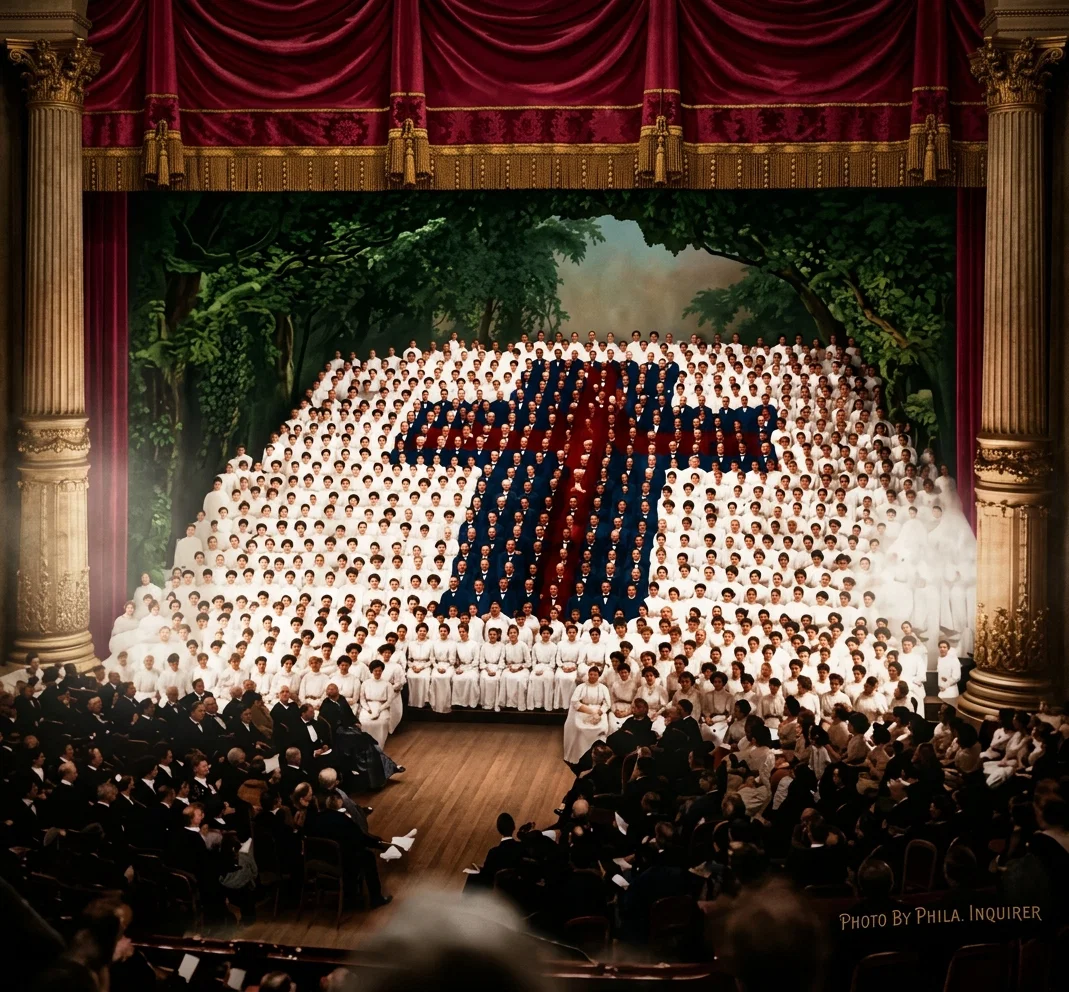
The Chorus of a Thousand Voices at the Academy of Music in Connection with the Federal Council of Protestant Churches at Philadelphia

Question Corner

2684.—“Until the Son of Man Be Come.”
Will you please explain what is meant by the expression in Matt. 10:23: “Ye shall not have gone through the cities of Israel, till the Son of Man be come”? A. D. O. D.
To us, the meaning of the expression is this: Jesus sent out the twelve disciples. Verse 5. He charged them that they should not go into the way of the Gentiles, nor in any city of the Samaritans, but to the house of Israel. He tells them how they were to go, in advance of Him; and it would seem that the obvious meaning of the text is that they should not have completed this whole thing until the Son of Man would manifest Himself in these very cities. They were simply precursors of Him. He Himself would be revealed after them.
2685.—“Nine Cents for God.”
In the World’s Mission number of the SIGNS you make the statement that $7,500,000 was given to foreign missions in one year. You also state that our population is 80,000,000. Then you say that seven and one half million dollars divided among eighty million would be nine cents per capita for God, and $44.00 for pleasure. Will you please tell me how you get the nine cents? My rules won’t work. The $3,000,000,000 and $44.00 are easy beside the nine cent deal. G.
We obtain the nine cents per individual by the same method as we obtain the forty-four dollars. Three and one-half billion dollars divided by eighty million equals $44.00. Seven and one-half million dollars divided by eighty million, equals, to be more nearly exact, not quite nine and four-tenth cents. This may be easily proved: multiply 80,000,000 by .094 and it equals 7,520,000. We gave only round numbers. Perhaps our questioner made a mistake in pointing off his decimals.
2686.—Special Resurrection.
Will there be a special resurrection before the general resurrection? J. S.
There have been special resurrections at different times in the past, and we see no reason why there may not be a special resurrection shortly before the great general resurrection. Our Lord’s resurrection was a special resurrection. Those who were raised from the dead at the time of His resurrection constituted a special resurrection; and Dan. 12:2 seems to indicate that there will be another special resurrection, when not all, but some, will be raised to everlasting life, and some to shame and everlasting contempt, a resurrection in which both righteous and wicked will come forth; that will not be the case in the general resurrection. In the general resurrection, the righteous will be raised first, one thousand years before the wicked. At the end of the thousand years, the wicked will be raised, but in the resurrection referred to in Daniel, there will be those of both classes.
2687.—New Earth Conditions.
Will there be any children born on the new earth? Isa. 11:8 speaks as though there would. Will all the children that have died before the first resurrection be raised at that time? Or what will happen with the children that are living when Jesus comes? J. S.
Isa. 11:8 speaks of conditions that would have been brought about if the Jews themselves had rightly related themselves to God at that very time. They refer not simply to new earth conditions but to conditions on this earth if God’s children had yielded wholly to Him.
Now, of course, the blessed promises can only be fulfilled in the new earth state, but they will be fulfilled far and away beyond any conceptions of conditions which would have existed in the earth in its present condition. As to the salvation of children, it is well for our readers always to keep this in mind, the Bible is addressed to responsible people; those who are not responsible we can leave in the hands of our God. Those who inherited Adam’s sin die, of course, the first death, innocent and guilty alike. Those who die from this death are all redeemed by Christ, and those who are guiltless of sin in themselves, who are worthy of continuance of life in His kingdom, will be saved.
2688.—The Binding of the Strong Man.
How is the strong man Satan bound by Christ? G. R.
A parable should not be held to its exact wording. And Matt. 12:29 is a parable. How can one enter the house of a strong man except he first bind the strong man? What is meant by it is that He overcomes the strong man. He “cast out devils.” Verse 27. He limited the power of Satan; He met him on occasion after occasion and defeated him. He found poor demoniacs in whom Satan had taken up his abode, cast them out, placed His own presence, His own Spirit, within the men, and left them sane, and in a hundred different ways on every occasion where He met the strong man Satan, Christ, the stronger, defeated him.
2689.—What Withholdeth? 2 Thess. 2:6, 7.
I am interested in the study of 2 Thessalonians and I am desirous of having some help to a better understanding of the 6th and 7th verses of chapter 2. M. W. N.
That passage reads as follows in our Common Version: “And now ye know what withholdeth that he might be revealed in his time. For the mystery of iniquity doth already work: only he who now letteth will let, until he be taken out of the way.” The old English word “let” means “to hinder, or hold back.” All understand this. We use the word now in the sense of “permit.” The Revised Version makes it plainer in that respect. “And now ye know that which restraineth, to the end that he may be revealed in his own season. For the mystery of lawlessness doth already work: only there is one that restraineth now, until he be taken out of the way.” The “he” that is to be revealed in his own season, is the great apostasy foretold in Daniel, even to the very time when it should dominate—“time, times, and a half.”
That apostasy came up in the Christian church itself. It was restrained from developing in the Christian church by the presence of the Lord in the hearts of His people, and of His word as the rule of the church. Just as long as His word, and Spirit, and presence were held there by faith, just so long the Papacy would not develop.
No man power could come in when Christ the Head of the church was held high over all; and only Christ by His Spirit in the hearts of His people and as dominant in His church, could restrain that power from developing. It could not be done by man, nor by any man-made set of rules, because it was by the commandments of men in the place of the commandments of God that the apostasy came in. The presence of Christ by His Spirit in the hearts of His people is the One that restrains, and that restrains only so long as His children will permit Him to dwell in the heart and lives of His people. When they bid Him depart, grieve away His Spirit, then something else comes in to take the place.
2690.—What Language Did Our Lord Speak?
Prof. W. E. Howell seems to claim that the Saviour spoke Greek. See page 476 of the SIGNS OF THE TIMES of 1908. R. D.
Our correspondent speaks truly when he says that authorities differ as to the language spoken by Christ. It is generally agreed, however, that the language prevalent that day was the Aramaic, or the old corrupted Hebrew. Most of the Jews doubtless spoke that as did also our Lord, but it is also clearly evident that He spoke Greek. Nearly all the quotations in the New Testament are from the Septuagint or the Greek translation of the Hebrew Scriptures. In fact, Greek was quite commonly spoken throughout the world, and in all probability our Saviour spoke both languages.
2691.—Which Is the True Sabbath?
I have many times thought that the seventh day, or Saturday, was the true Sabbath, but people tell me that Monday is the first day, and Sunday is the seventh day. They say that Jesus laid three days in the grave, and Sunday was the seventh, or true day to keep. D. A. C.
Now this is not a hard question to settle; it does not make any difference how long Jesus laid in the grave in the settlement of this question, although He did not lie there three days. Of course we would have to learn when He was placed in the grave. The Lord guards the Sabbath question, however, in connection with the resurrection so that there can be no question about it. Mark 16:9 tells us that He arose on the first day of the week. Luke 24:1 tells us that the disciples came to the sepulcher on the first day of the week, but the verse before that says they returned and prepared spices and ointments and rested the Sabbath day according to the commandment.
Now the only means that we have, any of us, of knowing which was the seventh day, and which was the first day, is the Bible. That Bible language was written thirty or more years after Christ’s resurrection. The day that Luke called the Sabbath day must be the Sabbath day, and the day he called the first day of the week, must be the first day of the week. Now he tells us that the disciples rested on the Sabbath day; that the first day of the week all were busy. He tells us furthermore that the Sabbath day on which they rested was the day “according to the commandment,” and if we turn back to Ex. 20:8-10 we there learn what day the “Sabbath according to the commandment was.” That expression declares, “The seventh day is the Sabbath of the Lord thy God,” and the seventh day “according to the commandment” must be the seventh day of the week because it came the day before the first day of the week. Furthermore, that was the day which the Jews kept then; it is the same day which the Jews keep now, and they keep the day just before Sunday.
Now there is much more proof besides this, but certainly this is sufficient to show which day of the week the seventh day is, according to the Bible.
2692.—The Soul Within Him Shall Mourn.
Please explain Job 14:22. Does it mean that his soul within him shall mourn after he dies? INQUIRER.
No, it does not. The connection must be taken into consideration. Job is telling us of the sorrowful state of man. He will come to nothing. He looks constantly forward to the change which will take place, when he goes down into silence. In that condition of silence, “his sons come to honor, and he knoweth it not; and they are brought low, but he perceiveth it not of them.” The 13th verse reads, “O that Thou wouldest hide me in the grave, that Thou wouldest keep me secret.” Chapter 17:13 expresses a similar thought: “If I wait, the grave is mine house: I have made my bed in the darkness.”
The 22d verse refers to his condition before that. While he is contemplating his end, “his flesh upon him shall have pain, and his soul within him shall mourn.” Spurrell’s translation of Job 14:22 is: “Surely the flesh upon him shall consume away, and his soul shall lament over it;” previous, of course, to his death.
According to the unscriptural theory of the soul after death, it has no flesh upon it; it is absolutely free. Therefore, according to that theory, this could not refer to after death. It must refer to a time when one is in the flesh, and the time to which Job refers is when man is decaying, and hastening on to his death. When death comes, then it is darkness, silence, unconsciousness, sleep,

“Spare It This Year Also”

By Mrs. E. G. White
“Let it alone this year also.”
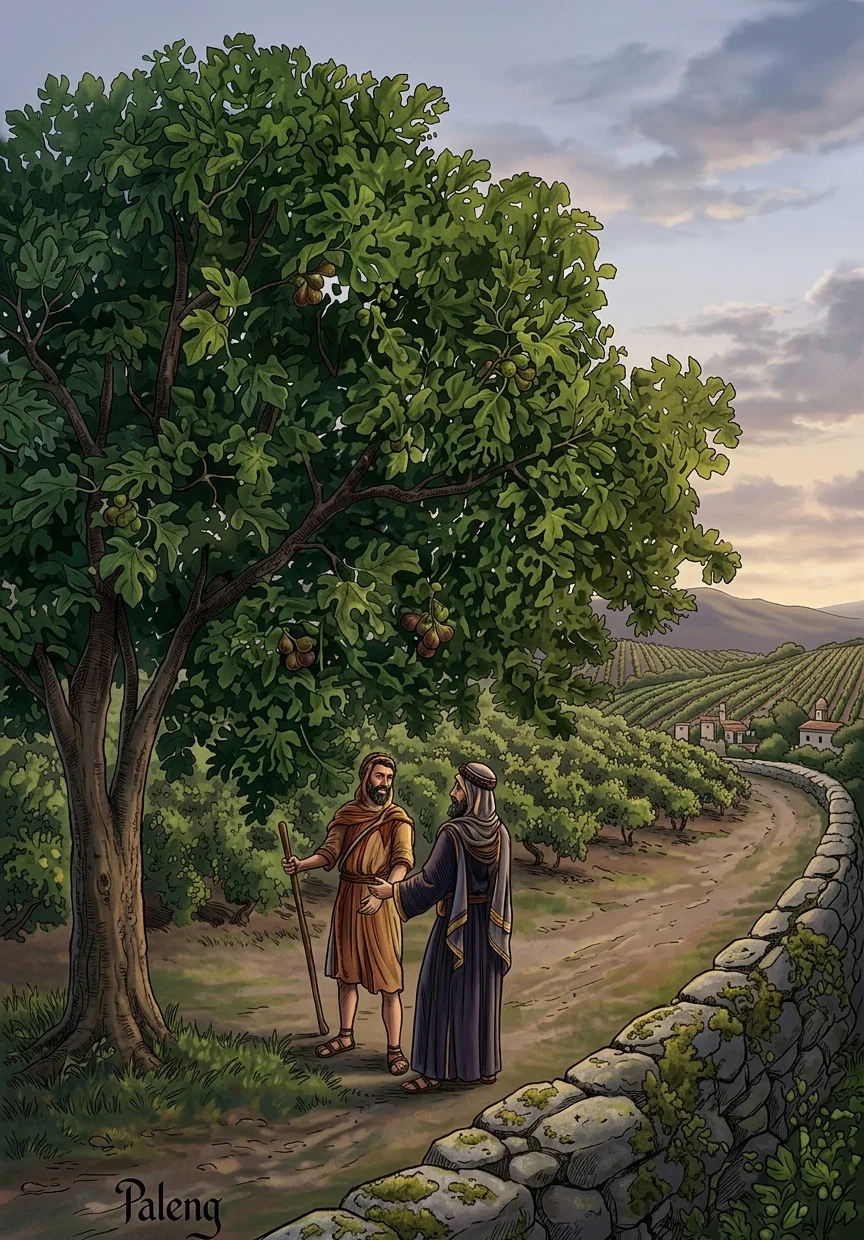
Christ in His teaching linked with the warning of judgment the invitation of mercy. “The Son of Man is not come,” He said, “to destroy men’s lives, but to save them.” “God sent not His Son into the world to condemn the world, but that the world through Him might be saved.” His mission of mercy, in its relation to God’s justice and judgment, is illustrated in the parable of the barren fig-tree. “A certain man,” Christ said, “had a fig-tree planted in his vineyard; and he came and sought fruit thereon, and found none. Then said he unto the dresser of his vineyard, Behold, these three years I come seeking fruit on this fig-tree, and find none: cut it down; why cumbereth it the ground?”

God’s Purposes in Israel.

Christ’s hearers could not misunderstand the application of His words. David had sung of Israel as the vine brought out of Egypt. Isaiah had written, “The vineyard of the Lord of hosts is the house of Israel, and the men of Judah His pleasant plant.” The generation to whom the Saviour had come were represented by the fig-tree in the Lord’s vineyard,—within the circle of His special care and blessing.
God’s purpose toward His people, and the glorious possibilities before them, had been set forth in the beautiful words, “That they might be called trees of righteousness, the planting of the Lord, that He might be glorified.” The dying Jacob, under the Spirit of inspiration, had said of his best-loved son, “Joseph is a fruitful bough, even a fruitful bough by a well; whose branches run over the wall.” And he said, “The God of thy father” “shall help thee,” the Almighty “shall bless thee with blessings of heaven above, blessings of the deep that lieth under.” So God had planted Israel as a goodly vine by the wells of life. He had made His vineyard “in a very fruitful hill.” He had “fenced it, and gathered out the stones thereof, and planted it with the choicest vine.”
“And He looked that it should bring forth grapes, and it brought forth wild grapes.” The people of Christ’s day made a greater show of piety than did the Jews in earlier ages, but they were even more destitute of the sweet graces of the Spirit of God. The precious fruits of character that made the life of Joseph so fragrant and beautiful, were not manifest in the Jewish nation.
God in His Son had been seeking fruit, and had found none. Israel was a cumberer of the ground. Their very existence was a curse; for they filled the place in the vineyard that a fruitful tree might fill. They robbed the world of the blessings that God designed to give. The Israelites had misrepresented God among the nations. They were not merely useless, but a decided hindrance. To a great degree their religion was misleading, and wrought ruin instead of salvation.

The Care of the Gardener.

In the parable the dresser of the vineyard does not question the sentence that the tree, if it remained fruitless, should be cut down; but he knows and shares the owner’s interest in that barren tree. Nothing could give him greater joy than to see its growth and fruitfulness. He responds to the desire of the owner, saying, “Let it alone this year also, till I dig about it, and dung it; and if it bear fruit, well.”
The gardener does not refuse to minister to so unpromising a plant. He stands ready to give it still greater care. He will make its surroundings most favorable, and will lavish upon it every attention.
The owner and the dresser of the vineyard are one in their interest in the fig-tree. So the Father and the Son were one in Their love for the chosen people. Christ was saying to His hearers that increased opportunities would be given them. Every means that the love of God could devise would be put in operation that they might become trees of righteousness, bringing forth fruit for the blessing of the world.
Jesus did not in the parable tell the result of the gardener’s work. At that point His story was cut short. Its conclusion rested with thegeneration that heard His words. To them the solemn warning was given, “If not, then after that thou shalt cut it down.” Upon them it depended whether the irrevocable words should be spoken.
The warning sounds down along the line to us in this generation. Are you, O careless heart, a fruitless tree in the Lord’s vineyard? Shall the word of doom erelong be spoken of you? How long have you received His gifts! How long has He watched and waited for a return of love? Planted in His vineyard, under the watchful care of the gardener, what privileges are yours! How often has the tender Gospel message thrilled your heart! You have taken the name of Christ, you are outwardly a member of the church, which is His body, and yet you are conscious of no living connection with the great heart of love. The tide of His life does not flow through you. The sweet graces of His character, “the fruits of the Spirit,” are not seen in your life.
The barren tree receives the rain and the sunshine and the gardener’s care. It draws nourishment from the soil. But its unproductive boughs only darken the ground, so that fruit-bearing plants can not flourish in its shadow. So God’s gifts, lavished on you, convey no blessing to the world. You are robbing others of privileges that, but for you, might be theirs.

There Is Hope for You.

You realize, tho it may be but dimly, that you are a cumberer of the ground. Yet in His great mercy God has not cut you down. He does not look coldly upon you. He does not turn away with indifference, or leave you to destruction. Looking upon you, He cries, as He cried so many centuries ago concerning Israel, “How shall I give thee up, Ephraim? How shall I deliver thee, Israel? . . . I will not execute the fierceness of My anger. I will not return to destroy Ephraim; for I am God, and not man.” The pitying Saviour is saying concerning you, Spare it this year also, till I shall dig about it and dress it.
With what unwearied love did Christ minister for Israel during the period of added probation! Upon the cross He prayed, “Father forgive them; for they know not what they do.” After His ascension the Gospel was preached first at Jerusalem. There the Holy Spirit was poured out. There the first Gospel church revealed the power of the risen Saviour. There Stephen—“his face as it had been the face of an angel”—bore his testimony and laid down his life. All that heaven itself could give was bestowed. “What could have been done more to My vineyard,” Christ said, “that I have not done in it?” So His care and labor for you are not lessened, but increased. Still He says, “I the Lord do keep it; I will water it every moment; lest any hurt it, I will keep it night and day.”
“If it bear fruit, well; if not, then after that”—
The heart that does not respond to divine agencies becomes hardened until it is no longer susceptible to the influence of the Holy Spirit. Then it is that the word is spoken, “Cut it down; why cumbereth it the ground?”
To-day He invites you: “O Israel, return unto the Lord thy God. . . . I will heal their backsliding, I will love them freely. . . . I will be as the dew unto Israel; he shall grow as the lily, and cast forth his roots as Lebanon. . . . His . . . beauty shall be as the olive tree. . . . They that dwell under his shadow shall return; they shall revive as the corn; and grow as the vine. . . . From Me is thy fruit found.”

The Prophetic Image of Daniel 2

By B. G. Wilkinson, A.M., Ph.D.
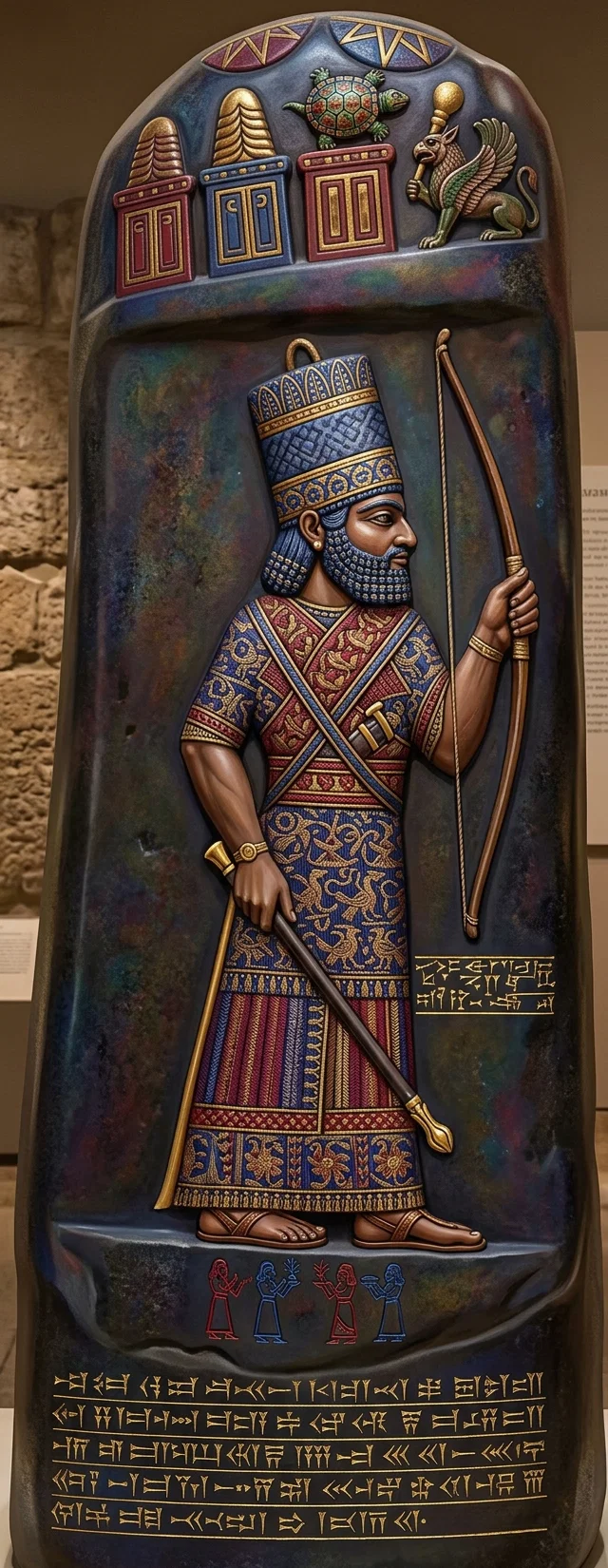
Babylonian Landmark: inscribed with the purchase-deed of a plot of ground, about B. C. 1100. (British Museum.)
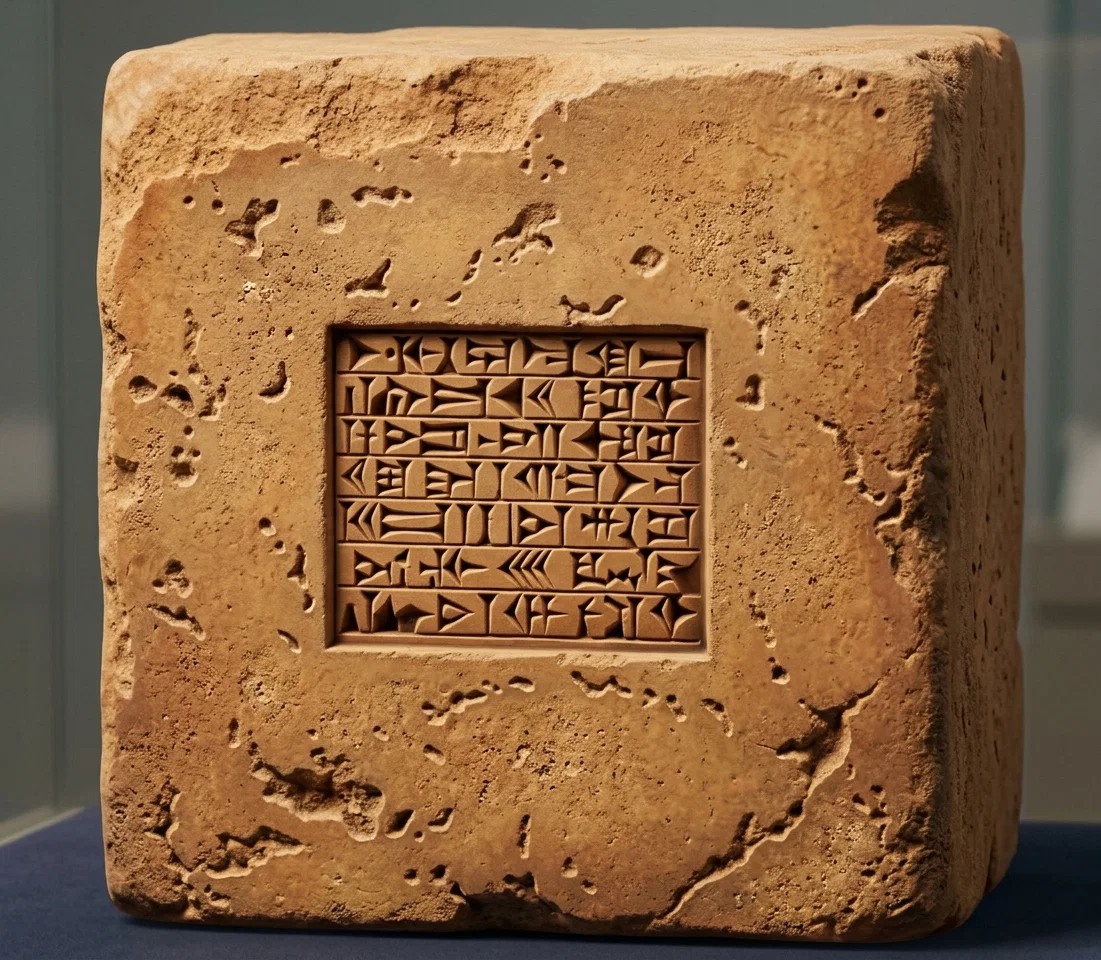
Babylonian Brick.
Babylonian Brick.

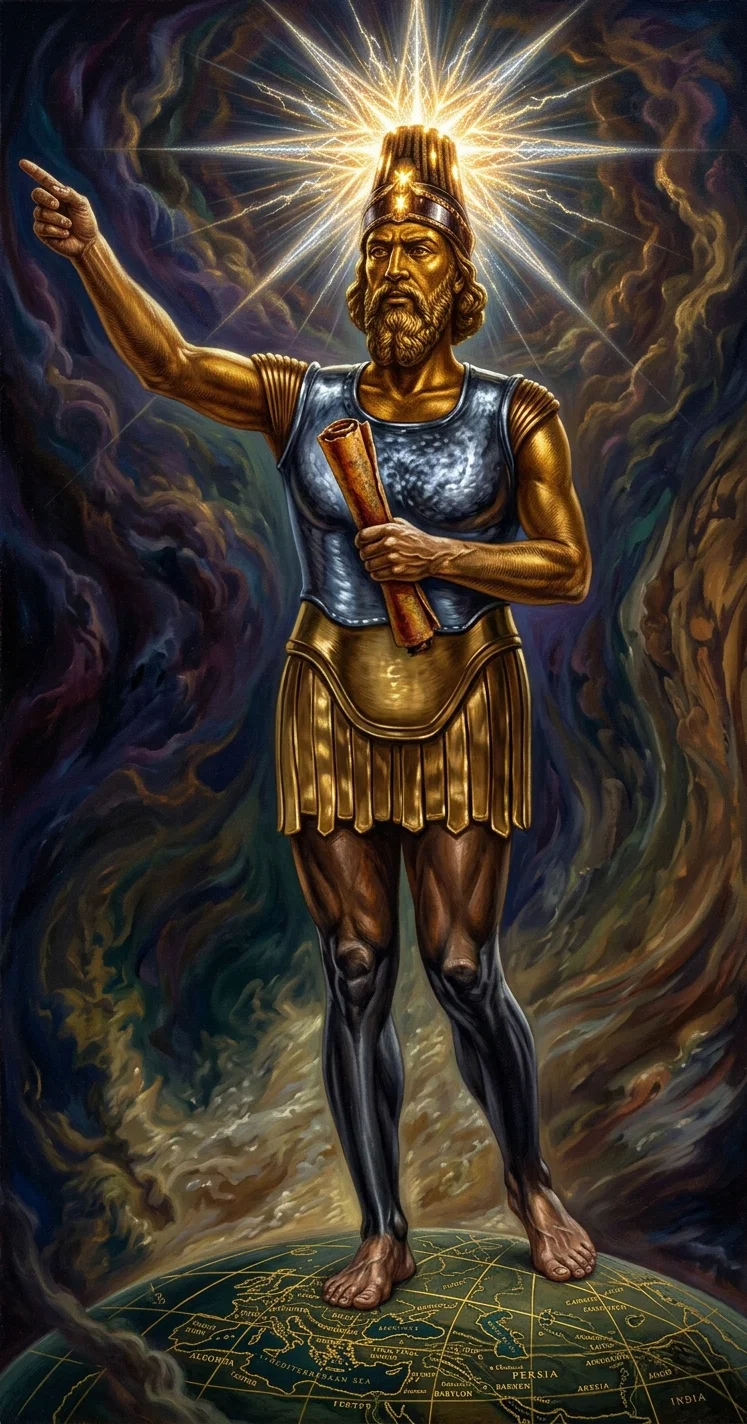
I. The Circumstances Preliminary.

OUT from Babylon had God called Abraham, because Abraham had already taken himself out of Babylon spiritually. Joshua, in his last address to the assembled heads of Israel, described the Babylon from which God had called Abraham, as follows: “Thus saith the Lord God of Israel: Your fathers dwelt on the other side of the flood [the river Euphrates] in old time, even Terah, the father of Abraham, and the father of Nachor, and they served other gods. And I took your father Abraham from the other side of the flood, and led him throughout all the land of Canaan, and multiplied his seed.” Joshua 24:2, 3. The living in the midst of idolatry, Abraham had already rejected the false gods of Babylon. God, therefore, called him and his seed to Palestine to the enjoyment of greater destinies. And today three world religions point back with pride to Abraham as their chief,—the Hebrew, the Mohammedan, and the Christian.
But the children of Israel in the land of Canaan relapsed back again into the idolatry from which God had called them. Therefore the Lord carried them back into Babylon physically to show them that they were there already spiritually. So far was their departure from the Lord that the Most High called, not them, but Nebuchadnezzar, King of Babylon, His servant. “Therefore thus saith the Lord of Hosts; Because ye have not heard My words, behold, I will send and take all the families of the north, saith the Lord, and Nebuchadnezzar the king of Babylon, My servant, and will bring them against this land, . . . and these nations shall serve the king of Babylon seventy years.” Jer. 25:8-11.
Through this servant, Nebuchadnezzar, tho a heathen king over a heathen nation, yet possessing great nobleness of character, God proposed to work for the advancement of His truth. A king of Babylon, however, could not, on account of his past training, stand close enough to God for direct communication. There was another. Daniel, a captive among the Jewish exiles, was, to the religion of Abraham, faithful among the faithless. Just as to John, the persecuted apostle of the New Testament, was given the greatest revelation to the Christian church, so the greatest revelation to the Jewish church was given to Daniel, the exiled prophet of the Old Testament. And as John, for his faithfulness, is known as “the beloved in the New, so in the Old Testament, the angel of God thrice addressed Daniel as “greatly beloved.” Exile, persecution, do not force us to impurity and departure from God; they simply withdraw us from the temporary joys of earth to behold the eternal glories of heaven.

A King’s Dream.

Compare, therefore, the bearing of Daniel in his trials, first in chapter 1, then in chapter 2. Chapter 1 may be called Daniel’s private test. He endured it successfully. Chapter 2 followed as his public test. “And in the second year of the reign of Nebuchadnezzar,” says chapter 2, verses 1 and 2, “Nebuchadnezzar dreamed dreams, wherewith his spirit was troubled, and his sleep brake from him. Then the king commanded to call the magicians, and the astrologers, and the sorcerers, and the Chaldeans, for to show the king his dreams. So they came and stood before the king.” The king had passed a sleepless night; for the same dream had reappeared to him a number of times. This is evident from the explanation of only one dream demanded, whereas the text speaks of “dreams.” The heart of the king was in the hand of the Lord and He was turning it in response to the prayers of His desolate people. Unable to understand the dream, the king was humiliated; he was irritated. He ordered his army of spiritual men to conquer this mystery—to tell the dream and its meaning; they smiled, they flattered, they argued, but gave no explanation, and the king grew more irritated. “If ye will not make known unto me the dream,” he cried, “there is but one decree for you: for ye have prepared lying and corrupt words to speak before me, till the timebe changed. . . . For this cause the king was angry and very furious, and commanded to destroy all the wise men of Babylon.” Dan. 2:9, 12.

Daniel and the Dream.

Contrast now the attitude of Daniel and the wise men. They had sought to gain time; but the more they labored, the more furious grew the king. Daniel had not been among them. Immediately, as soon as the officers searched him out to kill him, Daniel begged permission to go in before Nebuchadnezzar. It was granted. At once he stood before the astonished eyes of that ruler and requested—what? The very thing which had been refused the wise men. “Then Daniel went in, and desired of the king that he would give him time.” Verse 16. Ah! here is a secret. Why did Daniel secure the very thing which had been refused to the wise men?—Because in chapter 1 he had successfully endured his private test; now he was launching out. Strong in that past experience, he dared to throw himself on God and meet his public test.
It was a night for great things. Upon his bed the king is tossing through the long, sleepless hours. What a spectacle he has made of himself, and all through that dream! First of all, he has commanded to be destroyed his school,—that school, the pride and hope of his great life. The decree of death, by his own words, is hanging over that college of wise men. Within its walls he had collected the best and brightest of earth. From amidst the exiles and captives of all nations he had selected the noblest to adorn the venerable halls of Chaldean learning. Yet this hope was to be destroyed by his furious decree of only a few hours previous. And now, to crown it all, he had permitted his decrees, hitherto unchangeable, to be suspended at the request of a mere Jewish captive.

A Prayer-Meeting—Its Result.

In another part of the royal buildings, a different scene was passing. Daniel and his three companions were bowed in prayer. Before God, they were petitioning for their lives and for the hopes of their nation. If they should be destroyed, the devil had triumphed. Who would survive them, to keep alive in the hearts of their countrymen the promise of God to turn their captivity at the end of the seventy years? What, then, would become of the Jewish race and of the promised Messiah? They feared the wrath of the king; and much more they feared that mysterious dream, which they were unable to interpret. But on they prayed. They prostrated themselves before the Most High; they laid their hopeless lot before His all-seeing eye, and besought Him to remember. “Then,” says the record, “was the secret revealed unto Daniel in a night vision. Then Daniel blessed the God of heaven.” Prophecy triumphed over necromancy. The king had appealed to magic and had failed. Success followed his appeal to the spirit of prophecy.
The gray streaks of dawn were piercing the windows of the palace, when Nebuchadnezzar was summoned from his couch. “I have found a man,” cried his elated officer, “of the captives of Judah, that will make known unto the king the interpretation.” Seated upon his imperial throne, the king, surrounded by the majesty of state, awaited the coming of Daniel. The dim light of the morning, which permeated his Babylonian hall, revealed on the king’s face the traces of two sleepless nights. As they led the Hebrew captive before him, he awaited with impatience the promised reply. What would it be—an interpretation, or a disappointment? Calmly the faithful exile made known unto Nebuchadnezzar that the great revelation he was about to impart was not from him, but from God. “The secret,” he said, “which the king hath demanded, can not the wise men, the astrologers, the magicians, the soothsayers, show unto the king; but there is a God in heaven that revealeth secrets, and maketh known unto the king Nebuchadnezzar what shall be in the latter days.” Verse 28. His soft words fell with subduing effect upon the agitated spirit of the king. The confidence of Nebuchadnezzar was gained; in wonderment, he recognized before him the true servant of Jehovah, as Daniel recalled, point after point, the impressive dream.

The Dream of the King.

“Thou, O king,” he said, “sawest, and behold a great image. This great image, whose brightness was excellent, stood before thee; and the form thereof was terrible. This image’s head was of fine gold, his breast and his arms of silver, his belly and his thighs of brass, his legs of iron, his feet part of iron and part of clay. Thou sawest till that a stone was cut out without hands, which smote the image upon his feet that were of iron and clay, and brake them to pieces. Then was the iron, the clay, the brass, the silver, and the gold, broken to pieces together, and became like the chaff of the summer thrashing-floors; and the wind carried them away, that no place was found for them: and the stone that smote the image became a great mountain, and filled the whole earth. This is the dream, and we will tell the interpretation thereof before the king.”
[The next article will be upon the interpretation of the dream. The study will be complete in three numbers.]

Who Can Stand the Test?

NO ONE can thoughtfully read the thirty-third chapter of Isaiah without instantly detecting the fact that it is a prophecy dealing with the events that mark the closing days of this world of sin, and with those that will mark the bringing in and the setting up of the kingdom of Christ—the kingdom “which shall not be destroyed.” Note particularly verses 9, 10, 14, 15, 17, 20, 21, 22. Verse 17 reads thus: “Thine eyes shall see the King in His beauty: they shall behold the land [Eden restored] that is very far off.”
In the fourteenth verse several questions of exceeding moment are asked, and a detailed answer is recorded in the fifteenth verse. Verse 14: “The sinners in Zion are afraid; trembling hath seized the godless ones: Who among us can dwell with the devouring fire? who among us can dwell with everlasting burnings?” The answer, verse 15: “He that walketh righteously, and speaketh uprightly; he that despiseth the gain of oppression [margin: fraud], that shaketh his hands from taking a bribe.” The “devouring fire” referred to in the question can not possibly mean any other than the fire of God, which shall finally consume the irreclaimable sinner and purge and purify the earth from the “curse” that sin has laid upon her—from “the works of the devil.” See Malachi 4 and Rev. 20: 9, 10, 14, 15. In the answer it is clearly stated who will be immune from those fires, whom the “devouring fire” can never touch. They are the righteous, the saints of God.
Observe carefully that one of the distinguishing marks of the righteous is that he shakes his hands “from taking a bribe.” These latter words show unmistakably that the taking of bribes will be a characteristic sin in the closing years of time. How clearly also the first verse of this chapter shows that at the same time men would “deal treacherously,” that is, fraudulently, with one another. It means, in short, that venality would be a dominant last-day sin; venality is born of greed. No reader need be told that the taking of bribes is notoriously prevalent in the political and the commercial world. In the parlance of the day, the euphemism GRIFT has been substituted for the forbidding term bribe. Not all the multifarious forms of graft are bribery, but a very large proportion is nothing but the rawest sort of bribery with its concomitant crime of perjury.
G. W. RINE.

Acting on a Settled Point

It is much easier to settle a point than to act on it.—Richard Cecil.
Continue reading: The Ninth Commandment