Signs of the Times, Vol. 42, No. 14.

VITAMINES

Signs of the Times

Apr 6, 1915

Pacific Press Publishing Association · Mountain View, California · Apr 6, 1915

VITAMINES

An Important, Delicate Food Product—Its Possibilities for Health
By David Paulson, M. D.
Medical Superintendent Hinsdale Sanitarium, Hinsdale, Illinois
“When people live on the fruits, grains, and vegetables that God originally provided for Adam, and refrain from entirely spoiling them by so many of our modern processes and inventions, there is no danger of having a ‘touch of scurvy.’”
A few weeks ago, while I was visiting the Pacific coast, a friend near Armona, California, took me out driving. Before we returned, a buckle came loose in the harness, the horses became frightened, and almost in an instant they upset the carriage. Nothing was wrong except an insignificant buckle, but that speedily made everything else wrong.

Dietetic Buckle Loose

Some recent wonderfully interesting dietetic discoveries indicate that there has been a “buckle loose” in our diet. This “missing link” has brought many a well-meaning mortal to grief, for it is still true that “My people are destroyed for lack of knowledge.” Hosea 4:6.
Some years ago, Professor Eykman, of the University of Utrecht, Germany, was in Java studying a very prevalent and almost incurable Oriental disease called beriberi, somewhat resembling our scurvy. He was impressed with the fact that it was particularly those who lived almost exclusively on polished rice who had the disease.

Pigeons Destroyed by Polished Rice

He then undertook to feed pigeons on polished rice, and made the interesting discovery that in three weeks’ time they became ill, began to be crippled, were unable to hold up their heads, and even their throats became so paralyzed they could not swallow, and in another day or two they would die, from a condition strangely resembling the beriberi in human beings. Then Eykman took the shavings that had been removed from the polished rice, soaked them in water, passed a little of this fluid down through a tube into each sick bird’s crop, or in case of the birds that had not reached the stage where they could not swallow, fed them a little of these rice shavings.
And then this astonishing thing happened: In three hours’ time, they began to recover; and before the day was over, they were apparently as well as ever. It seemed like a veritable miracle.
In other words, God had put into the covering of the rice something that the birds absolutely needed, and nothing else could replace it. As little as three tenths of a grain of this mysterious substance was all that was necessary for the restoration of their health. Other observers noted that all over India and some of those other exclusively rice-eating countries, as soon as our modern polished rice was introduced, the people began to have diseases something like scurvy. The teeth became loose and fell out, and inflammation of the nerves was developed. It was also soon observed that when the old-fashioned rice was reintroduced, the disease disappeared.

Discoverer of Vitamines

Three or four years ago, Casimir Funk, in England, undertook to isolate this mysterious substance that was present in unpolished rice, and also to determine what other foods contained it, and by what means it is destroyed, and what influence it has on health.
He was fortunately successful in his search, and named this absolutely indispensable substance “vitamine.” He also made the important discovery that when fowls were fed exclusively on our modern steel roller process white flour, in three weeks’ time they were afflicted just the same as when they were fed on polished rice.
In other words, the vitamins are in the outer layers in the wheat, just as they are in the rice. The ordinary fine flour that everybody wants in order to have nice white bread has the vitamins eliminated. God put the vitamins in the bran, and in the yellow layer immediately under the bran, that the modern miller knows so well how to separate from the flour.

Why Certain Foods Produce Scurvy

It is generally known that in former days, when sailors were fed for a number of weeks on canned meats and other dried foods without any fresh foods or green stuff, they would ultimately develop scurvy. Their gums became diseased, certain nervous and digestive symptoms appeared, and in a short time they became entirely prostrated, just as the pigeons did when fed on polished rice. And it is also known that if these sailors could get into some port and secure some green stuff to eat, in a few days they would recover.
Dr. Evans, formerly health commissioner of the city of Chicago, says that few of the ordinary people ever develop this extreme type of scurvy. “Yet a large part of the population will have a ‘touch of scurvy’ between now and May. With some it will go no further than repeated spells of bad breath; with others, a multitude of vague aches and pains variously called rheumatism, sciatica, lumbago, gout. With others there will be attacks of sore gums. With others the face will be pale and a little bloated, with dark circles and slight bloat around the eyes. With others there will be patches of skin eruption. The reason is plain: for several months we have lived on ‘hog and hominy,’ or what is equivalent to it. Certain needs of our system have not been met.” Dr. Evans adds, “This is the season of the year when raw carrots are good for the complexion.”

Wonders of the Human System

The thyroid gland, or Adam’s apple, as it is sometimes called, produces a secretion that is absolutely indispensable to the human body. Children who are born with little or no thyroid gland grow hair resembling that of a horse. They are simple-minded, with no more intelligence than a monkey. Their faces appear shrunken. They are a pitiable sight to behold.
Some years ago it was found that if fresh thyroid glands are secured from a slaughter house, and thyroid extract is scientifically separated and given to such children, in a few months’ time they generally blossom out and become like other children; giving a striking illustration of how absolutely essential the thyroid gland is to the normal activities of the human system.
There are a number of other equally indispensable substances, or “hormones,” as they are called. We are now beginning to realize that the body cannot make these essential and indispensable substances out of protein, starch, sugar, and fats. It is believed that vitamins are the mother substance for the thyroid extract, for pepsin, and these other wonderful ferments which are present in such minute quantities in the body, but which are absolutely necessary for its normal activity.

Foods That Contain Vitamines

When people live on the fruits, grains, and vegetables that God originally provided for Adam (Gen. 1:29), and refrain from entirely spoiling them by so many of our modern processes and inventions, there is no danger of having a “touch of scurvy,” and many other similar diseases.
In 1850 Sylvester Graham led out in one of the mightiest health movements that has ever visited this country. Many people who had been considered incurable, were restored to health by adopting his dietetic ideas.
What was the secret of it?—He advised his converts to eat whole bread, which other people were despising, just as the nations of the East are beginning to despise unpolished rice, and suffer in consequence. He introduced the people to a normal, natural dietary. He taught them the importance of fresh green foods containing vitamins in all their strength. He hit on the idea of giving the people the very foods that modern science has now shown contain vitamins. We are just now beginning to learn more fully the scientific reason for the things he recommended.
Raw milk contains vitamins—more in summer than in winter, for then the cows have access to green things, which are particularly rich in vitamins. Raw meat also contains vitamins, simply because the animal has eaten food containing them; for as far as we know now, only the plant world can manufacture them. All whole grains contain them. So do yolks of eggs. Potatoes and carrots are particularly rich in vitamins. Green garden truck is a vitamine food par excellence. So are legumes. And limes, oranges, and lemons are especially so.

How Vitamines Are Destroyed

Vitamines may be peeled off from the grains, may be burned out by high temperatures, and are invariably destroyed in the exclusively dried foods. Baking heat, generally speaking, destroys vitamins. Persons who live exclusively on baked and toasted foods, and fail to add to their dietary others containing vitamins, will sooner or later begin to suffer with symptoms of some of the various deficiency diseases.
Who has not observed over and over again, fat, healthy-looking babies when they left their mother’s breast, then again when they had been fed a few months on condensed milk and patent baby foods with the vitamins burned out of them, on white flour bread from which the vitamins had been removed in the modern milling process, and on sweets and a few other foods that may have been wholesome and nourishing in themselves, but vitaminless—who, I say, has not seen such children become pale, anemic, scrawny, nervous, and begin to develop rickets, for exactly the same reasons that the pigeons became ill when fed on polished rice? A few teaspoonfuls of vegetable broth added to their food, a few fresh foods, and gruel made from genuine old-fashioned whole wheat flour, would in most instances have restored them completely to health.

New Light on Pellagra

Thoughtful observers are beginning to believe that pellagra, like scurvy and beriberi, is a deficiency disease. It is particularly prevalent among people who eat little or no green garden truck or other foods containing vitamins, but who live largely upon corn bread from which the vitamins are removed in the milling process and burned out in the baking, and on roasted bacon, which of course contains no vitamins, for the same reason.
Dr. Deeks, the Panama Hospital pellagra specialist, cures a large number of these patients by feeding them principally on vegetable foods, such as lettuce, celery, onions, carrots, tomatoes, spinach, beets, peas, string beans, also fresh fruits of all kinds, and eggs; and he insists that these patients religiously avoid cane sugar.
Dr. Cook, an eminent European specialist, believes that pellagra is due to a diet deprived of vitamins. It is of course not yet absolutely established that this is the only cause of pellagra, but it is certainly significant that the most successful cures are secured by feeding the patients on a food that is rich in vitamins.

Other Deficiency Diseases

There are many specialists who are beginning to believe that tuberculosis is largely a malnutrition disease; that the tubercular germs flourish in a soil that has been made favorable by living upon a one-sided diet that was especially deficient in vitamins.
Cancer is probably another deficiency disease. One thing is certain—that cancer is almost unknown among those who are living close to nature and on a natural, wholesome dietary. We shall no doubt have positive evidence, in the near future, that a predisposition to many other well-known diseases is induced by living on a diet that is deficient in these important, mysterious, protective substances, which are so absolutely essential to the normal function of the human system.
It must also be plain that such conditions cannot be cured by merely swallowing drugs, but only by a reform in the diet.

Too Many Inventions

Some of our many modern inventions and improvements are undoubtedly a snare of the devil, for which we are paying dearly in human suffering. For example: whole rice contains nearly four per cent mineral matter, while the polished rice, which nearly everybody is eating, contains only one eleventh as much. That is what we sacrifice for appearance.
The best part of our wheat, from a health standpoint, is taken out by the modern steel-roller milling process, because people want white bread. The old-fashioned stone-burr miller furnished us all the vitamins and the mineral matter in the flour, because he did not know how to remove them. But the new-fashioned process takes them practically all out; and what is left, and served on every modern table, is just as much a deficiency food as is polished rice, and if used by itself, would produce disease just as the polished rice did to the pigeons. Much of our excessive cooking and baking is unquestionably a curse to humanity—the cause of many of our deficiency diseases.

Worshiping False Gods

We are surprised that the children of Israel worshiped idols and went after false gods. But have we not also been chasing after false gods? We have sold good, wholesome food to the market, and then bought some of it back, paying several prices, for the sake of having it put up in fancy packages with the vitamins “processed” out of it.
Then we have gone to a doctor, and begged him for a prescription, which we did not need nearly so much as we needed to be reformed. We have carried the prescription to the druggist, and paid him to put it up for us, and then taken it according to the directions, and still continued to go astray.
(Continued on page 2)

Vitamines

(Continued from page 2)

Shall We Dispense with Physicians?

By no means. The conscientious and intelligent physician knows that diseases do not come without a cause, and he endeavors to trace human disorders to their source, to point out what needs to be avoided and what needs to be done. He knows that he can no more heal the sick than the farmer can grow corn. What the farmer can do is to cultivate corn. What the physician can do is to cultivate health, and that is what he is paid for doing.
We are fast coming to appreciate that health instruction is ten times more important than “drugs,” which in many instances only smother symptoms, and permit the patients to be comfortable when they are really miserable. It is too late in the day to continue healing “the hurt of the daughter of My people slightly, saying, Peace, peace; when there is no peace.” Jer. 6:14.

Earnestly Seeks the Lost

Heaven Rejoices as the Lost Is Found—Have You Joined in the Work?
By Mrs. E. G. White
“What man of you, having an hundred sheep, if he lose one of them, doth not leave the ninety and nine in the wilderness, and go after that which is lost, until he find it?”

Men Who Had Vested Interests

The wide-spreading table-lands on the east of Jordan afforded abundant pasturage for flocks; and through the gorges and over the wooded hills had wandered many a lost sheep, to be searched for and brought back by the shepherd’s care. In the company about Jesus there were shepherds, and also men who had money invested in flocks and herds, and all could appreciate His illustration.
As the shepherd loves his sheep, and cannot rest if even one be missing, so, in an infinitely higher degree, does God love every outcast soul. Men may deny the claim of His love, they may wander from Him, they may choose another master; yet they are God’s, and He longs to recover His own. He says, “As a shepherd seeketh out his flock in the day that he is among his sheep that are scattered; so will I seek out My sheep, and will deliver them out of all places where they have been scattered in the cloudy and dark day.” Eze. 34:12.

Would Have Died for That One

In the parable, the shepherd goes out to search for one sheep,—the very least that can be numbered. So if there had been but one lost soul, Christ would have died for that one.
The sheep that has strayed from the fold is the most helpless of all creatures. It must be sought for by the shepherd, for it cannot find its way back. So with the soul that has wandered away from God; he is as helpless as the lost sheep, and unless divine love had come to his rescue, he could never find his way to God.

Not Regarded with Careless Indifference

The shepherd who discovers that one of his sheep is missing, does not look carelessly upon the flock that is safely housed, and say, “I have ninety and nine, and it will cost me too much trouble to go in search of the straying one. Let him come back, and I will open the door of the sheepfold, and let him in.” No; no sooner does the sheep go astray than the shepherd is filled with grief and anxiety. He counts and recounts the flock. When he is sure that one sheep is lost, he slumbers not. He leaves the ninety and nine within the fold, and goes in search of the straying sheep. The darker and more tempestuous the night, and the more perilous the way, the greater is the shepherd’s anxiety; and the more earnest his search. He makes every effort to find that one lost sheep.

Hears the First Faint Cry

With what relief he hears in the distance its first faint cry! Following the sound, he climbs the steepest heights, he goes to the very edge of the precipice, at the risk of his own life. Thus he searches, while the cry, growing fainter, tells him that his sheep is ready to die. At last his effort is rewarded; the lost is found. Then he does not scold it because it has caused him so much trouble. He does not drive it with a whip. He does not even try to lead it home. In his joy he takes the trembling creature upon his shoulders; if it is bruised and wounded, he gathers it in his arms, pressing it close to his bosom, that the warmth of his own heart may give it life. With gratitude that his search has not been in vain, he bears it back to the fold.

Success Is Pictured

Thank God, He has presented to our imagination no picture of a sorrowful shepherd returning without the sheep. The parable does not speak of failure, but of success, and joy in the recovery. Here is the divine guarantee that not even one of the straying sheep of God’s fold is overlooked, not one is left unsuccored. Every one that will submit to be ransomed, Christ will rescue from the pit of corruption, and from the briars of sin.
Desponding soul, take courage, even though you have done wickedly. Do not think that perhaps God will pardon your transgressions, and permit you to come into His presence. God has made the first advance. While you were in rebellion against Him, He went forth to seek you. With the tender heart of the shepherd He left the ninety and nine, and went out into the wilderness to find that which was lost. The soul, bruised and wounded and ready to perish, He encircles in His arms of love, and joyfully bears it to the fold of safety.

“This Man Receiveth Sinners”

It was taught by the Jews that before God’s love is extended to the sinner, he must first repent. In their view, repentance is a work by which men earn the favor of heaven. And it was this thought that led the Pharisees to exclaim in astonishment and anger, “This man receiveth sinners.” According to their ideas, He should permit none to approach Him but those who had repented. But in the parable of the lost sheep, Christ teaches that salvation does not come through our seeking after God, but through God’s seeking after us. “There is none that understandeth, there is none that seeketh after God. They are all gone out of the way.” Rom. 3:11. We do not repent in order that God may love us, but He reveals to us His love in order that we may repent.
When the straying sheep is at last brought home, the shepherd’s gratitude finds expression in melodious songs of rejoicing. He calls his friends and neighbors, saying to them, “Rejoice with me; for I have found my sheep which was lost.” So when a wanderer is found by the great Shepherd of the sheep, heaven and earth unite in thanksgiving and rejoicing.
“Joy shall be in heaven over one sinner that repenteth, more than over ninety and nine just persons, which need no repentance.” Luke 15:7. You, Pharisees, said Christ, regard yourselves as the favorites of heaven. You think yourselves secure in your own righteousness. Know, then, that if you need no repentance, My mission is not to you. These poor souls who feel their poverty and sinfulness, are the very ones whom I have come to rescue. Angels of heaven are interested in these lost ones whom you despise. You complain and sneer when one of these souls joins himself to Me; but know that angels rejoice, and the song of triumph rings through the courts above.

A Strange Work to God

The rabbis had a saying that there is rejoicing in heaven when one who has sinned against God is destroyed; but Jesus taught that to God the work of destruction is a strange work. That in which all heaven delights is the restoration of God’s own image in the souls whom He has made.

Contemplate the Rejoicing of Heaven

When one who has wandered far in sin, seeks to return to God, he will encounter criticism and distrust. There are those who will doubt whether his repentance is genuine, or will whisper, “He has no stability; I do not believe that he will hold out.” These persons are doing, not the work of God, but the work of Satan, who is the accuser of the brethren. Through their criticisms, the wicked one hopes to discourage that soul, and to drive him still farther from hope and from God. Let the repenting sinner contemplate the rejoicing of heaven over the return of the one that was lost. Let him rest in the love of God, and in nocase be disheartened by the scorn and suspicion of the Pharisees.

This Atom of a World Is Beloved

The rabbis understood Christ’s parable as applying to the publicans and sinners; but it has also a wider meaning. By the lost sheep, Christ represents not only the individual sinner, but the one world that has apostatized, and has been ruined by sin. This world is but an atom in the vast dominions over which God presides; yet this little fallen world—the one lost sheep—is more precious in His sight than are the ninety and nine that went not astray from the fold. Christ, the loved Commander in the heavenly courts, stooped from His high estate, laid aside the glory that He had with the Father, in order to save the one lost world. For this He left the sinless worlds on high, the ninety and nine that loved Him, and came to this earth, to be “wounded for our transgressions” and “bruised for our iniquities.” Isa. 53:5. God gave Himself in His Son, that He might have the joy of receiving back the sheep that was lost.
“Behold, what manner of love the Father hath bestowed upon us, that we should be called the sons of God.” 1 John 3:1. And Christ says, “As Thou hast sent Me into the world, even so have I also sent them into the world” (John 17:18),—to “fill up that which is behind of the afflictions of Christ . . . for His body’s sake, which is the church.” Col. 1:24. Every soul whom Christ has rescued is called to work in His name for the saving of the lost. This work had been neglected in Israel. Is it not neglected to-day by those who profess to be Christ’s followers?

Have You Led One Back?

How many of the wandering ones have you, reader, sought for and brought back to the fold? When you turn from those who seem unpromising and unattractive, do you realize that you are neglecting the souls for whom Christ is seeking? At the very time when you turn from them, they may be in the greatest need of your compassion. In every assembly for worship, there are souls longing for rest and peace. They may appear to be living careless lives, but they are not insensible to the influence of the Holy Spirit. Many among them might be won for Christ.
If the lost sheep is not brought back to the fold, it wanders until it perishes. And many souls go down to ruin for want of a hand stretched out to save. These erring ones may appear hard and reckless; but if they had received the same advantages that others have had, they might have revealed far more nobility of soul, and greater talent for usefulness. Angels pity these wandering ones. Angels weep, while human eyes are dry and hearts are closed to pity.
O, the lack of deep, soul-touching sympathy for the tempted and the erring! O for more of Christ’s spirit, and for less, far less, of self!

A TIME OF TROUBLE

Such a Time Never Before Since the Existence of Nations—Some Things Foretold by the Master in Matthew 24
By Calvin P. Bollman
This is the second of some five or six articles by Elder Bollman on the Saviour’s prophecy in the twenty-fourth chapter of Matthew. Each article is independent, and may be read with profit by itself. Next week he will consider the forces that “shortened” the papal persecutions of the Middle Ages.
Editor.
The first part of the twenty-fourth chapter of Matthew, as the reader will readily agree, refers largely to the destruction of Jerusalem. Passing that by, therefore, as something long ago fulfilled, let us see if we can learn how much of our Lord’s great prophecy has met its fulfillment since the year A. D. 70, when the city of Jerusalem fell before the fierce assaults of the Romans, and the Jews were scattered among all nations.
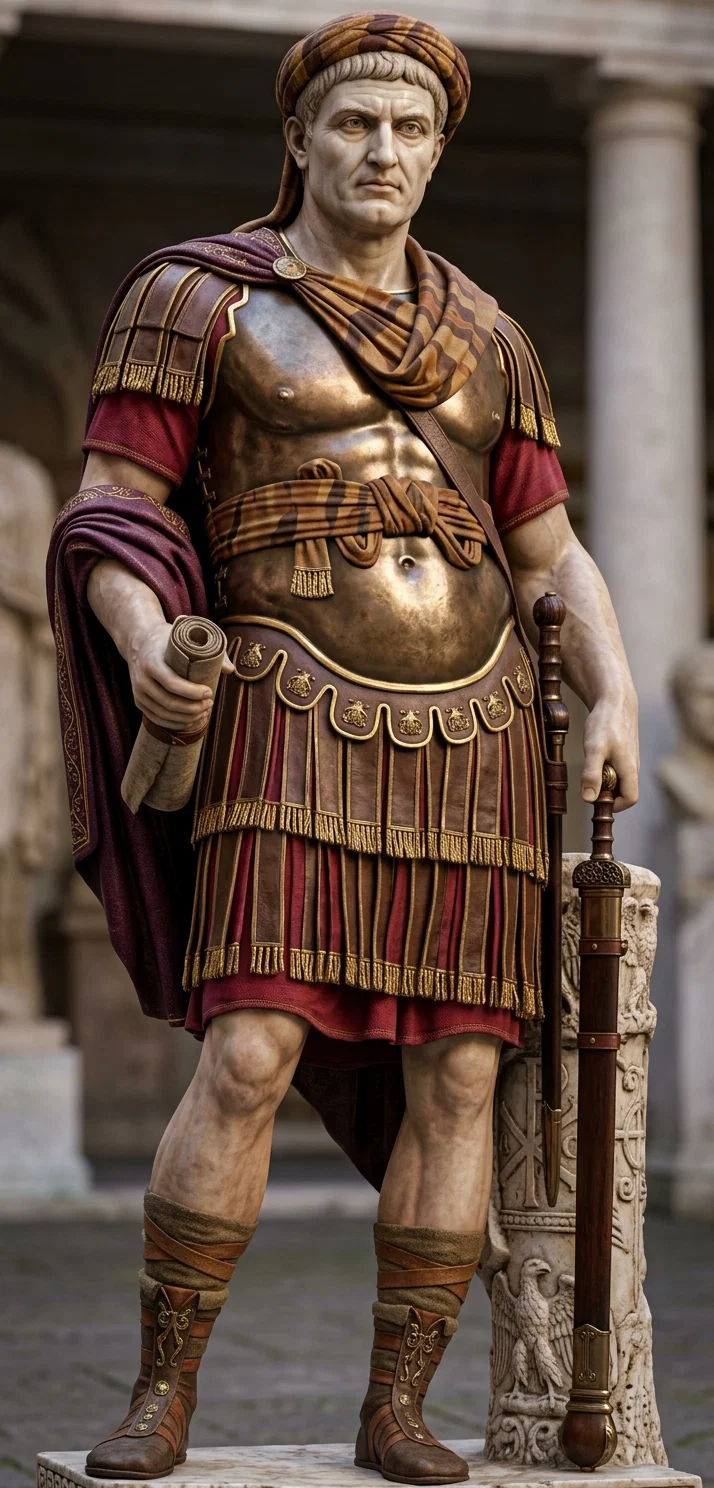
THE EMPEROR CONSTANTINE

The Time of Tribulation

Terrible were the scenes through which the Jews passed during the siege of their city; and still more terrible, if possible, were to be the scenes and trials that would come to Christian believers during the long centuries to which our Lord referred when He said:
“For then shall be great tribulation, such as was not since the beginning of the world to this time, no, nor ever shall be. And except those days should be shortened, there should no flesh be saved: but for the elect’s sake those days shall be shortened.” Matt. 24:21, 22.
Turning, therefore, from the scenes of the Jewish age, which in a sense overlapped the Christian dispensation by seventy years, or until by their final dispersion the Jews ceased to have a land and a national history of their own, we come at once to a study of some of the leading events of the present era, especially as they relate to the growth and experiences of the Christian church.

The Four Periods of the Christian Era

Ecclesiastical historians agree practically in dividing the time that has elapsed since the beginning of the Christian era into four periods; the first from the birth of Christ to the time of Constantine, early in the fourth century; the second from Constantine to Charlemagne, in the latter part of the eighth and the early part of the ninth century; the third from Charlemagne to Luther, early in the sixteenth century; and the fourth from Luther to the present time.

Persecuted by Jews and Pagans

During that part of the first period that lay between A. D. 34 and A. D. 70, the church of Christ suffered more or less persecution at the hands, first of the Jews, and then of the pagans instigated by the Jews. But soon the pagans began to persecute on their own account. Especially was this the case after the destruction of Jerusalem, the persecutions under Nero and Domitian both falling within the latter half of the first century A. D.
The second century was marked by considerable persecution, that under Marcus Aurelius, a little after the middle of the century, being perhaps the most severe. It was at this time that Justin Martyr and Polycarp suffered death.
During the early part of the third century, the Christians were favored rather than otherwise by several of the emperors. Indeed, during this time some Christians held important offices, both civil and military, under the Roman government. But about the middle of this century came the terrible persecution under Decius. Gallus, who succeeded Decius, continued the persecution for some time. The latter part of this century was, however, a time of comparative rest for the church.

A Church and State Union

But the early years of the fourth century were marked by fierce persecution under Diocletian and his son-in-law Maximianus. Then followed the reign of Constantine, and the reign of his three sons, Constantine II, Constantius, and Constans. During these years there was no persecution. There was, however, that which during the next two centuries developed into something a great deal worse; namely, the beginnings of a union of church and state, which resulted in the year A. D. 538, in establishing the bishop of Rome as “head of all the churches,” and a few years later, “corrector of heretics.” It was this that ushered in “the time of trouble” foretold by the Saviour in Matt. 24:21, 22: “For then shall be great tribulation, such as was not since the beginning of the world to this time, no, nor ever shall be. And except those days should be shortened, there should no flesh be saved: but for the elect’s sake those days shall be shortened.” This same period of time is mentioned in Dan. 7:25 as “a time and times and the dividing of time”; in Rev. 11:2, 3 as “fortyand two months,” and “a thousand two hundred and threescore days”; in Rev. 12:14 as “a time, and times, and half a time”; and again in Rev. 13:5 as “forty and two months.” It will be observed that this time—for it is a single definite period expressed in different terms—is a part of several lines of symbolic prophecy.
“Times,” “months,” and “days,” being introduced among symbols, must themselves be symbols. A “time” is merely another expression meaning a year. According to Dan. 4:23, Nebuchadnezzar was to be insane, and to have his dwelling with the beasts of the field, until “seven times” should pass over him. Josephus tells us (“Antiquities of the Jews,” book 10, chapter 10, last paragraph) that the seven times were seven years. Moreover, in the margin of Dan. 11:13 we have this reading: “At the end of times, even years.” Therefore “times” two, “time” one, and “the dividing of time,” or a “half time,” would be three and one half years, or “forty and two months.” “Forty and two months,” thirty days to the month, would be just “a thousand two hundred and threescore days.”

Prophetic Day a Literal Year

How much literal time is represented by 1,260 symbolic days, we may judge from Num. 14:34 and Eze. 4:6. These texts both speak of “a day for a year.” Acting upon this hint, commentators have agreed that these symbols mean literally 1,260 years; and beginning A. D. 538, they must end 1798.
It is a matter of considerable interest to note that both at the beginning of this period and at its close there were two events, separated in each case by the space of five years. At the beginning of the 1,260 years was a letter, or as it is generally termed, a “decree,” by Justinian, in the year 533, styling the bishop of Rome “head of all the churches.” Five years later—that is, in 538—came a crushing defeat of the eastern Goths before the city of Rome, which exerted a powerful and far-reaching influence in making effective the decree of five years before.

Declared the Papacy Abolished

In like manner, the closing of the period was similarly marked by a decree, followed five years later by a military campaign giving practical effect to the decree. In 1793, the states-general of France abolished the Roman Catholic worship, and established in its stead the worship of Reason. Five years later—namely, in 1798—a French army under General Berthier entered Rome, declared the papacy abolished, and made the pope himself a prisoner, carrying him to France, where he died in exile.
It is true that this is not the only instance in which a pope was forcibly deposed from his office, but it is the only instance in which this was done in an effort to abolish and utterly destroy the Roman Catholic civil and ecclesiastical system. It is therefore very justly cited as the close of the “thousand two hundred and threescore days,” or years, during which that power dominated the Christian world, persecuting and destroying all who dared in any way oppose the pretensions of the bishop of Rome to that universal headship ascribed to him by Justinian in 533, and made effective by the practical overthrow of the only political and military power which at that time was at all disposed to resist the papal claims; namely, the Ostrogoths, the last of the Arian kingdoms to fall before the arms of a Catholic emperor.

Glorying in the Cross

“God forbid that I should glory, save in the cross of our Lord Jesus Christ, by whom the world is crucified unto me, and I unto the world.”

True Religion and the Tongue

“If any man among you seem to be religious, and bridleth not his tongue, but deceiveth his own heart, this man’s religion is vain.”
Continue reading: Moral and Ceremonial Law