Your ShelfYour Projects

Signs of the Times, Vol. 41, No. 26.

The Drunkard and His Thirst

Signs of the Times

Jul 7, 1914

Pacific Press Publishing Association · Mountain View, California · Jul 7, 1914

The Drunkard and His Thirst
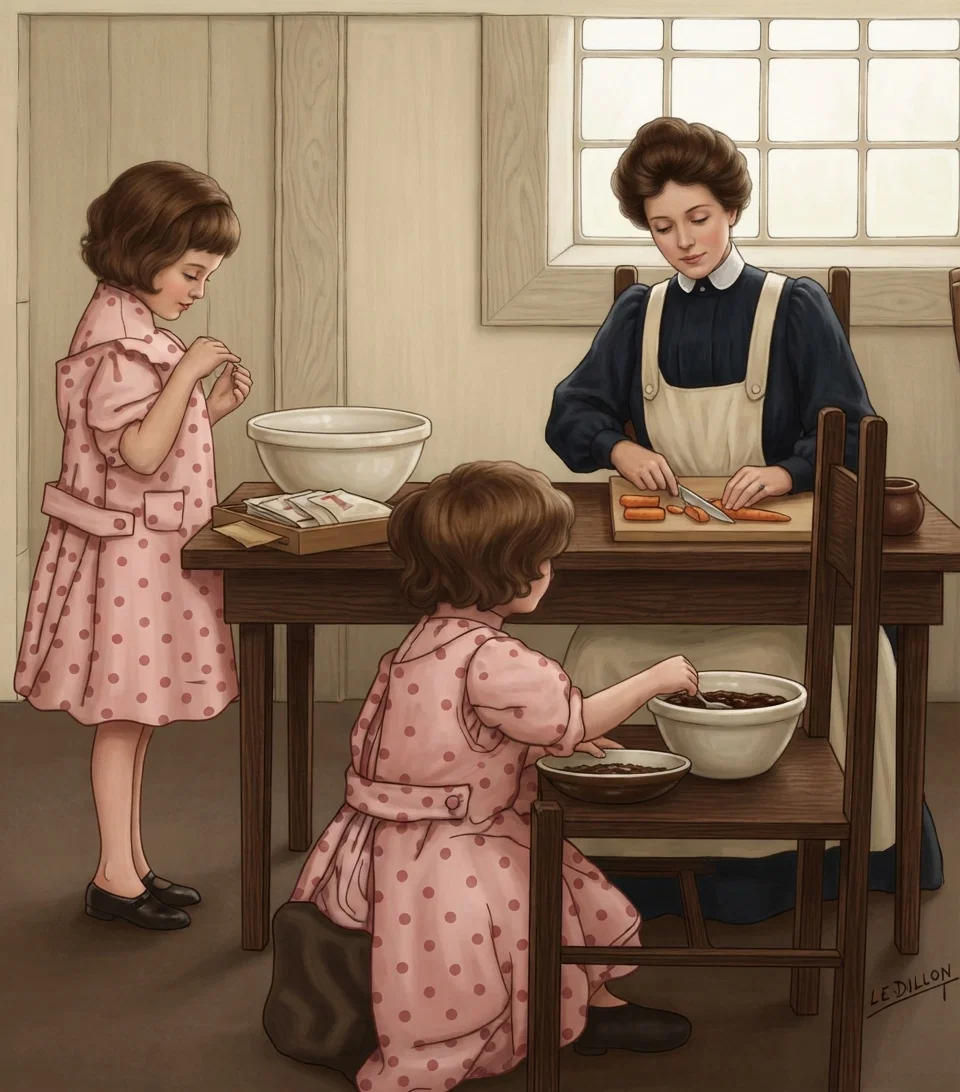
Creating an Appetite for Alcoholic Drinks — Unwitting Accessories to the Saloon — Fond Mothers Often Unintentionally and Ignorantly Join in the Ruinous Work
By DAVID PAULSON, M. D. Medical Superintendent Hinsdale Sanitarium, Hinsdale, Illinois
Scientific cookery should be regarded as an important part of the education of our young people.
LITTLE advancement can be made in the great battle for temperance until we recognize some of the immediate causes of intemperance. Dr. Brunton, the eminent English physician, tells of a drunkard who complained because the temperance people were forever reminding him of his drinking, but never telling him how to get rid of the thirst that compelled him to drink. What would we think of a farmer who spent his time trimming the tops of his troublesome weeds instead of pulling the weeds up by the roots?

A CAUSE FOR HIS THIRST

There is a cause for the drunkard's thirst, just as there is a cause for the fever patient's temperature. Divine Writ declares that "the curse causeless shall not come." If our modern dinner-tables could be cleared of those things that create a craving for liquor, there would be more vacant places at the bar table; for the saloon, instead of being the first step in the drunkard's career, is frequently the devil's hospital, sought out by those who already possess abnormal tastes created by a fond mother's cooking.

AN UNQUENCHABLE CRAVING

Our high pressure life is developing a people of weak and sensitive nerves. The mucous membrane of the stomach is as delicate as the lining of the eyelid. Many who are fed on veritable mustard plasters in the form of condiments and highly spiced food, find that these arouse a thirst the town pump can not quench. And a certain number of these unfortunates soon discover that the saloon-keeper and the patent medicine vender alone dispense the stuff that satisfies the craving created at the table.
It has been said that the kitchen is often the vestibule to the saloon. When a boy's delicate nerves are irritated by a dietary composed of juicy beefsteaks, doughy bread, and pasty mush that is almost certain to ferment before it can be digested, shall we wonder that he often craves the temporary felicity of the cigarette or the paralyzing influence of alcohol?

IN PARTNERSHIP WITH THE SALOON-KEEPER

That mother who prepares such food for her boy is unconsciously the best friend of the cigarette dealer and the saloon-keeper, for she is developing business for both. It is useless for her to implore Providence to deliver her boy from the curse of the cigarette evil and the liquor traffic, while she daily places before him a dietary that must create a demand for these things just as surely as the eating of a large quantity of salt develops a desire to patronize the water bucket. The divine declaration, "Whatsoever a man soweth, that shall he also reap," is as unerring in its operations as is the law of gravitation.
Our experience in dealing with multitudes of drunkards has thoroughly convinced us that partaking of an extensive variety of indigestible foods, saturated with substances that blister, burn, and sting as they are swallowed, and that are added for the purpose of giving the palate a twist, also twists the nerves, and even the temper and the character, almost dragging the poor, struggling victim of the drink habit into the saloon's open door.

SOWING FOR TEMPERANCE

We have not done our duty toward these sad wrecks of humanity until we have shown them how to sow for temperance instead of intemperance; for the ax should be laid at the root of the tree. Feed these men on a simple, nutritious, non-irritating, wholesome dietary, gathered from the lap of nature and properly prepared, and fully half the battle is won.
Scientific cookery should be regarded as an important part of the education of our young people. Indeed, some one has declared that cookery should rank highest among the fine arts. Yet the enterprising business man who demands an accurate stenographer, a well-informed lawyer, and a discreet manager, is fully satisfied that the woman in his kitchen is a competent cook if she can flavor and put together half a dozen food ingredients so that they please his taste, even though she may have no intelligent conception as to whether they will build up or destroy the brain, blood, and other tissues.

DISGUISED INTEMPERANCE

Children frequently have the seeds of intemperance sown within them by the patent medicines given to them in their infancy. A widely advertised soothing sirup, which has undoubtedly killed more children than Herod ever slew, contains one half a grain of morphin to every two ounces of the drug; and infants are particularly susceptible to the influence of narcotizing drugs.
The estimate that there are a million morphin and cocain fiends in this country is not surprising when we reflect that myriads of children are introduced to the bewitching effect of these drugs,and their nervous systems are trained to demand it, even before they are old enough to speak. "Train up a child in the way he should go: and when he is old, he will not depart from it," sets forth a principle that is just as true when the child is trained in wrong habits as when he is trained in correct habits.
Disguised intemperance in the form of the patent medicine evil has become a formidable rival to the saloon itself. It is astonishing that clergymen, statesmen, and other eminent men will furnish glowing testimonials of patent medicines that contain in some instances more alcohol than does ordinary whisky. These men evidently forget that the alcohol sold over the drug counter is as harmful as that sold over the bar.
Dr. Osborne, of Yale, in his paper read before the last meeting of the American Medical Association, spoke of one patent medicine firm as reported to be using five hundred barrels of whisky each week.

THE GREAT DECEIVER

The idea that alcohol is a food is a thinly coated scientific sophistry which has furnished a desirable excuse for thousands of moderate drinkers. It is true that a small quantity of alcohol will burn or oxidize in the body; but it ruins the body while it is burning, just as a quantity of gunpowder will burn in a stove, but will blast it in the process of combustion.
Professor Kraepelin, of Heidelberg, Germany, one of the world's greatest authorities on experimental psychology, has recently made two thousand experiments, in which he has scientifically demonstrated that as little as one third an ounce of alcohol will appreciably depress sight, hearing, feeling, and the various mental operations.

THE BEST MEDICAL MEN RECOGNIZE IT

The best men in the medical profession are beginning to recognize the fact that genuine and permanent healing can not be put up in bottles and bought and sold at so much an ounce. It is primarily the result of harmony with nature's laws, and the intelligent use of such physiological remedies as exercise, air, proper food, hydriatic measures, electricity, and a simple confidence in an all-wise God.
The physician who intelligently and skilfully brings these influences to bear upon his patients, uses fewer and fewer drugs; and of all the drugs he handles, he has the least use for alcohol.

Church Federation in Purpose and Method

The Bible Speaks of a Federation—What if the Complicated Machine Is Started Wrong?—No Certainty of Purpose
By B. G. WILKINSON
THIS is the third article Elder Wilkinson has furnished on the federation of the churches. In previous articles, he has spoken of the inception and history of the movement, and has dwelt upon the ecclesiastical organization formed in the fourth century, and which exerted such a powerful influence for evil in the world. The gospel of Christ is persuasive, and not dominative, was one of the leading points made.
Next week the theme of his article, in continuing this subject, will be the threat of the tendency of this modern federation that is reaching out in its ambitions to embrace the world.
“It was during the epoch when there were sects and heresies that Christianity made the conquest of the world.”—The Hon. Camille Pelletan.
Why should not the churches federate? Why should not the Methodists, the Baptists, the Presbyterians, the Episcopalians,—in fact all the Protestant churches,—unite in an effort to advance the interests of the church universal?

WHY FEDERATE EVERYTHING?

Further, why should not the Protestant denominations, after they are confederated, come together on some basis of unity with the Catholic world—yes, with all Christendom? Yea, more, why should not the Christians unite with the Mohammedans in common efforts to relieve industrial oppressions, check vice, clean up bad tenement districts, and bring in world-wide prohibition? Do they not have the right?—They certainly do. And apparently, to all intents and purposes the effects they intend to accomplish are laudable, and worthy of the endorsement of all.

THE SCRIPTURES TELL OF A FEDERATION

Yet the Scriptures have not left us in ignorance of the fact that an apparently laudable federation with bad results can be effected. “The kings of the earth set themselves, and the rulers take counsel together, against the Lord, and against His anointed, saying, Let us break their bands asunder, and cast away their cords from us.” Ps. 2: 2, 3.
Here is confederation—the possessors of might against the possessors of right. It is a confederation of kings, of the ruling ones in the earth. Surely they must put forth some laudable purpose on which they take counsel together. They could not hope for moral leadership unless they were able to present apparently good reasons why followers should join.
Moreover, those who thus band themselves together are not those who are in ignorance of God; for they say, in speaking of God and His anointed, “Let us break their bands asunder, and cast away their cords from us.” In other words, they have the knowledge of God and of Christ, but they do not do as they know. They are like the Pharisees of whom Christ said, “Whatsoever they bid you observe, that observe and do; but do not ye after their works: for they say, and do not.”
So these rulers, these kings of the earth, knowing of God and Christ, but obeying not, confederate themselves together. According to what they say, they federate themselves together to achieve great and good results. But God looks underneath the surface, and reveals what the actual results will be. Really they break these bands asunder, and cast away His cords from them. In other words, their organization accomplishes disorganization.
We are then led to make inquiries about church federation. In the first place, what are its purposes? Are they clear and certain? What about the means they have adopted to effect these purposes? Are they practical, or are they superficial, and bound to be ineffective? And finally, what will be the tendency of the organization? All must admit that intentions are not results; and however highly laudable the intentions of the contracting parties, the instrument they use to materialize their intentions may be weak and impracticable.
If it happen to be a big and complicated instrument, as church federation is bound to be, then if the machine gets started wrong, and develops bad tendencies at the very first, it might be difficult to detect those tendencies before it is too late, or to correct them if they should be detected. And history proves abundantly that in this we are not talking theories.
One may say that this very argument would apply to church organization. Not at all. To have a union of those who believe alike, working together for the same purpose, is vastly different from having a union of several denominations for whom the essential element of the union is that they must drop some of their fundamental points of faith; for no one can believe in the text, “Go ye into all the world, and preach the gospel to every creature,” without believing in a union that will permit believers to send their representatives to distant fields and support them there.

THEIR PURPOSE NOT CLEAR TO THEMSELVES

In the first place, there seems to exist for church federation as now formed an uncertainty of purpose. At least there is not a clear statement of its raison d’être.
At Baltimore, Maryland, on the night of December 4, 1913, I heard the president of the federation say that the reason for federating was that the churches had unused forces, much reserve, and that the Federal Council was formed to develop these.
Then Bishop McDowell, of the Methodist Church, took the stand. “It is not possible,” he said, “that all the world will become Methodist or Baptist or Episcopalian. We have only about so much reserve force.”
It is not clear, from these statements, whether the churches had so great an abundance of force that they demanded an organization of higher potentiality, as the Federal Council, to create an outlet for their great resources, or whether they had so little force that a reorganization was necessary, in order to check retreat and to give life to what there was.

SHOULD GIVE A CERTAINTY OF PURPOSE

This raises the issue. If there exists a real demand for federation, that demand will easily give a certainty of purpose. And if there is a certainty of purpose, federation can swing into existence under color of right. But if there is no real demand, then the reasons for federating will be conflicting, uncertain, and so will cast a cloud upon the endeavor.
This is exactly what those statements quoted above from two leaders in the movement do. “It is not possible that all the world will become . . . Baptist.” Do the Baptists accept this conclusion as the first dividend they receive for investing in church federation? If so, how inspiring will it be to them to fight a good fight? They believed in a divine commission to go into all the world and baptize all men. Whether such a result is attainable, is not for them to say. Their duty is to obey. It is theirs, under God’s command, as they understand it, to attempt the impossible. That is the logic of their belief. The other denominations with whom they federate may not believe it; but will that release Baptists, who do believe it, from the obligation of their convictions?

NOT ALL TO BE BAPTIZED

Not all men are to be baptized, declares the federation. Hence the Baptists can lower their mark. They are not to attempt so great things as they have hitherto attempted. Thus they will not need to lean so heavily on the Lord. But no individual should join a society if by so doing he is compelled to lower his mark. Likewise no society should join a federation of societies, if by so doing that society is compelled to lower its mark, unless the federation puts before it some other endeavor as a substitute.
But the Federation of Churches is not only under obligation to give a substitute purpose, but is also under obligation to give with it the assurance from God that His blessing will rest upon the new endeavor as much as it did upon the old. And this is exactly what federation means, if the leaders of the federation say what they mean. Either their public utterances say what they mean, or else they do not; and we are either to take them seriously, or we are not.

NO ESCAPING CONFLICTING CONCLUSIONS

It will be no escape from these conflicting conclusions, for the leaders of church federation to say, as they do, that the Baptists can go on working with all their might, as Baptists, to baptize all men, but that as members of the federation, they toil for better social conditions. This is directly contrary to the statement made above; for there it was said that the Baptists enter the federation because not all the world is likely to become Baptists. It is not social mission and baptizing, butsocial mission instead of baptizing. It is not an increase in the fields of usefulness, but an exchange in the fields of usefulness.

HOW CAN THESE DIFFERENCES COMBINE?

And what is true of the Baptists is true of other denominations. Do they enter the federation to develop forces yet in reserve, or to safeguard a limited amount of force? One church preaches plainness of dress, another admits the fashions. One opposes the dance and the theater, another countenances both. One makes the use of tobacco a bar to fellowship, another does not. How fast will social reform progress, if these bodies abandon their war against the evils of worldliness, in order to enter the federation?

RAPID INVASION OF SOCIAL EVILS

Compare the rapid invasion of social evils with the small victories already won by the federated churches. One Eastern manufacturer says that he would not be surprised any day to see another French Revolution break out in New York City. That metropolis has hundreds of thousands of Hungarians, Bohemians, Poles, and other foreign nationalities. Many of these never see Broadway and never learn the English language. Work is not always plentiful, and these people suffer. Yet only a mile or so across the city are the fashionable wealthy spending their thousands and millions in wantonness. Should those foreigners ever rise, this manufacturer declares, the police would not be able to control the situation.
The writer, on entering the city of Staunton, Virginia, one day, saw in one of the newspapers an appeal to the mothers of that city to rise against the invasion of the immoral dance and the immoral dress, lest the fair name of that city go down in history besmirched by the products of these Bacchanalian pleasures.
Bishop Rhinelander, of the Episcopal diocese of Pennsylvania, in his Lenten services, 1914, said, while declaring that the trend of modern thought, as manifested in the present-day drama, modern novels, up-to-date fashions, and moving-picture stories, shows that the seed of truth as given by Christ is not taking root in the hearts of the people: "No wonder suicide is becoming popular and fashionable, if the miserable panderings to bestial instincts that we see nowadays in the theaters and on moving-picture films are our ultimate conception of moral truth. These things are said to be produced for the moral uplift of the people and for social enlightenment and betterment, and the discouraging part of the question is that they are accepted by the people as such."

WHAT THE FEDERATION DID IN ONE CITY

On the other hand, here is what the Inter-Church Federation of Trenton, New Jersey, says of itself: "The federation prevented the Tri-State League from opening up Sunday baseball in the city. Sunday vaudeville at the local White City Park was stopped. An obscene play, called 'The Girl from Rector's,' was compelled to stop and leave town; and another, called 'The Easiest Way,' was prevented from entering the town at all. The objectionable side-shows on the Midway at the Interstate Fair, after a long battle, were at last withdrawn. The Charity Bureau of the federation has become the most effective charity organization of the city, and has lately devised a plan of cooperation with the City Department of the Outdoor Poor. . . . This temperance victory [over seven saloons] is an example of what an Inter-Church Federation can do. The Trenton federation is something more than a ministerial union, or a voluntary association. It is a combination of thirty-seven Protestant churches. Its council is composed of the pastor and a lay delegate selected by each church in the federation. Consequently the federation is a permanent and powerful body properly qualified to handle the moral situation of the city."

THEY ABANDON THAT HOPE

So the different Protestant denominations enter the Church Federation on the basis that not all the world is to become of the same persuasion as their particular denomination. They abandon that hope upon entering the door of the federation. They join upon the understanding that henceforth they are not to emphasize denominational differences. If, in the past, they became separate denominations by emphasizing their denominational differences, the formation of the Church Federation will correct that past mistake. And over against this consent to call their special denominational features non-essential, what do they secure? The report of the Trenton Inter-Church Federation claims that the federating resulted in (1) more emphasis on Sunday, because a baseball game or games and a vaudeville were stopped on Sunday; (2) stopping some obscene shows and prohibiting another from entering the city; (3) increased supplies and service for the city poor.

AND YET DISGRACEFUL WAR

Yet disgraceful war between capital and labor in Colorado, sordid discontent among the foreign poor with wantonness among the Christian rich in New York City, American capitalism and American armies invading Mexico, and preparations all over the world for war, roll on. It is enough to cause one to stop and ask if there is not some truth in the statement of the Hon. Camille Pelletan, "It was during the epoch when there were sects and heresies that Christianity made the conquest of the world." (Speech in French Chamber of Deputies, April 22, 1905.)
Is church federation a good or a bad omen for the future?

THERE'S A WELCOME

EVERY step leads on to Canaan. Though here shadows round us fall, Yonder where the lights are twinkling, There's a welcome for us all.
Courage, comrade! Struggle onward! Long thy rest shall be, and sweet, There beside the crystal river, Where no thorns shall pierce thy feet.
Truly the long night is waning. Morning dawn will soon appear. Way-marks all along the highway Tell us that the prize is near.
Almost home! Press hard the battle! Almost home! Christ's foes must fall. Yonder where the lights are twinkling, There's a welcome for us all. MAGGIE A. PULVER.

Arm Yourselves

"FORASMUCH then as Christ hath suffered for us in the flesh, arm yourselves likewise with the same mind." That is, be not surprised by trials. Count on them ahead. Be prepared for them.
What would soldiers amount to should they go into battle without their weapons? Have your mind made up beforehand that suffering and temptation and trial await you. For these the Christian is not responsible, but he is responsible for the preparedness to meet them when encountered, that he may triumph in the midst of them.
Jesus did not come into our world expecting an easy time. If He had, He would have failed. He came armed with the mind to endure, and not pity Himself either. He expected to encounter hardship, hatred, scorn, and at the last death.
When all this came upon Him because of His steadfast faith in and obedience to His Father, He was prepared for it. He was ready. This is the secret of His triumph. "Who in the days of His flesh, when He had offered up prayers and supplications with strong crying and tears unto Him that was able to save Him from death [but did not], and was heard in that He feared; though He were a Son, yet learned He obedience by the things which He suffered; and being made perfect [through this suffering], He became the author of eternal salvation unto all them that obey Him."
T. E. BOWEN.

The Gift of Speech

EVEN things without life-giving sound, whether pipe or harp, except they give a distinction in the sounds, how shall it be known what is piped or harped? For if the trumpet give an uncertain sound, who shall prepare himself to the battle? So likewise ye, except ye utter by the tongue words easy to be understood, how shall it be known what is spoken? for ye shall speak into the air. There are, it may be, so many kinds of voices in the world, and none of them is without signification. Therefore if I know not the meaning of the voice, I shall be unto him that speaketh a barbarian, and he that speaketh shall be a barbarian unto me. Even so ye, forasmuch as ye are zealous of spiritual gifts, seek that ye may excel to the edifying of the church.—Paul.

“Wilt Thou Be Made Whole?”

Had Wasted His Strength in Sin — Vainly Sought Help in the Troubled Pool — Hears a Tender Voice Calling Him to Freedom and Health — We Have the Same Help if We Will Accept
By MRS. E. G. WHITE
“NOW there is at Jerusalem by the sheep-market a pool, which is called in the Hebrew tongue Bethesda, having five porches. In these lay a great multitude of impotent folk, of blind, halt, withered, waiting for the moving of the water.” John 5: 2, 3.
At certain seasons, the waters of this pool were agitated, and it was commonly believed that this was the result of supernatural power, and that whoever first after the troubling of the pool stepped into the waters, would be healed of whatever disease he might have. Hundreds of sufferers visited the place; but so great was the crowd when the water was troubled that they rushed forward, trampling underfoot men, women, and children, weaker than themselves. Many could not get near the pool. Many who had succeeded in reaching it died upon its brink.

WAITING FOR THE TROUBLING OF THE WATERS

Shelters had been erected about the place, that the sick might be protected from the heat by the day and the chilliness of the night. There were some who spent the night in these porches, creeping to the edge of the pool day after day, in the vain hope of relief.
Jesus was at Jerusalem. Walking alone, in apparent meditation and prayer, He came to the pool. He saw the wretched sufferers watching for that which they supposed to be their only chance of cure. He longed to exercise His healing power, and make every sufferer whole. But it was the Sabbath day. Multitudes were going to the temple for worship, and He knew that such an act of healing would so excite the prejudice of the Jews as to cut short His work.

HELPLESS FOR THIRTY-EIGHT YEARS

But the Saviour saw one case of supreme wretchedness. It was that of a man who had been a helpless cripple for thirty-eight years. His disease was in a great degree the result of his own evil habits, and was looked upon as a judgment from God. Alone and friendless, feeling that he was shut out from God’s mercy, the sufferer had passed long years of misery.
At the time when it was expected that the water would be troubled, those who pitied his helplessness would bear him to the porches. But at the favored moment, he had no one to help him in. He had seen the rippling of the water, but had never been able to get farther than the edge of the pool. Others stronger than he would plunge in before him. The poor helpless sufferer was unable to contend successfully with the scrambling, selfish crowd. His persistent efforts toward the one object, and his anxiety and continual disappointment, were fast wearing away the remnant of his strength.

A TENDER FACE BENT OVER HIM

The sick man was lying on his mat, and occasionally lifting his head to gaze at the pool, when a tender, compassionate face bent over him, and the words, “Wilt thou be made whole?” arrested his attention.
Hope came to his heart. He felt that in some way he was to have help. But the glow of encouragement soon faded. He remembered how often he had tried to reach the pool, and now he had little prospect of living till it should again be troubled.
He turned away wearily, saying, “Sir, I have no man, when the water is troubled, to put me into the pool: but while I am coming, another steppeth down before me.”

ARISE AND WALK

Jesus bids him, “Rise, take up thy bed, and walk.” With a new hope the sick man looks upon Jesus. The expression of His countenance, the tones of His voice, are like no other. Love and power seem to breathe from His very presence. The cripple’s faith takes hold upon Christ’s word. Without question he sets his will to obey, and as he does this, his whole body responds. Every nerve and muscle thrills with new life, and healthful action comes to his crippled limbs. Springing to his feet, he goes on his way with firm, free step, praising God, and rejoicing in his new-found strength.

MIGHT HAVE DOUBTED AND LOST

Jesus had given the palsied man no assurance of divine help. The man might have said, “Lord, if Thou wilt make me whole, I will obey Thy word.” He might have stopped to doubt, and thus have lost his one chance of healing. But no, he believed Christ’s word, believed that he was made whole; immediately he made the effort, and God gave him the power; he willed to walk, and he did walk. Acting on the word of Christ, he was made whole.
By sin we have been severed from the life of God. Our souls are palsied. Of ourselves we are no more capable of living a holy life than was the impotent man capable of walking. Many realize their helplessness. They are longing for that spiritual life which will bring them into harmony with God, and are striving to obtain it. But in vain. In despair they cry, “O wretched man that I am! who shall deliver me from this body of death?” Rom. 7: 24, margin.

“WILT THOU BE MADE WHOLE?”

Let these desponding, struggling ones look up. The Saviour is bending over the purchase of His blood, saying with inexpressible tenderness and pity, “Wilt thou be made whole?” He bids you arise in health and peace. Do not wait to feel that you are made whole. Believe the Saviour’s word.
Put your will on the side of Christ. Will to serve Him; and in acting upon His word, you will receive strength. Whatever may be the evil practise, the master passion which through long indulgence binds both soul and body, Christ is able and longs to deliver. He will impart life to the soul that is "dead in trespasses." Eph. 2:1. He will set free the captive that is held by weakness and misfortune and the chains of sin.

WHEN SIN-POISONED, TEMPTED, AND IN DESPAIR, LOOK TO JESUS

The sense of sin has poisoned the springs of life. But Christ says: "I will take your sins; I will give you peace. I have bought you with My blood. You are Mine. My grace shall strengthen your weakened will; your remorse for sin I will remove."
When temptations assail you, when care and perplexity surround you, when, depressed and discouraged, you are ready to yield to despair, look to Jesus, and the darkness that encompasses you will be dispelled by the bright shining of His presence. When sin struggles for the mastery in your soul, and burdens the conscience, look to the Saviour. His grace is sufficient to subdue sin. Let your grateful heart, trembling with uncertainty, turn to Him. Lay hold on the hope set before you. Christ waits to adopt you into His family. His strength will help your weakness. He will lead you step by step. Place your hand in His, and let Him guide you.
Never feel that Christ is far away. He is always near. His loving presence surrounds you. Seek Him as One who desires to be found of you. He desires you not only to touch His garments, but to walk with Him in constant communion.

THE WAY OF THE CROSS

By CLARA EDNA ROSENCRANS
In the holy city Zion, Nigh to Kidron's murmuring wave, Till the resurrection morning, Jesus slumbered in the grave. In the carven tomb of Joseph, Low He lay, in slumber sweet, After all His cruel anguish, In the hallowed, blest retreat. Round Him stood the forest monarchs, Guarding well His sacred rest. Women knelt about His pillow, Whom His gentle hands had blessed. Children on whose golden ringlets Rested His dear hands in love, Came to weep and mourn the "Prophet," In that quiet, shadowed grove. They recalled how He had saved them From their sin and sorrow deep, And with reverent hands they laid Him To His long and quiet sleep. Bitter sorrow filled each bosom, Wounded love, and hope's defeat. Self-deceived He must be, surely, Else the downfall were complete. Proud the Pharisees were scoffing "This deceiver." Ah, the shame!
In the filth of their reviling Lay that loved and honored name. But the resurrection dawning Flushes all the eastern sky. Little dreamed those sad disciples Of the joy that was so nigh. See! He rises, clothed in beauty, And the shining of His face Backward drives the armed legions, Each one falls down in his place. And the angels sing hosannas, While His earthly friends rejoice, And sad hearts again are happy At that well-remembered voice. On the sacred Mount of Olives, Jesus stands, a conqueror. Roman cross and scourge and thorn-crown All have given victory. Not for earthly thrones or crowning Came He from the Father's love; Something higher, far more holy, Something earthly things above. And for those who follow after, Open is the path He trod. Through the cross to glorious victory Lies the path that leads to God.
Continue reading: China Struggling with Despotism