Your ShelfYour Projects

Review and Herald, Vol. 85, No. 49.

A Prayer

Review and Herald

Dec 3, 1908

Review and Herald Publishing Association · Takoma Park Station, Washington, D. C. · Dec 3, 1908

A Prayer

Dear Lord, not for the dead I pray; Not for the night, but for the day; Not for the calm, but for the strife, The tasks and triumphs of this life. Teach me the joy of work begun, Something to do and something done; Keep Thou the hope strong in my breast; Light Thou the path which leads to rest. Shadow and sorrow, death and tears,— Send, Lord, the faith to calm all fears: Give me to think on life alone, And strive to make it like Thine own; Labor and life and love, and then— At last to rest with Thee. Amen.
—F. D. Sherman.

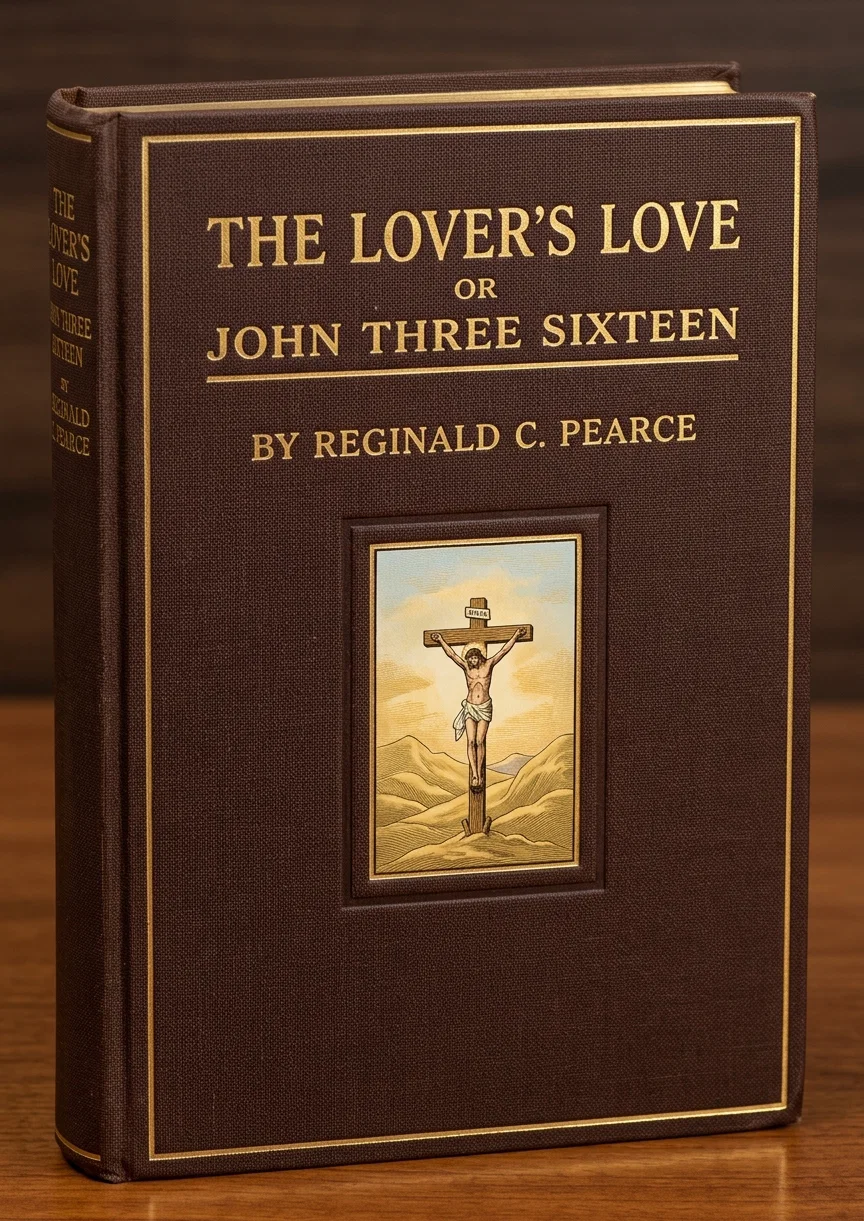
The Lover’s Love

In all probability no other single text in the Bible contains so much of the real gospel of salvation as is found in John 3:16. The book, “The Lover’s Love,” is a careful, reverent study of this text. The author has divided the text into seven parts: “The Lover,” “The Lover’s Object,” “The Lover’s Proof,” “The Lover’s Gift,” “The Lover’s Proviso,” “The Lover’s Purpose,” “The Lover’s Pledge.”
The winning way in which Mr. Pearce presents the truths of Christ’s life, death, and resurrection show a live experience in spiritual things, and can not but inspire the reader to renewed consecration.
“The Lover’s Love” will interest all, whether Christians or not, but is an especially good work to place in the hands of an unconverted friend in whom you are interested.
Bound in brown buckram . . . $ .75

Special Gift Copies of the New Edition of “Christ in Song”

No other song-book published is more deserving of a beautiful binding than the new edition of “Christ in Song.” Many people will be making gifts during the next few weeks, and we believe that the two leather styles in which we furnish “Christ in Song” will appeal to a large number as an appropriate present.
Turkey morocco, stiff boards, gilt edges, paper lined . . . . . . . . . . . . . . . . $2.50
Flexible levant morocco, gilt edges, leather lined . . . . . . . . . . . . . . . . . . . . . . . . 3.00
We also have three standard styles which will be sent, post-paid, at the following prices:—
Flexible . . . . . . . . . . . . . . . . . . . . . . . . $ .45
Cloth . . . . . . . . . . . . . . . . . . . . . . . . . . . .60
Half morocco . . . . . . . . . . . . . . . . . . . . . . 1.00

Elo the Eagle, and Other Stories

Ten fascinating animal stories presented in a most entertaining and instructive manner. Not only young folks enjoy these stories, but every member of the family will follow with absorbing interest the experiences of Elo and Dick and Joe and Frank and all the rest of these animal heroes. Over two hundred pages.
Price . . . . . . . . . . . . . . . . . . . . . . . . . . $1.00

The Master’s Greatest Monosyllables

Great truths are often expressed in small words. The lessons which the author of “The Master’s Greatest Monosyllables” draws from the little words “Come,” “Go,” “Do,” “Lo,” as used by Jesus, are impressive and helpful.
“The Master’s Greatest Monosyllables” is a dainty little gift volume of 132 pages. It contains a wealth of Christian encouragement and good cheer. There are eleven full-page illustrations.
Blue cloth, stamped in two colors and gold . . . . . . . . . . . . . . $ .50

Early Writings

The first writings of Mrs. E. G. White, including, “Spiritual Gifts” and “Experience and Views.”
This book contains the pith of the messages to Seventh-day Adventists. It is really a text-book, which should be read and studied by every member of the denomination.
Such chapters as “The Shaking,” “The Little Flock,” “The Seven Last Plagues and the Judgment,” and “The Sealing,” will be read many times with increasing interest.
Cloth . . . . . . . . . . . . . . . . . . . . . . . . . . $ .75 Paper . . . . . . . . . . . . . . . . . . . . . . . . . . .35 Red leather, flexible . . . . . . . . . . . . . . . . . 1.25 Morocco, gilt, thin . . . . . . . . . . . . . . . . . . 1.50

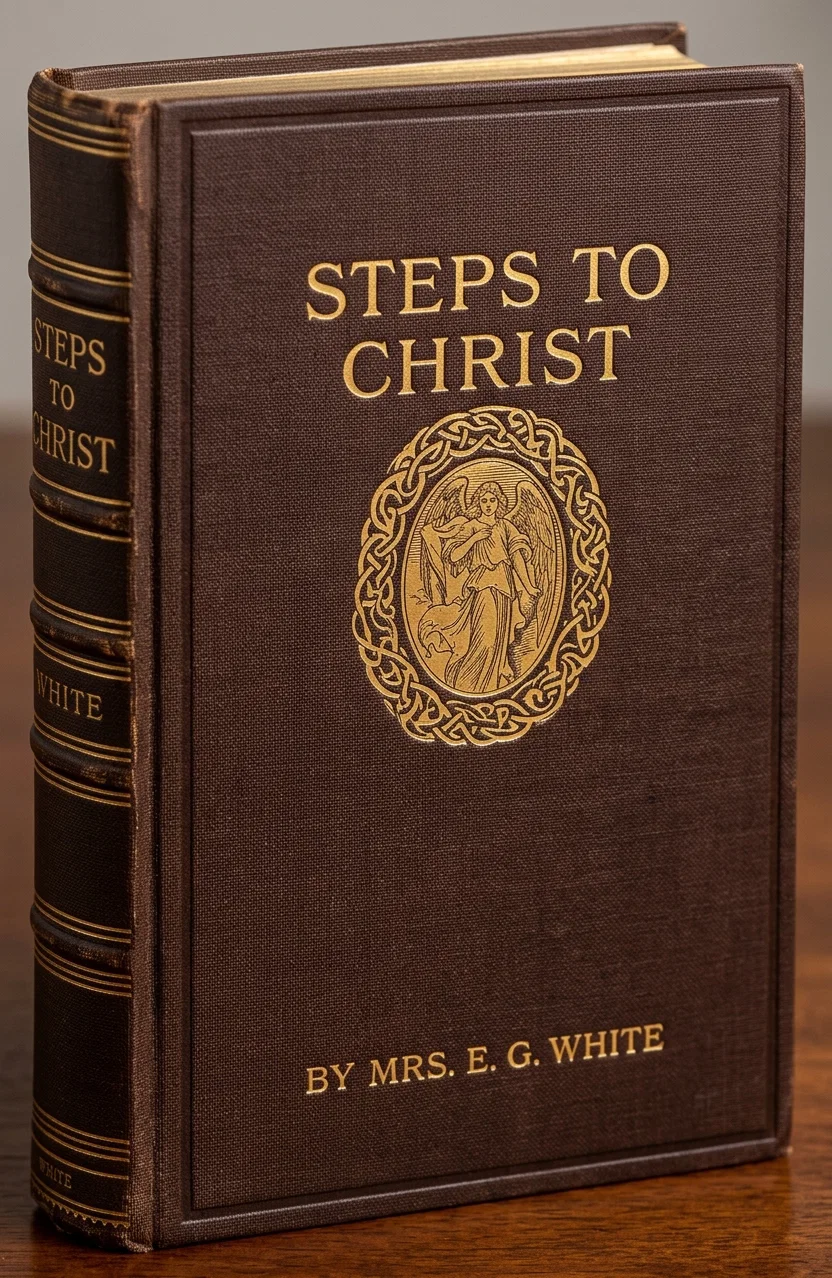
Steps to Christ

“Steps to Christ” is just what the name signifies—a guide-book heavenward. It fully meets the needs of all classes. To the Christian it points the way to a better acquaintance with the Lord. To the sinner it is a guide-book to the way of life.
There are sixty-one original illustrations by Mr. Warren B. Davis, of New York City, which add to the artistic appearance of the book, and help to impress the lessons of the text more forcibly on the mind.
Bound in a variety of styles to suit any taste or pocket-book.
Paper . . . . . . . . . . . . . . . . . . . . . . . . $ .30 Ecru cloth . . . . . . . . . . . . . . . . . . . . . . . .60 Presentation, gilt . . . . . . . . . . . . . . . . . . 1.00 Red American russia, flexible . . . . . . . . . . . 1.00 Edition de luxe, morocco boards, with gilt edges . . . . . . . . . . . . . . . . . . 1.50
Review and Herald Publishing Association New York City,                     WASHINGTON, D. C.                     Battle Creek, Mich.

APPROPRIATE GIFT BOOKS

The Advent Message

THIS advent movement has its place in history. Although it did not have its origin in any of the great seats of theological learning, and has not been recommended to the world by the leaders of theological thought, yet it has steadily made its way, in the face of ridicule and opposition, until it is now recognized as a factor which must be reckoned with in the religious world.
There is only one explanation for these facts. A divine message was to be proclaimed, and a divine providence raised up the messengers. This was not done in any arbitrary way, or in violation of the freedom of choice, but by directing the attention of sincere students of the Scriptures to those portions of God’s Word which declared the purpose of God for this time. William Miller, J. V. Himes, Charles Fitch, Josiah Litch, Joseph Bates, James White, J. N. Andrews, J. H. Waggoner, Uriah Smith, and their associates — men of no mean intellectual ability and of deep piety — were rewarded in their prayerful search of the Scriptures with such an understanding of the prophecies relating to the last days as enabled them to declare with assurance that the great prophetic periods were fulfilled, that the last-day conditions both of the church and of the world were fully met, and that a waiting church would soon behold her divine Lord.
Although this message has been rejected by the many, and has been scoffed at by infidels and nominal believers, yet it has been gladly received by many thousands who are persuaded that the work of preparing the way for the coming King is now being done, and that the long-deferred hope of the church will soon be realized.
Among all the religious denominations there is only one professing to be carrying forward the complete work of reform necessary to make ready a people prepared for the Lord. The name adopted by this people—the Seventh-day Adventists—suggests the leading features of this movement,— a return to the observance of the Sabbath of the fourth commandment, and the proclamation of the impending advent. This movement also stands for the restoration of every neglected or perverted gospel truth, and a return to the simplicity of apostolic faith and practise.
Let the doubting Thomases consider this fact: The Sabbath reform and the announcement of the second advent, when united in one message, have commanded the attention of the people as no proclamation of either truth by itself has been able to do. Although it demands a positive conviction of truth, and a courage based upon an intelligent faith, to respond to the call to observe the seventh-day Sabbath, contrary to the custom of the world and the example of the churches, and although the disappointment of 1844 has led many to regard the advent movement as a lost cause, yet the growth of this denomination and the extension of this message during the last forty years, furnish convincing evidence that this work is not of men. In almost every land on the face of the earth, the Sabbath and the advent have been proclaimed, and witnesses to these truths have been raised up; and this has all been done during the present generation. Some of the earliest advocates of these truths are still bearing their testimony in favor of them.
These considerations may serve to renew the courage of those who have already identified themselves with this advent movement, and ought to be suggestive to those who have attempted to proclaim the Sabbath truth apart from the advent doctrine. Both the Scriptures and providence testify that these truths go together, and neither of them can now be successfully proclaimed without the other.

The Closing Year and the Closing Doors

EVENTS of the closing days of 1908 have a message for every true Seventh-day Adventist. They should give point to our prayers this week of prayer, and lead to a larger annual offering than ever before.
Things are not going on over the world just as ever aforetime. The crisis we have talked about is visibly closing in, and our work is affected by it. Already the preparations for war and the open talk of an outbreak of hostilities in the Balkans next spring make the way of our workers there more difficult. If the gathering winds are not once more held back and quelled, it means the closing of many a door of opportunity in Europe, and great trouble and perplexity for our laborers and people.
For years we have had comparative quiet, and the Lord has wonderfully opened doors in these regions of Europe. But workers have been few and means limited. We pray God for yet a little more time; but how can we pray in faith for yet more time without dedicating our service and our means for the enlargement of our meager forces?
Now Turkey is wide open. We ought, as Elder Conradi has said, to have a hundred workers there to make up lost time. No one but the Lord can tell when the outbreak of war in southeastern Europe, or some new development, will swing shut these doors. Now is the time to act.
For years the way has been open in Persia. We have never set foot in that great country. And now there seems a chronic state of turmoil coming on. How long must Persia wait for the advent message?
After trying long to hold back the acknowledgment, the British authorities are constrained to admit that India is ina far more dangerous state of unrest than in the days before the sudden outbreak of the great Mutiny of 1856. The doors are closing, and we have so much yet undone, so many languages and peoples unreached.
So, too, China, with all the Orient, is astir. As truly as we have a message for the world, the doors so long wide open are not long to be held.
True, our work will not stop even amid the tumult of great world-changes. Whatever comes, the message is to be carried to all peoples. But we shall know to the full the meaning of that warning that the work not done in times of peace will have to be done amid great trouble and sorrow in times of tumult.
The angels have been holding the winds. Even for the heavenly powers it has meant the putting forth of earnest effort, so ripe is the world for the final harvest of destruction. But the cry still goes up, Hold, hold, till we have sealed the servants of our God. And to this advent people is committed that sealing message of Sabbath reform. As the angels check the winds of strife, and hold open these doors, they must look to this people to see us enter. It means a call right now to get into the unentered regions. It means increasing our forces in the mission fields where we have but a foothold.
There is nothing else to live for, nothing else worth while, no other purpose for means beyond the necessaries of life, than to press this message on at home and abroad. Pray for the largest annual offering from our own people that we have ever had. The Thanksgiving effort must not lead any to overlook the annual offering, in which we ourselves bring the gifts for missions. From all the four quarters of the earth comes the call for an advance.
W. A. S.

Editorial

IN one form or another the teaching is repeatedly cropping out that character is the result of doing rather than that doing is the result of character. There is doubtless a certain reflex influence of conduct upon character, but a righteous character can never be formed by the attempt to do righteousness. “Make the tree good, and its fruit good.” Righteousness must be received before it can be revealed.

The Religio-Political Principles of the Papacy

IMMEDIATELY after the close of the recent political campaign, Hon. Theodore Roosevelt, the President of the United States, gave to the public a letter in which he expressed his views as to the bearing which a candidate's religious profession should have upon his fitness for public office. From this letter we quote:—
To discriminate against a thoroughly upright citizen because he belongs to some particular church, or, because, like Abraham Lincoln, he has not avowed his allegiance to any church, is an outrage against that liberty of conscience which is one of the foundations of American life. You are entitled to know whether a man seeking your suffrage is a man of clean and upright life, honorable in all his dealings with his fellows, and fit by qualification and purpose to do well in the great office for which he is a candidate; but you are not entitled to know matters which lie purely between himself and his Maker.
Referring to the opposition against Mr. Taft, based upon the report that his wife and brother were Roman Catholics, President Roosevelt further said:—
As it happened, they are not; but if they were, or if he were a Roman Catholic himself, it ought not to affect in the slightest degree any man's supporting him for the position of President. . . . I believe that this republic will endure for many centuries. If so, there will doubtless be among its presidents, Protestants and Catholics, and very probably at some time, Jews.
The President's outspoken utterance in favor of religious liberty is timely, and ought to have a wide influence. The position which he takes against making one's religious views a test of his qualification for a political office is thoroughly sound, and is in harmony with both the American and the Christian idea of religious liberty. But in his application of this principle to Roman Catholics, the President evidently overlooks the fact that the papacy is a political organization, and that it maintains political principles diametrically opposed to the liberties granted by the Constitution of the United States. If Roman Catholics confined their religious views to the proper sphere, the principles enunciated by the President could be applied to them as well as to Protestants, but when they include within the pale of religion, political opinions subversive of free government and personal liberty, these so-called religious views, which are really political in their nature, become a subject of proper inquiry when one who holds them becomes a candidate for a public office.
This view of the matter has been quite clearly stated in an open letter to President Roosevelt prepared by a committee representing the Evangelical Lutheran Church of America. From this letter, we make some extracts:—
Of course it is subversive of the basic principle of a real separation of church and state to permit the religious belief or non-belief of any candidate for public office to determine the casting of one's vote for or against such candidate, except when that very religious belief or unbelief antagonizes this principle and all those rights and liberties that are included therein and safeguarded thereby. We agree with you, therefore, that those citizens are to be severely criticized who vote against a man merely because he is a Unitarian, a Jew, a Methodist, or any other religionist. But are you not aware of the fact that the Roman Catholic Church has again and again for centuries back, and down to modern times, through the official head and other authorities, denounced as wholly wrong, and as things to be tolerated only so long as they can not be changed, the complete separation of church and state, full religious liberty, freedom of conscience, of speech, and of the press, and that, moreover, it proclaims its teachings and principles to be unchangeable? . . .
Are we not, then, compelled to maintain that a loyal Roman Catholic who fully understands the allegiance required of him by the pope can never sincerely subscribe to the federal Constitution, or, if he does subscribe to it, never can be expected to abide by it, enforce, and defend it? . . .
We protest that it is neither personal feeling nor religious antagonism which determines our attitude in this matter, but solely our disagreement with the Roman Catholic Church on this basic political principle, a disagreement growing out of the rejection and denunciation by the Roman Catholic Church of that very principle which you admonish all faithfully to uphold, not only in theory but in practise.
The views of the President as expressed in his letter were dealt with in a series of resolutions presented at a recent meeting of the Philadelphia Baptist Ministerial Association. The resolutions read:—
Whereas, The President of our country has seen fit to denounce from his high office as unwarranted bigotry the action of some of our citizens who refuse to ignore religious tenets in connection with their voting; therefore be it—
Resolved, That, as was our fundamental teaching, we steadfastly maintain that man's religious faith, that is, his attitude toward God, should not be made a test for any political office, but his moral and intellectual attainments alone should be considered, leaving him absolutely free in purely religious matters.
Resolved, That, as we understand the facts, the Roman Catholic Church lays a claim on its clergy and its members not only for submission to ecclesiastical superiors in matters of opinion, but in all matters of daily life, and has for centuries, whenever it was possible, sought to visit physical pains and penalties on the disobedient, and has taught until now, and still continues to teach, bitter hostility to our public schools and our separation of church and state, and seeks to get from our government a recognition at Washington as a foreign political power, entitled, like other powers, to a representation here, and therefore is, and claims to be, very much more than a religious organization, even a very real and wily and mighty political organization, controlled from abroad by men who are neither familiar with, nor in sympathy with, our governmental ideas.
Resolved, That we appeal from our President, excited and seemingly ignorant of church history, to our President, cooled off and better informed.
Resolved further, That it is not in accord with our American liberty that men be called bigots who exercise the right of private judgment in matters of so much importance as their vote.
Discussion upon these resolutions was deferred for two weeks, when a spirited debate upon them was expected.
It was only to be expected that the Roman Catholics would be highly pleased with the position taken by President Roosevelt. An editorial paragraph in the New World (Chicago) voices their feeling in this matter:—
President Roosevelt's letter to thegentleman from Ohio is destined to become a historic document. Centuries hence Catholics will be quoting it against intolerants throughout the civilized world.
Letters and comments by various persons of more or less prominence have appeared in the public press, and altogether a wide-spread interest in this subject has been awakened.

The Rise and Fall of Religious Liberty in America

Lining up for the Final Assault

It has been shown in these articles that the principles of religious liberty were enunciated by Jesus Christ, promulgated by the true exponents of his gospel, maintained in Europe, even during the Reformation period, in opposition to the Reformers themselves, gained a footing in America only after the most strenuous opposition of the established order, and finally found a place in the Constitution of the federal government in spite of the fact that every State government save one adopted constitutions that were opposed to it in principle. The principle of soul-freedom has grown nowhere in the world without a terrible handicap of oppression, persecution, and martyrdom. It is a principle so opposed to the kingdom of darkness, that, so long as that kingdom exists, the warfare must continue. Therefore, in view of the fact that the majority of the individual States of this nation are committed to the opposite principle through their fundamental laws, it should not surprise us if history should repeat itself in this country, and oppression come again.
We have shown the growth in this country of an organized power committed to the principles of repression and oppression in “religious concernments,” a power definitely and avowedly committed to a vigorous warfare against the fundamental principles of the national government so far as the separation of church and state is concerned. Men have declared that there was no danger, that such an organization could not thrive in the “land of liberty;” but it is thriving to-day, advancing in numbers, in strength, in influence, until the principles it holds are made a lash to whip recalcitrant legislators into line with its purpose.
The growth of its influence has not been kept within its own organization. It has sought earnestly and persistently for support from other organizations, and that support has been given. It has stoutly attacked the federal Constitution because it did not contain the name of God, and did guarantee religious liberty; and that attack, first resented by the great body of the people, has come to be tolerated by the mass, and to be indorsed, directly or indirectly, by an ever-increasing number.
The first organized ally of the National Reform Association was the Woman’s Christian Temperance Union, which was induced by the National Reform Association to second its efforts to secure legislation in behalf of “sabbath reform” and also to secure the recognition of the Lord Jesus Christ as the governor of this nation and of his law as the basis of legislation. Accordingly, in 1887 the Woman’s Christian Temperance Union added to its organization the department of sabbath observance, which was put in charge of Mrs. J. C. Bateham, of Ohio. To show that this organization was fully in harmony with the aims of the National Reform Association, it will be sufficient to cite two authoritative utterances. The Woman’s Christian Temperance Union monthly reading for September, 1886, said:—
A true theocracy is yet to come, and the enthronement of Christ in law and lawmakers; hence I pray devoutly, as a Christian patriot, for the ballot in the hands of women, and rejoice that the National Woman’s Christian Temperance Union has so long championed this cause.
The Woman’s Christian Temperance Union in national convention in 1887 made this declaration:—
The Woman’s Christian Temperance Union, local, State, national, and worldwide, has one vital, organic thought, one all-absorbing purpose, one undying enthusiasm, and that is that Christ shall be this world’s king;—yea, verily, THIS WORLD’S KING in its realm of cause and effect,—king of its courts, its camps, its commerce,—king of its colleges and cloisters,—king of its customs and constitutions. . . . The kingdom of Christ must enter the realm of law through the gateway of politics.
The same year in which the Woman’s Christian Temperance Union took this action, there was formed (Nov. 13, 1887) an organization known as the American Sabbath Union. From the constitution adopted by that organization we learn that the object of its existence was “to preserve the Christian sabbath as a day of rest and worship.” Its influence also was thrown with the National Reform Association to seek by means of religious legislation the enforcement of the Sunday institution upon the people.
The following year the Woman’s Christian Temperance Union in convention passed a resolution to the effect that—
Christ and his gospel, as universal king and code, should be sovereign in our government and political affairs.
In 1888 the third party Prohibition party in State convention in San Francisco hissed down the principle of the separation of church and state, and adopted a platform recognizing the Lord as supreme ruler, “to whose laws all human laws should conform.” The same year the secretary of the National Prohibition Convention, Sam Small, in a sermon at Kansas City, Mo., in the month of January, said:—
I want to see the day come when the church shall be the arbiter of all legislation, State, national, and municipal; when the great churches of the country can come together harmoniously, and issue their edict, and the legislative powers will respect it, and enact it into laws.
This is the avowed purpose of the National Reform Association, and the latter won an influential ally when that political party declared itself in favor of religious legislation. Said one prominent speaker of that party, when accused by a national reformer of not making enough of national reform principles: “We are just as much in favor of those principles as you are; but the time has not yet come to make them so prominent as you wish. But you help put us into power, and we will give you all you want.”
In 1864 there was one obscure organization advocating those un-American principles; in 1888 there were four, and each of the three additions was capable of wielding a greater influence among the people at large than the parent organization. The effectiveness of the power working against the Constitution and religious liberty had been more than quadrupled.
In 1884 the National Reform Association had made a bid for Catholic support of its program in these words:—
Whenever they [the Roman Catholics] are willing to co-operate in resisting the progress of political atheism, we will gladly join hands with them.
What they meant by political atheism was nothing more nor less than the separation of church and state and the nation’s guaranty to the individual of the right to worship God according to the dictates of conscience. That ground being common to both the National Reform Association and the Catholic Church, the latter took the proposition of co-operation under favorable consideration, and in the year 1889, at the Catholic Lay Congress held in Baltimore on November 12, issued the following pronunciamento:—
There are many Christian issues upon which Catholics could come together with non-Catholics and shape civil legislation for the public weal. In spite of rebuff and injustice, and overlooking zealotry, we should seek an alliance with non-Catholics for proper Sunday observance. Without going over to the Judaic sabbath, we can bring the masses over to the moderation of the Christian Sunday.
This was done, as it was announced by the national reformers, “after correspondence and conference with the American Sabbath Union.” It was advocated by the editor of the Catholic Universe in these words:—
What we should seek is an en rapport with the Protestant Christians who desire to keep Sunday holy.
The national reform organization sought for Catholic union with them against “political atheism.” The Catholic editor advocated an agreement with such non-Catholics “who desire to keep Sunday holy,” in order that, by such union, the Sunday institution—the child of the papacy—might be exalted. The pronunciamento issued as a result of that advice and that “correspondence and conference with the American Sabbath Union,” declared in favor of such a union between Catholics and non-Catholics as would enable this combination to “shape civil legislation for the public weal;” and that “public weal” for which they were to unite in shaping legislation is principally comprehended in what they denominate “proper Sunday observance.”
That union may therefore, in effect, be regarded as consummated, and to the combination previously effected the National Reform Association can now add the power and influence of the whole Roman hierarchy in the United States. And to prove that this is not an incongruous or inharmonious combination, I quote the instruction given to Catholics by Pope Leo XIII:—
All Catholics should do all in their power to cause the constitutions of states, and legislation, to be modeled on the principles of the true church.
The word “states” in the above quotation is used in the sense of nations. The principle of “the true church” in reference to the proper relation between church and state is that the two institutions should be joined, controlled by one head, and that head the head of the church, and that all “heresy” should be punished by pains and penalties. The principles of national reformism, carried to their ultimate, involve just such an arrangement, though they refuse as yet to acknowledge the headship of the pope. Both organizations believe in the union of religion and the state—or literally, church and state; both believe in the state legislating upon religious matters; both believe in the enforcement of the Sunday institution by law, backed by pains and penalties; both believe in setting up a standard of religion for the nation, and laying the hand of the law upon religions that do not conform to the standard. Why should they not join hands?
For years the advocates of national reform principles sought to bring the labor unions into harmony with their purposes. For a considerable time these overtures were rejected; but notwithstanding these rebuffs and rejections, the advocates of national reformism claimed to represent the laboring men of the nation. Their claims were indignantly rejected by an authorized representative of the labor unions (Mr. Thos. J. Morgan) before a House committee during the hearing on the bill for closing the Columbian Exposition on Sunday. But the importunate persistence of the Sunday-law advocates has finally been rewarded; and the president of the American Federation of Labor has indorsed the purposes of the National Reform Association and its allies, so far at least as Sunday legislation is concerned. That indorsement was brought to light in this way: The officials of the International Federation of Sunday Rest Associations of America arranged for a convention to be held on the grounds of the Jamestown Exposition, September 25, 26, 1907, and Mr. Samuel Gompers, president of the American Federation of Labor, was invited to address the convention. Mr. Gompers’s letter in reply to the invitation reads:—
AMERICAN FEDERATION OF LABOR, WASHINGTON, D. C., Sept. 14, 1907. Dr. T. T. Mutchler, Pres. International Federation Sunday-rest Assns. America, 1008 Walnut St., Philadelphia, Pa.
DEAR SIR: Your favor received to-day, and contents noted. I regret very much that circumstances are such as to make it impossible for me to accept your invitation to deliver an address before your association at its meeting in Norfolk, September 25, 26, but as I previously stated to you, it is absolutely beyond my power to be present.
May I take the opportunity, however, of conveying to you my hearty commendation of the principles and purposes of the association which you represent? Not only am I personally in hearty accord with any movement which has for its object the preservation of one day’s rest in seven, but the American Federation of Labor, representing, as it does, over two million workingmen and women, has emphatically declared itself in favor of the Sunday-rest day, and it has done as much, if not more, than any other organized body of men and women to enforce the observance of the Sunday-rest day.
Again expressing my regret that circumstances prevent my attending the meeting of your association, with every wish for your success, I have the honor to remain, Very respectfully yours, (Signed) SAMUEL GOMPERS, President A. F. of L.
Thus another powerful ally joins the ranks of those who are working to transform this government into an ecclesiastical machine that will ride roughshod over the civil and religious rights of the people.
There are two other organizations that must be placed in the same category, the one designed to energize and direct these efforts on the part of the Protestant denominations, and the other designed to do the same work for and among the various Catholic organizations of the country. The first is the Inter-Church Federation Organization, and the second is the American Federation of Catholic Societies. This banding together of institutions and organizations for a common purpose—warfare against the fundamental principles of our government and the rights of individuals under it—is one of the most significant events of this century. The results of the combined influence of these organizations upon the American government and people will be considered in another article.
C. M. S.
Continue reading: Imitating the Ideal