Your ShelfYour Projects

Review and Herald, Vol. 85, No. 50.

LIFE AND HEALTH
Earlier text: Dedication of the Nashville Agricultural and Normal Institute

The Religious Liberty Campaign in Missouri
THE Missouri religious liberty lecture tour was even more successful in reaching the public mind in the latter days of the State-wide effort than at any other time of its brief history. Doubtless the political campaign waged so fiercely in Missouri was helpful to us in securing larger audiences, although it had been the general opinion that it would be nearly impossible to prosecute the public work during the closing days of the presidential campaign. The people were alert and active, and anxious to hear all the public speakers upon questions relating to government, from whatever standpoint presented.
After leaving Glasgow we visited Salisbury, Huntsville, Moberly, Palmyra, Monroe City, Louisiana, St. Charles, St. Louis, Macon, Kirkwood, Clayton, Independence, and Liberty, the work at the last-named place—the county-seat of Clay County—closing the tour upon the one hundred fifty-seventh day from its beginning. It was with tears we bade adieu to an audience of over four hundred persons gathered at one of the corners of the court-house lawn, and announced that “our religious liberty work in Missouri had ended.” Immediately, the city attorney came forward from a group of lawyers who had been intently following the lecture, and said, “Do not say ended until you give us at least another lecture upon the subject in our court-room;” while an honest, rugged old farmer said to Mrs. Wightman, “Come back and preach all that you believe, and we’ll come to hear you.” For more than an hour we were busy replying to questions, distributing literature, and taking the addresses of those who desired to correspond with us.
Sabbath, October 17, was the most remarkable day of the tour. At three o’clock we lectured from a large dray stationed at a corner of the court-house square, to an audience of not less than five hundred persons. The attentiongiven was remarkable. People were present from all parts of the county; and after speaking, we answered questions and distributed literature until the omnibus arrived to take us to the station.
Leaving Huntsville just at sunset, we arrived at Moberly at twenty minutes past six, and at half-past seven were addressing an audience of fully seven hundred persons in an open-air meeting. This was the second visit to Moberly, and the interest was far greater than at the first. Several policemen helped us arrange the platform, and then became so deeply engrossed in the topic that they forgot their duty to keep the street open, which rapidly became blocked. This day gave us an aggregate of twelve hundred interested listeners, while a large quantity of tracts and leaflets was given out.
At Palmyra nearly two hundred persons listened attentively. We also enjoyed a good visit with the brethren of the Palmyra church.
At Louisiana the night was inclement, yet our audience was large. We returned to Louisiana for a second visit, in order, chiefly, to meet some of the representative men of the State living there.
Other cities—nearly all visited—gave us large audiences. At St. Louis the meeting was held in the church. Nothing beyond this meeting was accomplished, as it has been the design of the writer to enter St. Louis—a city of over half a million inhabitants—later, for a more extensive and painstaking public work. For this work the church there is exceedingly anxious.
Fully five hundred persons listened to the lecture on inalienable rights, at Macon, on the afternoon of October 31. A week after this meeting the Pacific Press branch office in Kansas City received a letter from a prominent physician in Macon, who had passed by while Mrs. Wightman was speaking. He stated that he was anxious to ascertain who the speakers were, that he desired to know more upon the subject under discussion, that he had concluded that the lecturers were Christian people, and, very likely, Seventh-day Adventists. He had inquired of an Adventist for information, and had been referred to the Pacific Press branch office. It was evident that this man was a seeker after truth. It is gratifying to know that while oftentimes an intolerant bigot or a prejudiced person will, in order to nullify unanswerable argument, place us in the category of saloon-keepers and the lawless and the vicious, some honest souls find no difficulty in classing aright those who advocate principles of justice and equality—as Christians, as Seventh-day Adventists! Is it not significant that the principles of Christian and constitutional liberty which we advocated, enabled this man to identify us not only as Christians, but as Seventh-day Adventists? He writes that he knows nothing about Seventh-day Adventists, except that there is such a people, yet the terms “Christian” and “Seventh-day Adventist” are, to him, relative terms! So much, then, for Seventh-day Adventism!
At St. Charles one of the most interested listeners was an ex-member of the Dominion parliament, a gentleman of culture and refinement. He said: “I did not dream that such movements were on in the United States. I had expected to return to Canada ere long, and re-enter the political field; but since I have received such important knowledge upon the subject of religious liberty, and your danger of losing it, I feel that it would be both a duty and a pleasure to study to become entirely proficient, and then take the field in aggressive work to help stay the tide of evil that so seriously threatens from the direction of religious intolerance.” Judge Ball, of Montgomery City, met this Dominion politician at St. Charles, and related to him how the religious liberty message had stirred the minds of the people in his city, and said: “It has set us to thinking as nothing else has. And if these people will return to give us more of these truths, I believe the court-house will be filled night after night to hear them.” Such are the impressions made.
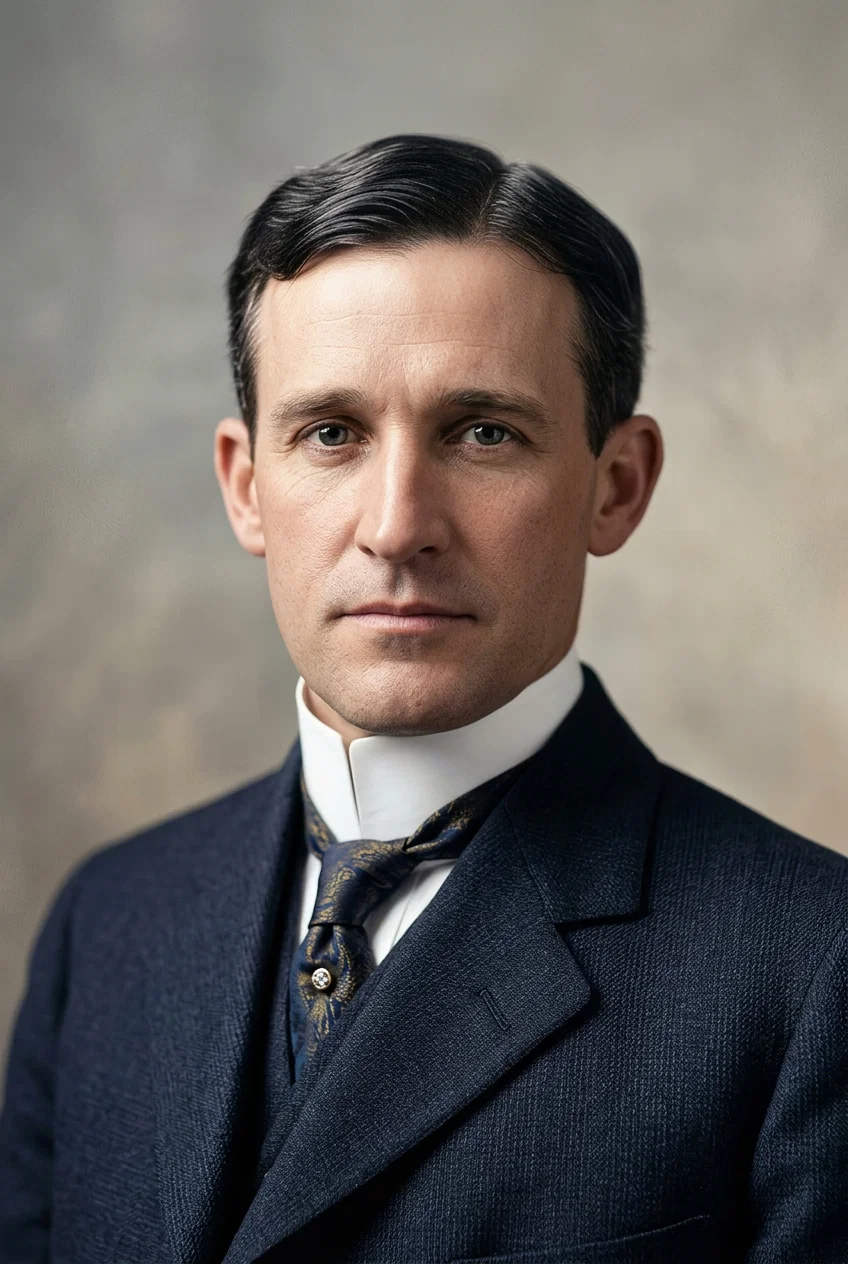
HERBERT S. HADLEY, GOVERNOR-ELECT OF MISSOURI
I can not enumerate the judges, district attorneys, sheriffs, and various officials of the State with whom it has been our pleasure and our privilege to converse. I wish that every reader of the REVIEW could read the many interesting letters we have received. One of the most prominent members of the Republican party, lawyer and ex-member of the State Senate, writes from Brunswick, asking us to return to his town and lecture in the city hall, and promises his aid and public co-operation. A prominent Democrat and ex-member of the legislature, lawyer and chief business man of a city of the southern section of the State, writes the same thing, and urges that the meetings be continued. So it will be seen that ours is in no sense a political work; it goes beyond that: it appeals to all classes of whatever shade of political belief. All are equally affected, and therefore equally interested. Influential citizens of over a score of the places visited stand ready to welcome again the religious liberty lecturers, and offer moral and financial support.
It will be noticed that Kansas City has not been enumerated in the places visited, and for this reason: It has had considerable attention and work given to it during the time of Judge Wallace’s remarkable procedure in Sunday-closing enforcement since last December, and it seemed best to defer any further special effort there until occasion may demand. The day following the close of the tour, however, we visited Kansas City, Kan., and conducted two religious liberty services in our church there, both of which were well attended, many persons being obliged to stand throughout the evening service.
A singular and noteworthy feature of the political campaign in Missouri was the signal defeat of Governor Joseph W. Folk in his attempt to secure the primary nomination for United States senator, to succeed Senator W. J. Stone, who triumphed over his political adversary by a majority of eighteen thousand votes. No political battle in Missouri ever was waged more fiercely than this. Governor Folk made an unprecedented canvass on the strength of his record of “law enforcement;” and it was at Kirkwood, in a political speech, that he qualified “law enforcement” as meaning “Sunday closing,” as “the prosecution of those who violate Sunday laws.” Both Mr. Folk and Mr. Stone are strong members of the heretofore dominant political party in Missouri, but the struggle for the senatorship engaged in by them so divided the party as to make it possible for the Republicans to elect Attorney-General H. S. Hadley governor of the State, who will be inaugurated at Jefferson City, January 1. Thus, in the defeat of Judge Wallace in his effort to secure the nomination for governor, and the defeat of Governor Folk to reach the United States Senate, two of the most formidable civic warriors for “strict compulsory legal sabbath observance,” the ablest champions for religious legislation in the civil state in Missouri, that grand old commonwealth is temporarily rid of bigotry and intolerance, and, under God, the principles of religious liberty, and its advocates, have triumphed. Governor Folk has said that he would retire to private life and the practise of law; while Judge Wallace’s term of office as criminal judge having expired, there seems no other course open to him than “private life and the practise of law.” So, in Missouri, the political skies seem to have cleared from the threatening clouds of intolerance and persecution. But, alas! the battles won to-day are often lost to-morrow. In Missouri, as elsewhere, “eternal vigilance is the price of liberty.” We are confident that Governor-elect Hadley, who has so ably distinguished himself as attorney-general of Missouri, will, as governor, fully safeguard the liberties and rights of thepeople as vouchsafed to them in the State’s Declaration of Rights.
A summary of the Missouri religious liberty tour may be briefly stated: 157 days of continuous service (beginning at Sedalia, June 3, and ending at Liberty, November 7); over 3,500 miles traveled; 147 speeches delivered; over 1,500 personal visits made; 76 newspaper articles published, thus reaching an aggregate of one million readers; over 1,000 letters written; over 100,000 pages of literature distributed; while it is safe to estimate that in the neighborhood of 15,000 persons listened to the lectures. God grant that in the kingdom to come we may find some fruit from this effort.
Mrs. Wightman and the writer now turn from the pleasant recollections of the summer’s work, to take up similar duties in the needy fields of the Central Union Conference. We desire the prayers of the REVIEW readers that we may receive divine wisdom in abundant measure, not only for the duties in our new work, but also that through correspondence we may help many of the interested persons in Missouri.
It is probably unnecessary for me to state that I have written the articles upon the Missouri tour solely that others may be encouraged in the good work by the simple recital of what God has wrought in Missouri in 1908. “Be strong and of a good courage; . . . for the Lord thy God is with thee whithersoever thou goest.” God has spoken; we need not fear. So let us unitedly buckle on the armor a little more tightly for the battles of 1909. Those battles are coming—coming with a thousandfold intensity. And we must be ready.
JOHN S. WIGHTMAN.

The Church Missionary Secretary

THE office of the church missionary secretary [heretofore called the librarian] is one of almost unlimited possibilities. The greatest care should therefore be taken in the selection of the person to fill this office. The first essential qualification is whole-hearted consecration to God. Without this, the work of this officer will surely be a failure. If there is among the church-members one who is a true follower of Christ, an active missionary worker, young enough to have strength and energy, and old enough to have influence, and who has some organizing and managing ability, let that person be selected to act as church missionary secretary. If no individual in the church has all these qualifications, select the one best fitted for the place. The duties and responsibilities of this office are heavy, and the missionary secretary will need the co-operation of all other church officers and of the members, if the work is to be carried forward in a manner that will please God.
The missionary secretary is the connecting link between the conference and the church. Plans for missionary work are usually communicated from the conference to the church through the State tract society secretary, who is expected to keep up a regular and frequent correspondence with every church missionary secretary in the conference.
When the missionary secretary receives from the tract society secretary a request for co-operation in some plan of missionary work, such as the circulation of a special number of one of our periodicals, the distribution of tracts on a religious-liberty issue, or a campaign with health literature, it is his duty first to place the communication before the other church officers, that they may together study it and become intelligent as to the needs of the situation, so that when the plan is presented to the church, and all the officers may be prepared to support it with the enthusiasm that it deserves. Generally when this is done, the members enter heartily into the plan, and make it a success. Our people are easily led, but are very hard to drive.
In addition to receiving communications from the State secretary, the missionary secretary should write regularly to the office, telling of the work of the church, of its successes, and of its failures. This will enable the State secretary to give intelligent counsel with regard to any difficulties that may arise.
The missionary secretary is the business agent of the church in the literature circulation department. He should understand how to keep the books correctly, and do everything in an orderly and proper manner. If an individual is appointed to this office who does not understand this part of his duties, he should make it his business to obtain the necessary instruction from the tract society secretary or from some other conference worker. A missionary secretary who rightly appreciates the responsibilities of his office will not be satisfied to keep his accounts in a loose, slipshod manner, but will endeavor to do all his work in the most perfect manner possible.
A church missionary secretary should never allow his church to get into debt to the tract society. If close watch is kept over the accounts, and the members are encouraged to work on the cash plan, there will be no debts.
Besides giving attention to collecting the accounts, it is the duty of the church missionary secretary to see that collections are taken up and donations solicited from absent members to provide literature for free distribution. Every church should have a fund, replenished as rapidly as used, for use in providing literature for free distribution to meet the five issues that are constantly arising.
E. M. GRAHAM, Secretary of the Australasian Union Conference.

The Church Treasurer

The importance of accurate accounting on the part of all our treasurers can not be overestimated. This is true of our church treasurers as well as of our general treasurers. “He that is faithful in that which is least is faithful also in much.” I greatly fear that our church treasurers do not realize the importance of this as they should.
Several years ago I spent three months in one of our large conferences, visiting churches, and examining the accounts of the treasurers. In that tour, I regret to say, I did not find a single treasurer’s accounts that balanced. One brother had receipts from the conference treasurer, showing that he had sent in one hundred fifty dollars more than his receipt stubs showed he had received, yet he insisted that he had always given a receipt, except for about seven dollars, and that his conference treasurer’s receipts were only for money he had sent in.
The accounts nearest in balance were only ten cents off,—and they were submitted by a church treasurer who could neither read nor write. This is not to put a premium upon lack of learning, but to show that accuracy can be attained by all. This brother realized his inability, and so took the greater pains. He had his daughters attend to the writing for him, and was careful to ascertain whether or not they had entered the amounts correctly.
It will be readily seen that accuracy on the part of our treasurers, will beget confidence on the part of the brethren, and will be conducive to liberality.
To see the effect of their giving, will also inspire the brethren to faithfulness in the support of the cause of God. Does fruit show for their sacrifice? What is being accomplished with the means that is placed in the cause of God? The treasurers should watch for the reports telling of the results that are being attained, and bring them before the church, thus giving them the good cheer that these reports carry.
R. W. PARMELE.

Christian Liberty

Reports, Notes, and Comments Pertaining to the Current History of the Rights of Conscience
Conducted by the Religious Liberty Bureau
K. C. RUSSELL     . . . . .     Chairman
W. A. COLCORD     . . . . .     Secretary

NOTICES AND APPOINTMENTS

Address

The address of Elder S. M. Cobb is Gordon St., Toorak, Victoria, Australia, care of Victorian Tract Society.
NOTICES AND APPOINTMENTS

Current Mention

— Two Japanese steamers collided off the port of Chefoo, China, November 30, and it is reported that 700 persons lost their lives.
— About one hundred Filipinos were drowned by the sinking of a coasting vessel off San Fernando, Philippine Islands, November 24.
— The American battle-ship fleet under Rear-Admiral Sperry left Manila, December 1, on its return voyage. The fleet returns by way of the Suez Canal.
— The shah of Persia has established a council of state in place of the recent constitution. This will be composed of forty members of the conservative aristocracy.
— The president of the Longshoremen’s Union, Mr. D. J. Keefe, has been appointed to the position of commissioner general of immigration, to succeed the late Frank P. Sargent.
— The treasurer of the United States, in his report for 1908, records a deficit of $58,070,201, the ordinary revenues of the country being that much less than the usual annual expenditures.
— A very important agreement has been entered into between representatives of this government and the government of Japan, in which each nation declares its own purposes in the Pacific, and its intention to recognize and respect the rights and purposes of the other. While not in the nature of a treaty, the agreement is looked upon as a pact amounting almost to the dignity of such a document. It is thought that this will help to maintain the peace of the world.
— The largest postal deficit in the history of this country is that for the past fiscal year, just reported by the postmaster-general, the receipts for the year being $16,000,000 less than the expenditures.
— After the first of January the cost of letter postage to Germany, where letters go direct from an American port to a German port, will be two cents an ounce, the same as the present rate to England.
— Emperor Francis Joseph of Austria celebrated, on December 1, the diamond jubilee of his coronation. So great was the crush of the crowds on the streets in the evening, that four persons were killed, and more than one hundred severely injured by being trampled upon.
— One hundred thirty-eight miners lost their lives in an explosion in the Rachel Mine, Marianna, Pa., November 28. This was known as the model mine, and was supposed to be as nearly safe as it was possible for a coal-mine to be made.
— The revolution in Haiti has been successful so far as the overturn of the government is concerned. Pres. Nord Alexis was compelled to accept the protection of the French flag in leaving the palace to embark on a French war-ship. Considerable pillaging and rioting followed the departure of the president. This was finally put down by General Poidevin, after twelve persons had been killed by the soldiers, and many wounded. General Simon, who is marching on the capital with 5,000 troops, is expected to be proclaimed the new president. There are five foreign war-ships in the harbor of Port au Prince, and in case of further rioting each war-ship will land a company to restore order.

Pennsylvania Sanitarium and Benevolent Association, Notice!

NOTICE is hereby given to the constituency of the Pennsylvania Sanitarium and Benevolent Association, that the fourth annual meeting of said corporation will be held in the Sons of America Hall, at Lebanon, Pa., at 10 A. M., on Thursday, Jan. 14, 1909.
The membership of the constituency is composed of the executive committee of the Columbia Union Conference of Seventh-day Adventists, the executive committee and ordained ministers of the Eastern Pennsylvania Conference of Seventh-day Adventists, thephysicians in the employ of the corporation, and twelve persons elected for the purpose at the last session of the Eastern Pennsylvania Seventh-day Adventist Conference.
Officers will be elected, and such other business as may properly come before the meeting will be transacted.
W. H. HECKMAN, President.

Notice !

IN answer to the flood of letters from our people all over the continent, wanting the baby girl recently advertised in the REVIEW, I will say that arrangements have been made for the baby. Mrs. J. Clayton, 1251 Pandora Ave., Victoria, B. C.

Notice!

THE sixth annual session of the Manitoba Conference of Seventh-day Adventists will be held in the city of Winnipeg, Dec. 30, 1908, to Jan. 3, 1909, to elect officers and transact the usual business connected with the conference. A full delegation is desired at the first meeting. A committee will have charge of the work of furnishing accommodations for the delegates. Reduced rates will be granted by the railroads, on the certificate plan.
Wm. C. Young, President.

Chesapeake Conference, Notice!

THE annual meeting of the Chesapeake Conference Association of Seventh-day Adventists will be held in the church used by the Seventh-day Adventists on North King St., Wilmington, Del., Monday, Dec. 14, 1908, at 8 P. M. This meeting is called for the purpose of electing officers, and transacting such other business as may legally come before the association.
THOMAS M. BRADFORD, Secretary.

North Dakota Conference Association Meeting

The annual meeting of the North Dakota Conference Association of Seventh-day Adventists will be held in connection with the annual meeting of the conference, Dec. 27-31, 1908, at Harvey, N. D. The purpose of this meeting is to elect a new board of trustees, and to transact such other business as may properly come before the association. The first meeting will be held December 31, at 10 A. M. C. J. KUNKEL, President.

Annual Meeting of the Michigan Sanitarium and Benevolent Association

THE regular annual meeting of the Michigan Sanitarium and Benevolent Association for the year 1908 will be held in the chapel of the Battle Creek Sanitarium, on North Washington Ave., Battle Creek, Mich., Wednesday, Dec. 30, 1908, at 3 P. M., standard time, for the election of trustees and the transaction of such other business as may properly come before the meeting.
By order of the Board of Trustees,
GEO. E. JUDD, Secretary.

North Dakota Conference Meeting

THE annual meeting of the North Dakota Conference of Seventh-day Adventists will be held Dec. 27-31, 1908, at the Cheyenne River Academy, Harvey, N. D., for the purpose of electing conference officers for the coming year, and for the transaction of such other business as may properly come before the conference. The first meeting will be held Sunday, December 27, at 7:30 P. M. Let all churches be sure to send a list of all their delegates and alternates at once to the conference secretary, Elder F. G. Specht, Harvey, N. D.
C. J. KUNKEL, President.

Eastern Pennsylvania Conference,

Notice!

The fifth annual session of the Eastern Pennsylvania Conference of Seventh-day Adventists will be held in the Sons of America Hall at Lebanon, Pa., Jan. 12-19, 1909. The first meeting will be held at 7:30 P. M., Tuesday, Jan. 12, 1909. The meeting is called for the purpose of electing conference officers for the ensuing year, and transacting such other business as may properly come before the conference.
This will be an important meeting, and all our churches should send full delegations. The ratio of representation is one delegate for the organization, and one additional delegate for every ten members.
W. H. HECKMAN, President.

Obituaries

CRICHLOW.— Died in Union Springs, Ala., Oct. 1, 1908, Fred Peters Crichlow, aged four months and three days. Words of comfort were spoken by Rev. O. Nelson, pastor of the Methodist Church. W. H. BOWEN.
BLACK.— Died at Mountain View, Cal., Nov. 13, 1908, of apoplexy, Mrs. Christine Black, aged 72 years, 7 months, and 26 days. In 1857 she was married to Jacob Black, who, with nine children, survive her. Seven of these are in the truth. She accepted present truth thirty years ago under the labors of Elder H. A. St. John. In 1890 she with her family moved to Battle Creek, Mich., in order that the children might receive their education in our institutions. Failing health compelled her in the spring of 1905 to remove to California, where she lived until her death. Through many years of difficulty and hardship she was a faithful wife and an earnest Christian mother, teaching her children the ways of the Lord. She believed in taking everything to God in prayer. Her greatest desire before her death was that she might meet all her children in the kingdom. Her kind and sympathetic nature made her well beloved by all who knew her. The funeral was held in the Mountain View church, the service being conducted by Elders M. C. Wilcox and A. O. Tait. G. W. DEFORTH.
NOTT.— Died in Bruce, Wis., Sept. 29, 1908, of typhoid fever and blood-poisoning, Emerson Allen Nott, aged thirty-one years and four months. Though his suffering was intense, he was patient and cheerful. He left a four-year-old son, besides father, mother, and two brothers, to mourn. Words of comfort were spoken by Rev. Cain (Congregationalist). MRS. SARAH NOTT.
BURGESS.— Died suddenly, after a long and painful illness, at North Loup, Neb., Nov. 7, 1908, W. H. Burgess, aged 78 years, 4 months, and 18 days. In 1857 he was married to Miss Anna Root. In 1888 they came to Nebraska. In 1877 they were converted, accepted the third angel’s message, and joined the Seventh-day Adventist church in Richford, Wis. The funeral was attended by many friends. Words of comfort were spoken by Elder G. B. Shaw (Seventh-day Baptist), from Deut. 33:25, last clause. An aged wife, one daughter, and three grandchildren are left to mourn. MRS. M. H. BURGESS.
KIRKENDALL.— Died suddenly at her home in Plymouth, Ohio, Aug. 17, 1908, of a complication of long-standing troubles, Mrs. L. F. Kirkendall, aged 72 years, 1 month, and 4 days. Sister Kirkendall was converted when a young girl, and accepted the third angel’s message, uniting with the Seventh-day Adventist church at Norwalk, Ohio, about twenty-five years ago, remaining a faithful member until death. The husband, one son, three sisters, and one brother are left to mourn. Though she sleeps, the thoughtful, devoted life lived before a large circle of friends remains a constant witness for the truth. Words of comfort were spoken by the writer, who was assisted in the service by Rev. F. B. Heibert, of the Plymouth Lutheran Church. C. T. REDFIELD.
BOOTH.— Fell asleep in bright hope, Nov. 9, 1908, in Battle Creek, Mich., Sister Angelia J. Booth, aged 68 years, 6 months, and 29 days. She was born in the State of New York, April 10, 1840. She was a daughter of Brother C. S. Glover, who was prominently connected with this work in the fifties and later on. At the age of seventeen she was married to Cyrus Edmunds, with whom she lived thirty-two years, when he was laid to rest. After a widowhood of six years she was married to S. M. Booth, and this union covered a period of thirteen years. During this six years’ interim Sister Booth spent most of the time in city mission work in Kalamazoo, Detroit, and Chicago. At the age of twelve years she was baptized by Elder Joseph Bates; thus her Christian experience covered a period of over fifty years. Sister Booth has always maintained the Bible faith and practise of the Seventh-day Adventists. Being of a retiring nature, in a modest way she has always been a living witness for Jesus. For years her health has been poor, but for the past twelve months she has been confined to the bed and invalid chair. The disease which carried her away was of a nervous character, and toward the last she was a great sufferer. Naturally of a cheerful disposition, she bore her sufferings with great fortitude. Her husband gave her unremitting attention. God gave to this saint a gifted voice for song, and this she employed on all proper occasions as long as strength remained. The husband, several brothers and sisters, many relatives and friends, and the Battle Creek Seventh-day Adventist church are left to mourn. Elder S. D. Hartwell conducted the funeral service in the Tabernacle, assisted by Elders A. C. Bourdeau and G. W. Amadon. G. W. AMADON.

Business Notices

This department is conducted especially for the accommodation of the Seventh-day Adventist readers of this paper.
Brief business notices will be published subject to the discretion of the publishers, and on compliance with the following—

Conditions

Any person unknown to the managers of this paper must send with his advertisement satisfactory written recommendation. Such recommendation should come from one of our ministers, or from the elder of a Seventh-day Adventist church. It is not enough to refer to some individual by name. Secure his recommendation in writing and send it.
We open no accounts for advertising, and cash must accompany each order.
A charge of one dollar will be made for each insertion of forty words or less. Each additional word, initial, or group of figures in excess of forty, will cost three cents.
No discount—for several insertions.
WANTED.—To exchange nine-room house and one acre of ground in suburbs of West St. Louis, Mo., for a home in Chicago, Ill., or farm in church settlement. Address, S. Collins, 2492 N. Paulina St., Chicago.
WANTED.—Position as engineer in some of our institutions. Will furnish recommendation as to character and ability. Will be ready for work on or before March 1, 1909. Address Harley A. Rentfro, Sigourney, Iowa.
CALIFORNIA RIPE OLIVES.—We now have circulars prepared describing more fully freight rates, difference in prices, beneficial effects, etc. These will be sent free upon application. Address W. S. Ritchie, Corona, Cal.
FOR SALE.—500,000 of the most beautiful Mottoes you ever looked at. We sold almost 31,000 of these beauties in the first twenty-nine days of November. We will mail 100 Mottoes, 12 x 16, for $6; or 100 of our Imported Bible Cards, 4 x 7 inches, for $3.50. Christmas will soon be here, and teachers will want these cards for their classes. Do not delay, but send order at once. Orders filled by return mail. Address, with two-cent stamp, Hampton Art Company, Lock Box 257, Hampton, Iowa.
FOR SALE.—Sanitarium Cooking Oil, pure and healthful; no odor; keeps indefinitely: 5-gal. can, $3.50; 10-gal. can, $7; 64 cents a gal. in half barrel and barrel lots; 30 gal. and 50 gal. Address Sanitarium Cooking Oil Co., Louisville, Ky.
SEND us names and addresses of five persons (not readers of this paper) who will want strawberry plants, and we will give you one year's subscription to Fruitman and Gardner. Catalogue free. Geo. Jorgensen and Son, Box 10, Poy Sippi, Wis.
WANTED.—The address of Mrs. Martha Nelson Wilson, former nurse at the Battle Creek Sanitarium. Any one knowing her or her parents' address will confer a favor by sending the same to Harris Treatment Rooms, 52 E. Division St., Fond du Lac, Wis.
HYGIENIC VEGETABLE COOKING OIL.—Best shortening known. Guaranteed under pure food law. Keeps sweet and choice. 5 gal., $3.50; 10 gal., $6.75. Cans crated. ½ bbl. (about 32 gal.), 60 cents a gal. By freight from Louisville, Ky. Address Dr. O. C. Godsmark, Chattanooga, Tenn.
FOR SALE CHEAP, ON EASY TERMS.—Our pleasant home in Boulder, Colo. Four rooms, pantry, closets, good cellar, city water, two lots. Near Colorado Sanitarium and church and school. Am located elsewhere. Desire to sell soon. Address U. P. Long, Sedgwick, Colo.
SPECIAL PRICES.—Wesson's white deodorized cottonseed oil. Best cooking oil made. A history of the Ban-nana, some recipes including $1. Meatolene recipe and large oil sample, 25 cents. Do not be misled; write to-day. Address Ethan A. Brown, Nut Food Specialist, Des Moines, Iowa.
FOR SALE.—Forest Valley Stock-farm; 320 acres, well improved; modern conveniences; three miles from good town; telephone; orchard beginning to bear. For further information, address Forest Valley Stock-farm, Elida, N. M. For reference, Elder H. L. Hoover, Estancia, N. M.
FOR SALE.—Treatment-rooms equipped with sinusoidal and galvanvanic machine; electric-light cabinet; thermaphore pack. Modern conveniences for giving treatments, also for care of house patients. Splendid opening. Will sell at sacrifice because of sickness. Address Sanitarium, South Haven, Mich.
FOR SALE.—Peanut Butter, 10 cents a pound; 100 pounds, freight paid, 11 cents. West of Rockies, 11½ cents. Olive Oil, $2.70 a gallon; 50 pounds Cocoanut Oil, $7; 54 pounds Vegetable Cooking Oil in 6 cans, $6; freight paid, $6.50. Cash with order. All guaranteed absolutely pure. Address Vegetarian Meat Company, Washington, D. C.

Publications Wanted

[SPECIAL NOTICE.—We learn that objectionable literature is being sent in response to these requests, and urge all to examine with special care any periodicals or pamphlets received outside of our well-known denominational publications. Be sure that the literature which you distribute teaches the truth. Those responding to requests for papers should send only clean copies, neatly folded, and securely wrapped.—Ed.]
THE following-named persons desire late, clean copies of our publications, post-paid:—
Mrs. Jennie White, R. F. D. 1, Hillyard, Wash., Signs, REVIEW, Instructor, and Liberty.
Mrs. Iza E. Clement, 16 McCallie Ave., Chattanooga, Tenn., Signs, Life and Health, and tracts.
Mrs. D. A. Fitch, Glendale, Cal., a continuous supply of publications for pioneer missionary work.
Mrs. Anna L. Gallion, Arapaho, Okla., Signs, Watchman, Instructor, REVIEW, Life and Health, and tracts.
R. W. Clark, St. Petersburg, Fla., wishes to thank those who have sent papers, and desires that a larger number be sent him.
C. A. Meyer, National City, Cal., papers and tracts in English and foreign languages for ship mission work and reading-racks.

Church Council and Missionary Departures

THE first quadrennial meeting of the Federal Council of the Churches of Christ in America was held in Philadelphia, December 2-8. As the doings of this body are of great significance in their relation to the fulfilment of the prophecy concerning the future of this country, several brethren from Washington attended this meeting during the whole or part of the time. The editor of the REVIEW was present during the first part of the session, and Elders G. B. Thompson, K. C. Russell, and W. A. Colcord during the latter part of the meeting. Brethren Russell and Colcord came directly to Philadelphia from Pittsburg, where they attended the meeting called for the organization of a National Lord's Day Alliance. Reports of both these important gatherings will appear in the REVIEW.
LAST week another missionary party left New York on the steamship "Cedric" for India, via London. The party was made up of Albert Beckner, W. E. Perrin and wife and two children, and R. H. Leech and wife. Brother E. Ingle, of South Africa, who has been in the States on business, accompanied the party as far as England. Brother Beckner goes to Burma to take up evangelical work; Brother Perrin to Lucknow, to assist in the publishing work; and Brother and Sister Leech, both of whom are nurses, will assist at the Mussoorie Sanitarium.
Continue reading: A Meeting of Great Significance