BEFORE the coming of the British, in the days of “the Lord of Gold, Silver, Rubies, and Amber, Descendant of the Sun, Arbiter of Life, King of Righteousness, and King of Kings,” the subject races of24Burma were liable to loss of life or confiscation of goods or both at all times. The arrogance of the Burmese kings led them to a systematic plundering of the five tribes under their rule. The Shans, being brother Buddhists, fared best, perhaps, while the Karens, having no religion except demon-worship, and no written language, fared worst, being considered inferior both spiritually and mentally. To this day the Burman speaks of the Karens as simple-minded folk.
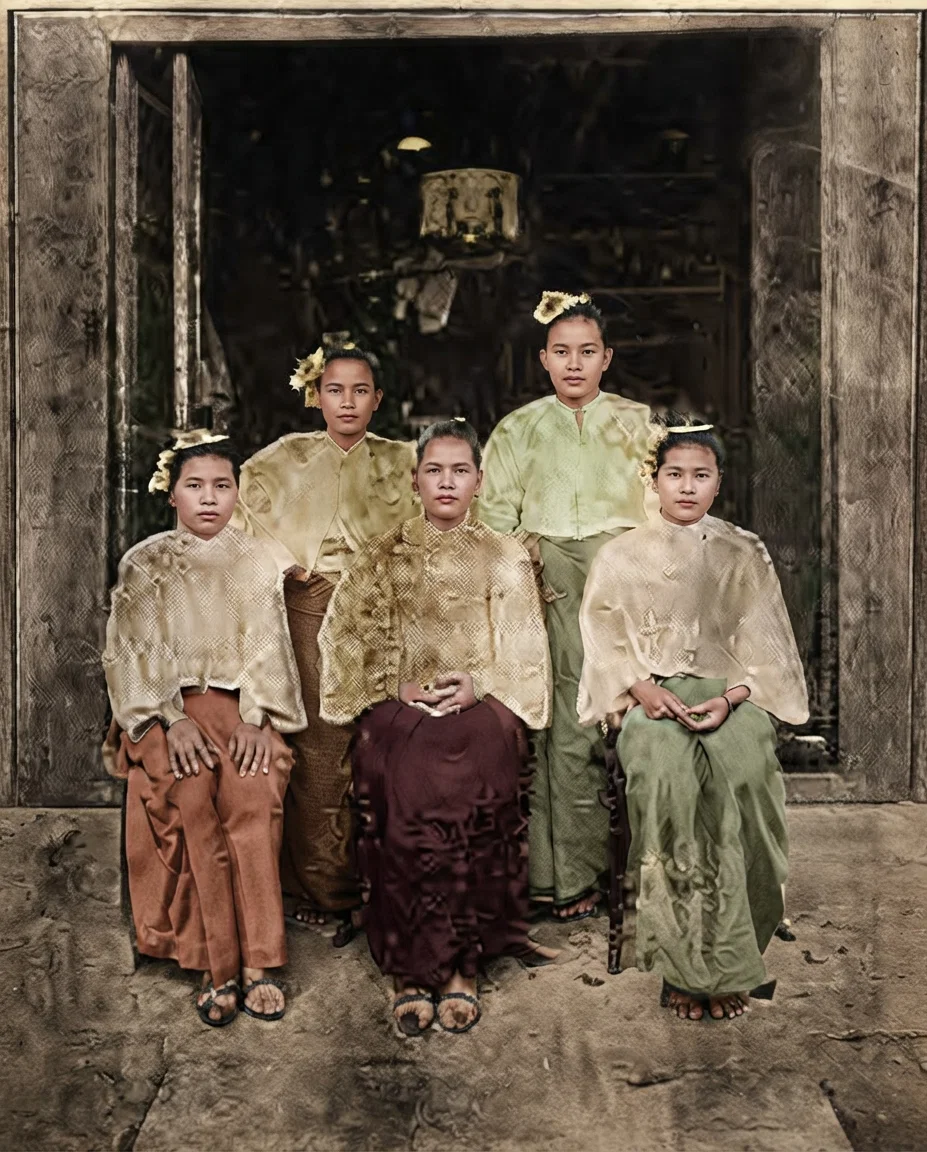
A Group of Burmese Girls.
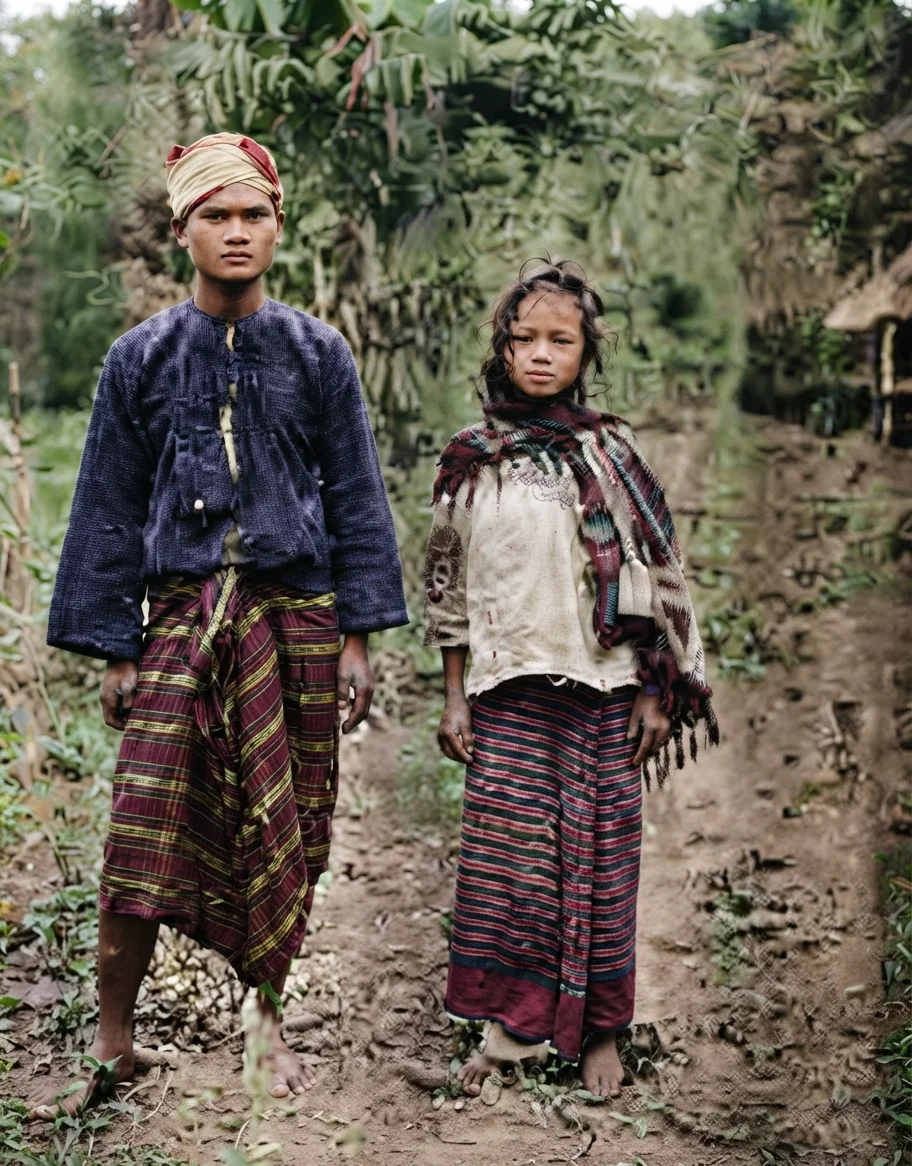
A Typical Karen Boy and Girl.
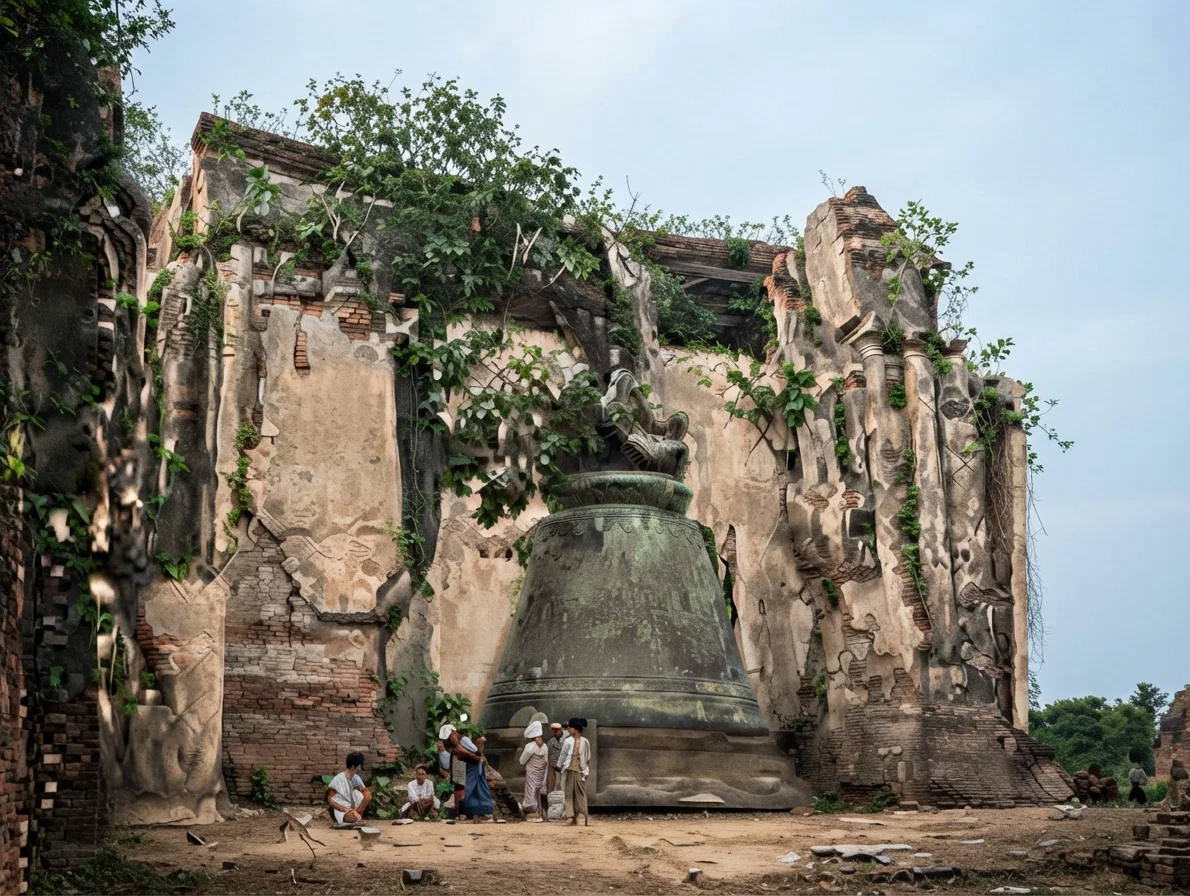
The Great Mongoon Bell, Burma.
However, this once despised people have illustrated in a remarkable way the scripture: “And base things” “and things which are despised, hath God chosen.” During the centuries of their subjection and oppression they preserved a tradition which offered hope for the future. They felt that because of sin they were cut off from God, but that there would come messengers of the true God who would teach them their way back to Him. They preserve an account of Creation, the Fall, the Flood, and other events very like the Biblical record.
When the missionaries came, the Karens illustrated their condition by telling a story. “Some children left in a place of supposed safety by their parents were so frightened by the approach of a tiger that they threw down the cliffs some pigs that had taken refuge with them. Their eyes, however, were not fixed upon the tiger but on the path by which they expected their father to come. Their hands fed the tiger from fear, but their ears were eagerly listening for the twang of their father’s bowstring that would send the arrow quivering into the tiger’s heart. And so altho we have to make sacrifices to demons, our hearts are still true to God.”
Thousands of these Karens have received the Glad Tidings with joy, while comparatively few of the Pharisaical Burmans have responded to the Gospel.
The message of the Saviour’s return in glory must be given in power to these humble Christians. And we know of no people to whom it would be more acceptable.
It has been known for years that when the Karens migrated southward a part of the tribe was left behind. And very recently these have been found. Missionaries in northeastern Burma near the Chinese frontier have found the Lahu, a people whose traditions correspond in almost every particular with those of the Karens. Their language, too, is almost the same. A man knowing the Karen readily acquires their tongue. The Lahu are spread over considerable territory in Burma and far northward into China.
Shwe Dagon Pagoda, Rangoon.
One of the marvels of modern missions is the readiness with which these people accept Christianity, and the eagerness they display in seeking the knowledge of the true God. Usually a mission worker must go out into the highways and byways to seek the lost, but here the operation is reversed—the lost are seeking him. It is not uncommon for people to come from ten to twenty days’ journey. Often groups coming from opposite directions arrive at the same time. There have been as many as five hundred camping in the mission compound at one time. In view of such phenomena, who can say, “There are yet four months, and then cometh harvest”? Saith the Lord, “Lift up your eyes, and look on the fields; for they are white already to harvest.”
Do not the hearts of all who read these lines respond? Will not some go? Will not some give means? Could stronger inducement be wanted? Here is an investment yielding “an hundredfold” in this life, and in the world to come, eternal life.
Many precious sheaves from Burma will be gathered into the kingdom, of this we are sure. The reapers must come. Dear reader, will you not be one? H. H. VOTAW.
Insein, Burma.
An Indian Home in Assam, India.
Karen Girls in Their Home Dress.
A Glance at Missions in India
By J. L. Shaw
By J. L. Shaw, Superintendent of India Mission Field
LITTLE did Ziegenbalg and Plutschau, pioneer mission workers in India, comprehend the great work for Christ to follow them, when, two hundred years ago the ninth of last July, they landed at Tranquebar, unknown and unwanted. Little did they think when lying in a prison some time after their arrival of the mighty mission movement of which they were the advance sentinels.
Nor yet did Carey, whose soul was fired with mission zeal nearly a century later, realize the progress which a hundred years since then would make. The English world, so eager to enrich themselves from India's storehouse, little thought the time had come, or ever would come, for planting Gospel seed in Indian hearts. They thought Carey's ideas an interference with divine sovereignty. Mr. Fuller, a personal friend of Carey, said: "If the Lord should make windows in the heavens might such things be." But the hour had struck. The time had come when the great Leader of mission movements was to proclaim a Saviour's love among the multitude of India's sons and daughters, and neither indifference nor governmental interference could stay His hand. He who said, "Go . . . teach all nations," had set His hand to the work among this darkened fifth of mankind, and who could hinder?
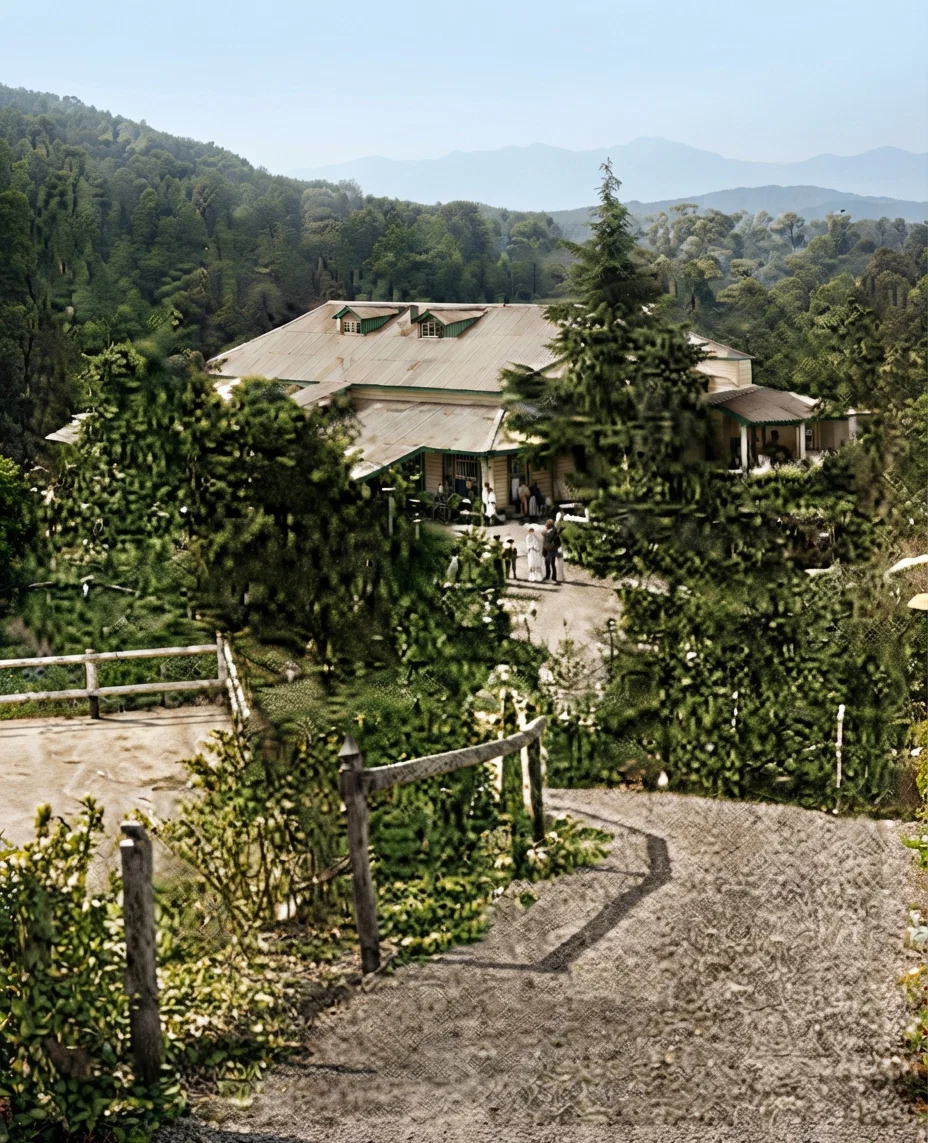
Mountain Mission Home, Mussoorie, India.
The record of the last hundred years is a record of progress in mission work in India. Let him who is skeptical but read what God hath wrought. There are now Christian institutions by the thousands: schools, colleges, hospitals, and orphanages holding hundreds; printing-houses with tons of Christian literature. And more, there are in India nearly a million native Christians, and among them many honest hearts loyal to their King Christ Jesus. There will be stars in the crowns of many faithful men and women who have labored and died for India's people in the century past.
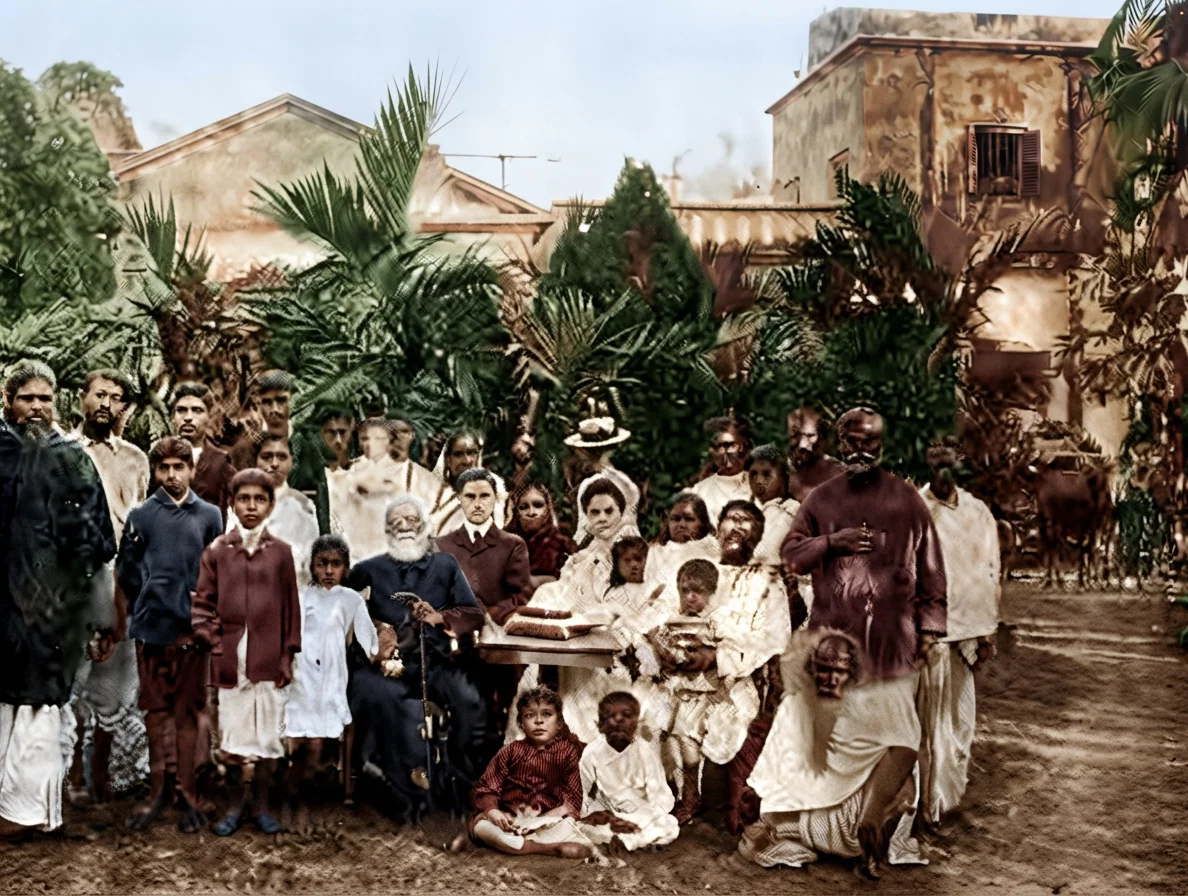
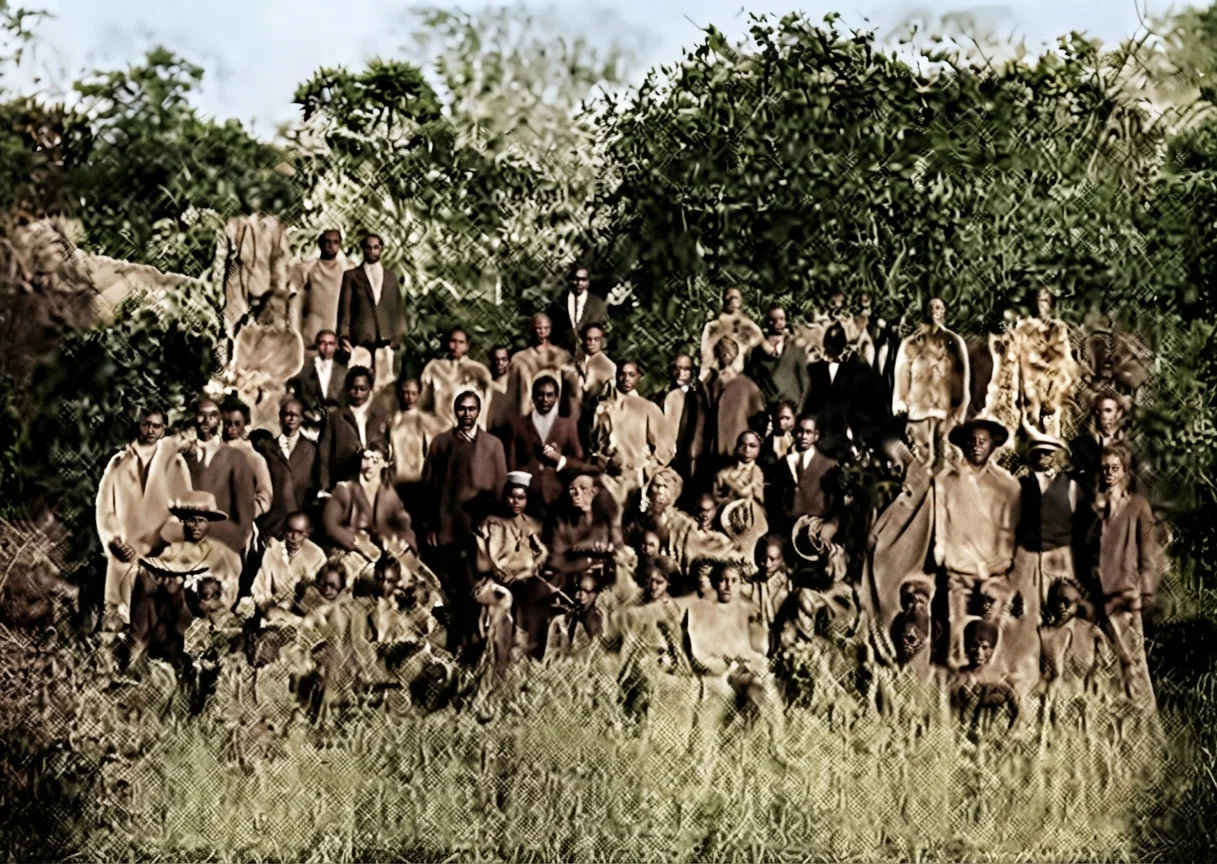
Bengali Sabbath-Keeping Christians, Calcutta, India.
Now many different societies are operating in India, and all told between three and four thousand Protestant missionaries. The Bible has been translated into the leading languages, and is being circulated. Every year marks an advance among the lesser tongues and dialects. That word which has shed a flood of light wherever it has gone is slowly yet surely reaching Indian hearts.
And yet with all that has been done, only a beginning has been made. We are contending with a great foe. The battle is fairly on. We have, as it were, skirted the coast and discovered a few bays and inlets, and have some conception of the magnitude of the work to be accomplished among the unwarned millions of India, but that is all. There is approximately one missionary for every one hundred thousand people, but what is that? Think of a city of a million pagans with ten workers for Christ among them, and remember they are hurrying on to Christless graves.
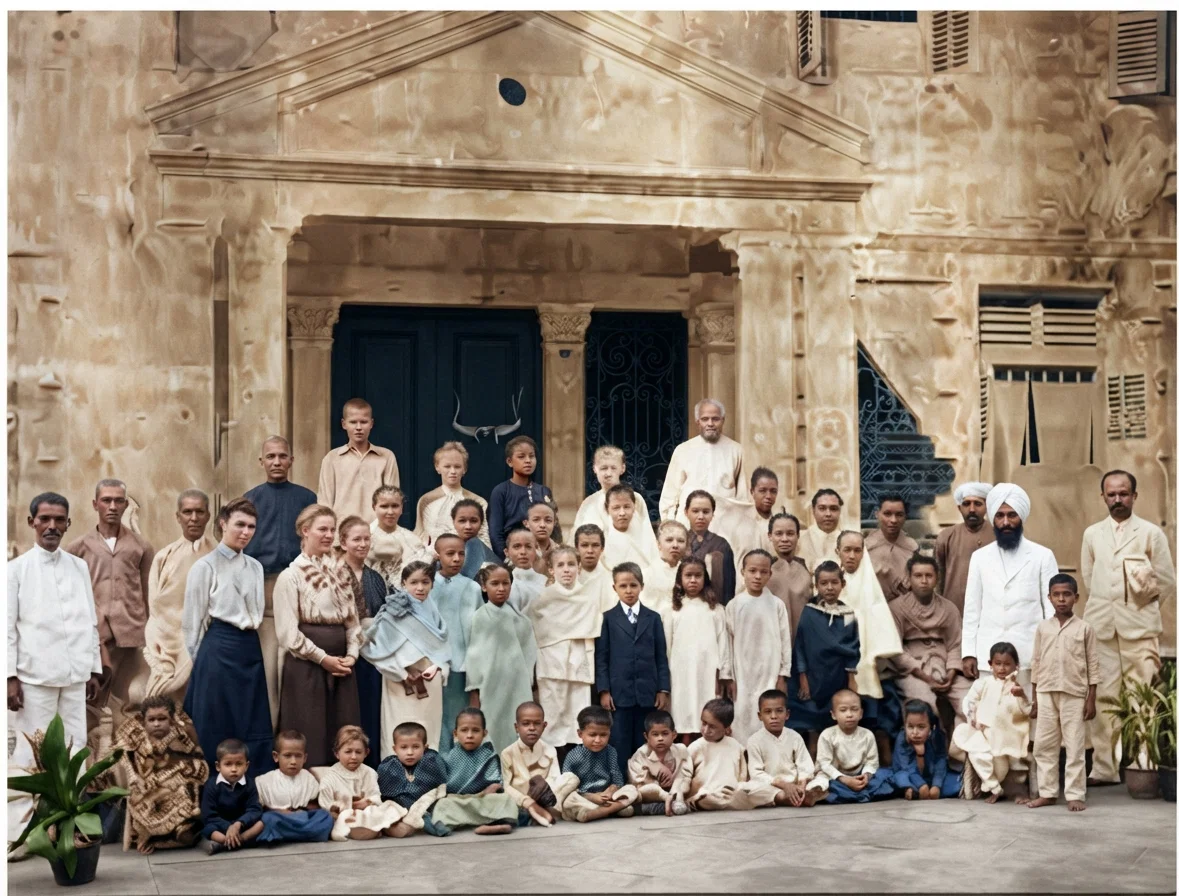
Elder G. F. Jones, Workers, and School, Singapore. (See page 22, for article.)
We believe that this Gospel of the kingdom is to be preached in all the world for a witness to every nation, and that in this generation. The golden morn is about to dawn. The end is near. Christ is soon coming. A short, quick work is to be done. The warning note of truth must be hurried on among these people and reinforcements are wanted. An army of consecrated soldiers is needed to push on the triumphs of the cross of Christ. Who will give himself to this work?
Our own mission has about thirty foreign missionaries in India, and a few local workers, about one for every ten million. It is as tho the people of Iowa, Illinois, Missouri, and Nebraska all were heathen, and had but one representative of present truth among them. We should strengthen our forces. Our work is hardly yet begun. We have but seen the need in part and can send back to our people in the home land the Macedonian cry. The following appeal in verse, from our leper brother in India, is the echo of that cry:
Hopeless millions here are moving
On toward the great last day,
Poor and naked, blind and wretched
Worshipers of wood and clay.
They have never heard of Jesus,
Nor of His redeeming love.
How He shed His blood to give them
Life and rest in heaven above.
They have never heard of heaven,
Or the city over there;
With its golden streets and portals,
And its walls of jasper rare;
Of the glorious kingly mansions
That the saints will soon attain,
When their Saviour, Christ, appeareth
Once again on earth to reign.
Brethren, come and tell these millions
Who are dying every day,
Lead them to the cross of Jesus,
From their gods of wood and clay.
Come, for time is quickly fleeting,
Come along without delay;
India needs more faithful workers,
Come for Christ's dear sake, we pray.
The Philippine Islands.
By E. H. Gates
By E. H. Gates, General Secretary Pacific Island Missions.
“The dark places of the earth are full of the habitations of cruelty.”
ALMOST four centuries ago the great navigator, Magellan, while searching for the famed Spice Islands, discovered the Philippines. At that time the people were mostly pagans, while many of the people of the Sulu Archipelago and the great island of Mindanao were fierce Mohammedans. Since that time the majority of them have, thru the teaching of the Spanish friars and the terror inspired by the Spanish guns, become Catholics.
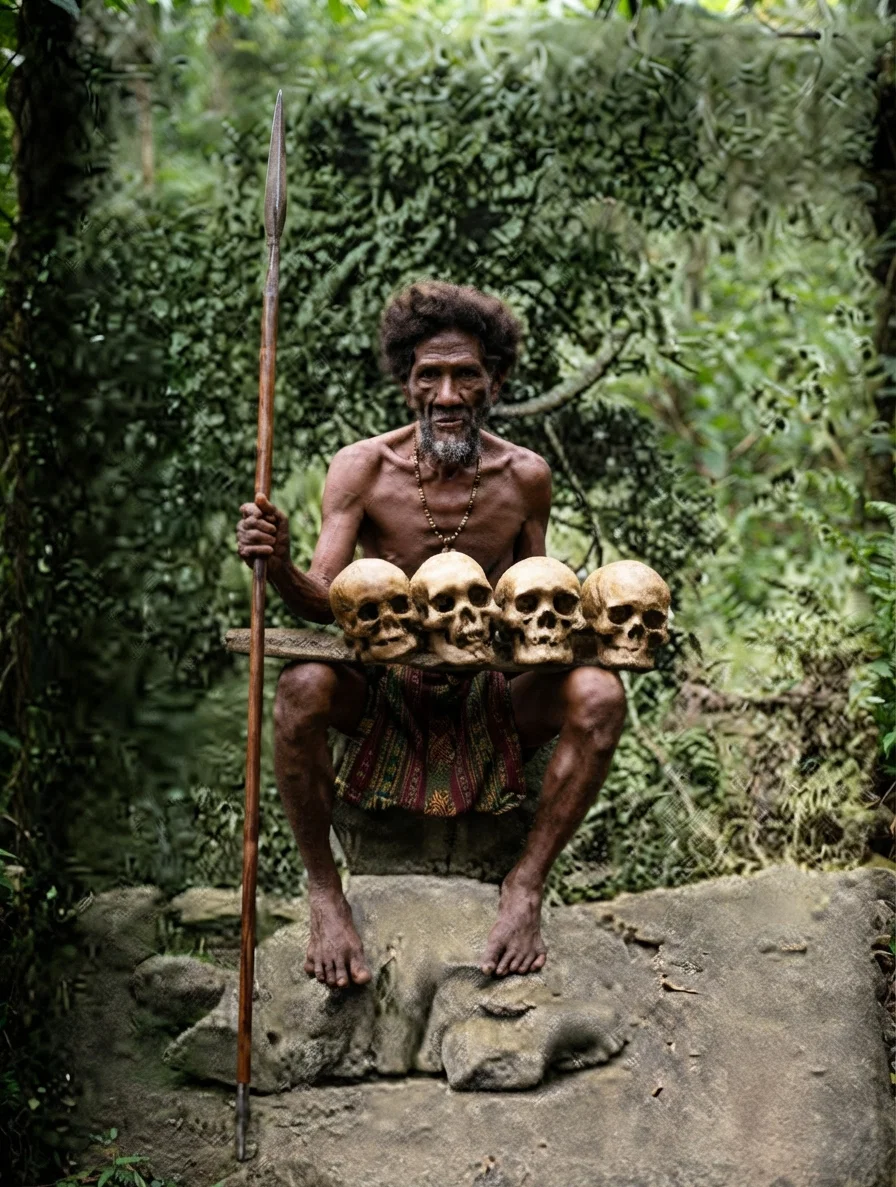
In the mountains are found the Igorrotes, who are head-hunters; the Negritos, a pigmy race; the Indonesians of Mindanao, and many other smaller tribes, upon whom the Catholic faith and Spanish civilization made but little impression. The Mohammedan Moros were never reduced to obedience to Spain, tho their progress as pirates was checked.
The present population of the group is nearly 8,000,000. The land area of the group is 19,000 square miles larger than the combined area of Great Britain and Ireland. Luzon, the largest island, is alone equal to the combined area of Denmark, Belgium, and Holland, and Mindanao is almost equal in size to Portugal.
Filipino Belle, Necklace of Sharks' Teeth.
Head-Hunter, Philippines.
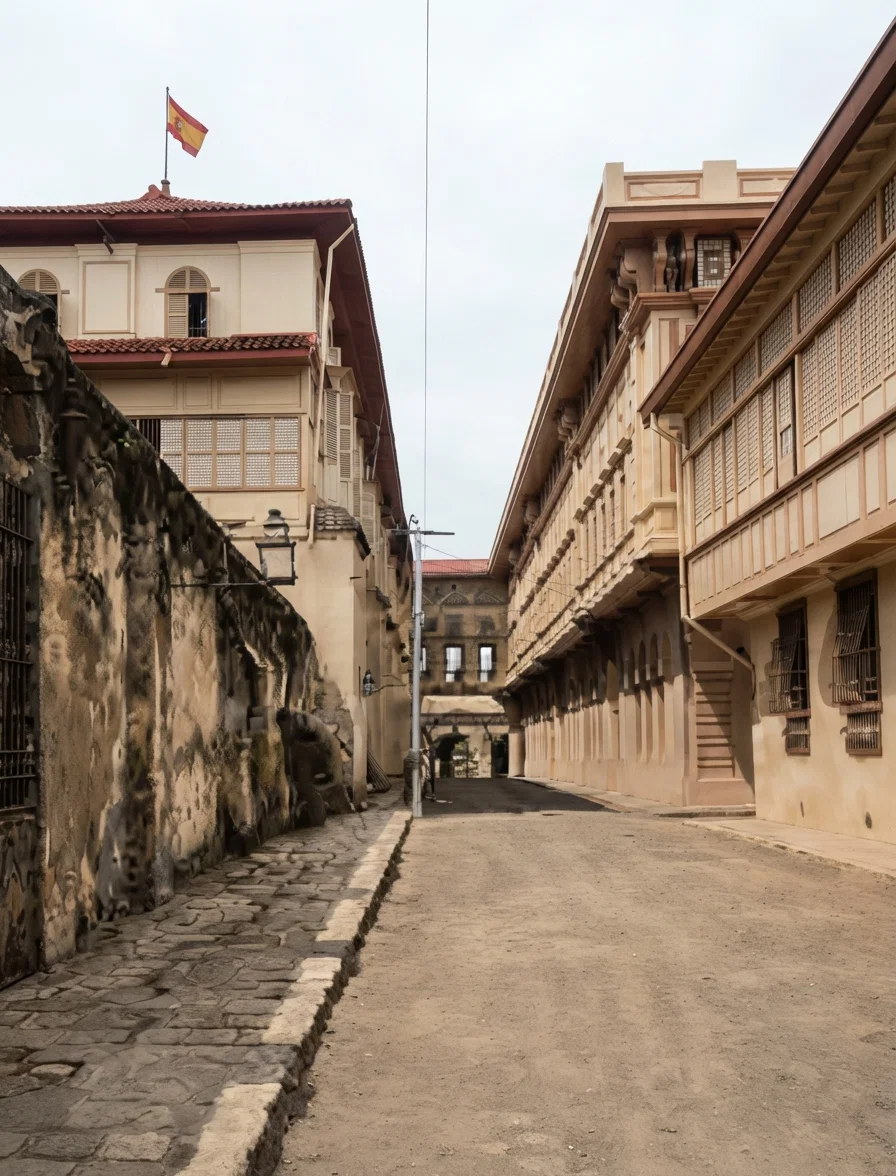
Typical Street in Manila.
Tho the majority of the Filipinos embraced the Catholic religion, but little change was necessary in their lives or forms of worship. The worship of gods, which were similar to those worshiped to-day in Java and Borneo, was exchanged for the worship of the Virgin and other saints.
The awful moral condition of the mass of the people is terrible to contemplate. For centuries they have been ruled over by licentious, intemperate, and cruel Spanish friars, whose whole aim seemed to be to get money and power, and indulge self.
Their religion is summed up in attendance at mass and religious festivals, at the latter of which vast crowds march in procession, carrying lighted candles, gaudily decorated images of the saints, and accompanied by bands of music, illuminations, and surpliced priests. Sunday is usually spent in attending cock-fights, horse-races, and gambling places. Everybody smokes, even little children, with few exceptions. In this great and needy field we have one missionary and his wife, Brother and Sister McElhaney. To this people the message of Christ’s love and the truths concerning His second coming must be quickly given. The heart of Jesus is touched with the sorrows and woes of these people who have so long been bound by Romish shackles.
Living expenses and rents are exorbitantly high in Manila. Much means and many consecrated workers will soon be needed to furnish facilities for doing a quick work. Brethren in the home land, let our prayers and offerings go forth together, so that the reign of sin be finished, and Christ’s coming hastened.
Matabeleland, South Africa.
By M. C. Sturdevant
HE which testifieth these things saith, Surely I come quickly." Rev. 22:20. Yet before He can come the "Gospel of the kingdom" must be preached in all the world. This is what we are striving to do in this part of the field, and we can say to the glory of God, the work is onward. In a few more weeks eight more precious souls will be buried with their Lord in baptism.
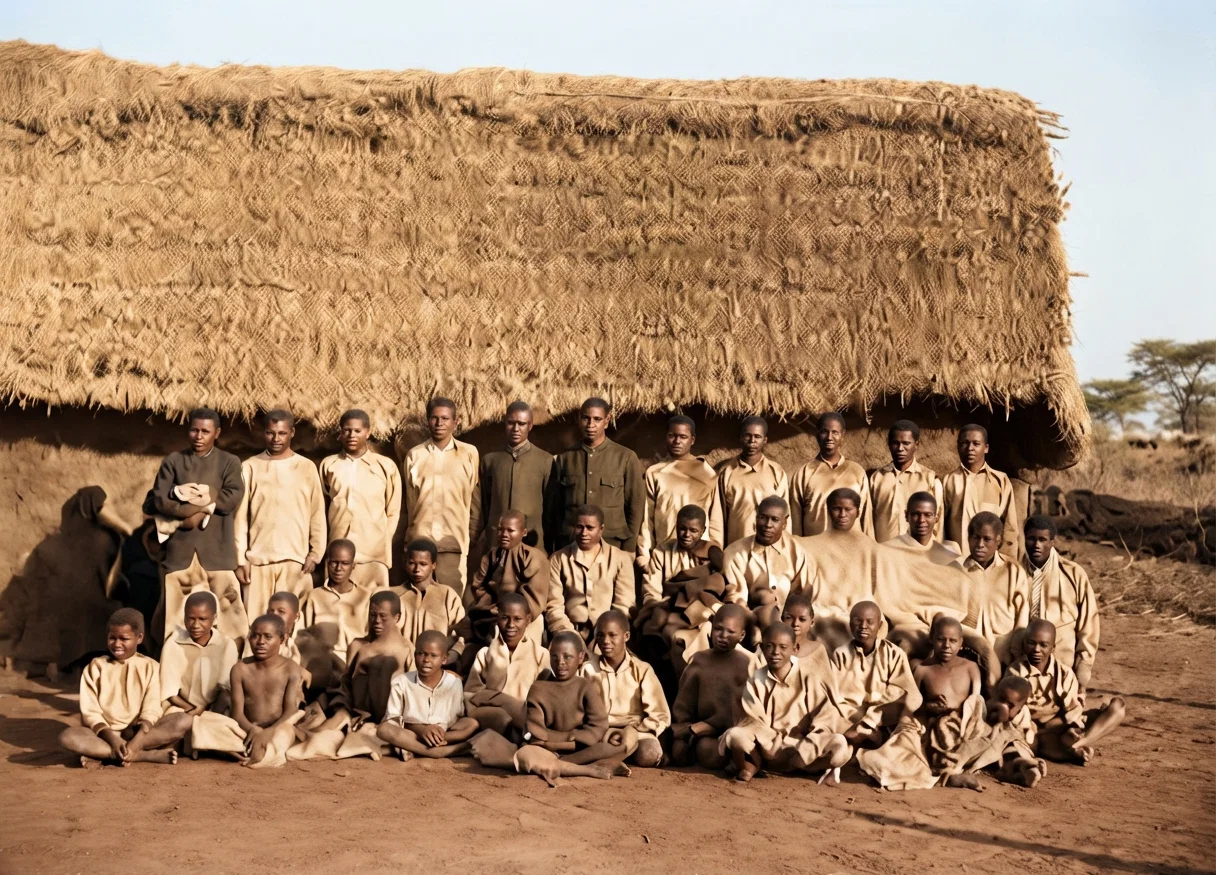
Elder Anderson's Mission School, Barotseland.
Ethiopia is stretching out her hands to God. Ps. 68:31. O, that all could see the earnestness with which many of our native young people are taking hold of their studies, and the desire to spread the truth among their people.
Much more should be done for these people than is now being done. I will mention but one experience of one of our native teachers. On account of the sickness of one of our boys, I was called out to where he was teaching, some forty-five miles from our station, traveling on the bike thru the heaviest sand and bush.
Tho very weary, my heart rested as the teacher called the little children who lived in the kraal (village) where he was teaching to our fireside in the evening and had them repeat the Ten Commandments and sing the sweet songs of Zion to me in their own language. They also repeated many scriptures. As they sat before me, naked in body only for the short skins fastened around the loins, I could see the "robe of righteousness" fast covering them.
We were thinking of closing up this small school, but the chief of the kraal (also father of the children) said: "Are you going to leave me without a teacher because only my own family come to the school? Are not our souls as precious as others?" After hearing that, I could not at present take the teacher away. And there are many others scattered over the great, "darkened field" as hungry as this chief for the truth of God's word. Who will come and help us? We want help, we must have help, to reach this people before the Saviour comes.
O, my heart cries out for some one to take my place here, if God will permit, that I may go farther inland. I want to go where the white man's foot has never yet carried God's word.
As I climb these kopjes (mountains), and look over the great stretch of country where thousands of these natives live, not yet knowing of the true God and their Saviour, I can hardly wait to hasten on and spread the glad tidings of the kingdom so soon to come.
I feel to say, Courage, brethren, the goodly land is just before us, let us go up and possess it at once. We are praying for the dear ones in the home field and for the work there. May we confide in your prayers for us, that God will give us the fitting we need and complete His work in us.
Solusi Mission School, Matabeleland.
M. C. STURDEVANT.
Bulawayo, Rhodesia, South Africa.
West Africa and Its Needs.
By D. C. Babcock
THE territory known as West Africa lies between the Gulf of Guinea on the south, and the Sahara Desert on the north, the Atlantic on the west, and Lake Chad on the east.
It has now been occupied as a mission field for more than a hundred years by several missionary societies, and, sad to say, comparatively little has been accomplished. We can not, however, lay the blame to these organizations wholly, for this field has many difficulties to encounter. It is widely known as the "white man's grave." Many, indeed, have laid down their lives for the Master's cause, and the different home societies have spent thousands of dollars to support the cause in this land of darkness. The numerous languages, or dialects, rather, is another great difficulty to encounter. There are scores of tribes and each has its own tongue. War and strife are continually experienced among the different tribes, and slavery of the worst type is carried on. Cannibalism exists among some of the tribes to some extent, and that not far from some of the mission stations. There seems to be a determined opposition to Christianity and the introduction of the English language among them.
But with all these difficulties to encounter, are we to give up the work of the Lord in this field? Are not the enumerated difficulties greater reasons for more energetic efforts to be put forth on the part of every true lover of God's cause than have been seen in the past? We believe that we are upon the very verge of eternity, and that this generation will see the finishing of the work of the Lord in the earth—a mighty work to be accomplished, and only a little time in which to do it. We believe the message, "Go ye into all the world, and preach the Gospel to every creature," comprehends West Africa, even with all its difficulties. We need men of strong physical ability, and who are acquainted with the Lord, to help us in planting mission stations in this field of darkness.
We need means to support these laborers and build up these stations, and we can only appeal to those that love to see the Gospel carried to those lying in darkness to lend a helping hand. We are glad that one advanced step has been taken in this field, in the building of a suitable mission home in Freetown, Sierra Leone, where our workers can take rest, and build up when attacked by the West African fever. This has given us renewed courage, and we look forward with bright hopes for the work of the Lord in this dark land.