Signs of the Times, Vol. 33, No. 10.

Contained in this Issue

Signs of the Times

Mar 6, 1907

Pacific Press Publishing Company · Mountain View, California · Mar 6, 1907

Contained in this Issue.

THE HEALING WORD.
A TROUBLED SOUL.
PRECIOUSNESS OF THE GOSPEL.
NO COMPROMISE IN TRUTH.
QUESTIONS.
2012.—Powers of Government; 2013.—Speaking with Tongues; 2014.—Making and Creating; 2015.—Is It a Parable? 2016.—Tea and Coffee.
THE GREAT SALVATION.
The Testimony of the Ages.
CHRIST AND NICODEMUS.
CONSCIENCE AND ITS PLACE.
III. "Thinketh No Evil."
SPIRITS IN PRISON.
EVENING REFLECTIONS.
LORENZO DOW AND THE COBBLER.
CHINA.
Name, Territory, and General Features.
IT COSTS ALL.
FRANCE AND THE VATICAN.
OUR WORK AND WORKERS.
IS IT A RELIGIOUS MEASURE?
Response to "California Christian Advocate."
IMPORTANT NEWS AND NOTES.

Poetry

Egypt Left Behind.
The Dawning.
Clear the Way.
The Old-Fashioned God.

"Sealskin"

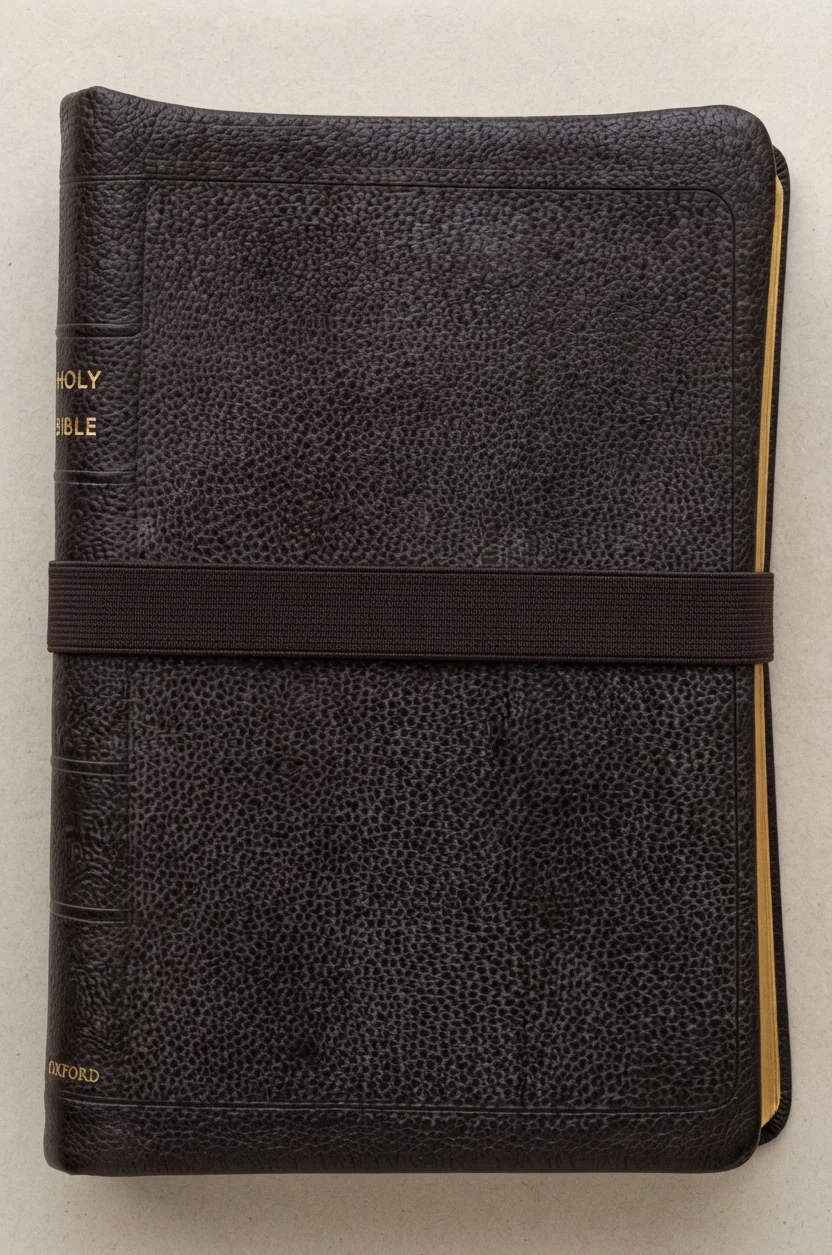
It is not often that we select any one Bible and give it the prominence we are giving the one here shown, but our judgment on many years' experience in the Bible business is that it is worthy of it.
Actual Size 6⅞ x 4¾ x ⅝.
It is printed on the celebrated Oxford India paper.
It is only 5/8 of an inch thick.
The type is clear-faced minion.
The chapter titles are in figures.
It contains references and twelve maps.
It is bound in genuine sealskin and is kid-lined.
It is sewn with silk and has silk head-bands and marker.
It is guaranteed to be absolutely perfect in every respect or your money will be promptly returned.
It is the lightest, thinnest, most beautiful, as well as the most durably-bound, Bible published.
In ordering, call for "Sealskin." It will be sent with charges prepaid, on receipt of $4.50.
PACIFIC PRESS PUBLISHING COMPANY, Mountain View, Cal. 285 Salmon Street, Portland, Ore. 1109 East 12th Street, Kansas City, Mo.

26 Special Numbers.

To Begin May 1.

These twenty-six special numbers will afford you opportunity of studying in your own home in a connected and progressive way the great subjects of the Bible.
Many of our readers have not had the help of a series of lectures in a systematic study of the Scriptures.
In this series each subject will be presented clearly, concisely, illustrated where necessary, and supplemented by Bible readings.
This is the outline which will be followed in the first four studies:

1. THE BIBLE.

Oneness of the Scriptures and Their Inspiration.

2. PROPHECY.

(a) Its Object and Scope. (b) The Great Image of Daniel 2. (c) The Four Beasts of Daniel 7. (d) The Seven Seals of Revelation 5 and 6.

3. THE COMING OF THE LORD.

(a) Will He Actually Come Again? (b) How Will He Come? (c) What His Coming Means to the Righteous. (d) What His Coming Means to Those Who Reject Him. (e) What His Coming Means to the Earth, Including the Promised Inheritance and the Everlasting Kingdom.

4. OUR SACRIFICE AND PRIEST.

(a) The Lamb Slain from the Beginning. (b) Our Sacrifice in Type and Shadow. (c) The Ancient Sanctuary and Its Service. (d) The Antitypical Sanctuary—Our Center of Worship.
Next week will be given here outline for the next four studies in the series.
Thus you will early become acquainted with the plan for this special series.
Here is one great advantage it has over a series of lectures such as referred to.
You have friends at a distance who could not share with you the benefits of a series of lectures. But you can give them the privilege of enjoying these Bible studies in their homes.
The regular departments of the SIGNS will, of course, continue during this time, and will be filled with the very best.
One gentleman recently, when learning of this special series, said: "I can use seventy-five sets of this series among my friends."
Clubs of five or more to one address during this six months will be furnished at regular club rate, 50 cents per copy.
Regular rates will apply on single subscriptions—75 cents for six months.
Our descriptive booklet will help you in interesting others. Request copy from your tract society, or from the

THE HEALING WORD.

THE recorded miracles of Jesus are not told to entertain us, or to give so many evidences of His supernatural power. He wrought many more miracles than are recorded, to relate which would merely satisfy curiosity or repeat instances of the same kind. Of those recorded, they have in the aggregate their grand lesson, and each separate one has its special lesson beyond the miracle itself.
THE great lesson of all the miracles is stated in John 20:31: "But these are written, that ye may believe that Jesus is the Christ, the Son of God; and that believing ye may have life in His name." The aggregate of His miracles and signs covers every phase of human need, and reveals an all-sufficient Saviour. Each separate miracle manifests in a striking way some special excellence of the all-embracing Gospel.
CHRIST AND THE CENTURION.
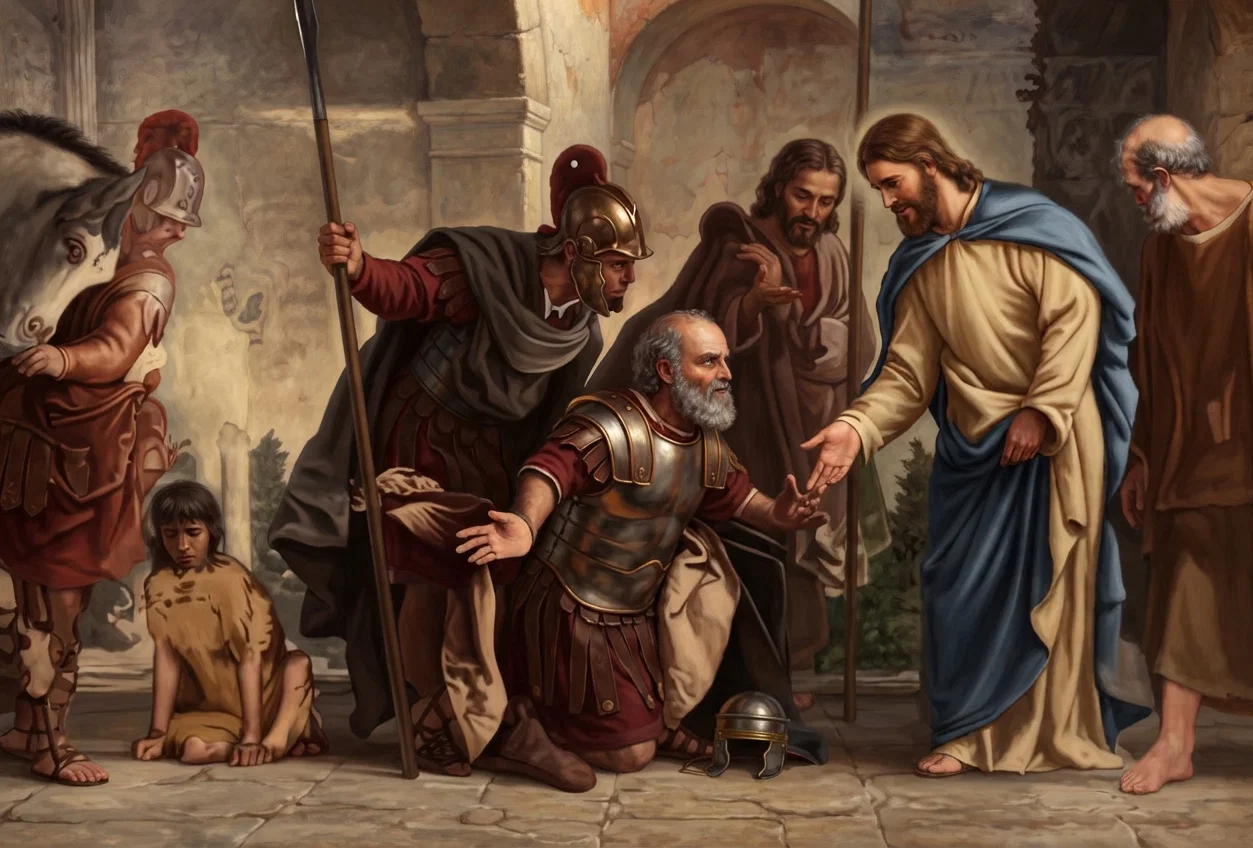
AN instance of this is given in Matthew's record of the healing of the centurion's servant. The centurion was a Roman, having command of a hundred men in the Roman army. He was wealthy, benevolent, and religious; and if not a proselyte to the Jewish religion, was, at least, favorably disposed toward it. The Jewish elders declared: "He loveth our nation, and himself built us our synagog." Luke 7:5. He doubtless sent the elders of the Jews, according to Luke, believing they would have more influence with the Jewish Master. Matthew records it as tho he himself went to Jesus, under the principle that what a person does thru others he is counted as doing himself. We therefore follow Matt. 8:5-13.
THE centurion met Jesus as He entered into Capernaum. He besought Him, saying, "Lord, my servant lieth in the house sick of the palsy, grievously tormented." Jesus replied, "I will come and heal him." Then the great faith and the broad grasp of right government in the centurion are manifest: "Lord, I am not worthy that Thou shouldst come under my roof; but only say the word, and my servant shall be healed. For I also am a man under authority, having under myself soldiers: and I say to this one, Go, and he goeth; and to another, Come, and he cometh; and to my servant, Do this, and he doeth it." And Jesus said, "Verily I say unto you, I have not found so great faith, no, not in Israel."
THUS must the centurion have reasoned: He was an officer of the Roman government. That government had its imperial head, its chief officers, its sub-officers, all the way down. When sending a man on a mission,that government equipped him so far as was in its power in men and means to do the work. The emperor needed only to speak the word; his servants made it effective. This the centurion knew. He knew that thus it must be in the spiritual world, God's great empire. Jesus also was under authority. He was the Sent of God. As God's Messenger He was commissioned to do a mighty work for God. The Ruler of the universe, who commissioned Him, had given Him adequate power and servants to do His work. Therefore He need not come to the centurion's house; let Him speak the word only, send the word by the hand of invisible messengers, and the work would be done, the servant would be healed. It was not the messenger who was potent; it was the word he bore.
THE faith of the centurion grasped the word, and his servant was healed in that hour. Yet in all Israel there were none whose faith reached so far. They must see Christ; He must touch the blind eye, put His own finger in the deaf ear, touch the stammering tongue, take the hand of the sick, lay hand upon the bowed and palsied. Even dearly-loved, intimate friends thought His personal presence was necessary to heal their brother. "Lord, if Thou hadst been here, my brother had not died." They did not know the old scripture, which had been sung for hundreds of years, "He sent His word, and healed them." Ps. 107:20. It was necessary because of their limited faith that Christ should go away, or the Comforter would not come. John 16:7. While the literal, personal presence of Christ was before them, they could not grasp the omnipresence of His Spirit, nor the invisible operations of His Spirit-sent angels. But the centurion grasped the great scheme of God's power and wisdom. And many others shall grasp it outside of the visible church.
THERE is power in God's word to save. He spoke its cleansing power thousands of years ago by Isaiah and others. It has lost neither quality nor power in the lapse of ages. "Tho your sins be as scarlet, they shall be as white as snow," is as potent now as the day it was uttered, if we will comply with God's easy conditions. "Who forgiveth all thine iniquities; who healeth all thy diseases," is as true now as when first sung by the poet of God and the choirs of Israel. We may not see God's burning glory; we may not look into His loving eyes; we may not feel His soothing touch; we may not hear His wondrous voice; but we may take His mighty word, and be forgiven and healed. Unworthy that He should enter our house, yet we may ask that His all-potent word be sent; and we may by faith claim its healing. Christ is no respecter of persons: "ask, and ye shall receive." Feed upon His word; appropriate its life. He is Jesus Christ, "the same yesterday, and to-day, yea and forever."

A TROUBLED SOUL.

THUS a troubled, tempted soul writes us, and asks for help and instruction:
"I sincerely want to do what is right and please God, but it seems I do not progress as I ought. I feel that your church has the truth. O, tell me, can such a sinner as I become a member? And how? I once had many opportunities of becoming one, but I failed to take advantage of them. Now I have to seek for them. I am even trying to keep the true Sabbath. E. T."
1. All the above is good, as far as it goes. It is encouraging, because it shows that the Spirit of God is at work upon the heart of this troubled one. We would have no desire to seek Him at all if He did not call us. John 6:44. Therefore, when we feel drawn to serve God, we may know that God is by His Spirit calling us, and He would not call us if there was no hope. Be assured, then, that when God calls us, if we will follow, He will lead us to light and life and home.
2. We do not know how great a sinner this soul is. We do not need to know. We do not want her to tell us her sins. She may be the greatest of sinners; Jesus is the greatest of Saviours. Her sin may overwhelmingly abound; but where sin abounds, grace does much more abound. Rom. 5:20. "This is a faithful saying, and worthy of all acceptation, that Christ Jesus came into the world to save sinners." 1 Tim. 1:15. He declares, "I came not to call the righteous, but sinners to repentance." With infinite love He pleads, "Come now, and let us reason together, saith Jehovah: tho your sins be as scarlet, they shall be as white as snow; tho they be red like crimson, they shall be as wool." His grace and power is sufficient to cleanse the double-dyed scarlet sin, and make the heart as white as snow. Believe and praise Him.
3. It is well to feel the enormity of the sin. There is no unimportant sin. It is spiritual leprosy, and death dooms all who have it. Its outbreaking symptoms may be small. We may never have done the actual deeds of stealing, killing, or committing adultery, and yet have cherished coveting, hatred, and lust in our hearts. Hate them all with deadly hatred. If we love them, desire them to stay, Christ will not come in; He will not divide the dominion of our heart with sin. But if our heart hates the sin and we confess it to Him, put it away, He will forgive the sin and accept us. "If we confess our sins, He is faithful and just to forgive us our sins, and to cleanse us from all unrighteousness." 1 John 1:9. Confess the sin, plead the promise. He can not lie. "He abideth faithful." Then may we say: "I acknowledged my sin unto Thee, and mine iniquity did I not hide: I said, I will confess my transgressions unto Jehovah; and Thou forgavest the iniquity of my sin." Ps. 32:5.
4. Then join the church; for you need its associations, its helpfulness, its discipline, its cooperation. We never develop well-balanced characters alone. We need to learn to bear and forbear, to be patient and charitable toward others. Go to the church; ask for baptism and membership. All that is required is that you promise what God's word requires—to "keep the commandments of God and the faith of Jesus." That means the cheerful, loving doing of all that His word requires, walking in the light as it shines upon your pathway. After your baptism, the elder, or pastor, of the church will present your application before the church, and unless there is something wrong, the church will vote to receive you. If there is any delay or misunderstanding do not in any wise be discouraged. Let it be found and put away. The church and yourself both may need the lesson.
5. Then you want to grow, to make progress. That is good. How do children grow?—They breathe, or ought to, pure air and eat pure food. These are essential. The children of God need pure air. They need the breath of His Spirit, the association of good companionship. Let this be a rule of life: unless bound by family ties, break from every companionship which is dragging downward, of either books or men. If you can not grow strong and help your companions, forsake them for Christ's sake. He will more than make up all your loss.
Then feed upon His word, "the sincere milk of the word," "that ye may grow thereby." 1 Peter 2:2. It alone is "able to build you up, and to give you the inheritance among all them that are sanctified." Acts 20:32. Read it daily. Let it be like the manna, fresh every morning. Make it yours by faith and conduct. Read with prayer. Ask God for His Spirit. If you fail, go quickly to your best Friend, and confess it. Keep the conscience tender by heeding its voice. Keep the conscience true by the word, and we know that you will grow, and salvation will be yours daily.

NO COMPROMISE IN TRUTH.

COMPROMISES are the order of the day. They are manifest in business. They are manifest in politics. Sad to say, they are manifest in religion, and that where principle and conscience are at stake.
Yet there never can come a time in the experience of Christians, Christian associations or corporations, when they can afford to compromise for one moment an iota oftruth or justice or honor for aught the world can bestow or that seemingly is to be gained by the compromise. We are not to do evil that good may come.
There are methods of work, there are ways of propagating the Gospel, when compromises may be made between men of decidedly different opinions, without affecting honor, truth, or justice, even tho selfish dignity is humbled. Here the Christian should be willing to compromise. If his brother must have a crutch to walk with, let him go a little slower. But when the honor, the integrity, the purity, or the principles of God or His cause are at stake, never. Compromise in the one case is disloyalty to God; in the other, it is “submitting one to another in the fear of God.”

THE PRECIOUSNESS OF THE GOSPEL.

O, THE preciousness there is in the Gospel of Jesus Christ! Not in its mere contemplation is the preciousness, not in mere assent to its glorious doctrine and blessed facts; for we may famish while gazing upon the most nourishing food, we may drown while looking upon the lifeboat launched to save us. The value of the lifeboat to us is in its use; the blessing of the food comes thru eating and assimilation, and so the preciousness of the Gospel comes thru partaking of the grace of the Gospel. It comes by believing Christ, submitting to Christ, doing as Christ commands, walking where we can not see, trusting where we can not trace. It is the completeness of submission which brings the fulness of joy. "O, taste and see that the Lord is good; blessed is the man that trusteth in Him!"

The Vanity of Human Greatness

"SURELY, men of low degrees are vanity, and men of high degree are a lie; to be laid in the balance they are altogether lighter than vanity."—David.

2012.—Powers of Government

[We are willing to answer all questions in this department that are practical for the department and that would minister to the general good of our readers, but we answer no questions unless the name and address accompany the question. We do not ask this for publication, nor will it be published unless the inquirer so desires; we ask it, however, as an evidence of good faith, and that we may answer by letter if deemed best. Inquirers will please take notice. There is no departure from the rule. Unsigned questions reach the waste basket by the most direct route.]

2012.—Powers of Government.

Will you please explain the first seven verses of Romans 13? Does not the government have a right to legislate upon religious questions and to regulate in religious or ecclesiastical controversies? If not, why not? T. J.
Our Lord Himself draws very sharp and clear distinctions between the government of God and the governments of men. The Jews sought to entrap our Saviour in the very net in which so many have fallen. They said, “Is it lawful to pay tribute to Caesar?” Jesus said, “Show Me the tribute money.” When they brought Him a denarius, a Roman coin, He asked, “Whose is the image and the superscription?” and they said unto Him, “Caesar’s.” And He replied, not only for that time, but for all time, “Render unto Caesar the things that are Caesar’s; and unto God the things that are God’s.” Worship belongs to God. Caesar has no right to exact it, modify it, or direct it. “The tithe is the Lord’s.” Leviticus 27. Caesar has no right to lay any claims upon it whatsoever. “The seventh day is the Sabbath of the Lord thy God.” Ex. 20: 10. It bears God’s image and superscription. Caesar has no right to touch it in any way. The Lord’s Supper, baptism, and all other Christian ordinances and rites bear God’s image and superscription. With them Caesar has nothing to do.
Protecting men in their individual rights, collecting of tribute for the support of the government, belong to the government. With that the church has nothing to do. The Lord chose Nebuchadnezzar, and called him “My servant” (See Jeremiah 27), but when Nebuchadnezzar assumed the right to direct the worship of God’s children (See Daniel 3), they rightly refused to bow to him, and God sanctioned that disobedience by protecting them in the fiery furnace. When the civil polity of the Jews told the disciples to preach no more in Christ’s name, they said, “We ought to obey God rather than men.” Therefore when the apostle tells us, “Let every soul be subject to the higher powers,” it is subjection to those powers only in the field FOR WHICH THOSE POWERS ARE ORDAINED OF GOD, and in that field we have no right to resist them, but rather to submit to their ordinances. So “we must needs be in subjection not only because of the punishment [which they might visit upon us], but for conscience’ sake;” but the true conscience will render to God that which is His and to Caesar that which belongs to Caesar. So in that very scripture (Rom. 13: 8) we are told to “render to all their due,” and to God we owe first of all love and service.

2013.—Speaking with Tongues.

Please explain to me a part of 1 Corinthians 12. There are people in this part prophesying and speaking different languages, and they claim they have scripture for it in the chapter I have named. They also prophesy that Eureka, Cal., will be destroyed by earthquake and tidal wave, and that San Francisco is to be destroyed in June. INQUIRER.
The mere speaking with tongues and prophesying or working miracles or doing half a dozen other things, is no evidence that the work is of God. We read in Second Thessalonians 2 that in the last days Satan will “work with all power and signs and lying wonders, and with all deceivableness of unrighteousness in them that perish.” We read in Revelation 16 that spirits of devils would go out into the world working miracles. We read in Second Timothy, the third chapter, that as Jannes and Jambres, the old Egyptian magicians, withstood Moses by counter miracles and counterfeit miracles, so these also will resist the truth. And yet it is possible that the ones of whom you speak may be taught of God and have gifts of the Spirit. We should not condemn them because they claim to be the Lord’s people. God has given us one Voice by which we are to judge all doctrine, and that is His voice which spoke His law on Mount Sinai: “To the law and to the testimony, if they speak not according to this word, it is because there is no light in them.” So while among God’s people previous to His coming there will be seen all the gifts of the Spirit, yet when He describes the character of His people who shall welcome Him, He mentions no gifts nor miracles, but “Here are they that keep the commandments of God, and the faith of Jesus.” The wise man says, “Where there is no vision the people perish, but he that keepeth the law, happy is he.”

2014.—Making and Creating.

In question No. 1992, you say that we do not know how long time the creation of the earth took, but the fourth commandment, in Exodus 20, states that “in six days the Lord made the heavens and the earth;” and then in Genesis 1, it says, in enumerating the Creator’s work of the fourth day, “God made two great lights, the greater light to rule the day, and the lesser light to rule the night.” As the sun is thirteen thousand times greater than the earth, and made on the fourth day, would it not be more of an effort than to make our little ball? R.
If our inquirer will read again the answer to which he refers, he will see that there is a distinction made between the two words “make” and “create.” Nowhere in the Bible does it say in six days the Lord CREATED the heavens and the earth. For aught we know He may have created it in a moment of time. What the word does declare is that He created it IN THE BEGINNING. Compare with John 1: 1, 2; Ps. 102: 25; Job 38: 4-7. The creation was bringing into existence that which did not before exist. The making was the bringing into the form which appeared at the end of the sixth day, “for in six days the Lord MADE the heavens and the earth.” How far back that “in the beginning” stretches we know nothing. God lived and had His throne and dwelling; angels of God lived and had their dwelling. We put no limit to His power, neither in the mighty work accomplished nor in the time in which it was accomplished. “He spake and it was, He commanded and it stood fast.” But it seems to us quite clear that there is a difference between the two expressions, and that they are worthy of faithful study.

2015.—Is it a Parable? Luke 16: 19-31.

I was taught that what is said in regard to the rich man and Lazarus is a description of what will be after we are dead, but I was told the other day that hell will not always last. J. H.
Without any doubt the story of the rich man and Lazarus is a parable closely connected with other parables of a similar style in the Gospel of Luke. Send for the little tract published by this house, “The Rich Man and Lazarus,” price three cents, which will explain all about it. Suffice to say that it is a representation of the Jews and the Gentiles, the Jews represented by the rich man, the Gentiles by Lazarus; the Jews trusting in their noble, faithful ancestry like Abraham for salvation, the Gentiles, poor and humble, but seeking God.
For the “worm dieth not, and the fire is not quenched,” see Question 2004 in the SIGNS of February 20.
That there will not ever be an ever-burning hell, see Rev. 5: 13.

2016.—Tea and Coffee.

Are tea and coffee injurious, and is there anything in the Bible that forbids them? C. M. S.
The Bible does not mention tea or coffee or opium or alcohol or whisky or absinth or a hundred other drugs and decoctions which are used as stimulants or narcotics by the human race. The Bible is a great book of principles, and those principles are designed to lead the inquirer to avoid sin and follow righteousness. Our own faith and conscience must guide us in the application of those principles, but we must be sure that our conscience is a good conscience, if we would be so guided.
Now, in the first place, tea and coffee are of no benefit. That is shown by the fact that there are thousands upon thousands of people that do not use them who are just as well off, to say the least, as those who do. They have no demand for them, no need of them; therefore they have the amount of money that the tea and coffee would cost to use for other things.
Secondly, it has been demonstrated over and over again in the experience of tea and coffee users, and by medical men, that both tea and coffee are positively harmful, as manifest in the nervous condition of thousands, in the sallow skin, in the lack of appetite, in the sleeplessness, and we might also say in the loquacity and gossip which usually follow an afternoon tea. Thousands of people who had their constant headaches, especially without their strong tea, have for years, on the permanent discontinuance of the drug, known nothing of the headaches of the past. The development of the habit leads to partial intoxication just as surely as does the drinking of intoxicating liquors.
Now, in the light of these two reasons, why should a Christian use either? The admonition of the word is that whether “ye eat, or drink, or whatsoever ye do, do all to the glory of God.” Questions: Does it glorify God to expend money for things which are utterly useless, when there are so many ways in which the money could be used to advantage? Will it glorify God to continue the use of that which is positively harmful in its nature? It seems to us that these questions answer themselves. It is the duty of Christians to keep their bodies, the temples of the Lord, in the very best condition physically, their senses in the clearest condition, so that they may respond to His calls.
Continue reading: THE GREAT SALVATION