Your ShelfYour Projects

Signs of the Times, Vol. 25, No. 51.

A FEW THOUGHTS FOR EVERY SEASON

Signs of the Times

Dec 20, 1899

Pacific Press Publishing Company · Oakland, California · Dec 20, 1899

A FEW THOUGHTS FOR EVERY SEASON.
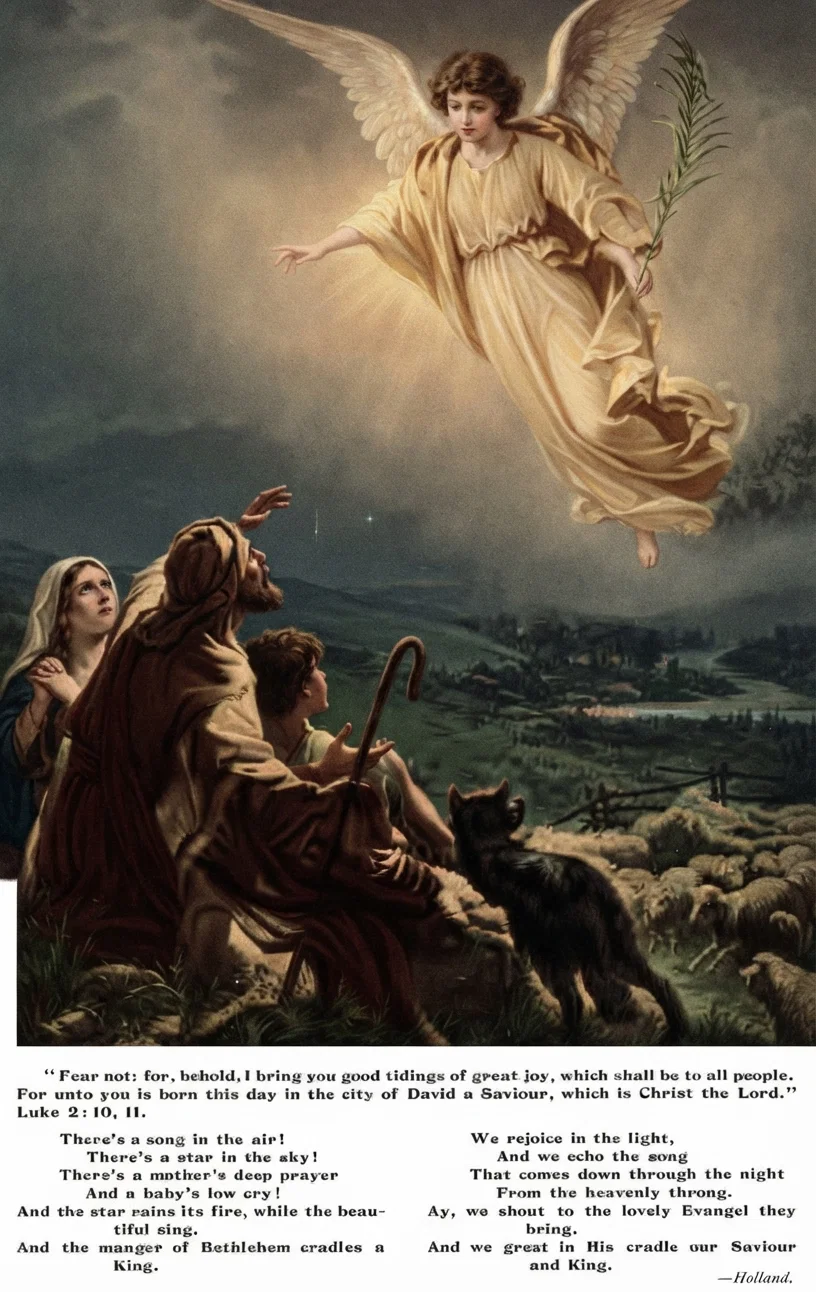
"THOU shalt call His name JESUS; for He shall save His people from their sins." Matt. 1:21.
BOTH of the above scriptures refer to the birth of our Lord Jesus Christ. At this season of the year His birth is celebrated by many, who believe December 25 to be its anniversary. The above texts, it is safe to say, will be used in Christmas-tide celebrations not a few. They will be used for the season and forgotten. We are using them at this time, not because of the season, not to call attention to a feast or festival, but to impress upon all, so far as the Lord may help us, that these scriptures are not for a special season, but for every season.
UPON whatever day Christ was born, it is certain that He was not born upon December 25. He was more probably born in early mid-autumn, the definite time of which no mortal may determine. God has not revealed the exact day of His birth or death or resurrection or ascension; and the multitude of theories concerning it held by learned men, is evidence of the uncertainty. The reason why the Lord has not revealed the definite time is that He would have us regard the fact, not the day; that a day is not a fitting memorial of any of these things; and that the truths taught in the birth of Jesus are living, present truths, as applicable to us now as when they occurred.
"HOW CAME December 25 to be set apart?" you ask. It is the last day of the old pagan Saturnalia, brought down to us, and called Christian. The old Saturnalian feast was celebrated with excesses of all sorts, with lights, with evergreens, with the licentious emblems of yule log and wreath, with sending of gifts one to another. And a backslidden, worldly church, deceived by the perverter of all truth, thought it would be a good thing to adopt the heathen festival, or a portion of it, "Christianize" it, and so the more easily "convert" the heathen. The result was loss to the church.
“Fear not; for, behold, I bring you good tidings of great joy, which shall be to all people. For unto you is born this day in the city of David a Saviour, which is Christ the Lord.” Luke 2:10, 11.
THE "song in the air" and the "star in the sky" are for the sad hearts and benighted wanderers in earth's gloomy vale now. The "good tidings of great joy" are for those who are now in the gloom clouds of despair, whose ears have heard only the wos and curses of sin. The blessed news of a SAVIOUR comes now to him who is bound by the cords of his sins, who is laden with iniquities, who is without strength in himself. The message is "to all people," to the nineteenth-century people as well as the first-century people, to men on October 25, on January 15, or on any other date, as truly as on December 25.
O, IT is perennial glad tidings! It is "the everlasting Gospel" to a fallen world. The angel's message comes now to every sin-sick soul, "Unto you is born this day . . . a Saviour, which is Christ the Lord." He was born into this world that He might be born anew in the heart of every soul who would receive Him. "That Christ may dwell in your hearts by faith," He must first be born there. That He may be born there, the Spirit of God must take possession of you. You must welcome that Spirit sufficiently to give up self, to ask, seek, knock, that God may bestow it upon you. He will do it; for He is more willing to do it than are earthly parents to give good gifts unto their children. Luke 11:9-13.
His name is JESUS—SAVIOUR. He, and He alone, can save from sin; "for there is none other name under heaven given among men, whereby we must be saved." Acts 4:12. Saving from sin, He saves from death; for death is the fruit of sin. James 1:15. Saving from sin, He saves unto righteousness; for "this is the name where-by He shall be called, THE LORD OUR RIGHTEOUSNESS." Jer. 23:6. Saving to righteousness, He saves to life eternal; for "in the way of righteousness is life; and in the pathway thereof there is no death." Prov. 12:28.
"His name shall be called EMMANUEL," GOD-WITH-US. (Margin of Matt. 1:23.) Not with us on the day of His birth alone, not with us during His thirty-three years of earth life alone, but with us forever. He became just what we are,—a partaker of flesh and blood,subject to sin, infirmity, death, meeting all life's wos, temptations, trials—that we might be one with Him, triumphant over all. He is still God-with-us. Our divine-human Saviour lives with all His human members. He is touched with the feeling of all our infirmities. From Him pulses out to all His children in the flesh the never-failing streams of the water of life. And to every soul still peals through galaxies of holy angels and faithful followers the glad invitation of the good tidings of great joy. Come, come, come, and partake of the water of life freely. O reader, Jesus Christ, if born anew by faith in your heart, if dwelling there by faith, is a Saviour every day, a perennial wellspring of joy!

Emmanuel, God With Us

"AND they shall call His name EMMANUEL, which being interpreted is, God-with-us." Matt. 1:23.

WORK IN CHRIST'S LINES.

CHRIST set Himself apart to achieve the redemption of man, that man might understand the service he owes to God, and learn how to discharge its duties. His life on earth was a perfect life. Every circumstance He turned into an occasion for imparting truth. Foretelling His work through the prophet Isaiah, He says: "The Spirit of the Lord God is upon Me; because the Lord hath anointed Me to preach good tidings unto the meek; He hath sent Me to bind up the broken-hearted, to proclaim liberty to the captives, and the opening of the prison to them that are bound; to proclaim the acceptable year of the Lord; . . . to comfort all that mourn; to appoint unto them that mourn in Zion, to give unto them beauty for ashes, the oil of joy for mourning, the garment of praise for the spirit of heaviness; that they might be called trees of righteousness, the planting of the Lord, that He might be glorified."
There is a sustaining power in the deed done to benefit and bless humanity. This was the power that strengthened the world's Redeemer. He declared, "I came down from heaven not to do Mine own will, but the will of Him that sent Me." His will was put into active exercise to save the souls of men, but He waited and lived and worked in dependence upon God. In everything He moved in perfect harmony with the Father. The Commander of all heaven, He humbled Himself to stand at the head of fallen humanity, to reveal to human beings perfect obedience to all God's commandments. His servants to-day would do well to ask themselves, What kind of a will am I cultivating? Have I been gratifying my own desires, confirming myself in selfishness and obstinacy? If we are doing this, we are in peril; for Satan will always rule the will that is not under the control of the Spirit of God. When we place our will in unison with the will of God, the obedience that was exemplified in the life of Christ will be seen in our lives. God requires us to keep His commandments, that we may cultivate the attributes which made the Saviour's life pure, holy, and undefiled.
Many blessings are lost to Christ's professed followers because they have so limited an experience in being crucified to the world. There is nothing so hard as the crucifixion of the will. Christ was tempted in all points like as we are; but His will was ever kept on the side of God's will. In His humanity He had the same free will that Adam had in Eden. He could have yielded to temptation as Adam yielded; and Adam, by believing and obeying God, could have resisted temptation as Christ resisted it. Had Christ so willed it, when tempted in the wilderness He could have commanded the stones to be made bread. He could have cast Himself down from the pinnacle of the temple; He could have yielded to Satan's request to fall down and worship him, the usurper of the world. But at every point He met the tempter with, "It is written." His will was in obedience to the will of God. The will of the Father was revealed throughout His entire life. It was a part of His very being.
Christ's obedience to His Father's commandments is to be the measure of our obedience. Those who follow Christ, if they would be complete in Him, must keep their will surrendered to the will of God. The man Christ Jesus was the greatest Teacher the world ever knew. During their three years of discipline under His instruction, the disciples received many precious lessons. They also received rebuke for their dulness of apprehension. They could not take in the great scenes presented to them. But when their Teacher was about to leave them, He bade them tarry in Jerusalem until they should be imbued with power from on high before going forth to preach the truth of the kingdom of God. The Saviour well knew that their arguments, however logical, would not melt the hard heart, or break through the crust of selfishness and worldliness. The truth could only be effectual when coming from hearts made warm and lips made eloquent by a living knowledge of the Way, the Truth, and the Life.
The evangelist John withdraws the curtain, as it were, and as a consecrated high priest enters into the holy of holies, opening to us the sacred character of Christ. He gives the record of Christ's last moments with His disciples. As the Saviour gave His last messages to His beloved followers, words filled with weighty importance fell from His lips. These words of inspiration were to be their anchor during the test and trial before them. "Let not your heart be troubled," He said; "ye believe in God," who is so plainly revealed in the Old Testament Scriptures. Believe in Me as the brightness of His glory, the manifestation of His character. "In My Father's house are many mansions; if it were not so, I would have told you. I go to prepare a place for you," to secure for you the right to a home in My Father's kingdom. "And if I go and prepare a place for you, I will come again, and receive you unto Myself; that where I am, there ye may be also." I left the courts of heaven to come to you and show you the way, and I will be with you in the mansions I have prepared. Let not sorrow fill your hearts; for I love you, "and whither I go ye know, and the way ye know."

For All Time.

The instruction Christ gave His disciples when He was among them He gave for the encouragement of His followers to the end of time. In His humanity He prayed for them. He prays for them still, as officiating high Priest within the vail. Abundant provision has been made that those who will seek God with the whole heart may find Him a present help in every time of need; for help has been laid on One that is mighty. To-day He commissions His workers, "Go ye therefore, and teach all nations, baptizing them in the name of the Father, and of the Son, and of the Holy Ghost; teaching them to observe all things whatsoever I have commanded you; and, lo, I am with you alway, even unto the end of the world." God calls for living, acting, working men, men who from the first moments of their religious life will depend upon God and trust in Him who is the Head of the church. "Ye are a chosen generation," He says, "a royal priesthood, an holy nation, a peculiar people; that ye should show forth the praises of Him who hath called you out of darkness into His marvelous light."
The Lord has a great work for His disciples to do, not in their own wisdom, but in the wisdom which He will give them. In every church we need Christlike workers, those who in life and character are growing in the divine likeness by working to call sinners to repentance. The spiritual life of the church can be kept alive only as the members make personal efforts to win souls to Christ. No amount of mental culture or theological training will do this work. But it can be done by the soul who is humble and contrite, and imbued with the Spirit of God. The bright beams of the Sun of Righteousness must shine upon the heart of the worker and purify his life before light from the throne of God can come to those who sit in darkness.
There is a solemn obligation resting upon all. God's admonition reaches to every soul: "Let your light so shine before men that they may see your good works, and glorify your Father which is in heaven." Our faith is to be a faith that works by love and purifies the soul. We are to be imbued with the Spirit of Christ, to work in Christ's lines. "Work out your own salvation with fear and trembling," the apostle says. "For it is God which worketh in you both to will and to do of His good pleasure." A sharp warfare must be instituted against selfishness and the corruption that is in the world through lust. The wrong act repeated becomes habit, to act and react upon mind and heart; and unless divine power shall interpose, and the human being become partaker of the divine nature, the sure result will follow. Strengthen not the evil will by turning it in wrong lines. Your life hid with Christ in God will be divested of all unselfishness. Causes and effects are linked together. We shall not always be able to see the path before us. Circumstances will develop in a way that we do not expect. But God sees not as man sees. His thoughts are not our thoughts, neither are His ways our ways. His hand is above all, and He will cause all things to work together for good to those that love Him.
MRS. E. G. WHITE. (Concluded next week.)

CHRIST MEETS THE PURPOSE OF GOD.

IN the Word we can see that the "eternal purpose" of God, which was hid in His own mind, "kept in silence through times eternal," embraced all the fulness of the universe through the eternity that was yet to come when this eternal purpose began to be unfolded. It embraced the creation of all the host of heaven, even all the countless worlds. It embraced the creation of intelligences to fill these worlds. It embraced the showers of God's own fulness upon these worlds, through the fulness of Christ, "for in Him dwelleth all the fulness of the Godhead bodily." Col. 2:9. It embraced the eternal happiness of the intelligences of the universe as they should eternally drink in the fulness of all the pleasures which would so freely be given through Christ. It embraced the eternal happiness of all the intelligences of all the worlds, on one and the same condition, namely, a service of loving, willing obedience. And this is the only kind of service through which perfect happiness can possibly come to intelligent creatures. A service of force is slavery.
But sin was not included in this eternal purpose of God, only so far as it was necessary to redeem the unfortunate ones from its consequences. Sin was not necessary in the carrying out of this eternal purpose. There is no possible excuse for its existence. An excusefor sin would only be to justify it. And there are no grounds upon which sin can be justified.
Nevertheless, He who knows all things, even from the beginning, knew that sin would enter. He did know that some of the angels would fall through sin. He knew that this world would fall. And, knowing all this, that same eternal purpose embraced the gift of His own Son, Jesus Christ, the Creator, in order to redeem from sin. He who manifested God in the creation of all things, was still to manifest the same creative power of God in the redemption of this fallen world. Redemption is but another word for the manifestation of the same power. Redemption is re-creation. And, therefore, it is but a manifestation of the same power of God unto salvation of all them that believe. Redemption is nothing less than a part of the original eternal purpose of God in a clean universe. That eternal purpose embraced the gift of Christ; it embraced the cross; it took in the garden of agony, and Calvary, and the death of the Creator of the universe of worlds. And through Christ, as the world's Redeemer, it embraced the salvation of all that will believe, even in this world of sin.
But even tho upon the part of Christ, the glorious Commander of heaven, the sacrifice of Himself was involved in this eternal purpose of God, He did not shrink from the task. If He had even held Himself back from this work of redemption, it would have proved that He was not worthy of the name of "The mighty God, The everlasting Father, The Prince of Peace," names ascribed to Him by the prophet. See Isa. 9:6. His heart of infinite love was touched with pity for the fallen race. He was moved with the tenderest compassion as the woes of a lost world rose up before Him. In the words of another: "Christ would take upon Himself the guilt and shame of sin,—sin so offensive to a holy God that it must separate the Father and the Son. Christ would reach the depths of misery to rescue a ruined race." He says of Himself, "I delight to do Thy will, O My God." Tho all this was embraced in the purpose of God, "yet it was a struggle, even with the King of the universe, to yield up His Son to die for the guilty race." But "God so loved the world, that He gave His only-begotten Son, that whosoever believeth in Him should not perish, but have everlasting life." Praise the name of God!
H. F. PHELPS.

THE MAJORITY BELIEF.

"All Nations Have Always Believed in the Immortality of the Soul."
IF it can be proved from the Word of God that the soul has natural immortality, and will never die, then the case of endless torment is greatly strengthened; but because all nations have believed a thing, that does not make it true. All nations have believed many other erroneous doctrines, and the majority have always been in the wrong.
As to the development of this belief we can not do better than to quote from a work entitled "The History of the Immortality of the Soul" p. 48, as follows:—
Another cause, and perhaps the chief, which aided in developing and supporting a belief in this doctrine, was the interest and authority of priests and lawgivers. Commonly those two officers were united in one person. Of course the more importance the priests could attach to the soul, and to rewards and punishments after death, the greater influence would they have with the people, and the more readily would they support them. Hence their interest was to build up this doctrine at every opportunity; and history shows that from the Egyptians to the Roman Catholic priests they have not been slack in doing this. So, also, the magistrate found that it greatly aided him in controlling the people, and in keeping them under, by threatening them with the wrath of the gods, and future torments for disobedience to the laws. Hence, also, says Dr. Horne, the most celebrated legislators of antiquity, as Zoroaster, Minos, Pythagoras, Solon, Lycurgus, Numa, etc., etc., all thought it necessary to profess some intercourse with heaven in order to give the greater sanction to their laws and institutions, notwithstanding many of them were armed with secular power.
Hence he also united his interest with the priest in helping forward this doctrine. Volumes might be and have been written showing that this is the case.
The very learned Bishop Warburton, in his "Drome Legation of Moses Demonstrated in Nine Books," has abundantly proved, by copious quotations from ancient writers, that what was said about the infernal regions, elysium, etc., was all invented by the priests and lawgivers to frighten the people and keep them in subjection.
Reader, let us not "follow a multitude to do evil" (Ex. 23:2), or to believe evil, but let us "prove all things; hold fast that which is good" (1 Thess. 5:21).
WM. PENNIMAN.

HISTORY REPEATS ITSELF.

[Dedicated to the American Sabbath Protective Societies.]
AGAIN the fires of Smithfield burn; Once more the gallows-trees uprise; Behold! whichever way we turn, The torture engines meet our eyes, And men, in "human form divine," Blaspheme God's love to thee and thine.
To thee and thine, unless that ye Walk with them in their narrow ways, What matters it how faithfully They serve Thee, Lord, Ancient of Days? It matters not, unless ye shall As low before their idols fall.
With glosses have they, Lord, obscured Thy Holy Word, with bigot pride Denounced Thy servants who endured The weary cross of Him who died; And guilty traitors onward draw Who think to change the "times and law."
From east and west, from north and south, The cry floats on each burdened wind, God's Word, the Spirit of His mouth, Is backward turned by bigots blind; The New World echoes the refrain; The Old World answers back again.
Blush, Tennessee, with crimson shame, And Georgia's lone Savannah plains; O Pennsylvania, what a name Thy land of liberty now stains, Thy mountain peaks and valleys fair! Spirit of Penn, dwellest thou there?
From frozen Canada's wide land, Fast growing hot with bigot hate, To Florida's low flowery strand, The Christlike love doth now abate; And history but repeats her story: We kill with "laws" as swords as gory.
The "sacred soil of Maryland" (What mockery in the prating words!) Forgets the sway of Calvert's hand, And draws, with demon's strength, Hate's cords. Mother of harlots! See, indeed, Thy daughters faithful to thy creed.
Lift, Bunker Hill, thy granite shaft, And pierce the audient heavens through; He from their "circle" wide hath laughed, Ye build the false upon the true, Lift, solemn-visaged Liberty, Higher, thy torch o'er land and sea.
Thy mother's face and vestal stole, And that grand poise of majesty, Foretelling to each trusting soul Divinest love and purity, And peace and safety evermore, To nations crowding on the shore,
What signal they? Dear Christ of God, In olden days the virgin bronze, With heavenly face and arms abroad, Her victims clasped (the legend runs), And for "God's glory" pierced the lives Of all, with her slow, hundred knives.
Home of the brave! Land of the free! What spirit spell is on thee now? The three unclean! Dear Christ, that we To any one but Thee should bow! O hasten, Lord, and save us from The "last delusion's" awful doom!
Thou who didst toil in Galilee, And wept o'er doomed Jerusalem, And on the cross of Calvary Bore meekly Hate's sharp diadem, What harvest of Thy tears and toil Shall there be reaped from such a soil?
Once more the wilderness shall be The refuge of the desolate; Since love has fled, and land and sea Are consecrated now to hate; Yet wake, O "remnant church," and see The morning light that breaks for thee!
See! brighter than the thunder-flame That burned on Sinai's awful brow, And swift as God's strong angel came To stand within the furnace glow, Compelling heat and torturing pain To loose their chemic force again,
So hastes the hour, with horror fraught To those of mystic Babylon; But sweet as sunlight mildly caught On slopes of sacred Lebanon, To those who "wait,"—life unto these; To those, doom's awful auguries.
Now, by Thy Word that can not fail, Each "jot and tittle" still enduring, Thou who hast made us to prevail By grace, through faith, of love's securing, We pray Thee, come, and make us, Lord, Still "more than conquerors" by that Word.
Come near in love, in pity come, O God of love; be pitiful, And teach us that salvation's sum, Our utmost need, Most Merciful, Is from ourselves to save us first, Of all our enemies the worst!
O Thou who on the cross didst die, To reconcile Thy world to Thee, What hear we in Thy bitter cry, Love's sweetest, saddest legacy? "My little children, love each other, For every man to man is brother."
O cross of pain and anguish dire, Gethsemane and Calvary, Be thou our cross to lift us higher, From hate and wrath and bigotry; And in Love's freedom bind us all, And be Thy Word our only thrall!
Trenton, N. Y. S. M. S. HAYNES.
THE HEAVENLY SANCTUARY

FORGIVENESS CONDITIONAL.

Forgiveness in the Light of the Sanctuary—A Striking Parable—Actual Not Absolute—Blotting Out Sins and Names.

THIS proposition, already referred to in a previous article, that the pardon, or forgiveness, that we receive as we pass along through our earthly experiences, in spiritual things, is not absolute but only relative and conditional, may have struck the reader as an altogether wild and erroneous idea, because the view is so generally entertained that when the penitent has confessed his sin, and received pardon, that is the end of that matter; that the sin is put away, and can never more appear against the one who perpetrated it. But the representations of the Bible, nevertheless, clearly sustain this proposition, and there are some of its teachings that can not be understood or explained on any other hypothesis. There is one portion of Scripture that very explicitly sets forth the fact of the conditional nature of forgiveness; and there is one great doctrine of the Bible which at once explains and justifies such a supposition.
The statement is found in Matt. 18:23-30; and the doctrine that explains it, is the subject of the sanctuary. The circumstances of the parable in the chapter in Matthew referred to, briefly stated, are these: A king was reckoning with his servants, and found one who owed him ten thousand talents, but had nothing with which to pay it. The king thereupon ordered him to be sold, he and his wife and his children, and payment to be made. This, of course, brought the servant into great distress; and he fell at the feet of his lord, and besought him to bear with him, and have patience, and he would pay him all. His lord, seeing him thus helpless and penitent before him, was moved with compassion toward him, and did not stop with a willingness to have patience and bear with him, as the debtor besought, but went so far beyond it as to forgive the entire debt and release him from the whole obligation. Then the awful prospect that he and his family must be sold into the terrible doom of slavery, was lifted from his soul, and he must have felt exceedingly happy.
But this same debtor went out and found one of his fellow-servants who owed him a hundred pence, and he took him by the throat, and demanded that he pay him what he owed him. Then this second servant fell down at the feet of the first, just as he had fallen at the feet of his lord, and besought him that he would have patience with him, and he would pay him all. But this servant would not, but seized him, and cast him into prison, till he should pay him his little debt. The other servants, through the innate sense of justice born in every heart, stirred by the wickedness of this transaction, reported the matter to their lord; and just as soon as he learned what had been done, he withdrew the pardon he had extended to the first debtor, revived his claims, and renewed the sentence at first pronounced against him, and caused him to come under the same condemnation under which he labored in the beginning.

Its Application.

We now have before us the parties and the facts of the parable. Let us consider what they represent: The king who had servants to render their accounts to Him, is God, the Father. The servants are we, His creatures here on the earth. The ten thousand talents represent our obligations to God of every kind, especially the guilt incurred by sin. Touched with a feeling of penitence, we would fain do everything in our power to cancel our debt; but this of ourselves we can never do. We put up our petitions to God, and He forgives us. But some of our fellow-servants commit, or we imagine they commit, a slight trespass against us, and we hold them under condemnation, and refuse to forgive them; and the lesson of fearful import which the parable teaches is that when we thus act toward our fellow-servants, God withdraws the forgiveness He has extended to us; in other words, that the pardon we had received was only provisional, depending for its continuing virtue on conditions to be complied with on our part, in subsequent times. Our condition being illustrated by that of the debtors in the parable, the aggravated nature of our offense is shown in the disparity between the sums owed by the debtors respectively. The one representing our relation to God, owed ten thousand talents. If the gold talent is taken as the measure of value, as is probable, the sum brought to view is over three hundred and thirty-seven millions of dollars; while the other, to whom his fellow-servant refused forgiveness, owed only a hundred pence, which would be about fifteen dollars. For the sake of the illustration, our Lord goes beyond the actual facts of life; for it can not be supposed that any servant would ever be able to incur, or ever be allowed to incur, such indebtedness as that. But it all the more forcibly illustrates the principle. If one freely forgiven so vast an amount would not forgive his fellow-servant the debt of a trifling sum, by what an inconsistent disposition must he have been controlled!
But some one may be prompted to say, Is it not going too far to say that for a failure on our part, so proportionately light, God will bring back upon us the whole sum of our transgressions and obligations, and hold us to an account we can never pay? We might be disposed to think so did not the parable affirm the contrary. It will be noticed that the narrative says expressly that the debtor was loosed from the debt, and the whole vast sum was freely forgiven him. Here, then, were pardon and forgiveness actually bestowed; but when this man turned around and treated his fellow-servant so shamefully, all the pardon he had received was canceled, and his whole indebtedness was rolled back upon him. Then, after a full statement of all these particulars, comes the astounding application, which should make the ears of every guilty person tingle: "So likewise shall my heavenly Father do also unto you, if ye from your hearts forgive not every one his brother their trespasses."

The Sanctuary.

We have said there is one doctrine of the Bible which sheds great light on this question, as it does so uniquely on many otherwise puzzling subjects and situations in various portions of the Scriptures; and that doctrine, as already stated, is the doctrine of the sanctuary. In the inspired record we read of "the book of life," and of other "books" in which are kept the records of man's deeds. These are separate books, according to the Bible. Thus it reads: "And I saw the dead, small and great, stand before God; and the books were opened; and another book was opened, which is the book of life; and the dead were judged out of those things which were written in the books, according to their works." In previous articles a prominent theme has been the blotting out of sins; but there is a blotting out, also, of something besides sins, and that is the blotting out of names from the book of life. On this the statement is very plain: "He that overcometh, the same shall be clothed in white raiment; and I will not blot out his name out of the book of life, but I will confess his name before My Father, and before His angels." Rev. 3:5. But if the one in question does not overcome, then the converse of this proposition certainly follows,—that his name will be blotted out of the book of life, which means for him the second death. But this action of blotting out his name is not taken till the close of the person's experience, till his case has been decided, and the question whether he has, or has not, overcome, is determined. But his name may have been in the book of life for a long time, even from the time when he first took upon himself the profession of a follower of Christ. But, tho his course has been such that he fails at last to be an overcomer, yet his name has been retained in the book of life while the problem of his salvation has been working out, and the record of his deeds has been going down in the other book, the book of God's remembrance (Mal. 3:16), waiting for the result which the balance sheet will show at the close.
And what does all this prove?—It proves that the account, so to speak, is kept open, and no decision made till the end; for the individual had, unquestionably, many times repented and been pardoned of his sins; yet the question of his destiny was not decided till a final adjustment; therefore all the pardon he had previously received was only conditional; and while it relieved the individual of all the impediments and handicaps of sin in his spiritual progress, still its final value is left undetermined, till the settlement of individual accounts and the decision of his destiny; that is, all the pardon he receives along the way counts for nothing unless he perseveres and is found an overcomer at the end. This is why there has to be an examination of all cases at last. This is why the books have to be opened, and the records taken into account, to fix the just destinies of all. This is why the sanctuary has to be cleansed of the sins accumulated there, an act which shows that sin is treated as an entity by itself; and this is the key to the whole situation in the parable of Matt. 18:23-35. Thus when the penitent brought his victim to the door of the tabernacle, and confessed over him his sin, the sin was removed from the sinner, and transferred to the offering. Then the offering was slain, and its blood, in which was the life (Lev. 17:11), was, by the ministration of the priest, conveyed and transferred to the sanctuary or some of its vessels; and this removal was the pardon of the sin so far as the sinner was concerned; but the sin itself still remained to be disposed of as to its own inherent evil. Thus sins were considered as accumulated in the sanctuary. But this process could not go on forever. The sin must be followed by retributive judgment till its destruction is secured; so it must be removed from the sanctuary, as it had before been removed from the sinner; and the universe itself will at last be cleansed from its presence by the everlastingfire prepared for the devil and his angels, in whom was the first inception and outcropping of sin. Into this fire the wicked go at last, because they join their interests and cast their lot with Satan. Matt. 25:41. And here sin and sinners perish together.
But what of those sins which have been removed from the sinner by the provisions of the Gospel, the sins of those who have been forgiven, and who have continued faithful to the end?—Here the sanctuary service points out the way: They are laid upon the head of the antitypical scapegoat, the devil, who is then sent away to his and their destruction. Rev. 20:1-3. Sin must perish at last in devouring fire; and those who cling to it, there perish with it. Those alone escape who, by the kind offices of their Mediator and Redeemer, separate themselves from it. Sin requires too elaborate a process for its destruction to be gone through with every time an individual sin is forgiven. But by this unique process of the sanctuary service it can be removed from the sinner, and yet retained till the final judgment, for its own destruction. But so long as the sins remain, so long as the books are kept open, so long as the account is unsettled, so long the startling contingency that his sins may all come back upon his own head, is ever before the eyes of the sinner, to spur him up to a continuance in well-doing, till the victory is won.
With this view of the matter, the parable of Matt. 18:23-35 is made clear. But, while admiring the harmony and beauty of this subject from a theoretical point of view, let us not forget the practical lessons we are to draw from it, as expressed in these solemn words of our Lord: "So likewise shall My heavenly Father do also unto you, if ye from your hearts forgive not every one his brother their trespasses."
URIAH SMITH.
Continue reading: ENFORCING BAD LAW