Your ShelfYour Projects

Signs of the Times, Vol. 26, No. 35.

ABOUT TO BE RELEASED

Signs of the Times

Aug 29, 1900

Pacific Press Publishing Company · Oakland, California · Aug 29, 1900

ABOUT TO BE RELEASED.
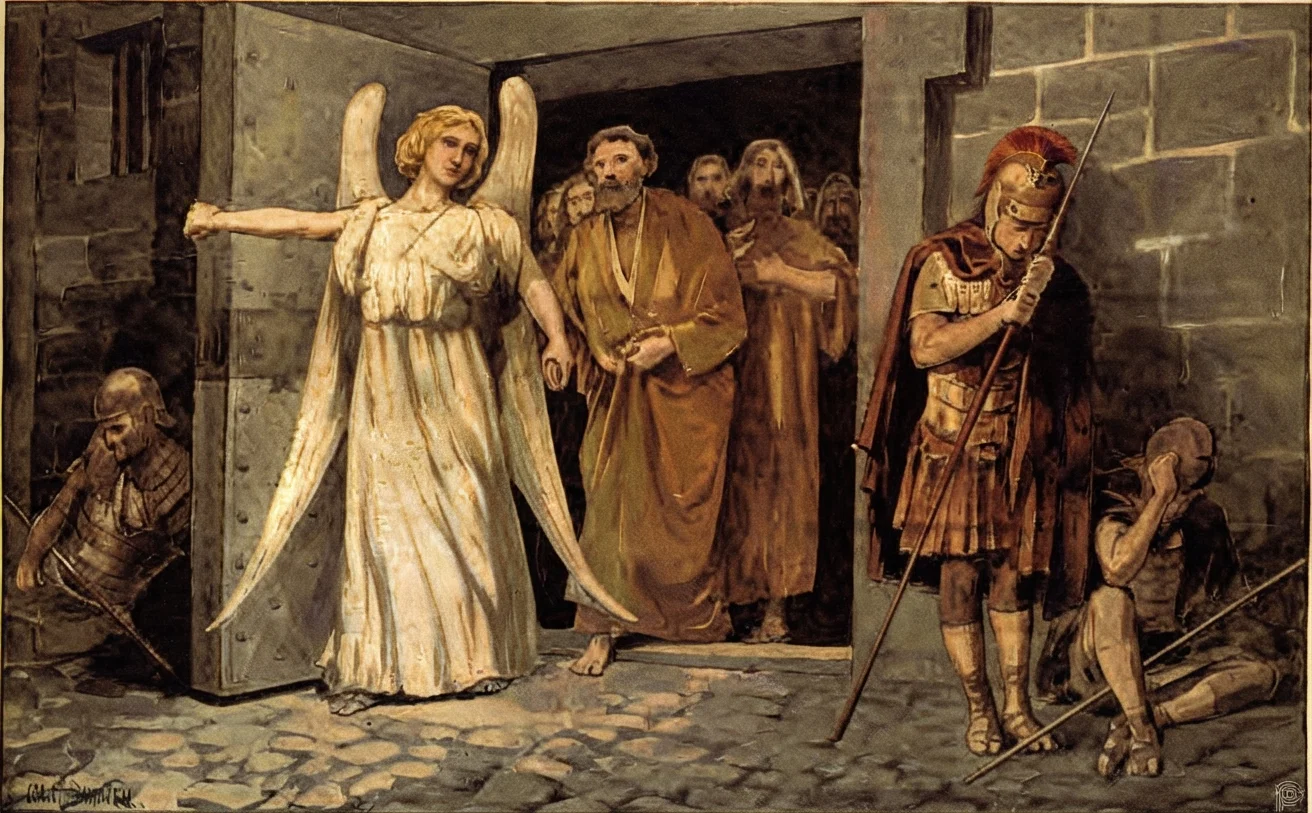
ALL through the history of this world is mingled the story of sadness and distress. Sorrow, disappointment, suffering, and every form of pain are the results of an abnormal condition.
THE Lord is not the author of this state of things. The fruit of the Lord's Spirit is "love, joy, peace, long-suffering, gentleness, goodness, faith, meekness, temperance." Gal. 5:22, 23. The Spirit of the Lord is always working to drive out and destroy sadness and pain, but it never produces these things. There may be sadness in the heart when the Lord reveals to us the evil and sin that is there. But this evil and sin are the cause of the sadness. The Spirit of God is the light only by which it is seen. And the object that it has in revealing the evil to us, and thus causing the temporary sadness, is only that the cause of sorrow may be removed, and we be led into the realm of eternal peace and enjoyment.
FOR thousands of years evil has had its abode in this earth, and men have been held in its chains as prisoners. There is no power in man that enables him by himself to break the bands of this slavery to the evil power. God alone can give this strength.
Apostles Released from Prison.
ALL through the ages the Lord has sought to win men from the slavery of sin and to set them free in Jesus Christ. And all who have learned the Gospel have come in contact with that which gives real freedom, and that brings to men an inexpressible joy through their experiences, in the effects of the divine power upon their human lives. Those who have tasted of these divine joys are constantly amazed that so few have harkened to the Lord's earnest entreaties to come to Him that they might have the true life and the joy that comes with it. And those who refuse the Lord's invitation not only make it hard for themselves, but they serve to perpetuate the evil that brings sadness and gloom upon all. There can never be perfect happiness in this world so long as there is a single soul that gives himself to the service of sin in any way whatever.
THE world is being filled with evil men. There is no avoiding the conclusion that things are growing worse all the time. Corrupting vices and crimes, murdering, robbing, and every form of evil imaginable, is becoming bolder and bolder, and the world has its terrors for every one, because of these things. No one seems to be safe from the weapon of the assassin, from the stealth of the robber, the cunning arts of the deceptive and vicious, nor from the tongue of the slanderer. With all these things growing worse in the world, the picture is by no means a bright one if we look at it from the human standpoint wholly.
BUT, praise the Lord, we are not required to look at the picture from the human standpoint at all. Our Father in heaven is seeking to get us to look at these things from His standpoint altogether. He bids us inquire, "Watchman, what of the night?" And then He sends back the answer to us, "The morning cometh, and also the night." Isa. 21:11, 12. It seems like a contradiction. It does not seem possible that the morning and the night can both be coming at the same time. But such is literally the case. The darkness that isfilling the world because of the crime and sins that are in the land everywhere, is a foreboding of the approaching night. But this night is only for those who refuse to receive the light from God. Those who have received the Gospel of Christ, and who consequently know His Word, are not disturbed by this darkness that is such a menace to all others. They know the promises of God, and know that the morning is coming, notwithstanding the gathering shades of midnight darkness.
THE Lord would have us understand that the "morning cometh." The time for the world's release from the chains of sin is almost here. This darkness that is spreading over the world is not the indication of a deeper night, but it is merely that dark hour that immediately precedes the bursting glories of the coming day. This evil that we see in the land is nothing more than the last supreme effort of Satan to destroy as many as he can before the coming of the Lord Jesus Christ to begin His everlasting reign. All who yield to the deceptions of Satan and cling to their sin, will indeed go down to destruction in the days that are just ahead of us. For all them it will be the beginning of the everlasting night that locks every vestige of sin in the well-merited oblivion of eternal death. What an awful thing it is to refuse to know the meaning of these times, and so be hurled into such a night, when the Lord wants us to walk out into the rising joys of His eternal day of release!
EVERY one in all the world should know that the coming of Christ is right at hand. All these wars, and rumors of wars, all this corruption in the world, all this criminality, all this plague of virulent diseases that seem to baffle the skill of the wisest physicians, in fact, every one of these things that are filling the minds of men so full of dread in these times, are but the evidences of the coming day of the Lord. Satan and sin have had their day. The Lord's day is now about to be ushered in. And when that glad morning comes, sin will have been forever put underfoot. Nevermore can it raise its hideous head to fill the hearts of men with sorrow and gloom.
HASTEN the glorious day! Bid every son and daughter of Adam know that the time for his release is right at hand. The resurrection morning is almost here. The coming of Jesus our Saviour is right at the doors. Are you ready? Is your heart heaving with the joys of the coming morning? or are you bowed down beneath the gloom of the forebodings of night? Lift up your heart to God for light and power. He desires to help you to hasten to get ready for the realities of the pleasures of eternity. The day is at hand. How full of indescribable joy is this great fact!

RESISTANCE TO LIGHT. No. 3.

(Concluded.)
THE Pharisees took offense at the words, "The truth shall make you free." "We be Abraham's seed," they said, "and were never in bondage to any man; how sayest Thou, Ye shall be made free?" Jesus answered: "Verily, verily, I say unto you, Whosoever committeth sin is the servant of sin. And the servant abideth not in the house forever; but the Son abideth ever. If the Son therefore shall make you free, ye shall be free indeed."
Paul declares: "There is therefore now no condemnation to them which are in Christ Jesus, who walk not after the flesh, but after the Spirit. For the law of the Spirit of life in Christ Jesus hath made me free from the law of sin and death. For what the law could not do, in that it was weak through the flesh, God sending His own Son in the likeness of sinful flesh, and for sin, condemned sin in the flesh; that the righteousness of the law might be fulfilled in us, who walk not after the flesh, but after the Spirit."
"I know that ye are Abraham's seed," Christ continued; "but ye seek to kill Me, because My word hath no place in you. . . . If ye were Abraham's children, ye would do the works of Abraham. But now ye seek to kill Me, a Man that hath told you the truth, which I have heard of God; this did not Abraham."
Christ declares that lineal connection is superseded by spiritual connection. The Jews were indeed Abraham's seed according to the flesh, but they manifested a spirit very different from the spirit of righteous Abraham. By their unbelief and persistent rejection of truth they disinherited themselves. Abraham obeyed God, and it was counted to him for righteousness. By their works the Jews showed that they bore no real relationship to Abraham.
On one occasion when Christ was informed that His mother and brethren were without, desiring to speak with Him, He looked upon the men and women who were feasting on His words, and, stretching forth His hands toward them, said: "Behold My mother and My brethren! For whosoever shall do the will of My Father which is in heaven, the same is My brother, and sister, and mother." Precious, glorious truth, spoken to comfort all believers, who may indeed be encouraged by knowing how Christ regards them!
"Ye do the deeds of your father," Christ said to the Jews, and they answered scornfully, "We be not born of fornication; we have one Father, even God." "If God were your Father," Christ said, "ye would love Me; for I proceeded forth and came from God; neither came I of Myself, but He sent Me. Why do ye not understand My speech? even because ye can not hear My word."
With faithful, unsparing hand Christ unmasked the men who had professed so much and done so little. Behind their pretentious piety there lay concealed deceitful malignity, the controlling principle of their lives. Children of Abraham, children of God, they were not, and neither could they be. By their works they bore evidence that they were the children of the enemy of God.
Christ saw that the time had fully come to rend from the Jewish leaders their covering of pretended piety, and to show that they were but whited sepulchers. "Ye are of your father the devil," he said plainly, "and the lusts of your father ye will do. He was a murderer from the beginning, and abode not in the truth, because there is no truth in him. When he speaketh a lie, he speaketh of his
own; for he is a liar, and the father of it. And because I tell you the truth, ye believe Me not. Which of you convinceth Me of sin? And if I say the truth, why do ye not believe Me? He that is of God heareth God's words; ye therefore hear them not, because ye are not of God. Then answered the Jews, and said unto Him, Say we not well that Thou art a Samaritan, and hast a devil? Jesus answered, I have not a devil; but I honor My Father, and ye do dishonor Me. And I seek not Mine own glory; there is One that seeketh and judgeth."
"Which of you convinceth Me of sin?" The keen eyes of jealousy had been watching Christ, trying to find something whereby He might be condemned. But nothing could be found. "The prince of this world cometh, and hath nothing in Me," the Saviour declared. No envy, no worldly ambition, no pride, no selfishness, could be found in Him. "I know thee who thou art," the evil spirits cried, "the Holy One of God."
Standing in the presence of the multitude, Christ uttered words which, if spoken by any one else, would have been blasphemous. "If a man keep My saying, He shall never see death," He said. "Then said the Jews unto Him, Now we know that Thou hast a devil. Abraham is dead, and the prophets; and Thou sayest, If a man keep My saying, he shall never taste of death. Art Thou greater than our father Abraham, which is dead? and the prophets are dead; whom makest Thou Thyself? Jesus answered, If I honor Myself, My honor is nothing; it is My Father that honoreth Me; of whom ye say, that He is your God. Yet ye have not known Him; but I know Him; and if I should say, I know Him not, I shall be a liar like unto you; but I know Him, and keep His saying. Your father Abraham rejoiced to see My day; and he saw it, and was glad."
The command given to Abraham to slay his son was the most severe test that could be brought upon him. But as he prepared in faith to obey God, there was opened before him the coming of the Just One, the Lamb slain from the foundation of the world for the sins of the human race. As by faith he grasped the promise, Christ revealed Himself to him. Abraham saw the incarnate Saviour, and rejoiced.
"Then said the Jews unto Him, Thou art not yet fifty years old, and hast Thou seen Abraham?" "Verily, verily, I say unto you," Jesus answered, "Before Abraham was, I am. Then took they up stones to cast at Him; but Jesus hid Himself, and went out of the temple, going through the midst of them, and so passed by." Their eyes were blinded that they might not see Him.
"Before Abraham was, I am." Christ is the pre-existent, self-existent Son of God. The message He gave to Moses to give to the children of Israel was, "Thus shalt thou say unto the children of Israel, I AM hath sent me unto you." The prophet Micah writes of Him, "But thou, Bethlehem Ephratah, tho thou be little among the thousands of Judah, yet out of Thee shall He come forth unto Me that is to be ruler in Israel; whose goings forth have been from of old, from everlasting."
Through Solomon Christ declared: "The Lord possessed Me in the beginning of His way, before His works of old. I was set up from everlasting, from the beginning, or ever the earth was. When there were no depths, I was brought forth; when there were no fountains abounding with water. Before the mountains were settled, before the hills was I brought forth. . . . When He gave to the seaHis decree, that the waters should not pass His commandment; when He appointed the foundations of the earth; then I was by Him, as one brought up with Him; and I was daily His delight, rejoicing always before Him."
In speaking of His pre-existence, Christ carries the mind back through dateless ages. He assures us that there never was a time when He was not in close fellowship with the eternal God. He to whose voice the Jews were then listening had been with God as one brought up with Him.
Christ's words were spoken with a quiet dignity and with an assurance and power that sent conviction to the hearts of the scribes and Pharisees. They felt the power of the message sent from heaven. God was knocking at the door of their hearts, entreating entrance. But they refused to listen. By their persistent rejection of warnings and invitations they caused Him to abandon them to their blindness and its results. Satan was working with all his power to secure them in his cause, and under his control they developed a stubbornness which brought upon them their ruin.

A New Creature in Christ

“WHEN one takes Christ into his life, a change takes place. There is a change in his desires, in his thoughts, in his convictions, in his affections, in his principles, in his aims, in his hopes, and in his influence over others.”
“Therefore if any man be in Christ, he is a new creature; old things are passed away; behold, all things are become new.” 2 Cor. 5:17.

Do Not Procrastinate

"Putting off work means adding to it. The weeds that should have been killed before the rain are many times harder to kill after the rain, with the delay that follows while waiting for the soil to get into condition again." Christ did not procrastinate in His work. He said, "I must work the works of Him that sent Me, while it is day; the night cometh, when no man can work." John 9:4. T.

THE WHEAT AND THE TARES.

IN this world the difference between the righteous and the ungodly does not always appear. The Lord does not place an outward premium upon righteousness. To do this would be to defeat the very plan He is endeavoring to carry out in connection with the salvation of the human family. If the Lord to-day invariably sent upon the righteous man the blessings of life, of health, of property, and upon the wicked, sickness, death, and disaster, the ungodly would cease to serve the Lord from mercenary motives, and with hope of temporal gain, rather than from true love. Hence the Lord sends His rain upon the just and upon the unjust. He bestows upon all alike the blessings of life and health and temporal prosperity. But the time is coming in the last great day when the Lord will make up His jewels and gather His precious ones home unto Himself, and then the difference now unseen will be made manifest. "Then," says the prophet, "shall ye return, and discern between the righteous and the wicked, between him that serveth God and him that serveth Him not." Read Mal. 3:13-18; 4:1-3.
This same experience, as illustrated in the parable of the wheat and the tares, is brought to view in the thirteenth chapter of Matthew, in the following words: "Another parable put He forth unto them, saying, The kingdom of heaven is likened unto a man which sowed good seed in his field; but while men slept, his enemy came and sowed tares among the wheat, and went his way. But when the blade was sprung up, and brought forth fruit, then appeared the tares also. So the servants of the householder came and said unto him, Sir, didst not thou sow good seed in thy field? from whence then hath it tares? He said unto them, An enemy hath done this. The servants said unto him, Wilt thou then that we go and gather them up? But he said, Nay; lest while ye gather up the tares, ye root up also the wheat with them. Let both grow together until the harvest; and in the time of harvest I will say to the reapers, Gather ye together first the tares, and bind them in bundles to burn them; but gather the wheat into My barn."
The disciples could not understand the lesson taught by this parable. After Jesus had sent the multitude away, and, with His followers, had gone into the house for a period of rest, they came unto Him requesting an explanation.
"He answered and said unto them, He that soweth the good seed is the Son of man; the field is the world; the good seed are the children of the kingdom; but the tares are the children of the wicked one; the enemy that sowed them is the devil; the harvest is the end of the world; and the reapers are the angels. As therefore the tares are gathered and burned in the fire; so shall it be in the end of this world. The Son of man shall send forth His angels, and they shall gather out of His kingdom all things that offend, and them which do iniquity; and shall cast them into a furnace of fire; there shall be wailing and gnashing of teeth. Then shall the righteous shine forth as the sun in the kingdom of their Father. Who hath ears to hear, let him hear."
We see from this lesson, and its explanation by our Lord, that so long as this world in its present form shall exist, the righteous and the wicked will both exist with it. They will live here together, side by side, in the same company, and perhaps associated together in the same relations of life, and in many instances their lives may be so blended, and their interests so closely identified, that only one with more than mortal vision could pierce the exterior of form and pretension, and, in the light of divine illumination, weigh the motives and purposes of the heart, and determine who were the sound wheat and who the light and worthless chaff. Not much of the world's conversion is couched in these words of our Lord. On the other hand, this parable stands as a strong and emphatic protest against this delusive doctrine of the enemy which has been foisted upon the world during this closing century.
And, in addition to this, what a blessed practical truth is taught us to reserve judgment to the final day of harvest gathering, when that which is clouded and indistinct now shall appear in its true light, the wheat brought to a golden maturity, and the tares revealed in their pretentious worthlessness. To-day the wheat and the tares are growing together in every part of the world's great harvest-field. Every church contains both good and evil. Side by side on the roll of the same book, side by side perchance in the pew of the same church, sit persons, one the pure gold, and the other base and worthless dross; one sound wheat, and the other chaff. In many instances the distinction even now may be so great and the contrast so sharp that a classification may be made; but in many instances this can not be done. Hence, it is for us to labor for all men lovingly, assiduously, faithfully, even as Christ labored; for the Judas as well as the John; for the impulsive Peter as well as the conservative James.
And in doing this we are to remember the words of the great apostle, "Judge nothing before the time." Perfect knowledge must precede perfect judgment. Only God possesses perfect knowledge; hence only God can perfectly judge. And so the child of God to-day must labor in charity, in love, and in long-suffering, not willing that any should perish, but determined, so far as possible, that all shall accept the grace that is in the Lord Jesus Christ, and have their lives transformed by the power of His Gospel. If we do not know now, we shall know sometime. If we can not discern clearly now, but must see through a glass darkly, sometime we shall see face to face. The cloud of sin will be rolled away, and the glory of God will shine forth in all its radiant effulgence.
So in the darkness of night through which we are now passing, that darkness which just precedes the breaking of the glorious day, let us hope on and labor on, being sure that the night is far spent, and that the morning will soon break. O glorious day, long desired, dawn upon thy waiting children! O blessed Jesus, long expected, come and come quickly to thy waiting people!
FRANCIS M. WILCOX.

THE HIGHER CRITICISM GAINING GROUND.

THE opinion has been variously expressed, and the hope entertained, that the so-called Higher Criticism would run its course and drop out of sight, leaving unharmed the good old regard in which the Bible was formerly held. But this is certainly not destined so to be. The spirit of the movement is gaining ground rapidly, notwithstanding its advocates have not been united in their conclusions, and periodically establish and renounce this and that supposed fact or basis in their scheme of Bible study.
The studies and investigations classed as "Higher Criticism" are far from any claim or pretense to subversion of faith in the Bible as the revealed Word of God. On the contrary, they claim to shed great light on the sacred page. And here is where the mischief enters. No one can afford to disregard true light; but the old-fashioned (as the world now goes) student of the Word can not recognize that as true light which in any manner alters the simple and direct Biblical statement of history or doctrine. And the characteristic workings of the "Higher Criticism" have led to conclusions ranging from questionings of dates and writers and style of language to absolute rejection of almost all historical record as being what it claims to be, and to disparagement of practical doctrine,—in short, to virtual casting away of the Holy Scriptures as the Word of God, in the extreme positions taken by some critics.
These evil results, in their varying degrees, are not confined to any one section or to a few men. They are universal, and "Higher Criticism" is only another name, and a modern excuse, for the spirit of doubt and questioning and infidelity that has always been present in the world since sin and opposition to divine things entered, and which has found a special field of operation since the giving of the printed Scriptures to the world, and now in this later age of discoveries, and research, and intense activity, and new doctrines and old, is moving with new life, and is even clothed with a garb of sanctity. And where it is not avowedly opposition and criticism, it is a spirit demanding and eagerly accepting something new, novel, or startling. Thus, in some of its many degrees, it stands in the pulpit and molds the lives of its audience; it occupies the editorial chair of the religious press, and scatters broadcast the germs and bacilli of infidelity and atheism. Already it forms a part of popular education in some of the leading gymnasia of Germany. These words are not an attack upon any one. But they are intended to call serious attention to what we believe is one great cause of lack of true godliness to-day, and departure from piety. There is need of a warning, and we must sound the cry.
In a recent issue, the Congregationalist makes note of the growth of Higher Criticism, but views it, we are sorry to say, with evident satisfaction. It characterizes the favorable attitude of the religious press and others as the "growth of tolerance." We quote a portion of its remarks on the subject:—
From a somewhat wide reading of the religious press we are impressed with the increasing friendliness of attitude toward Christian scholarship. Diatribes against the methods and conclusions of thehigher critics are much rarer than they were ten years ago. Even papers which represent the most conservative branches of the church seem to be parting company with the spirit of heresy hunting, and are disposed to allow present discussions to work themselves out naturally, and to remand critical questions to the study and the class-room, where they properly belong.
We can regard this growth of tolerance, and the changing attitude of those who once protested against methods which open the way for the evils we have mentioned, only as evidence of a departure from the simplicity and power of the Gospel,—a yielding to the spirit of the world. Already—as it has been all along—the heat of discussion finds its chiefest place in the study and class-room, but unfortunately the results do not find their resting-place there. There is a cry from many who view with deep and pious alarm the growth of indifference to spiritual matters that is possessing the churches, and the true remedy is indicated invariably to be a return to the old ways, the faith once committed to the saints.
But can we hope for anything better?—Yes, for individual, earnest seeking and turning to the Word in its simplicity; for the majority and the world in general, No. There may be movements hailed popularly as revivals, and there will ever be loud professions of godliness. But the tide is outward towards a sea where mingle streams of error and delusion. It is the time of peril spoken of by the apostle, "when they will not endure sound doctrine; but after their own lusts shall they heap to themselves teachers, having itching ears; and they shall turn away their ears from the truth and shall be turned unto fables." 2 Tim. 4: 3, 4. It is the day of scoffers—the last days—when men are "willingly ignorant" of the Biblical record of creation, of the destruction of the world by a flood, of its second destruction by fire, and of the literal coming of the Lord in the clouds of heaven. 2 Peter 3. There is no promise of a general bettering of conditions in this present age.
But there is light, and a sure and safe path in the good old faith of our fathers, found in the enduring but much criticized Bible. There is a heavenly light shining on the old page, and whoso reads may understand, and find peace, and joy, and eternal salvation, and a knowledge surpassing that of worldly savants, if he will.

WORK AND IDLENESS.

Two men have arrived at a railway station some time before the train. One will do nothing, or only fret and fume; the other will employ the interval in studying human nature, enter into a profitable conversation, or try to learn something from the contents of the book stall. In the same number of years the second class of man will live twice as long as the first, because he will do twice as much with his time. How much more energy would we have for good work if we wasted less of it in foolish anger, useless repining, envy, hatred, and all uncharitableness? Then, many of us would work with far more spirit if greater variety could be introduced into our work. Change of work is as good as rest. Pity that the manual and intellectual work of the world should be confined to separate classes of people instead of being divided among all! Why should some have their bodies worn out by overwork, and others their minds, when if the work were divided there would be just enough for the healthy and pleasurable exercise of all the faculties of both parties? Every boy, however high his social position may be, should be taught a handicraft. It is all very well for him to “manipulate his feet” well, as an Irish reporter wrote, at football, but would it not be better for him to learn to do useful work with his hands? Five or six hours’ reading or other intellectual work is as much as most men can do with profit in one day, and this leaves them plenty of time for using their hands. Many are discontented with the name of idler who are nevertheless content to do worse than nothing. Of course, when it is said that every man should work, we mean that he should do good and useful work.—Sel.

SIGNIFICANCE OF TRIALS.

HOWEVER it may be otherwise viewed by man, no trial or temptation is in God’s sight small or insignificant.
The trial of patience may seem to us a very little thing; but when we see that the work of patience is the work of perfection (Jas. 1: 1–3), we can understand something of the estimate God places upon it. As every stroke helps to bring from the rough stone the rounded figure existing in the mind of the sculptor, so every trial has its work to do, that “ye may be perfect and entire, wanting nothing.” When the work has all been accomplished that God in His love and favor would do for us, the “third angel” announces with a loud voice: “Here is the patience of the saints; here are they that keep the commandments of God, and the faith of Jesus.” “These are they which follow the Lamb whithersoever He goeth. These were redeemed from among men, being the first-fruits unto God and to the Lamb. And in their mouth was found no guile; for they are without fault before the throne of God.”
It is natural to applaud one who has faced some great calamity or difficulty and proved steadfast, and the world delights to herald his name; but the great army of earth’s heroes are unknown to men. They are in mansions and huts and hovels, dwelling in the valleys, on the mountain-sides—everywhere. They are of every nation, kindred, and tongue. They shall come from the east and the west, and sit down in the kingdom of God, with Abraham, Isaac, and Jacob. To them will be given “a white stone, and in the stone a new name written, which no man knoweth saving he that receiveth it;” for they are overcomers. They are passing through the fires of trial to-day, and will emerge from these unknown furnaces reflecting the image of their divine Lord and Master.
In the little worries of life that vex and bewilder the child of God, sometimes we find the hottest fires. Sometimes at the close of a day of severe toil, the worn and exhausted housewife meets, in an apparently trivial circumstance, for which her companion or thoughtless child is responsible, the greatest contest of her life. If at such a time she resists the tempter, and no word of impatience escapes her lips, or angry glance betrays the ruffled disposition, in the books of heaven there is recorded a victory greater than the taking of a city. If in some business transaction the Christian has been cruelly wronged, and he takes “joyfully the spoiling of his goods,” if, by the grace of God, he rises above it all, and gets where he can love the man that has done him the injury, he has gained a victory that causes angels to rejoice.
It is in just such fields as these that the great battles of life are fought. It is the crucifying of the flesh in these little things that insures the death of the “old man.” Alexander the Great could conquer the world; but he could not control the passions of his mind, and he died a slave.
The greatest man of earth, in God’s sight, is the overcomer. The choicest gifts of heaven are reserved for him, and when he has, by the blood of the Lamb and the word of His testimony, been declared the victor, God commands, “Rejoice, ye heavens, and ye that dwell in them.”
The most humble soul that overcomes the least sin is more highly esteemed by the immortal throng than earth’s greatest hero who tramples down the weak to gain his laurels.
The most obscure Christian is assured that he will finally be triumphant: “for greater is he that is in you, than he that is in the world.” Beyond the hills and mountains of trial, difficulty, and temptation, there stretches the great plain of peace, flooded with the amber light of God’s eternal joy, and leading the way to this we see Jesus, staff in hand, shouting to us, “In the world ye shall have tribulation; but be of good cheer; I have overcome the world.”
Could the diamond speak, it would complain, no doubt, at the emery wheel, and think its lot a hard one; but without the wheel it could never adorn the brow of the monarch; so to us “no chastening for the present seemeth to be joyous, but grievous; nevertheless afterward it yieldeth the peaceable fruit of righteousness unto them which are exercised thereby. Wherefore lift up the hands which hang down, and the feeble knees; and make straight paths for your feet.” These trials are but the pledge of God that He loves us; “for whom the Lord loveth He chasteneth, and scourgeth every son whom He receiveth.”
Dear reader, may the light of God’s love break in upon us, and in every temptation may we rejoice, knowing that if in one hand God holds a cross, in the other He has a crown. F. W. HIDDLESON.

AS YE WOULD.

If I should see A brother languishing in sore distress, And I should turn and leave him comfortless, When I might be A messenger of hope and happiness— How could I ask to have what I denied In my own hour of bitterness supplied?
If I might share A brother’s load along the dusty way, And I should turn and walk alone that day— How could I dare, When in the evening watch I knelt to pray, To ask for help to bear my pain and loss, If I had heeded not my brother’s cross?
If I might sing A little song to cheer a fainting heart, And I should seal my lips and sit apart, When I might bring A bit of sunshine for life’s ache and smart— How could I hope to have my grief relieved, If I kept silent when my brother grieved?
And so I know That day is lost wherein I fail to lend A helping hand to some wayfaring friend; But if it show A burden lightened by the cheer I sent, Then do I hold the golden hours well spent, And lay me down in sweet content. —Edith V. Bradt.

Called to Service

WE are brought into the kingdom of God on earth for service. God will supply the necessary ability. He never yet has called any son or daughter to a work without giving them the necessary wisdom, strength, and grace to rightly do it. Our sole responsibility is to employ well the grace He supplies. No one who thus works need ever be ashamed to face either God or man.—Christian Work.
Continue reading: THE RIVER OF LIFE