Your ShelfYour Projects

Signs of the Times, Vol. 29, No. 50.

Books with a Mission

Signs of the Times

Dec 16, 1903

Pacific Press Publishing Company · Oakland, Cal. · Dec 16, 1903

Books with a Mission

CHILDREN'S COLUMN

Do you like good stories?-"Of course we do," you all answer at once. Then we know you would like

THE HOUSE WE LIVE IN

This is a book of twenty-six stories, told by a mother to her children—Percy, Helen, and Amy. These stories are all about the effect different foods and drinks have upon the body, and how you can keep yourself well and strong. It is full of new pictures, and has a very pretty cover showing a boy and girl going to school. Price 75 cents.

BOTANY FOR CHILDREN

"I don't call this a lesson; such pleasant talk isn't study. I'd go to school all the year if I had my lessons this way," said one little girl after listening to one of the "talks" given by Aunt Mary, and written in this book. Fifty pictures of plants. Good cloth covers. Price $1.00.

GOLDEN GRAINS

Ten very small books with paper covers, filled with good stories. Only 25 cents for the whole set.

GOSPEL PRIMER

More than half a million boys and girls have already studied this good book. The most of its reading lessons are well-told Bible stories. These stories are told both in words and pictures, and are very interesting. Cloth covers, 50 cents; boards, 25 cents.

BEST STORIES FROM THE BEST BOOK

In two parts, the first called the "Easy Lessons Part," and the second, "Bible Story Department." Some of its many pictures are nicely colored. Board covers, 50 cents; cloth 75 cents.

JACK THE CONQUEROR

How a poor, ragged little boy became a great and good man. Cloth cover 50 cents.

SABBATH READINGS

Just the kind of stories your parents will like to read to you, because they are interesting to the grown-up people as well as to you. Price 40 cents.

PILGRIM'S PROGRESS

Maybe you have not yet read this story of how a man by the name of Christian traveled to the Celestial City. If not, you want to at once. This edition is bound in cloth, and costs only 25 cents.

FOUR PICTURE BOOKS

Bible animals. Bible alphabet. First book of Bible knowledge. Farmyard alphabet. These books are bound in heavy paper covers and are full of pictures, some of them in colors. Price each 25 cents, or the four for 90 cents.

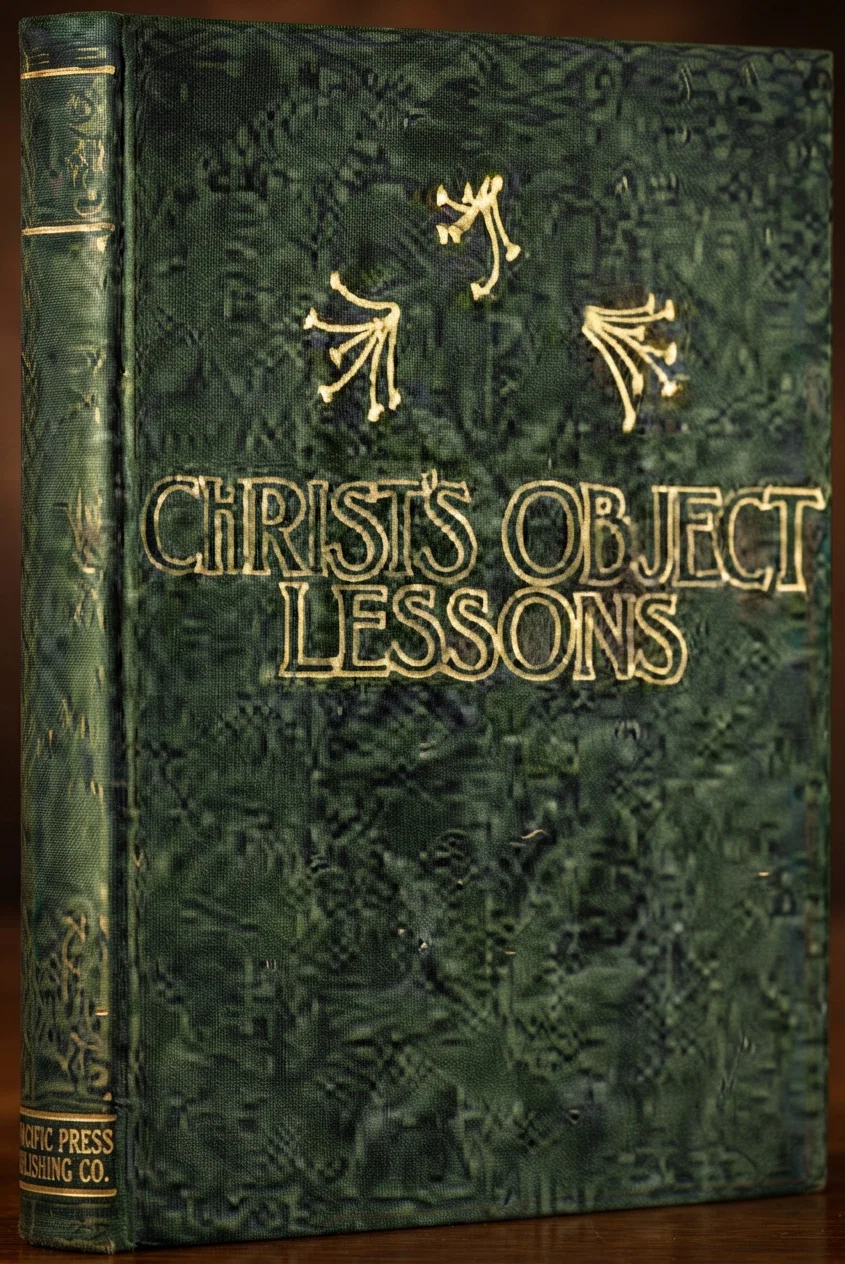
CHRIST'S OBJECT LESSONS

By Mrs. E. G. White
Christ's wonderful lessons as taught in His parables and their applications are beautifully presented by the author in a simple yet powerful style. New and old truths are made to shine forth with a luster that is inspiring indeed.
"Abounds in fruitful suggestions both spiritual and practical."—H. J. Vosburgh, D. D., First Baptist Church of Oakland. "Thoroughly scriptural, wholesome and evangelical."—Elbert R. Dille, D. D., First M. E. Church, Oakland, Cal. "An unsectarian, devotional book of unusual purity and sweetness."—H. C. Meredith, M. E. Church S., San Jose, Cal.
The book is handsomely illustrated with half-tone engravings and bound in antique cloth with an artistic cover design. 450 pages. PRICE, CLOTH GILT $1.25, POST-PAID

POWER FOR WITNESSING

By A. F. Ballenger
Those desiring power in order to effectually witness for Christ should read and study this book. It does not deal in generalities and theories which fail to work out in actual experience, but instructs the Christian how to obtain that tangible hold on the power of the Holy Spirit which "effectually worketh in them that believe." There are 44 chapters, among which are the following:—
The Preparation, "Forgiveness of Sins," Ye Are My Witnesses, Personal Experience in Receiving Repentance and Forgiveness of Sins, The Spirit Calls for Confession and Restitution, Righteousness then Power, Personal Experience in Receiving Keeping Power, Humility then Glory, the Holy Spirit and the Unpardonable Sin, Miracles and the Sin Against the Holy Ghost, etc. 201 pages, bound in cloth and paper. PRICE, CLOTH 75c; PAPER, 25c, POST-PAID

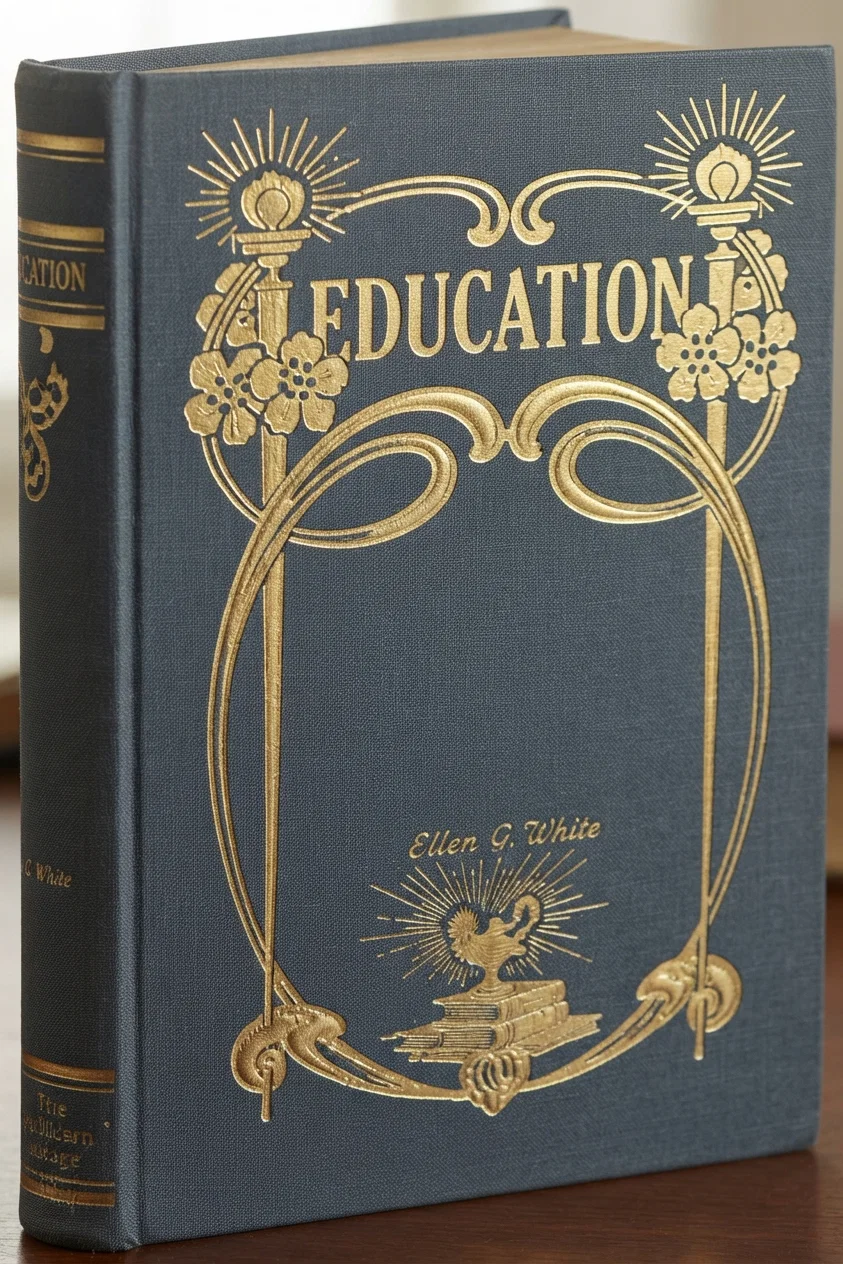
EDUCATION

By Mrs. E. G. White
A great work of inestimable worth to not only teachers and students, but to parents and business men as well. The author's thought is revealed in the following paragraphs from the book.
"True education means more than the pursuit of a certain course of study . . . It is the harmonious development of the physical, the mental, and the spiritual powers." From Chapter I, "First Principles."
"In the highest sense the work of education and the work of redemption are one; for in education, as in redemption, 'other foundation can no man lay than that is laid which is Christ Jesus.'" From Chapter on "Relation of Education to Redemption." 321 pages, attractively bound as illustrated. PRICE, CLOTH $1.25; LEATHER, $2.00, POST-PAID

THE BOY PUZZLE

By Rev. Joseph F. Flint
A thoroughly practical work by a man who has spent many years laboring among boys in industrial and other schools, and who has made the subject of their training, and their mental, moral, and spiritual development a life study. The author's thought is suggested in the following sentence from the book: "The essential principles of child-training are patience, not impulse; sympathy, not severity; justice, tact, tenderness and love."
Here are a few chapter headings: A Bundle of Possibilities, In Leading Strings, Mother's Little Man, Young Hotspur, Manhood's Morning, The Voting Age, The Noblest Work of God. Attractively bound in cloth. PRICE, CLOTH 75c, POST-PAID
PACIFIC PRESS PUBLISHING COMPANY 18 W. FIFTH STREET, KANSAS CITY, MO. OAKLAND, CALIFORNIA

A FOREWORD TO OUR READERS.

TWO mighty giants are engaged in battle, a typical struggle of a thousand. The world is the arena. Thousands on the one side, and millions on the other are enlisted in the combat in person, in means, in sympathy.
With the thousands are the munitions of war in this world. With the millions there is bare sufficiency for present needs. A small force numerically with great resources listed against a mighty force with limited resources. The product of the factors in each case render them so nearly equal in the tremendous possibilities of the conflict, that the outcome arouses all the latent instincts of gamble and risk in the human.
Heads are throbbing hot. Eyes are blazing eager. Muscles are knotted. Nerves are tense. Some are jubilant in hope of victory. Others are fearful of defeat. Yet all are intensely earnest as they gaze upon the combat, urge on the fighters, or take part in the fray.
Men fall and rise again in the struggle. Men fall and fail in the struggle. Women and children suffer and pine and die, crushed under ruthless feet, stabbed in the houses of professed friends.
Yet these combatants are necessary to the ordinary life of this world. Both might be used for the lasting benefit of humanity. But in the fearful struggle, now on as never before, there is little blessing, much wasted effort and energy, and great loss in the fearful harvest of crushed fortunes, ruined reputations and characters, hating hearts, venom-filled memories, and loss of life here and hereafter.
We are interested in this tremendous conflict between Capital and Labor. We are a part of humanity. What touches humanity touches us. What affects humanity affects us. For with others we can not stifle, nor would we,
“THE SYMPATHIES, THE HOPES, THE WORDS, THAT MAKE MAN TRULY MAN.”
We stand amazed at the mighty increase of riches through gigantic and even world-wide combination. We see that wealth is used subjectively, if not objectively, as a means of oppression. We feel with the millions of earth that there is injustice, objective, subjective, and incidental; sometimes of purpose, but with suffering always the result. We see the rising up against this on the part of laboring men, often like the blind giant Samson groping for the pillars which may be lifted for the overthrow of the whole system. In this desire to get even with the oppressor they are willing to die with him if they may but be revenged. And notwithstanding their blind impotency and misdirected revenge our hearts sympathize with them.
But we would teach them the better way. It is not our way, for we of ourselves could present nothing better than what has been presented before. We would lay before our readers in this number of our paper the way of faith, of justice, of truth, of love,—the eternally established way. We ask you to read and weigh, not in the light of the brute, temporary present, but of the eternal, permanent future; not in the light which men’s flaring, flickering, dying tapers cast upon the question, but in the steady, ever-increasing intensity of the radium power of the transcendent light of God’s “more sure Word of Prophecy.”

THE PROBLEM OF CAPITAL AND LABOR

REPRESENTATIVE OPINIONS

FOR INDUSTRIAL FREEDOM.

(By Harrison Gray Otis, President and General Manager of the Times-Mirror Company, Los Angeles, Cal.)
[The writer of this article is an employer, but he wishes it expressly understood that he does "not write from that standpoint exclusively," because he believes that the principles he advocates, "if carried out to their logical conclusion, will make for the welfare of all independent workers, whether employers or employees. In other words, industrial freedom is essential to the best interests of all American citizens." We hope that General Otis' letter will be read from this view-point, on its merits.—Editor.]
Rev. M. C. Wilcox, Editor of "Signs of the Times," Oakland, Cal.—Dear Sir: I have your letter of October 1, in which you ask for an expression of my opinion upon the following questions, to-wit:—
1. "What are the fundamental and vital differences between capital and labor?"
2. "What is necessary in order to a permanent settlement and peace between these two great forces?"
You have not asked your questions in precisely the form that will enable me to give the most effective and satisfactory answers thereto; but, nevertheless, I will informally and briefly answer as follows, referring you, for a more complete exposition of my views, to my frequently-expressed opinions heretofore made public, and particularly to a "Plain Statement of Bed-Rock Facts," and also to my response to the recent "Address of Citizens," published in the "Times," and in brochure form, under the key-note headline of "Liberty and Law. Industrial Freedom. All must have equal right to labor. Evils of striking, picketing, boycotting, idleness, violence, and industrial turmoil."
Answering your first question, "What are the fundamental and vital differences between capital and labor?" I have to say that these differences, as they exhibit themselves in recent years, are due directly and mainly to irresponsible labor agitators, and to the disregard on the part of too many "organized" laborers of the old-fashioned steadiness, faithfulness, application to duty, and devotion to the interests of the employer which in former times made the relations between employers and employed mutually trustful, to the great good of both. Thousands of workmen, once well disposed and faithful, have been taught by labor agitators, walking delegates, and "business agents" to be disloyal to the trust reposed in them, indifferent to the rights and interests of their employers, and treacherous in times of need and peril. Peaceful conditions, which once prevailed among employers and workmen, and were accepted by each as mutually satisfactory, have been transformed in recent years into warlike conditions, where the one class is arrayed against the other in antagonism, distrust, strife, and groundless ill-will, to the great detriment of both classes, tending to produce industrial stagnation, commercial lethargy, and mercantile bankruptcy, besides insupportable personal losses to the workmen themselves and suffering and distress to their families. In times of industrial stagnation the ordinary laborer, as well as the skilled workman, is the first to suffer and the last to recover situations lost and losses sustained through idleness. Another cause of difference is found in unjust treatment by some employers, tho this cause is as nothing when compared with those widespread differences which spring out of the vicious teachings of vicious labor propagandists, who are the bane of peaceful industry and a serious menace to the best interests of the country at large.
To your second inquiry, "What is necessary in order to a permanent settlement and peace between these two great forces?" (meaning capital and labor), I answer broadly, The enforcement of law! No peace can be had without this; no justice can be had without it; no equality of rights can be secured without it. The law was and is intended to protect all alike in the peaceful and lawful pursuit of lawful employments of whatever kind. And when I say "all," I mean laborers and workmen of all classes, kinds, and degrees, whether those workmen be organized or unorganized, whether they be union or non-union. In the same category are, of course, to be included all employers who are engaged in legitimate and lawful pursuits, whether they be large employers or small, whether they be corporations, companies, firms, or individuals. The term "captains of industry" can not justly be made a term of reproach, for all employers, both large and small, are captains of industry in fact, and all are quite as necessary in the industrial world as are the workmen themselves, the latter class outnumber the former so vastly.
Both classes must enjoy their rights under the law; and all who are engaged in legitimate pursuits, whether as employers or as workmen, must have the equal protection of the law, if this government is to be in fact what it professes to be,—"a government of the people, by the people, and for the people." Nothing short of the complete realization of this great truth, uttered by the immortal Lincoln, can be tolerated by his countrymen of this day, if they are determined to be free and to exercise the functions, the rights, and the privileges of free men. The latter-day attempts, made in so many quarters, and made so threateningly, to restrict and destroy the freedom of the individual in the industrial world, constitute the gravest peril that has menaced the country since the War of the Rebellion cast its black clouds across the national horizon.
Without elaborating this feature of the general subject (for it really requires no elaboration), I repeat that the enforcement of law, the protection of all honest citizens alike, and the denial of attempted discrimination between classes of workmen as respects their lawful and equal right to labor,—these things are vital to the establishment and preservation of industrial peace. And with industrial peace will come the greatest boon that can possibly come to the country and to all its people. Industrial peace, coupled with freedom of action under the law on the part of all honest citizens, means general industrial and commercial activity, enhanced production, increased wealth, and universal prosperity in a land of matchless natural resources and a not overburdened population, like our own. To use a familiar and potent phrase, it means "the greatest good to the greatest number," which should be the highest aim of honest citizens and wise statesmen.
To sum up, I oppose with all my might the strike, the boycott, and the picketing of plants, those favorite weapons of so-called "organized labor." Men may organize for lawful objects, but they may not organize for the purpose of denying the rights of their fellows, of monopolizing the labor of the land, of resisting the law, of disturbing the public peace, or of menacing in any manner the citizenship, the welfare, or the constitutional rights of others, or of interfering with the uninterrupted sway of the government, city, State, or nation. No class has superior rights merely because its members are organized.
Very truly yours, HARRISON GRAY OTIS.
Continue reading: THE REAL CONFLICT