Your ShelfYour Projects

Review and Herald, Vol. 91, No. 4.

Temperance Annual

Review and Herald

Jan 22, 1914

Review and Herald Publishing Association · Takoma Park Station, Washington, D. C. · Jan 22, 1914

Temperance Annual

The 1914

Temperance Annual

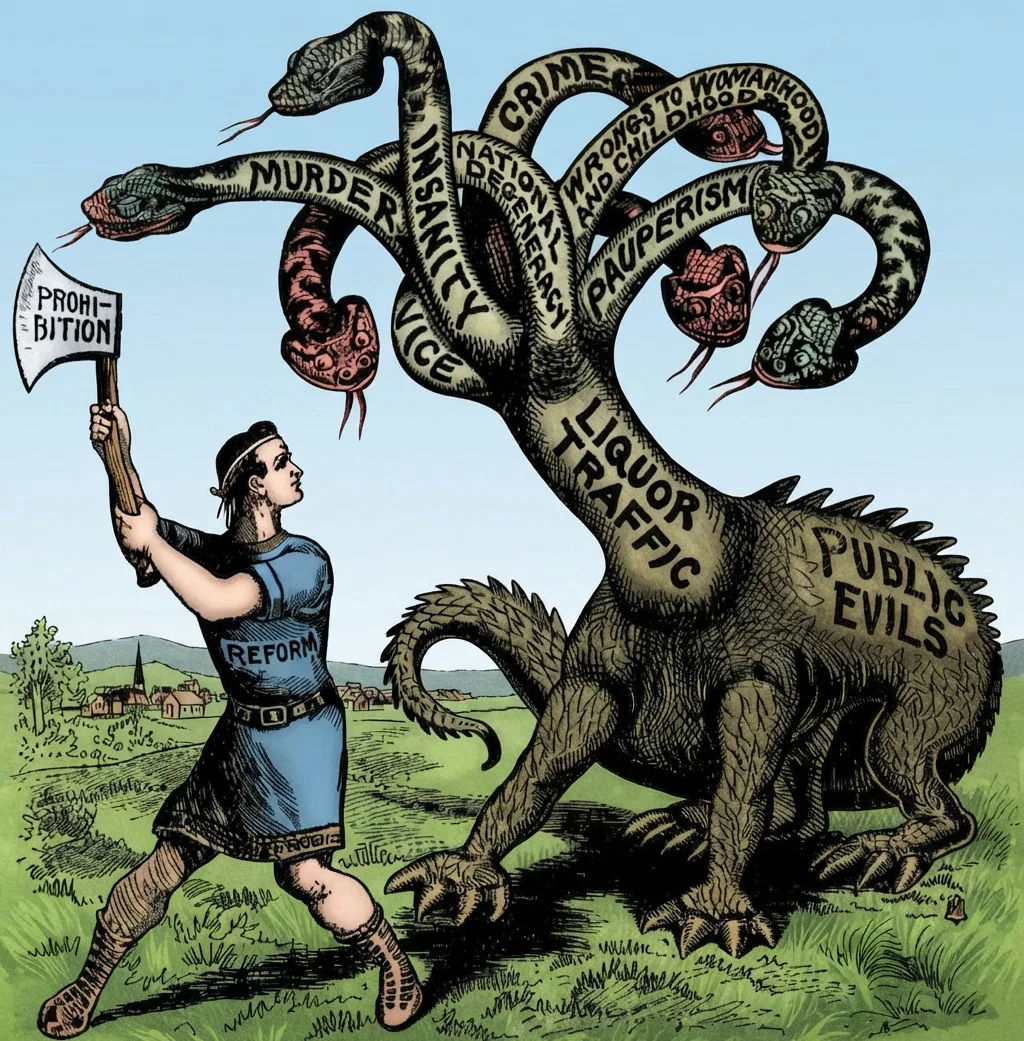
strikes the Liquor Beast a deadly blow. In every line of its contents, and through its ninety-six impressive illustrations it vividly portrays the character and terrible work of this World-Hydra, and appeals to good sense and sound judgment for the complete amputation of the neck and heart of this satanic, man-wrecking monster.
Every man or woman, boy or girl, who has an interest in and a desire to do something for humanity, has through the Temperance Instructor an excellent opportunity for effective service. It not only educates and reforms, but it pays its solicitors for their services. TRY IT.
SEND YOUR ORDERS TO YOUR CONFERENCE TRACT SOCIETY
Adapted from Jersey Journal

THE NEW BEREAN LIBRARY

We are glad to announce that a number of our books heretofore issued only in cloth bindings, and some of our new books just being brought out, will be issued in the Berean Library, with paper covers and printed on thin paper, at very greatly reduced prices. The first ten numbers of this series will be ready within a few days, and some of them are now ready for delivery.
  1. STEPS TO CHRIST - - - $.25 - $.15
  2. THOUGHTS ON DANIEL - - - .25 - .15
  3. THOUGHTS ON REVELATION - - - .25 - .15
  4. HIS GLORIOUS APPEARING - - - .15 - .09
  5. THE SABBATH IN THE SCRIPTURES - - - .25 - .15
  6. THE SABBATH IN HISTORY - - - .50 - .30
  7. CAPITAL AND LABOR - - - .25 - .15
  8. HERE AND HEREAFTER - - - .25 - .15
  9. BIBLE FOOTLIGHTS - - - .35 - .21
  10. OUR PARADISE HOME - - - .15 - .09
Nos. 5 and 6 are taken from the revised edition of "History of the Sabbath."
At the beginning of the winter season, when the evenings are getting long, the time is very opportune for circulating these splendid new publications among your friends and neighbors. Notice the special price in quantities, shipped by freight. Our churches should order from their librarians, and thus get them at the cheapest price.
REVIEW AND HERALD PUBLISHING ASSN., Washington, D. C.
ORDER OF YOUR TRACT SOCIETY

His Love and Mine

VICTOR BRICKEY
"Whom having not seen, ye love; in whom, though now ye see him not, yet believing, ye rejoice with joy unspeakable and full of glory." 1 Peter 1: 8.
WHY should I love one whom I have not seen? Why should I rejoice with joy unspeakable? Why should I place confidence and hope in this Jesus? What has he done that should inspire confidence? These natural eyes have never seen him; these arms of flesh have never embraced him; yet believing, I am able to rejoice with joy unspeakable in his love.
I love him because he first loved me. I may not now see him with these natural eyes, but believing, I see him lay aside his riches and glory and honor with the King of the universe, and the worship and adoration of the angels, to come down here to this world darkened by sin, full of perplexity, worry, and heartaches, that he might learn to be a merciful and faithful high priest, and lift me above the sin of this world and lead me to God.
How can I help but love him? He might have remained with his Father in glory. He was a great king, yet he came down here to be my servant. His was a life of hardship and toil, tramping from one city to another, helping those in need, persuading men everywhere to turn to God. They persecuted him. They reviled and mocked him. They smote him. They spit in his face. They put thorns on his brow, and pressed them into the flesh, sending the blood trickling down his face. They condemned him as a traitor to the government, and whipped him till he was so weak he could scarcely walk.
What a scene for heaven to behold! Its King being whipped by mortal men. At last they took him out and actually nailed him fast to a wooden cross. There he gave up his life for my sins; and though I have not seen him, yet believing, I love him for his love to me; and I rejoice because he is risen again and I am saved by his life. I rejoice because he said: "I go to prepare a place for you. And . . . I will come again, and receive you unto myself; that where I am, there ye may be also." And he says again: "Surely I come quickly." Because of my love for him, I long to see his face and be with him. My heart cries out, "Even so, come, Lord Jesus."
Pueblo, Colo.

The Sabbath Universal

R. H. BROCK
THE Holy Scriptures very forcibly teach that the seventh-day Sabbath, made at creation, is of universal application, and that the whole world is under perpetual obligation to observe it. In the very beginning the Sabbath was made, and sanctified, or set apart for holy use. God blessed the seventh day; he blessed it for man, that on that day above any other day of the week man might receive rich blessings, and in return honor his Creator. In grateful praise man would say, "Bless the Lord, O my soul, and forget not all his benefits."
In Ex. 31: 16 the Sabbath is called a perpetual covenant. It is a perpetual reminder of God's rest. The only reason given in all the Bible for the origin and existence of the Sabbath is that God rested upon that day. It is God's rest day. It belongs to God only. It is the Lord's day. "Therefore the Son of man is Lord also of the Sabbath." Mark 2: 28.
At Sinai God said, "The seventh day is [present tense] the Sabbath of the Lord." Some eight hundred years later we hear him say, "For thus saith the Lord unto the eunuchs that keep my Sabbaths." Isa. 56: 4. In Isa. 58: 13 (698 B. C.) God says, "If thou turn away thy foot from the Sabbath, from doing thy pleasure on my holy day."
Christ says, "The Son of man is Lord also of the Sabbath." Mark 2: 28. The apostle John says, "I was in the Spirit on the Lord's day." Rev. 1: 10. Thus from Genesis to Revelation the Lord claims one day. He calls it "the Sabbath of the Lord," "my Sabbaths," "my holy day," "the Lord's day."
The apostle, in Heb. 4: 4, says, "And God did rest the seventh day from all his works."
As the Sabbath is a memorial of the Creator's rest at creation, a monument erected in honor to him who created all things, it is evident that all created intelligences ought to render the utmost respect to this most sacred and holy institution made for man. The slightest disrespect by any living being to this blessed and holy day would be equally disrespectful to him who made it.
Not one of God's intelligent creatures is excused from rendering to him all honor, glory, and praise, in time or eternity. "I know that, whatsoever God doeth, it shall be forever: nothing can be put to it, nor anything taken from it: and God doeth it, that men should fear before him." Eccl. 3: 14.
Before the law was given on Mt. Sinai, the children of Israel were reprimanded by the Lord for disregarding the Sabbath. Ex. 16: 27, 28. The apostle Paul argues that the law was in existence before it was written at Sinai. He says, "For until the law sin was in the world: but sin is not imputed when there is no law" (Rom. 5: 13); "for where no law is, there is no transgression [or sin]." Rom. 4: 15. But sin did exist. Sin was imputed, and transgressors were punished for sin. Hence there was a law. The sin of Sodom was grievous, and God destroyed both the city and its inhabitants seven hundred years before Sinai.
In Noah's time "God saw that the wickedness of man was great in the earth." Gen. 6: 5. Wickedness is lawlessness. Why were the antediluvians condemned and destroyed with a flood? "And God looked upon the earth, and, behold, it was corrupt; for all flesh had corrupted his way upon the earth." Verse 12. Noah was a just man, a "preacher of righteousness." "All thy commandments are righteousness." Ps. 119: 172.
Jesus said, "The Sabbath was made for man." No man can add to God's word nor take from it.
Lake City, Fla.

The Bands of Orion

ELIZA H. MORTON
Orion, king of constellations, fair, "O, who can loose thy bands?" O, who can stay Thy course? A group, a family, thou art, Bound by a chain invisible, and all Thy bands are strong. Pleiades knows them well. United stars! O mighty power in space! The puny arm of man cannot dissolve Thy rolling suns, nor start one little world From out its orbit path. 'Tis God, and God Alone, who holds the stars within their course, And he would also hold his church adown The path of time by influences sweet, And make its members shine as stars. The God Who cares for whirling suns will care for us.
"Deep calleth unto deep" within thy sky,— A cavern vast in space, a shining way, A nebula, an opening beyond, and depths The human mind can ne'er, no, ne'er explore, A corridor of glory bright, star-lined, Leading to where?—To God's own throne afar, Round which the circling suns revolve, through which God's voice shall sound when time shall be no more. O star-decked path of pearly light! The one, The very one, through which our Saviour swept When he ascended to his Father's throne, And angels sang, "Lift up your heads, O gates! O, be ye lifted up, ye doors, and let The King of glory in, the mighty Lord!" And back the question came, "The King, who is The King of glory, who?" And all the stars Replied, "The Lord of hosts, he is the King."
And in the days not far, that King will come Adown that corridor, in glory clad. Eternal radiance from the throne will gleam, And stars will wheel and shine and voices sing, "O death, where is thy sting? O grave, where is Thy victory?" For all the dead in Christ Will rise, and with their Lord and living saints Ascend, straight up that shining way, into The palace of the King; while angels chant, "Lift up your heads, ye gates! O lift them up, Ye everlasting doors, and let the King Of glory in!" "Who is the King of glory, who?" And all the starry throng respond, "The Lord Of hosts, he is the King of glory. He Is strong and mighty. He is King of all."
And through Orion's starry depths of light To earth will come a city fair when all The years millennial above have closed, The thousand years by prophets long foretold. O, Jerusalem,—Jerusalem, with gates Of pearl and streets of gold,—our hearts cry out For thee. Thy glory shimmers even now Through nebula in space, and now we hear, Or seem to hear, the song that Christ is King. And he will be our King, if we obey His word. O Saviour, come! O, quickly come!

The Fall of the House of Ahab

(Concluded)
MRS. E. G. WHITE
Ahaziah "died according to the word of the Lord which Elijah had spoken." As he had no son, he was succeeded by Jehoram, his brother, who reigned twelve years. Throughout these years his mother, Jezebel, was still living, and she continued to exercise a baleful influence over the affairs of the nation. Idolatrous customs were still practiced by many of the people. Jehoram himself "wrought evil in the sight of the Lord; but not like his father and like his mother: for he put away the image of Baal that his father had made. Nevertheless he cleaved unto the sins of Jeroboam the son of Nebat, which made Israel to sin; he departed not therefrom."
It was during Jehoram's reign over Israel that Jehoshaphat died, and Jehoshaphat's son, also named Jehoram, ascended the throne of the kingdom of Judah. By his marriage with the daughter of Ahab and Jezebel, Jehoram of Judah was closely related to the king of Israel; and in his reign he followed after Baal, "like as did the house of Ahab." "Moreover he made high places in the mountains of Judah, and caused the inhabitants of Jerusalem to commit fornication, and compelled Judah thereto."
The king of Judah was not permitted to continue his terrible apostasy unreproved. The prophet Elijah had not yet been translated, and he could not remain silent while the kingdom of Judah was pursuing the same course that had brought the northern kingdom to the verge of ruin. The prophet sent to Jehoram of Judah a written communication, in which the wicked king read the awful words:—
"Thus saith the Lord God of David thy father, Because thou hast not walked in the ways of Jehoshaphat thy father, nor in the ways of Asa king of Judah, but hast walked in the way of the kings of Israel, and hast made Judah and the inhabitants of Jerusalem to go a whoring, like to the whoredoms of the house of Ahab, and also hast slain thy brethren of thy father's house, which were better than thyself: behold, with a great plague will the Lord smite thy people, and thy children, and thy wives, and all thy goods; and thou shalt have great sickness."
In fulfillment of this prophecy, "the Lord stirred up against Jehoram the spirit of the Philistines, and of the Arabians, that were near the Ethiopians: and they came up into Judah, and brake into it, and carried away all the substance that was found in the king's house, and his sons also, and his wives; so that there was never a son left him, save Jehoahaz [Ahaziah, Azariah], the youngest of his sons.
"And after all this the Lord smote him in his bowels with an incurable disease. And it came to pass, that in process of time, after the end of two years, . . . he died of sore diseases." "And Ahaziah [Jehoahaz] his son reigned in his stead."
Jehoram the son of Ahab was still reigning in the kingdom of Israel when his nephew, Ahaziah, came to the throne of Judah. Ahaziah ruled only one year, and during this time, influenced by his mother, Athaliah, "his counselor to do wickedly," "he walked in the way of the house of Ahab, and did evil in the sight of the Lord." Jezebel, his grandmother, was still living, and he allied himself boldly with Jehoram of Israel, his uncle.
Ahaziah of Judah soon met a tragic end. The surviving members of "the house of Ahab" were indeed "his counselors after the death of his father to his destruction." While Ahaziah was visiting his uncle at Jezreel, the prophet Elisha was divinely directed to send one of the sons of the prophets to Ramoth Gilead to anoint Jehu king of Israel. The combined forces of Judah and Israel were at that time engaged in a military campaign against the Syrians at Ramoth Gilead. Jehoram had been wounded in battle, and had returned to Jezreel, leaving Jehu in charge of the royal armies.
In anointing Jehu, the messenger of Elisha declared, "I have anointed thee king over the people of the Lord, even over Israel." And then he solemnly charged Jehu with a special commission from heaven. "Thou shalt smite the house of Ahab thy master," the Lord declared through his messenger, "that I may avenge the blood of my servants the prophets, and the blood of all the servants of the Lord, at the hand of Jezebel. For the whole house of Ahab shall perish."
After he had been proclaimed king by the army, Jehu hastened to Jezreel, where he began his work of execution on those who had deliberately chosen to continue in sin and to lead others into sin. Jehoram of Israel, Ahaziah of Judah, and Jezebel the queen mother, with "all that remained of the house of Ahab in Jezreel, and all his kinsfolks, and his priests," were slain. "All the prophets of Baal, all his servants, and all his priests" dwelling at the center of Baal worship near Samaria, were put to the sword. The idolatrous images were broken down and burned, and the temple of Baal was laid in ruins. "Thus Jehu destroyed Baal out of Israel."
Tidings of this general execution reached Athaliah, Jezebel's daughter, who still occupied a commanding position in the kingdom of Judah. When she sawthat her son, the king of Judah, was dead, "she arose and destroyed all the seed royal of the house of Judah." In this massacre all the descendants of David who were eligible to the throne were destroyed, save one, a babe named Joash, whom the wife of Jehoiada the high priest hid within the precincts of the temple. For six years the child remained hidden, while "Athaliah reigned over the land."
At the end of this time, "the Levites and all Judah" united with Jehoiada the high priest in crowning and anointing the child, Joash, and acclaiming him their king. "And they clapped their hands, and said, God save the king."
"Now when Athaliah heard the noise of the people running and praising the king, she came to the people into the house of the Lord." "And when she looked, behold, the king stood by a pillar, as the manner was, and the princes and the trumpeters by the king, and all the people of the land rejoiced, and blew with trumpets."
"Athaliah rent her clothes, and cried, Treason, Treason." But Jehoiada commanded the officers to lay hold of Athaliah and all her followers, and lead them out of the temple to a place of execution, where they were slain.
Thus perished the last member of the house of Ahab. The terrible evil that had been wrought through his alliance with Jezebel, continued till the last of his descendants. Even in the land of Judah, where the worship of the true God had never been set aside, Athaliah had succeeded in seducing many. Immediately after the execution of the impenitent queen, "all the people of the land went into the house of Baal, and brake it down; his altars and his images brake they in pieces thoroughly, and slew Mattan the priest of Baal before the altars."
A reformation followed. Those who took part in acclaiming Joash king had solemnly covenanted "that they should be the Lord's people." And now that the evil influence of the daughter of Jezebel had been removed from the kingdom of Judah, and the priests of Baal had been slain and their temple destroyed, "all the people of the land rejoiced: and the city was in quiet."

O. A. JOHNSON

Annual Feasts and Annual Sabbaths — No. 2

O. A. JOHNSON

It might be well to consider briefly the daily sacrifices and the offerings for the weekly Sabbath before considering the annual sabbaths.
The daily sacrifice consisted of a lamb. A meat and a drink offering were also brought in the morning, at the third hour, which corresponds to our nine o'clock. A similar sacrifice was brought in the afternoon, about the ninth hour, or about three o'clock according to our present mode of computing time. See Num. 28: 2-8; also "The Temple," by Edersheim, pages 143, 144.
On the Sabbath two lambs were offered in the morning and two in the evening, with their meat and drink offerings. Num. 28: 9, 10.
The showbread was prepared by the priests and placed on the table of showbread every Sabbath. The old bread was eaten in the holy place, "but only by such priests as were in a state of Levitical purity." Lev. 24: 5-7; 1 Chron. 9: 32; 1 Sam. 21: 6; "The Temple," pages 184-188.
There were seven annual sabbaths which God appointed Israel to observe in a religious manner with holy convocations and sacrifices, and on these days "servile work" was forbidden. These annual sabbaths occurred on specified days in the different months, and hence fell on different days of the week from year to year, like Christmas and New Year's Day in our time.

The First Annual Sabbath

corresponded to the first day of the feast of the Passover, and fell on the fifteenth day of the first month, Abib, or Nisan. "On the fifteenth day of the same month is the feast of unleavened bread unto the Lord: seven days ye must eat unleavened bread. In the first day ye shall have an holy convocation: ye shall do no servile work therein." Lev. 23: 6, 7. The special offerings for this day are definitely described in Num. 28: 16-23.
There was a special "festive offering," called Chagigah, which was brought on this day, and which was termed Pesach, or Passover. On this Edersheim remarks as follows: "Both the Old Testament and Jewish writings show that the term Pesach, or Passover, was applied not only to the paschal lamb, but to all the Passover sacrifices, especially to what was called the Chagigah, or festive offering. . . . The Chagigah was brought on the first festive paschal day."—"Life and Times of Jesus," Vol. II, pages 567, 568. It is this Chagigah, or Passover, that is referred to in John 18: 28. See "Life and Times of Jesus," pages 566, 567, and notes; "The Temple," page 218.
On the sixteenth day of Abib, the day following the first annual, or first Passover, sabbath, "a sheaf of the first fruits" was waved by the priest "before the Lord." Lev. 23: 9-14. See "The Temple," pages 256-259.
When this second paschal day fell on the weekly Sabbath, then this Sabbath was called "an high day," just the same as if the first Passover sabbath had fallen on the seventh-day Sabbath. John 19: 31. See "Life and Times of Jesus," Vol. II, page 613.

The Second Annual Sabbath

came on the twenty-first day of Abib. It was the last day of the Passover feast. No servile work was permitted on this day; on it Israel was to have a holy convocation, and special offerings were brought to the Lord. Lev. 23: 7, 8; Num. 28: 24, 25. While servile work was forbidden on these annual sabbaths, yet they were allowed to prepare that which they "must eat." Ex. 12: 16.

The Third Annual Sabbath

was the Feast of Weeks, or the feast of harvest, and is called Pentecost in the New Testament. Ex. 23: 16; Acts 2: 1. This yearly sabbath corresponded to the Feast of Pentecost. It fell on the fiftieth day, seven full weeks and one day, from the sixteenth of Abib, the day on which the wave sheaf was brought to the Lord. This sixteenth day was always counted as the first, and Pentecost, the fiftieth day, came always on the sixth day of Sivan, the third month of the Jewish ecclesiastical year. Lev. 23: 15-21; Deut. 16: 9, 10. On this day servile work was forbidden; upon it the Israelites were to bring special offerings to the Lord and have a holy convocation. Num. 28: 26-31.

The Fourth Annual Sabbath

came "on the first day of the seventh month, Tisri," of the ecclesiastical year, but it was the first month of the civil year from creation; hence this day was the New Year's Day, "the commemoration of the creation of the world." See "Selections From the Talmud," by H. Polano, page 335. On this day servile work was prohibited, and Israel was to have a holy convocation on it and bring various offerings to the Lord. Lev. 23: 24, 25; Num. 29: 1-6. "During the whole of New Year's Day, trumpets and horns were blown in Jerusalem from morning to evening."—"The Temple," pages 297, 298. See Lev. 23: 24.
The following remark on the "New Year's Day" is from the Talmud: "On New Year's Day three books were opened,—that of life, for those whose works had been good; another of death, for those who had been thoroughly evil; and a third, intermediate, for those whose case was to be decided on the Day of Atonement (ten days after New Year), the delay being granted for repentance, or otherwise, after which their names would be finally entered either in the book of life or in that of death."—"The Temple," page 296.

The Fifth Annual Sabbath

was the Day of Atonement, and it fell on the tenth of the seventh month, or Tisri. This was the most sacred of all the annual sabbaths; hence work of every description was forbidden on it. On this day a final atonement was made in the sanctuary by removing, or cleansing it from, all sins transferred to it during the year through the sin offering. On this day the Israelites were to afflict their souls by fasting and prayer. The special sacrifices and services for this day are clearly set forth in Leviticus 16 and Num. 29: 7-11.
The following from Rabbi Eleazer concerning the Day of Atonement is of interest: "On this great and tearful day the angel Sarnal finds no blots, no sins, on Israel." Thus he addresses the Most High: " 'O Sovereign Lord, upon the earth this day one nation pure and innocent exists. Even as the angels is Israel on this Atonement Day. As peace exists in heaven, so rests it now upon this people, praying to thy holy name.' Godhears this testimony of his angel, and pardons all his people's sins."—"Selections From the Talmud," pages 348, 349.

The Sixth Annual Sabbath

corresponded to the first day of the Feast of Tabernacles, and came on the fifteenth day of the seventh month.

The Seventh Annual Sabbath

fell on the twenty-second day of the same month, and closed the Feast of Tabernacles. Israel was to have holy convocations on these days, and servile work was forbidden on them. Various kinds of offerings were brought to the Lord upon these days, as well as on the intervening days. Lev. 23: 34-39; Num. 29: 12-38.

Annual Sabbaths Versus the Weekly Sabbath

Now it is important to observe that these annual sabbaths differ from the weekly Sabbath in the following particulars:—
1. The weekly Sabbath, the seventh day, was instituted at creation before the fall, while these seven annual sabbaths were instituted after the fall, at the time of the exodus, over twenty-five hundred years after creation.
2. God rested on the seventh day and blessed and sanctified it, while he did not rest upon these annual sabbaths, neither did he bless and sanctify them as he did the weekly Sabbath.
3. The command to observe the seventh day is a part of the moral law (Ex. 20: 3-17), while the commands to observe these annual sabbaths are only a part of the ceremonial law, called the law of Moses. Lev. 23: 5-39.
4. The Bible states plainly that these annual sabbaths and feasts were "beside the Sabbaths of the Lord." Verse 38.
5. The weekly Sabbath was instituted before the fall, and will therefore exist throughout all eternity on the new earth (Isa. 66: 22, 23); while the annual sabbaths and annual feasts were set apart for days on which to bring special offerings to the Lord, hence they ceased when the sacrificial law ceased at the cross. Dan. 9: 27; Heb. 9: 9, 10; 10: 1; Col. 2: 14-17.
Walla Walla (Wash.) College.

No Cross, No Plus

PHILIP GIDDINGS
PHILIP GIDDINGS
THAT is cross as well as plus. We grow in grace and in the knowledge of the Lord by cross planting.
"Except a corn of wheat fall into the ground and die, it abideth alone: but if it die, it bringeth forth much fruit." John 12: 24. "Knowing this, that the trying of your faith worketh patience. But let patience have her perfect work, that ye may be perfect and entire, wanting nothing." James 1: 3, 4. "We glory in tribulations also: knowing that tribulation worketh patience; and patience, experience; and experience, hope: and hope maketh not ashamed." Rom. 5: 3-5.
We grow in Him only as we are planted in him, for the "likeness of his resurrection" is the fruit of the seed which had root "in the likeness of his death." Rom. 6: 5; Phil. 3: 10. "Whosoever doth not bear his cross, and come after me, cannot be my disciple." Luke 14: 27.
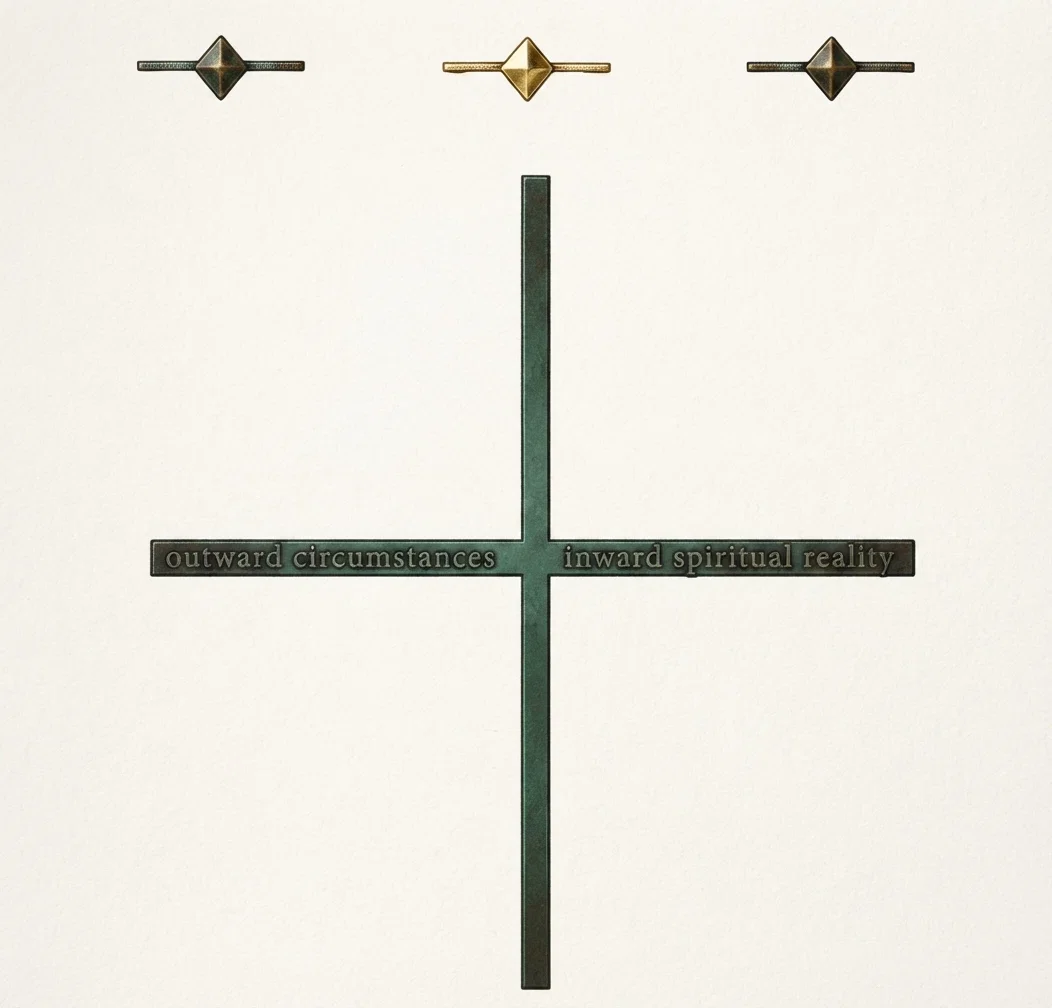
That negative horizontal minus (—) must go athwart the perpendicular (|) to make +. The crossbeam to form addition is subtraction. No cross, no disciple; for the certificate of discipleship must be certified daily by discipline. No submission, no mission. No cross, no plus; for they are of one. Olivet's base (Gethsemane) that witnessed the thrice bitter cup was that same Olivet's top that saw his triumphal ascent. Luke 22: 39; Acts 1: 12. And when he shall come again with "all the saints," of all the places of the renewed earth "his feet shall stand in that day upon the mount of Olives" first of all.
Where you have sown your bitterest tears for the Master, there you will reap your sweetest joy with him.
"Blessed is the man whose strength is in thee; in whose heart are the ways of them. Who passing through the valley of Baca [weeping] make it a well [place of springs]; the rain also filleth the pools. They go from strength to strength." Ps. 84: 5-7.
Baca's briny tears evaporated are what sunshine is analyzed into, love's prismatic promise.
Your trials are the examinations through which you must pass to higher standards.
Your crosses are your pluses.

A Lesson in Courtesy

A YOUNG man recently visited this city to secure an important position, for which he had been recommended by influential friends. The car in which he found a seat was soon crowded. Immediately in front of him stood a woman old enough to be his grandmother. She bumped against him once or twice, to his evident annoyance. Then an old gentleman got up and beckoned her to take his seat. This ended the first chapter.
The next morning the young man prepared for his call at his hoped-for new place of business. The president of the company turned to meet him with a smile when his name was announced, but the smile faded, and the face which greeted him was stern. "Yes," they had "had letters," they "had thought favorably of him, but —" and the interview ended.
One of his friends called on the president for an explanation. He was told the story of the old lady in the car. "But," he said, "I don't see that this concern has a right to dictate to its employees that they must give their seats to women in public conveyances." "It does not dictate," said the president, "but the man for this place must have peculiar characteristics. He must be courteous and considerate and helpful and patient and cheerful. A young man of twenty-five who can let a woman of seventy stand while he sits, has not the disposition necessary to fill this position."—A Cincinnati paper.

Some Personal Experiences—

No. 2

A. T. ROBINSON
THE writer had spent two years in South Africa. At that time a conference had been organized in Cape Colony. In Cape Town the conference office and church building had been erected, also Claremont Union College building, and the sanitarium and the orphanage at Plumstead. About this time complications arose in connection with our work, bringing us face to face with a crisis which threatened disruption and disaster to our organized work.
As the time approached when this crisis must be met, the members of the conference executive committee, after prayerfully studying the situation, decided upon a definite course of action and pledged one another to stand together firmly for what was believed to be the right course.
Just at the time when our perplexity was the greatest, I received a personal letter from Sister White, written in Australia. This letter, which had been twenty-four days coming to me, pointed out certain mistakes which I was in danger of making, and counseled me how to avoid such mistakes. At the bottom of this letter, which was written in Sister White's own handwriting, a postscript stated that what was written in the letter was copied from her diary which was written seven years before. She stated that she did not know why it had not been sent to me before, but that she felt impressed to send it to me then. I had not written to Sister White for several months, and had never written her a word concerning difficulties in connection with our work in South Africa, nor had I received a personal letter from her for more than two years.
After Mrs. Robinson and I had read this letter over several times, I read it to one of my associates in the work, who remarked that if Sister White had been all through the controversy which had developed among our people, she could not have given counsel that would more clearly apply to the situation which we were facing.
To follow the counsel given in this letter it was necessary to entirely change the plans which had been laid. This course was followed, with the result that it brought unity of action and a spirit of love and Christian fellowship, instead of strife and division.
While I had never doubted that through the spirit of prophecy the Lord was giving instruction to this people, yet this experience brought to me a joy and peace such as I had seldom before enjoyed. I felt to praise the Lord that he had opened a channel through which he could speak to his children who are earnestly trying to find the right way.
College View, Nebr.
Continue reading: Holding Our Ground