Your ShelfYour Projects

Signs of the Times, Vol. 26, No. 27.

Signs of the Times

Signs of the Times

Jul 4, 1900

Pacific Press Publishing Company · Oakland, California · Jul 4, 1900

Signs of the Times
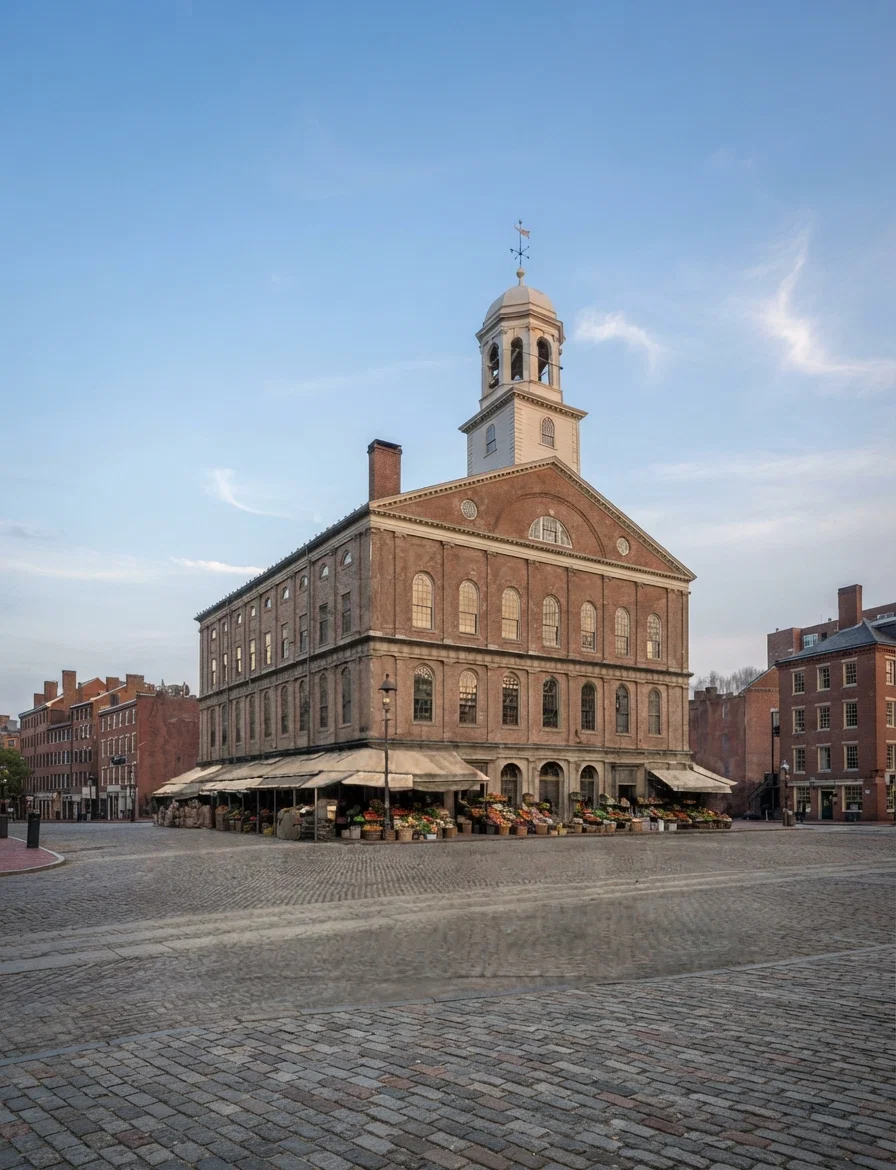
FANEUIL HALL - THE CRADLE OF LIBERTY

Pacific Press Publishing Company ∅ Publishers ∅ Oakland, California

Pacific Press Publishing Company ∅ Publishers ∅ Oakland, California

Colorado Sanitarium

For Circulars and Rates Address the # Colorado # Sanitarium BOULDER COLORADO
Twenty-nine miles northwest of the city of Denver is a well-equipped and well-regulated institution for the treatment of all chronic disorders. Buildings with all modern conveniences, including steam heating, electric lights, elevators, gymnasium.
Baths of Every Description, Including the Electric Light Bath Massage and Manual Swedish Movements Medicated Air Rooms, for the Treatment of Diseases of the Lungs. Electricity in Every Form Laboratory of Hygiene, for Bacteriological, Chemical, and Microscopical Investigation Classified Dietary Strictest Sanitary Measures Enforced Incurable and Offensive Patients Not Received

Practically Free

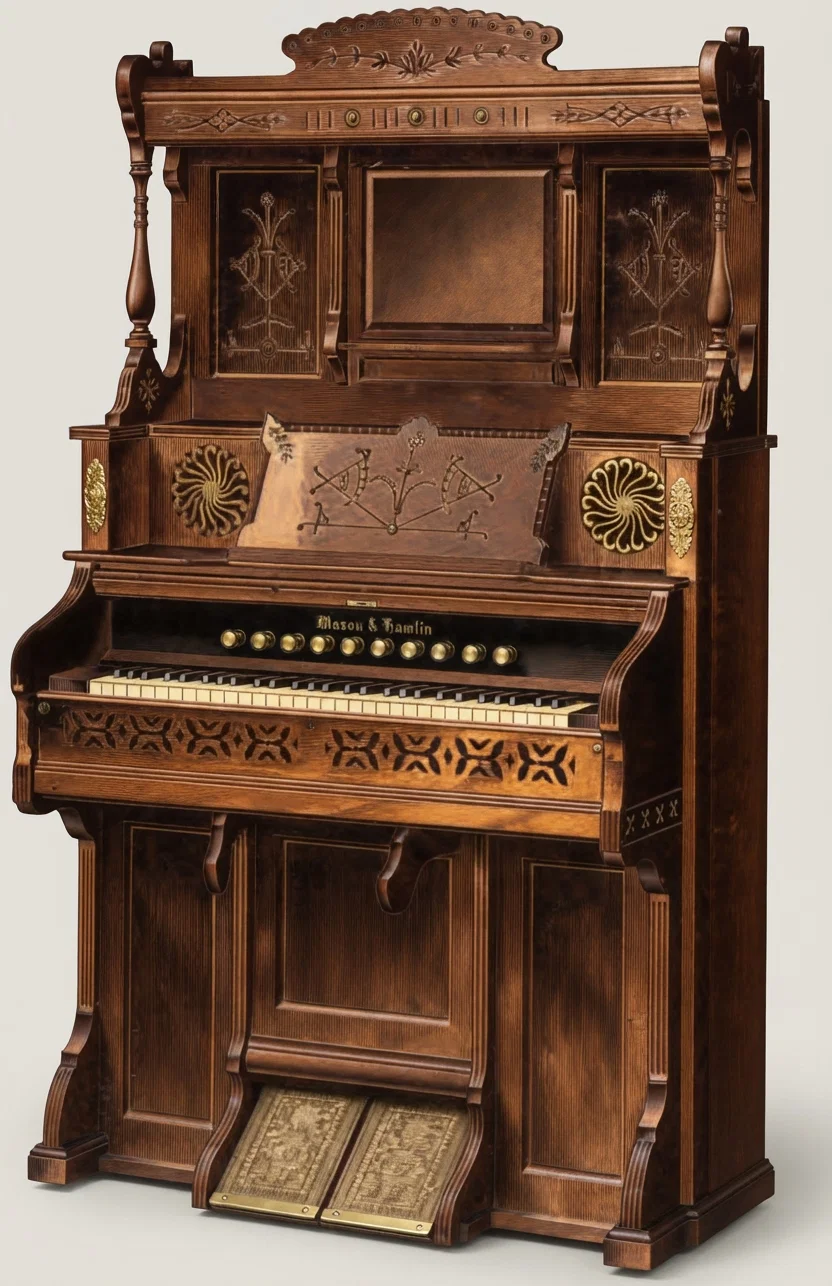
In the catalogue our organ is described thus:—

Parlor Model

Furnished in Walnut or Oak
(Walnut case will be sent unless Oak is expressly ordered)

A GREAT HIT

NOTE.—The largest order in the history of the Organ trade for a SINGLE STYLE of instrument has been given to the Mason & Hamlin Company for Parlor Organ, Style 2348
FIVE OCTAVES, F Scale, Eleven Stops (including Full Organ Knee Stop,) having Four Sets of Reeds of Two and a Half Octaves Each

BASS

Viola, 4 feet Pitch; Viola Dolce, Diapason, 8 feet Pitch; Sub-Bass Coupler (coupling down)

TREBLE

Melodia, 8 feet Pitch; Seraphone, 8 feet Pitch; Clarionet, Dolce on Seraphone; Voix Celeste; Treble Coupler (coupling up)

THROUGHOUT

Vox Humana; Full Organ (knee stop) Knee Swell
Length, 3 feet 8 inches; Depth, 2 feet; Height, 6 feet 2 inches; Weight, 195 lbs; Boxed, 335 lbs.

Price, $150

For Sabbath-school or Church use, the top of the case may be taken off at A

A Good Serviceable Organ for Sabbath-schools, Churches, or Homes

The name on the organ is sufficient guarantee of its merits

The Mason & Hamlin Organs

are acknowledged to be the best instrument on the market
By special arrangement with the Mason & Hamlin Company, we are able to make to Sabbath-schools, Churches, and Individuals this splendid offer
We will give this $150 Organ, on board the cars at Boston, Mass., for only 50 new yearly subscriptions to the SIGNS OF THE TIMES at $1.00 each
A little cooperative work, on the part of Sabbath-school scholars and church members, will very quickly and easily secure one of these organs
For further particulars, suggestions how to get to work, etc., address

Signs of the Times

OAKLAND, CAL.

TRUE LIBERTY.

THERE is no such joyful feeling or emotion in the earth as that which springs from a consciousness of freedom. To be truly at liberty, to be as "free as the bird" that flies, as the air that moves in the winds, as the water that flows in its limpid sparkle over its pebbly bed, is the most blessed state which a soul can know. The deeper the bondage from which one is delivered, and the more keenly it is felt, the greater will be the appreciation of the liberty of deliverance.
Now THE greatest and most widespread bondage this world knows is the bondage of sin. From its cruel power no human soul by nature is free. From the time when Satan's devices and deceptions found place in the hearts of our first parents in Paradise, the curse of bondage—the bondage of sin and death—has been upon the race. Beautiful tho the child may be, it is born with the brand of sin upon it. However wealthy or great its parents may be, neither untold wealth nor unlimited influence among men will release the power of sin. So far as humanity is concerned, its mortgage upon the race must inevitably go forward to foreclosure; and the end is death eternal.
ALL the misery we see or know is the result of sin's bondage. All sickness, all want and woe, all crime and iniquity, all suffering, oppression, injustice and fraud, all misery and poverty, all death and mourning, are only various forms of sin or the results of sin. The bowed forms, the whitened locks, the wrinkled faces, the darkened eyes, the feeble steps, are the whip-scars and gyve-marks of the cruelest tyrant earth ever knew—sin.
A TYPICAL SCENE OF NATURE'S LIBERTY.
SIN is not only cruel, but deceptive. If he came offering his wares in their fulness, his seed in its fruitage, humanity would not be deceived. But he clothes the vilest vices in the garbs of sensual pleasure; the most besetting indulgence comes to us at first merely as mildly-exhilarating stimulants; murder introduces itself to the soul as offended dignity and mild hatred over some fancied wrong. Could we see the ruined debauchee, the bloated drunkard, the condemned murderer in their incipient stages, we would turn away with loathing. But it is the nature of sin to deceive; and oftentimes the soul will not believe, will not realize, that it is influenced by sin, till the deadly bands bind them about, and the demon laughs at the soul's helpless efforts to escape. And the worst bondage is the bondage not realized. It is pitiful to see a slave working under a taskmaster who is living upon his life blood, pitiful to see him wearily dragging at his every step the ball and chain of slavery; but it is more pitiful still to see souls held in the thrall of evil habit or passion, and not realizing that they are slaves. And yet, it is forever true that "to whom ye yield yourselves servants [slaves] to obey, his servants [slaves] ye are to whom ye obey; whether of sin unto death, or of obedience unto righteousness." Rom. 6:16. "Whatsoever a man soweth, that shall he also reap." Gal. 6:7.
THERE is another illustration, not less forcible, which the Scriptures use to represent the condition of mortals. "The heart is deceitful above all things, and it is desperately sick." Jer. 17:9, R. V. "The whole head is sick, and the whole heart faint. From the sole of the foot even unto the head there is no soundness in it; but wounds, and bruises, and festering sores." Isa. 1:5, 6, R.V.The sickness is the leprosy of sin, insatiable, progressive, incurable, fatal. Its beginning is unnoticed. It does not pale the cheek; its warning, if at all, is not heeded; and many are aroused to their true condition for the first time when somebody else discovers their condition. But all are born with the leprosy of sin; and there is no human remedy. There are quack cure-alls in plenty advertised. Every false religion is of this character. But all of these find their merit in humanity or its works. Even these are a part of the deceptions of sin's slave system.
BUT there is a remedy, divine, creative. It is God's power and wisdom and love manifest in the flesh. "God was in Christ reconciling the world unto Himself." He wants no soul in bondage. He binds no soul to act against its will. He desires that we should desire His salvation, because He wants us to enjoy it forever. Because man would have his own way, God has let him have it, and we see the despairing fruitage of all earth's history apart from Him. But "God so loved the world, that He gave His only-begotten Son, that whosoever believeth in Him should not perish, but have everlasting life." And of that Son He said, "Thou shalt call His name JESUS; for He shall save His people from their sins." Matt. 1:21. The Saviour of a race of slaves is Jesus Christ.
HOW DOES He make us free? We do not know the alchemy by which the shackles of sin are melted away, by which the heart is changed to hate sin and love righteousness; but we do know that Jesus Christ does it for every soul who will believe. And "All the fitness He requireth Is to feel our need of Him." Here is His promise: "If we confess our sins, He is faithful and just to forgive us our sins, and to cleanse us from all unrighteousness." 1 John 1:9. This is not evolution, it is not divine self-healing; it is the creative power of God in the Gospel. "Who gave Himself for us, that He might redeem us from all iniquity, and purify unto Himself a peculiar people, zealous of good works." Titus 2:14. Has He not said it? and will He not do it? Then confess your sins, choose His way, His cleansing, and go free from sin and sinning. "If the Son make you free, ye shall be free indeed." Ye shall be free from sin and sinning, free from envy, lust, and hatred. Your salvation was begotten in divine love; it will beget love in all who receive it.

This is liberty;

this is the only liberty which will ever satisfy. Nay, more; this is a liberty which, if known and experienced, is preferred in physical oppression and tyranny to a place on the throne physically unshackled. Jesus on the cross was free; Pilate on the judgment-seat was a slave. Luther at Worms was at liberty; Charles the Fifth on the throne was a slave. John Huss in flames was a free man; Pope John XXIII., under whom he was put to death, was the abject slave of the cruelest system which ever cursed the world.
THE liberty of Christ Jesus is eternal. It had its day of deliverance from cruel bondage. It has its many days of glorious victory; it has its days of calm, quiet sailing along peaceful shores; it has its seasons of precious rest and counsel with the Master; it has its struggles, its groanings when the oppressor is cruel and the weak flesh is tried to the uttermost; but in it all it looks forward to the immortal state where sin and all its consequences will be forever banished, and all the redeemed, earth and people, shall forever enjoy the "glorious liberty of the sons of God," nevermore to know the bondage of sin.
"Take all the pleasures of all the spheres, And multiply each through endless years, One minute of heaven is worth them all." And we may have that minute here, ripening in a little while into the glorious eternal years of God. O soul, go free in Christ; and then "stand fast" "in the liberty wherewith Christ hath made us free"!

THE NEED OF CHRIST-LIKE WORK.

BY MRS. E. G. WHITE.
A SOLEMN responsibility rests upon us in regard to gaining a knowledge of God and of Jesus Christ. How great this responsibility is, is shown by the prayer offered by Christ a few hours before His betrayal. “This is life eternal,” He said, “that they might know Thee the only true God, and Jesus Christ, whom Thou hast sent.”
Christ came to correct existing evils. He came to adjust God's claims on man. He sees the selfishness of human beings. He sees that the world is engrossed by business and amusement. He sees the intensity of the efforts made to obtain earthly treasure. He sees that God is forgotten.
God has committed His goods to men, that they may advance His work in the world. He calls upon them to use their intrusted gifts in the relief of His suffering children, who plead for mercy and relief. But His plainly-stated claims are ignored. Men can not afford to return to the Lord His own. Yet millions and millions of dollars are spent in distilleries, where is made the liquor which ruins the souls and bodies of men. This life-destroying, maddening agency is dealt out by professedly Christian nations.
How many in our world recognize God as the owner of the money they handle? They spend it for self-pleasing, for selfish gratification. But before the bar of God they must give an account of the way in which they have spent this money. Here they must settle for their neglect of the fatherless and the widow. What a terrible account liquor sellers will have to meet in the great day of God! In the books of heaven a record is kept of every tempting glass held out by man to his fellow-man, to forge the chains of an appetite which makes him mad. At the judgment the money and influence that might have been used to relieve suffering human beings will be charged against those who might have helped in this work, but did not. God will render to every man according to his work.
Many of the officers in charge of steamers and other vessels place themselves under the control of Satan by liquor drinking. A continuance of this indulgence destroys the brain nerve power, and they become incapable of doing their work. We know not how many times God has interposed to save a whole ship's company from destruction because there were some on board who loved and feared Him. For their sake He has wrought wondrously. But there comes a time when the line of forbearance is passed. Mercy steps down from her golden throne, and, folding her wings, departs. Then the enemy is permitted to do that which he longs to do. Many of the terrible calamities which happen by land and sea will one day be seen to have been caused by liquor drinking.
He who lives for self-indulgence is unable to distinguish between good and evil. His appetite is his god. He worships his stomach. He lives to eat, instead of eating to live. This means self-destruction. Thus beings made in the image of God sink lower and lower. Their physical, mental, and spiritual strength is destroyed.
Satan has the world under his control. Christ came in human flesh to give the race another trial. He came to uplift and ennoble men and women. But the power of the Gospel is counteracted by the course pursued by professing Christians. How little is being done by the religious teachers to lift the standard of temperance! There are many ministers who fear to bear a decided testimony on temperance, because they know that this would affect their salary. The members of their churches indulge in liquor drinking, and do not want anything said about this evil. They are willing to have their names enrolled as church-members, but they are not willing to live a religion which involves a cross.
Much of the preaching of the present day is of a character to lull the people into a spiritual sleep. The doctrine of the millennium is a soothing potion to the sinner who does not desire to cease from sin. And Satan is better pleased with the help which the shepherds of the flock give him when they present truth mingled with error, than with the help given by the boldest unbeliever.
Human beings are all living on probation, and they are either working out their own eternal good or their eternal ruin. Satan is continually seeking to turn them away from God. He brings before them one scene of excitement after another,—horse-racing, football matches, pugilistic contests. Around these scenes thousands of spectators assemble, greedy for excitement, anxious to see man getting the better of his fellow-man. As it was in the days of Noah, just prior to the destruction of the world by a flood, so will it be before the coming of the Son of God.
God sees the sinfulness of this world. Hesees that men have dropped eternity out of their reckoning. He sees that excitement is making them mad; that they are goaded on to do violence to one another, while the multitude, among which are professing Christians, stand by and applaud. "Shall I not judge for these things?" He asks.
Sin is the transgression of the law, and yet in this age, when God is about to close the records for eternity, men dare to say that His law is abrogated. A strange statement, indeed, when Christ declared that He came not to destroy the law or the prophets, and that heaven and earth should pass away before one jot or tittle should pass from the law. And by His life He showed that it is possible for man to keep the law. There is nothing in the Scriptures to lead man to suppose that He can break the law and be guiltless. The heavens above us remain to testify to the binding claims of God's law.
God has chosen men and women as instrumentalities through which to work to counteract the evils in our world. He will hold those accountable who have been given great light, and yet are devoting their time and means to self-service, while thousands are perishing for want of help. He is about to pass by those who refuse to take up the work that must be done. Of those who refuse to take up the cross and deny self, the Lord says: "They shall not taste of My supper. I will take illiterate and obscure men, and by My Spirit move upon them to carry out My purposes in the work of saving souls. The last message of mercy will be given to the world, but not by the counsels of the supposed sages, who received My commission, but did not My work. The work will be done, not by the eloquence of the learned, but by a people who love and fear Me. Not by might, nor by power, but by My Spirit will I work."
If Jesus were made the sum and substance of every discourse given, sinners would be converted. By the message borne they would know what they must do to be saved. Lift Him up, the Man of Calvary, higher and still higher. He who draws nigh to Christ need not try to shine. As he beholds the Saviour, he catches the divine rays of light from the Sun of Righteousness, and he can not help shining. The light that is in him shines forth in clear, bright rays, in words and works of righteousness. Christ's grace dwells in him richly, and heaven's light shines through him. He honors Christ by complete obedience. He is stimulated to more vigorous action in the cause of God as he imparts that which the Lord gives him. He is a light-bearer in the world, shedding light on those who are in darkness. He walks close by the side of Christ, conversing with Him and gathering divine principles from His Word. He goes about doing good, comforting the downcast, guiding wandering footsteps in the narrow way, sweetening the cup of bitterness which many drink as the result of their own course of action, watching over those who need the guidance of a firm, steady hand to lead them to the feet of the Master, helping all with whom he comes in contact to fight manfully the battles of the Lord.

PIPES OF FREEDOM.

[Clarence Hawkes, in the "Springfield Republican."]
POOR LIBERTY, a nomad with a tent, Moving from land to land, half naked, spent With toil of travel and with hunger gaunt, Sheltered a day, then onward rudely sent!
O God, how many an Arnold Winkelried Must fall upon the spears, and, wounded, bleed, Yea, die for liberty, before the world Thy righteous mandate will forever heed!
O Christ, how many a deed of sacrifice Have brave men done between Thy day and this! And yet the world rolls on, all unconcerned, While brave men feel the sting of Judas' kiss.
Where patriots fall, by ruthless tyrant slain, The bloodroot grows to memorize the stain, And each small blade of grass for justice cries, This is the spot—behold it!—Cain! Cain! Cain!
Sin on our soul and blood upon our hands! Full-gorged and sate, the demon war-god stands, His heinous hoof upon the neck of truth, His path of fire and smoke across brave lands.
With fire and smoke man covers up the sky, By smoke and fire the trees and grasses die; Loved homesteads fall and cities sink to dust, And through the land resounds the orphan's cry.
Justice to all and favors unto none If we would hold the laurels we have won, Nor mold our country to the old world's creed That crushes thousands, to uphold the one.
When we shall own the brotherhood of men, Justice for all and not for one in ten, Freedom for all under a common law, Will war and discord cease, and not till then.
God give us peace! the hills and valleys cry, Christ give us rest from war! the zephyrs sigh; The brooks and birds are interceding, too— But only hideous cannon make reply.

CHRISTIANITY AND THE STATE.

THE Church never was aided by the State, for State aid always proved a curse. The State was never helped by union with the church. The following eloquent words of Macaulay, in his review of Southey's "Colloquies on Society," are to the point:
"The ark of God was never taken till it was surrounded by the arms of earthly defenders. In captivity its sanctity was sufficient to vindicate it from insult, and to lay the hostile fiend prostrate on the threshold of his own temple.
"The real security of Christianity is to be found in its benevolent morality, in its exquisite adaptation to the human heart, in the facility with which its scheme accommodates itself to the capacity of every human intellect, in the consolation which it bears to the house of mourning, in the light with which it brightens the great mystery of the grave.
"To such a system it can bring no addition of dignity or of strength that it is part and parcel of the common law. It is not now for the first time left to rely on the force of its own evidences and the attractions of its own beauty. Its sublime theology confounded the Grecian schools in the fair conflict of reason with reason. The bravest and wisest of the Cæsars found their arms and their policy unavailing, when opposed to the weapons that were not carnal and the kingdom that was not of this world. The victory which Porphyry and Diocletian failed to gain is not, to all appearance, reserved for any of those who have, in this age, directed their attacks against the last restraint of the powerful and the last hope of the wretched.
"The whole history of Christianity shows that she is in far greater danger of being corrupted by the alliance of power than of being crushed by its opposition. Those who thrust temporal sovereignty upon her, treat her as their prototypes treated her Author. They bow the knee, and spit upon her; they cry, 'Hail!' and smite her on the cheek; they put a scepter in her hand, but it is a fragile reed; they crown her, but it is with thorns; they cover with purple the wounds which their own hands have inflicted on her, and inscribe magnificent titles over the cross on which they have fixed her to perish in ignominy and pain."

CHRISTIANITY A LIFE.

WE commend the following from the great historian of the Reformation, D'Aubigne (book 14):—
“The Reformation was accomplished in the name of a spiritual principle. It had proclaimed for its teacher the Word of God; for salvation, faith; for king, Jesus Christ; for arms, the Holy Ghost; and had by these very means rejected all worldly elements. Rome had been established by the law of a carnal commandment; the Reformation, by the power of an endless life.
“If there is any doctrine that distinguishes Christianity from every other religion, it is its spirituality. A heavenly life brought down to man—such is its work; thus the opposition of the spirit of the Gospel to the spirit of the world was the great fact which signalized the entrance of Christianity among the nations. But what its Founder had separated had soon come together again; the church had fallen into the arms of the world; and this criminal union had reduced it to the deplorable condition in which it was found at the era of the Reformation.
“Thus one of the greatest tasks of the sixteenth century was to restore the spiritual element to its rights. The Gospel of the Reformers had nothing to do with the world and with politics. While the Roman hierarchy had become a matter of diplomacy and a court intrigue, the Reformation was destined to exercise no other influence over princes and people than that which proceeds from the Gospel of peace.
“If the Reformation, having attained a certain point, became untrue to its nature, began to parley and temporize with the world, and ceased thus to follow up the spiritual principle that it had so loudly proclaimed, it was faithless to God and to itself. Henceforward its decline was at hand. It is impossible for a society to prosper if it be unfaithful to the principles it lays down. Having abandoned what constituted its life, it can find naught but death.
“It was God’s will that . . . a striking contrast was to make this truth stand gloriously forth. One portion of the Reform was to seek the alliance of the world, and in this alliance find a destruction full of desolation. Another portion, looking up to God, was haughtily to reject the arm of flesh, and by this very act of faith secure a noble victory.
“If three centuries have gone astray, it is because they were unable to comprehend so holy and solemn a lesson.”
Continue reading: OUR COUNTRY