A CHURCH school was opened at Sandyville, Iowa, on the 2d inst.
ON the 9th ult. three candidates were baptized at Sharpsburg, Iowa.
NINE candidates were baptized at the recent camp-meeting at Longmont, Colo.
IN the vicinity of Deer, Minn., Brother F. Johnson reports the baptism of fifteen persons.
A SABBATH-SCHOOL of eighteen members was organized at Redlands, Cal., September 16.
BROTHER H. C. BASNEY reports the baptism of six candidates in Casco Bay, at Cliff Island, Maine.
AT Carrollton, Mo., Brethren C. H. Chaffee and L. W. Terry report eight converts in connection with their meetings.
AT Joplin, Mo., the funds have been raised for a church school; and at Tarsney they are erecting a school building.
MANY good words are said in the Workers' Bulletin concerning the late local camp-meeting at Charles City, Iowa. The brethren were greatly encouraged, and thirteen converts were baptized.
OF labor at Cripple Creek, Altman, and Anaconda, Colo., Brother B. W. Marsh reports to Echoes from the Field that nineteen had been baptized and several others were awaiting the opportunity.
FROM Valparaiso, Chile, Brother G. H. Baber writes encouragingly of the work. He takes a club of twenty-five copies of the SIGNS, besides other of our periodicals, of which he reports expressions of appreciation by those who read.
A SAN FRANCISCO worker devotes to the relief of the destitute all the proceeds of sales made by her of the SIGNS OF THE TIMES, and a recent report showed that, as a result of thirty-six hours' work in visiting and calling among the people, two hundred and four copies of the SIGNS OF THE TIMES were sold.
AT the recent annual meeting of the Michigan Tract Society, one of the resolutions adopted was the following: "That we unite with the publishers of the SIGNS OF THE TIMES and the American Sentinel in putting forth more earnest efforts to circulate these most valuable factors in teaching the truth to others, by taking them in clubs, by selling single copies, and by securing subscriptions for three months, six months, or one year."
A LETTER from Brother T. L. Guthrie, of Cardiff, Ala., notes that they have in that place "a nice little Seventh-day Adventist Church" and a prosperous Sabbath-school. He says, "I don't see how the people can reject God's Word so much." Well, Jesus tells us how the Jews of His time came to reject God's Word, and the same cause leads to the same effect to-day. The reason is given in Matt. 13:15: "For this people's heart is waxed gross, and their ears are dull of hearing, and their eyes they have closed." And our message to the rejecters of truth is the same as was that of Ezekiel to Israel in captivity: "Son of man, all My words that I shall speak unto thee receive in thine heart, and hear with thine ears, and go, . . . speak unto them, and tell them, Thus saith the Lord God; whether they will hear, or whether they will forbear." Eze. 3: 10, 11.
IN urging the importance of the World's Harvest Number of the SIGNS upon his people, President J. M. Rees, of Colorado Conference, says: "I would advise that every minister and worker in the conference take hold of this work, helping the tract societies to make up their list, and instruct them how to sell and dispose of them. I do not think that your time could be better employed in the work. Will the librarians of the different societies, assisted by the church elders, begin this work immediately? We trust that the Lord will direct in the good work for this special number." The conference whose president thus sees the importance of this enterprise, and whose people follow this good advice in a spirit of faith, will not fail of success in the disposition of the papers, nor fail to experience results that could not be so well accomplished in any other way for the short time that will be allotted to it. If all the conferences will take hold of this work in this spirit, there will be in the near future a general forward movement all along the line such as we have not seen for some time. Such opportunities for a united pull all together do not come every day.
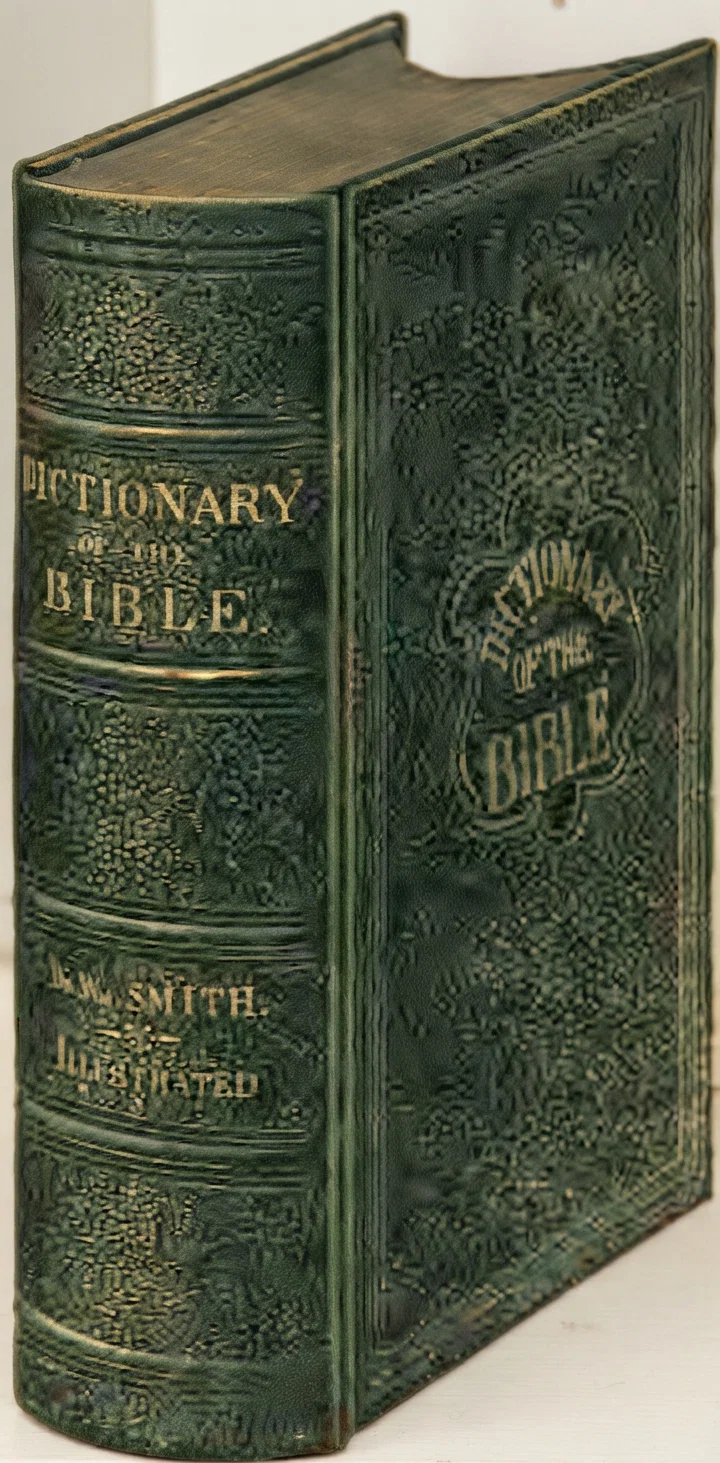
DICTIONARY OF THE BIBLE
$5.50 for $2.25
By Dr. Wm. Smith
Size, 6¼x9½x2½ inches
1017 pages
Illustrated
It contains a full description of every custom, place, plant, mineral, animal, etc., and a biographical sketch of every individual mentioned in the Bible
Publishers' price, bound in cloth, $4.50
Our price, post-paid, with the SIGNS, one year, $2.25
Book sent free for five new yearly subscriptions and one renewal at $1.00 each
The Parker Jointless Fountain Pen
Is a constant comfort
A continual source of satisfaction
A thing of beauty
A joy forever
Having no shoulder where the fingers and thumb hold it, but gently tapering, it handles like an ordinary penholder, and is fitted with a good gold pen
NO
screw to break
nozzle to get "stuck"
joint to leak
ink on your fingers, and
chance for the buyer to rue his bargain
Makers' price for pen, $2.50
Our price for pen and Signs one year, $2.50
Sent free for five new names
Address
SIGNS OF THE TIMES
Oakland, Cal.
PERIODICALS WANTED.
By Editor
SIGNS, Review, Instructor, and Our Little Friend for missionary work. Address, post-paid, Mrs. A. D. Kelly, 807 South Main Street, Butte, Mont.
CLEAN copies of the SIGNS and Sentinel, for free distribution at meetings. Address, Mrs. Lula Wightman, Gorham, Ontario County, N. Y.
LATE clean copies of the SIGNS and Review for missionary work. Address, L. A. Spring, 224 E. Sixth Street, Leadville, Colo.
NOTICE.
By W. S. Dann
LADY AGENTS wanted for Health Garments. Good sellers. Pay good profits. Now is a good time of the year to start. I give credit to those that can give references. Catalogue free.
W. S. DANN.
1515 Burt St., Omaha, Neb.
THE SPIRIT OF GOD
By Joseph Harvey Waggoner
ITS OFFICES AND MANIFESTATIONS TO THE END OF THE CHRISTIAN ERA.
BY ELD. J. H. WAGGONER.
THIS is a brief but comprehensive argument on the solemn and important subject of the Spirit of God. Its chapters embrace the following heads: The Holy Spirit of Promise; The Power from on High; Circumcision of the heart; The Unity of the Faith; The Law and the Testimony; Try the Spirits; The Great Commission; Gifts in the Reformation; In the Present Century; Spirit of Prophecy Restored. These are subjects of vital importance to all and especially to those who are looking for the return of their Lord. 144 pp. Price, 15 cents.
Address, PACIFIC PRESS Oakland, Cal.
A Help in Studying Prophecy
If you want a real help in the study of prophecy, you will find it in Dr. E. J. Waggoner's book,
"Prophetic Lights"
By Editor
Heavy paper-cover edition - $0.50
SIGNS, one year - - - $1.00
Both, post-paid, $1.25
Book free for one new yearly subscriber and one renewal at $1.00 each
SOMEBODY'S OPPORTUNITY.
ANOTHER forceful illustration of the fact that "the dark places of the earth are full of the habitations of cruelty," has just been supplied by Stoepel, the well-known German explorer, who has recently made the ascent, for the first time, of Mt. Morrison, the highest mountain in Formosa. It was while making this exploration and ascent that Stoepel came upon a tribe of man-eaters heretofore unknown, and distinct from any known race. These men have maintained complete isolation, never communicating with the Chinese, and are of Malayan origin. They are skull-hunters—always on the hunt for human heads. Stoepel actually witnessed the progress of a cannibal feast, while hiding in the underbrush. A dispute having arisen in Taiko, Formosa, over the paternity of a child, an appeal to head-hunting was regarded as the only way by which the righteousness of the child's case could be determined. The result was a massacre, in which thirty heads fell, after which the savages indulged in a feast, at which the heads of the murdered villagers were conspicuously displayed.—Missionary Review.
Mission Work in Queretaro
IN the city of Queretaro, Mexico, it has been said that "there are more churches than schools, and more priests than school-children." So far, according to the Christian Advocate, Methodist mission work moves slowly. "Even the police on the street seem to obey the bishops rather than the law. Two young men were recently arrested as they came out of our mission house, for no other crime, according to the police themselves, than 'entering the place and asking for tracts they had no business to read.' And both would have gone to jail but for the opportune presence of Brother Velasco, and his quiet but energetic defense of the young men. Another officer of the law one day attempted to compel our pastor to remove the Abogado bulletin from his door. But when the pastor replied that he would gladly do so the day that the governor ordered all bulletins and notices removed from the doors of Catholic Churches, the order was withdrawn. But things are changing in Queretaro. Some merchants of the place refused to sell to our people, but now seem to court their trade, and our workers are treated with more respect by the people on the streets. A revival resulted in seventeen conversions."
THERE IS A REMEDY.
By Editor
A CIGARET victim writes the New York Journal thus:—
I am almost eighteen years of age, and have been using these "coffin nails" for almost two years, and smoke on an average of ten to fifteen cigarets each day, inhaling same all the time. I have been censured by my people time and time again, but same does not seem to have any effect upon me. If there is any remedy you know of for this injurious habit, I would thank you to advise me as to same, as I am getting to be a slave to this enemy—the cigaret.
The Journal replies: "Take outdoor exercise and plenty of it. Tire yourself out physically. Remember that if there is any manliness in you, you can stop the dangerous habit. Stop it."
But many can not stop. Years ago we entreated a genial neighbor, a professed Christian, to quit tobacco-using. He remarked: "I admit all you say. It is a mean, low, expensive, filthy, disgusting habit." "Then," we remarked, "why do you not quit it, Mr. S.?" He replied frankly, "I am not man enough."
And yet there are noble men who are using it, who find it impossible to break the power of the habit.
One of the leading denominations of the land requires that its young preachers shall not use tobacco, but permits it in the old. The young man had recently attended a conference, where he was examined, among other things, in regard to this very matter. The examiner, an aged preacher, occupied rooms with him; and at night, before retiring, the old man went to the window, raised it, lit his cigar (or pipe), and on his knees—for the window was low—burnt incense to his master—the weed.
Now, there can be no question but what that old minister wanted to break the habit. He was ashamed to indulge before his associate. He was a moral coward. But in his own strength he could not stop, and there are many others in the same boat on the same stream.
In fact, the tobacco habit is more weakening to the will than the liquor habit. It has been demonstrated in mines and other public works that men accustomed to daily drinking will go weeks and months without liquor, but who will not go even days without tobacco. The will is too weak to resist the craving.
Is there a remedy?—Yes, there is in Jesus Christ. He came "to preach deliverance to the captives," "to set at liberty them that are bruised." Are you bound, dear soul? Think it over. Note the wretchedness, the littleness of the bondage. Think what it means to your body, your welfare, your soul. Think of the glorious freedom from the habit. And then go to Jesus Christ with the firm resolve in your heart that you will break from its power or die in the attempt. And surely it is better to die without than with it; for it is better to die free than a slave. Tell Jesus, your Friend, all about it. Tell Him how weak you are. He will not despise you. Give it all up to Him forever. Make no reserve. Bring into the covenant no "if." Then, in simple faith, ask Him for strength, and stop, and believe you are done with it forever. Reckon yourself dead to it.
If you need the discipline which comes from a hard struggle, He will permit the struggle. But surely you will not pray for victory, and hope for victory, unless you are willing to fight the battle. And fighting it with Him, nay, more, He fighting it in you, you are sure of victory. If you are not able to fight that battle against debased appetite, Jesus Christ will take away the appetite if you wish it with all your heart. He has done this many times in the past; He can do it for you.
If He desires you to fight a battle that faith and will may be made strong, cooperate with Him to the fullest extent. Take no stimulants; eat nourishing, strengthening, simple food; get plenty of sleep. If possible, take eliminative baths, to drive the poison from the system. Break the habit, break to win, in His strength, and you will praise God for freedom from slavery and victory over a base habit forevermore.
CORRECTIVE VALUE OF SYMPTOMS.
By David Paulson, M.D.
DAVID recognized the reformatory value of disease in his own case when he exclaimed: "Before I was afflicted I went astray; but now have I kept Thy word." "It is good for me that I have been afflicted; that I might learn Thy statutes." Ps. 119:67, 71.
Likewise many a man during disease comes to look upon many of the symptoms which appear, as in many ways corrective as well as curative. For instance, in morphinism: Patients who are afflicted with the morphine habit come to the doctors for treatment. They have taken the drug to smother the various pains of disease, and when they have succeeded, they imagine they have gotten ahead of nature; but in this they are mistaken. They must get rid of this habit, which, if persisted in, will bring them down to ruin. There is no royal road out of any disease; there is no way out except by coming into harmony with nature. The patient often says: "Is there not some way for me to get well without suffering pain?" "Don't you know of some institution where I can get over the morphine habit without any suffering?" And we can only assure such that it would be contrary to the established laws of nature; for there is no way of dodging nature; it is impossible for one to violate the laws of health without suffering some penalty.
The most important point to consider is that if there were some way by which a man could get out of the morphine habit without suffering, then whenever he felt the pangs of pain he would as readily take the drug again, and it would bring him down just the same as before. But when a man has been rescued from that habit, he looks back to the pain and suffering which he endured, and as he remembers the horrible pit from which he has been digged, he has no desire to go back again and go over that road.
When a child has put his hand on the stove, the pain which he experiences is so great that he does not wish to put it into the fire again; thus pain is corrective. So the symptoms of disease are both beneficial and corrective, and the thing to be done is to find out and remove the causes of the trouble, and thus cure the man,—we are to find out what nature is trying to do, and then assist nature in doing it.
DAVID PAULSON, M.D.
A WOMAN'S FIRST DUTY IS AT HOME.
"A WOMAN who is not strong, and yet has to perform the multifarious duties of house-mother and home-maker, must learn to recognize her limitations or she can not get through her task with satisfaction to herself or her family," writes Elizabeth Robinson Scovil in the Ladies' Home Journal. "She must learn to economize her strength and not fritter it away in doing unnecessary things, which some one else can do as well, that she may have enough left for the important demands that no one13else can satisfy. She must balance the claims of charity, society, and her own household, and resolutely refuse to be pushed beyond her powers of endurance. It is hard to shut one's ears to what seems a call of duty, but to the wife and mother home is the first duty, the special field given her to cultivate, and her part may be only to train and support the workers whose business and duty lie outside in the world."
SEND THEM TO BED WITH A KISS.
O MOTHERS, so weary, discouraged,
Worn out with the cares of the day,
You often grow cross and impatient,
Complain of the noise and the play;
For the day brings so many vexations,
So many things going amiss;
But, mothers, whatever may vex you,
Send the children to bed with a kiss!
The dear little feet wander often,
Perhaps, from the pathway of right;
The dear little hands find new mischief
To try you from morning till night;
But think of the desolate mothers,
Who'd give all the world for your bliss,
And, as thanks for your infinite blessings,
Send the children to bed with a kiss.
For some day their noise will not vex you;
The silence will hurt you far more;
You will long for the sweet children's voices,
For a sweet childish face at the door;
And to press a child's face to your bosom,
You'd give all the world just for this.
For the comfort 'twill bring you in sorrow,
Send the children to bed with a kiss.
—Anon.
STRIVING TO EXCEL.
By T.
A YOUNG lady in New York has just completed a 600-mile run on a bicycle, and thinks that she will make it 700 miles before she quits. It is claimed that she has beaten all previous records of the kind made by ladies.
But supposing she has made this big record, what does it amount to? She has hurt herself physically by doing it. The nervous tension has been so great that her system is seriously weakened, even tho she bravely claims that she is just as strong as when she started in. And all she has to show for this expenditure of strength and nervous energy is the fact that she stands at the head of the list as long-distance lady bicycle riders.
If the fathers and mothers of this time were doing their whole duty, there would not be very many young women, or men either, for that matter, who would be squandering their strength and lowering their brain and nerve power in the strife to excel for the simple and only purpose of desiring to beat. Such strife is the most complete selfishness. How much more noble is the story of those who give their strength freely, but it is for the uplifting of those who are in distress!
It fires every noble impulse of the soul to hear of those who freely and unselfishly sacrifice their health and strength to save some fellow-creature. But to read of those who sacrifice health and expend their God-given energies merely to excel, and from this selfish motive purely, excites nothing more than pity and sadness that something has not arisen to place a higher object before the minds of these young people. T.
THE ABUSE OF A SOCIAL CUSTOM.
By The Housekeeper
WHEN one's real friends get married, or celebrate a birthday or a wedding anniversary, it is a natural desire to want to mark the date with a souvenir or gift. True regard prompts the giving of something which will cause the recipient a pleasure. Such gifts are accompanied by genuine good wishes.
Alas for the solicited gift, wrung from a donor who gives in response to an invitation to a wedding or social anniversary, because gifts are in order! Alas, that gifts are ever made by those who give reluctantly, and to recipients who prize them for their value or utility!
A popular young man, boarding in a home-like boarding-house in a Western city, found on the breakfast table an invitation.
"Wedding cards?" some one suggested.
"It means five dollars."
"One of your friends?"
"No, oh, no! I am slightly acquainted with the bride to be. I go out with Aunt Reba's girls; I gave two or three nice presents to Kate's friends when they were married; my taste was admired, and since then there has been no lack of invitations to weddings. I have reduced my price, seldom pay more than five dollars, and am likely to buy yet cheaper gifts, of necessity. A fellow shouldn't be miserly. I like to go out and meet pleasant people, and benefits shouldn't be all one way, but my salary hasn't been increased, and expenses do increase. Father and mother need my aid now, and Brother Jim's books and board must be paid for. I mean the boy shall have the education I didn't get. I do not use tobacco or drinks. If the call for presents wasn't so frequent, I wouldn't mind as I do."
"It is the bargaining spirit in a girl that is so distasteful to me. I can't admire the swell wedding if I know the display is a severe strain on finances, and the wedding presents are all on display, their cost discussed. A common bank teller realizes he is out of place when display is the principal feature of a wedding."
While calling at a home newly purchased and fitted, a box of sweet and beautifully-arranged flowers came from a florist's.
"The flowers only cost twenty-five cents, and I bought them to send to a lady who is celebrating her husband's birthday and making it known that the invited guests may select china for souvenirs. She has a new china closet, and desires to fill it with pretty china. The fruit and cream served costs her little, as it comes from her mother's farm. I shall send flowers and my regrets, as I have another engagement. We are paying for our home by monthly payments. I resolved to be honest, and defy popular custom by sending these flowers when a pretty china article is solicited. Why not consult purse and convenience when presents are boldly solicited?"
—The Housekeeper.
A UNIQUE JOURNAL
By Editor
The AMERICAN SENTINEL is unique among all the papers published in the United States, in that it is the only journal devoted exclusively to the interests of Religious Liberty—Christian and Constitutional.
The Influence of Goodness
By Phillips Brooks
No MAN or woman of the humblest sort can really be strong, gentle, pure, and good without somebody being helped and comforted by the very existence of that goodness.—Phillips Brooks.
ABOUT IRONING.
To iron, or not to iron, is a problem that vexes the soul of many housekeepers, and especially those who have been trained by careful, painstaking mothers to the maxim, "Always iron so that the clothes will look well on the bars."
It is hard for the careful housewife, brought up in the old-fashioned way, to adopt new and easier ways, but times and customs change, and we have to consider that in the rush and bother of this high-pressure age some customs must be set aside. . . . The careful and conscientious housewife needs to discriminate closely between the essentials and non-essentials of housekeeping and home-making.
When I first became a partial convert to the non-ironing system, it proved a wonderful salve to an accusing conscience when a friend told me of a noted physician who had given express orders that the sheets, pillow-slips, and undergarments of a patient under his care should never be ironed. He stated that the strengthening, health-giving properties of sunshine and fresh air were destroyed by the use of the hot iron.
A careful oversight of laundry work will soon convince the most painstaking housekeeper that much of the family washing may be made smooth, sweet, and clean without the wearisome labor of ironing. In the first place, all clothes should be hung evenly upon the line, and then pulled straight and smooth, those that are to be ironed, as well as those that are not, and it is better if they can be left out overnight, that they may get the benefit of the dew as well as the sun and air.
Those that must be ironed may be taken down while they are still damp, be folded smoothly, and laid in the basket ready for the iron, while the others may be left on the line till midday, when they will be thoroughly dry and ready to be put away. Sheets may be taken from the line, folded evenly, and piled on a table, a board and weight placed upon them, and they will look quite as well and be far sweeter and healthier than if ironed. Kitchen towels, dish towels, and many other small pieces, as well as all knit underwear and stockings, may be treated in the same manner. This will greatly lighten the labor of ironing day.
Table linen, napkins, and tray-cloths need to be well ironed, also pillow-slips, dresses, aprons, and all starched things. The busy housewife may be thankful that much starching is a thing of the past, as prints, ginghams, and other cotton goods should only be slightly stiffened, but if one must wear white skirts, one may starch them to her heart's content. An ironing-board, a lump of beeswax, and a dust of borax in the starch, make ironing comparatively easy.—Union Signal.
A Church on Her Knees
"THE great need of the church to-day is to learn how to pray. A church on her knees is a conquering church. It is there that victories are won and power of the Spirit given to convict men of sin."
Work and the Blessing of Toil
By James Russell Lowell
No MAN is born into the world whose work is not born with him; there is always work, and tools to work withal, for those who will; and blessed are the horny hands of toil!—Lowell.
COVER YOUR OWN UMBRELLA
Don't throw away your old one—make it new for $1.00. Recovering only takes one minute. No sewing. A clumsy man can do it as well as a clever woman.
TEN DAYS' FREE TRIAL.
Send us $1.00 and we will mail you, PREPAID, a Union Twilled Silk, 26-inch "Adjustable Roof" (28-inch, $1.25; 30-inch, $1.50). If the "Roof" is not all you expected, or hoped for, return AT OUR EXPENSE and get your money back by return mail—no questions asked.
WHAT TO DO.—Take the measure (in inches) of your old umbrella. Count the number of outside ribs. State if the center rod is of steel or wood. Full instructions for putting on the cover will be sent with all orders. Our special price-list of different sizes and qualities mailed on request.
Send for our free book, "Umbrella Economy," anyway. Your umbrella will wear out some day, and you will be glad that you know about
THE JONES-MULLEN CO., 396-398 Broadway, New York
LIBERTY! LIBERTY!
By Editor
Is the cry nowadays from every quarter. We want it ourselves, but deny it to others. The AMERICAN SENTINEL advocates the only true liberty and discusses this and kindred topics in a fearless and straightforward manner. It's worth reading. Sample for the asking. Address,
AMERICAN SENTINEL
39 Bond Street, New York City
LESSON V.—SABBATH, NOVEMBER 4, 1899.
MARRIAGE OF THE KING'S SON; SUBTLE QUESTIONS ASKED.
(Matt. 22: 1-22.)
1 “And Jesus answered and spake again in parables unto 2 them, saying, The kingdom of heaven is likened unto a 3 certain king, which made a marriage feast for his son, and sent forth his servants to call them that were bidden to 4 the marriage feast; and they would not come. Again he sent forth other servants, saying, Tell them that are bidden, Behold, I have made ready my dinner; my oxen and my fatlings 5 are killed, and all things are ready; come to the mar- 6 riage feast. But they made light of it, and went their ways, one to his own farm, another to his merchandise; and the rest 7 laid hold on his servants, and entreated them shamefully, and killed them. But the king was wroth; and he sent his ar- 8 mies, and destroyed those murderers, and burned their city. 9 Then saith he to his servants, The wedding is ready, but they 10 that were bidden were not worthy. Go ye therefore unto the 11 partings of the highways, and as many as ye shall find, bid to the marriage feast. And those servants went out into the highways, and gathered together all as many as they found, 12 both bad and good; and the wedding was filled with guests. But when the king came in to behold the guests, he saw there 13 a man which had not on a wedding-garment; and he saith unto him, Friend, how camest thou in hither not having a 14 wedding-garment? And he was speechless. Then the king said to the servants, Bind him hand and foot, and cast him 15 out into the outer darkness; there shall be the weeping and 16 gnashing of teeth. For many are called, but few chosen. Then went the Pharisees, and took counsel how they 17 might ensnare Him in His talk. And they send to Him their disciples, with the Herodians, saying, Master, we know that 18 Thou art true, and teachest the way of God in truth, and carest not for any one; for Thou regardest not the person of 19 men. Tell us therefore, What thinkest Thou? Is it lawful to 20 give tribute unto Cæsar, or not? But Jesus perceived their 21 wickedness, and said, Why tempt ye Me, ye hypocrites? Show Me the tribute money. And they brought unto Him a 22 penny. And He saith unto them, Whose is this image and 23 superscription? They say unto Him, Cæsar's. Then saith He unto them, Render therefore unto Cæsar the things that are Cæsar's; and unto God the things that are God's. And when they heard it, they marveled, and left Him, and went their way.”
(Luke 20: 26.)
26 “And they were not able to take hold of the saying before the people; and they marveled at His answer, and held their peace.”
NOTE.—The texts inclosed in marks of parentheses, while not essential to the lesson study, will be found to throw much light upon the lesson, and are suggested for those who wish to study further.
SUGGESTIVE QUESTIONS.
1. What other parable did Jesus speak to the people assembled in the court of the temple? Matt. 22:1, 2. (Rev. 19:7-9.)
2. In this parable, who were bidden to the wedding? By what means? Verse 3. Note 1.
3. When the dinner was all ready to be eaten, what did the king then do? Verse 4. (Zeph. 1:7.)
4. How did the king's professedly loyal subjects treat this call to the marriage of his son? Verses 5, 6.
5. What was therefore done to these scorners? Verse 7.
6. What did the king then do to provide guests for the wedding? Verses 8-10. (Acts 13:46; Matt. 13:47.)
7. When the king came in to the wedding, what did he there see? Verse 11. Note 2.
8. When asked how he came there so unprepared, what answer did he render? Verse 12.
9. Because he could assign no good reason for thus appearing at the wedding, what order did the king issue concerning him? Verse 13. (Zeph. 1:8.)
10. Seeing that this parable also involved them, to what did the Pharisees resort? Verse 15.
11. To avoid again being humiliated before the people, what measure did they next take? Verse 16. Note 3.
12. What apparently innocent yet crafty question did they put to Jesus? Verse 17.
13. Before answering, what rebuke did Jesus administer? What demand did He make? Verses 18, 19.
14. When the tribute money was brought, what question did He ask? Verses 19, 20.
15. Upon receiving answer, what direct reply did Jesus make? Verse 21.
16. How did this answer leave the spies? What did they then do? Luke 20:26.
Side Lights.—“Desire of Ages,” chapter 66; “Spirit of Prophecy,” vol. 3, chapter 3.
NOTES.
1. Them that were bidden.—The early part of the parable refers to the Jews scorning the Saviour, and suffering the loss of their city in consequence. The latter part clearly shows the Gentiles being brought into the plan of salvation, and traces the whole through the closing scenes of earth and the judgment.
2. Wedding-garment.—From Rev. 19:8 it is clear that the royal wedding-garment is the righteousness which the Lord provides every one whom He calls to the wedding. All can have it who will. So, then, if any one neglects or refuses this gift on the conditions offered, and still persists in attending the wedding, as a guest, without the wedding-garment, he will have no excuse.
3. Their disciples with the Herodians.—In their secret council, they concluded not only to set spies on Christ's track, but to engage the Herodians in the task of overthrowing Him, in order to give their work less of a Pharisaic character. The latter stood on the principles of Jewish theocracy, drawing their inspiration from Deut. 17:15. To this scripture they appealed when Rome took possession of the throne of Judea. The Herods were of Idumean extraction, tho having intermarried with the Jews to some extent. The Herodians were believers in the right of the Herods to the throne. But when these were taken away, and Pilate, a purely Roman governor, was installed in their place, the Herodians felt free to unite with the Pharisees in demanding the rights of the Jews. Yet even in this they were inconsistent, since it was Roman power alone that had kept the Herods on the throne. They, however, agreed to assist in trapping Christ in some unlawful statement concerning the political situation.