Your ShelfYour Projects

Signs of the Times, Vol. 30, No. 41.

A DIVINE INDICTMENT

Signs of the Times

Oct 19, 1904

Pacific Press Publishing Company · Mountain View, California · Oct 19, 1904

A DIVINE INDICTMENT.
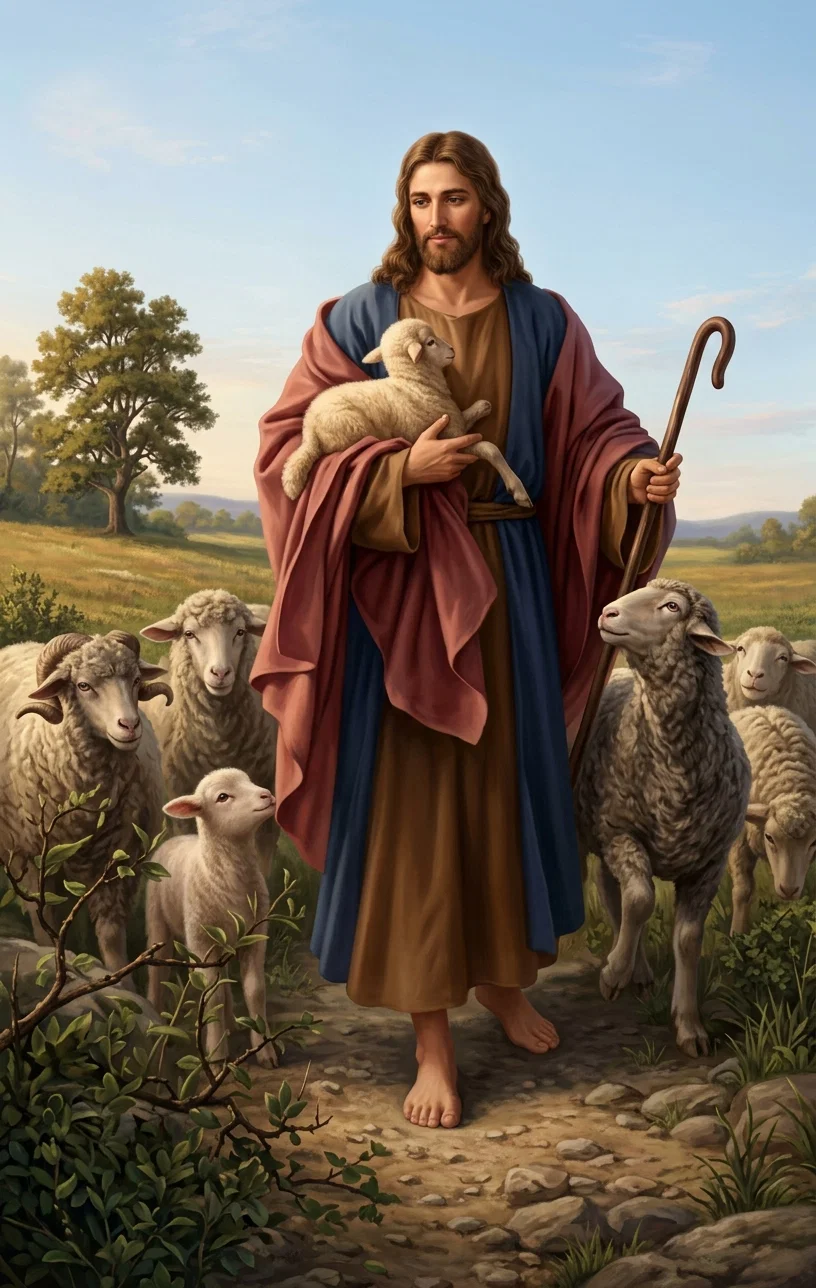
Of the true Shepherd, the prophet says: "He shall gather the lambs in His arms, and carry them in His bosom."
God has set in the earth His watchmen, His ambassadors, His shepherds; and of every one will He require the faithful performance of the work which He has placed in their hands.
Speaking to His watchmen, the Lord says: “If the watchman see the sword come, and blow not the trumpet, and the people be not warned; if the sword come, and take any person from among them, he is taken away in his iniquity; but his blood will I require at the watchman’s hand.” Eze. 33:6. So Christ says of His professed servants, who, when His coming was near, would be reveling in the pleasures of this world, “The Lord of that servant shall come in a day when he looketh not for Him, and in an hour that he is not aware of, and shall cut him asunder, and appoint him his portion with the hypocrites; there shall be weeping and gnashing of teeth.” Matt. 24:50, 51. This scripture is but one of many which show that at the time when Christ’s second advent is near, many of His professed followers will be far from Him, doing their own will and following after their own pleasures.
In all the history of the world there never was a time when there were so many tempting pastures for false shepherds as now, nor a time when there was so great need for shepherds who would give their lives for the sheep, who would search out the lost and straying and bring them back to the fold of Christ. The lost are falling and dying on every side, while many a false shepherd is pressing a downy couch. The hungry are crying for food, while many a false shepherd is regaling himself at a table heaped with all the bounties of garden, field, forest, and river. While many a wealthy false shepherd is basking in the genial warmth of his palatial residence, thousands of poverty-stricken peasants are shuddering in the clutch of penury, and shivering in the gusts that burst through their broken windows; or, while such shepherds recline in the cool, refreshing shade of some mountain retreat, or doze in the balmy breezes of some seaside resort, poverty moans and swelters and bakes, and gasps out its life, in the hot, stifling air of the tenement districts of the great cities, going down to a hopeless death in the most wretched misery.
Many of the churches have evolved into fashionable societies, select clubs, self-centered, working for the maintenance of their own social standing, and leaving undone the work to which they were called. The list of those who have gone down to their ruin while the church was seeking its own pleasure will be a terrible one when the record is complete.
This is the condition which prevails throughout the world to-day; and God, foreseeing the condition, has pronounced a searching indictment against such work and such workers. That indictment applies to-day; first, because the condition exists to-day; and second, because this indictment immediately precedes the entry of the Lord’s flock into the pastures of promise. Here is the Lord’s own language to His professed servants:—
“Thus saith the Lord God unto the shepherds: Wo be to the shepherds of Israel that do feed themselves! should not the shepherds feed the flocks? Ye eat the fat, and ye clothe you with the wool, ye kill them that are fed; but ye feed not the flock. The diseased have ye not strengthened, neither have ye healed that which was sick, neither have ye bound up that which was broken, neither have ye brought again that which was driven away, neitherhave ye sought that which was lost; but with force and with cruelty have ye ruled them. And they were scattered, because there is no shepherd; and they became meat to all the beasts of the field, when they were scattered; . . . yea, My flock was scattered upon all the face of the earth, and none did search or seek after them.” Ezekiel 34.
This is a divine indictment against those who have been set to feed the flock of God, and, having lost the love of souls, have given their time to the service of self, ruling over, and feeding in luxury upon the flock which they were set to feed, caring naught for its welfare, heeding not when some lose hope and fall out by the way to become victims of every beast of prey. This condition is making the church as a body a prey to every prowling beast of error, every representative of the great deceiver that roams the earth to-day. The doctrines of eternal truth are compelled to give way to the foibles of fashion, and social functions take the place of the study of the Word, till so little is known of what the Lord does require that the individual is unable to distinguish error as such when it comes to him in the garb of plausibility. Thus do the sheep become “meat to all the beasts of the field;” thus has the flock become “scattered upon all the face of the earth;” and thus have such shepherds proved themselves unworthy longer to have charge of the flock.
Christ designed that His followers should be ambassadors for Him in this “foreign country.” “Now then we are ambassadors for Christ.” 2 Cor. 5: 20. The ambassador never becomes a subject of the country to which he is sent, never takes part in the governing of that land; but thousands of the professed followers of Christ have virtually anchored themselves to this world, have become subjects of this world, and take a strong hand in ruling it, as well as the flock over which they had been set.
Now, the One who has the power to appoint has also the power to indict and remove; and this is what God has done in the thirty-fourth chapter of Ezekiel. After the indictment, the Lord says, “I am against the shepherds; and I will require My flock at their hand, and cause them to cease from feeding the flock; neither shall the shepherds feed themselves any more; for I will deliver My flock from their mouth, that they may not be meat for them.” “I will feed My flock, . . . I will seek that which was lost, and bring again that which was driven away, and will bind up that which was broken, and will strengthen that which was sick; but I will destroy the fat and the strong; I will feed them with judgment.” Verses 10, 15, 16. The judgment with which God will feed the false shepherds will be the judgment of that Supreme Court whose decisions can never be reversed, but must stand to all eternity, fixing forever the fate of the false.
Christ did not call His followers to lives of luxury or to the service of self, and yet many who profess to be His are living for self, and seeking for luxury and ease. In comparison with the lives of such false shepherds of to-day, witness the hardships of Paul, the shipwrecks, the scourgings, the prison life, the howling mobs, the stonings, the cruel death. Witness the faith of Stephen, of Peter, and of John, and what they bore in defense of the truth and for its advancement. Witness the lurid sacrifices of the faithful followers of Christ in the cruel burnings of the Dark Ages, and witness the faithful work being done for God to-day by the few who value His service more than life. Upon such does not fall the fearful indictment of the Judge of all the earth. To such Christ will say, “Thou hast been faithful over a few things, I will make thee ruler over many things; enter thou into the joy of thy Lord.” Matt. 25: 21.
The work of God is too sacred, too solemn, too important to permit of self-service or indulgence in the deceitful pleasures of the world; and he who takes the yoke of Gospel service in all sincerity, realizing the nature of the work to which he is called, will shun such indulgence as the pitfalls of death which they are. But upon those who yield to the enticements of ease and luxury there will fall the terrible indictment of the great Judge. Let the shepherds feed the flock, and watch over the flock as those who must give account of their shepherdship in the day of God. Christ was the great Example of true shepherdship, and he who will not follow Christ can not shepherd the flock of God.

NECESSITY OF PRAYER.

PRAYER is a necessity; for it is the life of the soul. Family prayer, public prayer, have their place; but it is secret communion with God that sustains the soul-life.
It was in the mount with God that Moses beheld the pattern of that wonderful building which was to be the abiding-place of His glory. It is in the mount with God—in the secret place of communion—that we are to contemplate His glorious ideal for humanity. Thus we shall be enabled so to fashion our character-building that to us may be fulfilled His promise, “I will dwell in them, and walk in them; and I will be their God, and they shall be My people.”
It was in hours of solitary prayer that Jesus in His earth-life received wisdom and power. Let the youth follow His example in finding at dawn and twilight a quiet season for communion with their Father in heaven. And throughout the day let them lift up their hearts to God. At every step of our way, He says, “I the Lord thy God will hold thy right hand; . . . fear not; I will help thee.” Could our children learn these lessons in the morning of their years, what freshness and power, what joy and sweetness, would be brought into their lives!—Mrs. E. G. White.

THE DAY-STAR.

BY H. A. ST. JOHN.
“I AM the root and offspring of David, and the bright and morning star.” Rev. 22: 16. “We have also a more sure word of prophecy; whereunto ye do well that ye take heed, as unto a light that shineth in a dark place, until the day dawn, and the day star arise in your hearts.” 2 Peter 1: 19.
Jesus is the day-star. From my bedroom window, in the early dawn, I behold the bright morning star, the harbinger of a day of sunshine brightness soon to burst upon the world. I know when I see this star sparkling like a diamond in the horizon that very soon its bright shining will be eclipsed, not destroyed, but absorbed, or swallowed up, in the brighter shining of the glorious sun, the king of day. And it is a sure word of prophecy, that never fails.
In like manner must the Lord Jesus be recognized by the remnant church of Christ, as the bright and morning star. In their conscious experience, the members of that body must know He has arisen in their hearts, or with all the unprepared they will be destroyed by the brightness of the visible, glorious appearing of the same Jesus, as the Sun of Righteousness, shining in all His splendor. Not one soul can endure the brightness of the undimmed, unveiled glory of the King of kings, excepting those in whose hearts the same Jesus has arisen; in the previous dawning of that perfect day. Then—
“In His radiance splendid Shall their light be blended, When His glory shall appear.”
And the breaking of that perfect and eternal day is right upon us. He is now even at the door. Soon the door, the heavens, as a scroll will be rolled back, opened wide, and all the world will behold the Son of Man coming with all His holy angels, in power and great glory. But now we are in the dawn of that golden morning.
With all the intensity of my soul let me ask you, dear reader, Has Jesus as the day-star risen in your heart? Before Jesus appears as the sun, He will come to the door of every heart as the day-star. He is now even at the door of your heart, knocking, and pleading for admission. If you will only hear His plea, and open the door, He will be constrained to come in and sup with you, and you with Him. O wonderful Guest, blessed, sweet intercommunion with Jesus, in which you will drink in of His feelings, thoughts, purposes, and love! Thus will the day-star arise in your heart. The eye of faith, the inner man, will behold the brightness of this morning star, which will remain in the horizon of your soul, till Jesus bursts the gates elysian, and sends a ray of light from His presence, an angel of transcendent splendor, to take you to Himself. And then you will be translated to the kingdom ofglory, to shine as a precious jewel forever and ever.
But let us ever remember that, if we would shine as stars in the kingdom of light, we must prepare and now welcome Jesus into our hearts to shine in and through us as the bright and morning star. And who can describe the blessedness of such illumination of heart, life, and labor. Then we will know by blessed experience that “the path of the just shineth more and more unto the perfect day.”
“Reign in me, Lord; Thy foes control, Who would not own Thy sway; Diffuse Thine image through my soul; Shine to Thy perfect day. “Scatter the last remains of sin, And seal me Thine abode; O make me glorious all within, A temple built by God.”

CREATED FOR HIS PLEASURE.

BY THORO HARRIS.
Eternal God! Father of light! Ancient of endless years! How awful, to our wond'ring sight Thy majesty appears!
Thou fill'st Thy vast creation broad With Thy immensity; Thou who alone wert perfect God Could'st not more perfect be.
Yet Thou wert not content, O Love, To live and move alone; Thou madest earth and heav'n above For love's dear sake alone.
'Twas for Thy pleasure they were made— 'Twas by Thy sovereign will; Thy hung'ring heart was yearning, glad Love's purpose to fulfil.
That Thou might'st love and be loved, Thou, O Love, sought not Thine own; Since love alone is lonely, how Could'st Thou rejoice alone?
And so Thou madest heaven and earth For love's supreme delight; We bless the Power that gave us birth, The everlasting Might!
Then may we, Lord, with rev'rent joy Thy gifts of love receive, And still our thankful songs employ And benedictions give.
Thy gifts our grateful homage claim, Our hearts to Thee we bring; We magnify the glorious name Of heaven's eternal King.

“REMEMBER THE SABBATH DAY.”

BY EDITH B. GOODRICH.
THE word “remember” is used only once in all the Decalogue; we find it in the fourth commandment. This commandment is of great importance, being that particular one which calls to remembrance the only true God, and that which distinguishes Him from all false gods; viz., His creation of the heaven and earth, the sea, and all that in them is. It is very evident that God had a purpose in commanding us to “remember,”—a reason for laying such stress upon the keeping “holy” of His Sabbath day; for when we forget that day, it naturally follows that we forget its author. We are not told to “remember” only, but to “remember” to “keep holy” that day. I believe that much—most—of the backsliding of God’s people to-day is due to the fact that, while the Sabbath may have been remembered, yet it was not kept “holy.”
How are we to “remember the Sabbath day, to keep it holy?” At the last moment? Half an hour before sundown? If that has been our mode, we can not properly “keep holy” that day which God has so strictly charged us to keep; for so many things will have been prepared that many unholy duties will crowd themselves over onto the day ordered to be kept “holy.” We should “remember” the Sabbath every day. I believe with all my heart that this is the only way to be able to keep it “holy” when it comes; for if we every day put out of the way some duty by doing it, then they will not all crowd themselves together on the day of preparation, thus creating confusion, overwork, and nervous breakdown. In the latter case, how often will absence at Sabbath-school and church follow, and, later on, backsliding, and lukewarmness, coldness, and finally downright apostasy.
By adopting a plainer mode of living and dressing, our duties will be lessened so far as regards work. Let us not forget the words of Wisdom, spoken by Wisdom itself: “Martha, Martha, thou art careful and troubled about many things; but one thing is needful; and Mary hath chosen that good part, which shall not be taken away from her.” Let us, in these exceedingly trying last days, be sure that we will not be “cumbered about much serving.” Let us eliminate from our work anything which is stealing our precious time—that talent which God one day will require at our hands. Can we not, by this God-given plan of plain cooking and dressing, so lessen our work as to bring ourselves into a calm and sane condition of body, mind, and spirit, so that we can indeed “remember” to “keep holy” God’s Sabbath day? If we are remembering that day as we should, we will not forget to prepare for it.
O let us all take heed to keep indeed holy the Sabbath day, that it may cause God to smile upon us, and that it may bring to us the fulfilment of the promised blessing of Isaiah 58:13,14: “If thou turn away thy foot from the Sabbath, from doing thy pleasure on My holy day; and call the Sabbath a delight, the holy of the Lord, honorable; and shalt honor Him, not doing thine own ways, nor finding thine own pleasures, nor speaking thine own words; then shalt thou delight thyself in the Lord; and I will cause thee to ride upon the high places of the earth, and feed thee with the heritage of Jacob thy father; for the mouth of the Lord hath spoken it.”
Salem, Oregon.

FAITH LESSON FROM THE MUSTARD SEED.

BY JOHN H. MC EACHERN.
Faith in the supreme and unlimited power of God, is one of the most essential possessions of the true Christian. It ennobles character, and strengthens the soul to progress onward devoid of all fears. It matters not to the endeavoring Christian what gloomy aspects the disappointments and bereavements of this world may present before him, if, through faith, he can look forward, believing in his heart the promise of Christ, “All things work together for good to them that love God.”
Let us, for a moment, look at what the all-wise Teacher, our Saviour, says of the need and power of faith in those who are His followers. In Matt. 17:20, He represents its power by the parable of a grain of mustard seed: “If ye have faith as a grain of mustard seed, ye shall say unto this mountain, Remove hence to yonder place; and it shall remove; and nothing shall be impossible unto you!” What an appropriate comparison! Almost every tiller of the soil is acquainted with this hardy little plant, and has observed with what thriftiness and sternness it confronts his efforts to kill and remove it from his field.
In its progress of early growth it presents before our mind the exact picture of the divine life in a young Christian. Whenever the seed is once sown, it immediately begins to grow, and so long as it is in a position to derive light and warmth from the sun and nourishment from the soil, it grows and flourishes, no matter what obstacles, such as stones and other debarments, its tiny roots may find in the way. Is it not a grand picture of the faith that may remove mountains?
The language here used is evidently symbolical. It would be absurd to think of man, even if God gave him the power, having a desire to remove the mountains of the earth simply to prove his own power of faith; but, like the mustard seed, the obstacles and burdens which every follower of Christ is destined to meet, may well be compared to a mountain. Even in the sinner’s conviction of his guilt before God, we find a great load, as it were a mountain, upon him. Bunyan, in his “Pilgrim’s Progress,” symbolizes it as a great load that Christian is carrying on his back. In this we again see the need and power of faith.
What can relieve the sinner of his burden?—“Faith in the atoning blood of Christ.”
Then, after conversion, when we start out in love of service, and with desires to progress in the divine life, we, like the grain of mustard seed, meet many hard obstructions in our way. The devil, “the enemy of all souls,” tries to confront us with all the embarrassments he can possibly devise, to discourage us from walking in the straight and narrow way that leads to eternal life. But in this our trial our faith must be like the above Christ-given illustration, which absorbs all possible strength and nourishment, extends its roots over the obstacles, or, if it be possible, permeates them. We, by looking forward to our high calling, and, by using the power which God has promised us, which is ours if we believe, can gain strength to follow Christ despite any and all obstacles and hindrances we may meet by the way.
There is yet another grand lesson to be learned from this simple, but inexhaustible, parable. So long as the soil in which the mustard grows, is kept in cultivation so that the seed is near the surface, where it can get light, it grows and flourishes; but when the tiller of the soil plows it down deeply and covers it with the sod, it lies there dormant, as it were taking a refreshing sleep, till the plowman turns the soil again and brings it to the surface. Coming again in contact with the light, it blooms forth fresher than before.
Its apparent death in the soil pictures to us the sleep of the child of God till the resurrection. Then, as the plowman uncovered that little seed so that life may be again manifest in it, so may we, when the Son of Man at the last day opens the graves, come forth again into divine light and life, to flourish throughout eternity.
May God increase our faith that we may overcome the tempter, abound in good works, doing our duty in all things, to the honor and glory of Him who has redeemed us that we should live and reign with Him forever.

TEST OF TRUE DISCIPLESHIP.

BY A. J. OSBORNE.
If any man come to Me, and hate not [love not less] his father, and mother, and wife, and children, and brethren, and sisters, yea, and his own life also, he can not be My disciple.” Luke 14:26.
To be a disciple is to be a follower. To be a disciple of Christ is to be a follower of Christ. And to be a follower of Christ is to hear and obey His word—the truth. To obey the truth is to follow Him who said, “I am the way, the truth, and the life.” “He that hath My commandments, and keepeth them, he it is that loveth Me.” “If a man love Me, he will keep My words.”
Divine love in the human heart impels its possessor to walk in harmony with the divine will. It will lead him to love his Lord with all his being, and his fellow-creature as himself. Matt. 22:37–39. It will lead him to love his Master supremely, and others less. This is being a disciple of Christ. But if we love fellow-creatures or self more than we love the Master, we can not be His disciple. We will be a follower of the one for whom our love is greatest; and, “No man can serve two masters.”
To make the Lord first in our affections will not detract from our own happiness or that of others, but will enhance it. Dear reader, in the fear of God, ask yourself this question: Am I following my friends, or my relatives, or my own selfish heart, or my Lord? Which?

THE SONG OF SOLOMON.

BY F. D. STARR.
THUS far in our study of the books of the Bible, we have made scarcely any reference to commentaries or works of that nature, but perhaps it would be well for a change to deviate somewhat from this rule for once, and present a few thoughts from authors who have written some very good things concerning the book in question. So we will venture to submit a few extracts which we hope may be helpful.
Concerning the Song of Solomon, we find in Matthew Henry’s Commentary the following: “All scripture we are sure is given by inspiration of God and is profitable for the support and advancement of the interests of His kingdom among men, and it is nevertheless so, for there being found in it some things dark and hard to be understood, which they that are unlearned and unstable wrest to their own destruction. In our belief both of the divine extractions, and of the spiritual exposition, of this book, we are confirmed by the ancient, constant, and concurring testimony, both of the church of the Jews, to whom were committed the oracles of God, and who never made any doubt of the authority of this book, and of the Christian church, which happily succeeds them in that trust and honor.”
“1. It must be confessed, on the one hand, that if he who rarely reads this book, be asked, as the eunuch was, Understandest thou what thou readest? he will have more reason than he had to say, How can I, except some man should guide me? The books of scripture-history and prophecy are very like one another, but this Song of Solomon’s is very unlike the songs of his father David; . . . it seems as hard as any part of Scripture to be made a savor of life unto life, nay, and to those who come to the reading of it with carnal minds, and corrupt affections, it is in danger of being made a savor of death unto death; it is a flower out of which they extract poison.
“2. It must be confessed, on the other hand, that, with the help of the many faithful guides we have for the understanding of this book, it appears to be a very bright and powerful ray of heavenly light, admirably fitted to excite pious and devout affections in holy souls, to draw out their desires toward God, to increase their delight in Him, and improve their acquaintance and communion with Him. It is an allegory, the letter of which kills those who rest in that, and look no further, but the spirit of which gives life.”
From the “Homiletic Commentary,” we present the following: “It is well with Dr. Chalmers to begin the study of this sacred book with the prayer: ‘My God, spiritualize my affections; give me intense love to Christ.’ This book, like the rest of Scripture, is to be read with seriousness and expounded with discretion; but no argument against reading and preaching from it in the fact that evil men may abuse it. Ignorant men wrest also other scriptures to their own destruction. ‘To the pure all things are pure.’ The holiest and most spiritually-minded have naturally delighted most in this book in which they find most of their Beloved and their Friend. Witness Bernard, of Clairvoix, Samuel Rutherford, and Robert McCheyne. In Scotland’s best times, the Song of Solomon was the chosen field of meditation at Sacramental seasons.”
In “The People’s Bible” is found the following extract from “Angus’s Bible Handbook:” “Much of the language of the Song of Solomon has been misunderstood by early expositors. Some have erred by adopting a fanciful method of explanation, and attempting to give a mystical meaning to every minute circumstance of the allegory. In all figurative representations there is always much that is mere costume. It is the general truth only that is to be examined and explained. Others, not understanding the spirit and luxuriancy of Eastern poetry, have considered particular passages as defective in delicacy, an impression which the English version has needlessly confirmed, and so have objected to the whole. . . . If it be remembered that the figure employed in this allegory, is one of the most frequent in Scripture, that in extant oriental poems it is constantly employed to express religious feeling, that many expressions which are applied in our translation to the person, belong properly to the dress (ch. 5:10, 14; 7:2), that every generation has its own notions of delicacy (the most delicate in this sense being by no means the most virtuous), that nothing is described but chaste affection, that Shulamite speaks and is spoken of collectively, and that it is the general truth only which is to be allegorized, the whole will appear to be no unfit representation of the union between Christ and true believers in every age.”
This book surely presents a very emphatic proof of the necessity of the advice given by one of the Lord’s servants, that we should never enter upon the study of the Scriptures without prayer. We need our minds elevated to see the spiritual side of this allegory. There are some very touching allusions in this book to Him who says He is “the Rose of Sharon and the Lily of the Valleys;” “the chiefest among ten thousand.” “He is altogether lovely.” How many of us have found Him so, so that we can say, “This is my Beloved, and this is my Friend?” On the other hand, are we in that condition that He can say of us, as of His spouse: “There is no spot in thee?” Ch. 4:7. This accords with the statement in Eph. 5:27, “That He might present it to Himself a glorious church, not having spot or wrinkle, or any such thing; but that it should be holy and without blemish.”
The condition of the church as she goes forth to her final conflict and victory, and to her final reward, is thus described: “Who is she that looketh forth as the morning, fair as the moon, clear as the sun, and terrible as an army with banners?” This is soon to be demonstrated.
“My Best-beloved sits enthroned On hills of light and worlds unknown; There He descends and shows His face, In the rich gardens of His grace.”
“Come my Beloved, haste away, Cut short the hours of Thy delay, Fly like a youthful hart or roe, Over the fields where spices grow.”

A SEARCH FOR WEALTH.

BY WALTER E. GILLIS.
It was the last days of July—hot and enervating. Two men, dressed in the loose, rough attire of woodsmen, were standing by their cabin, earnestly looking toward the distant hills. At last one of them brought out a large telescope through which they looked for some time without comment. Finally the older man speaks: “Boy, that gives a magnificent view. I can almost imagine I see the ledges, cropping out of those fissures we see in Old Baldy. I tell you that mountain has wealth in it, and it might as well be ours as not. But, lad, we must get at closer range, if we ever intend to set our stakes upon anything more than ‘glittering generalities.’ The man who builds castles in the air never attains to the rewards of honest toil. It is the man who sinks the shaft, and drives the drift, who finds the precious wealth hidden away in old mother earth. Prepare the packs, my son, and we will hasten to yonder peak without longer delay. Don’t forget the microscope and the compass.”
Nine miles on the train, and a tramp of twenty-seven miles through the dense undergrowth and windfalls of a Washington forest, bring the prospectors within the territory viewed through the telescope. Two days of muscle-fagging effort has not dampened the ardor of either; and, eager for a sight of “color,” they begin examining the various rocks strewn upon the ground, before giving thought to a place to camp or a bite to eat. However, the hearty appetite induced by climbing the steep mountain-side, and the coming on of night, soon persuade our friends to unroll their packs, and build a cheery campfire. The only theme of conversation is the prospect of hidden wealth, and what it should prove to be.
With the rising sun ascends the steam from the morning meal, and, as soon as light permits, they commence the fascinating details of prospecting. Their first effort is directed toward ascertaining the nature of the country rock (that is, the prevailing surface-rock of the district), as it would very greatly facilitate their efforts at determining the nature of the precious metals hidden beneath the surface. For example: Talc indicates the presence of copper; galena, the presence of silver, copper, and gold; shale, the presence of coal and chrome iron, and so on, through a long list. With painstaking effort they carefully examine all the nooks and crannies. Here and there they discover fissures in the great rocks, filled up by the beautiful products of crystallization,—in one the terraced triangles of micaceous iron; in another, the octahedrons and squares of iron pyrites. And here and there a cropping of the most beautiful water quartz. Now and again we hear them exclaim at the wonderfully beautiful mineral forms brought to view by the microscope. Smooth, common-looking rocks under the lens develop into beautiful, foliated masses of geometric figures.
Watching these prospectors has brought to my mind another most interesting scene. It is evening. About the living-room table are gathered the father and mother with the girls and boys. The center of interest is the family Bible, from which the father is reading: “My son, if thou wilt receive My words, and hide My commandments with thee; so that thou incline thine ear unto wisdom, and apply thine heart to understanding; yea, if thou criest after knowledge, and liftest up thy voice for understanding; if thou seekest for her as silver, and searchest for her as for hid treasures; then shalt thou understand the fear of the Lord,and find the knowledge of God.” Prov. 2:1-5.
Then the father explains to his children a practical and wise plan for searching this storehouse of precious gems of truth. First, get a telescopic view of it, as a whole—and read the Bible through, it will only take about sixty-five or seventy hours of your time. Read each book through at one sitting, if possible. Having accomplished this task, do not abandon the book, for you are now only possessed of “glittering generalities.” Now set your heart upon some particular theme, and apply the microscope, following the leading of the Holy Spirit, as scripture explains scripture, until you develop a chain of truth. Examine the country rock (the context), and be sure not to determine that the pliable, foliated mica crystals are gold, and thus wrest the Scripture until you appear foolish in the sight of the wise. The Bible is a mine of wealth which, unlike the deceptive hills, will always yield its treasures to the earnest seeker. “If any man will do His will, he shall know of the doctrine.” John 7:17.
Mountain View, Cal.

BE GENTLE AND KIND.

For one soul saved by scolding and fault-finding, ten are saved by sweetness. For one soul saved by fear of hell, ten are saved by the thought of the love of God. A gentle voice and a smiling face make a religion beautiful to the miserable and the sinful, whereas gloomy looks and a harsh or condescending manner make religion seem a thing to be avoided. Do you wish to draw souls to God? Then let your soul reflect His love. Be gentle, be sweet, be patient. Practical people may condemn you, but only thus can you imitate Jesus.—Christian Uplook.
Continue reading: RESPONSIVE TO THE VOICE