Your ShelfYour Projects

Signs of the Times, Vol. 27, No. 49.

MY SHEPHERD

Signs of the Times

Dec 4, 1901

Pacific Press Publishing Company · Oakland, California · Dec 4, 1901

MY SHEPHERD.
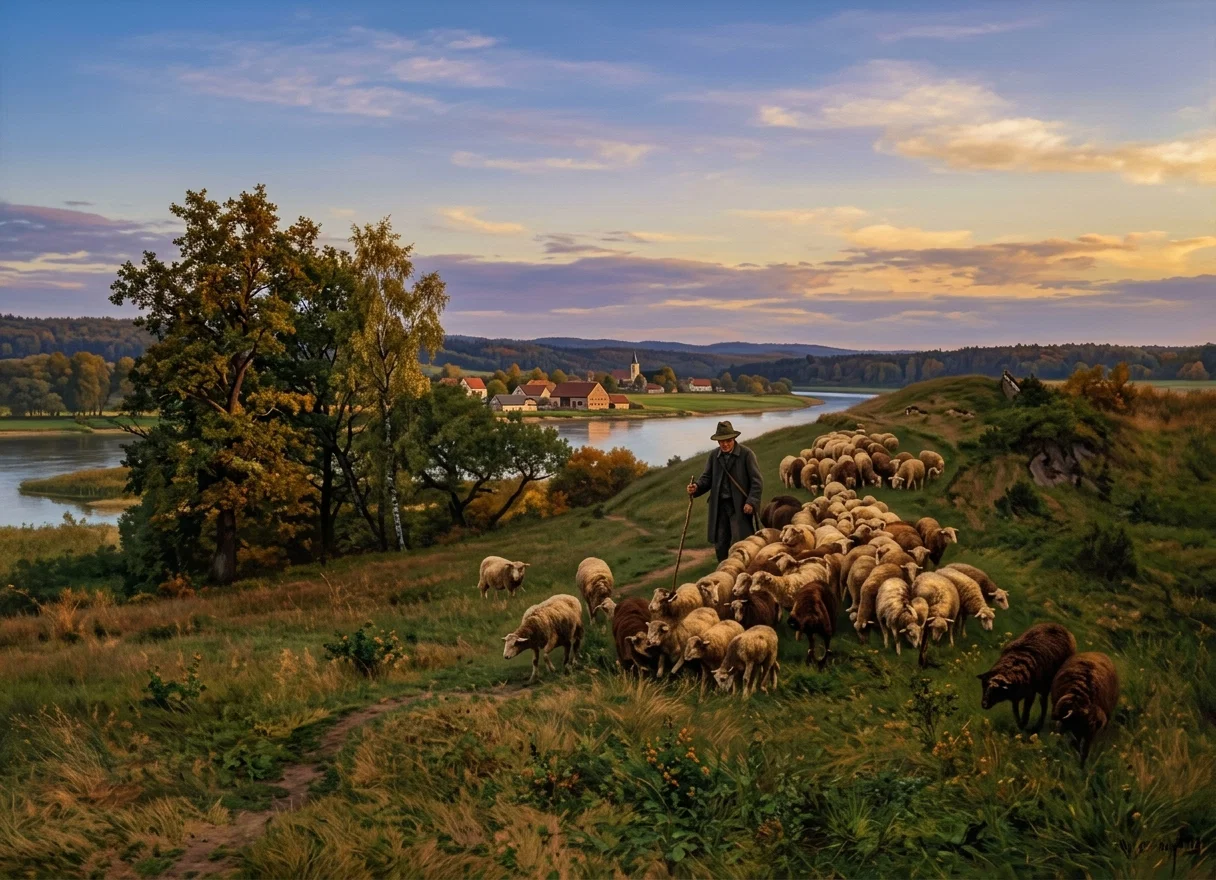
JEHOVAH is my Shepherd,” chants “the sweet singer of Israel.” “I am the Good Shepherd,” says Jesus. There is no contradiction, no clashing of interest, no jealousy of feeling; for there is no rivalry between the Father and the Son. Was not that Son’s name among the angels, before He came to this world, Michael, “who is like God”? Did not Jehovah declare, “My name is in Him”? Ex. 23:21. Not alone did He bear the name, but He possessed the character which demanded the name. The name was in Him. Were not His “goings forth” “from of old, from the days of eternity”? Micah 5:2, margin. Did not the Father say, “This is My beloved Son, in whom I am well pleased”? And did not Jesus say, “I and My Father are one”?
THE tender Shepherd’s love and care and sacrifice belong alike to both. God is love. That is His nature. All that Jesus did when there on earth was to manifest to the world the love of the Father. All He said, all He did, even to His death upon the cross, said to humanity, “God loves you, see how much He loves you.” As a mother He loves you. As a shepherd his sheep, He loves and cares for you. He perils His own life that He may save His sheep. He laid down that life that His sheep might all be brought home to His fold. He is the Good Shepherd.
THE words, “The Lord is my Shepherd,” are those of David. He knew the shepherd’s life, knew its days and nights of anxiety; knew the dangers from bold, wandering thieves; knew the perils of wild beasts. He himself tells us: “Thy servant kept his father’s ‘sheep; and when there came a lion, or a bear, and took a lamb out of ‘the flock, I went out after him, and smote him, and delivered it out ‘of his mouth.” 1 Sam. 17:34, 35, R.V. Whenever the beast of prey came, the shepherd was ready to defend the flock with his life. He knew in a human way what it meant in sacrifice, tenderness, bravery, and peril to be a true shepherd. No human at his best could serve for him; “Jehovah is my Shepherd.”
PRE-EMINENTLY the words of David are Christ’s words. He it was who spoke through the psalmist. In their fulness the psalms express the experience of our Lord. He was a sheep that He might be a shepherd. He met the fiercest enmity of the fiercest beasts of prey that he might know the experience of the mighty Shepherd’s helpings. And the beautiful Twenty-third Psalm is the expression of the faith of Jesus and of every soul who possesses the same faith.
“THE LORD is my Shepherd; I shall not want.” (Let us make personal application, as one of “the sheep of His pasture.”) How could we want? He is the Creator of all things. He possesses all power, all wisdom, all knowledge. “Nothing is too hard” for Jehovah; and His great heart of infinite love will keep back nothing that His sheep need, whether safely folded, or sick, bruised, and weary on the cold moorlands or mountains. Truly each can say, “I shall not want.”
“HE maketh me to lie down in green pastures: He leadeth me ‘beside the still waters.’ The sheep lies down when it has eaten sufficiently. ‘The pastures of tender grass’ (Hebrew, margin) furnish the food. The gently flowing river, or placid pool of living water, along whose bank the pathway runs, furnishes the drink. Here, on the sweet, rich food of God’s Word, drinking in the water of life, is the soul restored, or stored again, replenished, built up anew for the trial and task. The Christian, to live, must feed on the words of life, counting them more than daily food. He must drink of God’s waters of rest, not of the stagnant lagoons of superstition, tradition, or formalism. God gives it; it is all ours; eat and drink freely.
BUT not always can we lie in the sweet, green pastures; not always does our path run by the waters of quietness. But always “He leadeth me in the paths of righteousness for His name’s sake.” The pathways may be among the pitfalls of earth’s temptations; they may be through tangled thorns and briars that “wound and trip the ‘unheeding feet;’” they may be up ways steep and rugged and rough, bruising the tender feet on their sharp stones; they may be through the miasmatic morass; they may be in “the valley of the shadow of death;” but everywhere, in all places, at all seasons, they are the “pathways of righteousness.” God’s highway of righteousness is His holy law. “Blessed are the undefiled in the way, who walk in the ‘Law of the Lord.’” So the Shepherd speaks. “I will run the ‘way of Thy commandments;” “I have rejoiced in the way of Thy ‘testimonies;” “Teach me, O Lord, the way of Thy statutes, and I ‘shall keep it unto the end,” answer the faithful of the flock. The Master, the Shepherd, goes with us. He goes before us; “He leadeth me.” His nail-pierced footprints have trodden every step of the way and glorified it. Men who know not God may scoff at His law, but Jesus Christ, my Shepherd, has magnified it and made it honorable. Isa. 42:21.
SURELY when He is with me all the way, “I will fear no evil.” His rod of correction and guidance, His staff of succor and stay, comfort in the thought that He is bound to keep me in the way, if I am willing. When mine enemies are rejoicing in their seeming final triumph over me, He turns their rejoicing to lamentation by spreading His bounteous board and entertaining me as His honored guest. He brings forth the holy oil and consecrates me to His service; He fills my cup so full that I must give to others of its glorious fulness. And in view of it all, all His gentle, tender, faithful dealings, what other words can a soul say than these: “Surely goodness and mercy shall ‘follow me all the days of my life; and I will dwell in the house of the ‘Lord forever.’”

SOWING AND REAPING.

Say not ye, There are yet four months, and then cometh harvest? Behold, I say unto you, Lift up your eyes, and look on the fields; for they are “white already to harvest.” And he that reapeth receiveth wages, and gathereth fruit unto life eternal; that both he that soweth and he that reapeth may rejoice together. And herein is that saying true, One soweth, and another reapeth. I sent you to reap that whereon ye bestowed no labor; other men labored, and ye are entered into their labors.”
Say not, when you have committed your seed to the ground, There are yet four months—the usual time between seed-sowing and harvest—and then comes the harvest. In speaking thus to the disciples, Christ was referring specially to the work to be done for the Samaritans. The Samaritan woman to whom He had been talking had left her water-pot and had gone into the city, to say to the people there, “Come, see a man which told me all things that ever I did; is not this the Christ? Then they went out of the city, and came unto Him.” and “many of the Samaritans of that city believed on Him for the saying of the woman, which testified, He told me all that ever I did. . . . They besought Him that He would tarry with them; and He abode there two days. And many more believed because of His own word; and said unto the woman, Now we believe, not because of thy saying; for we have heard Him ourselves, and know that this is indeed the Christ, the Saviour of the world.”
The coming of these people to Christ and their conversion to the truth was an object-lesson to the disciples, and it should teach an important lesson to all who are engaged in the work of soul-saving. From it ministers should learn that God desires them to go forth into aggressive labor, that He has not given them the work of hovering over the churches, when close by there are souls who are perishing for lack of knowledge.
“And herein is that saying true, One soweth, and another reapeth. ‘I sent you to reap that whereon ye bestowed no labor.’ The Saviour spoke these words in anticipation of the ordination and sending forth of His disciples. The earthly work of the great Teacher was soon to close. The apostles were to follow after to perfect this work, to gather the fruit of the seed which He had sown. In the streets of the cities and in the synagogues Christ had been sowing the seeds of truth. The plan of salvation had been distinctly and clearly outlined; for the truth never languished on the Saviour’s lips. As a result of His work an interest had been aroused. The disciples were to follow up the efforts of the divine Sower, reaping where He had sown, that both Sower and reapers might rejoice together.”
To-day in His great harvest-field God has need of both sowers and reapers. Let those who go forth into the work, some to sow and some to reap, remember that they are never to take to themselves the glory of the success of their work. God’s appointed agencies have been before them, preparing the way for the sowing of the seed and the reaping of the harvest. “I sent you to reap that whereon ye ‘bestowed no labor,’ Christ said; ‘other men labored, and ye are ‘entered into their labors.’”
Those who sow the seed, presenting before large and small gatherings the testing truths for this time, at the cost of much labor, may not always gather the harvest. After they have done their part, and they rest from their labors, other servants of God, going over the ground, reap the fruit of their seed-sowing, completing their work.
“He that reapeth receiveth wages, and gathereth fruit unto life ‘eternal; that both he that soweth and he that reapeth may rejoice ‘together.’ Read these words carefully. Study their meaning; for they outline God’s plan. Often the Lord’s workers are bitterly opposed in their field of labor, and thus their work is hindered. They do their best. With earnest, painstaking effort they sow the good seed. But the element of opposition becomes fiercer and fiercer. Some may be convinced of the truth, but they are intimidated by the opposition. They have not the courage to acknowledge their conviction. The lives of the workers may be endangered by those who are controlled by Satan. It is then their privilege to follow the example of their Master, and go to another place. “Ye shall not have gone ‘over the cities of Israel,’ Christ said, ‘till the Son of man be come.’”
Let the messengers of truth pass on to another field. Here there may be a more favorable opportunity for work, and they may successfully accomplish the work of sowing and reaping. The report of their success will find its way to the place where the work was apparently unsuccessful, and the next messenger of truth who goes there will be more favorably received. The seed sown in trial and discouragement will be seen to have life and vitality. Adversity, sorrow, loss of property,—the changes of God’s providence, recall to the minds of the people with vivid distinctness the word spoken many years before by the faithful servants of God. First will appear the blade, then the ear, then the full corn in the ear.
The rejection of the truth of the Gospel by some prepares the way for its reception by others, who can see the weakness and inconsistency of the arguments used to make the truth of none effect. Thus those who seek to oppose the counsel of God are advancing rather than hindering the truth.
As food to the hungry and water to the thirsty, so is the doing of God’s work to those who obey His will because they love Him. Those who are engaged in the work of the ministry are to give evidence that God has a message for them to bear and a work for them to do. They are to labor in the spirit of meekness, showing that they have learned in the school of Christ His lowliness of heart, carrying with them the evidence that they have been with Christ and learned of Him. “Thus saith the high and lofty One that inhabiteth ‘eternity, whose name is Holy: I dwell in the high and holy place, ‘with him also that is of a contrite and humble spirit, to revive the ‘spirit of the humble, and to revive the heart of the contrite ones.’”
All parts of God’s vineyard are to be worked. There is need of wise men and wise women, who will labor earnestly to accomplish the work committed to them. God will use them as His instruments in the conversion of souls. Some will sow, and some will reap the harvest of the seed sown. Let every one do his very best to improve his talents, that God may use him either as a sower or a reaper.
Mrs. E. G. White.

Character Before It Is Glazed

CHARACTER, like porcelain ware, must be printed before it is glazed. There can be no change after it is burned in.—Beecher.

Beauty and Holiness

BEAUTY is the robe of holiness—the more holiness the more beauty.

The Law of God

The Second Commandment.

Thou shalt not make unto thee any graven image, or any likeness of anything that is in heaven above, or that is in the earth beneath, or that is in the water under the earth; thou shalt not bow down thyself to them, nor serve them; for I the Lord thy God am a jealous God, visiting the iniquity of the fathers upon the children unto the third and fourth generation of them that hate Me, and showing mercy unto thousands of them that love Me, and keep My commandments.
No heathen of ordinary intelligence will admit that he worships an image. In fact, the very name signifies the likeness of something, and not the thing itself. The image, says the heathen, assists me in concentrating my mind upon, and brings to me a more accurate knowledge of, the attributes of the deity I worship. In fact, he oft-times claims that the god of his adoration is incarnated, either temporarily or permanently, in the image before him. But never will he admit that the lifeless form there present is the god himself, or that it is other than a reminder of the same.
Now there was a time—yes, there have been two periods—in which all mankind understood, acknowledged, and obeyed the Maker of heaven and earth: The early days of Adam, and the period in which Noah and his family were enclosed in the ark. After each of these periods, there must have been a beginning in image-making; for we find the records or the traces of idols which occupied the impure groves of antiquity, both antediluvian and postdiluvian. What and how was that beginning?
Here is the record: “Because that, when they knew God, they glorified Him not as God, neither were thankful; but became vain in their imaginations, and their foolish heart was darkened. Professing themselves to be wise, they became fools, and changed the glory [character] of the uncorruptible God into an image made like to corruptible man, and to birds, and four-footed beasts, and creeping things.” “Thou thoughtest that I was altogether such an one as thyself,” said our God on another occasion.
These are the steps taken by each soul who has once known God, before he can become a transgressor of the second commandment. Note particularly, It was the glory, or character, of the Uncorruptible, which was, in their minds, changed into an image of the corruptible. First of man, then of beasts, and birds, and reptiles,—creeping things. If God’s ways were like the ways of these, then an image resembling one of them, or a combination of several in one, would aid the mind in comprehending God. Hence the origin of Moloch and of Dagon. But “My thoughts are not your thoughts, neither are your ways My ways, saith the Lord. For as the heavens are higher than the earth, so are My ways higher than your ways, and My thoughts than your thoughts.” “To whom then will ye liken Me, or shall I be equal? saith the Holy One.” “I have heard of Thee by the hearing of the ear; but now mine eye seeth Thee. Wherefore I abhor myself, and repent in dust and ashes.” And thus will it ever be with the man who, on earth, lives in the presence of God. Such a man will never liken God unto himself; and how much less to beasts and birds and creeping things.
From the giving of the law in awful majesty, scarce forty days had passed ere Israel clamored for some visible likeness of Him who was to go before them. That they intended this to be an image of the true and living God, may be seen in the expression, “These be thy gods, O Israel, which have brought thee up out of the land of Egypt.” They had not exchanged their God for another. O no; they had simply gotten a likeness of Him—a molten calf.
But what was the service rendered to that god whose image they had formed? “The people sat down to eat and drink, and rose up to play.” But what was the “play”? Was it innocent pleasure? Hardly. “The people were naked; for Aaron had made them naked unto their shame among their enemies.” How destitute of the light of truth must have been those minds and hearts which asked for an image of the Invisible One. But how intensified that darkness when, with the image before them, they thought to behold the character of the uncorruptible God in the likeness of a bull. This image did not elevate the mind to behold the heavenly, but degraded it to the level of the beast. The actions followed.
“Take ye therefore good heed unto yourselves; for ye saw no manner of similitude on the day that the Lord spake unto you in Horeb out of the midst of the fire; lest ye corrupt yourselves, and make you a graven image, the similitude of any figure, the likeness of male or female, the likeness of any beast that is on the earth, the likeness of any winged fowl that flieth in the air, the likeness of any thing that creepeth on the ground, the likeness of any fish that is in the waters beneath the earth; and lest thou lift up thine eyes unto heaven, and when thou seest the sun, and the moon, and the stars, even all the host of heaven, shouldst be driven to worship them, and serve them, which the Lord thy God hath divided unto all nations under the whole heaven.” “Take . . . heed . . . lest ye corrupt yourselves and”—do these things. The corrupting precedes the doing. No one, therefore, can think of making or having any visible likeness of the invisible God, until the mind and character are first corrupted by error and sin. An attempt to bring the true God more perfectly to the minds of men through the medium of an image of anything ever seen in earth or heaven, only conceals Him, and finally excludes Him from the character and habits of any one so doing.
But there is One “Who is the image of the invisible God, the first-born of every creature;” yet He is not a graven image; “for by Him were all things created, that are in heaven, and that are in earth, visible and invisible.” “In Him dwelleth all the fulness of the Godhead bodily.” And He says, “All things are delivered unto Me of My Father; and no man knoweth the Son, but the Father; neither knoweth any man the Father, save the Son, and he to whomsoever the Son will reveal Him.” “He that hath seen Me hath seen the Father.” Here is the only perfect revelation of God to man; here is the only image of the HOLY ONE. Therefore the second commandment forbids anything to take the place of Christ. It is a safeguard to the Gospel; and the keeper of it is the Gospel itself.
God’s purpose has always been that man himself should be a perfect image of his Maker. And the first suggestion of man is thus recorded: “And God said, Let us make man in our image, after our likeness. . . . So God created man in His own image, in the image of God created He him; male and female created He them.” Then follows the record of transgression: the darkening of man’s mind; the effacing of the nature of the Infinite, until men became “earthly, sensual, devilish.”
Once more the promise is given, that, “as we have borne the image of the earthly, we shall also bear the image of the heavenly.” The earthly nature is called “the old man;” the heavenly nature, “the new.” Now, “our old man is crucified with Him, that the body of sin might be destroyed, that henceforth we should not serve sin.” To the man with this experience, it can be truthfully said, “Ye have put off the old man with his deeds; and have put on the new man, which is renewed in knowledge after the image of Him that created him.” “We all, with open face beholding as in a glass the glory of the Lord, are changed into the same image from glory to glory, even as by the Spirit of the Lord.” This is the positive side of the second commandment. The prohibitory part is the negative.
Thus again, as in the first commandment, it takes the redemption that is in Christ Jesus, the gift of the Holy Ghost, which comes thereby; and through this, the indwelling “of all the fulness of God,” in order that the second commandment may be kept inviolate. And he who has that “fulness” can never transgress this holy requirement, not even in thought. E. J. Hibbard.

THE HUMAN AND DIVINE.

WHENEVER we have to consider any joint action of God and man, we are in danger either of thinking of God to the exclusion of man or of man to the exclusion of God. If we think of the Bible as a divine book, as given by the Spirit of God, we dwell upon the divine element in it, until we almost forget that all the writers of these books were human beings like ourselves, until all the reality of the human side of the book fades away; and we forget that the love of John, and the logic of Paul, and the fervor of Peter, and the rapt, visionary mind of Isaiah, and the tender and sorrowing heart of Jeremiah—that every one of these was just as real, and is just as real, in this book, as the mind and the heart of the author are in the last book that was published and advertised yesterday. We forget the reality of the human element in the Bible while we dwell upon the divine.
And so, on the other hand, there is the danger that in attempting to make this book a real, and living, and human book to us, dwelling upon the human element, men forget the divine, and they think and speak of these books and writings as the work of Paul, and Peter, and John, and Jeremiah, and Isaiah, and Moses, and forget that in and through all these the living and Eternal God is speaking words of eternal truth to men.—Bishop Magee.

HOW THE FAMILY OF EARTH SEPARATED FROM THE FAMILY OF HEAVEN.

In the past, great events must have taken place to produce the present condition of affairs in the universe. Great events must have occurred to break asunder those ties which bound together the heavenly family.
Before God made this earth, there was only one family in all the universe, and that family lived together in peace and unity. This we may read from the words: “Then the Lord answered Job out of the whirlwind, and said, . . . Where wast thou when I laid the foundations of the earth? declare, if thou hast understanding. . . . Whereupon are the foundations thereof fastened? or who laid the corner-stone thereof; when the morning stars sang together, and all the sons of God shouted for joy?” Job. 38:1-7. Now if all the sons of God shouted for joy when God laid the corner-stone of this earth, it is evident that there was but one family in the universe, and that family was the family of God. But does that condition of affairs exist at the present time? Do the children of earth unite in their songs with the sons of God in heaven? Can we see also that those songs are songs of joy?—No; if we stood now at the throne of God, we would hear, going up from all sides of earth, the great cry of human woe. Heaven has vailed its face from the sins of humanity, and the loving angels minister to us in unseen dress. The family of earth is separated from the family of heaven, and that fact, not only human reason, but also God’s Word declares.
“Be ye not unequally yoked together with unbelievers; for what fellowship hath righteousness with unrighteousness? and what communion hath light with darkness?” “Wherefore come out from among them, and be ye separate, saith the Lord, and touch not the unclean thing; and I will receive you, and will be a Father unto you, and ye shall be my sons and daughters, saith the Lord Almighty.” 2 Cor. 6:14, 17, 18. This solemn appeal tells of a different condition from that told in the words of the Lord to Job. There, all were united; here, God earnestly calls for a separation. But why this call? Why is this separation necessary? We saw that at the foundation of the earth there was but one family in the universe. And we must all believe that when God created man, and launched forth the human race, He certainly destined this new family to be one part of the magnificent whole.
Then if at the foundation of the earth there was but one family in the universe, and afterward there were two, some event at the time of man’s creation must have caused that separation. And moreover that separation must have excluded only man. For, from the scripture I have just quoted, God calls for mankind to separate from the unrighteous and become His sons and daughters. No wonder, then, that the apostle Paul declares, “For the earnest expectation of the creation waiteth for the revealing of the sons of God.” The line of separation puts on one side, as bound together, the former creations of God, but excludes from that family, on the other side, the human race. But were they to be excluded forever?—No; thank God that He now calls upon us to step over the line, and He will receive us as His sons and daughters. But we need clearer views. What caused this separation? Who is the father of this new family? And how has the great God of love made it possible that we may be reunited with the family of heaven?
The answer to the first question may be seen foreshadowed in the words of God to Job: “When the morning stars sang together, and all the sons of God shouted for joy.” Who are or were the morning stars? We know one immediately: “I Jesus . . . am the Root and the Offspring of David, and the bright and Morning Star.” Rev. 22:16. Here is the first Morning Star. It is Jesus Himself, the Son of God. Can we find another morning star?—Easily: “How art thou fallen from heaven, O Lucifer [or day-star], son of the morning!” Isa. 14:12. Here are now two morning stars. The first is Jesus; the second is Lucifer, who fell from heaven. Then the second must be Satan; for Christ said to His disciples, “I beheld Satan as lightning fall from heaven.” Luke 10:18. Can we not here see the line of separation beginning to appear? A fallen angel! one who once sang in the courts of heaven! And we have every reason to believe that he was an angel of superior rank; an angel endowed with capabilities and powers not given to man; and that angel who doubtless once held the rank next to Christ; of him Jesus says, “I beheld Satan as lightning fall from heaven.” Where did he go? And to what purpose did he use his great knowledge and power?—He came to our earth, and used his powers to tempt a newly-created race to sin against their Creator.
When this beautiful new earth came forth from the hands of the Creator, in it God placed a lovely garden. To the man and woman He said, “Of every tree of the garden thou mayest eat; but of the tree of the knowledge of good and evil, thou shalt not eat of it.” What! A tree of evil in the midst of the garden? Had not the great Creator just pronounced every tree good? Then if every tree was good in itself, what made this tree evil?—Because through this tree, and through this tree only, was Satan permitted to have access to the newly-created pair. God beheld the efforts of Satan to tempt Adam and Eve, and He limited his means of approach to but one, and that one was through the branches of the very tree God had warned man to shun. How wonderful are God’s commandments! They are given us that we may be warned away from the spot where the enemy lurks to spring upon us.
This is sure. We see in the present case that Satan had taken his position amid the branches of the tree. He became what he is called in Rev. 20:2, “the dragon, that old serpent, which is the Devil, and Satan.” After man’s fall, God degraded the serpent; so before the fall that animal must have been a beautiful and attractive creature. Therefore Satan assumed the appearance of the serpent. But one thing is astonishing. None of the animals that God had created could hold converse with man. For when the Creator sought for a creature fit to be a companion for Adam, He could find none suitable; therefore as a companion God gave Eve to Adam. But when Eve stood before the tree which by the presence of Satan became evil, the serpent opened his mouth and talked. Certainly Eve must have been astonished. But more! she ought immediately to have suspected something evil, and to have been on her guard. But no.
Now comes the conversation between Eve, and Satan speaking through the serpent. A great question was at stake. Would Eve obey the commands of her God, or would she listen to the argument of this beautiful creature, who could speak with her just as Adam could? Was not this a new companion? Did he not present convincing arguments? Did he not promise her a better existence if she would disobey God’s commands? Alas, how many Eves there are to-day! Flattered by the belief that they will secure greater advantages in spurning God’s commands, they turn to the path of disobedience. But for them there awaits the same result as came to Eve: “The wages of sin is death;” and worse than death, separation from the presence of God.
Separation is necessary; for of this great Creator I read: “A God of truth and without iniquity, just and right is He.” God is a God of truth. Can He dwell with those who do not follow the truth?—No. For by Himself is this question asked, “Can two walk together, except they be agreed?”—It is impossible. Here came the parting of the ways. God wished one thing; Eve another. It was nothing arbitrary which God demanded; it was for Eve’s best good; it was truth. Eve disbelieved. They were not agreed. Persuaded directly contrary to the loving command of their Creator, Eve chose evil, and Adam joined her. The separation came. The new-created man and woman chose a new head, and the family of earth separated from the family of heaven. There were now two families.
B. G. Wilkinson.
(To be continued.)

Judging Man by God

THE great question, after all, is this: Shall we judge man by God, or God by man? Do light and understanding flow upward or downward? If we judge man by God, at once we have true and discriminating thoughts of human life. We have absolute standards. We have a test of the worth of all we see or do. But if we judge God by man, we only have over again what the world has been so full of—the persuasions of self-interest, the disbelief in absolute righteousness, the changing standards of the changing times. Men have gone into the sanctuary of their own selfishness, the sanctuary of themselves, and straightway they have seemed to see an end of God. All sense of a supreme and awful Fatherhood on which all men depend, to which all action must go back for judgment, has been lost. No higher power than the human has seemed to be moving under and giving meaning to the events of ordinary life.—Phillips Brooks.

“TEACHING THEM TO OBSERVE.”

WHEN Jesus was about to ascend to heaven, He commissioned His disciples to carry on the Gospel work among men. This commission is brief, yet comprehensive: “All power is given unto Me in heaven and in earth. Go ye therefore, and teach all nations, baptizing them in the name of the Father, and of the Son, and of the Holy Ghost; teaching them to observe all things whatsoever I have commanded you: and, lo, I am with you alway, even unto the end of the world.” Matt. 28:18-20.
They were to go in the strength of His power,—I have all power, go ye therefore. This was a guarantee of help to the extent of the power of Christ. They were to teach (margin, “make disciples”) of all nations. In the kingdom of God there is no recognition of any national qualification as recognized among men. They are redeemed “out of every kindred, and tongue, and people, and nation.”
It was not mere theory that was to be taught to all nations. They were to be taught to “observe all things” that Christ had taught; not merely to concede the truth of the Gospel, but to formally practise the commandments and ordinances after the example of Christ. Of true disciples it will be said in the end, “Here are they that keep the commandments of God, and the faith of Jesus.” Christ’s ministers were commanded to baptize those who believed. This implied more than passive doctrine; it meant practically observing the ordinance. Being baptized was a public witness, or confession, of faith in Christ. It was following the example of Christ, who Himself had been baptized.
The apostles understood their commission, that it meant for them to teach actual obedience in very deed. This alone is proof of discipleship. When Peter, under the Pentecostal outpouring, preached the Gospel at Jerusalem, conviction went to the hearts of the people, and they said, “Men and brethren, what shall we do?” Peter told them what to do, saying, “Repent, and be baptized every one of you in the name of Jesus Christ for the remission of sins.” Here was a definite act, in which the individual believer must participate. Not that the baptism would take away sin; but that the faith manifested in the baptism would justify him before God. The act of baptism was the obedience of faith.
Baptism was not the only thing that Christ commanded His disciples to observe. In the thirteenth chapter of John is the record of His washing their feet, just before participation in the newly-instituted ordinance of the Lord’s supper. When He had washed their feet, He said to them, “If I then, your Lord and Master, have washed your feet, ye also ought to wash one another’s feet. For I have given you an example, that ye should do as I have done to you. ‘If ye know these things, happy are ye if ye do them.’” This, then, is one of the things that a minister sent of God will teach the people to observe. And why not, when we have the Lord’s assurance that there is happiness connected with it? Of course, like every other Christian duty, the happiness comes of doing it by faith, and not as a mere formality.
The Lord’s supper is an institution which the minister of Christ must teach believers to observe. Not only was it commanded to the twelve, but some years after the Lord’s ascension He showed to the apostle Paul that it was His will to have His death commemorated in this manner. Paul says: “I have received of the Lord that which I also delivered unto you, that the Lord Jesus the same night in which He was betrayed took bread; and when He had given thanks, He brake it, and said, Take, eat; this is My body which is broken for you; this do in remembrance of Me. After the same manner also He took the cup, when He had supped, saying, This cup is the new testament in My blood; this do ye, as oft as ye drink it, in remembrance of Me. For as often as ye eat this bread, and drink this cup, ye do show the Lord’s death till He come.” 1 Cor. 11:23-26.
These are ordinances instituted by the Lord Himself, and in every instance He illustrated by example Himself just how He would have them observed. There is no excuse for mistake or neglect in these matters. Furthermore, He is equally emphatic in regard to the observance of the law of God; therefore His ministers ought to be just as explicit in teaching men to observe the Decalogue. When a certain lawyer asked Jesus what he must do to inherit eternal life, the Master referred him to the law. “What is written in the law? how readest thou?” The lawyer answered, “Thou shalt love the Lord thy God with all thy heart, and with all thy soul, and with all thy strength, and with all thy mind; and thy neighbor as thyself.” And Jesus said to him, “Thou hast answered right; this do, and thou shalt live.” Luke 10:25-28.
From Matt. 22:35-40 we learn that all the law is comprehended in the words of the lawyer. And Jesus tells us that “it is easier for heaven and earth to pass, than one tittle of the law to fail.” Luke 16:17. The same thought is expressed in the fifth chapter of Matthew, where the context leaves no doubt that the Decalogue is the law to which He refers. In that connection also the duty of His ministers to teach the observance of the law is made very plain: “Whosoever therefore shall break one of these least commandments, and shall teach men so, he shall be called the least in the kingdom of heaven; but whosoever shall do and teach them, the same shall be called great in the kingdom of heaven.”
“Wherefore the law is holy, and the commandment holy, and just, and good.” Rom. 7:12. “Thy righteousness is an everlasting righteousness, and Thy law is the truth.” Ps. 119:142. G.
Continue reading: KEPT BY THE POWER OF GOD