Signs of the Times, Vol. 32, No. 16

FAITH NOT VAIN

Signs of the Times

Apr 18, 1906

Pacific Press Publishing Company · Mountain View, California · Apr 18, 1906

FAITH NOT VAIN.

“Now if Christ is preached that He hath been raised from the dead, how say some among you that there is no resurrection of the dead? But if there is no resurrection of the dead, neither hath Christ been raised; and if Christ hath not been raised, then is our preaching vain, your faith also is vain. Yea, and we are found false witnesses of God; because we witnessed of God that He raised up Christ; whom He raised not up, if so be that the dead are not raised. For if the dead are not raised, neither hath Christ been raised; and if Christ hath not been raised, your faith is vain; ye are yet in your sins. Then they also that are fallen asleep in Christ have perished. If we have only hoped in Christ in this life, we are of all men most pitiable. But now hath Christ been raised from the dead, the first-fruits of them that are asleep. For since by man came death, by man came also the resurrection of the dead. For as in Adam all die, so also in Christ shall all be made alive. But each in his own order: Christ the first-fruits; then they that are Christ’s, at His coming.” “Then shall come to pass the saying that is written, Death is swallowed up in victory.”

A NEW MAGAZINE

The following is a reproduction of the first cover page of the first number of the new quarterly Religious Liberty Magazine:
UNITED STATES CAPITOL, FRONT VIEW

Hanford Church Club Grows; SIGNS Praised as Missionary Paper

Hanford, Cal.
“As soon as I pay for my present number of SIGNS (I'm taking four) I mean to take three more. I'm just beginning to see that the SIGNS is our great missionary paper.
“Florence Livingston, Librarian.”
The church club at this place is now thirty-five, and is increasing from week to week.

NEW THINGS.

Sunday in a Nutshell, by D. E. Scoles. A new tract, giving extracts from different papers, and quotations from eminent men of all denominations relative to Sunday and Sabbath. Envelope size. Apples of Gold, No. 88. Price 1½ cents each, or $1.20 per hundred.
Ceremonial and Moral Law Distinguished, by W. A. Gosmer. Our friends who have been looking for something brief and yet comprehensive on the Two Laws question, will hail this new tract with delight. It treats the subject in a clear and logical way, and will prove satisfactory and convincing to all who are looking for truth. Bible Student's Library, No. 195. Price 1 cent each, or 80 cents per hundred.

THE RISEN CHRIST.

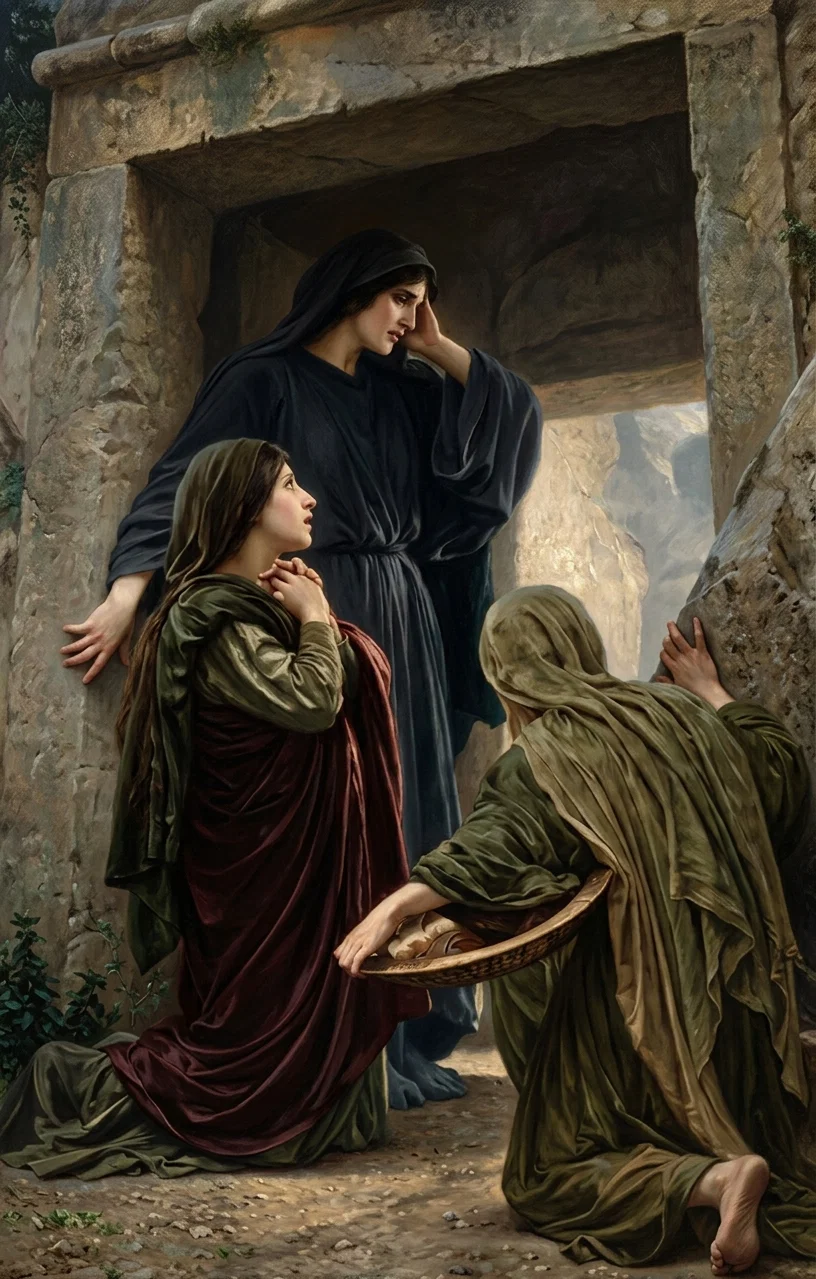
Gloom as dark as night marked the declining day that Jesus was laid in the silent sepulcher.
“HE IS NOT HERE; HE IS RISEN.”
But the gloom could not quench the love-light that still glowed in the hearts of devoted disciples. Loving hands lift the dear form from the cruel cross and lay it upon the cool earth, upon which He had bowed in such fearful agony a few hours before. Loving hands straighten the bent limbs, which had ever moved in the pathways of love and duty. The nail-pierced hands, which ministered so many blessings of life, are composed by His side. The dear eyes, no longer lighted by infinite love, are gently closed. The hair is smoothed back from the noble brow. Loving hands of devoted disciples, some of them unknown till this darkest hour, wrap the body in linen and spices, and bury Him in the new rock-hewn tomb of one who loved Him even to the death.
DESPERATION of death in the heart of priest and rulers, they led the mad mob which cried for His crucifixion before the Roman governor. They had exulted in triumph when the time-serving Pilate had yielded to their clamor and He was led away to be crucified. But the awful, supernatural events of the hours upon the cross had taken away their lately-begotten confidence. What meant the darkened heavens? What meant the rent veil of the temple? What was the meaning of the mighty earthquake and the opened tombs and the terror of the people? It was plain to the Roman centurion—this was the Son of God. It was plain to the dying thief—this was the Saviour of men, the Coming King. The rulers of the nation, who above all others ought to have known, were blinded by sin, so they shut their eyes to God’s tokens, and persistently go on in their rebellion. They are determined that He shall not rise from the dead, and so the greatest power of earth, Rome, is enlisted to circumvent and bury forever Life. That the soldiers may be secured, they even desecrate the Sabbath to obtain the military guard. Pilate granted their request; “so they went, and made the sepulcher sure, sealing the stone, the guard being with them, in the end of the Sabbath.” Matt. 27:66; 28:1. Satan and his host seemed triumphant.
GLORIOUS was the mission God gave His mighty angel that First-day morning. His glory overpowered the Roman cordon of soldiers, and hearts which had quailed not in fiercest battle fell before this shining messenger from the courts of glory. The Roman seal melted in the presence of his splendor; the stone was rolled away; God’s voice called to the Royal Sleeper; and Jesus the Son of the Infinite came forth a conqueror. With Him sprang to life the persons whose graves were opened at His crucifixion.
GLAD were the tidings God gave His angel to bear that morning to the almost disconsolate disciples. The women came first; they wished better to embalm the body for burial than they were enabled to do that afternoon before the Sabbath. They asked themselves the question, “Who shall roll us away the stone from the door of the tomb?” And looking up, they see that the great stone is rolled away. Then Mary Magdalene runs and tells Peter, “They have taken away the Lord out of the tomb, and we know not where they have laid Him.” The other women enter the tomb, and find two shining angels who ask the question, “Why seek ye the Living among the dead? Ye seek Jesus, the Nazarene, who hath been crucified; He is risen; He is not here; remember how He spake unto you when He was yet in Galilee, saying that the Son of Man must be delivered up into the hands of sinful men, and be crucified, and the third day rise again; behold, the place where they laid Him! But go, tell His disciples and Peter, He goeth before you into Galilee; there shall ye see Him as He said unto you.”
NOT gladder was the angels’ song at the birth of our Lord than was the message of the angels to the discouraged disciples,—“He is risen.” And this later message has also its important lessons for our admonition and instruction.
WHAT an echo of trouble-borrowing humanity is in the question: “Who shall roll us away the stone?” How many times God’s own children see the closed doors in imagination, and wonder who will open them as they go forward. Sometimes while they question they become discouraged, and they turn from the opportunity which calls them forward to greater light and blessing. Others, tho trusting, go forward, and find the great stone rolled away, the obstacle removed, the lions chained; yet when a new danger threatens, the same experience is often repeated. O, that we might learn that God lives; and that, if He calls, the raging sea or the swelling Jordan would open a path through the deep at His command.
THE living among the dead!” Nay, more; the Living One! Among the dead! What should life have to do with death? There is no fellowship between them. When Christ the Lord went down into the tomb, He went there a prisoner in our behalf, as He declared He would go; and when that time had expired, Righteousness Everlasting could not be held by great stones or iron bars, or even death itself, “because it was not possible that He should be holden of it.” Acts 2:24. Look into the dead sepulcher if we will, mark the place where the Lord lay, gather up the “holy shroud,” the napkin, and anything else; but He is not there, the tomb will know Him no more. The linen cloths, the spices, the napkin are no more than the dust on which He trod in His journey up the steeps of Calvary. Yet for centuries men plotted and planned and strove and starved and suffered and died to obtain the empty tomb. “Why seek ye the Living among the dead?”
GOD pitied the disciples in their blindness. He knew that they sought Jesus, that they longed for Him. He recognized that; but He told them and all others who might come after them that Jesus was not in the tomb. He died, but He is risen. He is the Living One, alive forevermore. His own voice comes back, “I am He that liveth, and was dead; and, behold, I am alive forevermore, amen; and have the keys of hell and of death.” Tell this to My disciples. Especially tell Peter, the discouraged one, disheartened by his own sins, that I live; that I remember him; that I love him; let him take courage and live.
CHRIST goes before you, beyond the city walls, beyond the environs of Jerusalem, beyond Judea, out into the Galilee of the nations. He ever goes before, leading onward in the great field of truth, in the great regions of lost and needy humanity. The Crusaders were not alone at fault in seeking Christ and power and holiness in the dead and empty forms of the past. Any Christian who seeks power by the empty shell of what once held life is repeating in his own experience the lesson taught by the discouraged disciples and the Crusaders. John Wesley or Paul Smith or Peter Cartwright may have had wonderful success in using certain methods, but the methods were incidental; the success was because of the divine life within the workers. He who uses the empty method, hoping by that to gain success, is seeking the Living One among the dead; and to them comes the voice of God’s messenger, “He is not here; He is risen; behold, He goeth before you.”
BRETHREN IN GOD, by whatever name you are called, Christ is risen! By the power of His righteousness He is risen and lives and reigns. By the power of righteousness and life He would come into our hearts, make us alive from the dead, take us from the dry, dead empty forms which sometime may have known His presence, and make us to sit in heavenly places with Him. Keep close to His word. He declares, “The words that I speak unto you, they are spirit, and they are life.” If He dwell in us, His life will take new form in method and plan and device far more fitting to our work and character, and filled with the constant daily experience of a risen Christ in us. “Christ is risen indeed!” “He goeth before you, . . . there shall ye see Him.”

RIGHTEOUSNESS IS LIFE.

SINCE the day that sin entered this world man has been in need of a Saviour. From that day to this, loyalty and disloyalty, obedience and disobedience, happiness and sorrow, tranquillity and turmoil, peace and war, self-denial and self-service, good and evil, life and death, have striven for mastery in the soul of man.
It is against the purpose of God that the sins of this present life and the miseries they bring should have permanent habitation in His realm. So all the purposes of God are aimed toward their eradication.
On the other hand, it is the unchanging purpose of God that obedience and righteousness should be perpetual in His universe; and so every agency of the Infinite is now employed to establish righteousness and perpetuate it in the lives of His loyal children.
The bewildered soul cries out: “Where is life? I will give all I have to attain unto it.” The Word of God answered the cry long ago. “In the way of righteousness is life; and in the pathway thereof there is no death.” Prov. 12: 28. In the very nature of the case it must be so; for our God, who is Himself righteousness, can not permit that death, the enemy of His creation, should triumph over one of His vital attributes.
The man who seeks to shape his character in harmony with God’s will; whose motto is, What God desires I will seek to do; who looks to Jesus Christ for that righteousness which Christ Himself has promised him—that man has placed himself in the very channel of life. God will not permit death to triumph over such a soul. He may die; but death can not hold him. It has lost its power; it has been deprived of its sting in his case; whereas, had he chosen the other course, it would have held him in its embrace forever.
Knowing it to be true that “in the way of righteousness is life,” man naturally inquires, “How may I find the way? How shall I know it when I find it? What is the standard of righteousness?” We are not left to our own devisings in finding and knowing that way; we are not required—nor permitted—to set up a standard of our own. The way of righteousness is through the precepts of the law of God in Christ Jesus. That law is God’s standard of righteousness. He says:
“Let my tongue sing of Thy Word; For all Thy commandments are righteousness.”
The life that is conformed to that law is a life of righteousness. The life of righteousness is a complete triumph over sin. It is only sin that is bringing death. So righteousness is a triumph over death.
Because the law of God is the standard of righteousness, and because “in the way of righteousness is life,” the psalmist exclaims, “O, how love I Thy law.” Christ, speaking of Himself, says: “I delight to do Thy will, O My God; yea, Thy law is within My heart.” Ps. 40: 8. That standard of righteousness being in His heart, and His life conforming wholly to that standard, made it possible for Jesus Christ to become the Saviour of men; made it possible for Him to bring life with Him to a race sold under sin. “The carnal mind,” says Inspiration, “is enmity against God; for it is not subject to the law of God, neither indeed can it be.” Rom. 8: 7.
There are the two opposites: The Son of God conforming to every requirement of the law, delighting to do it, and so putting Himself “in the way of righteousness and life;” and on the other hand, the man who opposes the law of God, reproaching that standard of righteousness, placing himself at enmity with God, refusing obedience to His law, and so necessarily calling down upon himself death instead of life.
Righteousness is life; the standard of that righteousness is the law of God. As long as righteousness exists, the standard by which it is measured must exist. To abolish the law would be to abolish the standard of righteousness and therefore abolish righteousness itself. That can not be as long as God is God; for that righteousness is the very character of God. “Thy righteousness,” says the psalmist, “is an everlasting righteousness, and thy law is truth.” “Thou art nigh, O Jehovah; and all Thy commandments are truth. Of old have I known from Thy testimonies, that Thou hast founded them forever.” “Every one of Thy righteous ordinances endureth forever.” Ps. 119: 142, 151, 152, 160. That law stands; that standard of righteousness will always be the standard; and they who conform thereto will always be in that path wherein is life.
The law of God embraces all righteousness. Christ kept it. It was the standard of His righteousness. All that there is for man to become Christ already embodies because of His perfect conformity to the law of God, the expression of His Father’s character. Now, says the apostle John, “God gave unto us eternal life, and this life is in His Son. He that hath the Son hath the life; he that hath not the Son of God hath not the life.” 1 John 5: 11, 12. In harmony with this is Christ’s own declaration: “I am the resurrection, and the life.” John 11: 25. Again: “In Him was life, and the life was the light of men.” John 1: 4. Inspiration, through Paul, declares that the promise of life is through Christ. See 2 Tim. 1: 1. “When Christ, who is our life, shall be manifested, then shall ye also with Him be manifested in glory.” Col. 3: 4. Christ became all that to us because of His own righteous character, His unswerving conformity to the standard of righteousness, Hisobedience to the expressed will of God. But He can not do that for us unless we also have a heart to do God’s will, a spirit of loyalty to the standard of righteousness. We will never be able to save ourselves by our own righteous deeds. We will always need the robe of Christ’s righteousness to cover our failures. But that gracious covering will never be thrown over us while there remains in us a spirit of antagonism to the law of God which it was Christ’s great purpose to teach us to reverence. Said Jesus: “If thou wouldst enter into life, keep the commandments.” Matt. 19: 17. “He that is steadfast in righteousness shall attain unto life.” Prov. 11: 19.
Righteousness is the badge of implicit loyalty to the everlasting kingdom of righteousness. “Righteousness delivereth from death;” Righteousness is life. Jesus Christ was and is righteous; and through His righteousness and our loyalty to Him and dependence upon Him, we may attain unto life eternal.
S.

NECESSITY OF THE RESURRECTION.

The penalty of death that came upon Adam because of disobedience is defined in plain terms,—“Dust thou art, and unto dust shalt thou return.” There is no reserve here, the personal pronoun, “thou,” stands for the whole personality. That the entire race is affected is shown in the expressions, “In Adam all die,” and “Death passed upon all men, for that all have sinned.”
The only remedy for this condition lies in the direct interposition of the Creator. So the Gospel message is, “God so loved the world, that He gave His only-begotten Son, that whosoever believeth in Him should not perish, but have everlasting life.” It is again stated in these words: “The wages of sin is death; but the gift of God is eternal life through Jesus Christ our Lord.”
Eternal life being an absolute gift, it is not based on anything inherent in the one to whom it is given. The virtue is all in the Giver, and in the means employed. So, “if any man be in Christ, he is a new creature,” or new creation. That is true spiritually, even in this life,—“old things are passed away; behold, all things are become new.”
But how do we finally come into the enjoyment of eternal life through Christ? To answer this question we must remember that all the blessings we have and are to have in Christ are dependent, not alone upon His humble life and sacrificial death, but upon His resurrection. Could the adversary have held Him in the grave, the plan of salvation must have failed. But for the resurrection, Christ never could have given to the church that blessed assurance, “I am He that liveth, and was dead; and, behold, I am alive forevermore, Amen; and have the keys of hell and of death.” Rev. 1:18. He could not hold the keys of hades (the grave) had He not come forth from its silent confines Himself. By this was demonstrated for all time His ability to fulfil His words to Peter when that disciple acknowledged Him as “the Christ, the Son of the living God,” of which great truth He said, “Upon this rock I will build My church, and the gates of hell [hades, the grave] shall not prevail against it.”
That the plan of salvation would have fallen short without the resurrection of Christ is plainly set forth in the fifteenth chapter of 1 Corinthians. This exposition was called forth because some brethren had imbibed the false notion that “there is no resurrection” (verse 12), and Paul reasons on this wise: “If there be no resurrection of the dead, then is Christ not risen; and if Christ be not risen, then is our preaching vain, and your faith is also vain. . . . For if the dead rise not, then is not Christ raised; and if Christ be not raised, your faith is vain; ye are yet in your sins. Then they also which are fallen asleep in Christ are perished.” Verses 13–18.
Therefore, altho God had given His Son to die that believers in Him “should not perish,” Christ in the tomb was powerless to save, and those believers who slept in the grave were perished, without His resurrection. There could be no virtue in being baptized in His name if He were dead. “What shall they do which are baptized for the dead [Christ], if the dead rise not at all?” Verse 29. So the resurrection of Christ, and consequently the resurrection of believers in Him, was and is essential to salvation.
God could not save believers in Christ without the resurrection of Jesus, because salvation must be through faith in His name, and if He be not raised from the dead, “your faith is vain.” So God raised Him from the tomb and gave Him the keys. For what purpose?—That He might open the gates for others. “For as the Father raiseth the dead and quickeneth them, even so the Son also quickeneth whom He will. For neither doth the Father judge any man, but He hath given all judgment unto the Son.” John 5:21, R. V.
In further emphasis of the doctrine of no resurrection, no salvation, Paul says: “If after the manner of men, I have fought with beasts at Ephesus, what advantageeth it me, if the dead rise not? let us eat and drink; for to-morrow we die.” The apostle also shows that immortality is a condition to be “put on,” and not as already inherent. “Behold, I show you a mystery: We shall not all sleep, but we shall all be changed, in a moment, in the twinkling of an eye, at the last trump; for the trumpet shall sound, and the dead shall be raised incorruptible, and we shall be changed. For this corruptible must put on incorruption, and this mortal must put on immortality.” It has not natural immortality; that can only be attained by having it “put on” at the resurrection, or recreation. If “this mortal” had immortality, it would not be “mortal.”
“So when this corruptible shall have put on incorruption, and this mortal shall have put on immortality, then shall be brought to pass the saying that is written, Death is swallowed up in victory.” Death and the grave are victorious until overcome by means of the resurrection and the putting on of immortality.
G.

Question Corner

1806.—The Bride of Christ.

What is the bride of Christ? Where do you get the name of Adventist?
1. The bride of Christ specifically and primarily, as expressly stated in His Word, is the Holy City, the New Jerusalem, capital of the everlasting kingdom and standing for that kingdom. See Rev. 21: 2, 9, 10; Gal. 4: 26; Isa. 54: 13; 62: 1-5. 2. The two great neglected truths expressly taught in the Word of God and most strongly emphasized by Christ and the apostles, are the second coming of the Lord Jesus Christ, and the seventh-day Sabbath. Around the former group all the great truths of redemption and salvation through Jesus, and around the latter, obligation to God's law and His great power in creation and redemption; and the name expressive of these two things has been used by a class of God's children to bring before the world prominently these great truths and what they mean.
Many of the terms used in the Bible to mean the people of God, as Israel, Disciples, Christians, etc., have been taken by various rival sects and bodies. They really mean nothing. Let the Lord call us by what name He will. The name Seventh-day Adventist simply carries on its face, in a comprehensive way, the last great threefold Gospel message of the Bible. Rev. 14: 6-14.
Our correspondent suggests the name “Saints,” but nowhere do we find God's people calling themselves saints. Nowhere do we find the apostles calling themselves saints or holy ones; but we do find them calling themselves “servants” of the Lord; and God calls His people saints. The distinction is very clear. The thing which God demands is character. It is character which is written in heaven; it is the names of character which are written in the Lamb's Book of Life, and God calls people in this world to those characters. If they refuse, some one takes their place; if they go on, the names of the characters will sometime be given as the new names. It is all-important in the last great day to have one's name written in heaven. It is not so important to have the name recorded in some church book on earth. Nevertheless it is God's plan that His children shall associate themselves together here in church relationship in order to the formation of right character.

1807.—Books Omitted from the Bible.

Why do our Bibles contain seven books less than the old Bibles? O. M.
Our querist evidently refers to the Apocrypha which consists not of seven books, but of fourteen. These fourteen books are called the Apocrypha, as they are not considered canonical by Protestants, altho the Catholic Church admits them as canonical. By this we mean that they are not considered by Protestants to be inspired books; they are not in harmony with the inspired books of the Scriptures. They were written by different men as history or books of instruction between the time of Malachi and the time of Christ. They are not written in the Hebrew as the rest of the Old Testament is, but in Greek. Some of them, like Maccabees, give us good instruction in history. Others point out quite clearly what the theological views of the Jews were. 2 Esdras by some is considered to be an inspired book. The Apocrypha can be obtained bound in a volume by itself of any of the great Bible houses, and there are many Bibles published at the present time which contain these books.

1808.—“Sheol,” “Hades,” “Gehenna.”

Are the three words “Hades,” “Gehenna,” and “Sheol” of one meaning? and what do they signify or represent as to the hereafter?
Sheol in Hebrew is the same as Hades in Greek (compare Ps. 16: 10, with Acts 2: 27, 31); they represent the abode or condition of the dead, both righteous and wicked. Hades never means the place of future punishment. It is rendered in our common English version “hell” and “grave.” Gehenna, from the valley of Hinnon (2 Kings 23: 10), was a place south of Jerusalem, once celebrated for the worship of Moloch, and afterward polluted with every species of filth, carcasses of dead animals, and bodies of malefactors, upon which worms preyed, and to consume which constant fires were kept burning. The Saviour used the term to mean the absolute destruction of the incorrigibly wicked. Matt. 10: 28; Mark 9: 43, etc.

1809.—The Dark Ages.

At what period of time were the Dark Ages, so called, and when did that period end?
Say from the sixth to the sixteenth centuries, when superstition held sway.

TRANSLATION FAITH.

Noah, Abraham, and Moses, each did a specific work for God in a state of perfect faith. Noah preached righteousness and built the ark; Abraham offered up Isaac his only (true) son; Moses builded the first tabernacle. As to these things, they were wrought by a perfect faith in God. A time of preparation preceded until, growing from faith to faith by the revelation of the Gospel, these ripened a faith of which these works testified perfection.
Then came Christ in whom we see not one work, but a life of faith in preparation, and His ministry. The quality of Christ's faith was always perfect, yet it increased in quantity by the increase of growth in the knowledge of God. See Luke 2:40, 52. Here is most clearly seen the difference between a perfecting faith (in quality), by which some good work follows, and the intelligent, unwavering, perfect, faith of Jesus, by which God's will in the highest was stedfastly made manifest in His life.
The difference marks the faith of Jesus from every other kind of faith, and is the great truth of the third angel's or last message to the world. Rev. 14:12. It is the great truth of the everlasting Gospel of the one hundred and forty-four thousand who will be found waiting in the fulness of the power of the Gospel because they have the faith of Jesus at the coming of Christ.
For instruction, and to stir up our minds, let us the more read and consider, as we see the day approaching, with its record of faith, Hebrews 11: the cloud of witnesses of Heb. 12:1; and, best of all, look “unto Jesus the Author and Finisher of our faith” (Heb. 12:2, 3). For now (verses 22-26), having come to Mount Zion (the time of Mount Zion), the time of promise for God's children to have the faith of Jesus, is at hand.
H. C. Balsbaugh.

GLORIFIED TOGETHER WITH CHRIST.

1. Jesus Put on Immortality.—Jesus laid down His life for the cause He came to this world to represent. It was by this sacrifice of Himself that the ultimate success of the plan of salvation was assured. By His triumphant death He rendered sure the downfall of Satan’s dominion, and the final redemption of the earth from the thraldom of sin and the curse.
On the third day from the crucifixion of Christ, His exaltation and glorification began. On the morning of the first day of the week a mighty angel descended from heaven in great power; the earth trembled, and was illuminated by His presence. He rolled back the stone from the door of the sepulcher, and the sleeping Son of God awoke at the call of His Father. It was impossible that death should longer hold in its cold embrace the spotless Lamb of God.
He had triumphed over sin and Satan when He died, and now in His resurrection He triumphs over death and the grave. Said He: “I am He that liveth, and was dead; and, behold, I am alive forevermore, Amen; and have the keys of hell and of death.” Rev. 1:18.
With this victory over death, the Son of God began a career of triumph and exaltation, the blazing heights of which no mortal can conceive. He was raised to an immortal life; death shall have no more dominion over Him.
Now we purpose to show that the Son of God, in all the distinctive uplifts of His exaltation, is still the great Exemplar of His children, the sons of God; that every persevering disciple of Jesus will continue to follow on in the way his Redeemer has trod, not simply in the lowly pathway of earth, but on and on, through the tomb and death, and still on, until he shall be with Him where He is.
The gate of hell, or the power of the grave, can not prevail against the church of Christ. Jesus Himself will descend, with the voice of the Archangel and the trump of God, and the dead in Christ will rise. They had before triumphed over sin and Satan, and now they get the victory over their last enemy, death. They rise to die no more. Like their great Exemplar, they are now alive forevermore. This, to them, is the beginning of a succession of triumphs and exaltations, the blazing glory of which is not within the sphere of mortal conception.
2. Angels Came for Him.—We have seenthat the angels were present at the resurrection of Christ. And now when we come to His departure from earth, His ascension to heaven from the Mount of Olives, we find that a great cloud of angels received Him, and shut Him from the view of the gazing disciples. Two of the number tarried behind for a moment to instruct and comfort the believers with respect to their ascending Lord. These angels told them that this same Jesus would Himself return, and that His returning would be after the same manner as His departure which they had just witnessed.
These instructive and comforting words spoken, the angels left them, presumably to join the grand and joyful angelic escort that accompanied Jesus on His way upward to His Father’s throne, His former home of love. Here was a scene of surpassing glory, never to be forgotten by the humble beholders.
Now there will a time come when the sons of God shall be, not witnesses simply, but participants in an event like that of Mount Olivet. They themselves will be drawn heavenward by a power and attraction far stronger than any power or attraction of earth. Jesus Himself, in all His glory and majesty, will be the divine magnet in the heavens above, that will draw, literally and personally, all the saints unto himself.
They have just been raised from the dead, and in glowing language are singing their first triumphant songs of victory over death and the grave. Hear their glad anthems of experience and praise. “Death is swallowed up in victory. O death, where is thy sting? O grave, where is thy victory? The sting of death is sin, and the strength of sin is the law. But thanks be to God, which giveth us the victory through our Lord Jesus Christ.” 1 Cor. 15:54-56.
And all the holy angels participate in this scene. They have a part to act under the direction of their great Commander, who is seated upon the dazzling throne of His glory in the heavens above. He shall send forth His angels with a great sound of a trumpet to gather together His elect from the four winds, from one end of heaven to the other. These angels have many times before ministered to the same souls when they were making their dangerous pilgrimage through an enemy’s land. Hidden from view, they had guided them, delivered them, comforted them, ministered unto them; and hence were lovingly acquainted with all of them.
And now that these precious souls are more than conquerors, and ready to join their conquering Head, how joyfully must these holy angels obey the command of the Lord of the harvest, to go, as the reapers, and gather unto Him the precious sheaves of the ripe and golden grain. This time the sons of God are not to see their Lord depart from them into heaven, but to join Him in glory, and so to be ever with the Lord. It is the second step in their triumphal march to the exaltation long promised. In this they are still following in the pathway of the Son of God. But it is not the humble, thorny pathway, now; that is ended, and their immortal feet have entered upon the bright and shining course that will soon bring them to where Jesus has prepared a place for them, and where they may behold, and share, the glory that the Father has given His well-beloved Son.
3. Personally Ascended.—The body of Christ was not left in the grave. His flesh was not allowed to see corruption. It was the real personal Jesus that went into the sepulcher; and the same Jesus had a resurrection on the third day, and, forty days later, bodily and personally ascended to heaven from the Mount of Olives, in the sight of His disciples. This is no illusion, but a veritable reality. Whether we can comprehend it or not, it is a truth we should accept, on the authority of God’s Word.
It ought to be an encouraging thought to the believer in Christ, that he has a personal Saviour on the throne of grace. One who possesses a nature like His own, in that it is human as well as divine, and who can still be touched with the feeling of his infirmities. We thank God for a personal Saviour, with an experience and a nature exactly fitting to save unto the uttermost all that come unto God by Him; who has gone into heaven, there to appear in the highest court of justice in the universe in man’s behalf.
And in His personal ascension to heaven, He is again but treading the path in which His children will follow at a later day. Said He, “Whither I go, thou canst not follow Me now; but thou shalt follow Me afterwards.” John 13:36. The saints will be raised to immortality. They will have actual spiritual bodies in the resurrection, and will personally follow Christ to the mansions He has prepared for them.
Thus will all the saints go to heaven. They will have had their former vile bodies changed, and fashioned like unto Christ’s glorious body; and they will follow Christ. They will be led on their heavenly way by Jesus Himself, and an innumerable company of angels will attend them to the gates of the Paradise of God. Thus the glorified Son of God will bring many sons unto glory.
H. A. ST. JOHN.
Continue reading: OUR GREAT TREASURE-HOUSE