Your ShelfYour Projects

Signs of the Times, Vol. 37, No. 8.

Christianity and Earthly Power

Signs of the Times

Feb 22, 1910

Pacific Press Publishing Association · Mountain View, California · Feb 22, 1910

Christianity and Earthly Power

See 1 Samuel, Chapters 4 and 5
The ark of God was never taken till it was surrounded by the arms of earthly defenders. In captivity, its sanctity was sufficient to vindicate it from insult, and to lay the hostile fiend prostrate on the threshold of his own temple. The real security of Christianity is to be found in its benevolent morality, in its exquisite adaptation to the human heart, in the facility with which its scheme accommodates itself to the capacity of every human intellect, in the consolation which it bears to the house of mourning, in the light with which it brightens the great mystery of the grave. To such a system it can bring no addition of dignity or of strength, that it is part and parcel of the common law.
It is not now for the first time left to rely on the force of its own evidences and the attractions of its own beauty. Its sublime theology confounded the Grecian schools in the fair conflict of reason with reason. The bravest and wisest of the Cæsars found their arms and their policy unavailing, when opposed to the weapons that were not carnal and the kingdom that was not of this world. The victory which Porphyry and Diocletian failed to gain is not, to all appearance, reserved for any of those who have, in this age, directed their attacks against the last restraint of the powerful and the last hope of the wretched.
The whole history of Christianity shows that she is in far greater danger of being corrupted by the alliance of power, than of being crushed by its opposition. Those who thrust temporal sovereignty upon her, treat her as their prototypes treated her Author. They bow the knee, and spit upon her; they cry “Hail!” and smite her on the cheek; they put a scepter in her hand, but it is a fragile reed; they crown her, but it is with thorns; they cover with purple the wounds which their own hands have inflicted on her, and inscribe magnificent titles over the cross on which they have fixed her to perish in ignominy and pain.—From Macaulay’s Essay on “Southey’s Colloquies.”

Please Be Definite.

For instance, a question comes to us asking us to be so kind as to explain the meaning of the latter part of "the 28th verse of Hebrews." But the question is not definite enough so that we may know what chapter is referred to. There are five chapters in Hebrews which have 28 verses or more: chapter 7, chapter 9, chapter 10, chapter 11, chapter 12. If our correspondent will tell us what chapter is referred to we will be glad to answer the question if we can.

3045.— Regarding Two Laws

Is it true that Seventh-day Adventists admit the Sabbath to be a ceremonial law?
C.
Seventh-day Adventists hold that the Bible teaches very clearly, and this is acknowledged by the best Bible students, that there are several kinds of laws contained in the Old Testament.
1. The great moral law of God, the Ten Commandments, which are called "a law" in Exodus 24:12, and concerning which it is said God "added no more." Deut. 5:22. It stands out a law by itself, in the very bosom of which is the Sabbath commandment, flanked on either side by great moral precepts over which there can be no question.
2. There were ceremonial laws regulating sacrifices, offerings, and the worship of God.
3. There were health laws regulating the sanitary conditions of the camp of Israel, especially while they were passing through the wilderness.
4. There were judicial laws, what we would call civil laws, exercised there under a theocracy, regarding the rights of property and life, etc.; the same as our civil laws to-day. Those latter laws were combined more or less, because the Jews were themselves a great family of God with God for their Ruler; but he is a poor and unintelligent reader indeed who can not see all of these things very clearly as the Old Testament is read.
5. The Sabbath of the Lord our God stands right in the very heart of the moral law. While there has been more or less ceremonial connected with it in worship, the ceremonies are regarding the forms of worship and not regarding the keeping of the day. On the other hand there were certain yearly sabbaths, or rest days, in connection with the great feasts and fasts of the Jews. These are expressly discriminated in Lev. 23:38, where they are mentioned "besides the Sabbaths of the Lord."
6. As to whether a ceremony is binding or not depends upon who commands it. Our Lord gave one ceremony regarding feet-washing, as recorded in John 13; and He expressly declares, "I have given you an example, that ye should do as I have done to you." He also enjoins, "If I then, your Lord and Master, have washed your feet; ye also ought to wash one another's feet." He has given us the ordinance, or ceremony, of the Lord's Supper, and enjoins its observance till He comes. Further than this, He has given us the ordinance of baptism, which implies a ceremony; and the command is, "Repent, and be baptized every one of you." He who refuses purposely to follow these commands and injunctions and ceremonies of divine appointment, shows that his heart is not in harmony with God. Those ceremonies can not save him, but a heart that is out of harmony with God can not be saved.
7. When the Lord Jesus came into this world, He especially declared that not one jot or tittle would pass from the law. He can neither change nor destroy it. He did come, however, in order that men might be cleansed from sin, and have hearts that would delight in God's law; "for this is the love of God, that we keep His commandments." 1 John 5:3. The law led to Him also, for "Christ is the end of the law for righteousness to every one that believeth." Rom. 10:4. That does not mean that the law there came to an end, for the apostle expressly tells us all through the book of Romans that it condemns the transgressor. "End" is there used in the sense of object, purpose, intent. Christ is the intent of the law; the object of the law; purpose of the law. It shuts us up into sin, and shows that the only way out is by Jesus Christ, who is Himself the law perfected; and man can be redeemed from sin, or forgiven his sins, only by the righteousness of Jesus Christ. But the righteousness of Jesus Christ was wrought out in the observation of all the commandments of God. The sabbath days of Col. 2:16, 17 are of another character. They are the ceremonial yearly sabbaths which pointed forward to the work of our Lord. They are shadows of things to come; but even as to these, the injunction is not that we should not keep them, but "let no man judge" us concerning them.
8. There is an utterly wrong conception obtained by many that God changed His character when Christ came; that God's government was then changed, and that our Lord Jesus was a prime factor in overturning the Father's government. Just think of it! that He who had declared Himself, "I am Jehovah, I change not," felt that it was necessary to change when Christ died upon the cross, and to give the lie to what had again and again been said. The apostle James, writing down this side of the crucifixion, declares that with the Father "is no variableness, neither shadow of turning;" and yet in the face of that, people would have us believe that the Lord did change a Sabbath which He had honored for four thousand years, and would substitute for it a day concerning which there is no commandment given. The only change that took place at the time of the death of our Lord, was that type there met antitype. Not a single moral principle nor moral commandment in God's law changed. Every one of them was confirmed by the death of Christ. Sacrifices ended there by limitation; necessarily ended, because the shadow reached the substance; but faith establishes God's law in the heart of every one who receives Him. Rom. 3:31. There is no category of all human duties in the New Testament; no place anywhere which gives us nine commandments and leaves the tenth one out; but everywhere the same holy law is enjoined, and that law includes the fourth commandment as well as the others.
9. The man who needs Christ is the man who is "under law," which means under condemnation of the law. The man who is in Christ Jesus is not "under the law," that is, not condemned by the law; but is under greater obligations to keep the law, because Christ has forgiven him the sins which the law condemns. The law to that man becomes a witness that he is right before God. Rom. 3:20-22.
10. God gave a sacred name to the seventh day,—the Sabbath. It is known by that name all through the New Testament. It is known by no other. It was observed by our Lord, our great Example, and by apostle and disciple from that time on. See all through the book of the Acts. It may be remarked that Pentecost fell in all probability upon the seventh day of the week, as good scholars have affirmed.

Warning of Noah

3047.— Warning of Noah.— G. C.— The Bible proof that Noah was warned for one hundred years or more is found in Genesis 6. We know of no other. It is there stated by the Lord, "My Spirit shall not strive with man forever, for that he also is flesh: yet shall his days be a hundred and twenty years." Verse 3, American Standard Version. Presumably the Lord revealed that to Noah, gave him the message that he was to give to that wicked and gainsaying generation, so that he was warned not simply for a hundred years, but a hundred and twenty years, and he passed the warning on to others.

3046.— Selling to Strangers. Deut. 14: 21.—

3046.— Selling to Strangers. Deut. 14: 21.—
N. J. E.— Certainly the verse gave permission to the Lord's children anciently to sell to strangers that which it was not right for them to eat of themselves. There was to be no deception, however, in this. Among the nations which surrounded Israel, there were those who would eat meat in the blood, and that which died of itself. It was common for them so to do, but God forbade Israel to do it. When they sold to nations around them, it was selling only that which was perfectly proper in the sight of the nations. We recall when a boy the death of an ox by accident; three days after which an old countryman wished to purchase that ox for food, when the carcass was becoming loathsome and bloated. The man to whom the beast belonged, however, refused to sell it for any such purpose as that. The best way for the Christian to do is even to teach the uninstructed around him that such a thing as that is wrong.

3048.— Finished His Work. Gen. 2: 2.

There are two versions which render Gen. 2:2, "For on the sixth day God finished His work;" namely, the Samaritan and the Septuagint. Dr. Adam Clarke refers to these; Boothroyd also refers to them, and translates, "For on the sixth day God finished His work which He had purposed to do, and on the seventh day God rested from doing any of His works." And yet we see no reason why the common rendering is not perfectly proper. A part of God's work was the Sabbath. He was giving us a full, rounded-out week, with its days of labor as well as its day of rest. Consequently a part of the work concerning that first week must be the making of the Sabbath; and to make that, God rested upon it, blessed it, and sanctified it. If the rendering of the Samaritan and Septuagint, not the Syriac, be correct, the work would have reference simply and solely to the material doing of things.

3049.— Question of Tithing

If a person has to buy machinery to harvest his crops, would it be right to take the expense of the machinery out of the crop, and then pay tithes on the remainder?
Hardly. He has his machinery after the crop is harvested. That is so much investment of his own. If he has to hire his crop harvested, that is another thing; but if he buys machinery in order to harvest it himself, he has invested so much more in capital, and surely before a man makes new investments he ought to tithe the money which he invests. After the crop is secured, he has so much more capital than he had in the beginning, in the machinery which he has purchased.

Water as a Biblical Symbol

3050.— Eze. 47:17.— Mrs. J. R. J.— The last chapters of Ezekiel, 40 to 48, describe in a good deal of detail the sanctuary, the city, and the land which would have been given to Israel in Ezekiel's day if Israel had only yielded to God's conditions. The Lord would have given them all that is promised in those chapters. All the various figures and promises there, would have been literally fulfilled. But water used as a symbol represents sometimes the Word of God, "the washing of water by the Word." Eph. 5:26. Sometimes it is symbolical of the Spirit and life of God, as in Isa. 44:3.

Fulfilled When?

3051.— Fulfilled When? Rev. 13:15-17.— G. W. Y.— The most of the things recorded in the passage cited above will be fulfilled before probation ends, else why the warning in the 14th chapter? The great wonders will be wrought in order to deceive men who are not deceived, in order that the image may be made, which will be followed by persecution. Of course the very climax of it all will come after probation has closed, in the deception of those who have turned away from God.

Baptism

3052.—"Baptism."— G. C.— The word "Baptism" means plunging, whelming, immersion, dipping. There is no question about that. All the standard lexicons agree. Literally baptism is always immersion. People have come to use it for sprinkling and pouring, but the word does not mean that.

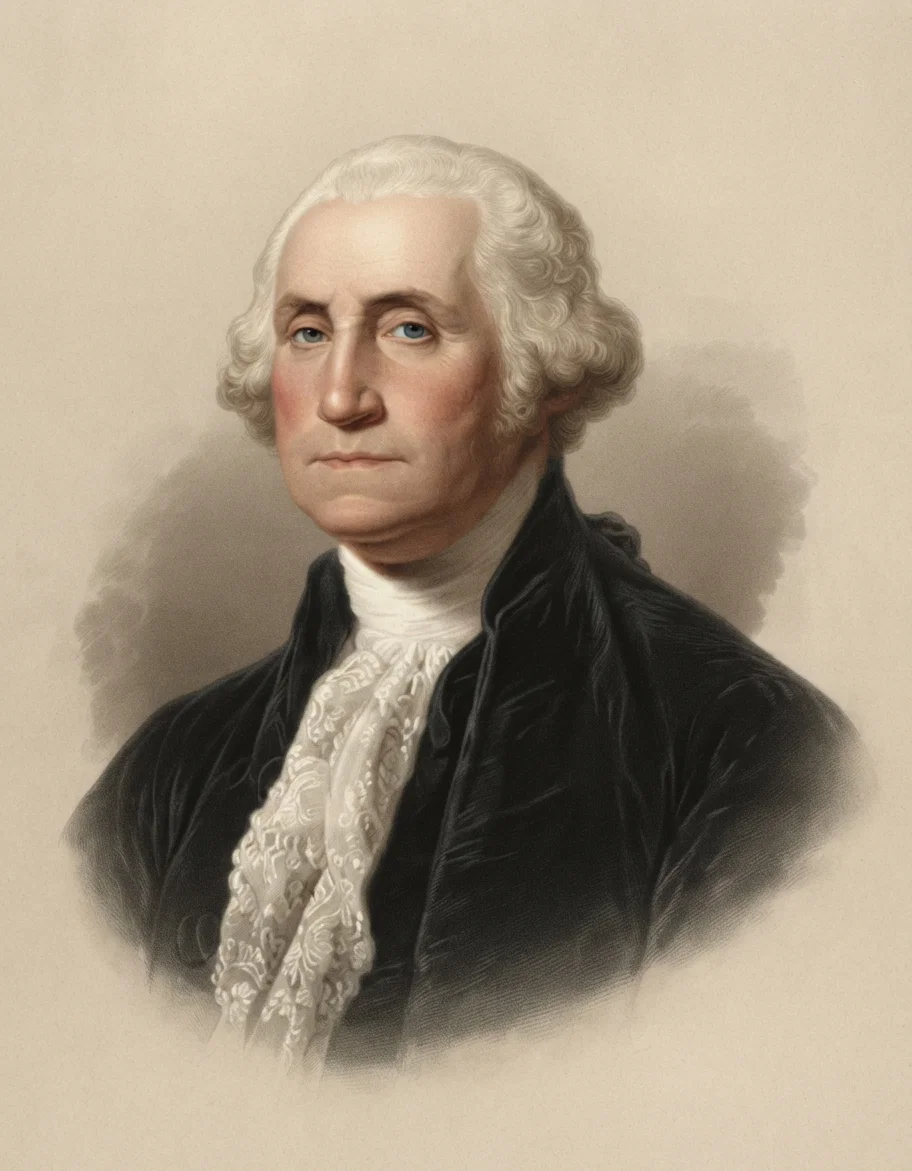
Washington and Lincoln

Lovers of Liberty
JAMES RUSSELL LOWELL well said, in his stirring poem "The Present Crisis": > "Where to-day the martyr stands, > On the morrow crouches Judas with the silver in his hands. > Far in front the cross stands ready, while the crackling fagots burn, > While the hooting mob of yesterday in silent awe return > To glean up the scattered ashes into History's golden urn." But a Greater, eighteen centuries ago, said in words yet living:
Washington, "the Father of His Country"
"Ye build the sepulchers of the prophets, and garnish the tombs of the righteous, and say, If we had been in the days of our fathers, we would not have been partakers with them in the blood of the prophets." Matt. 23: 29, 30.
Yet the very men who so spoke, crucified the very Author of Liberty. Will this generation, this people, rehearse in their history the oft-repeated story of the ages?
Last February, 1909, was the centennial year and month of the birth of Lincoln. The same short month brings the yearly memorial of the great Washington. The greatness of both these men is extolled, monuments and memorials to their fame are erected, and their sepulchers are garnished; yet, alas, the principles which made them, which they lived, which one fought and the other died to maintain, are neglected or forgotten.
What are those principles? — Freedom — civil and religious freedom, barred neither by tyrant's decree nor papal bull; neither by autocratic rule in politics nor by decree of councils in religion.
George Washington's principles of religious liberty are embodied in the Declaration of Independence and in the Constitution of the United States, both of which documents felt his molding hand. The former declares:
"We hold these truths to be self-evident: that ALL MEN ARE CREATED EQUAL; that they are endowed by their Creator with certain UNALIENABLE RIGHTS; that among these are LIFE, LIBERTY, AND THE PURSUIT OF HAPPINESS; that to SECURE THESE RIGHTS governments are instituted among men, deriving their just powers from the CONSENT OF THE GOVERNED."
These are wonderful truths. For their amplification see article in another column, entitled "The Basic Principles of Americanism."
The Constitution, Amendment I, reads thus:
"CONGRESS SHALL MAKE NO LAW RESPECTING AN ESTABLISHMENT OF RELIGION, OR PROHIBITING THE FREE EXERCISE THEREOF, or abridging the freedom of speech or of the press, or the right of the people peaceably to assemble, and to petition the Government for a redress of grievances."
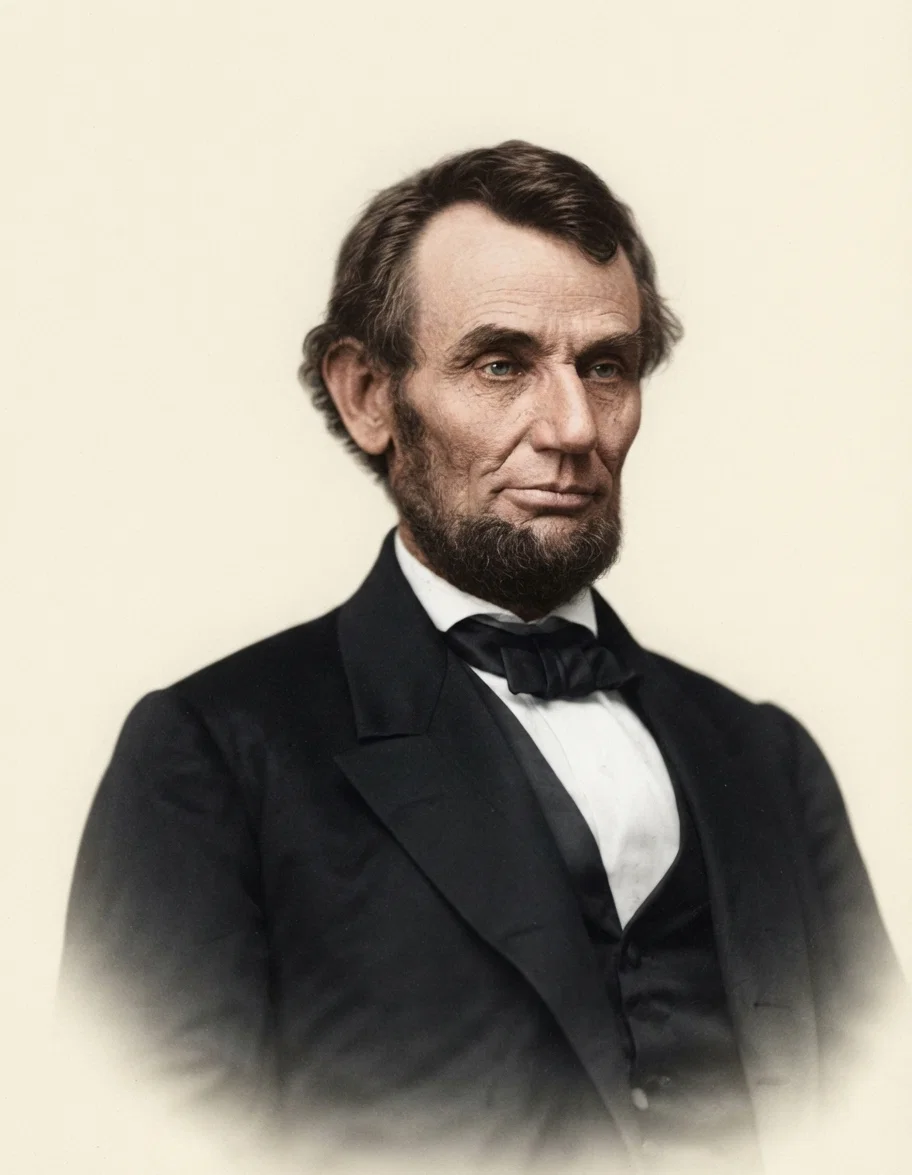
Lincoln, "the Martyr to Liberty"
Fearing that fullest liberty was not distinctly enough guaranteed in the Constitution, the Ephrata Community, a seventh-day Christian body, near Philadelphia, on whose little press was first printed the Declaration of Independence, wrote to Washington expressing their fears, to whom Washington replied:
"If I had the least idea of any difficulty resulting from the Constitution adopted by the Convention of which I had the honor to be President when it was formed, so as to endanger THE RIGHTS OF ANY RELIGIOUS DENOMINATION, then I never should have attached my name to that instrument. If I had any idea that the general Government was so administered THAT LIBERTY OF CONSCIENCE WAS ENDANGERED, I pray you be assured that no man would be more willing than myself to revise and alter that part of it so as to AVOID ALL RELIGIOUS PERSECUTION. You can without any doubt rememberthat I have often expressed as my opinion that EVERY MAN WHO CONDUCTS HIMSELF AS A GOOD CITIZEN IS ACCOUNTABLE ALONE TO GOD FOR HIS RELIGIOUS FAITH, AND SHOULD BE PROTECTED IN WORSHIPING GOD ACCORDING TO THE DICTATES OF HIS CONSCIENCE."
Washington fought for religious liberty as well as civil.
To these principles Washington was irrevocably committed. Out of these principles grew the mighty Lincoln and his love of freedom, expressed in a thousand ways. We make two quotations from among many. In Lincoln's speech made at Trenton, N. J., Feb. 21, 1861, with the memory of Washington exhaling its fragrance about him, he said:
"I am exceedingly anxious that that thing [liberty],—that something even more than national independence, that something that held out A GREAT PROMISE TO ALL THE PEOPLE OF THE WORLD TO ALL TIME TO COME,—I am exceedingly anxious that this Union, the Constitution, and THE LIBERTIES OF THE PEOPLE shall be perpetuated in accordance with the ORIGINAL IDEA for which that struggle [the Revolution] was made; and I shall be most happy indeed if I shall be a humble instrument in the hands of the Almighty and of this His almost chosen people for perpetuating the object of that great struggle."
In a speech in Independence Hall, Philadelphia, where the great document was signed, Lincoln said:
"I have never had a feeling politically that did not spring from the SENTIMENTS EMBODIED IN THE DECLARATION OF INDEPENDENCE. . . . It was not the mere matter of separation of the colonies from the mother land, but that SENTIMENT IN THE DECLARATION OF INDEPENDENCE WHICH GAVE LIBERTY not alone to the people of this country, but hope to all the world for all future time. It was that which gave promise that in due time the weights would be lifted from the shoulders of all men, and THAT ALL SHOULD HAVE AN EQUAL CHANCE. This is the sentiment embodied in the Declaration of Independence. . . . If this country can not be saved without giving up that principle, I was about to say I would rather be assassinated on this spot than surrender it."
But in the light of these principles, there is no room for Sunday laws, or any other law which will discriminate between classes on account of religious belief or practise when this belief or practise does not infringe or trench upon the equal civil rights of others.
The other day the United States Senate, through sophistry and cant, passed to the third reading a Sunday law, a religious law, a law which discriminates between men civilly because of religious belief. If passed into a statute law, there are a multitude of dogmatists who long to enforce by law their own views, who will call it holy, sacred, vital, and its opposers traitors. Such laws recall the sentiment expressed by that great American, Lowell:
"Law is holy: ay, but what law? Is there nothing more divine Than the patched-up broils of Congress, venal, full of meat and wine? Is there, say you, nothing higher? Naught, God save us! that transcends Laws of cotton texture, wove by vulgar men for vulgar ends?" "Think you Truth a farthing rushlight, to be pinched out when you will With your deft official fingers, and your politicians' skill? Is your God a wooden fetish, to be hidden out of sight, That his block eyes may not see you do the thing that is not right?" "But the Destinies think not so; to their judgment-chamber lone Comes no noise of popular clamor, there Fame's trumpet is not blown; Your majorities they reck not; that you grant, but then you say That you differ with them somewhat,—which is stronger, you or they?" "Patient are they as the insects that build islands in the deep; They hurl not the bolted thunder, but their silent way they keep; Where they have been that we know; where empires towered that were not just, Lo! the skulking wild fox scratches in a little heap of dust."
Religious legislation, or civil law to enforce religious dogma, held by many or few, means ruin to the churches or church which demands it, and ruin to the civil power which yields to the demand.

The Meaning of the Sabbath Question

Four Vital Things Involved

THAT there is agitation over the Sabbath question, world-wide, insistent, needs not to be said; we all know it. It comes to us from zealous religionists, in the clamor for "sabbath laws," or "Sunday laws;" in religious discussions, from platform and press; and even the lonely soul in the midst of solitude or surrounded by paganism has the great question brought home to his heart by the Holy Spirit and the Bible. Priest, preacher, publisher, legislator, judge, may endeavor to keep this question in the background, but it continually thrusts itself upon the attention of all with ever increasing persistency. For instance, there were thirty bills presented before the legislature of New York at its last session, having to do with Sunday. The question can not be set aside. Religiously, politically, socially, Scripturally, it is constantly pressed to the fore.
It is an important question, for it involves in its comprehensiveness, among other things, the four vitally important matters following:
  1. The Veracity, not to say Infallibility, of Holy Scripture;
  2. The Authority of God's Word as against Tradition and Apostasy;
  3. The Existence of Protestantism;
  4. The Future of Civil Government.

I. As Regards the Veracity of Holy Writ

Do the Scriptures speak the truth in the account given in Genesis as to the origin of the septenary, or weekly, cycle and the Sabbath? Gen. 1:3-31; 2:1-3. Very clear and explicit is that record. The Sabbath precept stands in the Ten Words of the Decalogue (See Exodus 20) as God's memorial of creative energy, to call to the constant remembrance of His creatures His almighty power, manifest in speaking in six literal days the things of Gen. 1:3-31. "By the Word of the Lord were the heavens made." Ps. 33:6, 9. "He spake, and it was; He commanded, and it stood fast." Is the record true, or shall we believe the fanciful abstractions of evolution, which either deny the Word or explain away its creative power by hopeless hypotheses? Did God then bring disorder into beauty in six days by the mighty power of His Word, or did it "evolve" through countless ages?
This great fact of the exercise of creative power is recorded, affirmed, indorsed, and confirmed by all the Bible from Genesis to the Revelation. Our Lord believed it, taught it, without question. Modern "science" and "higher criticism" at first thought to reject the Genesis story of the origin of things and the fall, and retain the rest; but when they rejected Genesis, they were forced, as was quoted four weeks ago from the Independent of June 24, to place on the same basis all that followed, including the origin and creative energy of Jesus Christ, manifest in miracles, as well as the record and miracle of prophet and apostle. Now the entire Bible as inspired Record and Guide is in the light of "higher criticism" gone, and the world under the rejection of the Sabbath story has found itself with but one standard, "human reason."
The Sabbath is the sign between God and His people, that they may not only know that He is God, but that He is Jehovah that sanctifies them. Eze. 20:12, 20. But the Sabbath is nothing to the evolutionist. To hold it as God gave it would be a denial of his elaborate and uncertain hypotheses. In the very nature of things he must reject it as unscientific and traditional or relinquish his theories of evolution.
But evolution gives him no Gospel for the poor, the sinful, the weak. On the other hand, repeatedly God encourages the weak and sinful soul to believe that He is able to cleanse, save, and regenerate now, and He offers as the proof of this His power manifest in creating and making the earth. See John 1:1-12; Isa. 42:5; Col. 1:13-19; Isa. 45:17, 18, etc. Does He mean this? Jesus said: "If ye believed Moses, ye would believe Me; for he wrote of Me. But if ye believe not his writings, how shall ye believe My words?" John 5:46, 47.

II. The Sabbath Question Involves the Authority of the Bible as Against Tradition and Apostasy

Only apostasy pleads for tradition; loyalty will be satisfied with nothing else than theoriginal source. Now the only weekly Sabbath, or Lord's day, which the Bible knows, is the seventh-day Sabbath. All Sabbath laws, precepts, promises, and blessings, center in that. They are given to confirm, support, uphold, declare, establish that Sabbath in the hearts of God's children. The Sabbath was constituted by God's rest, blessing, and sanctification; by these He placed His own presence in THE seventh day, a constant pledge of everlasting rest through the power and love of Jesus Christ. Gen. 2:2, 3. The Sabbath law is one of the immutable Ten Words spoken by God's voice, written by His own finger on tables of stone. Ex. 20:8-11; Deut. 5:22. It was observed by our divine Exemplar, Jesus Christ, by whose "obedience" to the holy law we are made righteous (Rom. 5:19), and by faith in whom the law is established in the heart (Rom. 3:31). "The seventh day is the Sabbath of the Lord thy God."
Opposed to this is a day which, in the position it occupies in the septenary cycle, could NOT be a Sabbath, could NOT be a memorial of creation. It has no authority in the Word of God. It is only by unwarranted inferences, hallowed by tradition, that it is made to SEEM to have any Biblical authority at all; and it is safe to say that if the professed people of God were not now keeping it, they would utterly reject as unworthy of a Sabbath basis the insufficient and often contradictory support put forth in Sunday's behalf.
Upon the one side or the other of this question THE WORLD MUST CHOOSE. One is of God; the other is against Him, whatever it may have seemed or does seem to be to honest the uninstructed thousands. A counterfeit bill never becomes genuine by passing as current money, tho it may have been used as such by thousands of honest people. Error never becomes truth, however many honest people may have believed it. The Sunday sabbath, or pseudo Lord's day, is, according to God's great Detector,—the Bible,—a counterfeit, a hoary error; it is neither divine memorial nor pledge of heavenly power; and Jesus tells us, "Every plant which My heavenly Father planted not, shall be rooted up." Matt. 15:13. Reader, which shall it be,—the eternal Word of truth, or lying, and perishing tradition? The truth in that tradition once led and held you despite the error. That truth brought you to the Word of God, that it might be confirmed, and that you might see your errors and relinquish them for more truth. God blessed you while you held the error, not because you were in error, but in spite of the error. You followed the light, you saw and found blessing. But the "path of the just" "shineth more and more unto the perfect day." Will you follow the light of truth, or abide by the error of tradition?

III. The Sabbath Question Involves the Existence of Protestantism

Protestantism is founded on the Bible, and the Bible only; but when Protestantism KNOWINGLY COMES face to face with truth and rejects that truth for tradition, or holds to received tradition in the light of opposing truth, she, by so doing, as Dowling well says, "steps down from the Protestant rock, passes the line which divides Protestantism from popery, and can give no valid reason why every doctrine of the Papacy should not be received on the same basis." In this Sabbath question, now before the world, Protestantism is facing the very question of its existence, and by it she stands or falls. She must follow the Word or tradition. If she follows tradition, she loses the very source of her origin and life, and is left to drift. Then, finding no divine proof to support her substituted tradition, she turns to the last resort of apostasy,—union with the state, and oppressive, intolerant, and persecuting laws to silence the faithful voices raised in protest against error. Then her name may continue, it may still be called upon an apostate church; but the life and the light in Protestantism are departed, and Protestantism is dead. Yet Christianity is not dead. "Even so then at this present time there is a remnant according to the election of grace," who will lift aloft the true standard of "the commandments of God and the faith of Jesus," and go forward.

IV. The Sabbath Question Involves the Future of Civil Government

Why?—Because the friends of Sunday, the pseudo sabbath, the sabbath of traditional apostasy, all over the world are, under various pleas, pressing upon the governments of earth, contrary to the teachings of Christ, the duty of the state to enforce the observance of Sunday by law. But Christ's "kingdom is not of this world." Control of conscience and of faith and of religion belongs to God alone. Every government that has set itself against truth and liberty in the past has fallen. As long as civil government, however imperfect it has been, has progressed toward liberty, God has suffered it to continue and grow strong. But when, in the face of light, government sets itself against God, or assumes to act in God's stead, its fall is certain; its days are numbered. So it was with Babylon, Medo-Persia, Greece, and Rome.
By the pressure now being brought to bear upon civil governments, legislators, rulers,—local, national, and international,—decision must soon be made. Popular governments will go with the prevailing human influence, and this will be to enact sabbath laws. To yield once, is to yield again and again; and to continue to yield to such demand, is death to any government; for it is departing from the law of its life.
This, in brief, shows the importance of the Sabbath question. O soul, on which side will you stand? Will it be with error, tradition, civil law, and death? or will it be with God and righteousness and truth and life?
Continue reading: The Basic Principles of True Americanism