Your ShelfYour Projects

Signs of the Times, Vol. 31, No. 46.

SOWING AND REAPING

Signs of the Times

Nov 15, 1905

Pacific Press Publishing Company · Mountain View, California · Nov 15, 1905

SOWING AND REAPING

BY C. M. SNOW
Behold a young sower went forth to the field In the early morn to sow; And he scattered the grain with a glad refrain, Till the sun of the day was low. Where falls thy seed, O sower, give heed, And heed what the seed may be; For the sun and the rain shall ripen all, And the harvest is ever beyond recall; It shall stand to eternity.
I looked on the sower at harvest-time, When the waving fields were white; And his face was lit with the light of joy, And his harvest hopes were bright. From dawn of day till twilight gray He had sowed the seeds of truth; And the seed sprang forth with bounteous yield, For the mead of the heart is a fruitful field— The bosom of age and youth.
I saw a wide field at evening time, In the glow of the setting sun; But no plant was there save the weed and tare, And a sower's life-work was done. He had scattered the seeds of sinful deeds The long, long season through; And now there grow but noisome weeds— Each separate one some sorrow breeds, Some deed of wrath to rue.
"The summer is ended," I hear him say, "And I reap but weeds of wo; The harvest is past, and I am not saved— Ah, why did I careless sow? In sin I sowed, and I'm reaping now, The harvest of God is here. With empty hands I bow, I bow, And how shall I answer Him—how, O how! When His awful voice I hear?"
Then sow ye the good, the seeds of truth, Till the evening shadows fall; For the reapers of God are an angel band; They reap the sowings of every hand, And they faithfully harvest all— They faithfully harvest all.

Holiday Suggestions

Our Paradise Home

Where will it be? What will it be? When will it be? These are some of the questions concerning which there are many speculative theories.
But our all-wise heavenly Father has not left us in darkness and doubt regarding the future, and our eternal home. He knew that we would be anxious to know something about it, and so He has satisfied our curiosity by giving us, in the Bible, some glimpses of the Goodly Land.
Thinking that we might not be able to find all these interesting things, our good Brother Lane has gleaned out the items and put them into a book, so that we may read them in connected form. He gives us some fine pictures, too.
Price in board cover, 25 cents; cloth, 50 cents.

The House We Live In

Not the house of wood, brick, or stone that we may chance to be living in, but a story about the human body house.
Did you ever stop to think that your body is constructed something like a house? that it has a frame; is partitioned off into rooms or apartments; has walls, windows, halls, a kitchen, eating-room, bath, music-room, heating plant, pumping engine, telephone, servants, etc.?
Mrs. E. W. Farnsworth has discovered a great many interesting comparisons like these, and in telling us about them gives many valuable hints on the physiology of the body, and the best material to use in making it grow up strong, and keeping the various parts in good repair. She also tells us about the cruel thieves and murderers that often break in to steal and destroy, so that we may keep good locks on our doors and windows to protect us.
All the children will want to read this book anyway, and maybe some of the older ones. It contains 200 pages, with pictures on every page. Price in cloth, 75 cents.

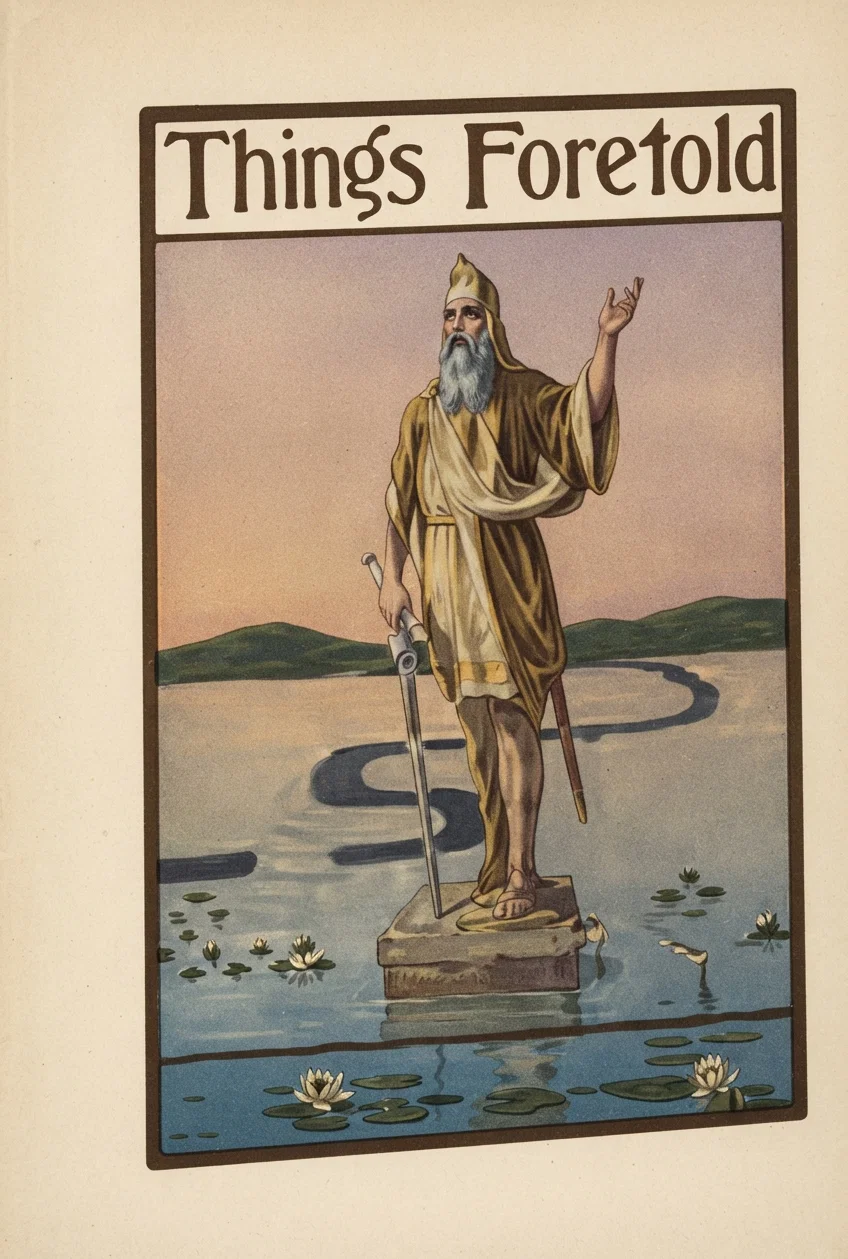
Things Foretold

The world is full of sorcerers, mediums, and fortune-tellers of various grades, and they are reaping rich harvests, too, because people are curious to know what the future has in store for them. But far better is it to appeal to the sure Word of prophecy for guidance and counsel, for it sheds the strong light of Heaven on human affairs and clears up the mysteries of the future.
Things Foretold
Things Foretold
In "Things Foretold" we find the prophetic history of the world told so clearly and simply that even the children can understand. Events are pointed out that have already taken place; others that concern us just now; and still others that clear up the uncertainty of the future.
Besides this important feature, the children will be much interested in the stories of Daniel and his fellow-captives in the land of Babylon, and enjoy the nice pictures which the book contains.
112 pages; 21 chapters. Price 50 cents.

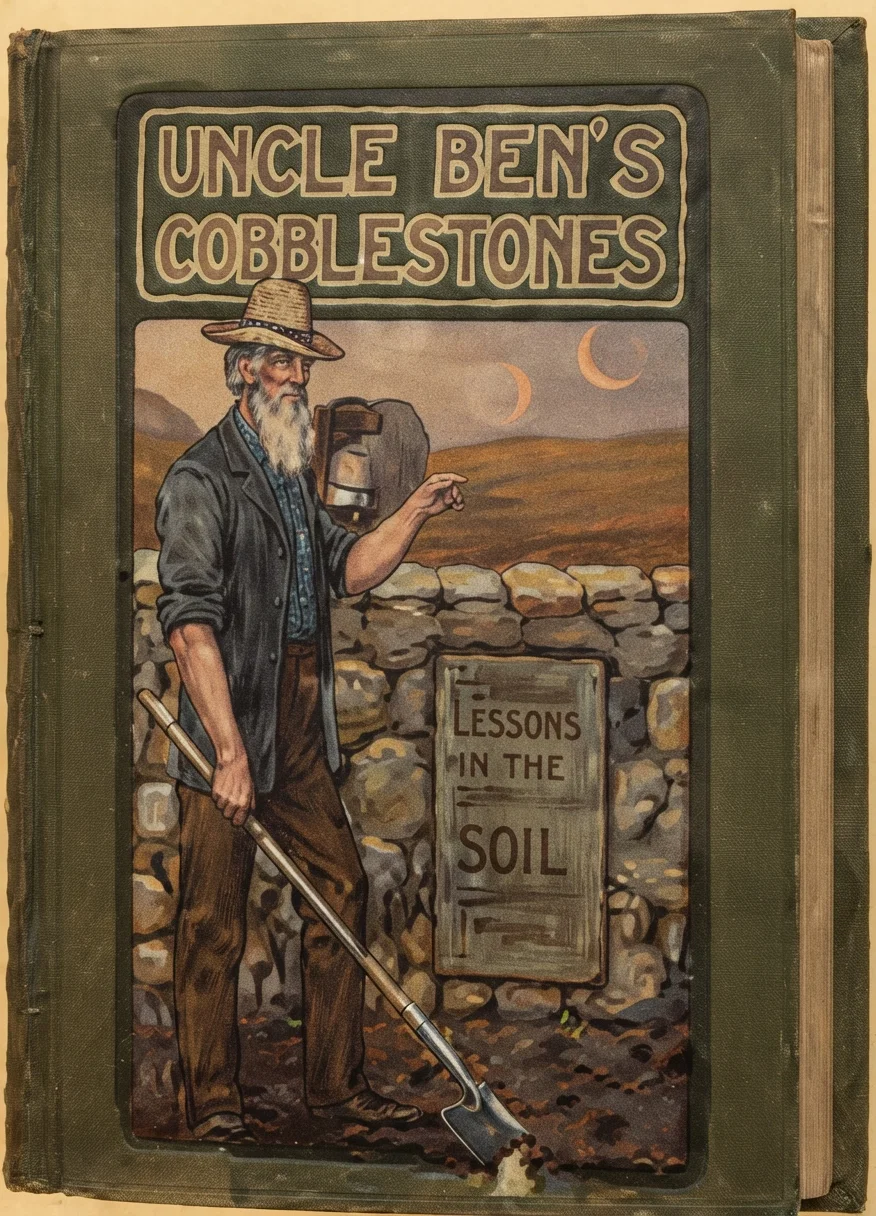
Uncle Ben's Cobblestones

Uncle Ben is a real pleasant old gentleman, and one the children around home all like because he knows how to tell just the very best kind of stories.
In some way Uncle Ben has found out that all the little boys and girls like to hear stories, too, and he would like very much to go around and visit you all, but that would take too long, and some of you would get tired waiting. So in place of a personal visit, Uncle Ben has decided to print his stories in book form so that you may all have them right away.
He tells you about very common things, such as air, water, sunshine, fire, smoke, glass, coal, salt, paper, matches, etc., but he tells so many remarkable things about how they are made, and what they are made of, that you begin to wonder if they are really the things that you have been using every day. Uncle Ben is a good man, too, and so, of course, weaves in little lessons of truth that will help you to grow up and be good and kind, too.
You would give one cent, and more, too, if you had it, wouldn't you, to hear a good story? Well, try Uncle Ben, he gives you more than 200 pages of stories, and about twice that number of pictures for only 75 cents.
NOTE.—After you have read the descriptions of the foregoing books, we feel sure that you will not only want to read them yourself but will want to sell some of them around home. All such should send for our "Home Worker's List," which gives a full list of this line of books, the commission you make, and how to begin work. Free on application.

WHAT IS BEING SAID ABOUT THE SPECIAL "SIGNS."

PACIFIC PRESS PUBLISHING CO., Mountain View, Cal., Dear Brethren: Please send us 75 sets more of the new Special SIGNS, and please send them at once so we can get them out among the people, for "the King's business requires haste." Enclosed you will find draft for $7.50 in payment of this order, and we hope to sell these and many more. We are, Yours in His service, MR. and MRS. ANDREW DUGANE.
P. S.—As I was about to mail this, the second number of the Special SIGNS came, and we are delighted with the appearance of the paper. No one should hesitate to engage in the missionary effort to sell these papers for they will sell. A. D.

A Favorable Report

"We think the ones received just grand."

Missionary Convention Campaign

"Less than one week has gone by since the first Missionary Convention, and I am glad to say that the campaign seems to be opening up in a most excellent way in our part of the field. We have already received orders for nearly 5,000 sets of the SIGNS OF THE TIMES. No doubt the Sunday mail will bring us orders for the entire number that we ordered sent here." JAMES COCHRAN, Kansas City Branch Office.

Special Signs of the Times

Brantford, Ont., Oct. 27, 1905.
"Will you kindly send me ten sets of Special SIGNS OF THE TIMES. We have had several hundred through our Ontario Tract Society, and have ordered more. As they are out, I take this way of getting more."

Third Angel’s Message Series

"Please mail fifty sets Third Angel's Message Series SIGNS to J. Wilken Eden. I am thankful you sent me this order blank, and hope all our people will do all they can to distribute these papers with haste and power."

Christianity

Christianity.—Altho in common parlance the word "Christian" is understood to mean one who professes to follow Christ, it is generally conceded that a true Christian is one who does follow Christ. He may not have attained perfection, but he is a willing learner, and by faith walks in the light as far and as fast as truth is revealed. To be a Christian there must be a yielding of the heart to Christ in response to the drawing influence of the Spirit of God. "No man can come to Me," says Christ, "except the Father which hath sent Me draw him." John 6:44. When we see the "fruit of the Spirit" (Gal. 5:22, 23), or the Spirit of Christ, exemplified in any individual, we may safely say that he is aChristian.
Of an association of such persons we may say that it is a Christian body. But the mere assertion by any human authority that any person or any body of people is Christian, does not make it so. Where the fruit is lacking, where the conduct is at variance with the profession, it is safe to conclude that the profession of Christian character is a false profession. No human edict, no human process, can make an individual or association Christian. “Ye must be born again,” born of the Spirit, in order to be a Christian. G.

GOD IS ABLE TO CARE FOR HIS OWN.

A GOD that can not take care of himself and his institutions is not God. This principle was demonstrated by Gideon. His father's family lived at Ophrah, where the people had an altar erected to Baal. An angel of the Lord appeared to Gideon one night and told him to build an altar to the Lord at a certain place, and to cut down the "grove," or idols, that surrounded the altar of Baal, for wood to offer a burnt sacrifice. Gideon took ten men and accomplished the work in the night, as he feared the people.
IN the morning, when the men of the city saw what had been done, they inquired, "Who hath done this thing?" In some way suspicion pointed to Gideon, and they demanded of Joash, Gideon's father, that he bring out his son that he might be put to death. "And Joash said unto all that stood against him, Will ye plead for Baal? will ye save him? he that will plead for him, let him be put to death whilst it is yet morning; if he [Baal] be a god, let him plead for himself, because one hath cast down his altar." Judges 6:25-31.
IN the days of Eli, the army of Israel took the ark of God to battle with them against the Philistines, and it was captured. The Philistines took it to Ashdod and set it up in the house of their God, Dagon. In the morning it was found that Dagon had fallen on his face before the ark. The priests set up the idol in his place, but the next morning it was down again, and the head and hands were cut off, lying on the threshold. So it was proved that Dagon could not take care of himself, while the ark, an institution of Jehovah, was preserved even in the hands of its enemies.
BUT the ability of Jehovah to care for His own, without the help of man, was further demonstrated in this connection. The men of Ashdod were sorely afflicted with a plague until they sent away the ark. Sending it to Ekron, the people in that region were also sorely afflicted. Then they put the ark upon a new cart and hitched to it two young cows that never before had been yoked, and let them go. They made a test of this, saying that if the cart were taken by way of Beth-shemesh, they would know that the ark had done the evil to them. And, sure enough, the kine took the way to Beth-shemesh.
ANOTHER significant point in this connection is, When the people of Beth-shemesh saw the ark, they made great rejoicing and sacrificed to the Lord; but amidst it all they presumed to look into the holy ark, and God smote fifty thousand of them. So Jehovah is not only able to care for His own institutions in the midst of their foes, but He will not allow His own professed people to tamper with them contrary to His Word. He does not always immediately punish trifling with His law, or trampling upon His sacred institutions; and for this reason men assume that their unlawful traditions are approved. "Because sentence against an evil work is not executed speedily, therefore the heart of the sons of men is fully set in them to do evil." Eccl. 8:11.
Now, THE principle herein illustrated is all involved in the Sabbath question. God has a Sabbath, instituted at the beginning of creation, and its observance is enjoined in His holy, unchangeable law. Men have set up another day which they call a sabbath. God never has asked men to "protect" His Sabbath by any human law. He simply enjoins them to obey His law. If the state should make a law supplemental to God's Sabbath law, nothing would be added to the force of God's law; for if men should pretend to observe the Lord's Sabbath merely because the state so enjoined, it would not be Sabbath-keeping in a manner that God would recognize. He says, "Remember the Sabbath day to keep it holy," and the only way to do that is to keep it because God says so—to keep it in obedience to His command. To observe it just because the state so ordered would be to set the state before God.
THOSE who adhere to the so-called sabbath set up by men are always solicitous that it be "protected" in some way by human law. The fear is often expressed that this "sabbath" will be destroyed. But, as was said of Baal, if it be a god, or of God, let it defend itself; it doesn't need the support of state law. The constant demand for state defense of the Sunday-sabbath is a tacit admission that it is not of God—that it needs a perpetual human bolstering.
THERE never has been a state law to sustain or enforce a real Christian church institution. But the power of the state has been invoked in behalf of every perversion of such institutions. God's appeals to men to obey His law and regard His ordinances have not been made for the protection of His institutions, but for the salvation of men. His institutions are indestructible; they may be trampled upon by men, but "Truth crushed to earth will rise again."
EVEN the professed people of God who persistently pervert and treat as common the Sabbath of the Lord, will meet in the judgment the consequences. They may not, as did the people of Beth-shemesh, meet the speedy execution of the penalty; but God's merciful patience must not be mistaken for approbation; it is also coupled with justice, which will exact the last jot and tittle of the law. "The commandments of God, and the faith of Jesus" (Rev. 14:12) are inseparably connected. G.

GUIDANCE.

BY LLEWELLYN A. MORRISON.
WHEN Israel out of Egypt came, By night and day, o'er desert way, In pillar'd cloud, with heart of flame, Jehovah's presence did abide And lead His people safely on— 'Mid burning sands, past alien lands— Till sundered Jordan saw the dawn Whose eve found all on Canaan's side.
Majestic brightness, from within, Flash'd through the cloud, whose robes did shroud Divinity, from eyes, by sin Unfit to view its light, unveiled, What kindly Fatherhood and care, By love concealed, and yet revealed! Jehovah doth with mortals share The gifts, by highest love unsealed.
What exercise of love-won trust! Our God knows best, and rise or rest Doth each proclaim Him wise and just And watchful for His people's need. For all His tender mercies move; They—soon or late—who serve and wait, Shall reach the "Canaan" of His love— For all His guidings thither lead.
Conduct us on our desert way! Each shadowed night be Thou our light! Enshelter us each weary day, Until we over Jordan come And reach the land of corn and wine, And hail the King—with rapture sing And praise the Leadership, divine, Which brought us out of bondage, home.

THE MELCHIZEDEK PRIESTHOOD.

A Word to Our Readers.

In our issues of last April and May we published four articles from the pen of George W. Reaser on "Who Was Melchizedek?" Subsequently the editor offered various suggestions on the priesthood of Christ. These were published with no thought of controversy, or to arouse antagonism.
"Who was Melchizedek?" is a question which finds its way frequently into our editorial office from souls not satisfied with previous explanations. There are not a few who have contended that it was Shem, who, according to "Usher's Chronology," yet had in Abraham's day an ordinary lifetime to live. Others have believed and taught that the Melchizedek who met Abraham was Christ; others still, that he was the Holy Spirit; yet others, perhaps the larger class, that he was an inhabitant of Canaan, living at Salem, or Jerusalem, tho we are sure that there was not there at that time a kingdom of righteousness in the earth nor a city of peace. But we know of none who make the Genesis Melchizedek a substitute for Adam.
With respect for all those who hold (tentatively, we presume) these various views, we admitted the articles by Elder Reaser, and offered the suggestions we have in order to stimulate further study. If these articles and suggestions are unscriptural, reject them. If they help to broader, clearer views of Christ's work, study on. They will antagonize no fundamental truth of God.
Debating the question will help us very little. Usually, it will lead to "arguments" unworthy of him who uses them.
It will not help us to believe that because we do not understand, or some one in the past did not understand the subject, no one else does.
It will do no good to sneer at or misrepresent the position of some one with whom we do not agree. For instance, it has been said in this paper that "Melchizedek" was a title, the name of an order of priesthood. But no one said or meant to say that it was a title that met Abraham. It was an intelligent being, called a "man" (Heb. 7:4. See also Gen. 18:2; Dan. 9:21), but a "man," a priest, bearing the title of Melchizedek. The king of Egypt, before whom appeared Moses and Aaron, was a man, but he bore the title, not the name, of Pharaoh, a title held by many in the same kingdom both before and after him, who were known and called in the Bible by that title as tho it were the literal name. The person who met Abraham was one of the Melchizedeks.
The name of our Lord was Jesus; one of His prominent titles is the Messiah or the Christ, the Anointed of God. In this study we commend the following, found in an article in this issue:
Peter exhorts his brethren to "grow in grace, and in the knowledge of our Lord and Saviour Jesus Christ." Whenever the people of God are growing in grace, they will be constantly obtaining a clearer understanding of His Word. They will discern new light and beauty in its sacred truths. This has been true in the history of the church in all ages, and thus it will continue to the end. But as real spiritual life declines, it has ever been the tendency to cease to advance in the knowledge of the truth. Men rest satisfied with the light already received from God's Word and discourage any further investigation of the Scriptures.
Study the great subject of the priesthood of our Lord. It is longer, broader, deeper, grander, more glorious than the mere antitype of the Levitical priesthood, great and glorious as that priesthood is. The Levitical priesthood and what it prefigured was a priesthood for the time on account of sin, but, thank God, temporal, because sin is temporal, under which priesthood the sin is put away. But the Melchizedek order of priesthood embraces the universe in its breadth, and eternity in its continuance. It is worthy of all study. It is too great and noble and sublime to be treated by the tricks, the jokes, or the torsions of debate. Its right understanding, whether understood now or not, will clear up many dark places, and make God's Book and Christ's work glow with supernal and unwonted radiance.

LIBERTY THROUGH CHRIST.

GOD made man “upright.” He was morally and physically upright. This is all comprehended in the Creator’s pronouncing him “very good.”
When Satan undertook to destroy God’s work, he did not attack man physically, or in any arbitrary manner seek to overthrow him. He made an insidious attack on the man’s moral faculties; and, having overcome him on this point, the further consequence followed naturally. It is the moral fall that cuts one loose from God. When Adam disobeyed God’s law, the process of death set in; for the transgression of the law is sin (1 John 3:4; Rom. 7:7), “and sin, when it is finished, bringeth forth death.” James 1:15; also Rom. 5:12 and 6:23.
In yielding to the counsel of Satan and disobeying God, the man transferred his allegiance from the Creator to the tempter. From being a son of God he became a servant of Satan. “Know ye not, that to whom ye yield yourselves servants to obey, his servants ye are to whom ye obey.” Rom. 6:16. And as the children of a slave are also slaves, so the children of the fallen man and woman became the natural servants of Satan. “By one man sin entered into the world, and death by sin; and so death passed upon all men, for that all have sinned.” Rom. 5:12. “In Adam all die.” 1 Cor. 15:22.
As a further natural result of sin, the human race imbibed the spirit of selfishness that actuated their conqueror. This produced individual tyranny over other individuals, and eventually there came political tyranny. Therefore the sin-stricken race became afflicted with moral slavery, political slavery, and physical slavery.
Jesus Christ set about the work of redeeming the lost race, or as many of them as would yield to the principles of His rule and accept salvation on His terms. The plan of salvation was entered upon by both the Father and the Son. Not only was the Son willing to make the necessary sacrifice, but “God [the Father] so loved the world, that He gave His only-begotten Son, that whosoever believeth in Him should not perish, but have everlasting life.” John 3:16.
In order to redeem fallen men, it would be necessary to set them free, to give them liberty. And here is Christ’s prophetic revelation of His mission: “The Spirit of the Lord God is upon Me; because the Lord hath anointed Me to preach good tidings unto the meek: He hath sent Me to bind up the broken-hearted, to proclaim liberty to the captives, and the opening of the prison to them that are bound.” Isa. 61:1.
When Christ undertook to set men free, He did not begin to strike off the shackles of the slaves of men, or to overturn political tyrannies. He directed His effort toward the spiritual liberation of men. As all other features of slavery grew out of the man’s moral or spiritual captivity, so the freedom of the race from all manner of tyranny must come through spiritual freedom. Therefore the way to human liberty is along the highway of spiritual liberty.
When John the Baptist began his work of reform, it was not as a social reformer, or a political reformer, but as a religious reformer. He did not call upon men to throw off their physical and political shackles by force; but he called upon all classes of men to “repent.” The kingdom of God was at hand, and if they would repent, and prepare for that great event, all necessary reforms would follow logically. He did not appeal to King Herod to reform the laws; he simply admonished him to put away his sins.
When Christ began His public ministry, He repeated the appeal of John, “Repent; for the kingdom of heaven is at hand.” Altho He knew that the Roman Government would sanction His death (Matt. 20:17–19), He made no effort to forestall such action, or to work a political reform. Nor did He admonish men to free their slaves. All these things were to come through the influence of the Gospel; they could not permanently be brought about in any other way. That had been amply demonstrated by the Deluge, in the deliverance from Egypt; and in the great Roman Republic.
All of the apostles suffered persecution at the hands of the government, but all the reform they ever sought to establish was through the proclamation of the Gospel. No one suffered more than Paul; yet, altho he had access to kings and governors and magistrates, and gained their respect as a man, he used his opportunities and his influence for the one purpose of preaching to them the Gospel of Christ.
Paul loved his Jewish brethren intensely (Rom. 9:1–5), and had great sympathy for them in their subordination to the Romans, yet he made no direct effort for the improvement of their political condition. He only implored them, on the evidence of their own Scriptures, to accept Jesus of Nazareth as their Saviour. In Him was all righteousness, andthrough faith in Him must come all the liberty that fallen man could permanently obtain.
Christ had said, “If the Son therefore shall make you free, ye shall be free indeed” (John 8:36); and, to those who accept this liberation as the basis of all liberty, Paul says, “Stand fast therefore in the liberty wherewith Christ hath made us free, and be not entangled again with the yoke of bondage.” Gal. 5:1. The fulness of human liberty in every other respect will be experienced in the new earth, “wherein dwelleth righteousness.” 2 Peter 3:13. All the commandments of God are righteousness. Ps. 119:172. When man fell, it was through disobedience to the commandment of God, into a condition of unrighteousness. So when the disciples of Christ are redeemed, they are restored to a condition of obedience, and become fit subjects for a land and a kingdom wherein righteousness rules. G.

PERSUASION OR FORCE.

THE Gospel of Jesus Christ is founded in freedom—the freedom of the individual.
"Come unto Me, all ye that labor and are heavy-laden, and I will give you rest," is not a command, but an invitation. "Whosoever will, let him take of the water of life freely," recognizes the right of human choice in the matter of worship. If any one had the right to compel worship, it would be our heavenly Father, but those words last quoted are His words, spoken by His Son for Him.
There is a command in reference to the promulgation of the Gospel. It reads: "Go ye into all the world, and preach the Gospel to every creature;" but the command ceases there, and is given only to those who have voluntarily become members of the household of faith. The Gospel of Jesus Christ recognizes the freedom, equality, and brotherhood of man.
But there is another method of the promulgation of religious belief. It is as old as Paganism, and its principles are utterly subversive of the righteous principles of the Gospel of Christ. We may term it "the gospel of force." Each is the antipode of the other in purpose, in conception, in the process by which it accomplishes its object, and in the object itself when it has been worked out. Jesus said, "If any man hear My words and believe not, I judge him not; for I came not to judge the world, but to save the world." But the "gospel of force" judges, condemns, executes. The Gospel of Jesus Christ teaches, invites, convinces, and wins men, in order that eternal life may be bestowed upon them. The "gospel of force" beats down, compels, drives, brow-beats, and even kills some, in order that its eminence may be recognized by those that remain, its greatness be acknowledged by men, even at the expense of the lives of some of the men. And that has been done even in our own day; and the spirit that would permit it has not yet been eradicated from our midst by any means. In that is manifest the pagan heritage of all its principles and modes of operation.
In the imperial nations which call themselves Christian the "gospel of force" is the chief tenet in the creed of national progress. He who does not bow to that creed is disloyal to his country. In Russia he who forsakes the orthodox faith is looked upon as disloyal to his emperor and his country. It is a punishable offense; it is not permitted under prevailing Russian law in spite of the manifestoes of religious liberty. What the new order of things may bring about in Russia we can not as yet tell. If it shall accomplish the separation of church and state, then it will have gone to the very root of religious liberty and of all liberty, for a people are not free until they have freedom to worship God according to the dictates of conscience. In view of this fact the people of this country should look with alarm upon the very first experiment in the matter of religious legislation. They should look with alarm upon the position taken by our Supreme Court in declaring that this is a Christian nation. They should look with alarm upon the growing sentiment among religious bodies toward the enactment of Sunday laws, or even laws for the closing of saloons on Sunday. The latter are not in the interests of temperance, but in the interest of Sunday alone, a religious institution.
The "gospel of force" is not confined to one empire or one nation. The principle is the same wherever found. In the pagan mind religion and the sword are closely related, and it was not an uncommon thing for one heathen nation to conquer another, and force the conquered nation to worship the gods of the conquerors. The "gospel of force," the "gospel of powder and ball," the gospel of "the sword in one hand and the Bible in the other," is based upon the same idea. The principle of the Christian religion is, "Choose you this day whom ye will serve." It is a matter of free choice. The principle underlying that false system is, Choose the religion we bring, or feel the fury of the sword or the penalty of law.
Between the latter principle and the underlying principle of the Gospel of Christ there is a great gulf fixed which no man can bridge. On the one side of that gulf is the throne of everlasting Love; on the other is the throne of the arbitrary despot, on which sits Lucifer, the fallen lightbearer. His church is the church of force; his ministers the mailed warriors who carry "the Bible in one hand" and the implements of death and destruction in the other. But God, who has warned men against an unequal yoking with unbelief, has never yoked Himself with the proponents of any such cruel and ghastly policy. The ministers of the "gospel of force" smite with the mailed fist; the ministers of the Gospel of Christ turn the fist into an open hand for the bestowal of blessings. The one bruises; the other binds up whatever bruising the other has done. The one wields the sword; the other binds up its wounds. The one compels enmity; the other wins hearts and souls.
Force and Christianity, imperialism and the kingdom of Christ, are as far apart as the east and the west, as death and life. The "gospel of force" has been tried in every nation, and has proved a bane to the people and to the true cause of God. There is a better way; there is a purer, kinder Gospel; there is a King who never does nor will oppress. That way is the way He trod with bleeding feet; that Gospel is the Gospel of love and brotherhood; and that King is the Maker of the heavens and the earth, the Prince of Peace, the everlasting Father, whose home is the habitation of love, whose throne is set in the hearts of those who are His. Into His service oppression never comes, and out of His hand go none of the carnal arrows that wound the hearts of men. Let us enlist in that service of love; let us preach that Gospel of peace; and then triumph in that victory that uproots all things that bruise, and oppress, and misrepresent the mission of our Father in the earth. S.

Question Corner

1733.—Upon What Day Did Pentecost Fall?

A Christian minister stated that Pentecost (Acts 2:1) fell on Sunday. Is this so?
It may have fallen on that day. It all depends on the day Christ was crucified and raised from the dead. Pentecost was fifty days from the resurrection. There are good authorities who contend that Pentecost fell on the seventh day that year. In different years it fell on different days of the week. But the record of Acts 2 tells us nothing of the day of the week which it would have done if the day of the week was to have been honored. The great thing was that the outpouring of the Spirit met the type in Pentecost. See Andrews "History of the Sabbath" for full discussion of the matter.

1734.—Blessing and Sunday-Keeping.

Am I not to suppose, or rather to believe, that first-day worshipers have the blessings of God? And that their praise and thanksgivings are acceptable to God? Will not our Creator overlook or excuse the absence of the letter of the command where the spirit of the command is made manifest, do you think? It is hard to think or believe that Christendom will ever get back to the seventh-day Sabbath observance.
1. Surely God blesses those true worshipers who keep Sunday, but not because they keep Sunday. He blesses them despite their errors because they are faithful in what they see. He blessed Abraham and Jacob and David, not because they were polygamists, but in spite of it.
2. When we are enlightened, the only safe way is to make haste and delay not to observe God's commandments. Ps. 119:60. The only being in the universe who can rightly interpret the Spirit of the law to us is God, and this He has done in His Word and in the life of Christ. But the Word declares, "The seventh day is the Sabbath of the Lord thy God;" and Christ honored the day because He had the law of God in His heart. Ex. 20:10; Ps. 40:7, 8. Who has the right to substitute for God? the profane for the holy? Nadab and Abihu did and died. Lev. 10:1-10. See Eze. 22:26. O, let us listen to the Word; there is no substitute for disobedience; there is no safety but in doing the will of God. Read prayerfully 1 Sam. 15:22, 23; Deut. 4:2; Matt. 7:20-23; 15:9, 13.
3. No, sad as it is, according to the prophetic word, many will not return to the seventh-day Sabbath observance. Yet it is true, and God calls us to it. Shall we be like the Jews of old? Read Ex. 23:2; Hosea 10:13; John 12:42, 43. Follow Christ. His Sabbath stands preeminently for faith in His Word, faith in His creative, regenerating power. Over against it are the philosophies and teachings of men. "Fear God, and give glory to Him; for the hour of His judgment is come."

1735.—"It Is a Gift." Matt. 15:4-6.

Please explain Matt. 15:4-6. What is the meaning of "It is a gift"?
One of God's great commandments enjoins, "Honor thy father and thy mother." That means to support them in old age. But the Pharisees had a scheme of making void their duty. They said, My property is "Corban" (Mark 7:11), that is, "given to God," and I have no right to use it for you; and therefore they withheld the help their parents needed, while they used the property for their own benefit. Of course, it was not given to God. That was a plan to get rid of duty.
Continue reading: THE VATICAN VEXED