Your ShelfYour Projects

Signs of the Times, Vol. 27, No. 8.

WITNESSES OF GOD

Signs of the Times

Feb 20, 1901

Pacific Press Publishing Company · Oakland, California · Feb 20, 1901

WITNESSES OF GOD.
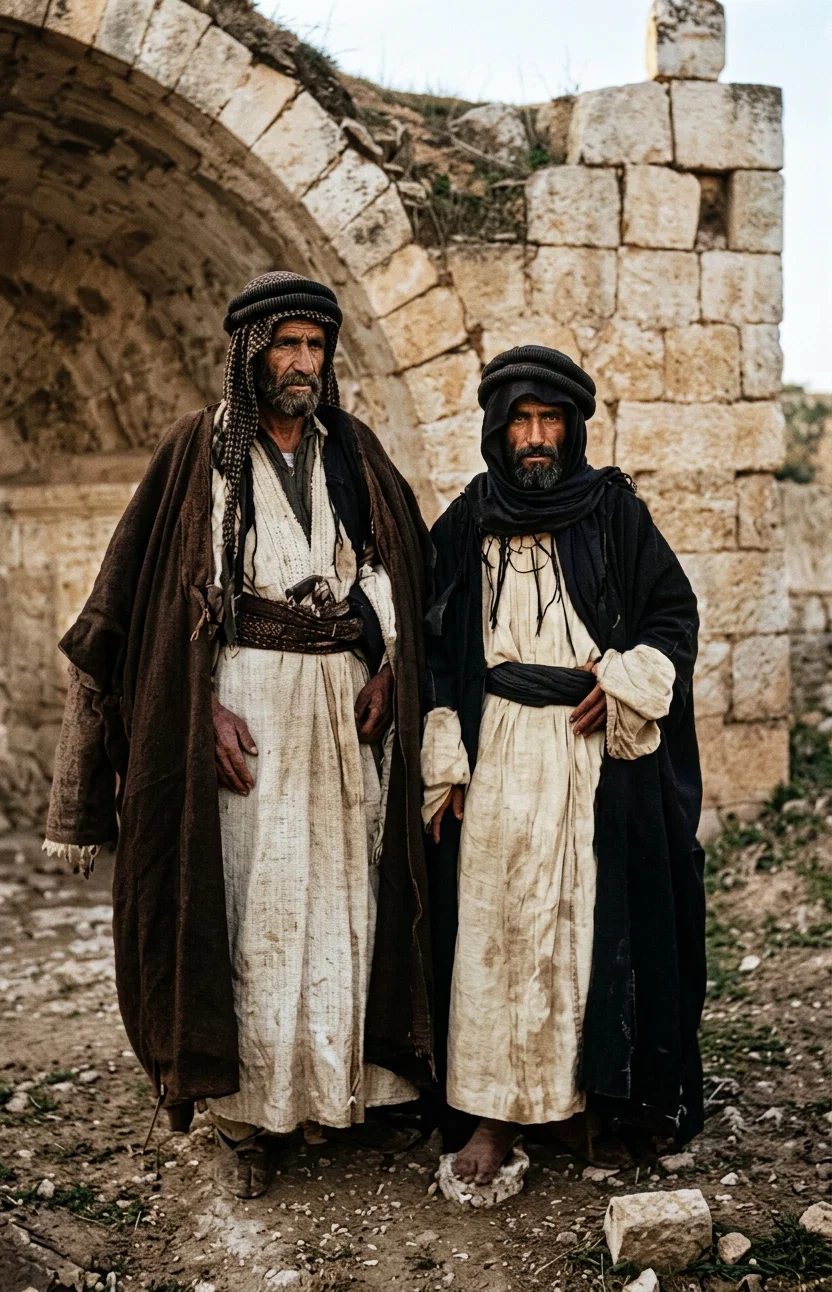
GOD writes twice every prophecy in His Word: once thru the prophets who spoke the God-breathed history of time to come, and again when in His overruling providence that prophecy is fulfilled. Thus with no possibility of collusion He presents the twofold, infallible witness of the divinity, authenticity, and infallibility of His Word. There are many instances of this in Scripture and history.
BEDOUINS OF THE DESERT, FROM A PHOTOGRAPH AT SILOAH, PALESTINE.
IT is said that Frederick the Great, of Prussia, once asked a minister of the Gospel for proof that the Bible is the Word of God. The good man sententiously replied, “Sire, the Jews.” And that people are not only proof that the Bible is the Word of God, they are a demonstration of the fact. In their history and country, in their loyalty and disloyalty, they have attested, oftentimes unwillingly, the truth of the “more sure word of prophecy.” Wherever one goes he meets the Jew. Hunted from nation to nation by intolerable decrees, driven from the land of promise by heathen, Moslem, and “Christian,” he has become a wanderer, without a home, without a country. But in poverty or wealth, hated or loved, persecuted or endured, the Jew is a witness that not one word will fail of all that the Lord God has spoken.
BUT the Jew is not alone. The Bedouin (outdoor) Arab of the desert shares with him, if not so prominently, the high eminence of a witness for God thruout the ages. He may not know it; in the vast majority he probably never heard of the place in court that he is filling; nevertheless he is there, as he has been for thirty-eight centuries, still occupying the witness chair, still testifying for God. And the old German preacher could have as truly answered, “Sire, the Bedouins,” as, “Sire, the Jews.” In the case of the Jew the evidence is more abundant, but not the less true and conclusive.
THE prophecy is found in Gen. 16:11-13. It is the word of the Lord concerning Ishmael, the child of rebellious Hagar, before Ishmael was born; “Behold, thou . . . shalt bear a son; and thou shalt call his name Ishmael. . . . And he shall be as a wild ass among men; his hand shall be against every man, and every man's hand against him; and he shall dwell in the presence of all his brethren.” R.V.
THERE are three predictions in this divine forecast of the future: (1) The character of Ishmael and his posterity, for the prophecy is not of the individual alone; (2) their relations to others; (3) their continuance. How specific and precise are these predictions! How unlike the uncertain, ambiguous expressions of heathen oracles! Let us study them for a little.
I. The Character of Ishmael and His Descendants. — “He shall be as a wild ass among men.” The wild ass is used as representative of a strong, obstinate, fierce disposition. From this son of the ambitious, vain, revengeful Hagar sprang the Bedouins of the Syrian and Arabian deserts. Houseless, homeless, dwelling in tents where night overtakes them, where the exigencies of nomadic life makes necessary, or where easy choice finds it desirable, the Ishmaelite has been as a wild ass among men, “alone by himself” (Hosea 8:9), untrained, obstinate, rebellious of all restraint.
2. Relations to Others.— “His hand shall be against every man.” How true it is of the Bedouins, the descendants of Ishmael, the wild, roving tribes of the desert! Sometimes engaged in merchandise, they trafficked in slaves. In fact, they stooped not to purchase and sell even one of their own kin,—Joseph. They are now, as for years, the robbers of the desert. Laying claim to all the great stretches of desert land to the south and east of Palestine, they lay tribute upon all caravans or travelers that pass them, and woe be to him who refuses the “backsheesh,” unless he is sufficiently strong to place successfully his hand against the descendants of Ishmael. The facts meet the prophecy.
3. Their Continuance.— “He shall dwell in the presence of all his brethren.” The Philistines, who gave the name of Palestine to the wonderful land of earth, are passed away. The great nation of the Hittites, unless it is identical with the Armenians, is no more. Ancient Babylon, Assyria, Media, Egypt, and others as nations are but memories of history. But the Jew, the legal descendant of Abraham, abides, and in his presence, “before him,” dwells the Ishmaelite. Countless revolutions have swept over the land; nation and kingdom and tribe and people have risen to short-lived fame or sunken to oblivion, but he whose hand is against every man still abides, a picturesque witness for the truthfulness of the Word of God, and that part of the Word which the “higher critics” regard as wholly mythical or traditional.
WITNESSES for God, reader, are we all. It is an eternally true saying that “we can do nothing against the truth, but for the truth.”
“Truth crushed to earth will rise again, The eternal years of God are hers.”
It is ours to witness for God gloriously, grandly, as did Moses, demonstrating that God’s power thru faith is sufficient to save a man from selfishness and sin, to lift him above all mean ambition, and to give him a heart to pray for his detractors. It is ours to witness, as did Elijah, zealous for God when all others had proved disloyal, demonstrating by his physical translation his character translation from sin to righteousness. It is ours to let Jesus Christ live in us and witness in His members the same witness that he bore for God when in His own person He taught in the temple courts of Jerusalem, healed in the streets of Capernaum, prayed on the mountains of Galilee, or died a martyr (witness) to the truth on the cross of Calvary. These are the witnesses God desires us to be.
BUT if we will not be willing, glad witnesses to His power, His wisdom, His goodness and love, still we shall be witnesses, the unwilling. It is the divine, unchanging prophecy of the ages that “whatsoever a man soweth, that shall he also reap. For he that soweth to his flesh shall of the flesh reap corruption.” Gal. 6:7, 8. “God is not mocked.” Not one word shall fail of all that He has spoken. Whoso shall heed it shall bear glorious witness for God. All who will not heed it shall “eat of the fruit of their own way, and be filled with their own devices.” Prov. 1:31. They shall reap the divinely declared “wages of sin.” And thus even in unholy abasement will they witness for God. And when at last they stand before “the great white throne,” and the eye of the Eternal searches them to the very core, then “every knee shall bow, and every tongue shall confess to God.” Rom. 14:11.
“NO WORD of God shall fail.” It is your privilege, reader, it is that of every soul, to triumph with the Word, to bear joyful, glad witness for God both now and hereafter. We may be like Pharaoh or Moses, Saul or Samuel, Elijah or Ahab, Jesus or Caiaphas. We may declare Him and His Word false now. We may prefer to its holy instruction the hypotheses of knowledge-inflated minds; the lie may for a while seem to be successful; but “God is not mocked,” and sooner or later even the truthless life, to its everlasting shame, shall bear witness to the truth of the infallible Word. O soul, let that living Word in Christ Jesus into your heart now! Let it witness to you and thru you even now of the power and love of God to save from sin and death. We are all witnesses; let us be willing, glad witnesses for God in righteousness.

OPTIMISM—PESSIMISM

WE do not believe in either. We are neither pessimist nor optimist. We do not believe with the optimist that all things are for the best, whatever their appearance; nor do we believe with the pessimist that all things are tending toward the bad, or that things are as bad as they can be.
Strictly speaking, the Christian philosophy is neither optimistic nor pessimistic. The ultimate of things either good or bad depends on their relation to the great Creator and Ruler of the universe.
The things—be they mountains or men—which continue out of harmony with God are doomed to extinction. They are not of God. But those things in harmony with God, tho they be buried ten thousand fathoms in the sea, shall issue into glory and life everlasting.
The assurance of the Christian is: “We know that all things work together for good to them that love God, to them who are the called according to His purpose. . . . What shall we then say to these things? If God be for us, who can be against us? Rom. 8:28-31. The only wise thing is to be of God; and that is the privilege of every soul.

WORDS OF WARNING.

Christ foretold the destruction of Jerusalem, as well as of the temple. His words were spoken in the hearing of a large number of people; but when He was again alone, Peter, James, John, and Andrew came to Him, saying, “Tell us, when shall these things be? and what shall be the sign of Thy coming, and of the end of the world?”
Jesus did not answer His disciples by taking up separately the destruction of Jerusalem, and the last great day of His coming. The city of Jerusalem represented the world, and the utterances regarding its destruction are to be connected with the world’s more terrible destruction. In speaking of Jerusalem, His prophetic words reached beyond that event to the conflagration that will take place in that day when the Lord shall rise “out of His place to punish the inhabitants of the earth for their iniquity.” The description of the two events is mingled, and the entire subject is a warning to those who shall live in the last scenes of earth’s history.
“Take heed that no man deceive you,” Christ said. “For many shall come in My name, saying, I am Christ; and shall deceive many.” False messiahs will appear, claiming to work miracles, and declaring that the deliverance of the Jewish nation has come. These will mislead many. Christ’s words were fulfilled. Between His death and the siege of Jerusalem, many false messiahs appeared. But this warning is given to those also who live in this age of the world. The same deceptions practised prior to the destruction of Jerusalem will be practised again. The events that took place at the overthrow of Jerusalem will be repeated.
“And ye shall hear of wars and rumors of wars; see that ye be not troubled; for all these things must come to pass, but the end is not yet.” Prior to the destruction of Jerusalem, there were rumors of wars. Men wrestled for the supremacy. Emperors were murdered. Those supposed to be standing next the throne were slain. “All these things must come to pass,” Christ said, “but the end is not yet.”
“For nation shall rise against nation, and kingdom against kingdom; and there shall be famines, and pestilences, and earthquakes, in divers places. All these are the beginning of sorrows.” The rabbis, Christ said, would declare that the signs that appeared were tokens of the advent of the Messiah. But be not deceived; they are the beginning of His judgments. The people have not repented, and been converted, that I should heal them. The signs that they argue are tokens of their release from bondage, are signs of their approaching destruction.
“Then shall they deliver you up to be afflicted, and shall kill you; and ye shall be hated of all nations for My name’s sake. And then shall many be offended, and shall betray one another, and shall hate one another.” All this the Christians suffered. Mothers and fathers betrayed their children; children betrayed their parents. Friends delivered their friends up to the Sanhedrin.
Thru the apostles God gave the Jewish people a last opportunity to repent. He manifested Himself thru His witnesses, in their arrest, in their trial, and in their imprisonment. He had told His disciples that they would be delivered up to councils; but He told them also that they were not to be anxious as to how they might vindicate the truth, for He would give them a wisdom that all their adversaries could not gainsay nor resist. Yet their persecutors wrought out their purpose in killing Stephen, Paul, Peter, and other Christians, men of whom the world was not worthy. In killing them the Jews crucified afresh the Son of God.
On every occasion that persecution takes place, the witnesses make decisions, either for Christ or against Him. Those who show sympathy for the men wrongly condemned, and are not bitter against them, show their attachment to Christ.
“And many false prophets shall rise, and shall deceive many.” False prophets and false Christs did arise, deceiving the people, and leading great numbers into the desert. Magicians and sorcerers, claiming miraculous power, drew the people after them into the mountain solitudes. But this prophecy was spoken also for the last days. This sign is a sign of the second advent. Satanic agencies will be prepared to deceive and to delude.
“And because iniquity shall abound, the love of many shall wax cold.” In times of trial many will be offended because the principles of truth cut directly across their practise or their income. Many will stumble and fall. They have professed to love the truth; but they will then show that they had no vital union with the True Vine. They will be cut away, as branches that bear no fruit, and will be bound up with unbelievers. “But he that shall endure unto the end, the same shall be saved.”
“When ye therefore shall see the abomination of desolation, spoken of by Daniel the prophet, stand in the holy place (whoso readeth, let him understand); then let them which be in Judea flee into the mountains; let him which is on the housetop not come down to take anything out of his house; neither let him which is in the field return back to take his clothes.” This warning was given to be heeded forty years after, at the destruction of Jerusalem. The Christians obeyed, and not one of them perished in the destruction of the city.
“But pray ye that your flight be not in the winter, neither on the Sabbath day.” Christ, who made the Sabbath, did not abolish it, nailing it to His cross. The fourth commandment was not rendered null and void by His death. It was to be held sacred forty years after His death; even as long as the heavens and the earth remain, so long will it hold its claim upon the human family.
“Then if any man shall say unto you, Lo, here is Christ, or there; believe it not. For there shall arise false Christs, and false prophets, and shall show great signs and wonders; insomuch that, if it were possible, they shall deceive the very elect. Behold, I have told you before. Wherefore if they shall say unto you, Behold, He is in the desert; go not forth; behold, He is in the secret chambers; believe it not. For as the lightning cometh out of the east, and shineth even unto the west; so shall also the coming of the Son of man be.” Here, again, the warning concerning Jerusalem is blended with the warning of the second advent.
The disciples heard Christ’s words; but they did not fully understand them. They did not know why He connected the perils at the overthrow of Jerusalem with the perils attending His second advent. The Holy Spirit must guide them into all truth, bringing to their remembrance all things that Christ had said to them. But those who live in this age may understand the general warning, and should appropriate it, applying it to the period where it belongs.
“This Gospel of the kingdom shall be preached in all the world for a witness unto all nations; and then shall the end come.”
MRS. E. G. WHITE.

THE GOOD MORAL MAN.

THE world seems to be full of what are known as “good moral men.” Many are running the risk of losing eternal life, hoping to be accepted by the Lord as good moral men. While this sort of man does not openly profess belief in Jesus Christ, still it is hoped that somehow God, who is the God of love, will accept him.
One does not have to be wholly bad, viewed from man’s standpoint, to fail of eternal life. The tree in the midst of the garden was a tree of knowledge of good and evil. In order for Satan to be a deceiver, he passes off many apparently good things. In this way he deceives. Good is used only for the purpose of deception, and therefore all is made evil, as God views it.
So with the moral man, He may do in his lifetime many noble deeds, he may say a great many good things, but all this may be done from a wrong motive, a motive in itself selfish. This passes not with God. If the Son of God is left out of a man’s reckoning, whatever he may otherwise be, however great his ability or attainments, all is counted as dross by the righteous Judge. The works of a man’s life will be worthless if his life is a Christless life. That which he and others may have counted upon, will sink into utter insignificance when God opens up the treasures of Christ’s rich life, which they have selfishly and wilfully set aside to pursue a course to them more pleasing. All these treasures were placed within their reach. By renouncing their own evil ways, and accepting Christ’s sweet life as theirs, all these treasures might have been theirs; but no, they had no need of Him during their lifetime—they lived and died as “good moral men.”
My brother, there is no such person on earth as a “good moral man.” The heart of man is evil; it is inherently selfish. “The heart is deceitful above all things, and desperately wicked.” This is what God says of your heart and mine. Do you believe Him or not? Further, we are told that we do not know our own hearts. He tells the truth, and the only safe way is to acknowledge this worthlessness now and accept of the life of God’s dear Son, which life will endure every test that can possibly be placed upon it. The wise man will go and sell all that he has and buy the field in which is the pearl of great price, the life of the Son of God. If you are depending upon a “good-moral-man” plea, it will be wise for you to sell that too; for it takes all to buy the field. T. E. BOWEN.

EVOLUTION AND RELIGIOUS APATHY.

WHAT books have had the greatest influence upon the thought of the nineteenth century?” This is the question recently propounded by The Outlook, and to which answers were published from G. Stanley Hall, president of Clark University; W. De Witt Hyde, president of Bowdoin College; Arthur T. Hadley, president of Yale University; Henry Van Dyke, professor of English literature at Princeton; Edward Everett Hale, Thomas Wentworth Higginson, and James Bryce—all men who are thoroly conversant with the literature of the day, and who aim to be familiar with the prevailing thought of the people.
Each of the above named submitted a list of ten books which he considered had “had the greatest influence upon the thought of the nineteenth century.” It is a singular fact that while each of these men mentions books which are not given by the others, yet there is one book which they all agree must have a place among the ten. That book is Darwin’s “Origin of Species,” the book upon which is largely built the modern theory of evolution, the theory of man’s descent from lower orders of animals.
Now these men are not giving a list of what they consider the greatest books of the century, but a list of the books which are having the greatest influence upon the thought of the people of this century. Viewed in this light, their answers are significant indeed; and their unanimous decision in reference to Darwin’s book is startling, to say the least. The influence which this learned theorist is exerting over the minds of the people can not be estimated, but is eating like a canker into the religious life of the people of this generation. A careful, prayerful study of the Word of God and a real experience in Christian life would have armed the people against the work of this insidious, undermining foe; but the people have neglected that armor, have neglected the study of the Word, held their Christian experience too lightly, allowed themselves to be lulled to sleep by pleasant words, and when this foe came in with its subtle insinuations, they were prepared to receive it as a friend. At first they imagined they could in some way hold to the theory of evolution and still be Christians,—still believe the Bible. Thus disarmed, the enemy soon had them at his mercy; and they forsook the divine truth for the human theory, the temple of God for the slough of doubt. Unfamiliar with the use of that shield which would have quenched all the fiery darts of the enemy, they were vulnerable at every vital point. Doubt robbed them of the quickening power of a real Christian experience, and then merged into actual disbelief; and disbelief of God’s own account of the origin of life in the earth set the muck-rakes of God’s accusers at work searching for the secret of life in the protoplasm, the amoeba, and the missing link. The propounding of great questions to which they could discover no answer, the discovery of phenomena which they could not explain, and the building of a false theory upon their undiscovered answers and unexplained phenomena, was labeled Science, and familiarity with it made a requisite of scholarship.
Then by this class, ministers of the Gospel were held to be behind the times unless they could disbelieve God because they were not able to fathom all His secrets. It became “fashionable” to be an evolution theorist; it became “out of style” to have implicit confidence in God’s Word; and the fashionable pastor of the fashionable church yielded to the influence of his fashionable members, and “set the style” for many another whose foothold upon the Rock was insecure. This is no fanciful linking of events in the popular drift toward clerical infidelity. It is the sorrowful setting forth of what has actually taken place and is taking place in all parts of the country.
The church is in the wilderness of her great temptation. In too many cases she is yielding to Satan’s suggestion, and is trying to getthe bread of life out of the stones of the desert. She breaks them open, finds a fossil, and discovers(?) that her Master’s record of creation is untrue. Eve found out in the same way that she could not die. God told man in Eden, “In the day that thou eatest thereof thou shalt surely die.” Satan scoffed, and Eve doubted. God has told man the secret of his existence. Satan has scoffed again, and the fashionable church is doubting, and logical doubters grow cold in church attendance.
Here is one of the secrets of the empty pew, the dry sermon, and the decline of spirituality in the churches; and that decline will increase and the number of empty pews increase just in proportion as the theory of evolution supplants the truths of God’s Word in the minds and hearts of those who have called themselves Christian. It is bound to be the case.
Evolution deals in fossils. The starfish forces open the shells of the mollusk, sucks out the life, and leaves the empty shell to fill with mud and form a fossil. That is what evolution is trying to do with Christianity. With many individual professors of Christianity it is succeeding. They have been robbed of Christian life, spiritual vitality, and all they have left is the dead, fossilized form of what they once had been.
The man who has ceased to believe God’s Word can not be expected to put zeal and whole-heartedness into the worship of the One who indicted that Word. The true believer expects to meet God in the place dedicated to His worship; but what incentive has the logical doubter for attendance at such a place? What incentive, then, has the evolutionist for such attendance? What heart has the “spiritual adviser” in his spiritual advice when he is fostering and propagating a theory which is diametrically opposed to the truth of God’s Word?
Satan planned his masterpieces of deception for the last generation of men upon the earth, and we are in that generation. In this thing he has struck at the very root of true religion, belief in God’s Word, and thousands upon thousands of casual, careless Christians are caught by the deception. We are told that they are men of the brightest minds; but they are minds which have submitted to the leading of God’s enemy—minds which were naturally bright, but which have given more attention to strange philosophies than to the truths of the religion they professed. Therefore they became narrow toward God and broad toward every species of doubt and unbelief.
But there will be those who will “stand fast” in the midst of this devastating flood, whose anchor will never drag, however turbulent the sea. These are they who have made a thoro, daily, prayerful study of God’s Holy Word, who have yielded to the leadings of God’s Holy Spirit, and have learned to know and feel their acceptance with Him. “Wherefore gird up the loins of your mind.” “Study to show thyself approved unto God, a workman that needeth not to be ashamed, rightly dividing the Word of truth.” “That good thing which was committed unto thee keep by the Holy Ghost.” “Meditate upon these things; give thyself wholly to them.” “I have more understanding than all my teachers; for Thy testimonies are my meditation.”
The brightest mind in the world is dull when compared with that of the fallen “covering cherub,” and consequently unable alone to cope with his deceptions; but the mind that is fully submitted to the will of God has a shield which that enemy can never pierce. Thru lack of that submission thousands will go down to destruction; but the protection which such submission gives is within the grasp of the humblest soul upon the earth.
C. M. Snow.

“ABIDETH FOREVER.”

The “glory of man” is “as the flower of the grass.” Yes, but “the Word of the Lord abideth forever.” The Word of the Lord! What do we mean by the Word of the Lord? When we speak of the word of a man, we mean his very thought, clothed in appropriate garb and equipped with suitable equipments to enable it to pass from mind to mind. When we speak of the Word of the Lord, we mean the very thought of the living God, sent forth to reach the mind, and to dwell in the heart, and to become part of the life of His creature; and as it comes from the Infinite, the Eternal, it partakes of His truth, His eternity, His infinity. By it man knows God, and “this is life eternal,” this is a permanent possession, this is a lasting heritage, “to know Thee, the true God.” 1. The moral law abideth forever. Right is right, and wrong is wrong, by an absolute decree. Tho all appearances are against it, “tho hand join in hand”—appearances are one thing, and reality quite another—right in the long run must prevail, and “wickedness shall not go unpunished.” . . . 2. The Bible in its sacred and unapproached pre-eminence abideth forever. It lives on because it has in it the life and thought of the unchanging God, felt in serious moments to be of the last importance for doctrine, for reproof, for correction, for consolation to the soul in the journey of life.—W. J. Knox-Little, The Journey of Life.

CALLING AND ELECTION.

MUCH trouble many people make for themselves, and others also, by limiting the love and mercy of God. “I should like to be saved, but it is impossible unless I am one of the elect, and I have never been called.” Sad to say, not a little religious (not Christian) teaching in time past, and even to the present time, has tended to produce and impress these false ideas of God. That professed atheists should blaspheme God’s name and character, is to be expected; but that professed followers of God should ever for a moment sanction, not to say promulgate, so horrible a libel upon Him as that He has chosen a certain few to be saved and that He has deliberately doomed all the rest to eternal destruction, regardless of their desire or willingness to be saved, is beyond comprehension. Let us note a few simple Bible facts.

Who Are Called?

First as to who are called. Read the words of the apostle Peter to those who assembled on the day of Pentecost: “Repent, and be baptized every one of you in the name of Jesus Christ for the remission of sins, and ye shall receive the gift of the Holy Ghost. For the promise is unto you, and to your children, and to all that are afar off, even as many as the Lord our God shall call.” Acts 2:38, 39. Who are they whom “the Lord our God shall call”? Note carefully; it is those to whom the apostle was speaking, and to their children, and to “all that are afar off.” That includes everybody.
The same thing was spoken through the prophet Isaiah. By that prophet the Lord said, “I create the fruit of the lips: Peace, peace to him that is far off, and to him that is near.” Isa. 57:19. The Lord proclaims peace to him that is far off, and to him that is near; there is no chance for anybody to find an exception.
With this agree the words of Christ, “Come unto Me, all ye that labor and are heavy laden, and I will give you rest.” Matt. 11:28. This includes every needy soul. “Ho, every one that thirsteth, come ye to the waters, and he that hath no money; come ye, buy, and eat; yea, come, buy wine and milk without money and without price.” Isa. 55:1. “And the Spirit and the bride say, Come. And let him that heareth say, Come. And let him that is athirst come. And whosoever will, let him take the water of life freely.” Rev. 22:17. Not only is every one who hears invited to come, but he is also authorized to invite everybody else whom he sees. There is no partiality with God.
In view of these plain calls, who dare limit the grace of God? “The grace of God hath appeared, bringing salvation to all men.” Titus 2:11, R.V. “As by the offense of one judgment came upon all men to condemnation; even so by the righteousness of One the free gift came upon all men unto justification of life.” Rom. 5:18. All men have gone astray, like lost sheep, and all are called back. God “willeth that all men should be saved, and come to the knowledge of the truth.” 1 Tim. 2:4, R.V. The Lord is “long-suffering to usward, not willing that any should perish, but that all should come to repentance.” 2 Peter 3:9.

Self-elected.

“Yes; but does it not say somewhere that many are called, but few chosen”? and is not that evidence that all can not be saved?—Yes, and no. That statement is indeed made, but it by no means teaches that there are any who can not be saved if they wish salvation. The question is really equivalent to this, “Does not this last text overthrow all the others?” The Word of God is not divided against itself. Read the passages in which this statement is found (Matt. 20:1–16 and 22:1–14), and it will be apparent that those who are not chosen are those who themselves do not choose to accept the terms of salvation. That is the whole of the matter. Election means choice. The free choice is given to all. “Choose life, that both thou and thy seed may live.” Deut. 30:19. “Choose you this day whom ye will serve.” Joshua 24:15.
Whoever chooses salvation, or, in other words, elects to be saved, is one of the elect. The non-elect are, of course, lost, but it is of their own choice. Of those who are lost, the Spirit of God says, “Forthat they hated knowledge, and did not choose the fear of the Lord; they would none of My counsel; they despised all My reproof; therefore shall they eat of the fruit of their own way, and be filled with their own devices.” Prov. 1:29–31.
When the Jews at Antioch “spake against those things which were spoken by Paul, contradicting and blaspheming,” the apostles said, “It was necessary that the Word of God should first have been spoken to you; but seeing ye put it from you, and judge yourselves unworthy of everlasting life, lo, we turn to the Gentiles.” Acts 13:45, 46. They judged themselves unworthy of everlasting life, by refusing to receive it. It was indeed given to them, and they put it away from them. Note that it was all in their own hands; they were made judges in the case. And so it is with all men; each man determines his own worthiness or unworthiness. Whoever will receive eternal life, is counted worthy of it. Each man judges of his own fitness, and elects himself. Surely God could not possibly deal more fairly with mankind.
That the matter of election is one that rests with the individual, is seen from the exhortation of the apostle Peter: “Wherefore the rather, brethren, give diligence to make your calling and election sure.” 2 Peter 1:10. All men are called of God’s own free grace; but the call avails nothing if men do not choose to accept it. Having chosen the gift of God, it rests with the individual to make his election sure, “by patient continuance in well-doing” thru keeping the faith.

Man’s Destiny in His Own Hands.

There is a grave responsibility in the fact, yet it is a most glorious truth, that God has placed every man’s destiny in his own hands. Every soul can have just what he himself chooses. Surely God is good to all, and His goodness is manifest even in the destruction of the wicked, since even in their destruction God is but allowing them to have that for which they manifested a most determined choice even after the fulness of the blessing of life had been set before them. They simply get the wages for which they have labored; for “the wages of sin is death.” Rom. 6:23. Men who persistently choose their own way, in opposition to that of God, “treasure up” unto themselves “wrath against the day of wrath and revelation of the righteous judgment of God.” Rom. 2:4, 5. It would be unjust not to give them the wages which they have so carefully laid up.
But is it not a fact that Jesus said, “No man can come to Me, except the Father which hath sent Me draw him”?—Yes, Jesus did say that; and He also said of Himself, with reference to His crucifixion, “And I, if I be lifted up from the earth, will draw all men unto Me.” John 12:32. Now when we remember that “God so loved the world, that He gave His only-begotten Son,” and that it was “by the grace of God” that Jesus tasted “death for every man” (Heb. 2:9), we can see that it is God Himself who in Christ is drawing all men to Himself. “God was in Christ, reconciling the world unto Himself.” “The Lord hath appeared of old unto me, saying, Yea, I have loved thee with an everlasting love; therefore with loving-kindness have I drawn thee.” Jer. 31:3. E. J. WAGGONER.

THE PROTESTANT PLATFORM.

The Bible, I say, the Bible only, is the religion of Protestants. Nor is it of any account, in the estimation of the genuine Protestant, how early a doctrine originated, if it is not found in the Bible. He learns from the New Testament itself that there were errors in the time of the apostles, and that their pens were frequently employed in combating those errors. Hence, if a doctrine be propounded for its acceptance, he asks, Is it to be found in the inspired Word? Was it taught by the Lord Jesus Christ and His apostles? If they knew nothing of it, no matter to him whether it be discovered in the musty folio of some ancient visionary of the third or fourth century, or whether it sprang from the fertile brain of some modern visionary of the nineteenth; if it is not found in the Sacred Scriptures, it presents no valid claim to be received as an article of his religious creed. More than this, we will add that, tho Cyprian, or Jerome, or Augustine, or even the fathers of an earlier age, Tertullian, Ignatius, or Irenæus, could be plainly shown to teach the unscriptural doctrines and dogmas of popery, which, however, is by no means admitted, still the consistent Protestant would simply ask, Is the doctrine to be found in the Bible? Was it taught by Christ and His apostles? And if truth compelled an answer in the negative, he would esteem it of no greater authority as an article of his faith than the vagaries of John of Munster, the dreams of Joanna Southcote, or the pretended revelations tions of Joe Smith, of Nauvoo. The Bible, and not, as has recently been asserted, “the Bible and tradition,” but “the Bible only is the religion of Protestants.”—Dowling’s History of Romanism.

CHRIST OUR EXAMPLE.

His history has been before the world for more than eighteen hundred years. For eighteen hundred years the world has frequently made the attempt to imagine a faultless character; but no faultless character has ever been exhibited to mankind but that of our Jesus. His charity, His piety, His purity, His fortitude, His self-possession, His self-denial, His self-government—all prove the perfection of His character and confirm the judgment of His very enemies. They could not even ground condemnation on the frivolous accusation of the false witnesses, but condemned Him at last for that fact which is the very foundation of our hope; they condemned Him because He declared Himself to be the Son of God, thereby, as they correctly and logically reasoned, making Himself equal with God. The Lord Jesus was condemned for asserting His divinity.
He is now held forth to us as an example, that we should follow His steps. The precise point marked out for our imitation is not obedience simply, but obedience attended with suffering. Our virtues are never to be trusted until they are tried, and they are never tried without suffering. The Christian, then, will bear his trials thankfully. He will thank God for removing from his heart even that which rends his heart asunder, because he knows that God does not afflict willingly, nor grieve the children of men; that He only sends affliction to effect for us or in us some ulterior blessing; and that it is good for us to be afflicted, affliction working for us a far more exceeding and eternal weight of glory.—W. F. Hook, Parish Sermons, p. 226.
Continue reading: THE JERUSALEM OF TO-DAY