Your ShelfYour Projects

Signs of the Times, Vol. 25, No. 44.

FROM NAZARETH TO BETHLEHEM.

Signs of the Times

Nov 1, 1899

Pacific Press Publishing Company · OAKLAND, CALIFORNIA · Nov 1, 1899

FROM NAZARETH TO BETHLEHEM.
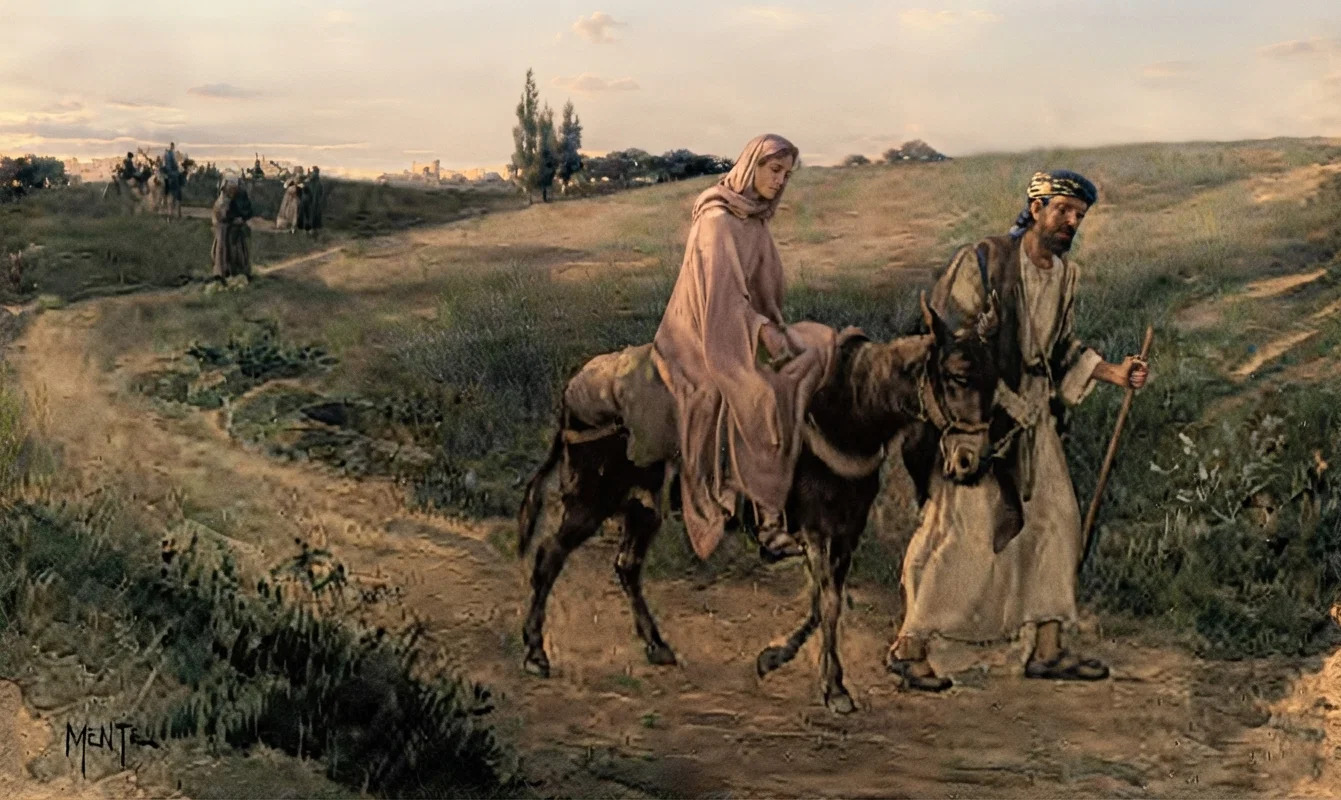
MARY had been told by the angel Gabriel that she was to give birth to the Saviour of the world: "And, behold, thou shalt conceive in thy womb, and bring forth a Son, and shalt call His name Jesus. . . . The Holy Ghost shall come upon thee, and the power of the Most High shall overshadow thee; wherefore also that which is to be born shall be called holy, the Son of God." Luke 1:31-35, R.V. Joseph also, to whom Mary was betrothed, had received like information: "And she shall bring forth a Son, and thou shalt call His name Jesus; for He shall save His people from their sins." Matt. 1:21.
BOTH Mary and Joseph accepted the angel's words—she so far as to rejoice over the honor bestowed upon her (Luke 1:46-55), and he to the extent of marrying Mary after deciding not to do so on learning of her condition (Matt. 1:18-25). But faith requires more than this; faith calls for a belief of the Scriptures, which are given by the Spirit of Christ (1 Peter 1:10-12), as well as the words spoken by angels; and if there should be a conflict of testimony, the Scriptures are the guide (Gal. 1:6-8).
Now THE angel did not tell either Joseph or Mary that the Child Jesus must be born in Bethlehem; the Scriptures contained that information (Micah 5:2); and faith would have searched the Scriptures for every bit of information concerning the One thus intrusted to them, and of whom all Israel professedly expected so much. But time passed by, and there seems to have been no thought of moving to Bethlehem before the birth should take place. Had Joseph and Mary been left to themselves, the Child would have been born in Nazareth. Such was the stupor that had come over them, in common with the Jewish people, through adhering to the traditions of their teachers instead of the Scriptures. However, God, who knoweth the future as well as the past and present, provided for the emergency. He did not send an angel to hasten them on their prospective journey when they might have gone more comfortably. Having evidently neglected the precaution which faith would have suggested, they had to go under the pressure of human decree.
And Joseph also went up . . . to the city of David, . . . to enroll himself with Mary.
"God works in a mysterious way His wonders to perform."
"Now IT came to pass in those days, there went out a decree from Caesar Augustus, that all the world should be enrolled. . . . And all went to enroll themselves, every one to his own city. And Joseph also went up from Galilee, out of the city of Nazareth, into Judea, to the city of David, which is called Bethlehem, because he was of the house and family of David; to enroll himself with Mary, who was betrothed to him, being great with child." Luke 2:1-5, R.V.
No ONE anticipating such a journey would have deferred it until such a late day under such delicate circumstances. The distance was not less than seventy or seventy-five miles—at least three or four days' journey at the rate they must necessarily travel. Arriving at Bethlehem, a new and most embarrassing difficulty meets them,—they can find no stopping-place. They are too late to secure even the ordinary accommodations provided for travelers and temporary sojourners. Others, with no reason at all for being there but the enrolment decree, are ahead of them. Faith would have brought them there and settled them before the decree went forth; but lack of it necessitated their seeking the shelter provided for the beasts.
AND so it ever has been,—lack of faith defers the work of the Lord that might have been done under more favorable circumstances, until the pressure of human decrees renders it embarrassing and oft extremely difficult and dangerous. But, somehow or other, the people of God are slow to profit by the experiences of those who have gone before, altho 'whatsoever things were written aforetime were written for our learning.' When the Lord is obliged to use the heathen (as in the case of Caesar Augustus) as instruments for carrying out the purposes that should have been accomplished by His own people through faith, the end is invariably brought about through much tribulation and bitter experiences on the part of those who ought to have known and performed the Lord's will by faith in His Word.

RIGHTEOUSNESS, THEN POWER.

CHRIST hath redeemed us from the curse of the law, being made a curse for us; for it is written, Cursed is every one that hangeth on a tree; that the blessing of Abraham might come on the Gentiles through Jesus Christ; that we might receive the promise of the Spirit through faith.'
'The promise of the Spirit' is the promise of the baptism of the Holy Spirit in its pentecostal power. Just before His ascension Christ commanded His disciples 'that they should not depart from Jerusalem, but wait for the promise of the Father, which, saith He, ye have heard of Me. For John truly baptized with water; but ye shall be baptized with the Holy Ghost not many days hence. . . . Ye shall receive power, after that the Holy Ghost is come upon you.' This promised baptism of power can not be received by any one who has not received the blessing of Abraham. For 'the blessing of Abraham' is received 'that ye might receive the promise of the Spirit.'
Reader, have you received the 'blessing of Abraham'? It is useless to pray for the baptism of the Holy Spirit until you have. You do not know what the blessing of Abraham is. You may know, and know as quickly as Abraham knew, if you will do as Abraham did. Let us now go in search of the blessing of Abraham. The blessing of Abraham is the blessing of righteousness which God gave Abraham because he believed God when He spoke to him. Let us see that this is so. It is written (Gal. 3:6), 'Abraham believed God, and it was accounted to him for righteousness.' And again (verse 9), 'So then they that be of faith [they that believe God] are blessed with faithful Abraham.' Blessed with what?—Blessed with what Abraham was blessed with,—blessed with righteousness. The blessing of Abraham, therefore, is the blessing of righteousness which the Lord gave to Abraham when He told Abraham He would do something for him that seemed hard to do, and Abraham believed God could and would do it. Gen. 15:6.
Now that you know what the blessing of Abraham is for Abraham, God wants you to share in that blessing, to 'be blessed with faithful Abraham,' in order that you 'may receive the promise of the Spirit.'
Paul, in Rom. 4:1-11, again shows that the blessing of Abraham is the righteousness with which God blessed him when he believed what God said, and then makes a personal application of this truth thus: 'He staggered not at the promise of God through unbelief; but was strong in faith, giving glory to God; and being fully persuaded that, what He had promised, He was able also to perform. And therefore it was imputed to him for righteousness. Now it was not written for his sake alone, that it was imputed to him; but for us also, to whom it shall be imputed, if we believe on Him that raised up Jesus our Lord from the dead, who was delivered for our offenses, and was raised again for our justification.' Rom. 4:20-25.
'If we believe,' 'they that be of faith [they that believe] are blessed with faithful Abraham.' Believe what?—Believe that God justifies (makes righteous) the ungodly or unrighteous.
'But to him that worketh not, but believeth on Him that justifieth the ungodly, his faith is counted for righteousness.' Rom. 4:5. Are you unrighteous or ungodly? God says He will justify you, make you righteous, if you will ask Him to do it and believe that He does it.
'What things soever ye desire, when ye pray, believe that ye receive them, and ye shall have them.' Mark 11:24. Ask for the blessing of Abraham—ask God to forgive all the sins you ever committed from the day you knew the difference between right and wrong, until this moment. Ask Him to give you the righteousness He has promised to give to the unrighteous. Then believe that you have received that righteousness. 'For every one that asketh receiveth.' Luke 11:10.
But, says some one, if the blessing of Abraham is righteousness by faith, then I have always believed in that, for I have always believed in righteousness by faith. Good, if true. But if you have received righteousness by faith you have stopped sinning. Righteousness by faith not only justifies you from your past sins, but saves you from falling into those same sins again. It is both a cure and a preventative.
I am passing by my neighbor's house. He is in the cow-yard, milking. The cow kicks the milk over. The neighbor kicks the cow; then he seizes the stool and chases the cow around the yard. As he has the advantage in the inside track, he gets near enough to the cow to hurl the stool at her with telling effect. As neighbor in his chase comes near the fence on which I am leaning, I speak thus: 'Neighbor, have you accepted the message of righteousness by faith?'
He replies: 'I always believed in righteousness by faith. Never believed anything else. And I think it is a disgrace to even suggest that we need a special message on this subject. What will our neighbors of the other churches think of us if they hear it? But what made you ask me if I believed in righteousness by faith?'
'Because when a man believes in righteousness by faith, he will not get angry and club his cow.'
Reader, have you accepted righteousness by faith—not the theory that men are made righteousness by faith, but has it become a fact in your life? 'Faith without works is dead.' Do you still get out of patience in your home, at your work, with your brethren, with your neighbors, with your stock? Do you yield to the lusts of the flesh, to the lust of the eye? Do you love the world, its goods, or its pleasures? Do you love the pre-eminence? The precious truth that men are made righteous and kept righteous by faith, is given you to give you the victory over all your besetting sins. Then you will have received the blessing of Abraham, and can pray for the promise of the Spirit. Ask and ye shall receive. ALBION F. BALLENGER.

THE COMING OF THE LORD.

Signs in the Social World.

NATURALLY the same elements and principles operating in the political world would be seen in the social life of the people. In fact, the social life lies at the foundation of political life. Hence, the same conditions appearing in the one, would appear in the other. Extravagance at home naturally leads to extravagance abroad. Degeneracy in home life results in degeneracy in political life, and in our own day and in our own country the social life of the people has but to be contemplated and understood to determine the character of the statesmen and representatives of the people.
The last days are compared to the days of Lot and the days of Noah. Says our Saviour in the seventeenth chapter of Luke: "And as it was in the days of Noe, so shall it be also in the days of the Son of man. They did eat, they drank, they married wives, they were given in marriage, until the day that Noe entered into the ark, and the flood came, and destroyed them all. Likewise also as it was in the days of Lot; they did eat, they drank, they bought, they sold, they planted, they builded; but the same day that Lot went out of Sodom it rained fire and brimstone from heaven, and destroyed them all. Even thus shall it be in the day when the Son of man is revealed."
In the days of Noah there was no sin in eating or drinking; there was no sin in marrying and giving in marriage, after God's order. To partake of food is but to satisfy a natural desire implanted by nature. To engage in holy wedlock is but to follow the ordinance instituted by the Creator. Hence the proper exercise of neither of these things was sin in Noah's day, nor in Lot's day, nor is it in our day. But it was the misuse of these rites and ordinances which made their practise odious in the sight of God. Men ate and drank, not to satisfy the demands of nature and to glorify God thereby, but to satisfy their gluttony and unnatural craving. They married wives, not after God's ordinance, but in obedience to their own unholy desires.
That this is the condition of affairs in the world to-day, there is not wanting proof on every hand. In every nation in the land, our own not excepted, the spirit of intemperance has done its terrible work. Desolate homes, broken-hearted wives, forlorn, neglected children, furnish multiplied evidences on every hand of the abasement of the natural desires of man. The question of what we shall eat, and what we shall drink, is that which chiefly concerns the minds of the multitude. With the poor, the last farthing is oftentimes spent for drink, for that which will pamper to the perverted taste. With the rich, thousands of dollars are wasted in serving sumptuous dinners and gluttonous feasts. It is no uncommon thing for dinners to be served to-day costing upwards of ten thousand dollars.
And what shall be said of the great social evil, which to-day, even as greatly as the drink habit, is sending hourly down to the pool of pollution thousands of our young men and young women? Our cities have become veritable Sodoms. And, as has been seen in the investigations carried on by the Legislatures of Illinois and New York, and other States, into the affairs of some of the leading municipalities of the country, the officers of the law, instead of being the guardians of public safety and so-called public morals, are willing parties to the system of debauchery carried forward, so that vice is doubly legalized, having, on the one hand, the protection of the law (as havelicensed liquor houses), and, on the other hand, the connivance and encouragement of the so-called officers of justice. A moral leprosy has taken hold of nearly every strata of society.
True to the words of divine inspiration do we see the condition of these things to-day, and, seeing them, we recognize their relation as precursors and signs of the great day of the Lord. In that day shall every secret be made known. In that day shall the wicked plottings and connivings of men be brought to light. Iniquity to-day may hide her face and cover her pathway, but in God's great purpose it is destined some time to have an end. The principles of righteousness shall triumph, and that speedily. All who are connected with these principles will triumph likewise. The principles of evil shall have an end, and all who are connected with those principles shall go down in the general destruction which will attend every evil thing.
May the Lord enable us to stand for the right in these days of moral degeneracy. The ones whom He brings to Himself will be those of unfailing purpose, strength of principle, and unsullied character. Only he who has clean hands and a pure heart shall stand in His holy hill.

THE SEAL OF GOD. NO. I.

The Conflicts of the True Church—Persecuting Powers—The Last Great Power—A Warning Message—The Seal of God, the Mark of the Beast.

TO THE apostle John on the isle of Patmos were opened scenes of deep and thrilling interest in the experience of the church. Subjects of intense interest and vast importance were presented to him in figures and symbols, that the people of God might become intelligent concerning the perils and conflicts before them. The history of the Christian world to the very close of time was revealed to John. With great clearness he saw the position, dangers, conflicts, and final deliverance of the people of God. He records the closing message which is to ripen the harvest of earth, either as sheaves for the heavenly garner, or as fagots for the fires of the last day.
In vision John beheld the trials which God's people would endure for the truth's sake. He saw their unyielding firmness in obeying the commandments of God, in the face of the oppressive powers that sought to force them into disobedience, and he saw their final triumph over the beast and his image.
Under the symbols of a great red dragon, a leopard-like beast, and a beast with lamblike horns, the earthly governments which would especially engage in trampling upon God's law and persecuting His people, were presented to John. The war is carried on till the close of time. The people of God, symbolized by a holy woman and her children, were represented as greatly in the minority. In the last days only a remnant still existed. Of these John speaks as they "which keep the commandments of God, and have the testimony of Jesus Christ."
Through paganism, and then through the Papacy, Satan exerted his power for many centuries in an effort to blot from the earth God's faithful witnesses. Pagans and papists were actuated by the same dragon spirit. They differed only in that the Papacy, making a pretense of serving God, was the more dangerous and cruel foe. Through the agency of Romanism, Satan took the world captive. The professed church of God was swept into the ranks of this delusion, and for more than a thousand years the people of God suffered under the dragon's ire. And when the Papacy, robbed of its strength, was forced to desist from persecution, John beheld a new power coming up to echo the dragon's voice, and carry forward the same cruel and blasphemous work. This power, the last that is to wage war against the church and the law of God, was symbolized by a beast with lamblike horns. The beasts preceding it had risen from the sea, but this came up out of the earth, representing the peaceful rise of the nation which is symbolized. The "two horns like a lamb" well represent the character of the United States Government, as expressed in its two fundamental principles, Republicanism and Protestantism. These principles are the secret of our power and prosperity as a nation. Those who first found an asylum on the shores of America rejoiced that they had reached a country free from the arrogant claims of popery and the tyranny of kingly rule. They determined to establish a government upon the broad foundation of civil and religious liberty.
But the stern tracing of the prophetic pencil reveals a change in this peaceful scene. The beast with lamblike horns speaks with the voice of a dragon, and "exerciseth all the power of the first beast before him." Prophecy declares that he will say to them that dwell on the earth that they should make an image to the beast, and that "he causeth all, both small and great, rich and poor, free and bond, to receive a mark in their right hand, or in their foreheads; and that no man might buy or sell, save he that had the mark, or the name of the beast, or the number of his name." Thus Protestantism follows in the steps of the Papacy.
It is at this time that the third angel is seen flying in the midst of heaven, proclaiming: "If any man worship the beast and his image, and receive his mark in his forehead, or in his hand, the same shall drink of the wine of the wrath of God, which is poured out without mixture into the cup of His indignation." "Here are they that keep the commandments of God, and the faith of Jesus." In marked contrast to the world stands the little company who will not swerve from their allegiance to God. These are they of whom Isaiah speaks as repairing the breach which had been made in the law of God, they who are building the old waste places, raising up the foundation of many generations.
The most solemn warning and the most awful threatening ever addressed to mortals is that contained in the third angel's message. The sin that calls down the wrath of God unmixed with mercy must be of the most heinous character. Is the world to be left in darkness as to the nature of this sin?—Most assuredly not. God does not deal thus with His creatures. His wrath is never visited upon sins of ignorance. Before His judgments are brought upon the earth, the light in regard to this sin must be presented to the world, that man may know why these judgments are to be inflicted, and may have opportunity to escape them.

The Seal—the Mark.

The message containing this warning is the last to be proclaimed before the revelation of the Son of man. The signs which He Himself has given declare His coming to be near at hand. For well-nigh forty years has the message of the third angel been sounding. In the issue of the great contest two parties are developed, those who "worship the beast and his image," and receive his mark, and those who receive "the seal of the living God," who have the Father's name written in their foreheads. This is not a visible mark. The time has come when all who have an interest in their soul's salvation should earnestly and solemnly inquire, What is the seal of God? and what is the mark of the beast? How can we avoid receiving it?
The seal of God, the token or sign of His authority, is found in the fourth commandment. This is the only precept of the Decalogue that points to God as the Creator of the heavens and the earth, and clearly distinguishes the true God from all false gods. Throughout the Scriptures the fact of God's creative power is cited as proof that He is above all heathen deities.
The Sabbath enjoined by the fourth commandment was instituted to commemorate the work of creation, thus to keep the minds of men ever directed to the true and living God. Had the Sabbath always been kept, there would never have been an idolater, an atheist, or an infidel. The sacred observance of God's holy day would have led the minds of men to their Creator. The things of nature would have brought Him to their remembrance, and they would have borne witness to His power and His love. The Sabbath of the fourth commandment is the seal of the living God. It points to God as the Creator, and is the sign of His rightful authority over the beings He has made.
What, then, is the mark of the beast, if it is not the spurious sabbath which the world has accepted in the place of the true?
The prophetic declaration that the Papacy was to exalt itself above all that is called God, or that is worshiped, has been strikingly fulfilled in the changing of the Sabbath from the seventh to the first day of the week. Wherever the papal Sabbath is honored in preference to the Sabbath of God, there the man of sin is exalted above the Creator of heaven and earth.
Those who assert that Christ changed the Sabbath are directly contradicting His own words. In His Sermon on the Mount He declared: "Think not that I am come to destroy the law, or the prophets; I am not come to destroy, but to fulfil. For verily I say unto you, Till heaven and earth pass, one jot or one tittle shall in nowise pass from the law, till all be fulfilled. Whosoever therefore shall break one of these least commandments, and shall teach men so, he shall be called the least in the kingdom of heaven; but whosoever shall do and teach them, the same shall be called great in the kingdom of heaven."
Roman Catholics acknowledge that the change in the Sabbath was made by their church, and they cite this very change as evidence of the supreme authority of this church. They declare that by observing the first day of the week as the Sabbath, Protestants are recognizing her power to legislate in divine things. The Roman Church has not relinquished her claim to infallibility, and when the world and the Protestant churches accept the spurious sabbath of her creating, they virtually acknowledge her claim. They may cite the authority of the apostles and fathers in defense of this change, but the fallacy of their reasoning is easily discerned. The papist is sharp enough to see that Protestants are deceiving themselves, willingly closing their eyes to the facts in the case. As the Sunday institution gains favor, he rejoices, feeling assured that it will eventually bring the whole Protestant world under the banner of Rome.
MRS. E. G. WHITE. (Concluded next week.)

The Weary Ox Treads Surest

"THE ox when he is weary treads surest."

A LIVING SACRIFICE.

A Peculiar Feature of the Christian System—Of Divine Appointment—The More Excellent Sacrifice—The Jewish Economy.

THERE are peculiar features found in the Gospel system, which are not only not found in any other form of religion, but which clothe the Christian scheme with a glory that even its friends are too apt to overlook. One of these is seen in the unapproachable superiority of the sacrifice which it provides. Sacrifices are of divine appointment, and are designed for a most important purpose. When the plan of redemption was formed, and there was involved therein, as its central act, the gift of Christ for the world, the offering of blood as an act of worship was instituted, to set forth this great fact in figure before mankind. From this has come the practise, found even among uncivilized tribes in the remotest corners of the earth, of erecting altars which should send up smoking incense to heaven, and causing blood to flow from some living thing. No class of men can be found so low in the scale as to give no evidence of some religious instinct implanted in their bosoms. They bear in their inmost nature a painful consciousness that they are guilty, and that in some way expiation must be made for their sins. This is why smoking altars and bloody knives of sacrifice have written their lessons upon all the ages, and in all lands.
Taking advantage of this feeling in man's heart,—the impression of that first lesson burned into the conscience of humanity, when its representatives first turned their backs upon God and heaven, what havoc has the enemy of all righteousness wrought in the world! To what a senseless farce and cruel mockery has he degraded the sacred service! What God at first instituted as an object lesson, to keep before the minds of men the central thought in the great scheme of human redemption, that without the shedding of blood there can be no remission, he has perverted to a colossal evil. He has ever tried to hide from men's minds the true God, introducing divinities fashioned after the evil conceptions of the human heart, vengeful and abominable, deceiving them as to the end to be accomplished by sacrifices, loading the service with cruelty, and fouling it with loathsome lust. Thus has he turned it into a dark and appalling curse. What was first given to men to meet a necessity of their nature, and open a channel through which faith could lay hold upon a living Saviour, was turned into a most potent engine of corruption, destruction, and despair. It was to foster and vitalize true faith in the human heart, which Satan has tried to thwart, that the offering of sacrifices was ordained in the beginning.
Of the first offering of which a record remains, we read these words: "By faith Abel offered unto God a more excellent sacrifice than Cain, by which he obtained witness that he was righteous, God testifying of his gifts; and by it he being dead yet speaketh." Heb. 11:4. Turning back to the record, in Gen. 4:3-9, we learn at once what it was that made Abel's sacrifice more excellent than Cain's. Cain brought of the fruit of the ground; but Abel brought of the firstlings of his flock.
What Cain brought may have been, in itself considered, more pleasing to the eye than the offering of Abel, and surpassing it in beauty, abundance, and value; but the essential feature of a heaven-ordained sacrifice, such as God could accept, was lacking; that is, there was in it no blood. It was only the fruit of the ground, fair, and ripe, and perfect, and costly, no doubt, but containing no blood to signify faith in One to come, who was to shed His blood and give His life for the salvation of men. But Abel selected an animal without blemish from the firstlings of his flock. He poured out its blood. Such an offering was the appointed type of the coming Redeemer. It proclaimed the solemn truth that without the shedding of blood is no remission, and that the offerer, acknowledging that his life was forfeited and could be redeemed only by the life of another, was willing to accept of pardon and life on that condition. Abel's offering showed such faith in a coming Saviour, and, being in accordance with God's own arrangement, God could consistently accept it, and give Abel proof of His pleasure, by letting the fire fall from heaven and consume the sacrifice. Cain's offering showed no such faith, but was rather a subterfuge of unbelief, and God could not accept it. Had Cain desired to show faith, as Abel did, he could easily have obtained a fitting animal from his brother, as God in His scathing reproof reminded him, when He said that "sin [a sin-offering] lieth at the door." Hence Cain's offering, being without faith, was without merit; for without faith the whole ceremony became a hollow mockery; "for whatsoever [religious service, no matter with how much care and elaborate show performed] is not of faith, is sin." It is changed by the alchemy of evil into an offense against God.
In the Jewish economy, the system of types and shadows, sacrifices and offerings, was elaborated into its greatest perfection. In the ages before this, men had shown their faith in a coming Redeemer by their family sacrifices, offered according to the lesson handed down from Eden. But the time had now come for a more complete and definite object lesson to be set before the world. The family of Jacob, which went down into Egypt a mere pigmy household of seventy souls, had there grown, under the watchful eye and fostering care of God, notwithstanding all their afflictions, into a great company, a mighty nation; and with them God was then able to organize a theocracy in the world, and set among the nations a visible kingdom of His own, to maintain His name and truth before the people of all lands. The sanctuary was given them, with its beautiful and impressive service. There, in glowing figure, was set forth the way of pardon and life. There, by visible ceremony, was shown the method by which sin is transferred from the burdened penitent to a vicarious substitute, and finally put away, and destroyed forever. In the glorious sanctuary was seen a permanent exhibition of the glory of God, in the dazzling Shekinah; and by this unique and captivating service of the sanctuary, man was molded by his religion, and brought near to God.
For such a people, called to such a service, God could do nothing less than to offer them the headship of the nations, and to place them above all people as the depositaries of His law, and the representatives of His truth and Himself in the earth. Such an offer He did make them (Ex. 19:3-8); but they grievously failed by falling under temptation and sin; and so they never became all that God desired and intended them to be. Besides this, their system, glorious as it was (2 Cor. 3:10), was inadequate, and hence only designed to be temporary; because the best sacrifices they had to offer could not take away sin. The apostle puts it in these words: "For the law having a shadow of good things to come, and not the very image of the things, can never with those sacrifices which they offered year by year continually make the comers thereunto perfect." "For it is not possible that the blood of bulls and of goats should take away sins." Heb. 10:1, 4. But in the New Testament dispensation all the imperfections of the old are fully remedied. That was the bud; this, the flower. Here the overwhelming wonder of the great scheme flashes out in all its glory. The earthly sanctuary disappears, and the true sanctuary in heaven comes into view. Before an astonished universe the sacrifice for us took place on the cross. Rising from the dead, and ascending up on high, He who had died entered that sanctuary not made with hands, not with the inefficient blood of animals, the best that man could offer, but with His own precious blood. Drop the plummet into this divine fountain of saving grace, and see if you can sound the profound depths of its wisdom and love. The Majesty of heaven becomes the sacrifice; but death can not hold Him. Emerging from the tomb, He ever liveth to plead His own blood, and make intercession for us. In the act that led Him to consent to undertake the work, in the act of laying down His life as our sacrifice, in the act of presenting His blood in our behalf as our living Mediator, the same feelings of compassion for us must rule His heart, the same love animate His bosom. Could faith have firmer ground on which to rest? Could our souls have greater assurance of the help they need? Who has devised such a plan as this? Who would try to furnish for us such a foundation for full assurance of faith and hope? Powers of darkness would not. Human beings could not. Jesus is the Author and Finisher of our faith.
"With joy we meditate the grace Of our High Priest above; His heart is made of tenderness, His bosom glows with love." URIAH SMITH.

YOUR BESETTING SIN.

  1. THE sin you do not want to be reproved for.
  2. The sin you are readiest to defend.
  3. The sin your thoughts run most upon.
  4. The sin that leads you captive the easiest.
  5. The sin you find the most excuse for.
  6. The sin that oftenest beclouds your spiritual sky.
  7. The sin that causes you remorse of conscience the most frequently.
  8. The sin that makes you doubt your present acceptance with God.
  9. The sin you are most unwilling to acknowledge you possess.
  10. The sin you are most unwilling to give up.
  11. The sin you are all the time trying to persuade yourself is an infirmity.
  12. The sin which must be laid aside in order to enjoy full salvation.
  13. The sin which is as dear as a right eye, but which must be given up.—Anon.
Continue reading: THE LORD OUR RIGHTEOUSNESS