Your ShelfYour Projects

Signs of the Times, Vol. 23, No. 44.

Editorial

Signs of the Times

Nov 11, 1897

Pacific Press Publishing Company · Oakland, California · Nov 11, 1897

Editorial

PROPER SABBATH OBSERVANCE.
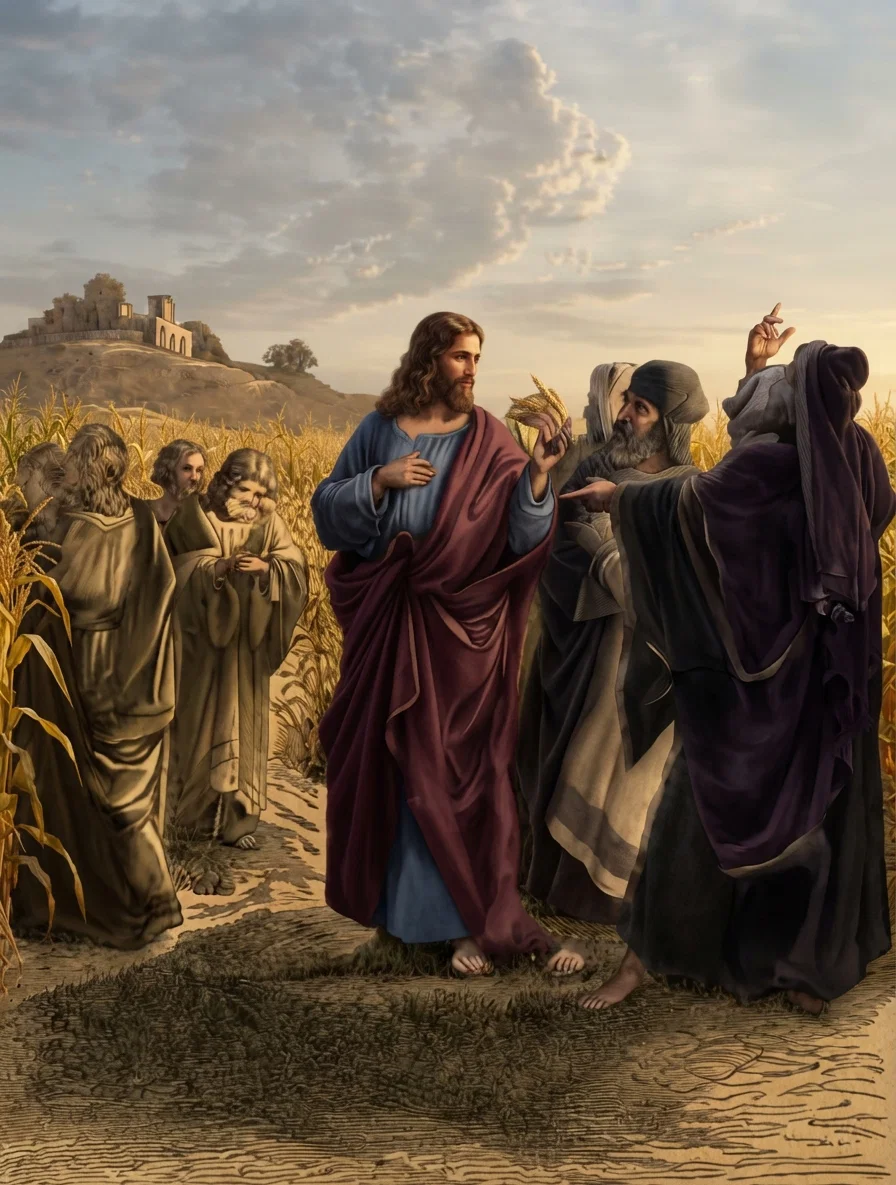
"And it came to pass, that He went through the corn fields on the Sabbath day; and His disciples began, as they went, to pluck the ears of corn. And the Pharisees said unto Him, Behold, why do they on the Sabbath day that which is not lawful? And He said unto them, Have ye never read what David did, when he had need, and was an hungered, he, and they that were with him? How he went into the house of God in the days of Abiathar the high priest, and did eat the show-bread, which is not lawful to eat but for the priests, and gave also to them which were with him? And he said unto them, The Sabbath was made for man, and not man for the Sabbath; therefore the Son of man is Lord also of the Sabbath." Mark 2:23-28. And he said, "If ye had known what this meaneth, I will have mercy, and not sacrifice, ye would not have condemned the guiltless." Matt. 12:7.
Who Speaks.—This statement about the Sabbath and its purpose is from Him who made the Sabbath; for in Christ were all things created (Col. 1:16, 17), and without him was not one single thing made, of that which exists (John 1:1-3); and the Sabbath is the rest of the Creator. Gen. 2:1-3. The Creator, he who made the Sabbath for man, is the only one who can tell us what it is for, and how to keep it. All statements by men, to the effect that this thing may not be done on the Sabbath, and that thing must not be done on the Sabbath, are Pharisaical and popish additions to God's Word, which, inasmuch as they are mere human ordinances, are always sure to be wrong. The Word of God alone is to be the guide under all circumstances; whoever holds fast to the Word, and is taught of God, can not go wrong.
HE WENT THROUGH THE CORN FIELDS ON THE SABBATH DAY.
"For Man."—"The Sabbath was made for man," and is therefore not something that is against him, a hard requirement,—something to hold him down,—but a thing calculated to help him in every way. But it is for man, that is, it is a blessing to a man only when he keeps it. When a man rejects that which is good, he has only the evil; so a blessing spurned leaves only the curse; and the Sabbath broken leaves a man helpless. Therefore when it is said that all human additions to the Sabbath, and interpretations of the commandment, are of no value, it must not be understood that anybody in the world has any license to break the Sabbath. "Remember the Sabbath day, to keep it holy," is as valid a commandment as it was the day it was spoken from Sinai.
"Lawful to Do Well."—Notice that the Saviour did not excuse the disciples for breaking the Sabbath, but he declared that they had not broken it; they were guiltless. God is not like the gods that the heathen worship, who must be propitiated by human suffering. He has no delight in seeing people suffer, but only in seeing them happy. Fasting is right in its place, and acceptable to God; but when it is done as a penance, when one makes a virtue of it, then it is an abomination to the Lord. Jesus said that the disciples, in quietly satisfying their hunger on the Sabbath day, were guiltless. They did that which was "not lawful," only according to the traditions of the Pharisees, but not according to the law of God. "It is lawful to do well on the Sabbath days," said Jesus (Matt. 12:12), and he it is who by obedience to the law of God magnified the law, and made it honorable. Isa. 42:21.
Our Lord's Sabbath Work.—In these words, "It is lawful to do well on the Sabbath days," and, "The Sabbath was made for man," we have the explanation of many of the acts of Christ. The first of these statements is found in Matthew's account of the healing of the man with a withered hand (Matthew 12), which occurs in immediate connection with that of the disciples eating the corn. Indeed, they went from the corn field direct to the synagogue, where Jesus performed this miracle. The Pharisees, knowing how ready and anxious Jesus was to relieve the afflicted, watched him to see if he would heal the man on the Sabbath. He asked them, "Is it lawful to do good on the Sabbath days, or to do evil? to save life, or to kill?" But they held their peace. And when he had looked round about on them with anger, being grieved for the hardness of their hearts, he saith unto the man, Stretch forth thine hand. And he stretched it out; and his hand was restored whole as the other." Mark 3:4, 5.
Its Nature.—The Sabbath, therefore, is connected with well-doing, and stands for well-doing, since it was made for man, for his benefit. The scribes and Pharisees had made it a burden for the people; and it was to show its real nature, that Jesus performed so many miracles on the Sabbath day. Let us look at three typical miracles, besides the one already noted, that were done on the Sabbath.Healing of the Impotent Man.—In the fifth chapter of John we have the account of the healing of the man at the pool of Bethesda, who had an infirmity that had made him unable to walk for thirty-eight years. "When Jesus saw him lie, and knew that he had been now a long time in that case, he saith unto him, Wilt thou be made whole? The impotent man answered him, Sir; I have no man, when the water is troubled, to put me into the pool; but while I am coming, another steppeth down before me. Jesus saith unto him, Rise, take up thy bed, and walk. And immediately the man was made whole, and took up his bed, and walked; and on the same day was the Sabbath." John 5:6-9. "Therefore did the Jews persecute Jesus, and sought to slay him, because he had done these things on the Sabbath day." Verse 16.
Healing of the Blind Man.—Altho Jesus knew how the Pharisees felt about such things, he still continued to go about doing good, no less on the Sabbath days than on other days. He said, "I must work the works of Him that sent me, while it is day." As he passed by, "he saw a man which was blind from his birth." Having said that he must do the works of God, and that he was the light of the world, "he spat on the ground, and made clay of the spittle, and he anointed the eyes of the blind man with the clay, and said unto him, Go, wash in the pool of Siloam (which is by interpretation, Sent). He went his way therefore, and washed, and came seeing." "And it was the Sabbath day when Jesus made the clay, and opened his eyes." And again there was strife among the Jews over the matter. See John 9.
Healing of the Infirm Woman.—On another occasion Jesus "was teaching in one of the synagogs on the Sabbath. And, behold, there was a woman which had a spirit of infirmity eighteen years, and was bowed together, and could in nowise lift up herself. And when Jesus saw her, he called her to him, and said unto her, Woman, thou art loosed from thine infirmity. And he laid his hands on her; and immediately she was made straight, and glorified God. And the ruler of the synagog answered with indignation, because that Jesus had healed on the Sabbath day, and said unto the people, There are six days in which men ought to work; in them therefore come and be healed, and not on the Sabbath day. The Lord then answered him, and said, Thou hypocrite, doth not each one of you on the Sabbath loose his ox or his ass from the stall, and lead him away to watering? And ought not this woman, being a daughter of Abraham, whom Satan hath bound, lo, these eighteen years, be loosed from this bond on the Sabbath day? And when he had said these things, all his adversaries were ashamed; and all the people rejoiced for all the glorious things that were done by him." Luke 13:10-17.
Relieving the Afflicted.—One noticeable thing about all these cases is that none of them were what might be called urgent cases. There was no immediate danger of death in any of them, unless possibly in the case of the man at the pool of Bethesda, and one day more could certainly not have made much difference in his case. The blind man would never have known the difference if Jesus on seeing him had said to himself, "To-morrow or as soon as the Sabbath is past, I will come and heal that man." Eight or ten days even would have made no great difference so far as the man was concerned, for his life was in no danger, and he had no expectation of seeing. The same thing is true of the woman that was bowed down, and of the man with the withered hand. They would not have suffered materially if Jesus had waited a day or two longer before healing them, especially as they were not expecting to be healed. But Jesus did not wait, when he saw people in affliction, but gave them the blessing of health and strength at once, no matter what the day. Even when he knew that the Jews were watching him, so as to have an accusation against him, and that they would seek to kill him for his Sabbath miracles, he did not put off the good work.
A Design.—We can not read the record of these cases without seeing that it was not mere accident that they were healed on the Sabbath day. When the persons’ lives were in no danger, and they had as it were become accustomed to their infirmity, and had not asked nor expected to be healed, and when Jesus knew that the healing of them on the Sabbath would increase the enmity of the rulers of the Jews against him, and that they were watching him, we can easily see that there was design in the performance of these miracles on the Sabbath day. Jesus wished to teach the people and their rulers a lesson that they needed to know.
A Lesson of Love.—Of one thing, however, we may be sure, the design of Jesus was not to spite the Jews, or to show contempt for the rulers. It was not any defiance of danger, or desire to assert his rights, that led him thus to act contrary to the cherished traditions of the elders. We know that he often went away to another part rather than stir up the animosity of the rulers, and that he did not court publicity. No; his one desire was to do good, and to show the people that the Sabbath was meant to be a blessing, and not a burden. His work was "to heal the broken-hearted, to preach deliverance to the captives, and recovering of sight to the blind, to set at liberty them that are bruised" (Luke 4:18), not alone in body, but in soul and spirit. The physical blindness and bondage and infirmity which the people suffered was only an evidence and a consequence of the spiritual blindness and bondage and infirmity that afflict mankind; and the power of Jesus over the one was simply an evidence of his power over the other. He came to represent the Father, and to declare his name, who is, "The Lord, The Lord God, merciful and gracious, long-suffering, and abundant in goodness and truth, keeping mercy for thousands, forgiving iniquity and transgression and sin." Ex. 34:6, 7. The healing of the body was only a sign to show the reality of the blessed work of forgiving sins and cleansing from all unrighteousness. See Matt. 9:5, 6.
Object of the Sabbath.—Now the object of the Sabbath is to cause people to know the Lord as the God who sanctifies. Eze. 20:12. The Sabbath is God’s rest, the rest which he graciously shares with all who believe him. Ex. 20:8, 9; Heb. 4:3, 4. It stands for complete deliverance from sin in the present time, and is the pledge and assurance of the final redemption of the body and of the whole creation from every trace of the curse. Those who cease from profaning it, and who call it a delight, and not a burden, and by the proper observance of it honor God as Creator with all power in heaven and earth, have the promise that through it they shall delight themselves in the Lord, and be made to ride on the high places of the earth. Isa. 58:13, 14. It was to show all the people, including us, that the Sabbath means freedom from sin and the curse, and fulness of joy in the Lord, that Jesus performed those miracles. Let it be particularly noticed that the effect of them was to cause the people to rejoice and to glorify God.
No Controversy over the Day.—It may be noted, in closing, that there was never any controversy or question as to which day is the Sabbath. The commandment settles that for all time, and the Bible gives no ground for any controversy over the matter. "The seventh day is the Sabbath," and the Pharisees and Jesus were agreed on that, since there was no room for difference. Jesus did not once intimate that the seventh day was not the Sabbath, or that he had come to change it, or that he no longer needed to be observed as strictly as formerly. He expressly stated that he had not come to destroy the law, or any portion of it, but instead to fulfil it, and show how it should be observed. His works of love and mercy, never performed for his own profit or benefit, but only for the good of others, even to his own loss, were done, not to show disregard of the Sabbath day, but were, on the contrary, the highest possible honor that could be shown it, in that they presented it as the sign of the greatest blessing that God has it in his power to bestow. Who will accept it as such, and in glorifying God find himself sanctified and glorified? E. J. W.

Force of a Word

Force of a Word.—How much meaning often rests on one little word. Take for instance the word “also” in the question asked Peter by the damsel who kept the door of the high priest’s palace, “Art thou also one of this Man’s disciples?” John 18:17. Peter had just been brought in by John. Verse 16. John before this had gone in with Jesus. Verse 15. His going in with Jesus had revealed to the girl that John was Christ’s disciple. She did not need to ask John the question; his acts revealed where he stood. All this is shown by that little word “also.” “Art thou also [as well as this man with thee] this Man’s disciple?” Had Peter been with Jesus, he would not have denied his Lord. When he had to be asked the question to ascertain his discipleship on such an occasion, he was in danger of falling. This is just as true in the case of every one. When our discipleship of Christ can only be ascertained by direct inquiry, it is unworthy of the name; it ought in honesty to be denied.

The Man Who Never Makes Mistakes

“The man who never makes mistakes is a very unpleasant person to live with.”

THE BREAD OF LIFE.

"I AM the bread of life; he that cometh to Me shall never hunger; and he that believeth on Me shall never thirst." John 6:35.
O, how my inmost soul was stirred When I believed that living word— That "whosoever will," may come And find in Christ a precious boon! Dear Lord, I come, I find.
O, how it does our spirit grieve When those we love will not believe The precious words which Thou hast said, "I am the light, the living bread," "Come unto Me," and find.
Lord, if Thou art the bread indeed, Cause them upon that bread to feed, That they may learn to know aright "The entrance of Thy Word" is light. O, may they come and see!
Then gently lead us all the way, Nor ever let us from Thee stray. Be Thou our Guide, our Shepherd, Friend, Until this life, or time, shall end, And then we all shall find.
MRS. E. R. LEWIS Spokane, Wash.

PETER'S FALL.

(Concluded.)
PETER needed a deeper, broader knowledge of Jesus Christ. He had listened to his words and enjoyed his lessons. He had acknowledged him to be the Son of God, and he believed him to be thus; but he had only touched the margin of faith in Christ. There were depths in the knowledge of his character which demanded his homage, his faith, his tribute of perfect trust and unshaken confidence. "Thou shalt see greater things than these," is the promise that invites increased expectation.
Jesus stood ready to reveal himself to Peter. In his great love he told him of his denial. He sought to reveal the defects of his character, and his need of the help which Christ alone could give. He told Peter that he was mistaken in his ideas of himself, and that in not receiving and believing the words of Christ, he was doing the very evil of which Christ had declared he would be guilty. How earnest, then, should have been Peter's prayers, that the Lord would teach him how to resist the wiles of the devil, how to be watchful against his temptations! But Peter's boastful assertions, while refusing to see himself as Christ viewed him, were causing his light to grow dim.
Jesus did not try farther to make Peter believe that he knew the course he would pursue; but he knew that "the heart is deceitful above all things, and desperately wicked." "Simon, Simon," he said, "behold, Satan hath desired to have you, that he might sift you as wheat; but I have prayed for thee, that thy faith fail not; and when thou art converted, strengthen thy brethren."
The object of conversion is twofold, personal and relative. It is to bless us, and to make us a blessing. This is an individual work; but those who profess to believe the Word of God have so long accustomed their minds to be content with little things that they have disqualified themselves to discern and appreciate the great things prepared for them. In the place of receiving into good and honest hearts the Word that God sends in messages to help them, to elevate, ennoble, and sanctify them, they cavil and gossip over it, because it cuts directly across their inclinations. In the place of seeing their need of conversion, they regard the means which the Lord has provided to change their characters as idle tales. To them their habits are stronger than truth. Individual conversion means a change of character. Man must place himself in personal relation to Christ, that, in the place of following his own hereditary and cultivated tendencies, he may have the mind of Christ, placing himself under the moulding influence of the Holy Spirit.
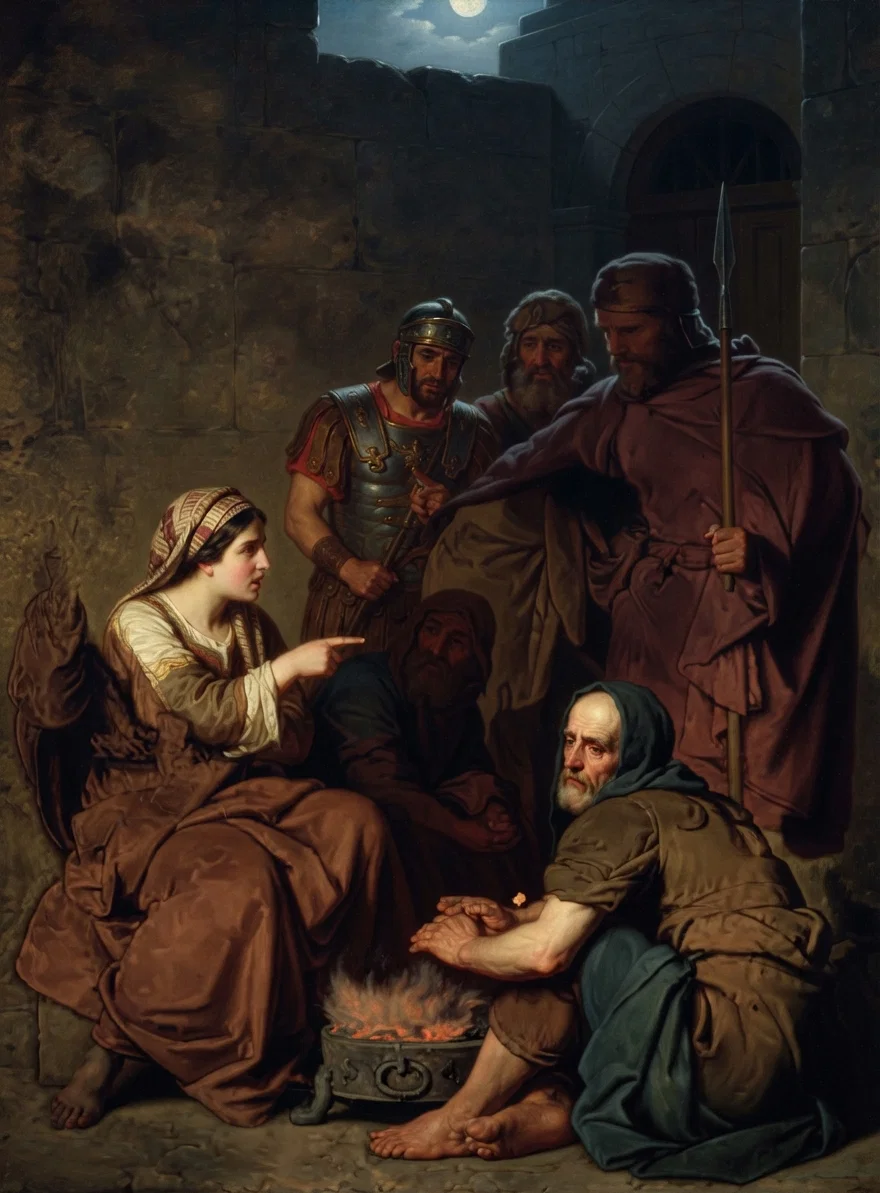
“And when she saw Peter warming himself, she looked upon him, and said, And thou also wast with Jesus of Nazareth. But he denied, saying, I know not, neither understand I what thou sayest. And he went out into the porch; and the cock crew.” Mark 14 : 67, 68.
O, that Peter had better learned the lesson given in the fifteenth chapter of John, of the necessity of abiding in Christ! "As the branch cannot bear fruit of itself," said Christ, "except it abide in the vine; no more can ye, except ye abide in me." Peter was listening to his words as, pointing to a vine on which was a withered branch, he said: "Every branch in me that beareth not fruit he taketh away; and every branch that beareth fruit, he purgeth [pruneth] it, that it may bring forth more fruit. . . . As the branch can not bear fruit of itself, except it abide in the vine; no more can ye, except ye abide in me. . . . If a man abide not in me, he is cast forth as a branch, and is withered; and men gather them, and cast them into the fire, and they are burned."
Peter denied the Man of Sorrows in his acquaintance with grief, in the hour of his humiliation; but he was filled with shame and sorrow for his act. With blinding tears he made his way to the solitudes of the Garden of Gethsemane, and there prostrated himself where he had seen his Saviour's prostrate form. He remembered with remorse that he was asleep when Jesus prayed during those fearful hours. His proud heart broke, and penitential tears moistened the sod so recently stained with the bloody sweat-drops of God's dear Son. He left the garden a converted man.
Then how tender and charitable, how meek and forgiving, Peter revealed himself to be! While under the test, he had been but a very dim reflector of the character of his Lord. How much of infirmity, of unmortified sin, of carelessness of spirit, of unsanctified temper, of heedlessness in entering into temptation, he revealed, rather than giving up his own way and will! But now he was ready to pity the tempted. He was humbled, and could sympathize with the weak and erring. He could caution and warn the presumptuous, and was fully fitted to strengthen his brethren.
Peter's history has a lesson for us. We need an abiding Christ with us, as Enoch had when he walked with God three hundred years. We can have what Enoch had. We can have Christ as our constant companion. Enoch walked with God, and when assailed by the tempter, he could talk with God about it. He had no "It is written," as we have, but he had a knowledge of his heavenly Companion. He made God his counselor, and was closely bound up with Jesus. And Enoch was honored in his course. He was translated to heaven without seeing death. And those who will be translated at the close of time will be those who commune with God on earth. Those who make manifest that their life is hid with Christ in God will ever be representing him in all their life practises.
The highest testimony that Peter could have borne for Christ under trial would have been to reveal his steadfast principles, and in revealing the pure, holy beauty of the character of Christ, show that Christ was abiding in him. The Lord would have his followers reveal in their life-practises his life of self-denial, lifting the cross at every step. We are to show our consecration in every act. And this will be the highest testimony that we can bear to the Redeemer's glory.
The Word must be studied, it must rule in the heart, that we may be prepared to bring from the treasure-house good things. Let the Word of God dwell in you richly; then when you are assailed, you will have the armor of God to wear. Having done all, you may stand. When the host of hell seek to destroy with temptations, you will be ready with sharp perception to discern their wiles, and meet them as Christ met his enemy in the wilderness,—with, "It is written."
When men feel themselves strong, then it is that they need the words of inspiration brought to their minds, "Let him that thinketh he standeth, take heed lest he fall." Had Peter taken heed, he would not have disgraced himself, and put Christ to open shame. Often the tempted one does not realize that he has unseen, heavenly agencies working in his behalf; but this is so. When we feel our personal weakness, when we depend on Christ, and not on self, we have done what we can. Then theheavenly intelligences are ready to lift up a standard for us against the enemy, saying to the Satanic agencies, "Thus far shalt thou go, and no farther." At such times if words were to pass from Christ to us, they would be, spoken gently and sympathisingly, "Abide in my love. Be of good cheer. Thou art in Christ's heart; thou art not alone."
MRS. E. G. WHITE.

"THE MOST HIGH RULETH." NO. 3.

IT has been shown in former articles that the Most High ruleth in what are termed heathen nations as well as in those nations which profess to worship the true God. By way of emphasis it will no doubt be profitable to refer to the fact that not only did the Lord give his own chosen nation into the hands of the king of Babylon, but that he did the same with the other nations. It is significant in this connection to note that he sent the same message to surrounding kingdoms that was sent to the kingdom of Judah. In the twenty-seventh chapter of Jeremiah is the record of his commanding several nations to submit to Nebuchadnezzar. His word to Jeremiah is there stated as follows:—
"Thus saith the Lord to me: Make thee bonds and yokes, and put them upon thy neck, and send them to the king of Edom, and to the king of Moab, and to the king of the Ammonites, and to the king of Tyrus, and to the king of Zidon, by the hand of the messengers which come to Jerusalem unto Zedekiah king of Judah; and command them to say unto their masters, Thus saith the Lord of hosts, the God of Israel: Thus shall ye say unto your masters: I have made the earth, the man and the beast that are upon the ground, by my great power and by my outstretched arm, and have given it unto whom it seemed meet unto me. And now have I given all these lands into the hand of Nebuchadnezzar the king of Babylon, my servant; and the beasts of the field have I given him also to serve him. And all nations shall serve him, and his son, and his son's son, until the very time of his land come; and then many nations and great kings shall serve themselves of him." Verses 2-7.
The last clause of this quotation calls to mind the word of the Lord to Abram regarding the service of his descendants in Egypt: "And he said unto Abram, Know of a surety that thy seed shall be a stranger in a land that is not theirs, and shall serve them; and they shall afflict them four hundred years; and also that nation, whom they shall serve, will I judge." In Jeremiah's day God was still working on the same principle among the nations. And as the Lord changes not (Mal. 3:6), we may know that he is working in the same way to-day. Continuing the message through Jeremiah to the nations mentioned, the Lord says:—
"And it shall come to pass, that the nation and kingdom which will not serve the same Nebuchadnezzar the king of Babylon, and that will not put their neck under the yoke of the king of Babylon, that nation will I punish, saith the Lord, with the sword, and with the famine, and with the pestilence, until I have consumed them by his hand. . . . But the nations that bring their neck under the yoke of the king of Babylon, and serve him, those will I let remain still in their own land, saith the Lord; and they shall till it, and dwell therein." Verses 8-11.
This word of the Lord was given to Jeremiah "in the beginning of the reign of Jehoiakim, king of Judah," yet the "bonds and yokes" and the Lord's command was to be sent to these kings by the messengers that should "come to Jerusalem unto Zedekiah king of Judah." Now Jehoiakim reigned eleven years, and Jehoiachin (also called Jeconiah and Coniah) reigned three months and ten days, before Zedekiah was placed upon the throne by Nebuchadnezzar. This shows that the Lord knew years beforehand that Zedekiah was coming to the throne. The same message was given to Zedekiah that had been sent to other kings, for the reason that, altho he had been set up by Nebuchadnezzar, he was inclined to rebel, and finally did rebel, against the authority of the king of Babylon. This rebellion brought upon him and the kingdom the full force of complete overthrow.
In the case of the downfall of Zedekiah and the kingdom of Judah we have a marked contrast between the reliability of true prophecy and that of false prophecy—between the power of God and the power of man. The false prophets encouraged Zedekiah in his rebellion. They told him that the vessels of the Lord's house which had been carried away when Jehoiakim was taken would soon be returned, and that the Chaldeans would come no more against Jerusalem. Appearances were favorable to their words, for Pharaoh's army came out of Egypt to help Judah, "and when the Chaldeans that besieged Jerusalem heard tidings of them, they departed from Jerusalem." Chapter 37:5. So confident was Zedekiah in the prospect that, in face of the word of the Lord by Jeremiah, he requested that prophet to pray for his success against the Chaldeans.
"Then came the word of the Lord unto the prophet Jeremiah, saying, Thus saith the Lord, the God of Israel: Thus shall ye say to the king of Judah, that sent you unto me to inquire of me: Behold, Pharaoh's army, which is come forth to help you, shall return to Egypt into their own land. And the Chaldeans shall come again, and fight against this city, and take it, and burn it with fire. Thus saith the Lord: Deceive not yourselves, saying, The Chaldeans shall surely depart from us; for they shall not depart. For though ye had smitten the whole army of the Chaldeans that fight against you, and there remained but wounded men among them, yet should they rise up every man in his tent, and burn this city with fire." Verses 6-10.
The true prophet dares to speak the Word of the Lord in the face of adverse appearances. And in every age it has been, is now, and will be to the end, when the adversaries of truth can not silence the messenger of God, or otherwise thwart the purpose of the Almighty, they resort to persecution. So it was in Jeremiah's case; when he had faithfully delivered his warning he "went forth out of Jerusalem to go into the land of Benjamin, to separate himself thence in the midst of the people." Verse 12. But he was met on the way by an officer who arrested him on a charge of falling away to the Chaldeans. Jeremiah said the charge was false, whereupon the princes smote him and put him in prison, "into the dungeon," where he remained many days.
Then the king had him taken out of the dungeon, but he stuck to his message that the city should be taken by the king of Babylon. However, he made a successful appeal to the king not to be taken back to the dungeon, and was allowed to remain in the court of the prison for a time. But he continued to warn the people as he had opportunity, and exhorted them to yield allegiance to the king of Babylon, till the princes besought the king to have him put to death. Like Pilate, Zedekiah was afraid to deny the request; so he said, "Behold, he is in your hand; for the king is not he that can do anything against you." Chapter 38:5. Then they took Jeremiah and let him down by cords into a dungeon. "And in the dungeon there was no water, but mire; so Jeremiah sunk in the mire." Verse 6.
One of the king's servants reported to him the sad condition of the prophet, so Zedekiah sent this man to have Jeremiah taken out of the dungeon and given the liberty of the prison court. There he remained until he saw the fulfilment of the word of the Lord which he had so faithfully proclaimed. Thus it was demonstrated that neither the wrath of kings, nor the babblings of false prophets, nor the vicious persecutions of God's faithful messengers, can annul the purpose of the Lord, or alter the great truth "that the Most High ruleth in the kingdom of men."
It is not necessary, nor would space admit, to detail the wars which Nebuchadnezzar was obliged to wage for many years in order to compel the submission of those nations because they would not hearken to the word of the Lord. The rebellion of Zedekiah continued nearly two years, and Tyre held out thirteen years. But all were in time obliged to surrender, having learned by sad experience what they refused to voluntarily accept, that the word of the God of Israel was sure which he spake by his prophet Jeremiah, when he said: "Behold, the days come, saith the Lord, that I will punish all them which are circumcised with the uncircumcised; Egypt, and Judah, and Edom, and the children of Ammon, and Moab, and all that are in the utmost corners, that dwell in the wilderness; for all these nations are uncircumcised, and all the house of Israel are uncircumcised in the heart."
Continue reading: PUNCT-UALITY