Signs of the Times, Vol. 31, No. 31.

THE GOOD SHEPHERD

Signs of the Times

Aug 2, 1905

Pacific Press Publishing Company · Mountain View, California · Aug 2, 1905

THE GOOD SHEPHERD

"I am the Good Shepherd; the good shepherd layeth down his life for the sheep. He that is a hireling, and not a shepherd, whose own the sheep are not, beholdeth the wolf coming, and leaveth the sheep, and fleeth, and the wolf snatcheth them, and scattereth them; he fleeth because he is a hireling, and careth not for the sheep. I am the Good Shepherd; and I know Mine own, and Mine own know Me, even as the Father knoweth Me, and I know the Father; and I lay down My life for the sheep." John 10:11-15.
"The Lord is my Shepherd; I shall not want. He maketh me to lie down in green pastures; He leadeth me beside the still waters. He restoreth my soul; He leadeth me in the paths of righteousness for His name's sake. Yea, tho I walk through the valley of the shadow of death, I will fear no evil; for Thou art with me; Thy rod and Thy staff they comfort me. Thou preparest a table before me in the presence of mine enemies; Thou anointest my head with oil; my cup runneth over. Surely goodness and mercy shall follow me all the days of my life; and I will dwell in the house of the Lord forever." Psalm 23.
HE LEADETH ME BESIDE THE STILL WATERS
BOOK DEPARTMENT NOTES

SUCCESSFUL BOOK

SELLING
As an indication of the fact that books containing the Gospel Message for this time find homes ready to receive them, we give below the report of the work of six agents for the three weeks ending July 1, 1905:
Name Hours Orders Value
A. D. Guthrie 100 72 $396.00
W. R. Beatty 48 34 217.45
H. S. Carter 99 118 201.95
Floyd R. Moore 117 105 166.25
Chas. W. Fusch 123 85 128.00
W. E. Floding 67 15 85.25
554 429 $1194.90
There are several features of this report to which we wish to call special attention:
1. It is not made up of a few hours or days here and there, but represents three ordinary, continuous weeks, without thought on the part of the workers of any publicity being given to it. In fact each man, with the exception of Mr. Floding—and his report includes but two weeks—lost from one to three days.
2. This work was not done in "picked" territory by any means. Mr. Guthrie has been in the mountains of Idaho and Utah, in what has been supposed to be very difficult territory indeed. This report includes the first three weeks' work by Mr. Beatty in the city of Vancouver, B. C. Messrs. Carter, Moore, and Fusch are in portions of California that have already been worked with the same book. Mr. Floding is in a very ordinary portion of the interior of California.
3. The work has been done with our regular books—"Desire of Ages," "Heralds of the Morning," and "Home Handbook."
We do not wish to give the impression that these men did not work, and work hard, for they certainly did. We do wish, however, to emphasize the fact that men who will study these books as these men have studied them, will prepare themselves as these men have prepared themselves, and work as these men have worked, may meet with similar success, because the time, the territory, and the books are representative.
We will be glad to correspond with those who desire to circulate these and other Gospel-filled books. To those with whom satisfactory arrangements can be made we will furnish all necessary information and instruction as to how to proceed, through our branch offices and general agencies.

Subscription to Signs of the Times

Chatham, Ont., July 10, 1905.
SIGNS OF THE TIMES, Mountain View, Cal.
Dear Sirs:
Enclosed in this letter please find the sum of $1.00 for which I would like you to send me your periodical called "SIGNS OF THE TIMES," for one year.
I am also giving an order to the "Review and Herald," 222 N. Capitol St., Washington, D. C., for their periodical called Advent Review and Sabbath Herald, for one year.
I have in my possession a few of your periodicals and I may say that they are the best I have ever cast my eyes upon. I find their reading so instructive.
Wishing you great success in whatever you undertake, I remain
Yours respectfully,
"I presume some friend has subscribed for the paper for me. I assure you it is very much appreciated."

PACIFIC PRESS PUBLISHING COMPANY

Main Office MOUNTAIN VIEW, CAL.
285 SALMON ST., PORTLAND, ORE. 1109 EAST 12th. ST., KANSAS CITY, MO.

REVIEW & HERALD PUBLISHING ASSOCIATION

222 North Capitol St., Washington, D. C. Battle Creek, Mich.

SOUTHERN PUBLISHING ASSOCIATION

1025 Jefferson St., Nashville, Tenn. 204 West 12th. St., Fort Worth, Texas.

Terms of Subscription.

Per Year, post-paid . . . . . . . . . . . . . . . . . . . . . . . . . . . . . . . . . . . . . . . . . . . . . . . . . . . . . . . . . . . . . . . . . . . . . . . . . . . . . . . . . . $1.50 Six Months, 75 cts. Three Months, 40 cts. To Foreign Countries, per year, $1.75.

SPECIAL TERMS.

  1. One new yearly subscription and one renewal, or two new yearly subscriptions, sent at one time, $2.50.
  2. Two new yearly subscriptions and one renewal, or three new yearly subscriptions, sent at one time, $3.25.
  3. Three new yearly subscriptions and one renewal, or four new yearly subscriptions, sent at one time, $4.00. Sample copies sent on application.

TO OUR PATRONS.

Please be careful to write all names of persons and places plainly.
Send money by Post-office Money Order, Express Order, or Bank Draft on New York, Chicago, or San Francisco.
Orders and Drafts should be made payable to the Pacific Press Publishing Co.
Paper money or silver should be sent in a registered letter.
Registered mail is safe. Unregistered mail is at the risk of the sender.
Postage-stamps in five or ten cent denominations will be accepted for small amounts.
The address label on your paper will indicate the time to which your subscription is paid. In case of non-receipt of papers, or any other irregularity, please notify us immediately.
When subscriptions expire, no more papers are sent to the party except by special arrangement.
You are requested to watch the date on your label, and renew early, and save the loss of papers. We can not always furnish missing numbers.
When requesting change of address, be sure to give both old and new addresses.
Important.—If you order SIGNS, Our Little Friend, books, etc., at the same time, use a separate sheet of paper for each. If this request is complied with, it will materially assist in the prompt and accurate despatch of the business.
When writing to the editor, be sure to use a separate sheet of paper.

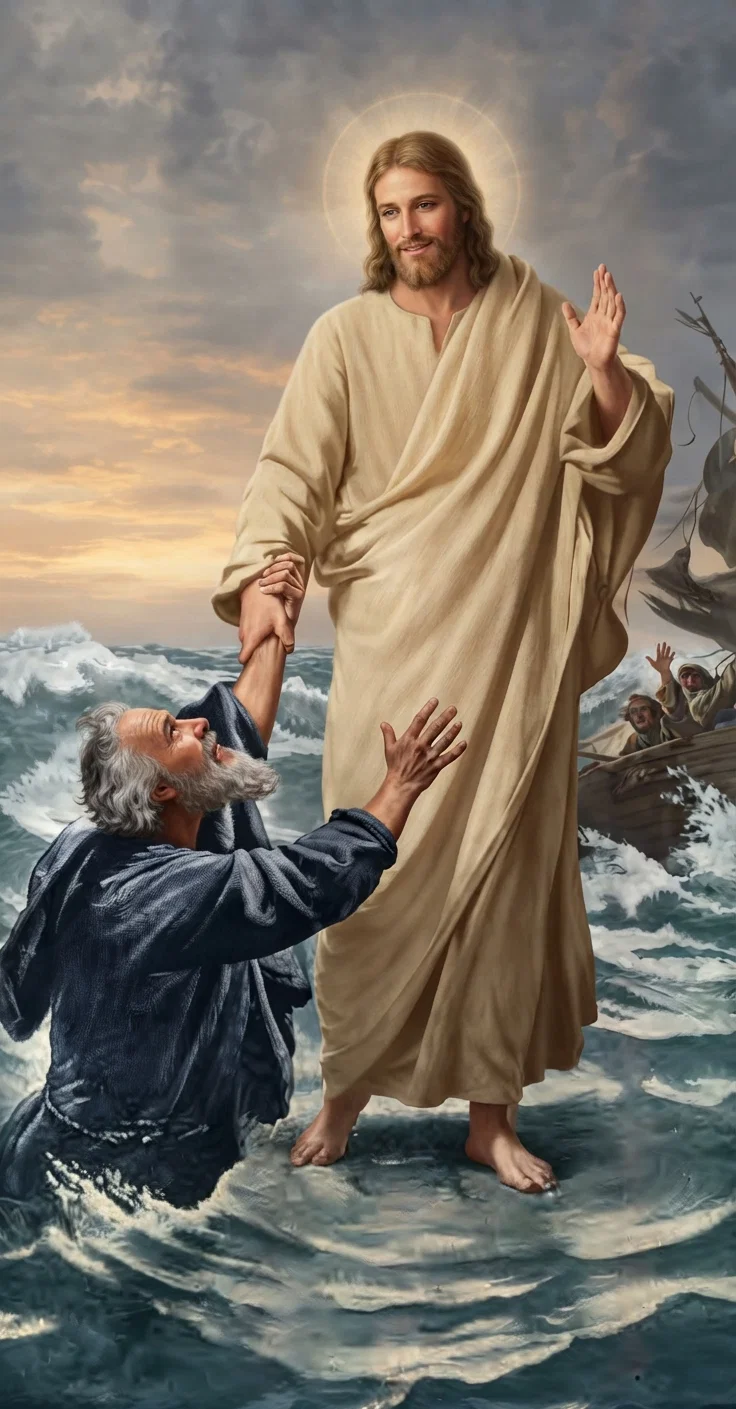
XIV. THE MASTER OF THE DEEP.

"THE sea is His, and He made it." By ages and earthquakes He scooped out its deep canyons and soundless valleys, within which its green waters rest and the sea monsters disport themselves. By heat and gravity He set in action its mighty currents—rivers in the ocean. By wind and sun and moon its mighty wave and resistless, everchanging, constant rolling swells pulse on forever. Yet it is His, and all is within His control. He measureth its waters in the hollow of His hands, and taketh up its continent isles as a very little thing. Mighty as are its proud, swelling billows, He has set the shifting sands as a decree that the mighty surges may not pass.
SUCH is our God; and God was in Christ. Therefore in the miracles wrought by Christ we shall find those which manifest the various attributes of God's wisdom, power, and love. After the feeding of the five thousand, the people were determined to make Christ a temporal king. Surely one who could provide bread by a word could make the Jewish commonwealth all that the Jew's highest ambition could ask. Jesus saw their purpose and perceived their blind misconception. He therefore sent away His disciples to the other side of the sea, and He sent the multitude—sadly disappointed were many—away. Then for the poor, ignorant people, for His dull disciples, He went up into the mountain to meet and plead with God alone. (Read Matt. 14: 21-33, and parallel accounts in Mark and John.)
IN the meantime the disciples had started to cross blue Galilee. But they found a contrary wind. The "prince of the power of the air" was determined to thwart their going. A great tempest swept down upon the lake, and the boat was "distressed by the waves." Darkness settled upon them, and the angry sea and rising tempest increased their peril.
O, thou of little faith, wherefore didst thou doubt?
THE fourth watch of the night came, that which precedes day dawn. All night they had been rowing, and were but half-way across, only about three or four miles. Row as they would, they seemed to make no progress. Their minds were filled with anxious forebodings. Why did Jesus turn them away? Why would He not reign as king? Why did He insist on their leaving Him at such a time? Was He now with the multitude? Many such questions must have forced themselves upon their minds. As the night wore on, old superstitions and fears arose. The fabled storm wraiths were real. The spirits of the sea had decreed their doom.
BUT the Master had not forgotten them. Alone with God His heart was upon His chosen ones. Through the night's storm and darkness He saw them far off upon the sea, laboring in vain to reach the land. Refreshed in His communion with the Father, He goes to their relief. There is no boat, but Infinite Power needs none of man's devices, tho they are sometimes used. He uses the soft rolling waters as a highway, and walks King on the surface of the sea. He reaches the troubled disciples, and acts as tho He would go farther. They see Him and cry out for fear. They declare, "It is an apparition." They are "greatly troubled," and like many others by the very One who comes to save them.
BUT the Master does not leave them to their fears. Straightway He speaks: "Be of good cheer; it is I; be not afraid."
THEN Peter, the Impulsive, answers: "Lord, if it be Thou, bid me come unto Thee upon the waters." And Jesus responds, "Come."
Then Peter went down from the boat, "and walked upon the waters to come to Jesus." As long as his eyes were upon the Master there was no trouble. Firm beneath his feet as the eternal rock, the waves bore him up. But he looked away, saw the waves and wind, the turmoil and tempest; and Jesus was forgotten. The footpath was rock no longer, but water. "And beginning to sink, he cried out, saying, Lord, save me. And immediately Jesus stretched forth His hand, and took hold of him, and saith unto him, O, thou of little faith, wherefore didst thou doubt?" The word was as sufficient as was the hand; but faith must use it.
JESUS and Peter enter the boat. The wind ceases. The storm demon is defeated. The Master of the sea is Conqueror. Then they that were in the boat worshiped Him and declared, "Of a truth Thou art the Son of God." Yet as great evidence had been given them the day before in the feeding of the five thousand. The Creator of the bread was the Master of the sea. It is only the "hardened," the blinded, hearts which can not see it. Jesus is the same to-day. Let the sinking, struggling soul on the great sea of life cry out in faith, "Lord, save me," and the infinite arm of strength will be extended to save. Then let us walk by faith.

HOLINESS AND OBEDIENCE.

In the possession of true holiness an essential requisite is obedience to God. This is seen by a reading of the following text:
"Wherefore gird up the loins of your mind, be sober, and hope to the end for the grace that is to be brought unto you at the revelation of Jesus Christ; as obedient children, not fashioning yourselves according to the former lusts in your ignorance; but as He which hath called you is holy, so be ye holy in all manner of conversation; because it is written, Be ye holy; for I am holy." 1 Peter 1:13-16.
It is all comprehended in true obedience. The "obedient children" will do the things there set forth; and it is that spirit of obedience to God which eventuates in true holiness. The admonition, "Be ye holy," is preceded by the direction for attaining true holiness, and that is summed up in the two words, "obedient children." As in all things pertaining to life and godliness Christ is our example, so we see that He was our example in this matter; for we read:
"Tho He were a Son, yet learned He obedience by the things which He suffered; and being made perfect, He became the Author of eternal salvation unto all them that obey Him." Heb. 5:8, 9.
Followers of Christ are looking for and hoping for perfection. Many have claimed and are now claiming perfection, holiness, but without following Christ's example in the matter of obedience. Christ became the Author of eternal salvation because of His perfection, His holiness; but He did not consider Himself our perfect Saviour until He had learned obedience. "Being found in fashion as a man, He humbled Himself, and became obedient unto death, even the death of the cross." He suffered for us "being tempted." He "was in all points tempted like as we are, yet without sin." If He had sinned, He would have been disobedient; that is, He would have broken the law, for "sin is the transgression of the law." Therefore, being obedient, He was a law-keeper. Obedience means law-keeping. He became a man for the very purpose of teaching men obedience by power of His own example; and He learned His lesson through suffering, even the ignominious death of the cross.
Not only did Christ suffer that He might teach us obedience; but also that He might be able to help us and sympathize with us in our struggle against the spirit of disobedience. Hear these words concerning Him:
"Wherefore in all things it behooved Him to be made like unto His brethren, that He might be a merciful and faithful High Priest in things pertaining to God, to make reconciliation for the sins of the people. For in that He Himself hath suffered being tempted, He is able to succor them that are tempted." Heb. 2:17, 18.
That wonderful fact is thus reiterated:
"For we have not an High Priest which can not be touched with the feeling of our infirmities; but was in all points tempted like as we are, yet without sin. Let us therefore come boldly unto the throne of grace, that we may obtain mercy, and find grace to help in time of need." Heb. 4:15, 16.
Having left us an example that we should walk as He walked; having become a man that He might have a perfect knowledge of the feelings and infirmities and temptations of men; having declared Himself able to succor them that are tempted, and to help us "in time of need;" we are without excuse in refusing now to keep His law. He says that He "became the Author of eternal salvation unto all them that obey Him." What have we to expect, then, if we refuse obedience? To refuse Him obedience is to deny Him as our Master; and of those who do this He says: "Whosoever shall deny Me before men, him will I also deny before My Father which is in heaven." Matt. 10:33.
What is meant by obedience?—It is the keeping of the law of God, conformity to that law; for in that is the will of God expressed. That this is what is meant by "obedience" as used in the Word of God, is taught both directly and indirectly in that Word itself. It is taught directly in such texts as these:
"Who gave Jacob for a spoil, and Israel to the robbers? did not the Lord, He against whom we have sinned? for they would not walk in His ways, neither were they obedient unto His law. Therefore He hath poured upon him the fury of His anger." Isa. 42:24.
"As the nations which the Lord destroyeth before your face, so shall ye perish; because ye would not be obedient unto the voice of the Lord your God." Deut. 8:20.
It was the law of God that was spoken by this "voice of the Lord;" for we read:
"And the Lord spake unto you out of the midst of the fire; ye heard the voice of the words, but saw no similitude; only ye heard a voice. And He declared unto you His covenant, which He commanded you to perform, even Ten Commandments; and He wrote them upon two tables of stone." Deut. 4:12, 13.
"When thou art in tribulation, and all these things are come upon thee, even in the latter days, if thou turn to the Lord thy God, and shalt be obedient unto His voice; (for the Lord thy God is a merciful God); He will not forsake thee. . . . Did ever people hear the voice of God speaking out of the midst of the fire, as thou hast heard, and live?" Deut. 4:30-33.
There can be no question, then, concerning what the Lord means when He commands us to be obedient unto His voice. He is commanding us to keep His law, the law spoken with His own voice, and written with His own finger upon two tables of stone.
That "obedience" means the keeping of the law of God is taught indirectly in the Bible in the record of the life of Christ. "Sin is the transgression of the law." Man had sinned. "Sin, when it is finished, bringeth forth death." So man had earned death through sin, the transgression of the law. But Christ, triumphant where man failed, obedient where man was disobedient, keeping the commandments of God, and so declared righteous by the Father, was able to purchase redemption for us, giving us the life earned by His obedience in place of the death which would have been the wages of our disobedience. Man's failure was in his disobedience to God's law. Christ's victory was in His obedience to that same law. The law of God was the test of Christ's holiness; and He stood the test because of His obedience to the law. There is no different test for the followers of Christ to-day. It is folly for us to claim holiness while despising or neglecting the law of God, or trampling upon any one of its several commandments. S.

SHALL NOT PERISH.

THE Gospel of Jesus Christ is briefly but tersely stated in John 3:16. "For God so loved the world, that He gave His only-begotten Son, that whosoever believeth in Him should not perish, but have everlasting life." There is a clear-cut distinction between everlasting life and perishing. Accepting the Gospel of Christ is unending life; being without the Gospel is to perish.
David gives us some contrasts that make very clear the idea of what perishing means: "Evil-doers shall be cut off; but those that wait upon the Lord, they shall inherit the earth." Ps. 37:9. Again, "For such as be blessed of Him shall inherit the earth; and they that be cursed of Him shall be cut off." Verse 22. Another expression gives a still fuller idea of the end of the wicked and the reward of the righteous: "For yet a little while, and the wicked shall not be; yea, thou shalt diligently consider his place, and it shall not be. But the meek shall inherit the earth; and shall delight themselves in the abundance of peace." Verses 10, 11. But David's definition of the word "perish" may be more to the point of the quotation at the head of this article: "The wicked shall perish, and the enemies of the Lord shall be as the fat of lambs; they shall consume; into smoke shall they consume away." Verse 20.
Consuming into smoke implies destruction by fire. So John, in one of his visions on Patmos, saw the manner of the execution of the wicked, and tells it as follows: "And I saw the dead, small and great, stand before God; and the books were opened; and another book was opened, which is the book of life; and the dead were judged out of those things which were written in the books, according to their works. And the sea gave up the dead which were in it; and death and hell [margin, "the grave"] delivered up the dead which were in them; and they were judged every man according to their works. And death and hell were cast into the lake of fire. This is the second death. And whosoever was not found written in the book of life was cast into the lake of fire." Rev. 20:12-15.
The effect of this fire is eternal, or everlasting; hence we have the phrase "everlasting punishment" (Matt. 25:46). Jude compares it to the destruction of Sodom: "Even as Sodom and Gomorrha, and the cities about them in like manner, giving themselves over to fornication, and going after strange flesh, are set forth for an example, suffering the vengeance of eternal fire." Jude 7. Sodom was utterly consumed, and the fire, altho "unquenchable," naturally went out of itself, when that upon which it fed was consumed "into smoke."
This is the doom which those escape who accept the Gospel of Christ, they "shall not perish." Christ says, "Blessed are the meek; for they shall inherit the earth;" to which wemay add the promise by the mouth of David, "The Lord knoweth the days of the upright; and their inheritance shall be forever." G.

"COVETOUSNESS, WHICH IS IDOLATRY."

GOD'S "law is spiritual," the apostle Paul declared. He had thought it to be a mere matter of forms and ceremonies and outward observances; but when the Spirit of God pierced his hard, obdurate, Pharisaic heart, that Spirit did it with a winged arrow from God's law; and that arrow was the tenth commandment, "Thou shalt not covet."
"For I was alive without the law once," says the apostle. He thought himself to be righteous and worthy of living; "but" he continues, "when the commandment came, sin revived, and I died." What that commandment was he tells us in this same chapter: "Is the law sin?—God forbid. Howbeit I had not known the sin, except through the law; for I had not known lust, except the law had said, Thou shalt not covet." Rom. 7: 7.
God's law is a unit. It is not made up of ten different laws. Ten different principles are expressed in the wonderful code, but they are all one.
"Break one thread And the web ye mar, Strike but one of a thousand keys, And the paining jar Through all will run."
This is more easily discerned in some commandments than others. For instance, the first precept, "Thou shalt have no other gods before Me," strikes against the basic principle of every false worship. The tenth commandment takes hold of, and interlinks with, every other precept in the law.
The coveting of a god with a different character leads to the rejection of the true God, and to the making of graven images expressive of the character which a covetous heart longs for.
The coveting of evil things makes the worship of the true God a form; and His name if taken at all, even in prayer, by the covetous is taken in vain.
God reserved the seventh day unto Himself. It belongs to Him. He has forbidden man to use it save according to His directions. The coveting of that time leads to the transgression of the fourth commandment.
"Honor thy father and thy mother," commands our heavenly Father; but the coveting of our own ways is sure to lead to disobedience and dishonor of parents.
"Thou shalt not kill," Sinai thunders; but every life taken in premeditation clearly shows that the murderer coveted the money, the wealth, the place, the reputation, or the power to inflict vengeance, or the deed would not have been committed.
The coveting of self-indulgence, of unlawful relationships with the other sex, leads to open adultery, as it is adultery in spirit; and the coveting of another's property leads to stealing. Coveted gain of some sort or kind is the root of bearing false witness.
Covetousness is a root of all kinds of evil. It lies at the base of all the greed, all the oppression, all the cruelty, all the tyranny, and all the great wars of the world. It moulds capital-trust and labor-trust. It dwells in the mind of political socialism; for it is an inherent element of the carnal, unregenerate nature.
Covetousness calls preachers and accepts wealthy pastorates. It enters into every phase and plan of human life apart from God; because humanity is carnal and selfish; and carnality and selfishness can only be taken away by Jesus Christ our Lord, and then only when the soul chooses to have it extirpated, rooted out. Covetousness—lust of power—changed Lucifer from an angel of light to a demon. Unrestrained, it would wreck the universe, dethrone God, and leave all space a darkling void, barren, hopeless, lifeless.
But God can change the "covetous man, who is an idolator," to one who loves unselfishly and who seeks others' good. "Let this mind be in you, which was also in Christ Jesus." Receive it by receiving Christ.

NO CONTRADICTION.

"FOR as many as have sinned without law shall also perish without law; and as many as have sinned in the law shall be judged by the law, . . . in the day when God shall judge the secrets of men by Jesus Christ according to My Gospel." Rom. 2:12-16. The statement, in 1 John 3:4, that "sin is the transgression of the law" does not contradict the foregoing thought of sinning "without law." Nor is the latter expression contradicted by the assertion that "where no law is, there is no transgression." Rom. 4:15. There are no contradictions in God's Word, for His Word is truth. And it is all truth; for man shall live by every word that proceedeth out of the mouth of God. Matt. 4:4.
How is it, then, that there are sinners "without law?"—The answer is that they are sinners without the written law. The law existed long before it was written. We have no record of any written word, or law, until the time of Moses; yet it existed before, as is shown by Abraham's keeping it. Gen. 26:5. So the people before Moses' time had the law, but not the written law.
God's Word is written in the things that He has made. "The invisible things of Him from the creation of the world are clearly seen, being understood by the things that are made, even His eternal power and Godhead; so that they [unbelievers] are without excuse," as verily as tho they had rejected the written Word.
In our day of multiplied Bibles there are millions dying without knowing anything of the contents of the Book. In these days of much preaching of the Gospel, millions live and die without hearing the living preacher. And, while those who have the greater light of the Gospel are censurable for slackness in proclaiming it, yet those who have been neglected are without excuse in not knowing God; for Christ ever has been "the true Light, which lighteth every man that cometh into the world." There is, therefore, a spark of light planted in the mind of every intelligent person, which, if followed faithfully, must lead to a knowledge of Christ and His Gospel. If not followed, it will just as surely go out. "If the light that is in thee be darkness, how great is that darkness!" "This is the condemnation, that light is come into the world, and men loved darkness rather than light, because their deeds were evil." No man dies, except as a consequence of sin; "the wages of sin is death." And "sin is not imputed where there is no law." G.

Question Corner

1696.—To What Law? Hebrews 7:12.

To what change of what law does Hebrews 7:12 refer?
Read the context, or less, even the verse itself, and there can be no more question. It is the law relative to the priesthood. "The priesthood being changed," of course the law regulating it must be changed. The Levitical priesthood was vested in the tribe of Levi, of the house of Aaron. The time of service, the kind of man, the sacrifices he offered, were all specified in law. But when Christ began His priesthood after the order of Melchizedek, he came of a different tribe to serve after a different order. The text in question has no more bearing upon the Decalogue than it has upon the Constitution of the United States. The use of it to endeavor to prove the change of a Sabbath shows to what desperate straits error is put to defend itself.

1697.—The New Birth. John 3:3.

Is water baptism the new birth?
No, water baptism is not the new birth. Millions have been born of God [some would prefer to say "begotten"] who have never known water baptism. We are begotten of God through the Word. 1 Peter 1:23. We are born of the Spirit. Rom. 8:14, 15; John 3:5, 6. We are regenerated by a new life from above. John 3:3, margin. The outward ceremony of this entrance into new relation before the world is water baptism. Gal. 3:27.

1698.—The Soul of Man.

Please explain what you understand the "soul of man" to be.
It is impossible to give a dictionary definition of the term soul. It may be defined in a general way under three heads: (1) The entire man. "Man became a living soul." Gen. 2:7. "Eight souls" were saved in the ark. 1 Peter 3:20. Joshua destroyed all the souls, that is, persons, in many cities. Joshua 10. So the Bible speaks in places, in the original of "dead soul," meaning a dead man. (2) All the thinking, reasoning faculties of man. "Bless the Lord, O my soul; and all that is within me, bless His holy name." Ps. 103:1. (3) Life, animal life, common to man and beast. See Matt. 16:25, 26. The word soul in verse 26 is the same in the original as life in verse 25. Both should be life. See also Gen. 1:30. Life is literally "living soul."

1699.—Are They Literal? Eze. 39:9.

In the latter part of Eze. 39:9 it reads, "And they shall burn them with fire seven years."
The question involves the study of the whole of the latter part of the book of Ezekiel, which we have not space for in this department, nor in the paper at this time. Suffice it to say:
1. The prophecy of Ezekiel from chapter 36 to the close of the book was a prophecy conditioned on the faith and obedience of ancient Israel. Over and over blessing is based on conditions; but Israel did not meet these conditions. Had she done this, the prophecy would have been fulfilled in fullest detail, including chapter 39:9-15, and the building of the temple offered, with its attendant sacrifices. But now these will never be fulfilled.
2. But God's purposes toward wicked nations and the true Israel are just the same, tho times and environment vary. Israel will be redeemed and given a more glorious inheritance, even the earth made new. Gog and Magog, representing the northern nations, will be punished in part, in this world before and when Christ comes in the ultimate, at the end of the 1,000 years of Revelation 20.
This view of the prophecy makes harmony; any other with which we are acquainted makes confusion. The coming of Christ is near, even at the door. We know no more than this.
Continue reading: THE THEORY AND THE CONDITION