Your ShelfYour Projects

Signs of the Times, Vol. 41, No. 28.

The Church and the Civil Government

Signs of the Times

Jul 21, 1914

Pacific Press Publishing Association · Mountain View, California · Jul 21, 1914

The Church and the Civil Government

Great Reformers of the Past Refused to Accept the Aid of the State — For the Church to Seek State Aid, Indicates Weakness and Apostasy — Caesar’s Sword Not Needed to Advance the Gospel
By ARTHUR G. DANIELLS
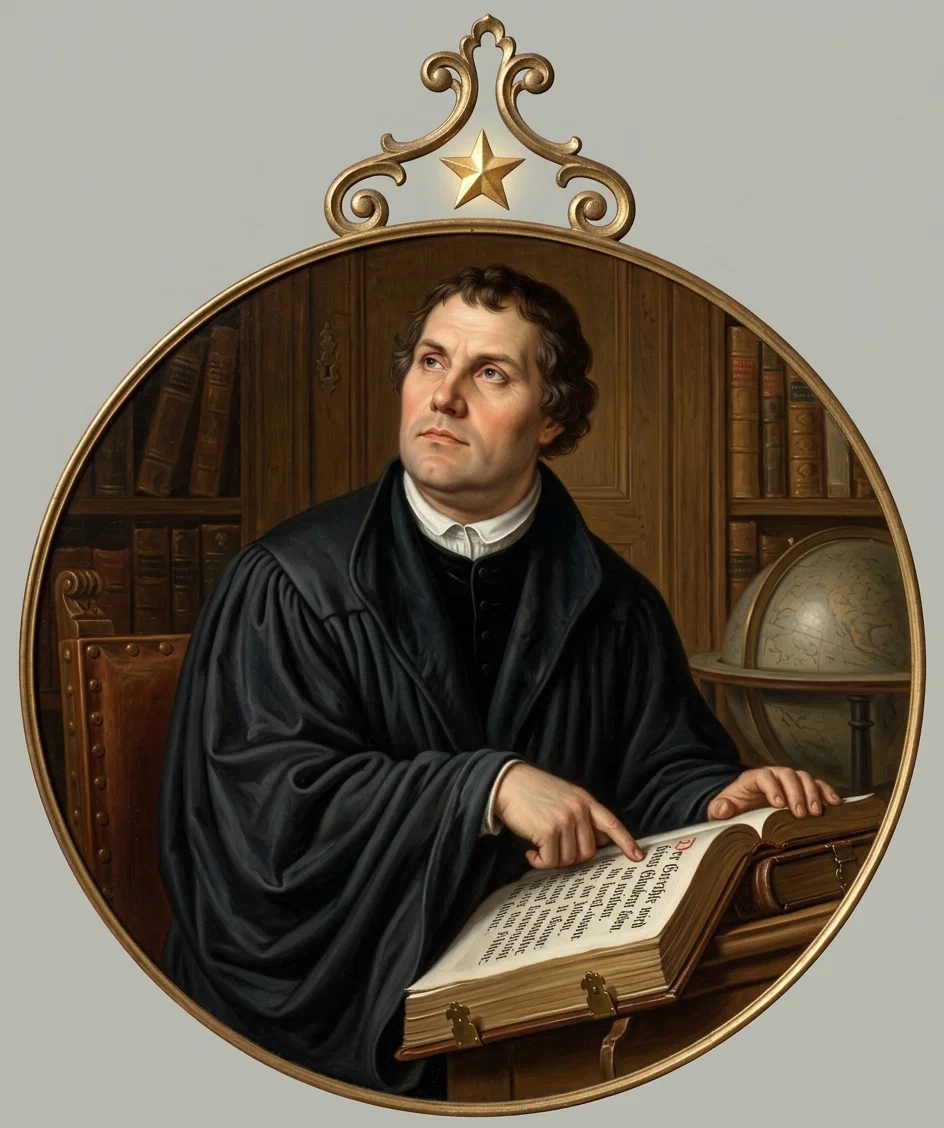
LUTHER BEFORE THE DIET AT THE CITY OF WORMS
“I stood up against pope, indulgences, and papists, but without violence or tumult.”
LUTHER BEFORE THE DIET AT THE CITY OF WORMS “I stood up against pope, indulgences, and papists, but without violence or tumult.”
THERE is at the present time an alarming tendency on the part of the church to make use of the civil power. Everywhere may be heard the clamor of professed Christians for the use of Caesar’s sword. There was a time when the leaders of the church spurned the offer of state aid to accomplish their ends. They had faith in God and in the power of His word, but they had no faith in the power of civil governments to promote the interests of religion. This was especially true of the apostles and of the Reformers of the sixteenth century. Said Luther:
“We must leave results to God. It is not we that must work, but His word. And why so? you may ask. Because the hearts of men are not in my hand as clay in the hand of the potter. We have a right to speak, but none whatever to compel. Let us preach; the rest belongs to God. If I resort to force, what shall I gain? — Grimace, fair appearances, apings, cramped uniformity, and hypocrisy. But there will be no hearty sincerity, no faith, no love. Where these are wanting, all is wanting; and I would not give a straw for such a victory.”
“I am ready to preach, argue, write; but I will not constrain any one, for faith is voluntary. Call to mind what I have already done. I stood up against pope, indulgences, and papists, but without violence or tumult. I brought forward God’s word. I preached and wrote, and there I stopped. And whilst I laid me down and slept, or chatted with Amsdorff and Melanchthon, the Word I had preached brought down the power of the pope to the ground, so that never prince or emperor had dealt him such a blow. For my part I did next to nothing; the power of the Word did the whole business. Had I appealed to force, Germany might have been deluged with blood. But what would have been the consequence? — Ruin and destruction of soul and body. Accordingly, I kept quiet, and let the Word run through the length and breadth of the land.”
“No secular sword can advance this cause. God must do all without the aid or cooperation of man. He who has most faith is the most availing defense.”
How differently many of the leaders in the churches talk and act to-day! Instead of looking to the great Head of the church to carry on His work with mighty power, their eyes are turned imploringly to the state. They appeal to the government for help. “We must have vigorous administration of law,” is the battle-cry of the church to-day. This cry is heard in the annual meetings of the churches, and from the pulpits and the religious press. Various organizations are formed to take charge of special lines of work. The masses are urged to cooperate with these organizations, and to give force to their demands by signing petitions which are presented by influential deputations to officers of the government and to legislative committees.
And what do these church leaders ask of the state? — Help — help to do the church’s work,— to promote the “Christian character of the people,” to establish the nation in “moral integrity and righteousness.” They ask that stringent laws shall be enacted and enforced to suppress vices and prevent “Sabbath” desecration. They ask that the state shall teach religion in the public schools.
This insatiable thirst of the church for the aid of the civilpower is a dangerous symptom. It reveals a separation from Jesus Christ, the Head of the church. He, through the power of His Spirit and word, is the only one that can help the church in the work it should accomplish. The state is powerless in this matter. In attempting to promote the “Christian character of the people,” it is sure to produce an effect directly the opposite. To all who are on this dangerous line we wish to say, in the words of the great apostle, we “show unto you a more excellent way.”

The Sword Not Needed by the Church

Referring to the Lord’s work in the earth, Luther said, “It is not by the sword that He will have His gospel propagated.” Such were the words of the great Reformer of the sixteenth century, and such is still the language of true Protestantism.
The sword is a carnal weapon; but the language of the true followers of Christ is, “The weapons of our warfare are not carnal.” The “sword of the Spirit” is our sword; and this, St. Paul says, is “the word of God.”
Upon one occasion, it will be remembered, one of the disciples of Christ attempted to defend Him with a sword. The Master’s command was, “Put up again thy sword into his place; for all they that take the sword shall perish with the sword.”

Her False Policy and Vulgar Weapons

D’Aubigne, in the “History of the Reformation,” speaking of the fallen condition into which the church had lapsed by resorting to worldly power, says: “She had, from false policy, had recourse to earthly instruments and vulgar weapons. When once the church had begun to handle these weapons, her spiritual essence was lost. Her arm could not become carnal without her heart becoming the same.”
This is a solemn truth, and the principle herein involved is as true to-day as it ever was. The church can no sooner call upon the state for aid and assistance than she loses her spiritual power. In this act she denies the gospel, which is “the power of God unto salvation,” rejects her lawful husband, the Lord, and unites herself in adulterous connection to Cesar. This worldliness and worldly connection is the “wine of her fornication” referred to in the Scriptures, with which Babylon, the Romish church, has made all nations drunk. And, sad to say, the daughters, the professed Protestant churches, are now seeking the same illicit union, as is manifest in their appeal to the state to enforce Sunday observance.

God Uses No Civil Force to Win Men

God constrains no one by means of force. He never compels nor attempts to compel any one to believe. His moral government is not one in which He exercises a blind and unreasoning control. To the creatures He has made He says, “Come, . . . let us reason together.” He invites them all to come and take the water of life freely, to come and be saved; but He forces no one. Neither will those who are godlike seek thus to constrain any.
Said Luther, as already quoted, “I am ready to preach, argue, write; but I will not constrain any one, for faith is voluntary.”

In This They Are Ungodlike

But in all ages, those who have assumed to take the place of God, and by law prescribe to men their religious duties, have acted very ungodlike. Because men would not believe and act in religious matters as they dictated, they have threatened them with the infliction of civil penalties, thrown them into dungeons, placed them upon the rack, and kindled around them the fires of persecution.
Thus blindly and without reason have they sought to force their opinions and practices upon their fellow men. But the men who do such things are not Christians, whatever their profession. Neither is the church which upholds such actions and pursues such a course the Christian church, however much it may claim to be.

A Mighty Organization and a Great Menace

Church Federation and What It May Do to Religious Freedom—A Religious Combine the Most Dangerous of Any—Principles at Work That Produced the Dark Ages—Federation Refuses to Be Tolerant
By B. G. WILKINSON, PH. D.
“It was during the epoch when there were sects and heresies that Christianity made the conquest of the world.”—The Hon. Camille Pelletan:
In our previous articles we have examined the origin of church federation, the purposes of its existence, and the possibilities of its tendencies. We should now cover a special field, one of the most important which concerns human destiny. And there is demand for its consideration.
Already the issues raised or adopted by church federation have invaded the national Congress, are discussed before municipal authority, and are agitating the masses in general. Such is the tendency of the human, that unions or federations can not exist without raising controversies involving individual liberty. Usually every union or federation has as its reason for existence, the necessity of defense. It claims to protect certain principles or interests, and to erect itself as a barrier to encroachments upon the same. This is true, for example, of labor-unions. Will it be any less true of religious federations?

TO MAKE ALL FIT ONE PATTERN

Labor-unions claim to arise as a defense against capital and capitalists. They still continue to demand a right to exist, through this same claim. However, the doctrine of the closed shop, so generally condemned, shows that when labor-unions turn their attention from capitalists to non-union labor, they are able to become offensive, and then their crusade seems to threaten the liberties of the individual. It is the old story of a power endeavoring to make a suit of clothes to fit all men—to bring within certain principles adopted by an organization, all individuals, and so place an incubus upon the bounding impulses of the individual soul toward the progress of its own creation.
It is fortunate for these unions and federations that they have opposing organizations. In the case of labor, its great opposer is capital. As labor finds out the power of its organization, its tendency is to enlarge its membership, and so increase its power. Hence the tendency to coerce the individual.

THE FALSE RELIGIOUS SANCTION IS THE DANGER

Now add to such an organization a religious sanction, bring the conscience, such as it is, as well as the reason, into play, and the new organization feels that it has not only men but God behind it. It is likely not to go beneath the religious name under which it acts, to see whether or not its purposes and methods tally well with the ideals of its religion. France nominally was all Christian before the French Revolution, yet Christianity there did not prevent that great outbreak. Christianity of to-day would deny favoring any of those oppressions which drove that nation into its days of terror. Nevertheless, it was nominal Christianity in alliance with the throne—prosperous, with more than one third of the wealth of the country in its hands—which stands indicted in a large degree for the unhappy condition before the days of 1789.
It is well to consider carefully what will be the tendency, along these same lines, of this organization called the Federal Council of the Church of Christ, claiming eighteen million members, and representing in the United States a population of forty-five million.

TENDING TO CREATE A SOVEREIGNTY

There is another aspect, too, which involves the government as well as the individual, when great names and great wealth find themselves strongly federated or united in an organization. They tend to create a sovereignty of their own, and generally such a sovereignty as this looks menacingly toward the sovereignty of the state. Not that there is any thought of treason toward the state or government. Far from it. But there is always a possibility that an organization of this character will claim more directly the sanction of God for its existence, thansuch sanction is usually claimed for civil government; and further, that it will look upon itself as divinely created to hurry up the government into lines of activity which, in their minds, will please God.
The authority of the civil government seems more impersonal; its wealth, the contributions of the collective society, given only to be expended again for the running of the machine. But of great religious organizations that wealth comes through legacies and gifts whose proceeds are to remain. It is because of this threat, that England early passed what was known as the law of mortmain, which forbade the church to gather into her hands large estates. No doubt it was England’s early attitude toward this which saved her so tremendous a revolution as that which overtook France. France was belated in paying strict attention to this vital problem. And we need not, here in this country, flatter ourselves that with all such history behind us, it will be impossible for America to run afoul of these crises.

A GREATER PROBLEM THAN FRANCE EVER HAD

It is not ten years since so great a statesman as Aristide Briand, prime minister of France, said, when it was told him that the United States was criticizing the activities of the French republic in endeavoring to unloose herself from the grasp of a rich political-religious organization, that “unless the United States gives heed to where she is now going, she will soon have on her hands a problem of clericalism greater than that which we ever met.”
Now we come to notice a very vital matter in connection with this phase of church federation. All that we have said in the foregoing concerning the dangers of unions, either civil or religious, becomes many fold more serious when we speak of a religious organization unguided by the word of God.

WARNINGS FROM THE RELIGIOUS PRESS

Already some of the constituent members of the Federal Council of the Churches of Christ have voiced their alarm at the prominent position found in the federation by the advocates of “higher criticism.” Thus the editor of the Presbyterian of the South, in the issue of March 9, 1913, presents the matter in this way:
“At a time when the value and authority of revealed truth are being so widely depreciated in the estimate of religious leaders, and the cry for the submergence of cherished doctrinal beliefs for the sake of bigness and broadness has become so clamorous, it is well for those who love and cherish the eternal truths of inspiration to emphasize them and defend them with unwavering fidelity. The advocates of a merely humane fraternity, the culture of purely human instincts by purely human methods and appliances, under the guidance of a vague, universally diffused religious sentiment or influence, are demanding not only recognition but leadership.
“In the accomplishment of this purpose, it is their ambition to secure the following of the evangelical forces of the organized church, as well as their own school of rationalistic religionists. They are prosecuting this purpose with increasing energy and with an audacity that is little less than startling. Their latest achievement in prosecuting their ambitious purpose was the capture of the Federal Council. Evangelical churches must squarely face the question whether they will consent to aline themselves with the prevailing skepticism, or will hold uncompromisingly to the authority of the gospel by withholding organic fellowship.
“The situation is becoming clear to the expositors of religious thought and activity; warnings are being sounded and counsel freely given. The following from the Presbyterian of Philadelphia, impresses us as being most timely and wise:
“It has been generally recognized among the evangelical churches that the Federal Council has been captured, body and soul, by the so-called liberal or higher critical men. They have elected as president Dr. Shailer Mathews. They choose such speakers as Professor Steiner, who says that Daniel is a bundle of myths. The various commissions are made up chiefly of men who are leaders in liberal thought. This matter has received considerable attention in some of the leading religious journals. Conspicuous among these are the Presbyterian Standard, the Presbyterian of the South, the Christian Observer, of the Southern Presbyterian Church, and our honored colleague, the Herald and Presbyter. All these seem to be of one mind as to the defection from faith of the Federal Council. All raise the question, What should be done? The Presbyterian of the South and the Standard are decided that true evangelicals should withdraw from the council. The Christian Observer and the Herald and Presbyter seem to be of the opinion that the evangelicals should remain in the council, and fight.
“We are in sympathy with the withdrawal. Little good is to be accomplished by remaining in an organization for the sake of contention.”

DANGERS INCREASED BY THE “HIGHER CRITICS”

An organization, no matter how dangerous in itself, is in a more hopeful condition if it bows in obedience to the great principles of the Bible than a union which does not.
There is something in the divine word of God which speaks to the individual heart; and regardless of how much astray an individual may be, whether in India, in Africa, or in North America, the Bible can speak to the inner man and lead him to rely upon the mighty, invisible kingdom of God, sufficiently far above human powers, surrounding and opposing. It thus releases him from the dead level of surrounding customs. It enables him to cast away the fear of an organization, however powerful it may be. It is a living word. It speaks to him of a living kingdom, powerful to deliver—a kingdom swift also to call him to reckoning, if he in turn ruthlessly handles the liberties of his fellow men.
Now if, at the outset, the Federal Council springs into existence under the leadership of those whom “higher criticism” has led to disbelieve the divinity of the Bible, we can naturally see that the dangers or menacing tendencies of the organization are more serious.

THE RIGHT ARM OF THE FEDERATION

We have already seen that it is the purpose of church federation to remedy social distress by securing civil laws. When, however, it comes to religious matters, we would naturally think that a religious organization would confine her reliance in those issues to her divine power. Unfortunately, in this also we are disappointed in the Federal Council. Attending as we did in December, 1913, such meetings of the executive committee of the Federal Council as were public, as well as the meeting of the Lord’s Day Alliance, we heard this serious fact uttered by one of the leaders: “Sunday laws are the right arm of church federation.”
We would naturally think that God would be the right arm of a federation. Nor do we think that to speak thus is begging the question. Every one knows, who knows anything of history, that when religion has lost the impulse from God, upon which it leaned for power, it has always turned to the civil authority for supporting laws. To show the effort to secure a Sunday law, nation-wide and effective, we need only to mention further, in substance, what this same speaker said:
“We do not wish it publicly known, but we are organizing in some states, and in one state in particular, all the young people’s societies, to work to this end.

INTIMIDATING THE CANDIDATES

“These societies watch when a man announces himself as a candidate for election to a legislature. They wait upon this candidate to ask whether or not he wishes the vote of the church. Of course he does. They then contract with him to give him that vote if in return he promises to support a Sunday law, whenever a bill for this is introduced. They intend to follow out this contract by gently reminding this candidate, if elected, of his promise when a Sunday law is introduced into the legislature. If, on the other hand, he will not enter into this contract, it will be the business of the church, as far as lies within her power, to see that this man is not elected.”

THE CHURCH IN POLITICS

Now every one knows what this means. It means the church in politics. Yet we are told that “the Sunday law is the right armof the federation.” If, then, to get a Sunday law, she must go into politics, it is evident that politics in reality will be her right arm. It will be worse than that. It will mean a combination of Sunday and politics, and this question of Sunday and Sunday legislation occupies no mean place in the future program of the Federal Council.
(Continued on page 15)

A Mighty Organization and a Great Menace

(Continued from page 3)

FEDERATION REFUSES TO BE TOLERANT

To make this clear, we will simply revert to a prominent incident which occurred at the first great meeting, in which the Federal Council was organized. After the report on “Sunday observance” was made and adopted in this council, the following resolution was offered by a member of the council:
“It is not our intention that anything should be done to interfere with the convictions of those brethren represented with us in this council, who conscientiously observe the seventh day instead of the first day of the week as a day for rest and worship.”
Now this resolution was presented in behalf, as it says, “of those brethren represented with us in this council, who conscientiously observe the seventh day.” The brethren referred to were the Seventh-day Baptist denomination, for they were the only representatives in this council of any denomination which observed the seventh day instead of the first.
When, however, this liberal-minded member had offered this resolution, it was met immediately by vigorous protests from all parts of the floor. It was immediately and clearly seen that whatever laying down of differences there might be between denominations when they entered church federation, whatever willingness there might be to give and take regarding doctrines, and the belief that the seventh and not the first day of the week should be observed as a day of rest and worship, the resolution would not prevail. It was overwhelmingly fought down under the loud and vigorous “No-o-o.” This is all the more significant, after a regular delegate from the Seventh-day Baptist denomination pleaded for an extension to them of the principle of “religious liberty,” which had been declared from the platform of the council.

EMPHASIZING SUNDAY LAWS

Moreover, in the model constitution and by-laws, approved by the business committee of the Federal Council, and authorized for use in forming the Inter-Church Federation of the county or city, we read in article II, section I, “The object of this federation shall be (1) to realize the general aims of the constitution, and (2) more particularly to foster evangelistic movements; to promote the spirit of comity and cooperation among all our churches; to advance the charities of the community; to safeguard the welfare of children; to encourage the feeling of mutual helpfulness among all parts of society, especially between employer and employed; to protect the interests of the Sabbath, temperance, good citizenship, social purity, and law and order; and to secure other objects pertaining to local betterment.”
Every one knows that Satan himself is often transformed into an angel of light. The beauty found in resorts of vice, where marble, tapestry, carving, and gilding abound, is the beauty which really belongs to the hallowed temples of God. Only the soul enlightened by the grace of God can look beneath and see, back of the same beauty, vice in one place and holiness in another. Saturday and Sunday may be clothed on the outside with the same apparent authority. But to the enlightened conscience alone does God reveal which day He wishes His child to keep.

EXCOMMUNICATING INCONSISTENCY

It is certainly taking a strong stand for church federation to be so liberal on all other points of faith and then to take an excommunicating decision when the conscientious worshiper believes in another day than Sunday. To believe in another day predicates a strong disbelief in Sunday. Yet the conscientious disbeliever in Sunday meets his Sunday-keeping brethren in Christian unity, only to be spurned and tabooed on this difference of faith. This looks to us like taking a gouging advantage. And when church federation expects to succeed by so ungenerous a policy as to endorse a little gouging advantage toward a Christian brotherhood seeking unity with them, what attitude can be looked for when church federation decides that some other conscientious act of worship of some body displeases them? Having admitted the principle, cases can soon multiply.

THE PAPACY NO LONGER ALONE

It seems to us that with the advent of church federation, there came into existence a mighty engine for weal or wo. Protestants will not need now to look back to the papacy as the only dictator of religious faith and practise. Yet most Protestants believe that because of papal oppressions, God raised up the Turks to be the scourge of a fallen church. Do they think that arrogant assumptions over the conscience by the federated churches will be any less overlooked by the mighty Judge? Do they think that repeating the experiences of the Dark Ages will bring on any less calamities than those of that period when men “shall desire to die, and death shall flee from them”? Rev. 9:6. The papacy is still with us; and another organization like unto her makes its appearance. Verily the hour is solemn. While there is still chance, let us repent and undo any doing which might endanger the future. Else the coming of the Judge may be sooner than we believe.
“Mine eyes have seen the glory of the coming of the Lord. He is trampling out the vintage where the grapes of wrath are stored. He hath loosed the fateful lightning of His terrible swift sword. His truth is marching on.”

Down from the Sky

EARTHWARD from the shining courts of heaven, Christ shall come with pure angelic band, Saints shall be ransomed from the grave’s dark prison, And borne aloft by fair immortal hands;
Upward to where the stream of life is flowing, Where the streets of gold their feet shall press, Where the bloom of countless summers flowing, Wreathes all the land in untold loveliness; Where the eyes shall shine with wondrous brightness, And the broken heart for ay be healed, And the dazzling throne appear in whiteness, Where Jehovah is Himself revealed.
All the sin and wo and grief and heartache That has gathered for six thousand years, All the partings, longings, tears, and heartbreak, Will be banished when the Lord appears.
And so we say with joy: “Our journey’s ending. ’Tis but a little way to heaven and home.” We see the signs that tell of Christ descending, And pray in faith, “Lord Jesus, quickly come.”
L. D. SANTEE.

The Reward of Confiding Faith

She Touched the Master and Was Healed—He Sought Her Out to Comfort Her Heart—The Painstaking Compassion of the Saviour
By MRS. E. G. WHITE
“If I may but touch His garment, I shall be whole.” It was a poor woman who spoke these words,—a woman who for twelve years had suffered from a disease that made her life a burden. She had spent all her means upon physicians and remedies, only to be pronounced incurable. But as she heard of the great Healer, her hopes revived. She thought, “If only I could get near enough to speak to Him, I might be healed.”
Christ was on His way to the home of Jairus, the Jewish rabbi who had entreated Him to come and heal his daughter. The heart-broken petition, “My little daughter lieth at the point of death: I pray Thee, come and lay Thy hands on her, that she may be healed,” had touched the tender, sympathetic heart of Christ, and He at once set out with the ruler for his home.

The Crowd Was Pressing Him

They advanced but slowly, for the crowd pressed Christ on every side. In making His way through the multitude, the Saviour came near to where the afflicted woman was standing. Again and again she had tried in vain to get near Him. Now her opportunity had come. She could see no way of speaking to Him. She would not seek to hinder His slow advance. But she had heard that healing came from a touch of His garments; and fearful of losing her one chance for relief, she pressed forward, saying to herself, “If I may but touch His garment, I shall be whole.”

Christ Helped Her to Touch Him

Christ knew every thought of her mind, and He was making His way to where she stood. He realized her great need, and He was helping her to exercise faith.
As He was passing, she reached forward, and succeeded in barely touching the border of His garment. That moment she knew that she was healed. In that one touch was concentrated the faith of her life, and instantly her pain and feebleness disappeared. Instantly she felt the thrill as of an electric current passing through every fiber of her being. There came over her a sensation of perfect health. “She felt in her body that she was healed of that plague.”
The grateful woman desired to express her thanks to the mighty Healer, who had done more for her in one touch than the physicians had done in twelve long years; but she dared not. With a grateful heart she tried to withdraw from the crowd. Suddenly Jesus stopped, and looking round He asked, “Who touched Me?”

Peter Was Amazed

Looking at Him in amazement, Peter answered, “Master, the multitude throng Thee and press Thee, and sayest Thou, Who touched Me?”
“Somebody hath touched Me,” Jesus said; “for I perceive that virtue is gone out of Me.” He could distinguish the touch of faith from the casual touch of the careless throng. Some one had touched Him with a deep purpose, and had received answer.

The Woman’s Trust Not Passed By

Christ did not ask the question for His own information. He had a lesson for the people, for His disciples, and for the woman. He wished to inspire the afflicted with hope. He wished to show that it was faith which had brought the healing power. The woman’s trust must not be passed by without comment. God must be glorified by her grateful confession. Christ desired her to understand that He approved her act of faith. He would not have her depart with a half blessing only. She was not to remain in ignorance of His knowledge of her suffering, or of His compassionate love and of His approval of her faith in His power to save to the uttermost all who come to Him.
“She came forward trembling, and cast herself at His feet.”

Christ Insisted on Making Her Known

Looking toward the woman, Christ insisted on knowing who had touched Him. Finding concealment vain, she came forward trembling, and cast herself at His feet. With grateful tears she told Him, before all the people, why she had touched His garment, and how she had been immediately healed. She feared that her act in touching His garment had been one of presumption; but no word of censure came from Christ’s lips. He spoke only words of approval. They came from a heart of love, filled with sympathy for human woe.

“Thy Faith Hath Made Thee Whole”

“Daughter,” He said gently, “be of good comfort: thy faith hath made thee whole; go in peace.” How cheering were these words to her! Now no fear that she had given offense embittered her joy.
To the curious crowd pressing about Jesus there was imparted no vital power. But the suffering woman who touched Him in faith received healing. So in spiritual things does the casual contact differ from the touch of faith. To believe in Christ merely as the Saviour of the world can never bring healing to the soul. The faith that is unto salvation is not a mere assent to the truth of the gospel. True faith is that which receives Christ as a personal Saviour. God gave His only-begotten Son, that I, by believing in Him, “should not perish, but have everlasting life.” When I come to Christ, according to His word, I am to believe that I receive His saving grace. The life that I now live, I am to “live by the faith of the Son of God, who loved me, and gave Himself for me.”

The Soul Becomes a Conquering Power

Many hold faith as an opinion. Saving faith is a transaction, by which those who receive Christ join themselves in covenant relation with God. A living faith means an increase of vigor, a confiding trust, by which, through the grace of Christ, the soul becomes a conquering power.
Faith is a mightier conqueror than death. If the sick can be led to fix their eyes in faith upon the mighty Healer, we shall see wonderful results. It will bring life to the body and to the soul.

Moving Toward the Sun of Righteousness

“WHEN you move toward the Sun of Righteousness, all your shadows are behind you.”

“I Touched the Hem”

By Worthie Harris Holden
Lost in a crowd, mid a great, motley throng Eagerly pressing and urging along, Jostled by many, but cared for by none, Who there discerneth the suffering one? Ah, in the midst of that vast, surging crowd, Moveth the Master, ’mong humble and proud. His is a heart of divine sympathy— “Whence hath faith’s touch taken virtue from Me?” Love seeking witness from her who received, Grants benediction because she believed. Kneeling, all trembling, she seeks not in vain. “I touched the hem of Thy garment, to gain Healing and cleansing, and lo, I am whole!” “Daughter, be comforted. Peace to thy soul!”
Who, in the midst of earth’s throng and its press, Hath not felt loneliness, want, or distress? “Nobody cares,” cries the soul sick and weak; “Nobody aids—none even will speak.” Knowest thou not that the Master is near, Thy great Physician? O soul, do not fear! Touch thou His garment and haste to confess. He in His tender compassion will bless, Healing affliction and sorrow and sin, Thy heart’s devotion and service to win.
Continue reading: Dialogue Between Two Neighbors