Your ShelfYour Projects

Signs of the Times, Vol. 22, No. 4.

The Indwelling Christ

Signs of the Times

Jan 23, 1896

Pacific Press Publishing Company · Oakland, California · Jan 23, 1896

The Indwelling Christ
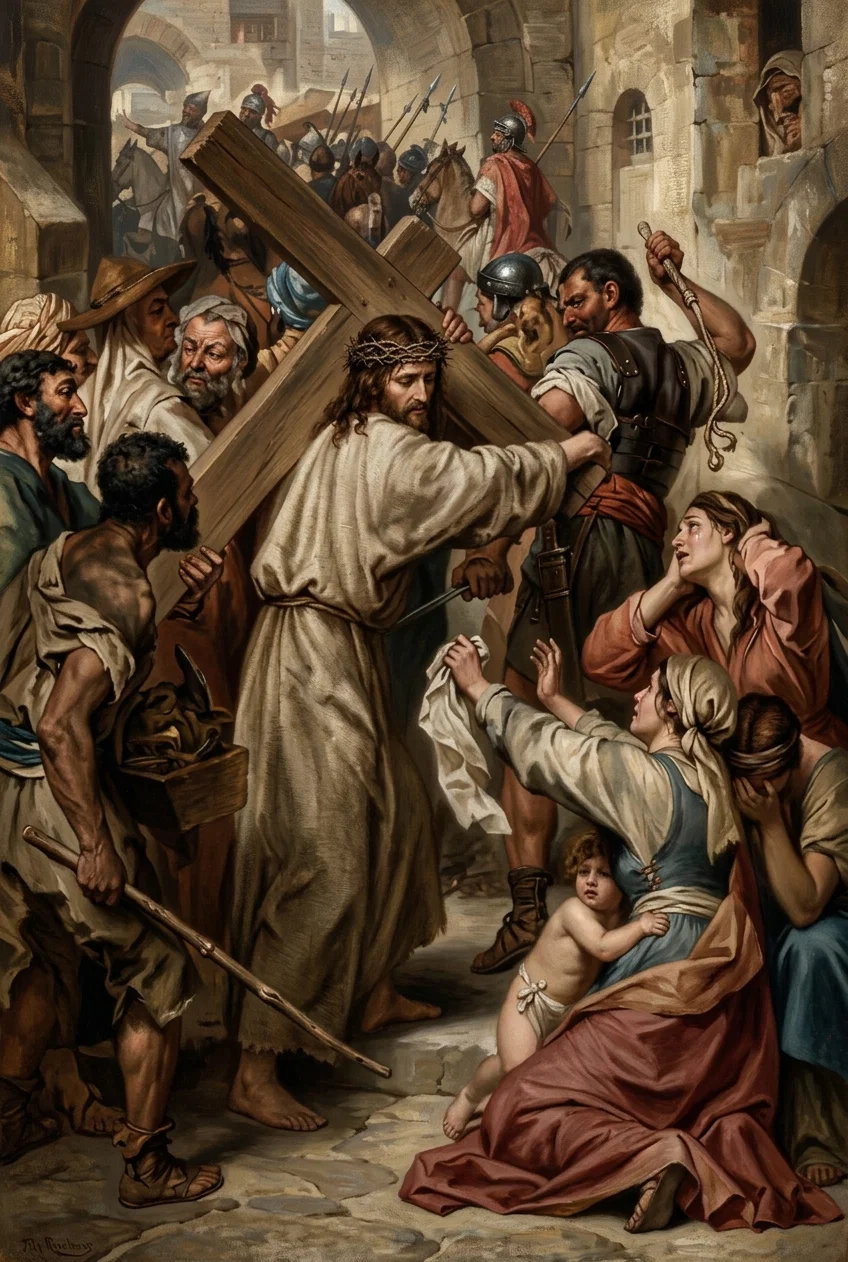
The Indwelling Christ.—When Jesus went away from earth, he promised his disciples, “Lo, I am with you alway, even to the end of the world.” Matt. 28:20.
Not to a Special Number.—This did not mean that he would be with a special number alone, that is, to those who saw him ascend from Olivet, or who heard his voice as he uttered the promise. It was to all his disciples, for “God is no respecter of persons.” Jesus said: “Neither pray I for these alone, but for them also that shall believe on me through their word.” The “you” of the promise included all believers in the Gospel of Christ.
Not to a Special Age.—The promise was not to that age or generation alone. It was to the end of the world, or age, as long as the age-lasting Gospel would be preached. Just as long as that Christ would be with his true disciples, granting them of the “all power,” according to the promise. The promise of Christ’s presence is, therefore, for this generation, and for us if we are his, if we bear the test of discipleship. “If ye continue in my word, then are ye my disciples indeed.”
Dwelling in the Church.—The promise is to the church of Christ. He uses the plural, “Lo, I am with you.” Through the apostle Paul he said: “For ye are the temple of the living God; as God hath said, I will dwell in them, and walk in them.” Again, “Know ye not that ye are the temple of God.” And still again the apostle speaks of the Christian church, “Ye . . . are built upon the foundation of the apostles and prophets, Jesus himself being the chief corner-stone; in whom all the building fitly framed together, groweth unto a holy temple in the Lord; in whom ye also are builded together, for an habitation of God through the Spirit.”
“If any man will come after Me, let him deny himself, and take up his cross daily, and follow Me.” “If any man have not the Spirit of Christ, he is none of His.”
By the Spirit.—This last scripture also reveals how the Lord dwells with his people, namely, by his Spirit. Jesus promised, “I will not leave you comfortless [or orphans], I will come to you.” In those wonderful chapters, the fourteenth, fifteenth, and sixteenth chapters of John, we are told how Christ will dwell with his people, not by his personal presence, but as he could not dwell with them by his personal presence, he would send the Comforter, the Holy Paraclete, the Holy Spirit, the Holy Ghost, the Spirit of Truth, elsewhere called the Spirit of Christ, the Spirit of God. When Christ was personally here, he could be in but one place at one time; but the Spirit is everywhere present with his people. It is life and power flowing out from the great Fountain of Life, manifested in all the various gifts, so beautifully set forth in Romans 12, 1 Corinthians 12, and Ephesians 4. It is God dwelling in, and manifesting his power in that church which has not rejected his commandments for the traditions of men, which has not set aside his living word for the creeds of those who are dead. Christ still walks among the candlesticks.
Not to the Church Alone.—But it is not to the church alone, as a body or congregation, that Christ comes by his Spirit. It does not dwell in the church as a man dwells among men. It dwells in the church of God by dwelling in the members who make up the church. So Jesus promises: “If a man love me, he will keep my words; and my Father will love him, and we will come unto him, and make our abode with him.” Of the Spirit he says, “He dwelleth with you, and shall be in you.” It is Christ in us, dwelling in our hearts by faith (Eph. 3:17), not as a sentiment, or an emotion, or in theory, but as a life principle, molding, reforming, recreating the character, so that the believer will say: “I am crucified with Christ; nevertheless I live; yet not I, but Christ liveth in me; and that life which I now live in the flesh I live in faith, the faith which is in the Son of God, who loved me, and gave himself for me.” Christ when here lived God’s life. God’s life was manifest in the flesh of Jesus of Nazareth, in order that he might live God’s life in us, in order that the life that is in him “might be made manifest in our mortal flesh.” 2 Cor. 4:11.
The Mystery of God.—This is the mystery, or secret, of godliness, God manifest in the flesh (1 Tim. 3:16), triumphing over sin and sinful tendencies (Rom. 8:3). As elsewhere expressed: “To whom [the saints] God would make known what is the riches of the glory of this mystery among the gentiles; which is Christ in you, the hope of glory.” Col. 1:27. This is Jesus Christ come in the flesh, not merely that he came two thousand years ago, but is come now in our flesh, Christ living in me. See 1 John 4:2-4. This only is true confession of Christ. It is not confession in mere words, it is backed by a fruit-bearing life. “With the heart man believeth unto righteousness [unto right doing]; and with the mouth confession is made unto salvation.” Rom. 10:10. A belief that stopsshort of doing righteousness is spurious, and a confession that is not based upon such a belief will profit nothing in the day of judgment, however it may deceive men or ourselves. But the faith that lets Christ into the life, that takes his life for the life of sin, knows the mystery, the secret, of godliness, or piety, “because greater is he that is in you, than he that is in the world.” There is all victory in such faith—victory over the world, the flesh, and the devil. Men may take advantage of us in worldly concerns, they may malign us, and abuse us, may persecute us, and even put us to death, but still we conquer, for in us is the life of him who has power over death, and in whom we eternally triumph. “And if Christ be in you, the body is dead because of sin; but the Spirit is life because of righteousness. But if the Spirit of him that raised up Jesus from the dead dwell in you, he that raised up Christ from the dead shall also quicken your mortal bodies by his Spirit that dwelleth in you.” Rom. 8:10, 11. Blessed life, the life of Christ! Blessed power that comes by that life! Blessed companionship in him! And, blessed thought! it is free to all.

THE ISRAEL OF GOD.

The Jews and Their Return.

It is not the design of this short article to enter into an exhaustive examination of the Scripture passages which speak of the Jews, and the promises of God to them. We freely admit that many of the promises in the earlier prophets taken by themselves would seem to indicate, as is claimed by many, that the Jews are to be restored to Palestine and the Jewish commonwealth again established; many other things, concordant and discordant, we are told by those of varying views, will then take place.
To those who may be inclined to look for some special movement among the Jews, some special work of grace among them on the part of God, we have some considerations to present.
1. The promises to Israel are based on conditions, and this is especially true as regards Israel as a nation. These conditions are forcibly set forth in Jer. 18:7–10, as follows:—
“At what instant I shall speak concerning a nation, and concerning a kingdom, to pluck up, and to pull down, and to destroy it; if that nation, against whom I have pronounced, turn from their evil, I will repent of the evil that I thought to do unto them. And at what instant I shall speak concerning a nation, and concerning a kingdom, to build and to plant it; if it do evil in my sight, that it obey not my voice, then I will repent of the good, wherewith I said I would benefit them.”
These conditions are very explicit and clear, and are stated in different language elsewhere. See also Deut. 8:19, 20.
2. The earlier revelations of God can only be understood by reference to the fuller and later revelations. It is not only reasonable that it should be thus, but it is so stated in the very matter of the Jew and Gentile. Many of the prophecies could be at the best but dimly comprehended at the time when they were given. It was not designed that they then should know it all, for it did not concern their day or generation. God gave it through men of that time that it might be an unimpeachable witness to later ages. So Daniel was told to “shut up the words, and seal the book, even to the time of the end; many [at that time] shall run to and fro, and knowledge [of these prophecies] shall be increased.” Dan. 12:4. The same truth, as applied to the Jews and alien nations, is stated by the apostle Paul. He declares that first of all he was a prisoner of Jesus Christ for the Gentiles, and that to him God had committed a dispensation, or stewardship, of the grace of God (Eph. 3:1, 2), and that by revelation God made known unto him the mystery, or the Gospel (compare with chap. 6:19, Gal. 1:11, 12), and continues thus:—
“Which [revelation of the Gospel] in other ages was not made known unto the sons of men, as it is now revealed unto his holy apostles and prophets by the Spirit; that the Gentiles should be fellow-heirs, and of the same body, and partakers of his promise in Christ by the Gospel.” Eph. 3:5, 6.
The Revised Version thus reads:—
“How that by revelation was made known unto me the mystery, . . . which in other generations was not made known unto the sons of men, as it hath now been revealed unto his holy apostles and prophets in the Spirit; to wit, that the Gentiles are fellow-heirs, and fellow-members of the body, and fellow-partakers of the promise in Christ Jesus through the Gospel.”
What could show more clearly that in Christ all are one, that “by one Spirit are we [Christians] all baptized into one body, whether we be Jews or Gentiles, whether we be bond or free.” 1 Cor. 12:13. Again, the same apostle says:—
“For the Scripture saith, Whosoever believeth on him shall not be ashamed. For there is no difference between the Jew and the Greek; for the same Lord over all is rich unto all that call upon him.” Rom. 10:11, 12.
Therefore, whatever blessings God may promise the Jews, or Israel, those who by faith accept Christ are fellow-heirs and fellow-partakers of the promise. This is even more forcibly, if possible, set forth in another passage by the same apostle. In referring to the Gentiles who were out of Christ, but had later accepted him, he thus sets forth their relation to the true Israel in the following:—
“That at that time ye were without Christ, being aliens from the commonwealth of Israel, and strangers from the covenants of promise, having no hope, and without God in the world; but now in Christ Jesus ye who sometimes were far off are made nigh by the blood of Christ. . . . Now therefore ye are no more strangers and foreigners, but fellow-citizens with the saints, and of the household of God; and are built upon the foundation of the apostles and prophets, Jesus Christ himself being the chief corner-stone.” Eph. 2:12–20.
“For as many of you as have been baptized into Christ have put on Christ. There is neither Jew nor Greek, there is neither bond nor free, there is neither male nor female; for ye are all one in Christ Jesus. And if ye be Christ’s, then are ye Abraham’s seed, and heirs according to the promise.” Gal. 3:27–29.
“Not as tho the word of God hath taken none effect. For they are not all Israel, which are of Israel. Neither, because they are the seed of Abraham, are they all children; but, In Isaac shall thy seed be called. That is, They which are the children of the flesh, these are not the children of God; but the children of the promise are counted for the seed.” Rom. 9:6–8.
Reading the earlier prophecies in the light of these clearer revelations, we may see the harmony and beauty of the plan of God. We will notice two:—
1. The origin of the term Israel.—The name was given of God; it means character. The name according to the flesh was Jacob, a supplanter, grasping, avaricious, overreaching. But in that night of wrestling by the ford Jabbok the name Jacob was changed to Israel, the supplanter became the prevailer by faith, the prince of God. See Gen. 32:24–28. The origin of the name is therefore of spiritual significance. The literal Israel, then, is spiritual Israel. The name was extended to Israel according to the flesh, but all are not Israel in truth who are of Israel according to the flesh. And, therefore, again, all Gentiles who by faith accept of Christ are of the true Israel of God, while those who reject him are not of Israel, even tho they come of the seed of Jacob.
2. The tribe of Judah.—In the prophecies concerning the sons of Jacob, we have the following concerning Judah:—
“The scepter shall not depart from Judah, nor a lawgiver from between his feet, until Shiloh come; and unto him shall the gathering of the people [nations] be.” Gen. 49:10.
The Shiloh of the tribe of Judah is our Lord Jesus Christ, and the gathering to him is the gathering by faith, as indicated above. Jesus is the great Jew, the One above all others for which the tribe of Judah was maintained when organization of other tribes came to naught. Jesus Christ came through the seed of Jacob, but he came for all the world. “For in him dwelleth all the fullness of the Godhead bodily. And ye [Christians, whether of Jew or Gentile] are complete in him, which is the head of all principality and power.” Col. 2:9, 10. What more can any people have? What more could any one ask?

The Church's Break from Christ and State Alliance

God does not cast off his people even tho they apostatize. He did not leave the early church, torn, divided into factions, confused in creed and doctrine and practice as it was. But the church—Babylon—cast him out. They could not ask the power of his Spirit to carry home error to hearts, to compel by love idolatrous ceremonies or days; they therefore turned from the Lord, and sought the power of the state. The church left her lawful spouse and committed fornication with the kings of earth. Compare 2 Cor. 11:2 with Rev. 14:8; 17:2. This was the last step in the separation of the early church from Christ. Out of this came persecution of those who did not subscribe to the creeds. The same factions will produce the same results in the church now.

Light and Works

The Saviour said, “Let your light so shine before men, that they may see your good works, and glorify your Father which is in heaven.” Most people unconsciously reverse the order, assuming that it reads, “Do so many good works before men, that they may see your light and glorify”—whom?—man. But the light is to shine so that men may see the good works. What is the light?—Jesus said, “I am the Light of the world; he that followeth me shall not walk in darkness, but shall have the light of life,” because his life is the light. Now when the light of Christ’s life shines in a man, it will make it manifest that his deeds “are wrought in God.” So both the light and the works are from God, and that is the reason why he will be glorified when they are seen.

THE JUSTICE OF MERCY.

THE last lesson showed us that since all men are declared guilty by the law, there can be no righteousness in the law for any man, and that, as a consequence, if men were left alone with the law, there would be no hope for any. The law is only the written statement of the righteousness of God, and therefore can impart no righteousness; but God is a living God, and his righteousness is a living righteousness; his Spirit has all-pervading power, and therefore he can put his own righteousness into and upon all that believe; for faith is the reception of God into the heart. In the reception of this righteousness
“there is no difference; for all have sinned, and come short of the glory of God; being justified freely by his grace through the redemption that is in Christ Jesus; whom God hath set forth to be a propitiation through faith in his blood, to declare his righteousness for the remission of sins that are past, through the forbearance of God; to declare, I say, at this time his righteousness; that he might be just, and the justifier of him which believeth in Jesus.” Rom. 3:22-26.

Questioning the Text.

How is the righteousness of God manifested apart from the law?
“By faith of Jesus Christ.”
In whom is it manifested?
“Unto all and upon all them that believe.”
What distinction is made between people?
“There is no difference.”
Why not?
“For all have sinned.”
In sinning, of what have men come short?
“All have sinned, and come short of the glory of God.”
While in this state, what do those who believe receive?
“Being justified.”
How justified?
“Freely.”
By what?
“By his grace.”
Through what?
“Through the redemption that is in Christ Jesus.”
How did this come about?
“Whom God hath set forth.”
What for?
“To be a propitiation.”
By what means?
“Through faith in his blood.”
What does he declare?
“To declare his righteousness.”
Whose righteousness does he declare?
God’s righteousness—the righteousness of him who set him forth. See Ps. 40:6-10.
For what is God’s righteousness declared in Christ?
“For the remission of sins that are past.”
Of what is this a manifestation?
“The forbearance of God.”
Why is it that God’s own righteousness is declared for the remission of sins?
“That he might be just, and the justifier of him which believeth in Jesus.”
“No Difference.”—In what is there no difference?—There is no difference in the way in which men receive righteousness. And why is no difference made in the manner of justifying men?—Because “all have sinned.” Peter, in relating to the Jews his experience in first preaching the Gospel to the gentiles, said, “God, which knoweth the hearts, bare them witness, giving them the Holy Ghost, even as he did unto us; and put no difference between us and them, purifying their hearts by faith.” Acts 15:8, 9. “Out of the heart of men,” not of one class of men, but of all men, “proceed evil thoughts,” etc. Mark 7:21. God knows the hearts of all men, that all are alike sinful, and therefore he makes no difference in the Gospel to different men.
“One Blood.”—This lesson is one of the most important to be learned by the missionary, whether laboring at home or abroad. Since the Gospel is based on a principle that there is no difference in men, it is absolutely essential that the Gospel worker should recognise the fact, and always keep it in mind. God “hath made of one blood all nations of men for to dwell on all the face of the earth.” Acts 17:26. Not only are all men of one blood, but they are also of “one kind of flesh.” 1 Cor. 15:39. The great burden of the Epistle to the Romans, as has appeared up to this point, is to show that, so far as sin and salvation therefrom are concerned, there is absolutely no difference between men of all races and conditions in life. The same Gospel is to be preached to the Jew and to the gentile, to the slave and to the freeman, to the prince and to the peasant.
Coming Short.—People are fond of imagining that what are called “shortcomings” are not so bad as real sins. So it is much easier for them to confess that they have “come short” than that they have sinned and done wickedly. But since God requires perfection, it is evident that “shortcomings” are sins. It may sound pleasanter to say that a bookkeeper is “short” in his accounts, but people know that the reason for it is that he has been taking that which is not his, or stealing. When perfection is the standard, it makes no difference in the result how much or how little one comes short, so long as he comes short. The primary meaning of sin is “to miss the mark;” and in an archery contest, the man who has not strength to send his arrow to the target, even though his aim is good, is a loser just as surely as he who shoots wide of the mark.
“The Glory of God.”—From the text we learn that the glory of God is his righteousness. Notice, the reason why all have come short of the glory of God is that all have sinned. The fact is plain that if they had not sinned they would not have come short of the glory of God. The coming short of the glory consists in sin. Man in the beginning was “crowned with glory and honor” (Heb. 2:7) because he was upright. In the fall he lost the glory, and therefore now he must “seek for glory and honor and immortality.” Christ could say to the Father, “The glory which thou gavest me, I have given them,” because in him is the righteousness of God, which he has given as a free gift to every man. It is the part of wisdom to receive righteousness; and “they that be wise shall shine.”
“Being Justified.”—In other words, being made righteous. To justify means to make righteous. God supplies just what the sinner lacks. Let no reader forget the simple meaning of justification. Some people have the idea that there is a much higher condition for the Christian to occupy than to be justified. That is to say, that there is a higher condition for one to occupy than to be clothed within and without with the righteousness of God. That can not be.
“Freely.”—“Whosoever will, let him take the water of life freely.” That is, let him take it as a gift. So in Isa. 55:1: “Ho, every one that thirsteth, come ye to the waters, and he that hath no money; come ye, buy, and eat; yea, come, buy wine and milk without money and without price.” It was the Epistle to the Romans that accomplished the Reformation in Germany. Men had been taught to believe that the way to get righteousness was to purchase it either by hard work or by the payment of money. The idea that men may purchase it with money is not so common now as then; but there are very many who are not Catholics who think that some work must be done in order to obtain it.
Making Prayer a Work.—The writer was once talking with a man in regard to righteousness as the free gift of God, the man maintaining that we could not get anything from the Lord without doing something for it. When asked what we must do to win forgiveness of sins, he replied that we must pray for it. It is with this idea of prayer that the Roman or Hindu devotee “says” so many prayers a day, putting in an extra number some days to make up for omissions. But the man who “says” a prayer, does not pray. Heathen prayer, as, for instance, when the prophets of Baal leaped and cut themselves (1 Kings 18:26-28), is work; but true prayer is not. A man comes to me and says that he is starving. Afterwards he is asked if anything was given him, and he says that he received some dinner, but that I made him work for it. When asked what he had to do for it, he replies that he asked for it. He could hardly make any one believe that he worked for his dinner. True prayer is simply the thankful acceptance of God’s free gifts.
Redemption in Christ Jesus.—We are made righteous “through the redemption that is in Christ Jesus.” That is, through the purchasing power that is in Christ Jesus or “through the unsearchable riches of Christ.” Eph. 3:8. This is the reason why it comes to us as a gift. Some one may say that everlasting life in the kingdom of God is too great a thing to be given to us for nothing. So it is, and therefore it had to be purchased,but since we had nothing that could buy it, Christ has purchased it for us, and he gives it to us freely, in himself. But if we had to purchase it from him, we might as well have bought it in the first place, and saved him the task. “If righteousness come by the law, then Christ is dead in vain.” Gal. 2:21. “Knowing that ye were redeemed, not with corruptible things, with silver or gold, from your vain manner of life handed down from your fathers; but with precious blood, as of a Lamb without blemish and without spot, even the blood of Christ.” 1 Peter 1:18, 19, R. V. The blood is the life. Lev. 17:11-17. Therefore the redemption that is in Christ Jesus is his own life.
Christ Set Forth.—Christ is the one whom God has set forth to declare his righteousness. Now since the only righteousness that is real righteousness is the righteousness of God, and Christ is the only one who has been ordained of God to declare it upon men, it is evident that it can not be obtained except through Christ. “There is none other name under heaven given among men, whereby we must be saved.” Acts 4:12.
A Propitiation.—A propitiation is a sacrifice. The statement then is simply that Christ is set forth to be a sacrifice for the remission of our sins. “Once in the end of the world hath he appeared to put away sin by the sacrifice of himself.” Heb. 9:26. Of course the idea of a propitiation or sacrifice is that there is wrath to be appeased. But take particular notice that it is we who require the sacrifice, and not God. He provides the sacrifice. The idea that God’s wrath has to be propitiated, in order that we may have forgiveness, finds no warrant in the Bible. It is the height of absurdity to say that God is so angry with men that he will not forgive them unless something is provided to appease his wrath, and that therefore he himself offers the gift to himself, by which he is appeased. “And you, that were sometime alienated and enemies in your mind by wicked works, yet now hath he reconciled in the body of his flesh through death.” Col. 1:21, 22.
Heathen and Christian Propitiation.—The Christian idea of propitiation is that set forth above. The heathen idea, which is too often held by professed Christians, is that men must provide a sacrifice to appease the wrath of their god. All heathen worship is simply a bribe to their gods to be favorable to them. If they thought that their gods were very angry with them, they would provide a greater sacrifice, and so human sacrifices were offered in extreme cases. They thought, as the worshipers of Siva, in India, do to-day, that their god was gratified by the sight of blood. The persecution that was carried on in so-called Christian countries in times past, and is to some extent even now, is but the outcropping of this heathen idea of propitiation. Ecclesiastical leaders imagine that salvation is by works, and that men by works can atone for sin, and so they offer the one whom they think rebellious as a sacrifice to their god—not to the true God, because he is not pleased with such sacrifices.
Righteousness Declared.—To declare righteousness is to speak righteousness. God speaks righteousness to man, and then he is righteous. The method is the same as in the creation in the beginning. “He spake, and it was.” “We are his workmanship, created in Christ Jesus unto good works, which God hath before ordained that we should walk in them.” Eph. 2:10.
God’s Justice in Redemption.—Christ is set forth to declare God’s righteousness for the remission of sins, in order that he might be just, and at the same time the justifier of him that believeth in Jesus. God justifies sinners, for they are the only ones who need justification. The justice of declaring a sinner to be righteous lies in the fact that he is actually made righteous. Whatever God declares to be so, is so. And then he is made righteous by the life of God given him in Christ. The sin is against God, and if he is willing to forgive it, he has the right to do so. No unbeliever would deny the right of a man to overlook a trespass against him. But God does not simply overlook the trespass; he gives his life as a forfeit. Thus he upholds the majesty of the law, and is just in declaring that man righteous who was before a sinner. Sin is remitted—sent away—from the sinner, because sin and righteousness can not exist together, and God puts his own righteous life into the believer. So God is merciful in his justice, and just in his mercy.
“There’s a wideness in God’s mercy, Like the wideness of the sea; There’s a kindness in his justice, That is more than liberty.”
E. J. W.

Question Corner

“Enquire, and make search, and ask diligently.”

No. 256. The Sabbath, Baptism, etc.

Is the church of Christ divided? C. E.
The writer of the above question asks it in view of the division on the Sabbath question and the question of baptism among different religious bodies, some persons holding that the seventh day is the Sabbath, others the first day; some persons holding to immersion as baptism, others to sprinkling at the altar. Now it does not matter what church or minister made either or any claim regarding one or both of the above subjects. The only question for the Bible believer to ask is, What does God’s word say? What did Christ live in his life? The answer then is very simple.
1. What day is the Sabbath, not of man or of the church, but of the Lord?—“Remember the Sabbath day, to keep it holy. Six days shalt thou labor, and do all thy work; but the seventh day is the Sabbath of the Lord thy God; . . . for in six days the Lord made heaven and earth, the sea, and all that in them is, and rested the seventh day; wherefore the Lord blessed the Sabbath day [the rest day], and hallowed it.” Ex. 20:8-11. That this day refers to a definite specific day in the septenary cycle is evident from the great fact that God guarded it by the triweekly miracle of the manna for forty years. See Ex. 16:4, 23-30, 35. That it is the seventh day of the week is shown by the fact that it came just before the first day of the week. See Matt. 28:1; Mark 16:1, 2. Furthermore, the seventh-day Sabbath was kept by our Lord Jesus Christ, our great and only perfect Example. What further testimony do we desire?
2. What is baptism? The word itself comes from the Greek root baptō, defined by Dr. Strong, a Methodist, as follows: “to whelm, i. e., to cover wholly with a fluid.” It is translated dip. The word as found in Matt. 3:6, 13, 16; Rom. 6:4, and everywhere else “baptize” or “baptized” occurs, is baptizō, defined by Dr. Strong as follows: “From a derivative of baptō; to make whelmed, i. e., fully wet,” and is used, he says, of Christian baptism. Liddell and Scott’s Standard Greek Lexicon thus defines the word, “To dip in or under water.” Its use and symbolism are consonant only with the idea of immersion. It symbolizes the great facts of the Gospel, Christ’s death, burial, and resurrection. See 1 Cor. 15:1-4. So Paul says again: “Know ye not, that so many of us as were baptized into Jesus Christ were baptized into his death? Therefore we are buried with him by baptism into death; that like as Christ was raised up from the dead by the glory of the Father, even so we also should walk in newness of life. For if we have been planted together in the likeness of his death, we shall be also in the likeness of his resurrection.” Rom. 6:3-5. But what likeness is there in the matter of sprinkling a few drops of water to the death, burial, and resurrection of Jesus? Now the word means dip, immerse. The ancient custom among the early Christians was to immerse. Jesus was baptized (immersed in the Jordan), and came up out of the water after his immersion. Mark 1:9, 10. So also the eunuch. Acts 8:38, 39. Is not this sufficient?
That Christian men will be saved who have not been immersed we have no doubt. They walked in the light they possessed. They had the spirit of obedience. Union, however, comes by worshiping God in both spirit and truth. Yet we should not condemn men but teach truth—the truth of God’s word. Christ’s flock is often torn and scattered, but union of all the true will come by and by. Let it be such a union as God’s word teaches.

No. 257. Keeping under the Body. 1 Cor. 9:27.

Please explain: “But I keep under my body, and bring it into subjection; lest that by any means, when I have preached to others, I myself should be a castaway.” 1 Cor. 9:27. C. E.
The body, the flesh, is “sinful,” and in man’s natural state dominated by its lusts and passions (Rom. 6:19-21), and man had no power to release himself from its domination (Rom. 7:18-23); but in Christ Jesus man is set free from this bondage (Rom. 8:2), and the spirit triumphs over the flesh. The body is under, while the spirit is on top, whereas previous to this the spirit was under in bondage while the body was on top, or dominated. Being set free, we are by God’s grace to let not sin “reign in your mortal body, that ye should obey it in the lusts thereof.” Rom. 6:12. Paul says that he kept his body under, as Rotherham renders, “beating my body under, and leading it into servitude,” into captivity in Christ. See 2 Cor. 10:5. He did this by keeping the spiritual nature uppermost, by dwelling in God; and Christ dwelling in him crucified and kept under the body. Study the way he did this in the following: 2 Cor. 6:4-10; Col. 3:1-17.

No. 258. Without Strength. Rom. 5:6.

I would be pleased if you would give me an explanation of Rom. 5:6: “For when we were yet without strength, in due time Christ died for the ungodly.” MRS. C. W.
The text simply means that Christ by dying for us met our need. He did not help those who could help themselves, but died for the helpless, the weak, the sinner, the lost, died for the ungodly, that his love thus manifested might win them, that we might have his Spirit or life. See verse 4. This is an ever-present truth with fallen man. Jesus gave himself in the beginning, a Lamb slain in purpose from the foundation of the world; and the Gospel sets him forth before every sinner as crucified in the present for him. See Gal. 3:1.
Continue reading: GRACE WILL RESULT IN LIBERALITY