Your ShelfYour Projects

Review and Herald, Vol. 89, No. 8.

How Much?

Review and Herald

Feb 22, 1912

Review and Herald Publishing Association · Takoma Park Station, Washington, D. C. · Feb 22, 1912

How Much?

WORTHIE HARRIS HOLDEN
How much is it worth to be ready And watching for Israel's King? How much should you seek for your trophies As his loyal soldiers to bring? How much do you value a mansion Awaiting your coming on high? How much would you give to escort Him In triumph ascending the sky?
If just for a moment in vision You stood by the river of life When sin and its author were banished, With all of earth's treasures and strife, How then would you value the honor, The pleasures, and wealth of to-day, When crumbled and burned into ashes, Or rusted and gone to decay?
O Lord, in Thy glorious heaven Excelling in majesty, Look down on Thy children in mercy, So wearily groping for Thee, And open their eyes till, beholding Thy beauty, they haste with delight To measure the claims of Thy kingdom And treasure their wealth in Thy light.

THE INSTRUCTOR

TEMPERANCE ANNUAL

for 1912

Now Ready to Mail

Edition 500,000 Copies

for the defense of thousands of suffering children, heart-broken mothers, and enslaved boys and men.

The Cover

Has an appropriate, striking cover design, with a three-color effect. “The Old Oaken Bucket.”

Circulation

1907 was 50,000 1909 was 110,000 1910 was 210,000 1911 was 340,000 1912 to be 500,000

THE HOME CRUSHER

“The Home Crusher” will find a Gibraltar in the 1912 Temperance Annual. It is the climax of all previous Temperance issues in contents as well as in appearance. It comes forth equipped for a strong battle against two of the most deadly enemies of mankind—liquor and tobacco. It will fight a good battle, and gain many victories for individuals, homes, the country at large, for our workers, and the special cause they represent. It will be a good seller and a great power for good.
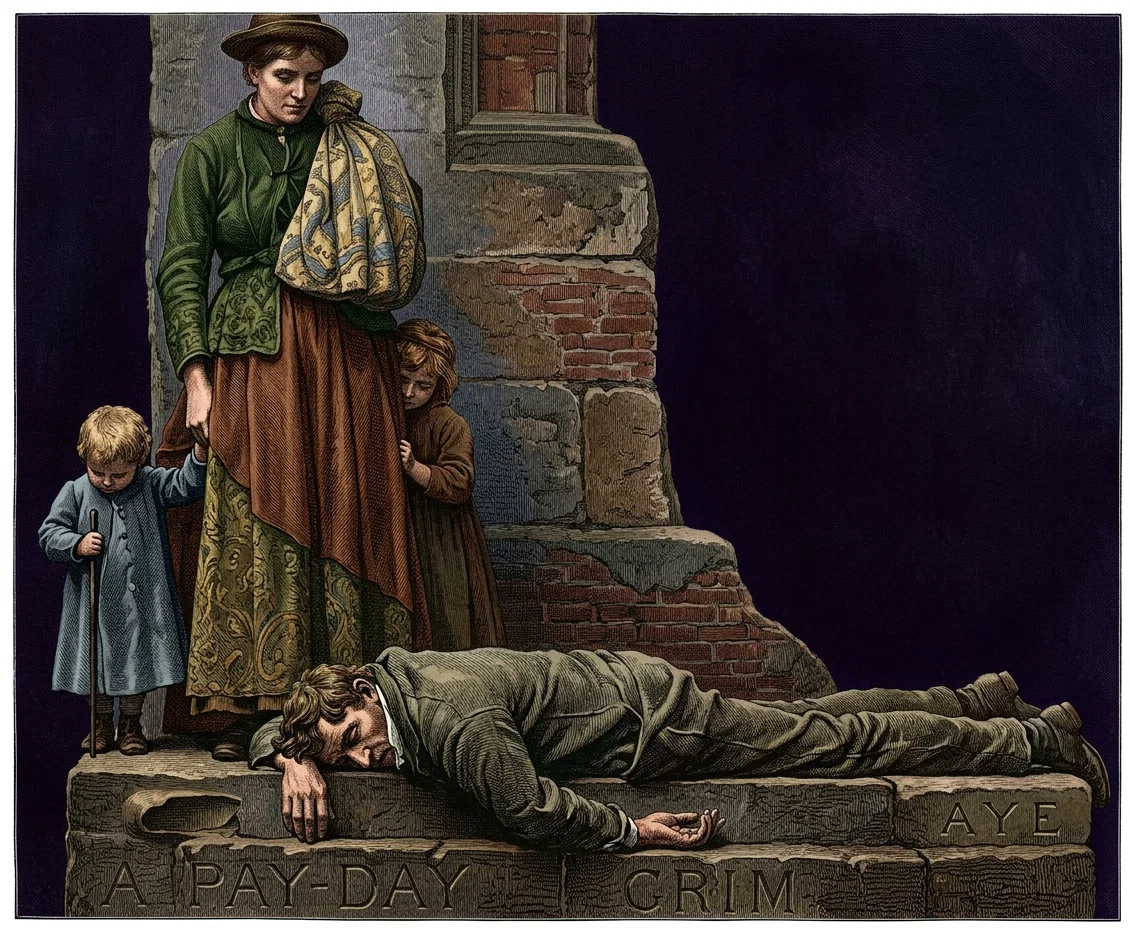
Pay-Day
Pay-Day
FORMER PRICES CONTINUED
Five to forty copies, 5 cents a copy; fifty or more copies, 4 cents a copy

ORDER THROUGH YOUR CONFERENCE TRACT SOCIETY

Things Which Were Written in the Books

The Angel's Record—No. 6

“Things Which Were Written in the Books”

MRS. S. M. SPICER
Not glad the angel scribe must write The harrowing list of folly, crime, The shade of sin’s dark, starless night Still hanging o’er the home of time;

Oppression

Of tyrant rule whose iron hand Has forged oppression’s cruel chain, Wide scattering sorrow o’er the land, And fear and want and cruel pain;
Of power that crushed the trembling, weak, Extorting unrewarded toil Where torn affections hopeless weep Such bitter tears as curse the soil;
Of gilded traitor who to raise The mighty self one little notch, A nation’s life and honor pays— O heaven!—the fearful price.

Envy

But on that sin-bedarkened page None darker seemed than envy’s deed; Abhorred on earth,—engine most vile To crush man’s joys, on which to feed,—
Base, “conscious poverty of soul” That worth in others can not bear, But with polluting, withering touch Would wrest the crown it can not wear.
Thirsting for praise, he strives to rob True worth of praise, and honor just; Then, climbing glorious fame’s fair heights, Would fain drag down to his vile dust.
Unhappy he whose humble name Attracts the poisonous arrow’s touch, Or feels the scorching, withering flame Of slander’s breath, envy’s first kin.
Should fallen nature ever fail, Or weakly slip,—a sad misstep,— What sin-steeped legions, born of hell, All ready stand to help him fall.
Record of shame to fallen man! Delight to see a brother fall! “Away with him!” “away with him!” Never-forgiving malice cries; “The law is right, the trespass wrong, The guilty sinner ought to die.” The holy angel blushed to write, That guilty man can not forgive; While Jesus said, from his pure heart, “Go, sin no more, and thou mayst live; Forgive as thou wouldst be forgiven.”

Prejudice

And prejudice—dire foe of truth— Of rumor born, yet ever strong To blind the eye and seal the heart To all except his treasured wrong.
Thank God in heaven that galling yoke Ne’er binds the struggling spirit down; Though failing once, there yet is hope To win and wear the highest crown.
How many lives of usefulness, Disheartened, crushed to earth, are lost! How many bleeding hearts attest The wrong injustice costs! And all The pity of that world of love Does wronged and suffering virtue need.

Be Brave, Be True

Be patient still; Jesus above The judge will be, not man, nor creed. Take cheer, ye sorrowing ones below! Through trials now, the waters deep Shall wash your robes as white as snow, And God’s own books the record keep When earth’s account with time shall fail.
The angel’s record all shall see; And truth, eternal truth, shall tell Thy just rewards—eternity.
“And the books were opened, . . . . and the dead were judged out of those things which were written in the books, according to their works.” Rev. 20:12.
Takoma Park, D. C.

The Relation of Seventh-Day Adventists to the Jewish People

GEORGE I. BUTLER
SEVENTH-DAY ADVENTISTS claim to be giving to the world the threefold message of Rev. 14: 6-12. Indeed, they claim this fact is the characteristic which distinguishes them from all other religious bodies. No other people on earth claim to be doing this, and most of them hardly dream there is such a message to be given. But there it is in the scripture referred to, and its language is most emphatic. It is evident from verses immediately following those cited that this threefold message is to be given for the special purpose of preparing a people for the coming of Christ.
This good platform of religious truth fits the last days, and can be applicable to no other period. It has three divisions, which are successive, the first, second, and third. The last states in so many words, “The third angel followed them,” i. e., followed the two which preceded it.
The first in point of time is to be proclaimed to “every nation, and kindred, and tongue, and people.” The Jews are a nation and people known all over the world. They are a remarkably conspicuous people, a peculiar people, among the very oldest nationalities on the earth, with the most remarkable history of any people, having had the most distinguished honor conferred upon them by being designated for many centuries as God’s peculiar people. But, because of many backslidings, and the rejection of great light, and their treatment of the Son of God when he came as the long-expected Messiah, the special blessing of being God’s own peculiar people was withdrawn, and they no longer had the opportunity of being the special missionary people to carry the gospel to the world. But they were not rejected as individuals. They were not cast off in any such sense that there was no hope for them.
Paul makes this point especially plain. “I say then, Hath God cast away his people? God forbid.” Then the apostle refers to the fact that he himself was an Israelite of the tribe of Benjamin, and he was among the greatest of the apostles, positive proof that the way of salvation was open to Jews as well as to Gentiles. The apostle presents some arguments that show God does have special thought of mercy toward that people to whom he had given so many blessings and privileges in the past. They even had some advantages over the Gentiles. There were great facts in their history to which they could look back with encouragement. The oracles of God, the ten commandments, had been committed to them for ages. They were more familiar with God’s dealings with mankind than any people could be who had not those advantages.
In Paul’s wonderful illustration of thetame and wild olive-trees these points are beautifully brought out (Romans 11). The tame olive-tree represents the Abrahamic stock and root. The wild olive represents the Gentiles. In order to have salvation it was necessary that the richness of the tame olive should be communicated to that wild, worthless olive-tree. This had to be done in the figure by grafting contrary to nature. That is to say, a scion of the wild olive must be inserted into a limb of the tame olive-tree broken off for this purpose. Usually, yes always, in grafting, the scion put into the limb is of better quality. That is why we say it is contrary to nature. In the spiritual application the limbs of the tame olive-tree were broken off because of “unbelief.” The Gentile twig grafted into Christ becomes a partaker of the promises and covenants given to Abraham’s seed. This process seems to have been a natural one in the illustration. The converted Gentile, while he retains faith in Jesus Christ, is secure. He becomes a child of Abraham.
It was true faith that made Abraham himself the favored of God, and so it is with every other man. True faith is the one thing essential in making any person acceptable as a child of God.
Where, then, does the poor Jew stand now?—In dark unbelief. But is there no hope for him?—Thank God, yes; if we can only bring Christ before him in the proper way. Then he can be grafted into the tame olive-tree even easier than the Gentile, as Paul teaches. Let us read Paul’s conclusion of his argument (Rom. 11: 25, 26): “For I would not, brethren, that ye should be ignorant of this mystery, lest ye should be wise in your own conceits; that blindness in part is happened to Israel, until the fulness of the Gentiles be come in. And so all Israel shall be saved: as it is written, There shall come out of Sion the Deliverer, and shall turn away ungodliness from Jacob.” The succeeding verses should also be read in this connection. They teach that there is a work to be done for the Jews in the last days.
The writer has for many years been looking for an important movement in this message,—a strong movement for the giving of this message among the Jewish people. The obstacles are exceeding great. The persecutions of the Jews by the Roman and Greek Catholics through the past ages have been terrible beyond description. These great bodies have harassed the very lives of that people. They are being abused, robbed, murdered, and persecuted to-day, especially by the Greek Catholic Church. These bodies call themselves Christians. The poor Jew because of these diabolical persecutions has come to hate the name of Christ. And it is no wonder, as for many ages they have been subjected to this treatment at the hands of those who called themselves the followers of Christ. These professed Christian bodies hate the Sabbath of the Lord, which is very sacred to all religious Jews. They eat swine’s flesh, a dreadful abomination to the Jew. The sacred writings of the Old Testament, sacred in the Jewish mind, these churches regard as of little importance.
We would advise every reader of this article to procure the book “From Judaism to Christianity,” written by Elder F. C. Gilbert, of South Lancaster, Mass. The writer has recently procured this book, and read it with the deepest interest. Elder Gilbert is a converted Jew, and is working for his people most earnestly. One can learn much concerning the belief, feelings, and actual life of the Jew from that work.
From the new work, “The Acts of the Apostles,” by Mrs. E. G. White, I quote the following in regard to our duty toward the Jews:—
“When this gospel shall be presented in its fulness to the Jews, many will accept Christ as the Messiah. Among Christian ministers there are only a few who feel called upon to labor for the Jewish people; but to those who have been often passed by, as well as to all others, the message of mercy and hope in Christ is to come.
“In the closing proclamation of the gospel, when special work is to be done for classes of people hitherto neglected, God expects his messengers to take particular interest in the Jewish people whom they find in all parts of the earth. As the Old Testament Scriptures are blended with the New in an explanation of Jehovah’s eternal purpose, this will be to many of the Jews as the dawn of a new creation, the resurrection of the soul. As they see the Christ of the gospel dispensation portrayed in the pages of the Old Testament Scriptures, and perceive how clearly the New Testament explains the Old, their slumbering faculties will be aroused, and they will recognize Christ as the Saviour of the world. Many will by faith receive Christ as their Redeemer. To them will be fulfilled the words, ‘As many as received him, to them gave he power to become the sons of God, even to them that believe on his name.’
“Among the Jews are some who, like Saul of Tarsus, are mighty in the Scriptures, and these will proclaim with wonderful power the immutability of the law of God. The God of Israel will bring this to pass in our day. His arm is not shortened that it can not save. As his servants labor in faith for those who have long been neglected and despised, his salvation will be revealed.
“Thus saith the Lord, who redeemed Abraham, concerning the house of Jacob, Jacob shall not now be ashamed, neither shall his face now wax pale. But when he seeth his children, the work of mine hands, in the midst of him, they shall sanctify my name, and sanctify the Holy One of Jacob, and shall fear the God of Israel. They also that erred in Spirit shall come to understanding, and they that murmured shall learn doctrine.” Isa. 29: 22-24.
These are most encouraging and instructive words. We are surely warranted in believing that the precious message of warning will be preached to the Jews. We should take great pains to treat them kindly. Let them know we keep the Sabbath of the Lord, love the Old Testament, and have a deep sympathy for them in all their sad history of persecutions, and wisely call their attention to this closing message to the world. We fall short of doing all we should for the Jews. O, the mercy of God, how great to us all, and even to his people of old who have so long walked in darkness!
Bowling Green, Fla.

JOHN D. GILLATT

The City Problem --- No. 2

JOHN D. GILLATT

“And that repentance and remission of sins should be preached in his name among all nations, beginning at Jerusalem.” Luke 24:47. “But ye shall receive power, after that the Holy Ghost is come upon you: and ye shall be witnesses unto me both in Jerusalem, and in all Judea, and in Samaria, and unto the uttermost part of the earth.” Acts 1:8.
It is interesting to observe that twice when Jesus was delivering his commission to the disciples, he urged them to begin their work in the largest city of the nation. It is also worthy of notice that the same missionary sketch-book of Acts, which begins by picturing the close of special endeavor for the metropolis of Judaism, concludes with a picture of special endeavor for the metropolis of gentilism. Between these two lies a wondrous story of city work conducted in various parts of the world field; so we can correctly say that the book of Acts is a divine record of city missionary work.
The most marvelous events recorded in the book of Acts are those of a pentecostal order, and be it noted that every one of the four recorded took place in a city. The cities were Jerusalem, the Jewish metropolis; Samaria, the Samaritan metropolis; Cæsarea, the Roman metropolis of Palestine; and Ephesus, one of the most important Greek cities, and metropolis of the province of Asia. Thus the former rain was, as the latter rain is to be, poured out upon all flesh, in that cities that were renowned among the Jews, Samaritans, Romans, and Greeks, respectively, had their distinct pentecostal revivals. In this way the Lord emphasized the universal need of the universal application of the Holy Spirit.
Do not the facts here dwelt upon suggest to us that cities are the regions in special need of gospel work? Now the Lord’s followers were to be witnesses: and true witnesses, according to established and well-known legal usage, have two qualifications, to know and to speak. Hence the Saviour said, “We speak that we do know.” John 3:11. The first requisite of a successful witness is unwavering confidence, irrefutable knowledge. Something, however, must precede even this,—there must be something for him to know, that he may have something to say. What we require, therefore, is a message, and immovable confidencein that message. Then, with power from our Commissioner, we are prepared to enter even these centers of sin, and offer that which will satisfy the spiritual needs of the people.
The message wherewith to evangelize the cities is plainly set on record. Let us read:— “The Lord’s voice crieth unto the city, and the men of wisdom shall see thy name: hear ye the rod, and who hath appointed it.” Micah 6:9. This verse merits close analysis. First of all, the Lord’s voice is to the whole earth, but particularly to the cities. Consider, for an instant, the word “voice.” By comparison of this scripture with John 1:23, we learn that the Lord uses human agencies as his voice. The one there thus describing himself was John the Baptist, who had come “in the spirit and power of Elias.” Luke 1:17.
We understand and tell the world that John was a type of the people to whom is committed the message of Christ’s second coming; hence we should allow the Lord and humanity to recognize in us the voice of God. Too often, though, the divine melody is missing from the mortal’s voice, and the tone is not pitched to the harmony of heaven’s sacred choir.
My fellow worker, are your lips mobile to the melody of angelic praise? Are your heart-strings softened and susceptible, that they may be stirred by the Spirit of God as the harp-strings by an expert? Have you that tender, sweet disposition that melts the hardened heart, and binds the sinner a willing captive to your Leader’s triumph car? If so, you may read yourself in this expression, “the Lord’s voice.” The church, then, professing as a whole to be that voice to-day must cry to every nation, kindred, tongue, and people, especially the cities.
The voice demands a message. This message has been committed to us, and is calculated to effect such a transformation in our lives that the Lord by the sanctifying influence of his Spirit, particularly through the Sabbath blessing, can write his name on our foreheads. The Lord gives us his appointed rest day that thereby we can cause “the man of wisdom” to see God’s name, not only as the seal of Sinai’s precepts, but in us the seal of the Spirit’s presence. In our grasp has been placed “a reed like unto a rod” with which we are commanded to measure creed and character. Revelation 11. Such a symbol we readily understand to signify the law. This rod is a speaking rod (a figure strange in itself, but how easy to explain when we apply it to the commandments of the decalogue), a rod that communicates the will of God; and it is for us to invite the citizens to hear, for the Lord has “appointed,” or “determined,” it inviolable. As we carry a message established by God’s own appointing, hallowed by his holy name, and blessed with his Sabbatic blessing, let us press on in our heaven-appointed work, taking courage, and whole-heartedly believing God’s promise, “Blessed shalt thou be in the city.” Deut. 28:3.
London, England.

Fire-Proof Buildings

T. E. BOWEN
In large cities we often read of the fire-proof vaults and fire-proof buildings where human life or money are thought to be secure against loss by fire or otherwise. But in very fact, there are no such buildings, no such vaults. There is absolutely nothing fire-proof in this world so far as life and property are concerned—only the righteous character of Christ developed in his children, the gold tried in the fire. The loss by fire in New York just recently of the magnificent fire-proof (!) Equitable Life Assurance Society building affords an object-lesson worthy of careful study. This becomes especially so to us as a people in view of what God has been pleased to reveal to us regarding these buildings in which men place so much confidence. In “Testimonies for the Church,” Volume IX, under the heading “The Last Crisis,” we find the following concerning “fire-proof buildings:” —
“On one occasion, when in New York City, I was in the night season called upon to behold buildings rising story after story toward heaven. These buildings were warranted to be fire-proof, and they were erected to glorify their owners and builders. Higher and still higher these buildings rose, and in them the most costly material was used. Those to whom these buildings belonged were not asking themselves, ‘How can we best glorify God?’ The Lord was not in their thoughts. . . .”
“The scene that next passed before me was an alarm of fire. Men looked at the lofty and supposedly fire-proof buildings and said, ‘They are perfectly safe.’ But these buildings were consumed as if made of pitch. The fire-engines could do nothing to stay the destruction. The firemen were unable to operate the engines.”
“I am instructed that when the Lord’s time comes, should no change have taken place in the hearts of proud, ambitious human beings, men will find that the hand that had been strong to save will be strong to destroy. No earthly power can stay the hand of God. No material can be used in the erection of buildings that will preserve them from destruction when God’s appointed time comes to send retribution on men on account of their disregard of his law and for their selfish ambition.”
The above is quoted to emphasize how unavailing is man’s effort to protect his valuables and life itself in the erection of fire-proof buildings; nothing is safe without the protection of the Lord.
In its issue of January 20 the Outlook, published in New York City, in an editorial draws some lessons from the recent destruction of the Equitable building, which point out the truthfulness of the above concerning the destructibility, and that by fire, of buildings supposedly fire-proof:—
“There were features about the destruction through fire of the Equitable building in New York City last week which made it unique. Not, unfortunately, that loss of life through forces set at work by apparently trivial carelessness is unknown; not, happily, that heroism and devotion are uncommon; not that a building thought to be fire-proof proves to be a storehouse of countless tons of inflammable matter which once well aflame makes stone and iron crumble like paper [a tacit admission in passing, however, of the surety of the words quoted above]. But this is the first fire which indirectly all but stopped business on the stock exchange, and closed temporarily several banks; the only one inwhich securities and cash to the amount of about a billion dollars remained secure in vaults while a roaring furnace raged around; the first which caused forty-five millions of cash to be carted down Broadway under police escort; the first of magnitude to be met and fought right in the center of the financial district of the metropolis. The strange and picturesque aspects of this great fire sheathed in ice have held people’s imagination, while the tragedy and pathos have moved their hearts. . . . After it is all over, as usual, it is easy to draw lessons: First, the need of individual carefulness in handling matches, cigarettes, and everything inflammable; . . . second, the folly of delay in calling out the firemen until a fire has gained headway; third, the moral criminality of putting stoves and flues near an elevator shaft; fourth, the mistake of concluding that exterior stone walls make a building fire-proof; fifth, the prime necessity of abundant water and strong pressure in a district of high buildings. When one reads the story, however, praise rather than blame comes uppermost. New York owes it to her fearless and efficient firemen that the Equitable fire was not the start of a conflagration which, in the consumption of property value at least, might easily have made the Chicago and Boston fires insignificant.”
The principal lesson in this, as well as in other destructive fires in our large cities, is that nothing considered as secure, is, in this world, secure. Securities in bank-stock, in real estate, in insurance company policies, in fire-proof buildings, while made as secure as man can make them, may still in a moment become a total loss in a bank failure, a money panic, an insurance company’s loss of property, or in the total wreckage of some supposedly fire-proof building that becomes in a few hours a mass of twisted steel and crumbled cement and melted stone. In this particular instance valuable securities in the vaults were not lost. To us whose eyes are upon another city, one that “hath foundations,” the lesson should come with force to invest in heavenly securities, which are secure. We do this when we invest both our talents of intellect and our money in imperishable riches — the winning of souls to shine in Jesus’ crown. Such investments are actually fire-proof.
Washington, D. C.

Coworkers With the Lord

A. SMITH
The Lord claims the tithe as his own, and he expects each one of his people to render a strict account of his stewardship in this matter. He designs that in the payment of tithes and offerings his people shall be coworkers with those who use these funds to carry the third angel’s message.
“The Lord has made the proclamation of the gospel dependent on the consecrated ability and the voluntary gifts and offerings of his people. While he has called men to preach the word, he has made it the privilege of the whole church to share in the work by contributing of their means to its support. A tithe of all our income the Lord claims as his own, to be devoted solely to the support of those who give themselves to the preaching of the gospel.”—Mrs. E. G. White, in Review of May 9, 1893.
“Let none feel at liberty to retain their tithe, to use according to their own judgment. They are not to use it for themselves in an emergency, nor to apply it as they see fit, even in what they may regard as the Lord’s work. God has shown honor to men in taking them into partnership with himself in the great work of redemption. He expects his agents to labor not against him, but in unison with him, that his treasury may be supplied.”—Ibid., Feb. 4, 1902.
“Carpenter or farmer, merchant or preacher, the one business is hastening the warning message onward. Just as truly as the Lord calls the missionary to toil unceasingly, with every power of his being and with all the means at his disposal, to carry the light into new fields, even so the call comes to the man toiling in business to dedicate that business to the cause of truth. Whether it be the calling and gift of public ministry, or whether it be the calling and gift of earning means in business, it is one call to this last service, and those who go and those who send will share equally in the reward.”—W. A. S., in Review.
Truly such assuring statements ought to be an encouragement to all our people to be faithful in paying tithes and offerings. We are all one people, working to one common end,—to finish the work God has given us to do in this generation.
Grandville, Mich.

White-Slave Traffic; a Warning

It is reported that within thirty days seventeen hundred girls have been lost between New York and Chicago, all of whom are still missing. Indeed, it is seldom that those who are entrapped to supply houses of shame escape; most of them are lost forever. Let the following story, taken from one of our exchanges, be a warning to girls and their parents, particularly those in large cities, to be very watchful that strangers do not deceive them.
The story of two girls who recently escaped the loathsome life of shame shows the modus operandi in securing the white slave. There are hundreds who do not escape, as did these girls.
These two girls lived near Chicago. Seeing an advertisement for waitresses, in a Chicago daily, they answered it, and went to the city. They were met at the station by a decent-appearing man, who took charge of them and conducted them to a house. As it did not appear to be a restaurant, the older of the girls was puzzled. She thought they were going to work at once.
At this house the girls were each given a separate room. They protested. They were strangers in a strange place, and had agreed to stay together. The man explained that there were plenty of rooms in the house, and against their will, they were put for the night in different parts of the house. At a late hour one of the girls determined to find the other. She was lucky in finding the room, undiscovered. Joining her companion, she locked the door for the night.
Shortly after this, some one knocked. The older girl inquired who it was. The only reply she could get was a demand for entrance. This was refused. The man outside persisted in his request. The younger girl grew frightened, and began to cry. As the demand outside grew to an insolent order, the older, who was broad-shouldered and brave, looked about for some weapon for protection.
In reply to her firm refusal to open the door, a threat was made that it would be broken. Arming herself and the frightened younger girl with a heavy wash-bowl and pitcher, the young woman waited as the effort was being made to force the door. It was soon broken at the lock; but no sooner did the head of the man show itself, than, with a fury born of desperation, the girl broke the bowl over his head. The blow stunned him. The girls ran into the street, and were taken in charge by a policeman.
They were advised to prosecute the procurer; but were so fearful of notoriety that rather than suffer the mortification of newspaper publicity in their home town, they made no demand other than that their expenses be paid back to their homes. This happened in Chicago but a short time ago.
In Indianapolis a recent case, which has been given some publicity because of the escape of the young girl, shows again the method employed in getting slaves for the human when his manhood has sunk below the level of the beast.
The procurer in this case was an attractive and beautifully dressed woman. She stopped at the counter in a certain leading retail store where the saleswoman was a pretty young girl. After asking the price of certain articles, she told the girl she was interested in the publishing business, and was getting out a volume of portraits of beautiful American girls. She declared that she had seen no face more attractive than that of the girl, and asked permission to put her picture in the book, stating that she would not only pay for the photo graph, but would pay the girl for the time used in having it made.
The girl was delighted. The woman advised going out at once. To this the girl agreed, as it was near the noon hour. Before leaving, she explained to an older girl that she was going to spend her noon hour getting her picture made, and asked that, if she were not back at one, an inquiry should be made for her, the manager be told she would be back very soon after.
She was not back at one o'clock. When, upon inquiry, the manager heard the story, his suspicions were aroused. He had knowledge of the procuring industry in and about Indianapolis. He hastened to the interurban station, but found nothing to arouse his suspicion. From there he went to the union station. A Chicago train stood on the track. A carriage drove up to the side entrance. A young girl was helped out. She seemed to be ill or drugged. It was the girl he sought. She was not with the attractive woman. Since she had left the store, she had been drugged and turned over to the man who was taking her to Chicago. This girl was rescued.
The constantly increasing demand for young girls for immoral purposes is a feature of the business that makes it vastly profitable, and makes necessary the securing of girls under false pretense.—The Gospel Trumpet.
Continue reading: What Shall We Neglect?