Your ShelfYour Projects

Signs of the Times, Vol. 36, No. 16.

PSALM XXIII

Signs of the Times

Apr 21, 1909

Pacific Press Publishing Association · Mountain View, California · Apr 21, 1909

PSALM XXIII

(SPURRELL'S TRANSLATION)
Jehovah is my Shepherd, I can not want: He maketh me to repose in verdant pastures; Beside the tranquil waters He will gently guide me. He will restore my soul; He will lead me in the pathway of righteousness, for His name's sake. Yea, altho I walk through the valley of the shadow of death, I shall fear no harm, because Thou art with me; Thy rod and Thy pastoral staff, they will console me. Thou shalt furnish a table before me In the presence of mine enemies. Thou hast anointed my head with oil. Ah! my cup overfloweth. Surely goodness and mercy shall follow me Every of the days of my life. And I shall dwell in Jehovah's house eternally.

Question Corner

[To Our Inquirers.— (1) The name and address of all who ask questions must accompany questions, not necessarily for publication, in token of good faith, and that we may reply by letter if thought best. All communications will be considered confidential if so desired, and no name will be published unless requested. But we have no time to give to anonymous or unsigned epistles or articles. (2) Let the questions be to the point. Do not say, “Explain Josh. 7:1-8,” but state the thing upon which help is desired. (3) Questions can not be answered immediately in this department. Sometimes it will mean a month or more of waiting. We can not reply to the same question frequently. Read answers to other questions; you may find reply to yours. (4) Members of the Bible Band will kindly enclose stamp if answer is desired by letter. Others will please enclose ten cents. This does not begin to meet expenses oftentimes. (5) “Foolish . . . questions avoid.”]

2818.— Unforgivable Sins.

Will you please explain Heb. 6:4-6, and the statement in another place that our bodies are the temple of the Holy Ghost and that all sins are under the promise of forgiveness but this sin, adultery being that sin?
Heb. 6:4-6 refers to those who turn away from every means by which God can save them. The two great agencies that God has in salvation are the death and offering of our Lord Jesus Christ, and the constant operation of the Spirit of God. When men utterly reject these, when they will not have them in harmony with God’s pleading, what hope is there for help to any soul? When “those who were once enlightened,” who know of God’s power, know of His working, have “tasted of the heavenly gift, and were made partakers of the Holy Spirit, and tasted the good word of God, and the powers of the age to come,” and then turn away from these things, not having to do with these things at all, how is it possible to renew them again unto repentance? “Seeing they crucify,” or as the margin in the Revised Version reads, “The while they crucify,” during the very time, “they crucify to themselves the Son of God afresh, and put Him to an open shame;” and then the illustration that follows shows how that this is the right application. The land upon which rain falls, that brings forth herbs, receives blessing from God; but supposing that same land, instead of bringing forth good herbs all the while that the rain of blessing is falling upon it, bears thorns and thistles, of course it is rejected and nigh unto a curse. So it is with the human being; if he will use God’s blessing aright, there is hope for him, but if he knows God’s blessings and tramples them underfoot, what hope is there to turn him to God just as long as he uses God’s blessings in that way? The unforgivable sin is the unrepentable sin. Let that be an established fact in your theology. We read in 1 Cor. 6:20 that our body is the temple of the Holy Spirit. God’s Spirit will always come in if we are willing to let it and will yield up everything that is contrary to it. There is nothing, however, in the word of God which tells us that this sin is adultery—absolutely nothing. Any sin which we may cherish, it matters not how small it may be, contrary to God’s word and the conviction of His Spirit, will lead us at last to that place where we will have no desire for repentance; and when we come to that place where there is no desire for repentance, we have come to the time in our experience where our sins are unforgivable because they are unrepentable; we have no desire to truly repent.

2819.— Can Satan Cure Sickness?

In Matt. 12:26 Jesus said Satan could not cast out Satan. Does it not say in some other place in the Bible that in the last days Satan shall work with all power and signs and lying wonders, curing sickness? A friend told me that sin led to sickness and death. If this is so, Satan could not cure sickness. Please explain.
B. B. 1538.
Satan had not been able to cast out Satan, and yet it would seem as tho he could command his own demons. The Bible represents the devil as the head of a company of evil angels called demons. These demons are at his command. They may affect an individual and cause functional difficulties and troubles, and Satan may be able for a time to relieve the individual so as to seem to cure the disease. There are two classes of disease: Functional, in which the action of the organs are disturbed, and organic, in which some part or organ of the body is seriously affected, as by tuberculosis or cancer. Many times the first class is cured by the removal of the cause, the latter by miraculous power or by natural forces. It would seem very reasonable to believe that where Satan caused the difficulties, as he does many times, he could in some instances, at least, remove them, so as to seem to cure. It is in 2 Thess. 2:8-10 where we are told that he will work “with all power and signs and lying wonders, and with all deceivableness of unrighteousness.” Notice the falsehood that is implied in all of this. All true healing of sickness and all ultimate healing include both body and soul. The devil would be glad to have us turn our whole attention to the healing of the body, which is important; but infinitely more important is the healing of the soul from the effect of sin, because sin is the cause primarily of all trouble; for sickness would not have come had it not been for sin. But that does not mean that every one that is sick is necessarily a sinner. There are many who have inherited sickness; some have it because of fruits of evil sowing, of which they have repented, altho the fruits are not yet passed away.

2820.— Observance of Lent.

Is the religious observance of the season of Lent, as practised by some churches, a Christian duty? Or is it as some Christians believe, a non-essential in religion?
F. F. F.
Why should we consider it for one moment an essential? God has nowhere commanded it or given it as a duty in His word. “Ye are My friends,” He declares, “if ye do whatsoever I command you;” “if ye love Me, keep My commandments;” but nowhere are we told to keep Lent in any way. A physical benefit comes by a partial fast, but the temperance that is manifested on the part of professed Christians during Lent ought to be the temperance that is manifest throughout the entire year. All these extra-religious institutions which men bring in are entirely apart from the Gospel.

2821.— Liberty.

In the SIGNS of March 3 the editor says, “We plead not for liberty for ourselves, but for each and every man—for our neighbor, be he infidel or believer, Protestant or Catholic, Jew or Gentile. As long as the liberty of the individual is secured, the liberty of all is safe.” Will the editor please give a fuller explanation of the liberty above mentioned? Liberty to do what? liberty to believe what? from a Christian standpoint.
F. F. F.
We hardly know what our inquirer means by “from a Christian standpoint.” What is meant by the note, is religious liberty, liberty that should be recognized by all civil powers; liberty to believe or not to believe; liberty to obey God or not to obey. Civility is another thing. It is the duty of every one to be civil within the province of civil law. Civil government is ordained to prevent incivility; in other words, to protect a man’s property, life, chastity, and reputation. Further than this, it can not go. It has no right whatever to prescribe what man shall do as relates to his duty to God. It was Jesus, the very Founder of Christianity, who said: “If any man hear My words, and believe not, I judge him not; for I came not to judge the world, but to save the world.” Therefore one whose inalienable rights are recognized by the civil power has the privilege to believe in religion or not to believe, without let or hindrance from his fellow men.

2822.— Matt. 21:44.— The Stone.— W. S.—

The falling on that Stone, Christ Jesus, is to be broken to pieces, by confession and contrition. The Lord is said to be with him who is of a contrite spirit. Isa. 57:15. The word “contrite” comes from the same word as “triturate,” the breaking up into very fine, small particles, just as the druggist triturates the crystals with mortar and pestle. God would have us break our hearts in repentance and contrition, falling upon the Stone our Lord Jesus Christ with true repentance of heart. Then He will bind us up and fill us with His life, but if we do not do that, then there will come a time when as in the figure, the Stone will fall upon us and destroy us.

2823.— Smoking Flax.

In Matt. 12:20 it speaks of smoking flax. What does this mean?
W. S.
“A bruised reed shall He not break, and smoking flax shall He not quench.” It simply means this, that God in His great goodness would not cut any one off so long as there was hope for him. The reed might be bruised, but He would not break it. He came to bind up. The smoking flax might be consuming, yet He would not put out the fire. He would not override the will of the sinner. He would not attempt to force moral conclusions. In His great mercy and goodness He would do everything He could to help the weak, who seemingly were without help.

2824.— This Generation.— Matt. 24:34.— W. S.—

By “this generation,” Jesus evidently meant those who should see all these things fulfilled, beginning with the closing of prophetic time in 1844 and continuing till He comes.

OUR BIBLE BAND

Schedule for Week Ending May 1, 1909.

Day Date Morning Evening
Su. April 25 2 Sam. 21, 22 Luke 18:24-43
Mo. “ 26 “ 23, 24 “ 19:1-27
Tu. “ 27 1 Kings 1, 2 “ 19:28-48
We. “ 28 “ 3, 4, 5 “ 20:1-26
Th. “ 29 “ 6, 7 “ 20:27-47
Fri. “ 30 “ 8, 9 “ 21:1-19
Sa. May 1 “ 10, 11 “ 21:20-38

Suggestive Notes.

Our Old Testament lessons conclude the book of 2 Samuel and reach to the close of the 11th chapter of 1 Kings. Again the jealousy of Joab is aroused over rival officers which David prefers, and Amasa, Absalom’s captain, is murdered. The story of the famine, which came upon Israel, is given, and its cause; the psalm of thanksgiving in chapter 22, and another in chapter 23; the story of David’s mighty men. Chapter 24 records another sin by David, and that is the numbering of Israel. Evidently the motive lying back of it was the showing forth of David’s glory in noting the increase and prosperity of Israel during his reign. This was contrary to the plan of God, disagreeable to the gruff old captain Joab, and it brought upon the king the displeasure of the Lord.
The first book of Kings opens with the continuation of David’s reign, his appointment of Solomon as king, his charge to Solomon, and the bestowal of wisdom upon Solomon in harmony with the proverb afterward given through Solomon that “the fear of the Lord is the beginning of wisdom;” Solomon’s riches and wisdom, the building of his house and the building of the temple, the dedication of the temple, the wonderfully comprehensive prayer of Solomon, an account of the management of his kingdom and his great riches, closing with the account of his awful idolatry and death. Who it was that wrote the books of Kings we do not know. They were probably written at different times by the seers and prophets and priests, and brought together by Ezra at the time of the exile.
In the New Testament our lessons begin with Luke 18:24, closing with the 21st chapter. The principal events in this week’s reading are the foretelling of His death by our Saviour, the healing of the blind man, the call of Zacchaeus, the parable of the pounds, the riding into Jerusalem, the weeping over the city, parable of the husbandman, captious questions of the Pharisees and Sadducees, closing with the chapter on His discourse on the destruction of Jerusalem and His second coming.

Life’s Greatest Compensation.

By Mrs. E. G. White
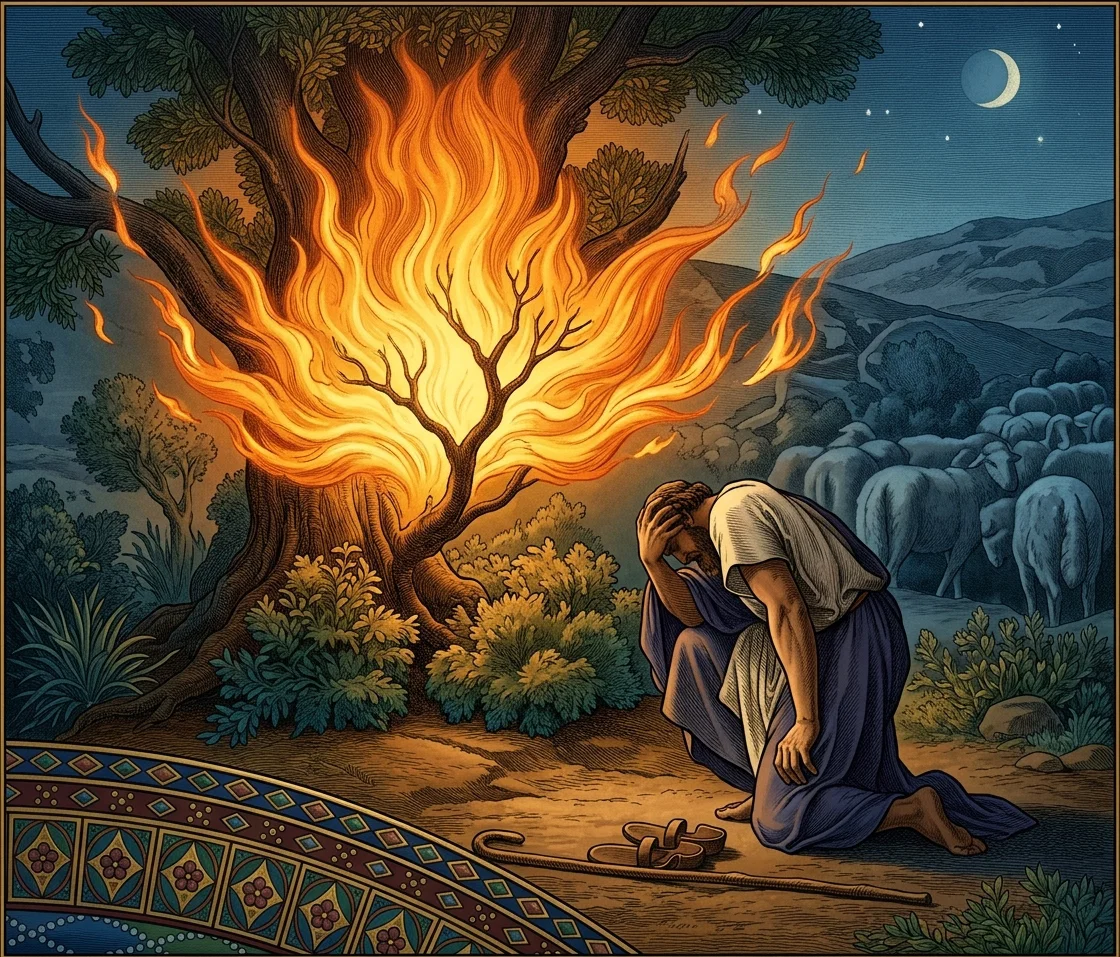
The call of Moses to service and to “the reproaches of Christ.” See Ex. 3:1-12; Heb. 11:24-27.
In our life here, earthly, sin restricted tho it is, the greatest joy and the highest education are in service. And in the future state, untrammeled by the limitations of sinful humanity, it is in service that our greatest joy and our highest education will be found,—witnessing, and ever as we witness learning anew “the riches of the glory of this mystery,” “which is Christ in you, the hope of glory.”
Love, the basis of creation and redemption, is the basis of true education. This is made plain in the law that God has given as the guide of life. The first and great commandment is, “Thou shalt love the Lord thy God with all thy heart, and with all thy soul, and with all thy strength, and with all thy mind.” To love Him, the infinite, the omniscient One, with the whole strength, and mind, and heart, means the highest development of every power. It means that in the whole being—the body, the mind, as well as the soul—the image of God is to be restored.
Like the first is the second commandment. “Thou shalt love thy neighbor as thyself.” The law of love calls for the devotion of body, mind, and soul to the service of God and our fellow men. And this service, while making us a blessing to others, brings the greatest blessing to ourselves. Unselfishness underlies all true development. Through unselfish service we receive the highest culture of every faculty. More and more fully do we become partakers of the divine nature. We are fitted for heaven; for we receive heaven into our hearts.
Christ bound men to His heart by the ties of love and devotion; and by the same ties He bound them to their fellow men. With Him love was life and life was service. “Freely ye have received,” He said, “freely give.”
It was not only on the cross alone that Christ sacrificed Himself for humanity. As “He went about doing good,” every day’s experience was an outpouring of His life. In one way only could such a life be sustained. Jesus lived in dependence upon God and communion with Him. To the secret place of the Most High, under the shadow of the Almighty, men now and then repair; they abide for a season, and the result is manifest in noble deeds; then their faith fails, the communion is interrupted, and the life-work marred. But the life of Jesus was a life of constant trust, sustained by continual communion; and His service for heaven and earth was without failure or faltering.
As a man He supplicated the throne of God, till His humanity was charged with a heavenly current that connected humanity with divinity. Receiving life from God, He imparted life to men.
The palm-tree, beaten by the scorching sun and the fierce sandstorm, stands green and flourishing and fruitful in the midst of the desert. Its roots are fed by living springs. Its crown of verdure is seen afar off over the parched, desolate plain; and the traveler, ready to die, urges his failing steps to the cool shade and the life-giving water.
The tree of the desert is a symbol of what God means the life of His children in the world to be. They are to guide weary souls, full of unrest, and ready to perish in the desert of sin, to the living water. They are to point their fellow men to Him who gives the invitation, “If any man thirst, let him come unto Me, and drink.”
When the providences of God are seen in the light of eternity, those who have wrought with unselfish spirit will behold the fruit of their labors. The outworking of every right principle and noble deed will be seen. Something of this we see here. But how little of the result of the world’s noblest work is in this life manifest to the doer! How many toil unselfishly and unweariedly for those who pass beyond their reach and knowledge! Parents and teachers lie down in their sleep, their life-work seeming to have been wrought in vain; they know not that their faithfulness has unsealed springs of blessing that can never cease to flow; only by faith they see the children that they have trained become a benediction and an inspiration to their fellow men and the influence repeat itself a thousandfold. Many a worker sends out into the world messages of strength and hope and courage, words that carry blessing to hearts in every land;but of the results he, toiling in loneliness and obscurity, knows little. So gifts are bestowed, burdens are borne, labor is done. Men sow the seed from which, above their graves, others reap blessed harvests. They plant trees that others may eat the fruit. They are content here to know that they have set in motion agencies for good. In the hereafter the action and reaction of all these will be seen.
Of every gift that God has bestowed, leading men to unselfish effort, a record is kept in heaven. To trace this in its widespreading lines, to look upon those who by our efforts have been uplifted and ennobled, to behold in their history the outworking of true principles,—this will be one of the studies and rewards of the heavenly school.
The histories of Bible characters are of vital interest. To none are they of deeper importance than to the youth. Moses renounced a prospective kingdom, Paul the advantages of wealth and honor among his people, for a life of burden-bearing in God’s service. To many the life of these men appears one of renunciation and sacrifice. Was it really so? Moses counted the reproach of Christ greater riches than the treasures in Egypt. He counted it so because it was so. Paul declared: “What things were gain to me, these have I counted loss for Christ. Yea, verily, and I count all things to be loss for the excellency of the knowledge of Christ Jesus my Lord for whom I suffered the loss of all things, and do count them but refuse, that I may gain Christ.” He was satisfied with his choice.
Moses was offered the palace of the Pharaohs and the monarch’s throne; but the sinful pleasures that make men forget God were in those lordly courts, and he chose instead the “durable riches and righteousness.” Instead of linking himself with the greatness of Egypt, he chose to bind up his life with God’s purpose. Instead of giving laws to Egypt, he by divine direction enacted laws for the world. He became God’s instrument in giving to men those principles that are the safeguard alike of the home and of society, that are the corner-stone of the prosperity of nations,—principles recognized to-day by the world’s greatest men as the foundation of all that is best in human governments.
The greatness of Egypt is in the dust. Its power and civilization have passed away. But the work of Moses can never perish. The great principles of righteousness which he lived to establish are eternal.
Moses’ life of toil and heart-burdening care was irradiated with the presence of Him who is “chiefest among ten thousand,” and the One “altogether lovely.” With Christ in the wilderness wandering, with Christ on the mount of transfiguration, with Christ in the heavenly courts,—his was a life on earth blessing and blessed, and in heaven honored.
Paul also in his manifold labors was upheld by the sustaining power of His presence. “I can do all things,” he said, “through Christ which strengtheneth me.” “Who shall separate us from the love of Christ? shall tribulation, or distress, or persecution, or famine, or nakedness, or peril, or sword? . . . Nay, in all these things we are more than conquerors through Him that loved us. For I am persuaded, that neither death, nor life, nor angels, nor principalities, nor powers, nor things present, nor things to come, nor height, nor depth, nor any other creature shall be able to separate us from the love of God, which is in Christ Jesus our Lord.”
Who can measure the result to the world of Paul’s life work? Of all those beneficent influences that alleviate suffering, that comfort sorrow, that restrain evil, that uplift life from the selfish and the sensual, and glorify it with the hope of immortality, how much is due to the labors of Paul and his fellow workers, as with the Gospel of the Son of God they made their unnoticed journey from Asia to the shores of Europe?
What is it worth to any life to have been God’s instrument in setting in motion such influences of blessing? What will it be worth in eternity to witness the results of such life work?
“The palm tree . . . stands green and flourishing and fruitful in the midst of the desert.”

Emancipation Day

WITNESSED, on Oct. 23, 1908, for the first time a genuine celebration of Emancipation Day, in memory of Oct. 23, 1863, when the emancipation of the former slaves was practically accomplished.
I shall not take time nor space to describe the dinner served by the negroes to their white fellow citizens, some of whom were their rescuers,— nor the procession, headed by the band, and the old veterans of the Civil War, nor the speeches made by white and black. But I do wish to say that this celebration awakened some thoughts in my mind of another emancipation proclamation, which is even now heralded over the entire world,— and another celebration which will soon be held,—the proclamation of liberty to the captives, bound by the chains of sin and a carnal mind, forged by Satan, and a celebration in which will participate all true soldiers in this struggle for liberty.
Former slaves to physical bondage ought to be thankful and joyful; but their servitude does not compare to the slavery of sin and Satan. Well has a certain writer said that “there are slaves who are free, and masters who are slaves.” In this slavery of sin and Satan is every man who has not been set free by the grace of the mighty Redeemer. And those who are set free by the Son of God, who are free indeed, have more reason to rejoice, for they have attained to the glorious liberty of the sons of God, while the former were simply freed from bodily servitude, as were the children of Israel when freed from Egyptian oppression. They were then not free from the slavery of sin, as is shown by their experience during their journey in the wilderness. But into Canaan could enter only those who attained to this other liberty, in whose hearts was a different spirit, as in Caleb’s. Into the heavenly Canaan, the eternal kingdom of God, only those will enter who have attained to the glorious liberty of the children of God. But that is the blessed privilege of every one.
Now the emancipation from the slavery of sin is being proclaimed. Every man may be free — if he accepts of this liberty offered so freely. The proclamation and invitation to come, is being carried to the uttermost ends of the earth to-day. Now is the time to accept it. Soon it will be too late. There is a better General than ever fought earth’s battles to inspire and strengthen the soldiers in this campaign; and there is sure victory and certain liberty to whosoever will come.
Soon it will be too late. Then those who have chosen to remain in the slavery of sin, will be inseparably connected with it, and will perish with their sin. Hasten, and save your soul. Enter into the open door of mercy; do not reject Him who rejects none, however sinful, who will come. Let Him become King and Lord in your heart now. That is the only way, the only course you can pursue, and see Him when He, as He has promised, comes in the clouds of heaven as King of Kings and Lord of Lords, to gather His own to Himself.
Soon the proclamation will cease to be proclaimed. Soon the most glorious celebration will be held, which the universe will ever see. Then all the true warriors of the cross, from Creation until the end of time, will be carried by the holy angels into the presence of the Son of God when He appears in the glory of the Father, in His own glory, and in the glory of all the holy angels, to take to Himself His redeemed. And then He will gird Himself, and serve His faithful ones at that glorious marriage supper of the Lamb.
O, may we all be among the blessed, who from all nations and tongues, will be gathered at the glorious celebration of emancipation, made free indeed from the terrible service of Satan, to serve forevermore Him who has purchased our freedom, redeemed us, to His own praise and glory, as true children of the living God.
THEODORE E. M. VALENTINER.

Religion Is Not a Matter of Business

NO ONE has any business in religion whose religion is only a matter of business.— H. F. Cope.

Heaven Is Above All

HEAVEN is above all! there sits a judge that no king can corrupt!—Shakespeare.
Continue reading: The Spirit World and a Future Life