Signs of the Times, Vol. 35, No. 8.

Not Abandoned of God

Signs of the Times

Sep 23, 1908

Pacific Press Publishing Company · Mountain View, Cal. · Sep 23, 1908

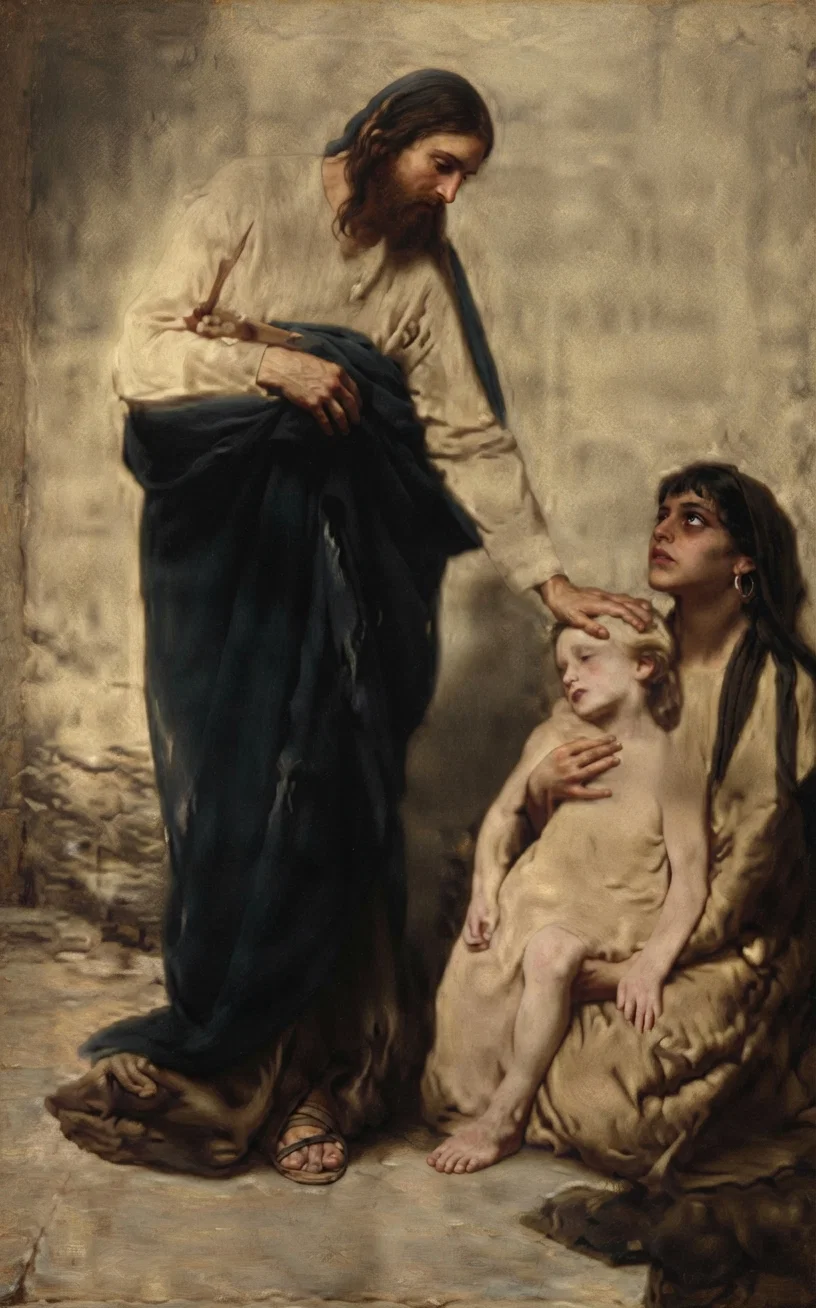
Not Abandoned of God

WE can almost read the story in the picture and its title. A poor girl has gone astray or been led astray from the path of virtue. She may have had a virtuous father and mother, tho not wise ones. Taking the first steps from the paths of virtue down easy grades according to common customs, she yields to resultant temptation and falls.
In her departure from virtue, a child is born. It may have been born in her father's house. She may have sought refuge there afterward. But the Puritanic father, furiously indignant at the disgrace and dishonor which has come upon his good name, turns his daughter out into the cold world, rejected, abandoned, to find shelter where she can; home is denied her. She goes forth with her helpless, innocent child and her little bundle of clothes, and her father's curse. He to whom she owes her ruin has forsaken her.
ABANDONED.
ABANDONED.
We do not see just that setting of the characters nowadays, dear reader, we grant; but the awful reality exists in Protean forms. The bleak moor, the lonely country road, the distant farmhouse or villa over the hill, may be wanting, but the abandoned women, and the women abandoned—cast out—are not wanting. The thousands upon thousands on the downward road are pitiful. Turned out upon our country roads now, and they would not be as lonely as this poor child of misfortune. They are multiplying.

The Innocent Suffer.

The picture would not be so sad if the chief sinners were the chief sufferers before the public. They are sinners, that is true. There are among them those who have abandoned all semblance to virtue, and who delight in sin. We grant it. But still, after all is said, the men who lead them astray are by far the worse sinners. Sometimes "Society" knows this, knows the man to be a debaucher of women, a corrupter of girls, but he is tolerated, sought, honored—O the pity of it!—while his victims are cast out, abandoned, and his offspring are either murdered or are in a foundling asylum. Oftentimes the first sin on the part of the woman is because of a foolish love or affection for the man who has brought her wholly within his power. Then abandoned, she gives way to despair, to recklessness, to unrestrained sin. Her betrayer is at large, plying his hellish art in ruining other unsuspecting, foolish girls, half trained at home, or with no training at all.
We are expressing it tamely; we do not dare to use words to express the indignation we feel at the awful inequality of "Society's" punishment. There are men who fall under temptation as do women; of these we are not speaking; but there are those in the form of men who, to minister to their overweening lust, deliberately plot to ruin the innocent. God lives; God knows; vengeance is His, and He will repay.

God Will Not Forsake.

But what we wanted to say here most of all is that, tho men may abandon, forsake, cast out, God will not. To the woman who has fallen by her own lust, or under the power of others, Jesus speaks as He did of old, "Neither do I condemn thee; go and sin no more." If you have sinned a thousand times, yet is there forgiveness and welcome to His heart. Where sin abounds, grace superabounds. "Tho your sins be as scarlet, they shall be as white as snow," if you will bring them to Him in simple faith. He does not abandon you. Those who come to Him, He says, He "will in nowise cast out." Then come. "He delighteth in mercy." He "taketh pleasure" in "those that hope in His mercy." Men may abandon the sinner; Christ "died to save them." Would God there were more of His Spirit among His professed people.

That One Sin.

A SINGLE match in the hands of a little child kindles a great conflagration, and a city is in ashes. A little spark ignites giant powder, and a great plant is in ruins. A little opening in the dam was suffered to go unnoticed, and the deluge of waters broke through, flooding all the vale, and sweeping many to destruction. A little leak in the noble ship fills her hold with water, drowns her fires, and finally sends her to the bottom with all on board. The lonely match, the one spark, the only opening, the single leak, were all such little things, but destruction and ruin attended their train.
The one cherished sin may seem in your eyes a little thing, but destruction is behind it. One cherished sin is a seed in fertile soil, which will bear abundant and baleful crop. O, do not harbor it in your heart nor permit it to remain in your thought for one moment! That one sin will pervert your standard of right. It will unconsciously lower every moral principle. The man who admits blackness into his soul where white light only should dwell, perverts every spiritual color sense.
Sin is an enemy. It may be clothed in the insignia of royalty or the rank of the high of the earth; it may pose as a necessity, pure pleasure, or expediency; but if condemned of God, it is sin, a deadly enemy to the soul, an enemy that will be satisfied only when the soul perishes eternally.

No Text Provided

The Saviour's Characteristics
By Mrs. E. G. White
THE plan of redemption, by which the merciful divine-human Redeemer rescued man from the thralldom of sin, is beyond the comprehension of men or of angels. It is a mystery so surpassing, so grand, so sublime, that we can never hope fully to understand it. Christ's sacrifice for fallen man has no parallel. It is the most exalted, sacred theme on which we can meditate. Every heart that is enlightened by the grace of God is constrained to bow with inexpressible gratitude and adoration before the Redeemer for His infinite sacrifice.
In His earthly life, Jesus of Nazareth differed from all other men. His entire life was characterized by disinterested benevolence and the beauty of holiness. In His bosom existed the purest love, free from every taint of selfishness and sin. From the beginning of His ministry, men began more clearly to comprehend the character of God.
Up to the time of Christ's first advent, men worshiped cruel, despotic gods. Even the Jewish mind was reached through fear rather than love. Christ's mission was to reveal to men that God is not a despot, but a Father, full of mercy and love for His children. He spoke of God by the endearing name of "Father." In answer to the anxious questionings of Joseph and Mary, after they had found Him in the temple, He said, "Wist ye not that I must be about My Father's business?" He did not refer to Joseph, His earthly father. It was not Joseph's business in which He was engaged with the doctors of the law.
To give a true representation of the tender, loving, pitying care exercised by His Father, Jesus gave the parable of the prodigal son. Tho His children err and stray from Him, if they repent and return, He will receive them with a joy greater than the earthly parent feels in the recovery of a long-lost son. In all the sufferings and afflictions of men, there is an Eye to pity, a Heart to love. "Like as a father pitieth his children, so the Lord pitieth them that fear Him." God's tenderest care is exercised over us. He pities us in our weakness and in our sorrow. We may be despondent, even despairing; the heavy clouds of affliction may be over us; but there is light ahead. Beyond the gloom is a sympathetic, compassionate Friend, One who does not willingly grieve or afflict the children of men.
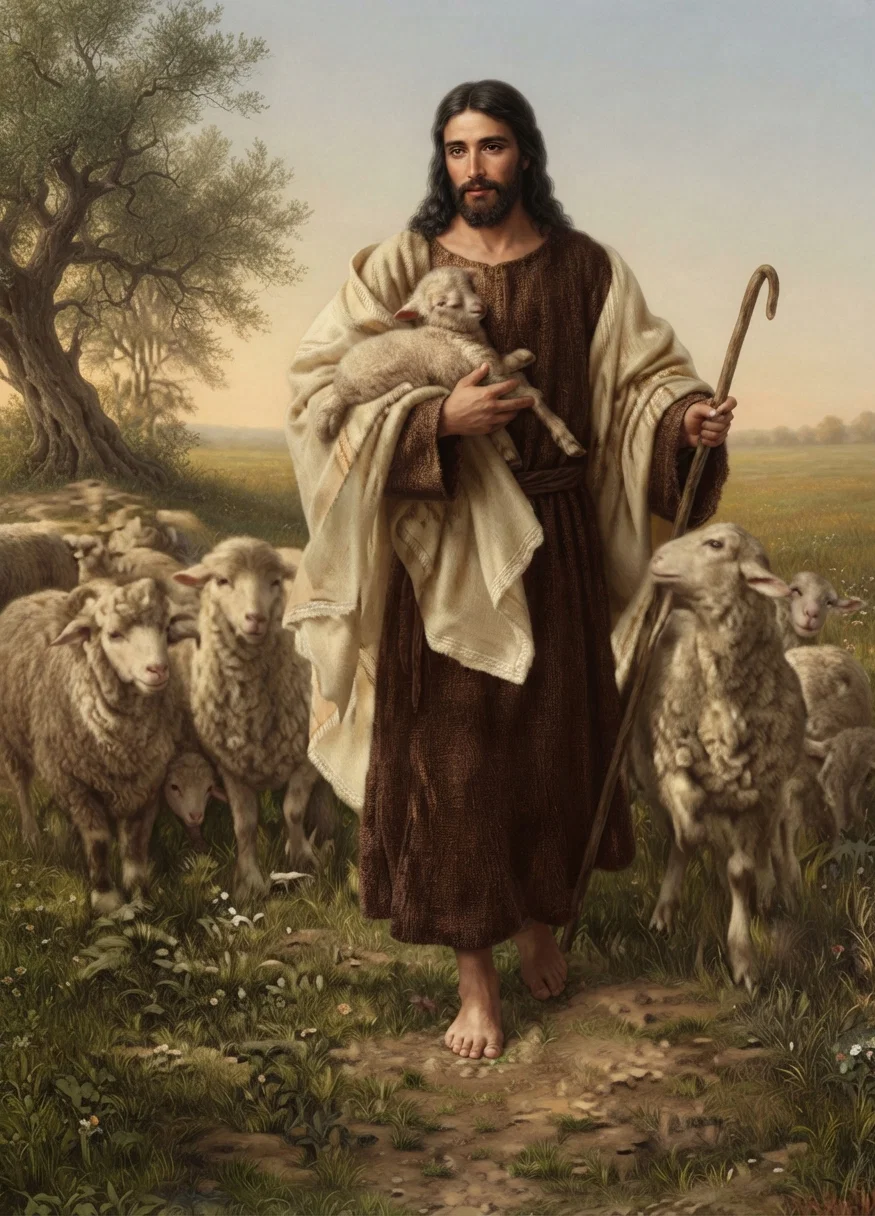
"He shall gather the lambs with His arm, and carry them in His bosom."
"All things whatsoever ye would that men should do to you, do ye even so to them." The Saviour taught this principle to make mankind happy, for in no other way can happiness come. God gives to men and women the boon of life, not merely to enable them to gain wealth and worldly advantages, but that they may improve the higher powers, by doing the work He has entrusted to mankind, the work of searching out and relieving the necessities of their fellow men. Man should not work for his own selfish interest, but for the interest of every one about him, blessing others by his influence and kindly deeds. This purpose of God is exemplified in Christ's life.
The Saviour declared, "Inasmuch as ye have done it unto one of the least of these My brethren, ye have done it unto Me." The incident of the good Samaritan is given as an illustration of our duty to those in need of sympathy and help. The Jews had been instructed by their leaders to despise the Samaritans; but Jesus showed that one of this hated class was far in advance of the priests in the performance of deeds of compassion, mercy, and benevolence. The Levites, chosen to fill sacred, holy offices among God's favored people, did not improve the opportunity. The Samaritan, scorned by priest and Levite, despised by the Jews as a member of a despised race, was pointed out by Christ as one who obeyed the law of human kindness and who showed true mercy. His compassionate act the Saviour extols, and stamps with the seal of divine approval.
Christ carried out in His life His own divine teachings. He was absorbed in the work He came to perform; His devotion to the work of saving the lost was manifest on all occasions. While He rebuked sin with severity, He ever showed tender love for the sinner. In Him were blended the wisdom of the serpent and the harmlessness of the dove. His zeal never led Him to become passionate. He manifested consistency without obstinacy, benevolence without weakness, tenderness and sympathy without sentimentalism. He was highly social, yet He possessed a reserved dignity that did not encourage undue familiarity. His temperance never led to bigotry or austerity. He was not conformed to this world, yet He was not indifferent to the wants of the least among men.
The feeding of the five thousand is an illustration of Christ's tender solicitude. The multitude, forgetting the wants of nature, had listened with deepest interest to His ministry of truth; but He, like a pitying father, was mindful of their needs. Often hungry Himself, He was awake to the necessities of others. Calling His disciples to Him, He said, "I have compassion on the multitude, because they continue with Me now three days, and have nothing to eat: and I will not send them away fasting, lest they faint in the way." The Saviour remembered that after His long fast in the wilderness of temptation, He had fainted, and that angels had ministered to Him. Without hesitation He wrought a miracle to feed the thousands who had followed Him in order that they might hear the gracious words proceeding from His lips.
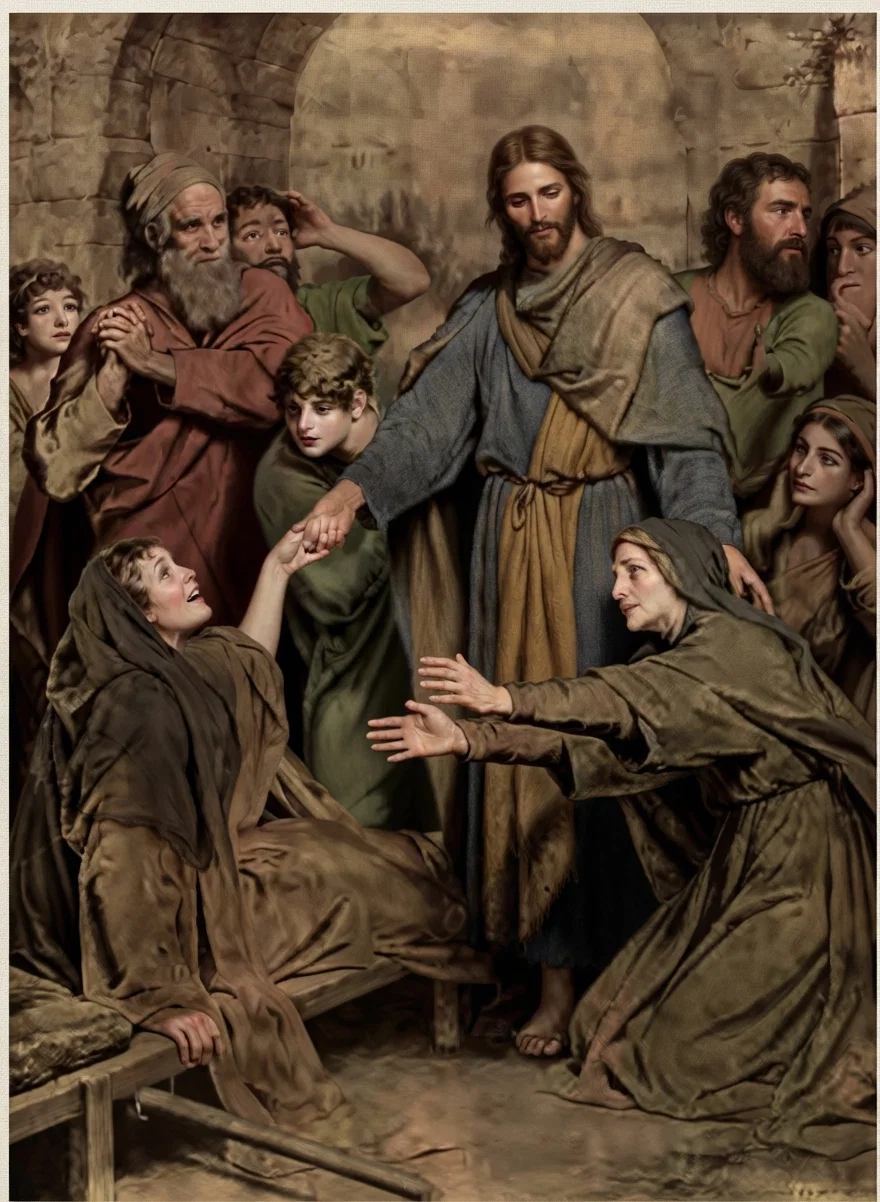
He healed all that were sick.
The Saviour's example is to be the standard of our service for the tempted and the erring. The same interest and tenderness and long-suffering that He has manifested toward us, we are to manifest toward others. "As I have loved you," He says, "that ye also love one another." If Christ dwells in us, we shall reveal His unselfish love toward all with whom we have to do.

The Sabbath Endures.

THE Sabbath—the one set apart, blessed, and hallowed by the Creator in the beginning—still endures, and will endure—must endure—as the memorial of creation. It was designed to commemorate creation; it has thus been observed since creation; no other day has been set apart by the Lord of the Sabbath for this purpose; not a text in the entire word of God authorizes a change. In fact, the day could not be changed in any way, not even by the Creator, for past events can not be altered. Another day could not be substituted, for another day could not commemorate the event the Sabbath recalls. The Sabbath belongs to God; He has never changed it; why should man attempt to do so? H.

Encouragement Rather Than Criticism

"The men and women that are lifting the world upward and onward are those who encourage more than criticize."

Prayer in the Name of Jesus

By William Covert
HERE is progression in all experience and in all study that the child of God should recognize in order to grow in understanding. Jesus spoke of this to His disciples among the last things that He gave in His personal ministry. Wishing them to know that much yet remained for them to learn, He said, "I have yet many things to say unto you, but ye can not bear them now. Howbeit when He, the Spirit of truth, is come, He will guide you into all truth; . . . and He will show you things to come." John 16:12, 13.
And in harmony with the thought of advancement, He gave them instruction on the subject of prayer at that time which He could not give when He taught them on prayer in the beginning of His ministry. In His early lessons, He taught them how to pray to the "Father" in heaven, but when He gave that beautiful model regarding the name of the Father, He could not, or at least He did not, teach them how to use the name of the Son in prayer. And even up to the time of His ascension, there were many lessons held in reservation which the Holy Spirit was to teach them later.
But on that occasion, while Christ was endeavoring to teach His disciples what they might be able to comprehend of His ministry for them after He would ascend to heaven, He introduced the subject of how they should use His name in their prayers. Yet much of what He then said on prayer was in anticipation of a fuller understanding that would be given by the Spirit during His ministry in the heavenly sanctuary. However, He could at that time properly speak of the provision which was being made for His separation from them and for their future needs; therefore, in making arrangements with them relative to future prayer, He said, "Hitherto have ye asked nothing in My name: ask and ye shall receive, that your joy may be full." Asking in His name was to especially avail after He should ascend to the Father, for then their prayers were to be made in His name.
Christ came to this world as a man; He lived as a man; and in the name of humanity, and for humanity, He died a sacrifice for man. And after His death He arose and ascended to heaven, but still retained His humanity. All this was done that He might in exalted and glorified humanity represent man. He is now in heaven and on the throne of God as the Son of Man, also as the Son of God. Thus He has united man in His name with the throne of God. And, too, He has a name which is above any name, so that at the name of Jesus every intelligent being in heaven and in earth is asked to bow. The power of that name relates equally to His love, to His position, and to His potency. Thus the name of Jesus has become the all-prevailing name in which our requests are to be made known to God. This is so because it is Christ that the Father always hears, and it is through Christ that our prayers reach the throne. Those which He passes on to the Father, and which are indorsed by Him, receive favorable answers.
He that was dead sat up, and began to speak. And He delivered him to his mother.
He now says, "Whatsoever ye shall ask in My name, that will I do, that the Father may be glorified in the Son. If ye shall ask anything in My name, I will do it." Christ's ascension to heaven after His incarnation and sacrifice opened the way for man to pray in His name, and for Him to be man's Helper in prayer. It was in consideration of these things that Christ said, "It is expedient for you that I go away." He could help them more by going to heaven than He could by remaining on earth, for He would be present with the Father and with the angels in their counsels in man's behalf. He would be there in authority and power to send help from heaven for men on earth, because He had died to redeem them, and there is now dwelling in Him "all the fulness of the Godhead bodily. And ye [Christians] are complete in Him, which is the head of all principality and power." Col. 2:9, 10.
Believers who are now connected with Him on earth will stand for Him; therefore, in the Judgment it will be said of them and of their deeds of kindness performed here, "I was an hungered, and ye gave Me meat: I was thirsty, and ye gave Me drink: I was a stranger, and ye took Me in: naked, and ye clothed Me: I was sick, and ye visited Me: I was in prison, and ye came unto Me. Then shall the righteous answer Him, saying, Lord, when saw we Thee an hungered, and fed Thee? or thirsty, and gave Thee drink? When saw we Thee a stranger, and took Thee in? or naked, and clothed Thee? Or when saw we Thee sick, or in prison, and came unto Thee?" And His answer will be, "Verily I say unto you, Inasmuch as ye have done it unto one of the least of these My brethren, ye have done it unto Me." Thus it is shown that Christ's needy people
stand for Him on earth, while it is said that He is in heaven, "now to appear in the presence of God for us." Those workers who labor in the Gospel now are sent by His authority to labor under commission from His hand. So He says, "All power is given unto Me in heaven and in earth. Go ye therefore, and teach all nations."
They are also stamped with His seal; therefore it is said, "After that ye believed, ye were sealed with the Holy Spirit of promise, which is the earnest of our inheritance."
And now that we have been baptized into His name, we should pray in His name. Further, since we have been adopted into the family which bears His name, we can, in that name, obtain all that we need according to His riches in glory. It was after He was received up into glory that He sent richest gifts back to His people on earth, for it was then that humanity through the glorified Son of God was more directly connected with the power on high. And since His children abide in Him, and He abides at the right hand of the Father, holding all power in heaven and earth, what have His children to fear? Could more desirable provision be made for them?

How to Learn to See.

ONE who puts seeing before believing in his spiritual life will never see much that is worth believing. And what he does see will not affect his beliefs. His sight is already controlled, if not destroyed, by his unbelief. Only when he realizes that he has got the cart before the horse is there any hope of his seeing the invisible. There is no truth in the old assertion that "seeing is believing," when it comes to matters of eternal life and death. "Believing is the secret of seeing," writes Henry F. Cope. Jesus was ready to let Thomas see the demanded evidence of the resurrection, because Jesus knew that Thomas had long been a believer in Him. Because of the belief which was already there, the sight for which Thomas asked was granted, and was convincing. But there is no record of Jesus' having gone, after His resurrection, to Annas, or Caiaphas, or Pilate, or any others who had refused to believe in Him, in order to convince them of His resurrection and Messiahship. They must believe in Christ before they could see the truth that He was ready to show them. When a man has come as a little child in trusting surrender to the Saviour, then he will begin to see wonderful things. Until he believes, he has no right to expect the sight which can only follow belief.—Sunday School Times.

Wholehearted Service to Christ

“If you want to be holy you must serve Christ wholly.”

When the Bible Opposes Us

"Some people are opposed to the Bible because the Bible is opposed to them."

The Earth Cursed

By Allen Moon
IN the beginning God created man upright (Eccl. 7:29), and it was His purpose that he should be supremely happy. To this end, "God planted a garden . . . in Eden; and there He put the man whom He had formed. And out of the ground made the Lord God to grow every tree that is pleasant to the sight, and good for food; the Tree of Life also in the midst of the garden. . . . And a river went out of Eden to water the garden" (Gen. 2:8-10)—all for man's joy and happiness.
God said to man, "Multiply and replenish the earth." That is to say, Multiply and fill the earth, and all this sphere shall be as the garden of Eden. He had begun the work of beautifying man's abode by surrounding him with a garden of living green—a garden of flower and fruit wherein was lacking nothing upon which he could feast his sight or satisfy the demands of his being; and above all, the Tree of Life in the midst of the garden, from which flowed the river of the water of life. This pure stream was the habitation of the finny tribe in all its glory and beauty; and the trees of the garden were the habitation of the birds of song and plumage. It was while he was in the midst of this glorious scene that God caused the animal creation to pass before man, that he might give them names, for they formed a part of his dominion.

The Changed Condition.

"And God saw everything that He had made, and, behold, it was very good." Gen. 1:31. God saw not as man now sees. "His work is perfect." Deut. 32:4. Therefore He saw no imperfection in it. This perfect beauty and utility might have been perpetual, only that it was man's to enjoy on condition of loyalty and obedience. Rebellion and disloyalty had appeared in the universe of God, even among the higher order of beings, and the glorious estate in which they were placed was liable to corruption, unless they were removed. So when man joined in transgression against the law of his Maker, "unto Adam He said, Because thou hast harkened unto the voice of thy wife, and hast eaten of the tree, of which I commanded thee, saying, Thou shalt not eat of it; cursed is the ground for thy sake; in sorrow thou shalt eat of it all the days of thy life. Thorns also and thistles shall it bring forth to thee; and thou shalt eat the herb of the field." Gen. 3:17, 18. Therefore the Lord God sent him forth from the garden of Eden to till the ground from whence he was taken.
How changed is man's condition now—shut away from the garden of perfection and beauty, to till the earth upon which the curse rests, so it can not yield in perfection as did the garden which God had planted. And sad as it may seem, man was the cause of this change, as stated in the language of inspiration: "The earth also is defiled under the inhabitants thereof; because they have transgressed the laws, changed the ordinance, broken the everlasting covenant. Therefore hath the curse devoured the earth, and they that dwell therein are found guilty." Isa. 24:5, 6 (R. V.).
The Tree of Life no longer remains on the earth. Cut off from the life-giving tree, man himself is imperfect. He no longer is the stalwart being that came from the hand of his Creator. The animal creation has gone from his dominion. Man no longer regards the life of these creatures, the gift of God, with pleasure, but he feeds upon their flesh to satisfy his hunger, because the earth fails to respond to his tillage in the sweat of his brow. The insect that God created for man's pleasure in the garden has become his enemy, destroying plant and tree and shrub, so that the language of the prophet of Israel is literally fulfilled when he said, "The earth mourneth and fadeth away, the world languisheth and fadeth away, the haughty people of the earth do languish." Isa. 24:4. And this because of sin that brought the curse; and through the curse, everything that God made perfect upon the earth has become abnormal and unnatural.
The earth still retains a portion of its strength; but God permits the strength to diminish as time goes on. But it is not God's purpose to permit this blot in His fair dominion to continue. He will bring to an end the state into which man plunged himself by the fall; for "the earth shall be utterly emptied and utterly spoiled; for the Lord hath spoken this word" (R. V.). He will not make a full end, but will have respect unto His redeemed people; for He has said, "When thus it shall be in the midst of the land among the people, there shall be as the shaking of an olive-tree, and as the gleaming grapes when the vintage is done." Isa. 24:13. A remnant shall be gathered out of the ruin, when "the earth is utterly broken down, the earth is clean dissolved, the earth is moved exceedingly" (Isa. 24:19), for it is polluted with blood.
In each generation of men on the earth there have been a few loyal ones, and for them God has in store an Edenic inheritance yet in this earth.

"God Bless You, Dear."

In all the varied realm of thought, Expressed in language sweet and clear, No whispered word to me has brought A warmer glow of love and cheer Than this: "God bless you, dear!"
"God bless you, dear!" God, who upholds The universe by word of power, Whose Spirit all our lives enfolds, Whose mercy rules each passing hour— "God bless you, dear!"
"God bless you, dear!" There's not a trace Of anyone beneath the skies Outside the bounds of that embrace, Whatever be its present guise; "God bless you, dear!"
"God bless you, dear!" And does He pause To note each child upon his way? My heart makes answer: "Yes, because He loves us both;" and so I pray, "God bless you, dear!" —May Field M'Kean.

The Second Coming of Christ.

IF there is any one thing that ought to cheer those whose hearts need cheering, it is this, that Christ is coming again. If this hope were taken from us, we should be of all men most miserable; but with that hope, what have we to fear?
How significant that John closes the sacred canon with that heartfelt prayer, "Even so, come, Lord Jesus!" And if he felt thus, why should not we?
Coming—to destroy the works of Satan and his hosts, and to establish a kingdom with Himself at the head.
Coming—to relieve masses of the eternal grind from birth to death.
Coming—to show His people His own glory, and to enable us to share it with Him.
Coming—to reveal to us depths of happiness of which at present we can form no conception.
Coming—to bring with Him an innumerable host of the redeemed, that we may rejoice with them in glory.
Coming—in order that we may enjoy with Him forever the imperturbable happiness of God Himself, the heart filled with bliss at the thought that it shall never end, but be always enhanced.
Coming—to banish all thoughts of all age, infirmity, gray hairs, and to give instead the real fountain of eternal youth.
Coming—to make us heirs of the wealth of the universe—yea, to make us heirs of Himself.
Coming—to make it possible for us to "soar to worlds unknown" and to behold the astounding wonders of the universe, the workshop of God, and to be actual participants with Him in His work.
Coming—as He Himself said, to receive us unto Himself—best of all.
But all the reasons for His coming can not be mentioned, for they are beyond our power to tell; but if those stated are not enough to stir up the indifferent and to cheer up the despondent, what will?
The coming of Christ is the union of divinity with humanity; and blessed is he who has part in the wedding-feast of God's Son.
W. P. Root.

The Choice.

LORD, I would choose the crowded way Where souls are tried, the strain and strife With grim Temptation day by day— Would know the heights and depths of life. I would not ask a sheltered place, A fireside and a cradle song, Lest, having "all in all," I might Forget the great, heart-broken throng. —Beth Slater Whitson.
Continue reading: Signs of the Second Coming of Christ