Your ShelfYour Projects

Signs of the Times, Vol. 30, No. 7.

MEMORIES OF BETHLEHEM

Signs of the Times

Feb 17, 1904

Pacific Press Publishing Company · Oakland, California · Feb 17, 1904

MEMORIES OF BETHLEHEM.
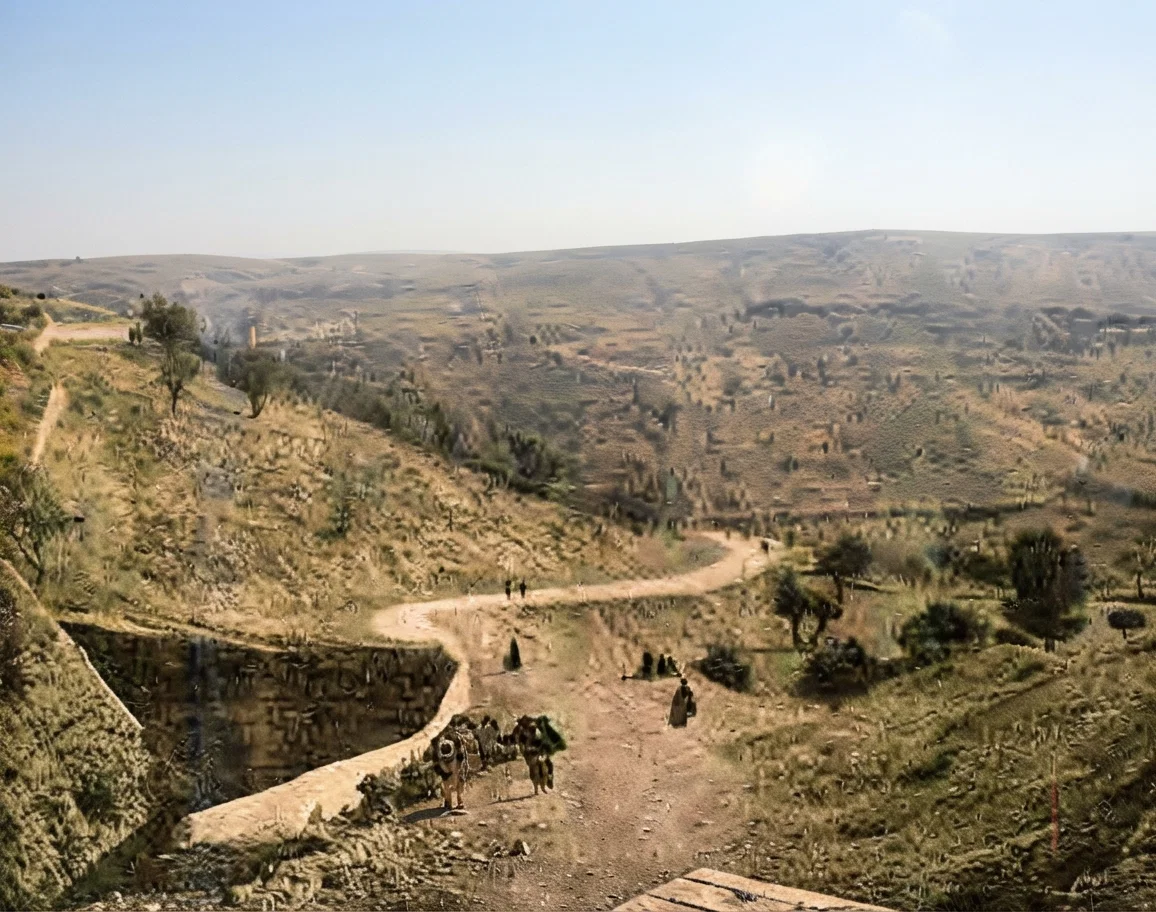
WHEREVER the Gospel of Christ is preached the beautiful name Bethlehem is learned and loved. Thither came Ruth to leave the dutiful record of her filial love, and to give to posterity a lineage of kings. Thither came Samuel, the prophet of God, to anoint the great-grandson of that believing Moabitish maiden to be king of Israel in the place of Saul. There was he born through whom God gave to Israel, in unapproachable poetry, messages of mercy, songs of praise, and prophecies of great things yet to be. Thither fled the anointed but uncrowned David to escape the wrath of the ruler who had fled from the leading of God to take counsel of his own will.
THEN to this Bethlehem, or House of Bread, there came one day, when the fulness of time had come, that Babe who was destined to feed the world with the bread of life—He who was so fully to identify Himself with that life-giving work that He Himself was that "living bread which came down from heaven," and of which "if any man eat" "he shall live forever." To herald the coming of that Child, we hear the songs of angels under the star-sprinkled sky, with God's own message of assurance to the world. It tells us that the true God is not the god of war and strife, of hatred and cruelty, of jealousy and malignity. The will of God, expressed in angel song, was, "Glory to God in the highest, and on earth peace, good-will toward men." "Still does our Father love us, and God can not forget."
BUT closely written into the history of the coming of that Child is that sad story of senseless cruelty which filled the cemetery of Bethlehem with little graves and the homes of Bethlehem with sorrowing fathers and mothers. Blind selfishness set itself up to spend its little day and raise its withering arm against the purpose of infinite love. He filled his little place of pomp for a little day in feverish anxiety; but Herod has filled a larger and longer place in the loathing of the world than any other name in history, and justly so. What sadness and what gladness cluster around the name of ancient Bethlehem!
On the Road to Bethlehem.
MICAH had long ago foretold the birthplace of that Child to whom the world must look for redemption and whom Israel had been taught to expect. "But thou, Bethlehem Ephratah, tho thou be little among the thousands of Judah, yet out of thee shall He come forth unto Me that is to be ruler in Israel; whose goings forth have been from of old, from everlasting." "And He shall stand, and shall feed His flock in the strength of Jehovah, in the majesty of the name of Jehovah His God; and they shall abide; for now shall He be great unto the ends of the earth. And this Man shall be our peace." Micah 5 : 2, 4, 5. How appropriate that to the House of Bread (Bethlehem) should come He who was the bread of life, and who was to "feed His flock in the strength of Jehovah." With the manna that fell from heaven God fed the wandering hosts of Israel in the wilderness of Arabia; and in that manna God has symbolized the work of Christ for this world during all the history of sin. Born in Bethlehem, of Judea, He has been the inexhaustible Bethlehem for the whole starving world. To that House of Bread no hungry soul has ever come and found repulsion or emptiness. No king or pope or priest has ever been able to lock the door of that Bethlehem against the yearning importunities of a single unsaved soul. Tyrants have locked men and women in dungeon cells, or burned them at the stake, for going of their own free will to partake of that proffered bread; but they could no more cut off the supply of that bread of life than they could prevent the sun from shining or the clouds from pouring down their blessings on the earth. A sense of the thirst and hunger of soul are the only tickets required to secure for the applicant a bountiful supply of the water of life and the bread of life.
THE prophet declares of those who are fed by Him that "they shall abide; for now shall He be great unto the ends of the earth. And this Man shall be our peace." The time is drawing near when the kingdom of Christ, the Prince of Peace, will bear sway over all this world, which is now dominated by the kingdoms of men, ruled through force and fomenting strife. But they who are fed by His hand "shall not be moved," "shall abide," and abide in peace. Strife is running riot in the world to-day; but he who is truly fed of God will have peace in the very midst of this world's commotion.He will not be moved, he will not be anxious, he will not be fearful of the outcome, because "this Man shall be our peace."
THE inn at Bethlehem in which the child Jesus was born had no place for Him in whose hands lay all the blessings of heaven for a lost world. The house was filled with the everyday traveler and trafficker. So with the hearts of the great mass of humanity to-day. Men are struggling, striving, surging, self-seeking, competing, crowding the heart walls for room, while the Saviour of the world stands without, knocking unheard, pleading unanswered, and still loving through it all, the souls that weave themselves as woof into the warp of this world. And when one does hear, and turn from the turmoil and the strife and the grasping and the soul-starving to the water of life and the house of bread, then heaven rejoices, and the long waiting and the scorn and the rebuffs and the mocking of the rabble that hounded Him to the cross then and follows His disciples now,—all are forgotten in the joy that fills the heart of Christ. He is seeing the fruit of soul-travail, and the seeing brings the satisfying which recompenses all.
O SOUL outside of Christ, why dwell longer in sin? Why wander longer in the wilderness of strife and doubting? Why walk longer in the way that has no other end, no other goal, than death? Why journey on toward the desert of death when you might return to the garden of God, with its flowing "river of life," its fruit-filled "tree of life," its "bread of life"? Why serve longer the prince of this world on his battle-fields of selfishness, strife, greed, and all manner of evil, when the Prince of Peace has unfurled His banner, in whose service all is love and joy and peace and all manner of good? The time for choosing is now, to-day. The hosts of evil are swelling to untold proportions, and soon the harvest they have sown they will reap. But out of this sin-sown soil God is bringing forth a remnant for His glory who shall walk over the ashes of the hosts of Satan, when the dross of sin has been burned out of this earth. To that remnant are all the promises of God. They shall live and reign with Him forever, even forever and ever. Souls are deciding every hour for death or for life. "Choose you this day whom ye will serve." The unbidden Guest of Bethlehem holds out to you the bread of life, and bids you drink of the water of life, and offers to you the joys and blessings of eternal life, where the canker of sin can never come. It is the richest offer that has ever been made to man. Accept it, and accept it now. C. M. SNOW.

THE DIET QUESTION FROM A SCRIPTURAL STANDPOINT.

BY H. F. COURTER.
WHEN God created man in His own image, and gave him the tree of life in order that his existence might be perpetuated, it is reasonable to conclude that he also provided the very best daily diet. Everything in connection with the creation of His creatures was "very good," therefore we must conclude that every provision for their sustenance was equally good. The provision for the diet of man was as follows: "And God said, Behold, I have given you every herb bearing seed, which is upon the face of all the earth, and every tree, in which is the fruit of a tree yielding seed; to you it shall be for meat." Gen. 1:29.
What a delicious bill of fare for man in his purity! No death was required to furnish his daily meals. No cries or groans of dying creatures were heard to mar the music of the sweet orchestra of warbling birds, nor to stop the enjoyment of the skipping lambs, the playful calves, or the sporting fish. But after man yielded to the tempter, and, by disobeying God, brought sin upon all the race, together with its consequences upon all the earth, his appetite, as well as every other faculty and function, became perverted. The result was a general apostasy, and the judgment of the Deluge in Noah's time.
The long lives which the antediluvians had been permitted to enjoy had proved, under the reign of sin, to be a curse rather than a blessing to them. So, after the Flood, God permitted Noah and his descendants to eat flesh. This permission reads: "Every moving thing that liveth shall be meat for you; even as the green herb have I given you all things." Gen. 9:3.
Not only did this diet beget in man a blood-thirsty, warlike disposition, but it naturally shortened his life at a rapid rate. Notice the decline in the ages of the descendants of Noah. This patriarch himself, being 600 years old at the time of the Flood, lived to the age of 950 years. But his son Shem reached only 600 years; and so on, down to Abraham, who died at 175, and when we reach Joseph, we find him passing away at the age of 110.
When God set His hand to lead His people out of Egypt, to be a holy nation, a peculiar people, upon whom none of the diseases of Egypt should come, He took away the flesh diet, and gave them manna, the "corn of heaven." But they murmured at this diet, and longed for the "flesh-pots of Egypt." So the Lord sent them quails in great abundance, and they gorged themselves to the full. But "while the flesh was yet between their teeth, ere it was chewed, the wrath of the Lord was kindled against the people, and the Lord smote the people with a very great plague. And He called the name of that place Kibroth-hattaavah; because there they buried the people that lusted." Num. 11:33, 34. All this judgment was the result of their lusting after flesh. See Ps. 78:18, 30, 31.
After Israel refused to obey God and be free from disease, the Lord granted them their desires in part, but they had to bear the consequence—sickness. Then He set apart the clean beasts, and forbade them to eat the unclean. See Leviticus 11 and Deuteronomy 14. Therefore, while flesh-eating was permitted, and consequently not sinful, it was not an absolute necessity; for Paul says, "It is good neither to eat flesh, nor to drink wine, nor anything whereby thy brother stumbleth." Rom. 14:21.
Also, in the tenth chapter of 1 Corinthians, Paul cites the example of Israel as a warning to those "upon whom the ends of the world are come." The "admonition" is that "with many of them [Israel] God was not well pleased; for they were overthrown in the wilderness," and it comes to us "to the intent we should not lust after evil things, as they also lusted." Now the thing after which they especially lusted was flesh food, and the indulgence of perverted appetite led them into other evils—idolatry, fornication, tempting of Christ, murmuring, etc., for which things they were sorely punished in many ways.
From this admonition to us, "upon whom the ends of the world are come," it is evident the Lord would have us avoid a course of diet that might in any way make us carnally minded, and unfit us for entering the promised land, upon whose borders we are now standing. It is evident that, as we near the time of restoration to the Paradise of God, He would have us prepare, even here, for the enjoyment of the vegetarian diet originally furnished to those who inhabited that happy home. Our probation here is designed to prepare us for the home over there. Therefore we must learn here to enjoy that which will be for our enjoyment hereafter.

MIND THE CHECKS.

A SOUL, who had made rapid progress in her understanding of the Lord, was once asked the secret of her easy advancement. She replied tersely, "I mind the checks." And the reason that many of us do not know and better understand Him is, we do not give heed to His gentle checks, His delicate restraints and constraints. His is a still, small voice. A still voice can hardly be heard, it must be felt; a steady, gentle pressure upon the heart and mind like the touch of a morning zephyr to your face; a small voice, quietly, almost timidly spoken in your heart, but if heeded growing noiselessly clearer to your inner ear. His voice is for the ear of love, and love is intent upon hearing even faintest whispers. There comes a time also when love ceases to speak if not responded to, or believed in. He is love, and if you would know Him and His voice, give constant ear to His gentle touches. In conversation, when about to utter some word, give heed to that gentle voice, mind, check,and refrain from speech. When about to pursue some course that seems all clear and right and there comes quietly to your spirit a suggestion that has in it the force almost of a conviction, give heed, even if changed plans seem highest folly from the standpoint of human wisdom. Learn also to wait on Him for the unfolding of His will.—Living Words.

A CHRISTIAN'S BUSINESS.

A PROFESSOR of chemistry who should devote his time in the class-room to lecturing upon the solar system would not be regarded as much of a teacher of chemistry. But his behavior would be consistency itself compared with the preacher of the Gospel who wastes his grave opportunity by orating to sinful, dying men on the theory of evolution or any other mundane theme. "The Jews require a sign," wrote Paul, "and the Greeks seek after wisdom; but we preach Christ crucified," and his example is a wise one to follow.—Examiner.

ABLE TO DELIVER.

BY THORO HARRIS.
He is able to deliver From the cruel yoke of sin, From the galling chains that bind thee, From the power of guilt within. "Call Him Jesus." Blessed thought! Christ has full deliv'rance brought.
He is able to deliver When thine all on Him is cast; He is able to deliver If thy faith but hold Him fast. From the tyrant's fearful power Christ can save this very hour.
He is able to deliver; He desires that all should prove All the heights of holy freedom, All the depths of pardoning love. To the men of every race Christ has brought redeeming grace.
He is able to deliver; He is willing; trust Him now; Seek this uttermost salvation, At the throne of mercy bow. Christ a full deliv'rance brings; Glory to the King of kings!

MUSINGS.

BY ELIZA VEEDER DOW.
MEN will argue, philosophize, and try to make the Word of God of none effect; they will labor to establish some plan for the development of the race, other than what God has revealed in the Bible.
Surely, "the fool has said in his heart, There is no God!"
"They said therefore among themselves, Let us not rend it, but cast lots for it, whose it shall be; that the Scripture might be fulfilled." Everything from Genesis to Revelation has been given by God for you and for me, that we might know that God has created the heavens and earth and given to humanity a one Guide to follow.

HOW CAN WE READ THE BIBLE UNDERSTANDINGLY ?

THE writer, during a period of about eight years engaged in house to house "evangelical home missionary work," has heard this question repeatedly, from those whom he believes to be true, honest-hearted seekers after truth. And the reason why this question is asked is most reasonably explained by them thus:—
“The members of the various Christian denominations quote the Scriptures to sustain some special doctrine (or teaching) practised in their church. This seems to imply another question: Does the Bible adjust itself to suit each of the numerous creeds found in the world?” They express this as ample reason for holding themselves aloof from any religious denomination. Is this justifiable? Are we dependent upon any religious creed for our soul’s salvation? All denominational creeds are man-made, and the Bible teaches that he who puts his trust in man is cursed (Jer. 17:5); that every one of us shall give an account of himself to God (Rom. 14:12); that every plant which our heavenly Father has not planted shall be rooted up (Matt. 15:13), meaning, of course, every unscriptural doctrine in all our denominational churches.
We believe God’s Word has a clear and simple solution to the question heading this article when it comes from an earnest seeker after light, and we also believe there are some earnest souls who will read these words and lift up their hearts in gratitude to God for His promise found in Matt. 5:6.
The first thing we need to consider is the character of God’s Word, then the character of the natural man. The first we find in 2 Tim. 3:15, and the second in Rom. 5:12. What relation do these characters bear towards each other? They are as far apart as light and darkness, as life and death, as heaven and destruction. Man in this condition has not the slightest idea of what a kind heavenly Father has in keeping for those who love Him. 1 Cor. 2:9. He is as a dead man, his mind is at variance with everything that is heaven-born, and he can not in this condition possibly subject himself to the ruling power of God. Rom. 8:6, 7. How can it be possible for such a man to read God’s Word understandingly? Paul again, in another place, states that the carnal man is sold under sin, and that the law (God’s Word) is spiritual. Rom. 7:14. What then must take place before this mind can comprehend the instruction found in the Bible?
We have an instance on record of one of the most naturally intelligent men upon the earth in Christ’s time, who was, nevertheless, blind concerning the plan of salvation. We hear our question answered to him by the great Master Teacher thus: “Except a man be born again, he can not see the kingdom of God.” John 3:3.
Here is a master of Israel (verse 10) just entering the great spiritual school with Jesus in the flesh for his teacher. What a great and exemplary object lesson for teachers and pupils for all time! This carnal or natural man is led by the Spirit of God to Jesus (John 6:44), who is the Way, the Truth, and the Life (14:6), in order that he may become reconciled to our heavenly Father, become a new-born man, to act as a minister of the Gospel, in making known that same truth to others. 2 Cor. 5:17-20. What God did for Nicodemus He is desirous of doing for every other child of Adam, who, like him, realizes a poverty of spirit that he may receive the assurance of the kingdom of heaven. 1 Tim. 2:4; Matt. 5:3.
We are instructed that the carnal-minded or natural man, before he passes through this experience, is mindful of the natural needs of his children, and if the natural animal instinct is capable of this, what must be the magnitude of the love of one for His children whose very name is love itself? How much more willing must He be to provide His trusting children with His Holy Spirit? Luke 11:11-13; 1 John 4:8.
What is the Bible commonly called?—The Word of God. When we hear a man speak, what is the sound called?—The voice. When we read the Bible then, what do we hear?—The voice of God. To whom is He speaking?—To us (him, her, or those who read). How do we understand our heavenly Father’s voice?—By the Spirit, which He has given us so that we can commune with Him through His spiritual, written Word.
What eye hath not seen, nor ear heard, nor hath entered into the heart of the natural man concerning the love of God, is now revealed to us by His Spirit, this Spirit searching all things, yea, the deep things of God. 1 Cor. 2:9, 10.
There is no other way possible to read the Bible understandingly, because the spirit of man simply knows the things of a man, but the things of God knoweth no man, but the Spirit of God, and this Spirit is not the spirit of the world, but the Spirit which is of God, given the new-born man that he might know the things which are freely given him of God. This is not the wisdom gathered from the teachings of men, but which the Holy Spirit teacheth, comparing spiritual things with spiritual, and this comparison of spiritual things with spiritual can be nothing else but the comparison of scripture with scripture in the Bible. Verses 11-13.
Reader, let us try this plan; it never fails.
JOHN AP G. WILLIAMS.

DRUNK, OR SOBER, WHICH?

BY H. A. ST. JOHN.
“AND be not drunk with wine, wherein is excess; but be filled with the Spirit.” Eph. 5:18. A person may be drunken with pleasures, cares, blood, strong drink, or the spirit of the world, the spirit that ever worketh in all the children of disobedience. Each and all lead to the same condition and results. There will be stammering, staggering, stumbling, and falling—a constant downward tendency to eternal ruin.
“Let us watch and be sober.” “Let us, who are of the day, be sober.” “Teach the young women to be sober.” “Gird up the loins of your mind, be sober.” “Be ye therefore sober, and watch unto prayer.” “Think soberly, according . . . to faith.” “The grace of God that bringeth salvation hath appeared unto all men, teaching us that . . . we should live soberly,” etc. “Young men likewise exhort to be sober-minded.” “Women adorn themselves with . . . sobriety.” “Continue in faith and charity and holiness, with sobriety.”
These are some of the teachings of the Word of God on sobriety. Only such as heed these injunctions and admonitions are truly sober. All these are in the narrow way that leadeth upward unto eternal life. All others are traveling the broad road that leadeth downward to eternal death.
All, of both classes, are spirit-led, and many are spirit-filled. The one class are led and filled with the spirit of Satan, and are all in different stages of intoxication and ruination, leading on to the final end, eternal condemnation and degradation of body, soul, and spirit. The other class are led and filled with the Spirit of God, and are all in different stages of consecration and re-formation, leading on to final and eternal justification and glorification, of body, soul, and spirit, in heaven.
Let each one of us earnestly inquire, On what side of the line am I? In which road am I traveling? Am I sowing to the flesh, to reap corruption in the bitter by-and-by? or am I sowing to the Spirit, to reap incorruption in the sweet by-and-by? Am I double-minded? foolish minded? fickle minded? carnally minded? or worldly minded? If so, I will now present my body as a living sacrifice, and be no longer conformed to this world, but transformed by the renewing of the mind, that I may become single minded, wise minded, steadfastly minded, spiritually minded, and heavenly minded. Thus having in me the same mind that was in Christ, I will be able, like Him, to “prove what is that good, and acceptable, and perfect, will of God.”
When our eyes are opened to see things in the light of heaven, we will behold a world filled with different kinds and degrees of dangerous and ruinous intoxication. O, let us, who are of the day, whose eyes have been opened to discover the real truth and state of the world, let us see to it that we give to the world a perfect example of that sobriety that brings true, internal peace and joy here; and leads to the fulness of internal, external, and eternal peace and joy hereafter.

TO THOSE WHO FAIL.

BY BENJAMIN PHILLIPS.
No MAN who did his God deny Has e'er a crowning victory won; He only lives to fail and die, With bright success not half begun.
Some struggle hard as seasons fly, And yet their work is never done— No man who did his God deny Has e'er a crowning victory won.
Some sink in gloom because they fail, And e'en their gracious King assail; They sorrow much, and know not why Of peace and courage they have none— No man who did his God deny Has e'er a crowning victory won.

History of Government

BY ALONZO TREVIER JONES

AUTHOR OF “TWO REPUBLICS,” “EMPIRES OF THE BIBLE,” “GREAT EMPIRES OF PROPHECY,” “ECCLESIASTICAL EMPIRE,” ETC.

SELF-GOVERNMENT IN ROME.

BY Nimrod and his imitators in Egypt, Assyria, Babylon, Medo-Persia, Grecia, and earliest Rome, monarchy and imperialism had made themselves so obnoxious that mankind was completely tired of them, and, as a consequence, the people of Rome stood up and took the lead in behalf of all the people of the world in repudiating every principle of imperialism, monarchy, and kingship; and asserted, in behalf of the world, the principle of government of the people. They declared that the people were capable of governing themselves; they needed no man set over them to whom they must be in subjection, do obeisance, and pay tribute. The people of Rome did this in behalf of mankind. They espoused this principle for the good of themselves and the whole world. They stood as the conservators of liberty for mankind, and as the leaders of the nations to the blessings of liberty and true government.
The principle of government of the people asserted by Rome was intended as the true and ultimate principle of government. But in truth it fell far short of this, for, as we have seen, the true principle of government is self-government under God, with God, and in God. But the principle of self-government announced by Rome was that of self-government without God; self-government altogether of self; self-government wholly on the human basis. Yet, tho it was only this, and tho it was far short of the true principle, the government of Rome was far better than any human government that had been since the first apostasy to idolatry and monarchy.
In the first ages of their government of the people, the Romans understood the true principle of temperance, which literally is only self-control. And they practised accordingly, as we have seen illustrated in the instance of the ambassadors to the king of Egypt, who, at the royal banquet of all Egyptian luxury and dainties spread in their honor, chose only the plainest of what was before them, and partook of this in the most frugal manner, refusing all the rest as that which tended only to corrupt both mind and body, and to breed vicious humors in both. And because of adherence to these principles, it is deservedly recorded of the Romans that "they possessed the faculty of self-government beyond any people of whom we have historical knowledge," with the sole exception of the Anglo-Saxons.

Degeneracy and the Cause.

As a natural consequence, the government of Rome, being a government of the people, was the freest and the best human government of all ancient times, so long as they maintained the principle of self-government, even only on the human basis. But just as soon as they failed in the government of themselves, so soon the Roman government failed; because, of all forms of government, that form known as the government of the people or the republican form, depends most vitally upon the integrity of the individual in governing himself.
Because of faithfulness to principle, the government of Rome prospered and grew into the mightiest nation of all ancient times. And so she could have continued had the Roman people, who were truly the government, individually continued to govern themselves. But the Roman people were not content to govern only themselves. They took it upon themselves to govern other people, and in this they abandoned the principle of self-government. And when the other people, to whom the senate and people of Rome had professed to extend the blessings of liberty and self-government, chose to act upon the principle, and assumed the prerogatives of governing themselves, the Roman people, having announced to the world and having espoused, in behalf of the world, the principle of self-government, government of the people, absolutely refused to allow any of those people to govern themselves. The Roman people, committed to the principle of self-government, denied it to other people, and insisted upon governing them in spite of themselves, upon the principle that "they were not capable of self-government." The Roman people, who themselves were first governed by kings, and who had cast off kings and repudiated kingship, and had immediately established government of the people upon the principle that they were entirely capable of governing themselves, asserted dominion over other peoples, and refused even to allow them to attempt to govern themselves, when those other peoples, as the Roman people, and with the assistance of the Roman people, had cast off kings and repudiated kingships, upon Rome's own principle of their capability to govern themselves.
When the Roman people had thus completely repudiated the last essence of the principle of self-government, or government of the people, she was lost; there was absolutely nothing to hold her, nothing to keep her from following the identical course of all the imperial powers before her. For when Rome had spread her power over other peoples, and repudiated her own essential principle of government in refusing that principle to them, this was but to espouse and assert the same old imperialistic principle that had afflicted the world from Nimrod to her own day, and which she had repudiated in espousing the principle of self-government—government of the people.

A Harvest of Greed and Corruption.

When the Roman people collectively repudiated their own essential principle of government, they lost from themselves, individually, the benefits of the restraining power of that principle. And when from her many conquests, through their native habits of thrift and economy in self-support, the first consequence of self-government, "money poured in upon them in rolling streams of gold," the getting of money by any means, lawful or unlawful, became the universal passion. "Money was the one thought, from the highest senator to the poorest wretch who sold his vote in the Comitia." And with the restraint of self-control annihilated in the repudiation of the principle
of self-government, all this abundance of wealth was spent only in the indulgence of luxury of every kind. "Wealth poured in more and more, and luxury grew more unbounded. Palaces sprang up in the city, castles in the country, villas at pleasant places by the sea, and parks, and fish-ponds, and game preserves, and gardens, and vast retinues of servants," everywhere.
All this indulgence of luxury inevitably resulted in a vast sea of idleness, depravity, and debauchery. And that people, committed originally to the principle of self-government in the world, and who originally possessed the faculty of self-government beyond all other people of ancient times, became the most abandoned to every kind of depravity and vice, and was sunken in intemperance the farthest from any thought of self-government. "No language can describe the state of that capital after the civil wars. The accumulation of power and wealth gave rise to universal depravity. Law ceased to be of any value. . . . The social fabric was a festering mass of rottenness, the people had become a populace, the aristocracy was demoniac, the city was a hell. No crime that the annals of human wickedness can show was left unperpetrated. The higher classes on all sides exhibited a total extinction of moral principle; the lower were practical atheists."

Past Reformation.

So complete and so universal was the depravity that the few who retained any sober thought on the subject "despairingly acknowledged that the system itself was utterly past cure."
It was truly past cure, or even amelioration, from any earthly or human source. And when the corruption had reached such a depth of depravity that from it men could conclude only that if there were a God, He must surely let loose His judgments and end it all, just then—instead of letting loose His judgments in annihilating ruin, He opened full and free the fountain of His love, and "gave His only-begotten Son," that whosoever would believe in Him, instead of deservedly perishing, should be saved from all his sins and from all evil, and should have eternal life. Jesus, the Son of God, came into that Roman world that was sunken in iniquity and corruption. He came into that Roman world which was dominated by that people who were so utterly apostate from their own original espousal of the principle of self-government. And He came to reveal to that people and to all mankind the true principle of self-government in very truth—self-government under God, with God, and in God.
And He did reveal it. He sent His apostles into all the world to preach it "to every creature"; and when one day one of His apostles stood face to face with a representative Roman who had sent for that apostle, to hear him concerning the faith in Christ, that apostle, in preaching to that representative Roman the truth of the true faith in Christ, "reasoned of righteousness, self-government, and judgment to come."
And as that apostle of Christ, talking to that representative Roman, to that man who was a chief representative of that government originally founded upon the principle of self-government, set forth in the spirit of truth the true principle of self-government, indeed, that representative Roman "trembled," as he saw not only how far short had that people come in their original conception of the principle of self-government, but how infinitely farther short was that people now come. As that representative Roman saw the heavenly beauty and infinite value of the true principle of self-government as it is in truth, and that in all consistencyhe should espouse it, and that to do so meant the utter abandonment of all that Rome had now become, this was also an element in his trembling.
And the God so graciously sent, and Christ so kindly brought, and the apostles and early Christians so faithfully preached to the people of Rome the full reality and vital substance and the essential truth of the principle of government which the people of Rome had originally espoused, yet, instead of readily recognizing it and gladly accepting it, they absolutely repudiated it, and persecuted to the death the principle and all who espoused it.
But most deplorable of all was that there came an apostasy, “a falling away,” even amongst those who espoused in the name of Christ this true principle of self-government. These unfaithful ones also held the principle only in the mere profession, and upon only the human basis. These also, instead of governing themselves, naturally enough manifested the ambition to govern others, asserting in this “a kind of sovereignty for themselves,” and even beyond this, they extended their ambition to dominate the civil power.
They said, “Let the government, let the imperial power, espouse the Christian religion; let it ally itself with the church; let it receive through the church the true principle of government. Thus will it attain to true government indeed; and thus shall the kingdom of God come.”
Their words were accepted. Their scheme was adopted. By political means the empire was made “Christian.” The name, the forms, and the profession of Christianity were adopted as the way to salvation, and so became only a cloak to cover the original iniquity; so became only the form of godliness, under which to increase unto more ungodliness. Then and thus Roman apostasy and iniquity attained its ultimate; and the divine judgments of destruction did now fall in annihilating ruin “upon this nominally Christian, but essentially heathen world.” Wave after wave of a mighty flood of the barbarians of the north swept out of existence the empire and people of Rome.
“Self-government” on the human basis, “self-government” without God, had demonstrated itself a complete failure.
Continue reading: CHRIST IN THE OLD TESTAMENT