Your ShelfYour Projects

Signs of the Times, Vol. 32, No. 48.

CHRISTIAN WARFARE

Signs of the Times

Dec 12, 1906

Pacific Press Publishing Company · Mountain View, California · Dec 12, 1906

CHRISTIAN WARFARE.

Soldier, go, but not to claim Moldering spoils of earth-born treasure, Not to build a vaunting name, Not to dwell in tents of pleasure; Dream not that the way is smooth, Hope not that the thorns are roses, Turn no wistful eyes of youth Where the sunny beam reposes; Thou hast sterner work to do, Hosts to cut thy passage through; Close behind thee gulfs are burning— Forward! there is no returning.
Soldier, rest; but not for thee Spreads the world her downy pillow; On the rock thy couch must be, While around thee chafes the billow; Thine must be a watchful sleep, Wearier than another's waking; Such a charge as thou dost keep Brooks no moment of forsaking. Sleep as on the battle-field: Girded, grasping sword and shield; Those thou canst not name nor number, Steal upon thy broken slumber.
Soldier, rise! the war is done! Lo! the hosts of hell are flying! 'Twas thy Lord the battle won: Jesus vanquished them by dying. Pass the stream—before thee lies All the conquered land of glory; Hark! what songs of rapture rise, These proclaim the victor's story. Soldier, lay thy weapons down, Quit the sword and take the crown. Triumph! all thy foes are banished, Death is slain and earth has vanished. —Charlotte Elizabeth.

NOTES FROM THE SUBSCRIPTION DEPARTMENT.

Fifty thousand copies of the Thanksgiving SIGNS have already been sent out. Orders continue to come, and our press is running nights to enable us to fill orders promptly.
A good increase in the regular subscription list has been seen during the last three weeks:
Week ending Nov. 7 shows an increase of 565 Week ending Nov. 14 shows an additional increase of . . . . . . . . . . . . . . . 564 Week ending Nov. 21 shows an additional increase of . . . . . . . . . . . . . 1,054 Total increase in three weeks . . . . . . . 2,183
This is the result of united efforts being put forth in behalf of the circulation of our pioneer missionary paper. Some new club orders have been entered. A number of clubs have been increased in number. Besides many are taking hold nobly in securing regular readers for the paper. The following is an example of how “opportunities” are being improved:
“Having received a copy of the SIGNS booklet, I improved the opportunity to take a few new subscriptions for the SIGNS, also two renewals. Enclosed find P. O. Order for $9.00, also list of names and addresses.”
Words of appreciation are constantly coming:
"We gladly receive and read the good old SIGNS OF THE TIMES, and also receive much benefit and encouragement from its pages. We want to help it with our mite. Please find enclosed $2.00 P. O. Order for same."
The influence of our Earthquake Special number can never be known. Letters such as the following come almost daily:
"I found a part of your paper, the SIGNS OF THE TIMES—'Our Earthquake Special.' If you have any of that date, I would be glad to have one. If not, send me a sample copy. I am interested in these things."
Another letter shows the interest awakened by one SIGNS OF THE TIMES leaflet:
"A SIGNS OF THE TIMES leaflet has been given me on which I see the SIGNS OF THE TIMES advertised. I am interested in the Third Angel's Message, and have no papers or literature thereabout. Please send me a copy, or as many copies as you can, to distribute among my neighbors, and state terms of subscription."

Sowing Seed in the Morning

“In the morning sow thy seed.”

THE BANK WHICH NEVER FAILS.

A BANK, says the Standard Dictionary, is "an institution for lending, borrowing, issuing, or caring for money." Banks are of various kinds, which we need not stop to discuss. The safety of a bank depends upon its capital, the credit of its stockholders, and its conservative, safe management in its loans or investments of its stock or deposits. With practically unlimited capital, almost any bank would be considered safe. But many banks of small capital are considered safe, because of conservative, safe management.
—0—
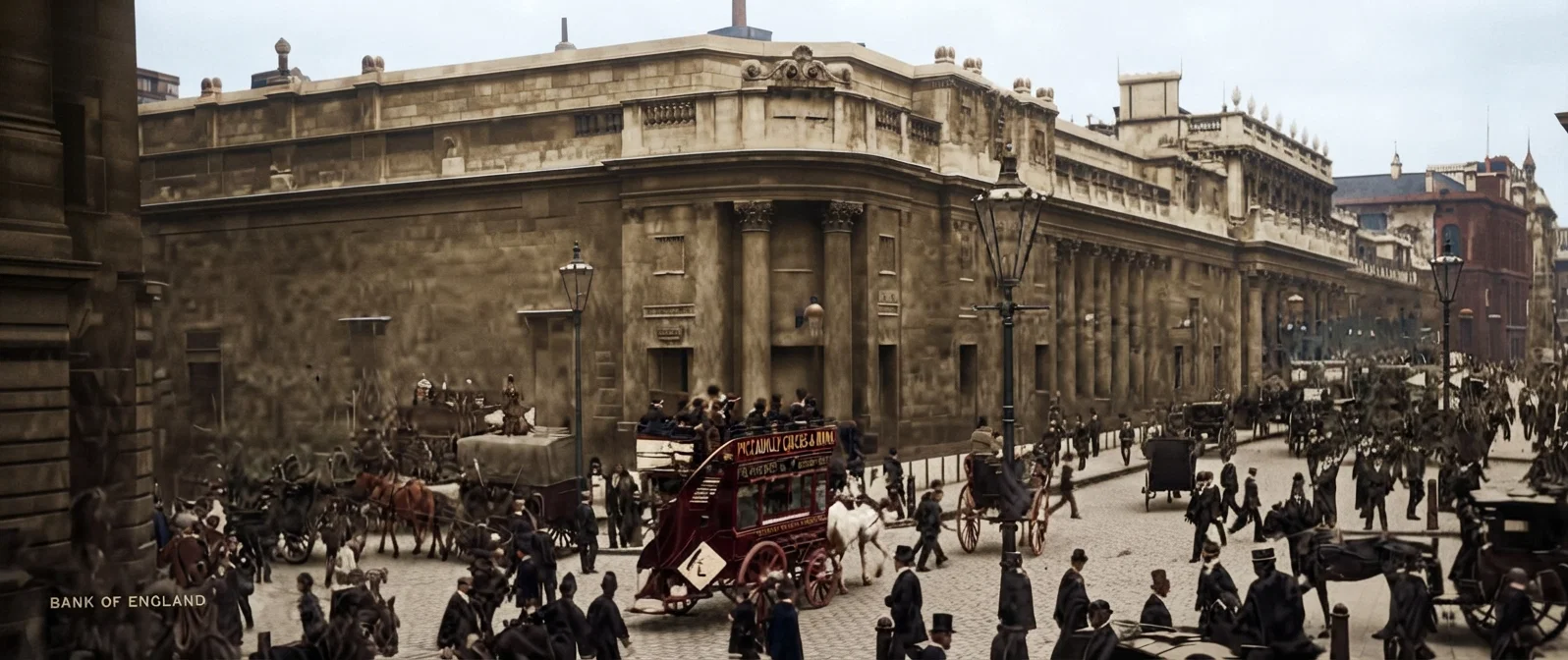
STILL there come times in the history of all these financial institutions when they are distrusted, and the result is a run on the bank. Even good banks go down before these panics which take possession of the hearts of human investors. Even the Bank of England, the strongest in the world, has seen times when the shadows were dark and payment was suspended, and the very credit of the British Empire trembled in the balance. So it will ever be with human institutions. Man is ever ready in times of sunshine and prosperity to trust his fellow. He is equally ready in times of adversity and darkness to lose all confidence in men and institutions of men. Out of this lack of confidence has grown all the laws endeavoring to safeguard depositors, laws at the best imperfect.
—0—
THERE is one bank, and only one, in which investments are absolutely safe if made in good faith. That bank is the Bank of Heaven. Behind it as capital stock are the Unlimited Resources of the Universe, founded in the Creative Power of God. All power is His. All the rolling spheres came forth at His command. By His power they move on in their courses through uncounted ages. And tho even an enemy should, by perversion of their laws, destroy them all, so that heaven and earth should pass away, His word shall not, can not, pass away. Matt. 24:35. Again the Creator would speak, and the universe would be peopled, "for no word of God shall be void of power." Luke 1:37, A. R. V. All the riches of earth are His; the mines of gold and precious stones, the cattle upon a thousand hills; the rain, the sun, which bring from earth's bosom the harvests of wealth, are all at His command.
The Bank of England in London, sometimes called the “Old Lady of Threadneedle Street,” the strongest financial institution in the world.
—0—
WE may not therefore question the resources of the Bank of Heaven; they are infinite. More than this, He who has the power to produce and restore has also knowledge and wisdom to manage. "Great is our Lord, and mighty in power; His understanding is infinite." Ps. 147:5. "Jehovah is the true God; He is the living God, and an everlasting King. . . . The gods that have not made the heavens and the earth, these shall perish from the earth, and from under the heavens. He [Jehovah] hath made the earth by His power, He hath established the world by His wisdom, and by His understanding hath He stretched out the heavens." Jer. 10:10-12. Job declares, "By His Spirit the heavens are garnished" with all the jewels of light; and yet all that we see are but "the outskirts of His ways; and how small a whisper do we hear of Him! But the thunder of His power who can understand." Surely in the President of the Bank of Heaven we must have confidence.
—0—
THE Bank of Heaven is a beneficent institution. It is not designed to enable the moneyed kings of God's universe or of this earth to lord it over their fellows nor to corner the natural wealth of the world. The Bank of Heaven does not deal with men's wants so much as it does their needs. The great world became bankrupt through sin. God met their need by giving His only-begotten Son. He poured out the treasure of the fulness of the Godhead, that dying man might live, and the earth be brought back and redeemed, a shining gem in the coronet of God. By virtue of that gift, all others come—the air we breathe, the sunlight we enjoy, and all other blessings which we must have and so often unthankfully receive. The great, good Banker continually, unstintedly, pours out these treasures upon a dying world, that His goodness may lead to repentance, and that we may become identified with Him in the great Bank. He would have us, not alone beneficiaries, but stockholders, partners in the enterprise of the universe throughout the eternal ages.
—0—
HOW MAY we do it?—(1) By giving ourselves in all our sinfulness and selfishness to Him, that He may remove all our woful debt of sin, and in its stead cover us with "the riches of His grace" (Eph. 1:7); "for by grace are ye saved through faith; andthat [saving] not of yourselves; it is the gift of God; not of works, that no man should glory" (Eph. 2:8, 9). (2) By identifying ourselves with Him in becoming channels for His blessings and riches to reach other hearts. For "ye are a chosen generation, a royal priesthood, a holy nation, a peculiar people; that ye should show forth the praises [virtues, excellencies, riches] of Him who called you out of darkness into His marvelous light." 1 Peter 2:9. "Freely ye have received, freely give." Matt. 10:8.
—0—
WHAT returns will we get? Not always, perhaps not generally, the mere gold of men's greed in this life, save that we may use it for God. There are greater riches than gold. There is a greater treasure which the Bank of Heaven would bring us than all the gold of Ophir or the gems of Golconda, nay, more than all the treasures of earth can buy, and that is ## the Gold of Character.
That gold of character insures another treasure that earth can not buy, and that is eternal life in the kingdom of God, companionship of all the holy and blest forever, sonship in the family of God, inheritors of all the riches of His universe. Read the assurances to all depositors in this Bank: "He that hath pity upon the poor lendeth unto Jehovah, and his good deed will He pay him again." "Blessed is the man that feareth Jehovah. . . . He hath dispersed, he hath given to the needy; his righteousness endureth forever." "Give, and it shall be given unto you; good measure, pressed down, shaken together, running over, shall they give into your bosom. For with what measure ye mete it shall be measured to you again." "Harken my beloved brethren, did not God choose them that are poor as to the world to be rich in faith, and heirs of the kingdom which he promised to them that love Him." And at the last, "then shall the King say unto them on His right hand, Come, ye blessed of My Father, inherit the kingdom prepared for you from the foundation of the world; for . . . inasmuch as ye did it unto one of the least of these My brethren, ye did it unto Me." He who will receive this at the last will be the possessor here of the character that knows the truth, "It is more blessed to give than to receive." And throughout all the ceaseless ages of eternity God's universe will be one demonstration of this great fact.

Question Corner

1950.—What Kind of Spirit Is Referred to?

What is a spirit if spirits “have not flesh and bones.” Are they bodiless beings? How can they enter swine if they have a body? or is that verse to be taken literally? May it not mean that the demons just controlled the swine?
It is difficult to explain things spiritual by things grossly material. We are not to suppose that sentient beings can not exist unless they are formed as we are, any more than we should argue that birds can not fly because we can not. Because spiritual beings—angels, good and evil—have not flesh and bones as we have, is no evidence that they are not as real beings as we are. The work they do, and have done, shows distinctly their reality and individuality. “There is a natural body, there is also a spiritual body.” When man yields to an evil spirit, that spirit seems to take complete possession of the man. If he does not yield, the spirit can only trouble him outwardly.

1951.—“Harvest Homes” in Churches.

Is it right for Christians to hold harvest homes in churches, to bring into the church pumpkins, vegetables, fruits, etc.? What does John 2:16 mean?
John 2:16 shows how God regarded the making of His house a house of merchandise, a place of selfish trade and barter, of buying and selling. If this is what a “harvest home” service does, it is wrong. If any service makes common, or profane, the house of God, it is wrong. But if it was a thanksgiving service of the fruits of the earth to God, and these were present for that purpose, we do not see any harm in a proper use of God’s gifts.

1952.—The Allegory of Galatians 4.

Galatians 4, speaking of the two covenants, says, “Hagar is Mount Sinai in Arabia, and . . . is in bondage with her children.” It uses the present and not the past tense. Does this mean to teach that children of the bond woman and children of the free woman existed then and also exist now, and that as then the children of the bond woman persecute the children of the free woman now? Did the two covenants exist then and do they exist now?
It is impossible to fully reply to such a large question in this department; however, we offer these suggestions: First, that the old covenant, as a covenant, was made between God and Israel. Yet its principles have been always true. The real core of it is salvation by works, that is what “Hagar” stood for. Abraham would fulfil God’s promise by a scheme and plan and effort of his own, but it failed, and she, the bond woman, simply brought forth a bond child. The Jews, holding to that principle, and holding to it more than ever in the days of Christ, were well represented by Hagar, in bondage to sin. Secondly, God saves by grace, for “by grace are ye saved, through faith; and that [saving] not of yourselves; it is the gift of God.” So Isaac was born of the power of God.
Now those principles have existed all the way through, before it was drawn out in an actual written covenant with Israel. They exist to-day just the same in principle, when men try by their own works to save themselves, when men set up their creeds instead of God’s living Word, and when they try to enforce their creeds upon others. Ishmael was born of the bond woman contrary to God’s plan, and yet there was the effort on his part, and to some extent Abraham’s, to force him into the position of the heir, and force the younger son Isaac out. To this, of course, Sarah objected, and God honored her position. It was true in Paul’s day that “we are as Isaac are the children of promise,” that is, if we are children of the Lord Jesus Christ; for “if ye be Christ’s, then are ye Abraham’s seed, and heirs according to the promise.” And more and more manifest it will be in the last days that he that is born after the flesh will persecute him that is born after the Spirit, because the one will hold to the traditions inaugurated and maintained by the flesh, while the other will hold to the living Word of God.

1953.—The War in Heaven.

Is the war in heaven, referred to in Revelation 12, and the casting out of the angels the same as that referred to in Jude 6?
We do not think so. Jude 6 does not speak of casting out, but the “angels which kept not their first estate, but left their own habitation.” That refers to their sinning in the very beginning. This evidently is referred to in Revelation 12:4—“his tail drew the third part of the stars of heaven,” the angels; but verse 7 of Revelation 12 refers to a subsequent time, the culmination of the great conflict between Christ, or Michael, and Satan. That culmination came when our Lord was raised from the dead triumphant forever over death and hell. Then came the second casting down, “and their place was found no more in heaven.” These are the same angels, of course, that were cast down in the beginning. The nature of that conflict it is impossible for us to say. It was a spiritual conflict between spiritual beings, and we, in our gross materiality, can have no conception as to the weapons and forces employed. Many have been studying for years and years how birds lighter than the same bulk of water can sink in water and remain so for hours, and how they can rise to great heights and maintain a long flight for days even; but they have not yet solved the problem. When we can not understand physical forces, how can we explain spiritual. Some things will have to be left until we get to the other side, in God’s advanced school.

NOT AMERICA ALONE.

FROM reading the newspapers in the United States one might get the impression that moral degeneracy is more general in this country than in other parts of the world. But it is said, and perhaps truthfully, that this appearance comes from our having conditions here constantly portrayed before us. Even an English authority says that the difference between England and America is that America does her house-cleaning in public, while England does hers in private. But the publicity given to American defalcations in monetary affairs, fraud in manufactures and industries, and corruption in political circles causes the English authorities to do some home investigating; and it has been disclosed that revolting conditions exist in the manufacture of jams and other preserves.
One English journal well says: “The looseness in food preparation in various countries may be remedied, but there is another variety of looseness not so easily managed. This is moral laxity. Neither is it confined to one country; it is world-wide. Uncleanliness in food may be detrimental to a nation, but loose morals destroy it. Human power may clean up a factory, but it takes divine power to renovate a heart.”
G.

BUILDING THE THINGS THEY DESTROY.

It is strangely anomalous that so many of the religious journals in the United States are commending the efforts of France and Spain to throw off the union of the state with the church, while at the same time they so energetically encourage the principles of such union in our own country. They seem oblivious to the fact that all religious legislation is simply progress toward that end. The very first union of the Christian church with the Roman state began to take practical shape with the Sunday-rest laws of Constantine. That was an opening wedge, and as the church’s influence in the state waxed stronger, the Sunday laws were made more stringent, until it became heresy, with a penalty of excommunication, attended by bitter persecution, for any one to observe the “Sabbath according to the commandment.”
Yet in the face of this historical fact, most of the popular religious journals are advocating the enforcement of Sunday observance by state and national law. And it is safe to predict that this religious clamor will continue until the goal of the church and state union shall be reached. When men pursue any object blindly, ignoring the logical results as manifest in the experiences of past generations, they are sure to go beyond their original expectations. If Christian men would sit down and count what it cost the church in the earlier centuries to take their stand on Sunday observance enforced by the state, they would hesitate to repeat the experiment. That we have not reached the limit of such experience yet is no argument that persistent development of the root will not eventually bring forth the tree and its fruit. All the processes of evil are developing their fruits extremely fast in these last days, and none more so than those which go forward in the garb of political religion.

A TRUE ISM OF GOVERNMENT.

THERE is much talk nowadays about Socialism, applied Christianity, the authority and selfhood of the State, its personality, etc.
Do not be deceived. The only just government or system of government, the only true religion, is that which recognizes the rights of the individual, be that individual who he may. Among these rights, as our forefathers declared, are life, liberty, and the pursuit of happiness. These include the worship or non-worship of God, the profession or non-profession of religion. Man can not of right deprive himself of this right, nor has any man or combination of men the right to deprive him of his right to freely choose.
This right is God-given. God Himself does not compel choice. He sets before man the two ways, and says, “Choose ye.” Just human government will not go beyond this. It will honor the individual. For when the rights of each one is conserved, the rights of all are conserved. But if any system deprives a single soul of his equal rights with all men, the system is false, and will, if operative and dominant, extend to others, and eventually work ruin. The only true ism of government is individualism.

"INCREASED AUTHORITY."

The California Christian Advocate says: "It is now probable that a majority of two-thirds of the thirty denominations represented in the Council of Church Federation will accept the basis of federation proposed by that council. In that case another council, with increased authority, will be called for the winter of 1908."
Of course the "increased authority" here meant is authority delegated by the churches included in the federation. But let it be remembered that the primary object of the Church Federation scheme is "increased authority" in political affairs. G.

THE PAPACY IN PROPHECY

THE IMAGE AND MARK.

READ again Rev. 13:11-17, as follows: “And I saw another beast coming up out of the earth; and he had two horns like unto a lamb, and he spake as a dragon. And he exerciseth all the authority of the first beast in his sight. And he maketh the earth and them that dwell therein to worship the first beast, whose death-stroke was healed. And he doeth great signs, that he should even make fire to come down out of heaven upon the earth in the sight of men. And he deceiveth them that dwell on the earth by reason of the signs which it was given him to do in the sight of the beast; saying to them that dwell on the earth, that they should make an image to the beast who hath the stroke of the sword and lived. And it was given unto him to give breath to it, even to the image of the beast, that the image of the beast should both speak, and cause that as many as should not worship the image of the beast should be killed. And he causeth all, the small and the great, and the rich and the poor, and the free and the bond, that there be given them a mark on their right hand, or upon their forehead; and that no man should be able to buy or to sell, save he that hath the mark, even the name of the beast or the number of his name.”
That the seven-headed beast of Revelation 13, under the fifth head, the head dominant for the forty-two months of the prophecy (Rev. 13:5-10), refers to the Papacy is demonstrated beyond question, unless we are disposed to reject all prophecy.
It is equally demonstrable that the Sunday institution is the mark of that power; that power claims it as such; it is Rome’s badge of assurance that she has power to “change the times and the law,” as the prophecy declares the little horn would “think to do.” Dan. 7:25. The little horn of Daniel 7 is identical with the beast power of Rev. 13:5-10. Around that change in God’s law revolves the great religio-political controversy of the last days.
That the two-horned beast of the latter part of the chapter referred to in the Scripture at the head of this article is a symbol of this country has also been demonstrated. It is in that prophecy declared that this nation shall make an image to the beast and enforce its worship; that it will legalize the mark of the beast and enforce its reception.

That “Mark of the Beast”

is not merely Sunday keeping; thousands upon thousands have observed Sunday in the past, believing that they were doing God’s will, believing that they thus were keeping His law. Light from His Word had not reached their hearts upon that question. Jesus said of the Jews, “If I had not come and spoken unto them, they had not had sin; but now they have no cloak for their sin.” John 15:22. Not until God’s message reveals to the soul the base counterfeit which Satan through apostasy has foisted upon the church, which loved tradition more than the Word of God, and that soul rejects God’s message and adheres to the counterfeit enforced by statute law, does he receive the mark of the beast. That time, that crucial moment, only God knows and He must be the judge; but His servants who know that message, who know the genuine and the counterfeit, must bear witness to the truth.
This message of truth has been going to the world for years. Thousands have embraced it; many thousands more see it, but have not yielded to it; many thousands more see that it is wrong to seek to enforce any kind of religious institution upon the minds and hearts of the people. Such freedom has been known in this country in the past that they feel, without weighing the evidence, that such a law never could be passed in this country.

But What Is the Prospect?

Let us lay before the reader two pictures. When this government was formed it was said by its founders in its Bill of Rights: “Congress shall make no law respecting an establishment of religion, or prohibiting the free exercise thereof.” That was the opinion of Washington, and Jefferson, and Madison, and Franklin, and scores of others, among which were the Baptists generally, and many of the other denominations. They felt that the only way to preserve the true principles of liberty was for the civil power to have nothing whatever to do with religion.

What Congress Said in 1829-1831.

There were others who felt otherwise, tho in the minority. Having little or no Scripture to establish Sunday sacredness, they did what has always been done in such a case—appealed to the civil law. This first appeal came before Congress in 1829, and a great mass of petitions was presented, praying that post-offices and post roads should be closed on Sunday. They came before both the Senate and House of Representatives. The Senate made answer in 1829; the House made answer to those petitions in 1831. The Senate said:
“It is not the legitimate province of the Legislature to determine what religion is true, or what false. It should be kept in mind that the proper object of government is to protect all persons in the enjoyment of their religious as well as civil rights, and not to determine for any whether they shall esteem one day above another, or esteem all days alike holy.
“If the principle is once established that religion or religious observance shall be interwoven with our legislative acts, we must pursue it to its ultimatum. . . .
“Let the National Legislature [or state] once perform an act which involves a religious controversy, and it will have passed its legitimate bounds. The precedent will then be established, and the foundation laid for that usurpation of the divine prerogative in this country which has been the desolating scourge of the fairest portions of the Old World. . . .
“To prevent a similar train of evils in this country [state], the constitution has wisely withheld from our government the power of defining the divine law. It is a right reserved to each citizen; and while he respects the rights of others, he can not be held amenable to any human tribunal for his conclusions.
“Extensive religious combinations to effect a political object are, in the opinion of the committee, always dangerous. . . . All religious despotism commences by combination and influence; and when that influence begins to operate upon the political institutions of a country, the civil power soon bends under it, and the catastrophe of other nations furnishes an awful warning of the consequences.
“If the principle is once established that religion, or religious observances, shall be interwoven with our legislative acts, we must pursue it to its ultimatum.”
The House of Representatives said:
“The individual acts for himself, the representative for his constituents. He is chosen to represent their political and not their religious views; to guard the rights of man, not to restrict the rights of conscience. . . .
“If the measure recommended should be adopted, it would be difficult for human sagacity to foresee how rapid would be the succession, or how numerous the train of measures which would follow, involving the dearest rights of all,—the rights of conscience.
“The Constitution regards the conscience of the Jew as sacred as that of the Christian, and gives no more authority to adopt a measure affecting the conscience of a solitary individual than that of a whole community. That representative who would violate this principle would lose his delegated character, and forfeit the confidence of his constituents.
“If a solemn act of legislation shall, in one point, define the law of God, or point out to the citizen one religious duty, it may, with equal propriety, proceed to define every part of divine revelation, and enforce every religious obligation, even to the forms and ceremonies of worship, the endowment of the church, and the support of the clergy.”

Not Toleration, but Inalienable Rights.

In contrasting conditions in America with past governments, Dr. Philip Shaff has well expressed the meaning of the inscription on the reverse side of the great seal of America, “A New Order of Things.” He said in “Church and State in the United States” (page 14):
“Toleration is an important step from state churchism to free churchism. But it is only a step. There is a very great difference between toleration and liberty. Toleration is a concession which may be withdrawn. It implies a preference for the ruling form of faith and worship, and a practical disapproval of all other forms. . . . In our country we ask no toleration for religion and its free exercise, but we claim it as an inalienable right.”
Such was the reply of the children of the fathers of the country, but with no agitation on the necessity of safe-guarding our liberties and with persistent agitation on the part of those who were clamoring for religious legislation, the minds of the grandchildren have become changed.

The Other Picture.

In 1863, the National Reform Association was organized, and held its first convention in Allegheny, Pa., Jan. 27, 1864. Its object is thus declared in the second article of the constitution then adopted:
“The object of this society shall be to maintain existing Christian features in the American Government; to promote needed reforms in the action of the government touching the Sabbath, the institution of the family, the religious element in education, the oath and public morality as affected by the liquor traffic and other kindred evils; and to secure such an amendment to the Constitution of the United States as will declare the nation's allegiance to Jesus Christ and its acceptance of the moral laws of the Christian religion, and so indicate that this is a Christian nation, and place all the Christian laws, institutions, and usages of our government on an undeniable legal basis in the fundamental law of the land.”
The organ of that association in its issue of July 7, 1884, declared:
“Patriotism as well as piety demands a return to a strict compliance with the fourth commandment, as well as other divine requirements affecting the nation.”
Certainly it will not be denied in the face of these and hundreds of other evidences which might be adduced that the National Reform Association demands that the religious Sabbath—and there is no other, whether false or true—shall be enforced by law.
In the years 1885-87, the devoted band of accomplished and earnest women organized into the Woman's Christian Temperance Union, was wooed and won by the National Reform Association, and as a result introduced a new department into its work, for “the promotion of Sabbath observance, co-operating with the National Reform Association.”
Again in its national convention of 1887, the W. C. T. U. declared:
“The Woman's Christian Temperance Union, local, state, national, and world-wide, has one vital, organic thought, one all-absorbing purpose, one undying enthusiasm, and that is that Christ shall be this world's King; yea, verily, this world's King in its realm of cause and effect,—King of its courts, its camps, its commerce,—King of its colleges and cloisters,—King of its customs and constitutions. . . . The kingdom of Christ must enter the realm of law through the gateway of politics.”
And in 1888, the following:
“Christ and His Gospel, as universal King and code, should be sovereign in our government and political affairs.”
No better reply need to be made to the above sentiment than that uttered by the United States Senate in 1829:
“Among all the religious persecutions with which almost every page of modern history is stained, no victim ever suffered but for the violation of what government denominated the law of God.”
We are glad to know that in this present current year they had nothing to say. Would to God that we might hope that they were seeing the evil of the movement to which they have given their support.

The American Sabbath Union

was organized in 1888, formed of the great evangelical denominations. Its object, “To preserve the Christian Sabbath as a day of rest and worship.” It has its branches in every state in the Union. Along this same line the Young People's Society of Christian Endeavor has been made to speak. Later on various labor unions in different parts of the country have also given their attention to the movement, tho we believe as a general thing the movement has not been approved by many of the workmen.
The effect of these religious combinations in politics and upon civil authorities was seen in 1892 and 1893. In February of the former year the Supreme Court of the United States, in the Trinity Church case, declared, contrary to the principles which gave birth and existence of the government, that “this is a Christian nation.”
The next year the legislative and executive branches of our government passed the Sunday-closing act pertaining to the Chicago World's Fair, thus deciding a religious controversy, and committing the government to religious legislation, the opposite picture to that presented in 1829 and 1831.
Further the mighty force which has been enlisted into the service of evil, conscientiously tho mistakenly, has been the two great federations which have spoken during the last year, the one the American Federation of Protestant Churches held in New York last autumn, the other the American Federation of Catholic Societies held in Buffalo last summer. Both of these have spoken emphatically in regard to the matter of preserving the Sabbath by law.
Certainly in the face of these things there is fair prospect that the movement will succeed, and the prophecy be fulfilled that this country shall speak with a dragon voice.
[The influence of this nation upon others will be considered next week.]

Social Life and Aristocracy

A social life which worships money, and pursues social distinctions as its aim, is, in spirit and in fact, an aristocracy.—J. G. Holland.
Continue reading: REPHIDIM