Signs of the Times, Vol. 43, No. 33.

The Mania for Gold

Signs of the Times

Aug 22, 1916

Pacific Press Publishing Association · Mountain View, California · Aug 22, 1916

The Mania for Gold

A World Phenomenon That Will Intensify
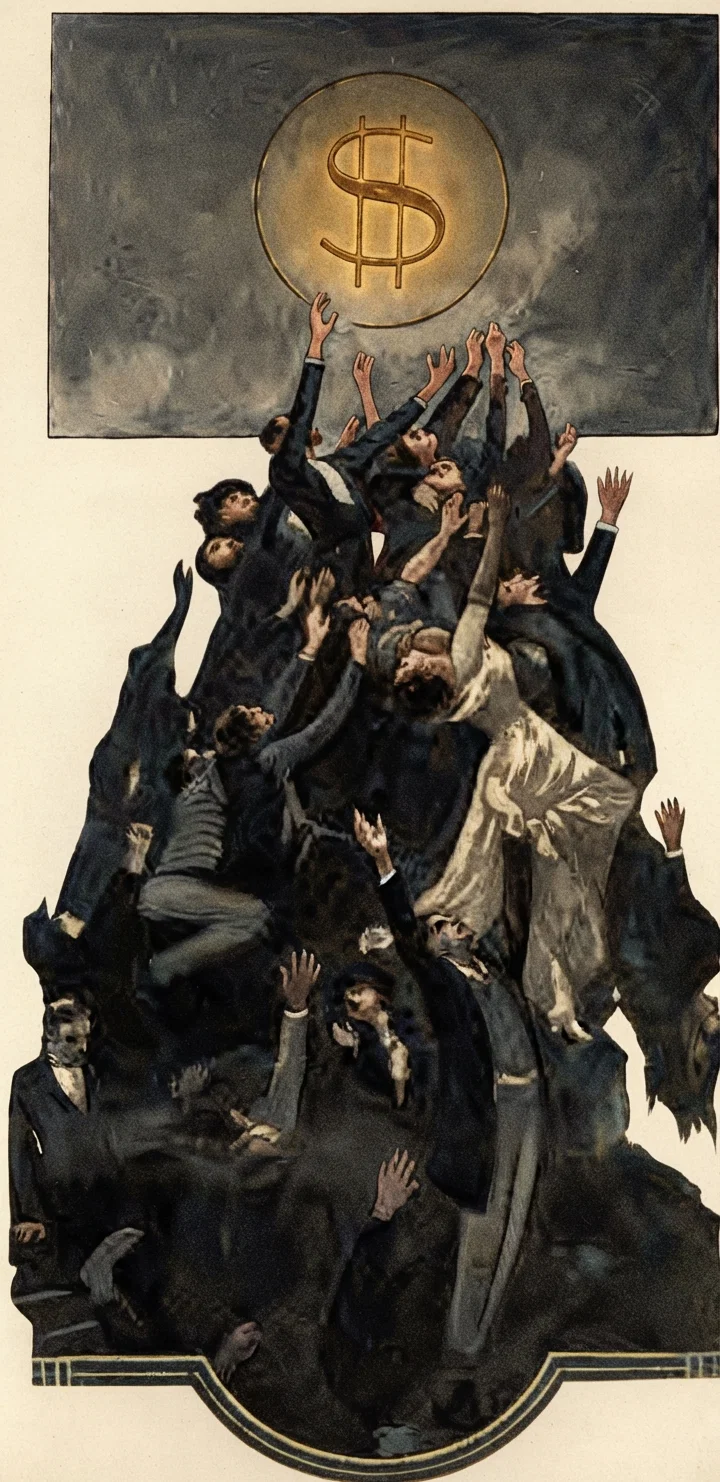
"Ye have heaped treasure together for the last days." James 5: 3.
By B. M. GRANDY
THE last days have come. Some one has heaped treasure together. Not the dwellers in the crowded tenements in the cities of the world, where mothers and half-clad children toil making cheap garments and other small articles of commerce.
Not the army of shop girls, shamefully underpaid and overworked. Discouraged and tempted, many fall easy victims to preying, licentious men, and, in order that their bodies may be clad according to fashion, are led to sell their souls for a mess of pottage.
Not the army of factory hands — men, women, boys, and girls — who, for the bare necessities of life, work long hours. Sad, but true, too often even part of the insufficient income goes to buy drink, tobacco, demoralizing amusement, and other things that sap the strength of the world’s workers.
Not even the more contented and better situated tillers of the soil are “heaping together” more treasure than is sufficient to clothe and care for them and their families properly.
As we go over the list of workers engaged in the various branches of industry, some poorly and some well paid, we do not find among them the class of whom the apostle speaks as heaping up treasure.
No; he says, “Go to now, ye rich men” — men with untold and fabulous wealth; men who loll in voluptuousness and wanton, extravagant pleasure; the unscrupulous, the greedy, and the grasping ones; pirates on the sea of commerce, heaping together treasure “for the last days.” Like the fabled treasure of Captain Kidd, rusting in a cave in some lost island, so rusts the hoarded treasure of many a modern captain of high and frenzied finance, whose income is so vast that the greatest problem of the possessor is, to keep his heaps of gold reinvested.
Portentous omens foretell the coming miseries of the godless, unhappy rich who tenaciously hoard the sordid treasures of the earth, with no time to think of the treasures of eternity. “Behold, the hire of the laborers who have reaped down your fields, which is of you kept back by fraud, crieth: and the cries of them which have reaped are entered into the ears of the Lord
of sabaoth.” James 5: 4. The lawful hire of the laborer, withheld that the heaps of gold and silver may swell, that the stock and the bonds may multiply, will become mountains of evidence against the possessors.
With a daily increase of wealth in the United States alone, for the first four years of the present century, of $13,000,000, and with the wealth of the country aggregating, in 1912, over $150,000,000,000, which is an average of $1,500 for every man, woman, and child in the nation, it seems there should be enough for all.
While America is among the richest of nations, yet the whole world has enjoyed a great increase of wealth in the last few decades. Millionaires have multiplied remarkably, the multimillionaires are with us in added numbers, and even the billionaire is not unknown. The fortune of one billion would represent the individual shares of 666,666 people, if the nation’s wealth were equally divided. Therefore, as the multimillionaires increase, so also must the pauper class. The multimillionaire, with the power of great wealth, continues to add to his treasure, at the expense of the poorer classes.
There is a comparatively small group of men in this country who can stop practically every wheel on the railroads, close the doors of most of our factories, lock the switches on our telegraph lines, and shut down all the coal and iron mines in the United States. They can do this because they control, to a large extent, the money which this country produces. The control of the money gives its possessors tremendous power over a nation’s industries. Senator Ingalls, when in Congress, truly said, “This concentration of wealth is the most appalling fact in history.”
The concentration of wealth affects not only the financial world, but the social, the political, and in fact every phase of human economy. Strikes become more serious and widespread, boycotts multiply, and anarchy and general lawlessness flourish.
The fact that social unrest is so prevalent is an evidence that the control of wealth by the few is not satisfactory to the many. If dissatisfaction were all that is bred thereby, the casewould not be so serious, for dissatisfaction is the heritage of all who have not found the peace of God; but dissatisfaction breeds envy, hatred, malice, and resentment, on the part of the oppressed and downtrodden. Murders, hired assassinations, dynamitings, and a general increase of crime are easily traceable to the social unrest.

Recourse to Violence

MANY reason this way: "Our laws are failing to protect the weak, our courts yield to the corrupting power of wealth. All else failing, why should we not take the direct action route, and by force of arms, right conditions that are so palpably wrong?"
The history of the French Revolution portrays the result of such a course.
Wronged though you may be, listen, friend, to the words of unfailing wisdom: "Recompense to no man evil for evil. . . . Avenge not yourselves, but rather give place unto wrath: for it is written, Vengeance is Mine; I will repay, saith the Lord." Rom. 12: 17, 19. "For where envying and strife is, there is confusion and every evil work. But the wisdom that is from above is first pure, then peaceable, gentle, and easy to be entreated, full of mercy and good fruits." James 3: 16, 17.
The acute industrial situation is worldwide, and presages the dissolution of the governments of the earth. The conditions are similar to those which preceded the fall of the great empires of the past. Egypt, Babylon, Greece, Rome, each crumbled in decay when the wealth was concentrated in the hands of the few, and the masses were reduced to a state bordering on vassalage.

The Only Remedy

THE conditions are yearly growing graver and more complicated. Taken in conjunction with other conditions pointed out in the word of God, the industrial situation is but an added token that the dissolution of all things earthly is at hand.
Confederacies are an indication of selfishness and distrust in the hearts of men, and are calculated to compel others to favor certain combinations because of their power. They are especially prevalent in these last days. But futile are their attempts to right conditions, because the hearts of men are fixed to do evil. Sin raises its sinister head in every walk of life. And the only remedy for sin is the gospel of Jesus Christ. The world seeks help everywhere but here. Yet not altogether; for some there are who find the antidote for sin, and apply it to their troubled souls.
These will heed the admonition of the prophet Isaiah, applying especially to the times when God's people await the Lord's return, and will not see in these confederacies the deliverance promised; but their hope is in that sure deliverance soon to come. See Isa. 8: 12-17.
The final adjustment, not only of the industrial troubles, but of all difficulties that harass mankind, is at hand. Surely God's people in this time should be found heeding the Word when it says: "Be patient therefore, brethren, unto the coming of the Lord. Behold, the husbandman waiteth for the precious fruit of the earth, and hath long patience for it, until he receive the early and latter rain. Be ye also patient; stablish your hearts: for the coming of the Lord draweth nigh." James 5: 7, 8. The same Lord that marks the sparrow's fall, takes note of the direful oppression of humanity throughout the earth. He alone can right the wrongs that will exist at His coming. With this great event will be ushered in that eternal period of peace when the truth of every declaration of God's word pertaining to righteousness will be unquestionably vindicated.

"Remember the Sabbath Day"

But Which Day Is It, the First or the Seventh?

THE New Testament teaches the binding claims of the fourth or Sabbath commandment as much as any of the other commandments of the law of God. The life of Christ was the law of God magnified and made honorable. Isa. 42: 21. The attitude that He sustained to the law in keeping and teaching the commands of the Father is set forth for an example to His followers.
All the endorsements of the Master to the law of God have as much to do with the fourth commandment as with the other nine. As Christians, we have no more right to eliminate the fourth commandment from the endorsements common to all the commandments of the Lord than has the thief, the murderer, the adulterer, or any other commandment breaker, to expunge the commandments that condemn him.
Jesus emphatically declared, "Think not that I am come to destroy the law." Matt. 5: 17. Again, "It is easier for heaven and earth to pass, than one tittle of the law to fail." Luke 16: 17. In view of this fact, Christ says: "Whosoever therefore shall break one of these least commandments, and shall teach men so, he shall be called the least in the kingdom of heaven: but whosoever shall do and teach them, the same shall be called great in the kingdom of heaven." Matt. 5: 19.
To the young man who desired to know what to do to have life, the Master admonished, "If thou wilt enter into life, keep the commandments." Matt. 19: 17. We have no more right to say that this instruction does not apply to the fourth commandment, than others have to say that the special command which condemns them is not included in the statement of our Saviour.
Christ was a faithful Sabbath keeper. He said, "I have kept My Father's commandments." John 15: 10. One of His Father's commandments is the fourth. It was His custom to attend and participate in the Sabbath services. Luke 4: 16-21. He was continually instructing the people concerning proper Sabbath observance.
Christ's instruction to His disciples relative to the destruction and desolation of Jerusalem, fixed the thought in their minds and hearts to pray that their flight from the city should not occur on the Sabbath day. Matt. 24: 20. Thus they would not be compelled to desecrate the Sabbath by making their escape from the city upon that day. Jerusalem was destroyed A. D. 70. That was at least thirty-nine years after the resurrection. In this instruction, the Lord surely emphasized the command, "Remember the Sabbath day, to keep it holy."
Matthew was a leader in the Christian church. He wrote his Gospel more than thirty years after the resurrection. If the first day of the week was the Sabbath at that time, he did not know it; for he calls the resurrection day merely the first day of the week, yet he speaks of the seventh day as the Sabbath. We read that "the next day, that followed the day of the preparation"—the preparation day was Friday, the sixth day, the day of the crucifixion—the priests went to Pilate to secure permission to set a watch at the sepulcher. "So they went, and made the sepulcher sure, sealing the stone, and setting a watch. In the end of the Sabbath [the seventh day], as it began to dawn toward the first day of the week, came Mary Magdalene and the other Mary to see the sepulcher." Matt. 27: 62, 66; 28: 1. We acknowledge, therefore, that inspiration thus tells us just what day was the Sabbath thirty years after the resurrection.
Mark wrote his Gospel almost thirty-five years after the resurrection. He calls the seventh day the Sabbath, and the day of the resurrection simply the first day of the week. He also makes clear that the Sabbath was past before the first day began. Mark says: "And now when the even was come, because it was the preparation, that is, the day before the Sabbath. . . . And when the Sabbath was past, . . . very early in the morning the first day of the week, they came unto the sepulcher at the rising of the sun." Mark 15: 42; 16: 1, 2. Here the three days are mentioned. The Gospel of Mark was inspired. Inspiration therefore tells us in this instance, thirty-five years after the resurrection, just which day is the Sabbath.
Luke, in writing his Gospel, some twenty-seven years after the resurrection, says: "And that day was the preparation, and the Sabbath drew on. And the women also, which came with Him from Galilee, followed after, and beheld the sepulcher, and how Hisbody was laid. And they returned, and prepared spices and ointments; and rested the Sabbath day according to the commandment. Now upon the first day of the week, very early in the morning, they came unto the sepulcher." Luke 23: 54-56; 24: 1. Thus we see that if the first day was the Sabbath, Luke did not know it. He called the day simply the first day of the week, but he called the seventh day the Sabbath.
It therefore follows that Jesus, Matthew, Mark, and Luke in these instances clearly teach the observance of the fourth commandment, which reads: "Remember the Sabbath day, to keep it holy. Six days shalt thou labor, and do all thy work: but the seventh day is the Sabbath of the Lord thy God: in it thou shalt not do any work," etc.
The first day of the week is mentioned only eight times in the New Testament, and is always spoken of as merely the first day of the week. The seventh day is mentioned fifty-nine times, and always called the Sabbath. While there is only one mention, in the New Testament, of a special appointed gathering on the first day, there are records of eighty-four gatherings on the seventh day. Neither Christ nor His disciples ever said one word in favor of Sunday as a holy day. There is no record, in the New Testament, that the expression "first day" ever passed His lips; yet we have His endorsement of His Father's law, His example in Sabbath keeping, and the command itself.
We should settle all points of doctrine, and all moral questions, by the plain, positive instruction of the word of God. Until we find somewhere in the Bible the command that says, "The first day [or some other day] is the Sabbath of the Lord thy God," let us remember the positive injunction of God: "Remember the Sabbath day. . . . The seventh day is the Sabbath."
All that men may say will not alter the reading of the commandments in the Judgment. We must meet them there. Christ will be our Judge then. If we fail to meet the demands of the law now, how will we fare in the Judgment?

The Reckoning Day

By Louis H. Christian
WE do not know what nation or man, or group of nations or men, has brought on this war. That is not for us to say. Possibly the larger responsibility rests on the rulers, the capitalists, and a few other leaders of nearly all nations involved. But we do know that some one must be guilty of this the greatest crime in the annals of mankind. And knowing this, we agree with the poet in expecting a reckoning day.
"And what shall these proud war lords say At foot of His mighty throne? For there shall dawn a reckoning day Or soon or late, come as it may, When those who gave the sign to slay Shall meet His face alone.
"What, think ye, will their penance be Who have wrought this monstrous crime? What shall whiten their blood-red hands Of the stain of rivers and ravished lands? How shall they answer God's stern commands At the great assize of time?"
God is the author of life; and being our Creator, He regards human life as very sacred. The Bible speaks of murder as the one sin in which justice can be appeased by nothing less than the life of the sinner: "Whoso sheddeth man's blood, by man shall his blood be shed." Gen. 9:6. The Scriptures teach that the shedding of blood pollutes the very land that receives it: "For blood it defileth the land: and the land cannot be cleansed of the blood that is shed therein, but by the blood of him that shed it." Num. 35:33. They "shed innocent blood, even the blood of their sons: . . . and the land was polluted with blood." Ps. 106:38.
If this be true, then the entire earth must be defiled, and the present suicide of the nations must certainly call for a heavy retribution. Of this we read: "Behold, the Lord cometh out of His place to punish the inhabitants of the earth for their iniquity: the earth also shall disclose her blood, and shall no more cover her slain." Isa. 26:21. This is a prophecy concerning the end of the world. Its fulfillment will come in part during the second and third of the seven last plagues, at the close of probationary time.
"And the second angel poured out his vial upon the sea; and it became as the blood of a dead man: and every living soul died in the sea. And the third angel poured out his vial upon the rivers and fountains of waters; and they became blood. And I heard the angel of the waters say, Thou art righteous, O Lord, which art, and wast, and shalt be, because Thou hast judged thus." Rev. 16:3-5.
In these plagues, the earth will "disclose her blood." God will require the blood of the millions slain, at the hands of those who have warred on and wasted the human race.

Revising the Ten Commandments

Shall Finite Man Correct the Infinite God?—Striking at the Very Foundations of Divine Government
By Milton C. Wilcox
IT goes without saying, that God's government is the basis of all stability in the universe; and it is further evident, to the thinking man, that the basis of His government rests in the righteousness, the justice, the completeness, of His holy law, the principles on which His government is based.
I need not take time to say that the law of God has been generally understood to be summarized in the Decalogue, which has been held as the compendium of all morality. It is so regarded in the word of God. It is the law which points out sin. "Nay," says the apostle to the gentiles, "I had not known coveting, except the law had said, Thou shalt not covet." We all know that it is the Decalogue that says, "Thou shalt not covet." It is the Decalogue, therefore, that points out sin. The same thing is taught in the second chapter of the epistle of James. The Ten Commandments are there called "the royal law," given by the great King. Reference is made to two of its ten words, "Thou shalt not kill," and "Thou shalt not commit adultery." It is also there affirmed that by that law we shall be judged,—a perfectly reasonable thing, for we must be judged by that which it is our duty to obey. And this passage by the apostle is but an echo of that which was taught by the wise man in the Old Testament: "Fear God, and keep His commandments: for this is the whole duty of man. For God shall bring every work into judgment, with every secret thing, whether it be good, or whether it be evil." Eccl. 12: 13, 14. The Bible is a unit regarding the law of the Most High.
The Ten Commandment law, as found in the twentieth chapter of Exodus, has been generally accepted through all the past by Christians, as the unchangeable law of God. It is prefaced by this statement: "And God spake all these words, saying." Moses believed that the law as there recorded was given of God. He furthermore declared the importance of holding that law in its integrity; for thus spoke Jehovah through His servant: "Ye shall not add unto the word which I command you, neither shall ye diminish from it, that ye may keep the commandments of Jehovah your God which I command you." Deut. 4: 2.
This principle is absolutely essential to the perpetuity of God's government; because if we can add to the commandment, and change its thought, or take from it, and make it less effective, we are striking at the very government of God.
All the great worthies of the Old Testament believed in the integrity and righteousness of God's law. Joshua believed it; Samuel believed it; Solomon believed it; David declared, "The law of the Lord is perfect"; and one of the great psalms, probably written by Daniel, refers, in almost every verse, to some phase of the great Decalogue. Isaiah believed God's law; Jeremiah and Ezekiel held to its perpetuity and integrity. Yet above all these, Jesus, the Son of the Most High, in whom dwelt all the fullness of wisdom and knowledge, received the law as God's law without question. Not only did He receive it into His life, and live it in His character, but He taught it, and declared that "it is easier for heaven and earth to pass away, than for one tittle of the law to fall." Luke 16: 17. In the great Sermon on the Mount, He said: "Think not that I came to destroy the law or the prophets: I came not to destroy, but to fulfill. For verily I say unto you, Till heaven and earth pass away, one jot or one tittle shall in no wise pass away from the law, till all things be accomplished." Matt. 5: 17, 18.
Not all things of the prophets are accomplished. The integrity of the law yet remains in every jot and tittle. A jot, it may be recalled, is the smallest letter in the Hebrew alphabet. A tittle is a little distinguishing mark of a letter. Neither jot nor tittle must be changed that would in any wise change the meaning of the law of God.
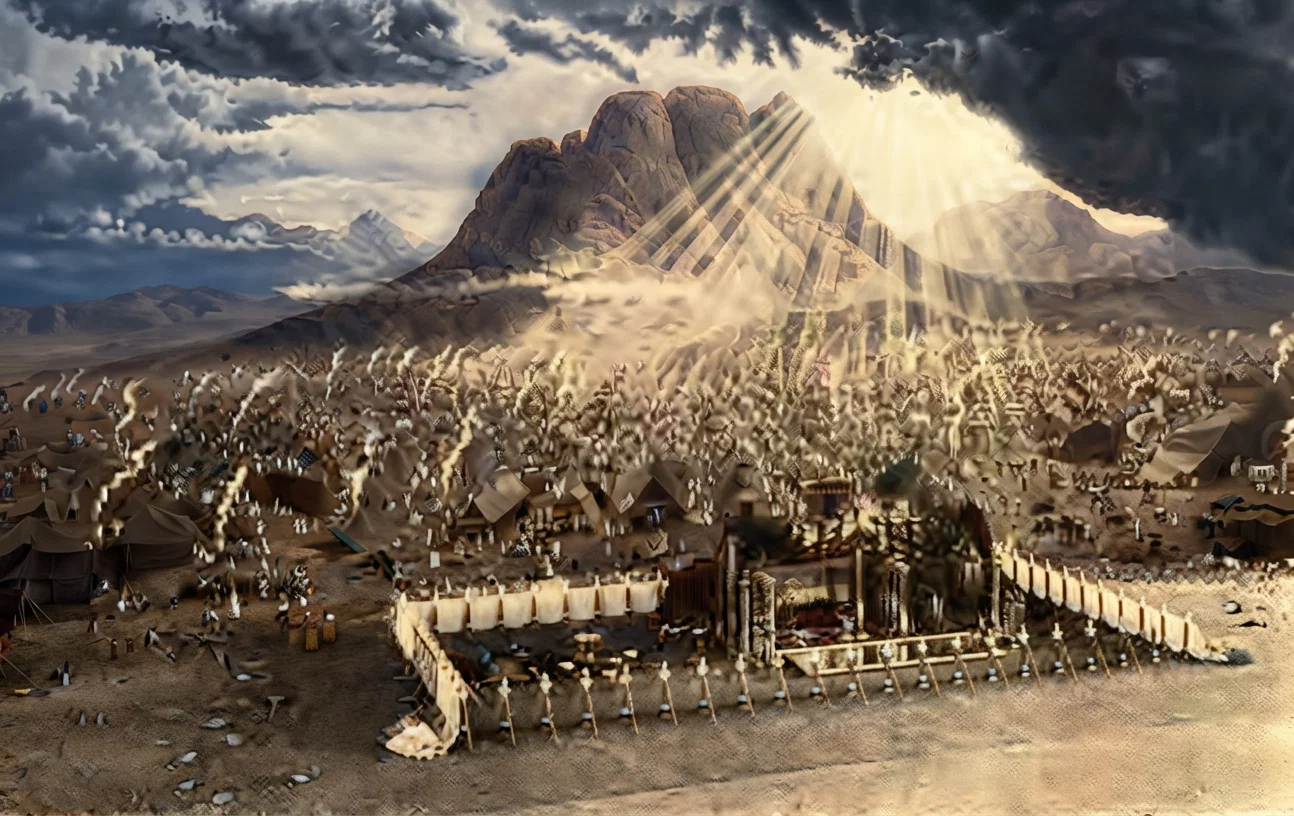
“Giving this commandment . . . out in the great desert.”

Modern Sadducees at Work

SINCE the time the law was given, it has had two enemies among the professed people of God: one, the traditions of men; the other, unbelief. Tradition has manifested itself in holding the hoary opinions of great teachers as superior to the simple Word; or, in other words, it has allowed the opinions of these men to interpret God's law, rather than accept it as God has given it. So the Jews made void the law of God that they might keep their own tradition. Yet the very sect among the Jews that did this were those who prided themselves on their correctness and faithfulness. They were the Pharisees. In later Christian times, tradition did the same thing. It virtually set aside the fourth commandment by adding the traditions of the fathers, who taught that the command could be made to cover the first day of the week instead of the day which God Himself gave.
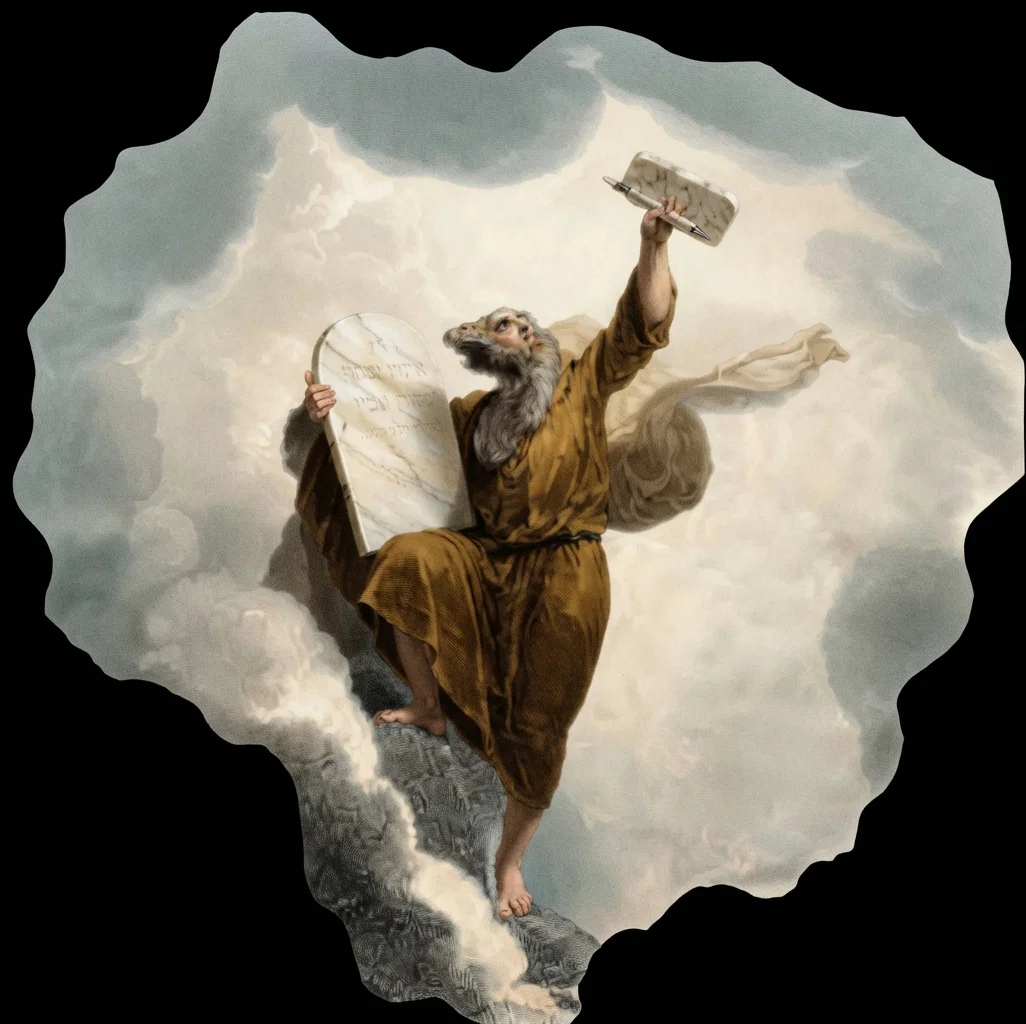
Our modern Sadducee is doing business under the title "higher critic." He is telling us that the law as we have it in the Bible, is not as God spoke it—that it has been enlarged since that time; and the proposal is, to revise it back to its original form. We are not overstating the case. In the copy of the Minneapolis Sunday Tribune that is before us, we have the statement made: "It will come as a shock to many, no doubt, to learn that the Ten Commandments are under process of revision. A commission of the Protestant Episcopal Church in this country has been working on the matter, and has decided to recommend a shortened form of the law as given to Moses by Jehovah on the mount—a form, according to Bishop Whitehead, of Pittsburgh, more in conformity with the 'thought and conception of the twentieth century' than that of the time when it was given."
It is a wicked fallacy. The Decalogue does not represent the standard of character which was in the world when it was given. The most enlightened country in the world at that time—Egypt—was in the grossest idolatry, as were many of God's people. The law came from God. It represented His character. Is it to be set aside for the "thought and conception" of the present day?
Now, this is a very dignified body that is appointed to revise the Ten Commandments. It is made up of seven bishops. It is called the Commission on the Revision and Enrichment of the Book of Common Prayer. The Book of Common Prayer is the guidebook of the Episcopal Church. In October, the tri-annual convention will decide whether to accept the report of this committee or not.
The bishop tells us that first of all, he wishes to make the law shorter, so that it can be more easily remembered. He wishes to "eliminate a great mass of reading that only lengthens the service unnecessarily without adding to the spirit or dignity of the worship." He suggests that the commandment will impress itself more upon the hearer if it is shortened, as for instance, "Honor thy father and mother," and the rest left off, as it is not needed. "Some of the commandments," he tells us, "have argumentative qualities. But that is not the essence of the matter; and the fourth commandment, relating to the observance of the Sabbath, is purely local. It says, 'God worked six days, and rested on the seventh;' but whonow believes that a day then was twenty-four hours? A day then might have been a thousand years, and we believe it was a very long time."
How do the bishops know but that the very words they are omitting are the words which are important to the commandment? Take for instance the fifth commandment. The purpose is to leave off, "that thy days may be long in the land which the Lord thy God giveth thee." History has demonstrated that obedience to the law of God begins with obedience to parents, and is conducive to long life and perpetuity of the family. The very thing God wanted to impress as the result of obedience of the commandment is left off.

Cast Out by Tradition

THE fourth commandment is shortened to "Remember the Sabbath day, to keep it holy." Why? Tradition will tell us that the day which God set apart is not the day to keep, but that the first day is the day enjoined upon Christians. What is the evidence of it?—Tradition, and tradition alone. The Lord did not say, in that commandment, that the first day was the Sabbath of the Lord. The commandment declares, "The seventh day is the Sabbath of the Lord thy God." Of what use is the law unless it says what it means? Divinity seems to have foreseen the time when man would seek to set aside the commandment, and therefore made it so plain that it could not be misconstrued. Not only one day of seven, but "the seventh day," "is the Sabbath of the Lord thy God."
Neither is the fourth commandment a local commandment, as the bishop declares it to be. God seemed to have an object in giving this commandment not in Egypt, not in the land of Palestine, but out in the great desert, what might be called "No Man's Land," in order that men might see its universality.
Then we are told that there are two versions of the Ten Commandments, one in Exodus 20 and one in Deuteronomy 5. It is strange that man cannot see that the former is given as God spoke it, and as it was written on the tables of stone, but the law as given in Deuteronomy 5 is a repetition of it by Moses, by word of mouth, to the children of Israel, forty years later, to impress upon them its lasting obligation.

Making Known His Sabbath

WE are told that there is a reason given for the observance of the Sabbath, in Deuteronomy 5, that we do not find in Exodus 20. That is true. We would like the reader to think of this. There is a divine reason in this. In Neh. 9: 13, 14, we are told that when God called His people out of Egypt, He made known to them His holy Sabbath. He made that Sabbath known in three different ways. It was to speak to them in three different ways, as a mighty witness for God.
1. As given in the commandment in Ex. 20: 8-11, the Sabbath stands as a memorial of God's creative power. "For in six days the Lord made heaven and earth, the sea, and all that in them is, and rested the seventh day: wherefore the Lord blessed the Sabbath day, and hallowed it." Its obligation is as wide as God's creation. Wherever men dwell on the face of the earth, receiving life and subsistence from God, their duty is, to observe God's law, to keep His Sabbath. It is the duty of the creature to the Creator.
2. But God did special work for Israel. He redeemed them out of Egyptian bondage, as typical of redemption from the deeper, darker bondage of sin. Consequently the Sabbath became to Israel a sign-memorial of God's redemption. And this is the thought that is emphasized by Moses in his repetition of the law forty years after. "And thou shalt remember that thou wast a servant in the land of Egypt, and Jehovah thy God brought thee out thence by a mighty hand and by an outstretched arm: therefore Jehovah thy God commanded thee to keep the Sabbath day." Deut. 5: 15. Read the whole of Deut. 4: 34-49. You will there learn that it takes just such a God as the Creator to provide the redemption that Israel obtained from Egyptian bondage. Therefore the memorial of creation became to the children of Israel a sign of their redemption. Week by week, as the Sabbath came, it spoke to them not only of the Creator, but of the Redeemer.
3. But more than this, in another phase, the Sabbath was to speak to them of their Sanctifier, the One who re-creates. Therefore we read in Exodus, the thirty-first chapter, thirteenth verse: "Speak thou also unto the children of Israel, saying, Verily ye shall keep My Sabbaths: for it is a SIGN between Me and you throughout your generations; that ye may know that I am Jehovah who SANCTIFIETH you." To sanctify is to make holy. The same God who made the day holy, and gave it as a memorial of His creative power, wishes His people by faith to let this creative power into their own souls, and transmute them from the base and sinful to the high and holy. Only creative power can sanctify or restore the heart of man. Consequently, "if any man be in Christ, he is a new creature," or, as the margin of the Revised Version reads, "there is a new creation." 2 Cor. 5: 17. Therefore the Sabbath became a sign of God's constant power to sanctify and save.
© Underwood 700,000 WOMEN DO MEN'S WORK IN WAR INDUSTRIES IN GREAT BRITAIN

Sinister Efforts of the Enemy

IT would please the enemy of God to have men forget these things, to lead them to trust to man, hoping that there is that within man which in some way will change his nature from sin to righteousness, from selfishness to holiness. The teaching of evolution has endeavored to do this apart from God, and the fruits of the teaching appear in such catastrophes as we now see enacted in Europe.
Higher criticism may tell us that we do not need that part of the commandment which gives the reason why God gave us the Sabbath day. Consequently the assumption of men who count themselves wise is that it can be set aside. But above all things, mankind needs ever to keep in mind that thought which the Infinite commanded, "Remember the Sabbath DAY."
Any day might do as a day of physical rest; but one day only speaks of the creative power, the redeeming power, the sanctifying power, of God; and that is the seventh day. And when men presume to set aside any part of that commandment, they are striking directly at the very foundation of God's government. More, they are taking from the poor souls who have, in their almost utter hopelessness, infinite longing for salvation, the only power that can save them from the awful consequences of sin.
Would you know the holiness of God's law, read it in the life of the Lord Jesus Christ. Read it in His crucifixion. That law is so holy that He must die in man's stead, in order to save him from the claims of the broken law. This law abides, for forever God's "word is settled in heaven." Forever it will abide in the hearts of souls saved to all eternity, establishing the government of God forever. And in that government, there will be no question as to the meaning, the purity, the integrity, the unchangeableness and perpetuity, of the word of God.
Continue reading: An Open Letter