Your ShelfYour Projects

Review and Herald, Vol. 87, No. 38.

How Wonderful!

Review and Herald

Sep 22, 1910

Review and Herald Publishing Association · Tacoma Park Station, Washington, D. C. · Sep 22, 1910

How Wonderful!

He answered all my prayer abundantly, And crowned the work that to His feet I brought, With blessing more than I had asked or thought — A blessing undisguised, and fair, and free.
I stood amazed, and whispered, “Can it be That He hath granted all the boon I sought? How wonderful that He for me hath wrought! How wonderful that He hath answered me!”
O faithless heart! He said that He would hear And answer Thy poor prayer, and He hath heard, And proved his promise. Wherefore didst thou fear? Why marvel that Thy Lord hath kept His word?
More wonderful if He should fail to bless Expectant faith and prayer with good success!
— Frances R. Havergal.

POPULAR HEALTH BOOKS

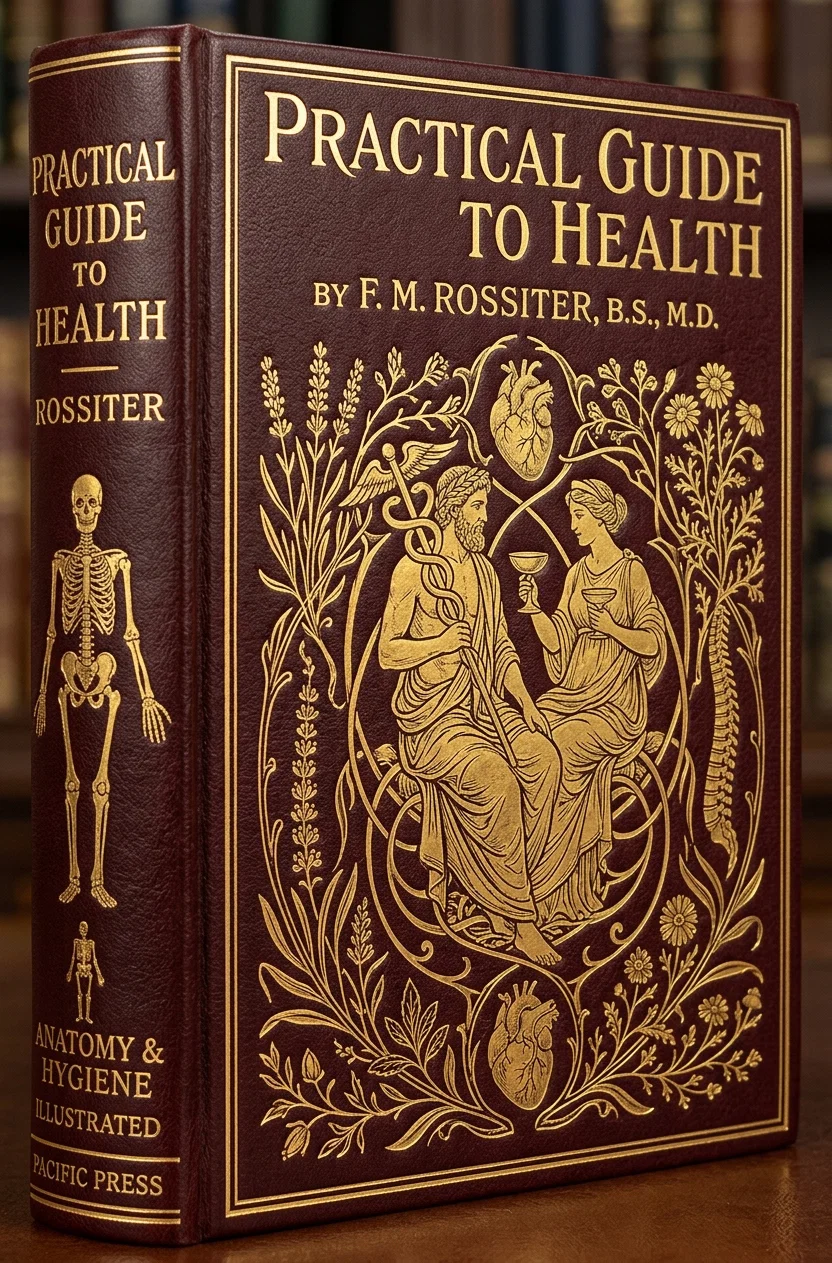
Practical Guide to Health, by F. M. Rossiter, B. S., M. D. The most complete and compact compendium of health information ever published. The peer of all home medical books; a complete guide in sickness and health; a masterly treatise on anatomy and hygiene, containing scientific description of disease, its cause and treatment. Gives plain instruction regarding the functions of the organs of the human body, and hygienic prescriptions for the care of disease without the use of medicine. Covers practically all diseases common to man. Contains 668 pages, 12 color plates, and nearly 100 other illustrations. Cloth ........................................ $3.00 Full morocco .................................. 5.00
Home and Health. A household manual, containing 2,000 recipes and practical suggestions on the building and care of the home, healthful living, home treatment of simple ailments, and the use of the natural simple remedies. Has hundreds of helpful hints and a complete classified index. Contains 600 pages, profusely illustrated and handsomely bound. Cloth ........................................ $3.00 Full morocco .................................. 5.00
The House We Live In, by Vesta J. Farnsworth. This book represents a mother talking to her children, freely discussing questions of health and physical development, “the house we live in” being the human body. It is a book especially valuable for home reading, and of great assistance to parents in teaching their children how to care for themselves physically. Contains 218 pages, and nearly 250 illustrations. Cloth ........................................ $1.00
Colds: Their Cause, Prevention, and Cure, by G. H. Heald, editor of Life and Health. This is a handsome brochure, understandingly written on a subject which is very commonly discussed but little understood,—a book which every one will read with interest. Bound in white leatherette, stamped in brown ink.. $.25
A Friend in the Kitchen, by Mrs. Anna L. Colcord. A practical vegetarian cook-book. This book is very popular nowadays, when so many people are endeavoring to learn to live practically without meat. This book makes a vegetarian diet wholesome and appetizing. Cloth ........................................ $.50 Waterproof paper ............................. .25
Health; How to Find It When It’s Lost; How to Keep It When It’s Found, by B. Franklin Richards. A book devoted to the discussion of practical every-day subjects, such as good foods, good combinations, stimulants, how to avoid consumption, care of the teeth, skin, the bath, home remedies, etc. Cloth ........................................ $1.00
Ministry of Healing, by Mrs. E. G. White. This book is dedicated to the medical missionary work under an agreement on the part of author and publishers that all profits be devoted to the aforesaid purpose. It is a remarkable work, and should be carefully read by every physician and nurse, as well as by every Christian worker. Cloth ........................................ $1.50

Ask Thyself

WORTHIE HARRIS HOLDEN
If to-night the angel bid thee Lay aside thy robe of care, With the girdle for thy toiling, What would be thy farewell prayer?
Shouldst thou leave the exit portal Of all worldly things to-night, Would the glittering earthly dazzle Linger on thy mortal sight?
Couldst thou know the bliss of heaven And the joy of trophies there, Wouldst thou ever leave the vineyard, Or neglect the hour of prayer?
O for visions of the Spirit, That our hearts may sense aright What our life is, while we tarry Through the vigils of our night!
For it may be thou shalt tarry, Or it may be thou shalt sleep, Till thy sheaves the angels garner When the Master comes to reap.
Portland, Ore.

The Faith That Will Stand the Test

MRS. E. G. WHITE
(Concluded)
If we look to self, and trust in self, we shall surely fall from our steadfastness. The terrible tempest that is gathering will sweep away our sandy foundation, and leave our house a wreck on the shores of time; but the house that is built upon the rocks will stand forever. We must be “kept by the power of God through faith unto salvation.” The apostle spoke some plain words to his Hebrew brethren, that meet the condition of many of those who profess the truth for this time. “We have many things to say, and hard to be uttered, seeing ye are dull of hearing. [They were not quick to discern the things of the Spirit of God.] For when for the time ye ought to be teachers, ye have need that one teach you again which be the first principles of the oracles of God; and are become such as have need of milk, and not of strong meat. For every one that useth milk is unskilful in the word of righteousness: for he is a babe. But strong meat belongeth to them that are of full age, even those who by reason of use have their senses exercised to discern both good and evil.” It is positively necessary for those who believe the truth to be making continual advancement, growing up unto the full stature of men and women in Christ Jesus. There is no time for backsliding and indifference. Each one must have a living experience in the things of God. Have root in yourselves. Become grounded in the faith, so that, having done all, you may stand with unwavering confidence in God through the time that will try every man’s work and character. Exercise your powers in spiritual things, till you can appreciate the deep things of God’s Word, and go on from strength to strength.
There are thousands who claim to have the light of truth who take no steps in advance. They have no living experience, notwithstanding they have had every advantage. They do not know what consecration means. Their devotions are formal and hollow, and there is no depth to their piety. The Word of God offers spiritual liberty and enlightenment to those who study it earnestly. Those who accept the promises of God, and act on them with living faith, will have the light of heaven in their lives. They will drink of the fountain of life, and lead others to the waters that have refreshed their own souls. We must have that faith in God that takes him at his word. We can have no victory without cloudless confidence; for “without faith it is impossible to please him.” It is faith that connects us with the power of heaven, and that brings us the strength for coping with the powers of darkness. “This is the victory that overcometh the world, even our faith.” “Faith cometh by hearing, and hearing by the word of God.” In order to exercise intelligent faith, we should study the Word of God. The Bible, and the Bible alone, communicates a correct knowledge of the character of God, and of his will concerning us. The duty and the destiny of man are defined in its pages. The conditions on which we may hope for eternal life are explicitly stated, and the doom of those who neglect so great salvation is foretold in the most forcible language.
Had the Bible been received as the voice of God to man, as the Book of books, as the one infallible rule of faith and practise, we should not have seen the law of Heaven made void, and the swelling tide of iniquity devouring our land.
As men wander away from the truth into skepticism, everything becomes uncertain and unreal. No thorough conviction takes hold of the soul. No faith is exercised in the Scripture as the revelation of God to man. There is nothing authoritative in its commands, nothing terrifying in its warnings, nothing inspiring in its promises. To the skeptic it is meaningless and contradictory.
There are many among us who are not cultivating faith. They have a vacillating experience. They are “like a wave of the sea driven with the wind and tossed.” Sometimes they seem strong in faith; then a blast of unbelief sweeps over them, and they are filled with gloom and doubt. They make no decided effort to recover themselves out of the snare of the devil, but are taken captive by him at his will. There are others, who, when assailed by temptations of unbelief, flee to the Word of God and to earnest prayer, and they are not left to the power of the enemy.
If men could realize the blighting influence of doubt upon their minds, if they could but see into the future, they would realize the imperative need of cultivating firm trust in God and implicit confidence in his promises. They would not sow one grain of unbelief; for every single grain blossoms and bears fruit. Satan is a living, active agent. It is his business to encourage skepticism. Every word of doubt is carefully nourished by the adversary of souls. While men sleep in indifference, suggestions that weaken faith are insinuated into the heart. Influences that confuse the perception of truth are brought to bear upon the life. In every way possible, Satan strives to turn souls from the narrow path that leads to heaven; and because men love darkness, they follow the voice of strangers, and reject the call of the Good Shepherd, who gave his life for the sheep. The plain, authoritative “Thus saith the Lord,” is refused for some winding sophistry of errors. Infidelity has increased in proportion as men have questioned the Word and requirements of their Maker. They have taken up the work of cheapening character, and lessening faith in the inspiration of theBible. Men claiming great wisdom have presumed to criticize and cut and cull the words of the living God, and have started questions to make shipwreck of the happiness of their fellow men and to ruin their hopes of heaven. This is a work that is pleasing to the enemy of all righteousness. The arguments that men bring against the Bible are the result of the counsels of the evil one. The door of their minds was opened to his suggestions; and the more they drifted into error, the greater grew their desire to draw other souls into the same channel of darkness.
Many claim to believe the Bible, and their names are enrolled on the church records, who are among the most influential agents of Satan. The work they are doing they will not consider an honor to them in the day of judgment. It will then be seen that every effort that weakened faith was made at a terrible loss. The tremendous price that must be paid will sink them into everlasting shame and ruin. The only safety is in rejecting instantly every suggestion of unbelief. Do not open your mind to entertain doubts, even for an instant; bid them a decided refusal as they come to you for admission. Fasten the mind upon the promises of God. Talk of them, rejoice in them; and the peace of God will rule in your hearts.
The fruits of doubt are not desirable. Look around you, and see what havoc has been wrought by the machinations of the evil one. Error and falsehood and heresy have held high carnival in the deceived hearts of men. From century to century the adversary has repeated his experiments with growing success; for in spite of the sad records of lives that have gone out in darkness, as moths flee to the fire, so men rush on into the ruinous deceptions that he has prepared to entrap them. If you desire salvation, I entreat you to shun his insinuations concerning the truth of God’s Word. Come to the “sure word of prophecy; whereunto ye do well that ye take heed, as unto a light that shineth in a dark place.” If that is not authoritative, what is it? If the word of the Lord of heaven and earth is not solid rock upon which to build, then it is in vain to look for sure foundations. “Heaven and earth shall pass away,” but “the word of the Lord endureth forever.” Unwavering faith in his word is the only faith that will endure through the perils of the last days.

The Need of the Hour

D. H. KRESS, M. D.
THERE never was a time when there existed a greater need for devoted and consecrated medical missionaries than the present. It has often been found difficult for missionaries to gain access to the people in foreign fields. The natives are suspicious of their movements. It seems to them that the missionary is there for the sole purpose of changing their religious views. But the medical missionary finds no trouble in entering fields which extend no welcome to the ordinary missionary. It is not difficult for him to convince the heathen that he seeks their good. He bears the divine credentials. As the natives witness the efforts put forth to relieve them of physical ills, they gain confidence in the missionary.
In the future, those sent forth by the church should be sent two and two, with the commission, “Into whatsoever city ye enter, . . . heal the sick that are therein, and say unto them, ‘The kingdom of God is come nigh unto you.’”
All who are sent forth should have a thorough knowledge of disease and its causes. They should be able to point out, and assist in the removal of, conditions which are responsible for disease. The missionaries need this knowledge for their own sakes, as well as for the sake of those whom they go to benefit and bless. Many a noble life has been sacrificed in the mission field, that might have been a benediction for many years. Others have ruined their health, and found it necessary to return after acquiring the language, at an immense cost to the cause.
Our sanitariums ought to do a grand work in the preparation of medical missionaries for foreign fields. It has appeared to me that, after finishing their course, it would be well for them to spend one year in connection with one of our city missions, doing active medical missionary work, under experienced trainers. No medical missionary is qualified to enter foreign fields without this training.
There are many who have in the past graduated from our sanitariums who have not had in mind the missionary idea. These should be encouraged to take a course at our Foreign Mission Seminary, where they can obtain the needed Bible training. There are excellent Bible workers who should be encouraged to attend the Seminary, to obtain the necessary medical knowledge and skill. In this school the aim is to combine these two branches of the gospel work. We believe that in the providence of God the Washington Sanitarium and the Foreign Mission Seminary have been planted together to grant to all an opportunity to go forth prepared to carry a complete gospel.
The world is waiting and longing for the manifestation of the sons of God. The last message of mercy is the practical revelation of God’s character of love, as revealed in the life of Christ. The medical missionary work is the gospel in practise.
The people came to Christ because they recognized in him a sympathetic friend and helper. This same spirit must be revealed in those who go forth doing the same work that he did. Jesus must again be recognized as the Friend of publicans and sinners before we can expect to see his wonder-working power revealed in the conversion of sinners, and in the healing of the sick.
Washington, D. C.

Tempted Like as We Are

L. A. HANSEN
“For there is one God, and one mediator between God and men, the man Christ Jesus.” 1 Tim. 2:5. Our high priest is a man, touched with the feeling of our infirmities, having been tempted in all points like as we are. The record of Christ’s life presents him as a human Lord, subject to the physical limitations of humanity.
The experience of Jesus in the things of human life covered such as are common to man. A suggestion of this is given, as we hear it asked by his townsmen, those who knew him best as among men, “Is not this the carpenter?” Mark 6:3. As one among them, learning a trade and pursuing it for many years, he was known as “the carpenter.” As a skilled workman, he may have been thus spoken of with designation as the carpenter, but in connection with his claim as Messiah, the term was used with disdain. What they despised to accept, we may receive with comforting assurance in a personal Saviour in the every-day things of life.
We need not speculate as we picture to ourselves something of what the life of Jesus must have been in that little mountain village. It was a place of bad repute,—a place in which the mob spirit showed itself among its best citizens, at a religious meeting, in an effort to kill one who had spoken to them only of good things. Here it was that Jesus spent nearly his entire life, as boy, youth, and man.
At the age of twelve Jesus knew that he must be about his Father’s business. That meant for eighteen long years a life far different from such as would usually be thought suitable to his great work. He came to do the Father’s will, and that meant that for the most of his life he would live under ordinary conditions, surroundings, and circumstances. This was not a matter of caprice or arbitrary design on the part of God for his Son, but a part of the great plan of love to give a lost world just such a Saviour as it needed. “For unto us a child is born, unto us a son is given.” “He gave his only begotten Son.” He is really ours, in the fullest sense.
The home of Jesus was a humble one; privation and denial were his lot. Day after day, week after week, year after year, there was for him a round of toil and homely duties. We have reason to believe that he was the sole support of his mother, and possibly other members of the family, near the close of his life. He knew what it meant to count on the product of his labor, and to figure on household expenses.
Whether at work in the carpenter shop or doing an outside job of work, going to and from his labors, associating with people here and there, Jesus was meeting experiences such as are common to all. Evil men and women allied with Satan to overthrow him on one point or another. His was a life in which there was room for just suchtemptations as come to us. He “was in all points tempted like as we are, yet without sin.”
“Jesus is our example. There are many who dwell with interest upon the period of his public ministry, while they pass unnoticed the teaching of his early years. But it is in his home life that he is the pattern for all children and youth. The Saviour condescended to poverty, that he might teach how closely we in a humble lot may walk with God. He lived to please, honor, and glorify his Father in the common things of life. His work began in consecrating the lowly trade of the craftsmen who toil for their daily bread. He was doing God’s service just as much when laboring at the carpenter’s bench as when working miracles for the multitude.”
“The parents of Jesus were poor, and dependent upon their daily toil. He was familiar with poverty, self-denial, and privation.”
“Jesus lived in a peasant’s home, and faithfully and cheerfully acted his part in bearing the burdens of the household. He had been the Commander of heaven, and angels had delighted to fulfil his word; now he was a willing servant, a loving, obedient son. He learned a trade, and with his own hands worked in the carpenter’s shop with Joseph. In the simple garb of a common laborer he walked the streets of the little town, going to, and returning from, his humble work. He did not employ his divine power to lessen his burdens or to lighten his toil.”
“He was not willing to be defective, even in the handling of tools. He was perfect as a workman, as he was perfect in character.”
“Jesus carried into his labor cheerfulness and tact. It requires much patience and spirituality to bring Bible religion into the home life and into the workshop, to bear the strain of worldly business, and yet keep the eye single to the glory of God. This is where Christ was a helper.”
“Jesus was placed where his character would be tested. It was necessary for him to be constantly on guard in order to preserve his purity. He was subject to all the conflicts which we have to meet, that he might be an example to us in childhood, youth, and manhood.” “No child of humanity will ever be called to live a holy life amid so fierce a conflict with temptation as was our Saviour.”—Quotations from “Desire of Ages,” chapter 7.
Takoma Park, D. C.

Our Denominational Papers

Writing for the Press—No. 8

Our Denominational Papers

W. S. CHAPMAN
Writing for our denominational publications is the highest type of press reporting. You may never have thought of it in that light, but a little consideration of the matter will make this plain.
I have shown that everything going into a worldly paper is a “story,” and that every “story” is “news.” Our publications are no exception. Secular papers treat almost exclusively of worldly matters, and are based, in a great degree, upon the wisdom of this world.
The publications of Sabbath-keepers treat almost exclusively of stories and news concerning a kingdom to come, and are based upon spiritual truths connected with the wisdom of God. In many instances their composition is controlled by the Spirit of God. The contributors to these papers are, practically, reporters, reporting the news concerning the kingdom, hence reporting the highest form of reportorial matter.
We look to the contributors to our denominational papers for the news, the latest news, from our Father’s kingdom. These publications are our only source of information. How eagerly we greet the coming of the REVIEW! How often the tired worker, discouraged perhaps, pauses at its receipt, sits down and scans its contents, then, with a smile of renewed courage on his face, lifts the weary burden again!
How cruel to disappoint such a one,—a seeker for bread,—and give him a stone! Yet many contributors do this very thing, not intentionally, but because they have never been taught how to write properly for the press.
All about these writers are items of most interesting news connected with their work,—precious evidences of the guardian care of God, it may be, over them and over the prosperity and advancement of his work. These gleams of light, that would thrill the hearts of the readers with delight and joy, often remain unconsidered, even unnoticed, simply because the writer’s mind has never been trained to recognize and appreciate news items.
The use of an unnecessary word ranks as a crime in newspaperdom. Every inch of space is precious, and guarded with jealous care. Thousands of interesting communications and costly telegraph despatches are thrown into the waste-baskets, daily, in the offices of the great daily newspapers, every one of which the editors would be glad to use, but there is not a single available inch of space left for their publication.
How small the space that the editors of our denominational publications have at their command in which to print the news concerning the kingdom of God! How difficult the task to decide what shall be published, and what held in abeyance or declined because of limited space!
If it is wrong to waste space in secular print, how careful our own writers should be to so rigidly condense their writings that not a superfluous word should appear! There are always articles, some of them of exceptional merit, that often wait many months for publication, but which could have appeared on time, had some of the published communications been properly condensed, thus making room for them.
We fail, too, to appreciate the place and power of our conference papers. They can be made missionary papers in a high degree if the members of the conferences will seek to train their minds as reporters, and will furnish these publications with items of peculiar and special interest and value, particularly in spiritual things, which come into their daily lives. If Sabbath-keepers will strive to gain proficiency in handling spiritual news, so that, for instance, they can discriminate between purely local items and those of general interest to the entire body of believers, sending the first named to their conference paper, and the latter to the REVIEW and the Signs, they will be doing a good work.
Proficiency will come through the experience gained in handling secular work. It will be more difficult to write acceptably for a conference paper than for one of the larger journals, because the smaller sheets can spare only lines of space where the larger publications can grant inches.
For the conference papers a communicated item should never exceed one hundred words, under any circumstances. It would still be better to confine it to fifty. This can be easily accomplished. Condense your article as far as you can. Condense your possible forty sentences into twenty, then ten, or even five.Afterward cull out every three-syllable word, or reduce to two syllables, and mail the item left to the editor. It will be sure to appear, if received in time; and you will, if you have a conscience educated to reporting, enjoy your work, when you see it in print, much more than if you allow the communication to go in as first written.
Business notices, reports, etc., which are necessarily vital parts of a conference paper, take up much room. Even these, however, can be condensed to half their usual length, and be more readable and more interesting because of such condensation. A conference paper is no place for the publication of sermonettes, or long-drawn-out appeals, or Bible readings.
Every paragraph in such a paper, even the business matter, should be a news item, bright, sparkling, and interesting, telling something, and telling it not only to Sabbath-keepers, but to all who may read it.
There will be no trouble in making this so if contributors and editors will follow the fundamental principles of press writing, jointly preparing the matter on correct lines, the editor dropping his sermonettes into the waste-basket, and returning to contributors for correction and condensation all communications exceeding a reasonable space limit, retaining for publication only those items that, combined, will make his paper desirable for public distribution.
We can not all preach, or give Bible readings, or canvass, or enter the field as nurses; but even the humblest among us can write an item, occasionally, for our papers, and write well, after a short experience with the local home newspaper. Begin on the first item coming to hand. Keep at it until you succeed.

Faithfulness in Duty

This truth comes to us more and more the longer we live,—that on what field, or in what uniform, or with what aims we do our duty, matters very little; or even what our duty is, great or small, splendid or obscure. Only to find our duty certainly, and somewhere, somehow, do it faithfully, makes us good, strong, happy, useful men, and tunes our lives into some feeble echo of the life of God.—Phillips Brooks.

Nearing Home

M. E. YERGIN
WE are nearing our home in the loveliest land On the shores of the song-filled day, Where angels and friends and the gem-strewn strand Through eternity reach away.
We are nearing the hour of our gathering home To the flower-lands where Jesus is King; Where the smiles of the Father in rainbows of light Make everywhere morning and spring.
We are nearing the shores where all language is love, Where the air wafts but gentle delight; Where the glorious verdure of heaven’s broad plains Blends into the flood-tides of light.
Rise up, O rise up, from the slumbers of earth! One day, and all sin-time is o’er! Join hands, earnest pilgrims,—one rush to the gates, And that triumph shall last evermore!
Chicago, Ill.

Prophecy

M. E. STEWARD
PROPHECY is a light that shines in a dark place. 2 Peter 1:19. Is there any place so dark as the future?
The nature of prophecy:—
1. Prophecy is foretelling future events by inspiration of God; it is also teaching. 1 Corinthians 14.
2. It is the best gift of the Holy Spirit. 1 Cor. 14:1.
3. It is sure. 2 Peter 1:16-18.
Prophecy is important:—
1. “Believe his prophets, so shall ye prosper.” 2 Chron. 20:20.
2. Jerusalem was destroyed because she knew not the time of her visitation. Luke 19:44.
3. “Surely the Lord God will do nothing, but he revealeth his secret unto his servants the prophets.” Amos 3:7. Prophecy belongs to us and to our children. Deut. 29:29.
Prophecy is designed for three things:—
1. “For the perfecting of the saints.”
2. “For the work of the ministry.”
3. “For the edifying of the body of Christ,” the church. Eph. 4:12.
Biblical record of the prophetic gift:—
1. “Holy prophets have been since the world began.” Luke 1:70.
2. In the former dispensation there were prophets all the way down the ages, to within four hundred years of the birth of Christ. At the time of his birth three persons prophesied,— Zacharias, Anna, and Simeon. The apostles had the gift of prophecy, and it has appeared in godly persons at intervals ever since their day.
3. It will continue “till we all come in the unity of the faith, and of the knowledge of the Son of God, unto a perfect man, unto the measure of the stature of Christ;” until “that which is in part shall be done away,” and “that which is perfect is come.” Eph. 4:13. 1 Cor. 13:10. This will be when our Lord comes. Just before the second coming of Christ, the gift of prophecy appears again. Mal. 4:5; Joel 2:28-31.
Prophecy exercised by women:—
1. Miriam, Huldah, and Deborah were among the Old Testament prophets.
2. It is recorded in the New Testament that Anna and the daughters of Philip prophesied. Luke 2:36; Acts 21:9.
3. “And it shall come to pass in the last days, saith God, I will pour out of my Spirit upon all flesh: and your sons and your daughters shall prophesy.”
“Despise not prophesyings.” 1 Thess. 5:20. The text does not say to despise not the prophecies uttered thousands of years ago. “Prophesyings” is an active, present-tense word, applying to the present time.
“Try the spirits whether they are of God: because many false prophets are gone out into the world” (1 John 4:1):—
1. “To the law and to the testimony” (Isa. 8:20); that is, compare them with the Old and the New Testament.
2. “Ye shall know them by their fruits.” Matt. 7:15, 16.
False prophets are:—
1. “Light and treacherous,” profaning the sanctuary, doing violence to the law of God. They are headstrong, despise God, and cause his people to err, while they strengthen the hands of the wicked. Zeph. 3:4; Jer. 23:9-40; Ezekiel 13.
2. They have supposed intercourse with the dead. The Bible says, “The dead know not anything.” Eccl. 9:5, 6.
3. They prophesy out of their own heart, having seen nothing. Eze. 13:3. “In the latter days ye shall consider [understand] it perfectly. I have not sent these prophets, yet they ran: I have not spoken to them, yet they prophesied.” Jer. 23:20, 21. False prophets are counterfeits; there is never a counterfeit without a genuine; hence the existence of false prophets proves that there are one or more true prophets.
False prophets in the last days:—
1. “The Spirit speaketh expressly, that in the latter times some shall depart from the faith [Scriptural truth], giving heed to seducing spirits, and doctrines of devils.” 1 Tim. 4:1.
2. Our Saviour’s great prophecy predicted false christs and false prophets. “There shall arise false christs, and false prophets, and shall show great signs and wonders.” “Wherefore if they shall say unto you, Behold, he is in the desert; go not forth: behold, he is in the secret chambers; believe it not.” Matt. 24:24, 26.
Sanitarium, Cal.
Continue reading: Instant Healing in Answer to Prayer