Your ShelfYour Projects

Signs of the Times, Vol. 42, No. 4.

WILL IT BE PEACE OR WAR?

Signs of the Times

Jan 26, 1915

Pacific Press Publishing Association · Mountain View, California · Jan 26, 1915

WILL IT BE PEACE OR WAR?

WHAT MANY PEOPLE ARE SAYING—GOD SAID THEY WOULD SAY IT—INFLUENTIAL MEN CALLING FOR MORE ARMAMENTS—HOW WILL IT END?
By Irwin H. Evans
THE PALACE OF PEACE AT THE HAGUE
Erected through the gift of $1,750,000 by Andrew Carnegie
THE PALACE OF PEACE AT THE HAGUE Erected through the gift of $1,750,000 by Andrew Carnegie
The last few years have been marked by agitation for peace, not by the ministry alone, but by statesmen and nations. A few years ago, Mr. Carnegie gave $1,750,000 for the erection of a peace palace, to be located at The Hague. This was to be a building where promoters of peace could meet, carry on their international work, and create public sentiment in favor of the arbitration of differences between nations.

International Courts and the End of War

Of late years, many pulpits have been occupied by men who have taught that peace would reign upon the earth, and that henceforth there would never be war. Some have thought the human race had developed so far intellectually, and had attained such a high standard of morality, that men would not resort to arms to settle their differences, but would meet on common ground, and refer all misunderstandings that could not otherwise be adjusted, to arbitrators, who would decide each case, and render their findings, somewhat as does a court of justice. Others have gone farther, and asked for an international court, whose decisions would be final and compulsory upon the nations, by international treaties and public sentiment. These courts would resemble in power the Supreme Court of our own country, or the highest court of other nations.
Only a few weeks ago, the secretary of state, Mr. Bryan, had the blades of some old army swords converted into paper weights, in the form of plowshares, to be presented to the ambassadors or ministers of the twenty-nine powers signatory to peace commission treaties with the United States. It is supposed that he did this in fulfillment of Scripture as he understood it.

Is It a Prophecy of Peace?

At this time, many are quoting the prophecy found in the second chapter of Isaiah, which reads: “The word that Isaiah the son of Amoz saw concerning Judah and Jerusalem. And it shall come to pass in the last days, that the mountain of the Lord’s house shall be established in the top of the mountains, and shall be exalted above the hills; and all nations shall flow unto it. And many people shall go and say, Come ye, and let us go up to the mountain of the Lord, to the house of the God of Jacob; and He will teach us of His ways, and we will walk in His paths: for out of Zion shall go forth the law, and the word of the Lord from Jerusalem. And He shall judge among the nations, and shall rebuke many people: and they shall beat their swords into plowshares, and their spears into pruning hooks: nation shall not lift up sword against nation, neither shall they learn war any more.”

The People Say One Thing—God Says the Opposite

This prophecy has led many to believe that the time is to come when the nations shall learn war no more, and when the people of the earth shall beat their swords into plowshares, and their spears into pruning hooks. But the scripture does not read that way. Verse three introduces the party that gives utterance to what follows: “And many people shall go and say.”
There is a vast difference between the “people” saying and the Lord saying. What God says, must be, and can never fail. But what the people say, may be true or false, according to conditions. In this prophecy, it is not the Lord who is saying that the people will “beat their swords into plowshares, and their spears into pruning hooks: nation shall not lift up sword against nation, neither shall they learn war any more.” It is the people who make this assertion.
God’s declaration on this subject is couched in different language. Here is His proclamation concerning the very time when “many people” talk peace and safety: “Proclaim ye this
(Continued on page 9)
among the Gentiles; Prepare war, wake up the mighty men, let all the men of war draw near; let them come up: beat your plowshares into swords, and your pruning hooks into spears; let the weak say, I am strong. Assemble yourselves, and come, all ye heathen, and gather yourselves together round about: thither cause Thy mighty ones to come down, O Lord. Let the heathen be wakened, and come up to the valley of Jehoshaphat; for there will I sit to judge all the heathen round about. Put ye in the sickle, for the harvest is ripe; come, get you down; for the press is full, the fats overflow; for their wickedness is great.” Joel 3:9-13.
This proclamation is in direct opposition to what the people are saying, as recorded in the second chapter of Isaiah. The time foretold by these prophecies seems to be the same. The prophecy in Isaiah says, “It shall come to pass in the last days.” The prophecy in Joel refers to the time when the harvest is ripe, and God is settling with the nations.

One Predicts Peace—The Other War

These prophecies are directly opposite the one from the other. One proclaims peace, and says that the nations are to learn war no more. The other is a call to battle. The people announce that they will beat their swords into plowshares, and their spears into pruning hooks. The Lord says they are to beat their plowshares into swords, and their pruning hooks into spears.
When we think of the present war in Europe, with all its horrors, the multitudes involved, and the awful waste in money and in what is far more precious than money,—human lives, the very strength and flower of the nations,—we can not but conclude that the peace and safety cry of the people is a delusion, and that war and strife will continue to the end.
While the people are teaching peace, and proclaiming and declaring that there will never be another war after this one, the nations are equipping themselves as rapidly as possible with the latest implements for effectively destroying life. At the present time, the papers are full of orders for every kind of weapon. Five hundred thousand swords, millions of dollars worth of guns, cannon, submarines, and air craft have been ordered by the warring nations. Even in our own land, where peace reigns, there is a widely agitated and rapidly growing public sentiment demanding a more thorough equipment for war.

Calling Our Nation to Prepare for War

In an editorial appearing in the Washington Post of December 2, under the caption, “The United States Must Get Ready to Protect Itself and This Hemisphere,” we read the following:
“After the great European nations have fought to a standstill, what will be the terms of peace?”
“How will the nations recoup themselves for their losses?”
“What innocent nations will be robbed of their territory to restore the balance of power?”
“In what direction will the victors turn for spoils, with their millions of armed men tugging like bloodhounds at the leash?”
“Will any strong nation, beaten but not destroyed, refrain from pouncing upon a weaker nation if it sees a chance to patch up its broken fortunes?”
“Modern history is full of instances in which nations unable to defend their interests have been despoiled. These examples are huge warnings to the United States. They can not be ignored if the United States would make itself safe against aggression.”
“If the German empire is not wrecked by the present war, it will be due to its preparedness for defense.”
“Great Britain has not been robbed of any territory. Germany has not been despoiled. Russia is intact. Is it not because they have always been prepared to defend their possessions?”
“The richest, most productive portion of the earth is the United States. Theoretically it is defended by 100,000,000 people. Actually its defenses are inadequate where they are not obsolete. It has outlying possessions which would be of great value to a European power.”
“The integrity of the western hemisphere depends upon the right arm of the United States. South America could be had for the taking if it were not for the United States.”
“The Panama Canal would be a rich prize for any of the maritime powers of Europe.”
“Mexico, crammed with natural wealth, without an organized government, would fall like a ripe plum into the maw of Europe if it were not for the United States.”
“At the conclusion of the present war in Europe there will be armies of millions of men in the field. The defeated nations will cast about for opportunities to recoup themselves for their losses. They will have big armies with which to take what they can get. Human nature has not changed, and history repeats itself—”
“That they should take who have the power, And they should keep who can.”
“Do the people of the United States repose in the serene confidence that the mere wish of this country will deter armed and desperate nations from taking portions of the western hemisphere? . . .”
“Great Britain, beaten by Germany but with her fleet intact, might turn covetous eyes upon North and South America.”
“Japan, with her war spirit aflame, and assured of cooperation by Great Britain, might look longingly across the Pacific.”
“Either of these nations possesses a fleet which could easily break through the American navy and take possession of New York, Boston, Charleston, San Francisco, and Seattle. They would find no opposition from an American army, because there is no American army. Their fleets would not be injured by American fortifications, because American guns are vastly outclassed.”
“Every coast and seaport fortification in the United States could be demolished by foreign warships standing entirely out of the range of American guns.”
“By crippling the United States navy, either Great Britain or Japan could take any portion of South America it desired, without asking leave of this country.”
“Even France had to be kept out of the western hemisphere by Abraham Lincoln, backed by 50,000 veterans commanded by Gen. Phil Sheridan. Where is the American army of veterans that could keep France out of Mexico now?”
“Diplomatic warnings and pointed hints did not prevent France from placing an Austrian prince upon a throne in Mexico. But when an American army was sent to the Rio Grande, France withdrew.”
“In the world upheaval that will follow the present war, in the clash of interests and the struggle for survival, with enormous armies waiting for the signal, and fleets ready to transport them to the unprotected shores of North and South America, what power will bid them stand back and keep hands off? What mighty nation will rush to the defense of the United States, if it does not defend itself? What European nation will defend the Monroe doctrine and uphold the republican system of government in these continents?”
“At the close of the war, the world will see great nations armed to the teeth, baffled and beaten, desperate, facing bankruptcy, organized for war, and accustomed to slaughter. These desperate nations will look across the ocean, and see vast regions full of riches, lying unprotected and seemingly waiting to be seized. Will friendship for the United States deter them from reaching out and recouping themselves? Or will they respect only the strength of a nation stronger than themselves, and ready to fight to protect its interests?”
“If any warning was ever written in flaming letters of fire and war, it is the warning to the United States to get ready to protect itself and the western hemisphere.”
Many other leading papers are voicing the same thoughts. Representative Gardner and Senator Lodge are leading in a publicity campaign favoring a greater preparedness for war.

Beware of Peace Delusions

Does this read like peace? Do these utterances indicate that the nations are planning that there shall be no more war? With Mexico in the throes of revolution; Hayti torn and rent by internal feuds; the Latin republics continually shifting for vantage, and almost annually paralyzed by wars,—does the future look promising for peace? Japan, having entered the fight with the European allies, greatly alarms the far East; Turkey, the bone of contention in eastern Europe for two generations, is already in arms; the carefully censored foreign news would lead us to believe that all the Balkan States will soon be in the scramble; and the most farsighted statesmen predict great national changes before the present war shall cease.
Why, then, be deluded by the false teachings of “many people,” and not heed the word of God? Christ says there shall be “wars and rumors of wars”; and John the revelator, in giving his vision of the very last days of the human family, said, “The nations were angry, and Thy wrath is come.” We must not expect peace—lasting, permanent peace; for we are living in the time when the nations are angry.
There is peace to come to this earth, but not until Jesus Christ comes the second time and takes to Himself both the kingdom and dominion under the whole heaven. Then the King of peace shall reign. Then the nations of earth will learn war no more. But until then, the world will be preparing for the last great battle—Armageddon.

IMPERFECT FAITH AND THE LAW OF FAITH’S DEVELOPMENT

The Source of Faith — Its Development in Abraham — God’s Recognition of Undeveloped Faith — The Small Seed of Living Faith Will Grow
By RODERICK S. OWEN
This is the first of several articles by Elder Owen on the experiences of Abraham that developed his faith. Each article presents some phase of the trials and struggles of the “father of the faithful,” and will be well worth reading, whether you can have the entire series or not. Elder Owen is one of our most experienced and best known Bible teachers. What he has given us is from the viewpoint of many years of successful service. Editor.
“Abraham believed God, and it was counted unto him for righteousness.”
“Whatsoever is not of faith is sin.” Rom. 4:3; 14:23.
Faith is the gift of God. It is one of the gifts of the Spirit. These gifts are bestowed upon man to be used to the glory of the Giver. God will bestow them to the extent that the recipient will thus use them. The law of healthful growth is the law of proper exercise.
The apostle Paul said to the believers in Thessalonica, “We are bound to thank God always for you, brethren, . . . because that your faith groweth exceedingly.” The severe persecutions and trials through which that church was passing, brought their faith constantly into exercise; hence its growth. “My brethren, count it all joy when ye fall into divers temptations; knowing this, that the trying of your faith worketh patience. But let patience have her perfect work, that ye may be perfect and entire, wanting nothing.” James 1:2-4.

PERPLEXED AND TESTED

God made Abraham a promise that in his seed should all the families of the earth be blessed. The fulfilment of this promise had been delayed. Abraham had no child; and in the natural course of events, he could hope for none. He had just about settled down to the idea that a faithful servant born in his own house must be the promised heir.
His faith in God, stimulated by his sympathy for the captives, had recently enabled him to defeat a triumphant army laden with spoils, whose invasion the combined force of five kings had not been able to check. But well he knew that his victory would arouse a desire for revenge on the part of those mighty northern nations which the defeated army represented, and that there might come at any time, sweeping down from the populous centers about his old home, an army to overspread the land, like the rushing of the waters of a mighty river. The future seemed dark, and shadows foreboding evil swept over his soul. In the midst of his perplexity, God spoke to him in a vision of the night, saying, “Fear not, Abram; I am thy shield, and thy exceeding great reward.” Gen. 15:1.

BROUGHT HIS PERPLEXITY TO GOD

Then Abraham appealed to God, reminding Him once more of His promise, saying: “Lord God, what wilt Thou give me, seeing I go childless, and the steward of my house is this Eliezer of Damascus? . . . To me Thou hast given no seed: and, lo, one born in my house is mine heir.” God then assured him that this was not to be the case, but that He would give him a son, the child of promise. Then, leading him out upon the plains of Mamre, He invited him to look toward the sparkling, star-bestudded sky, saying, “Tell the stars, if thou be able to number them: . . . so shall thy seed be.” And Abraham believed in the Lord, and God counted it to him for righteousness.

EXCHANGING THE CONFIDENCE IN SELF

One of the most important steps in the development of perfect faith, is to exchange the confidence we have in self, for confidence in the Lord. Abraham believed in the Lord; and just to the extent that we recognize our own weakness and inability, just to that extent can God’s strength be made perfect in our weakness. Just as God permitted the mind of Abraham to think of the vast army that could be raised in the densely populated center from which all nations sprang, thus leading him to sense his own weakness, so God permits us at times to experience the force of the enemy, in order that we may realize our inability to cope with the powers of darkness, and thus be led to hide ourselves in Him, that our weakness may be entirely covered from the enemy in the strength of our defense.
Although Abraham believed in the Lord, his faith was not perfect; for he immediately asked God to give some sign, additional evidence, by which he might know that the promise would be fulfilled. Perfect faith never asks for added proof.— Yet, Abraham’s faith in that embryo state, imperfect as it was, God accepted, and accounted him righteous. So God deals with all sinners whose faith reaches out toward Him; justifying them freely by His grace, before they have faith enough in Him to overcome their own weaknesses by His power. And this He does because He knows that our faith in Him can not go beyond our knowledge of Him.

MUST HAVE TESTING EXPERIENCES

Hence He must allow us to have experiences which will increase our knowledge of Him, in order that our faith may grow in Him. Thus God accepted the faith of Israel in Egypt before they knew that He could divide the Red Sea; before they knew that He could sweeten the bitter waters; before they knew that He could spread a table for them in the wilderness, giving them manna from heaven, and bringing water from the rock.
Thus God accepted Rahab’s faith when she knew so little about God that she thought it was necessary for her to lie in order to preserve the lives of God’s servants. Thus He accepts us, and throws over us the mantle of His righteousness, to hide all our deformity; and this expression of His love toward us becomes a revelation of His character to us, which furnishes a firm foundation for the future growth of our faith in Him. O, how His love, coming to us in copious showers of grace, waters our faith, and causes it to spring up like willows by the watercourses!

THE LIVING GRAIN OF FAITH

Yes, Abraham had faith in God. “If ye have faith as a grain of mustard seed”—living grain; not a grain of sand, lifeless grain. Abraham’s faith may have been as small as a mustard seed; but it had life in it, and life must find expression in exercise, and exercise results in growth. So his faith was expressed in works of faith. But works of faith in God are works of obedience to God; for to do as God says, is the strongest possible expression of faith in Him.

STRONGEST EXPRESSION OF DISTRUST

On the other hand, to refuse to do as He bids us, is the strongest possible expression of distrust in Him; but any act of compliance with God’s requirements which is not an expression of our confidence in Him, is not true obedience, because in such cases we are prompted to act by some other motive. Perhaps it is because we see that this is best for us, and we would not do it if we were not so convinced. If that be the case, then we are not obeying God, but are obeying the dictates of our own judgment, and are idolaters, for we are exalting our judgment above God. The apostle says, “Whatsoever is not of faith is sin;” because every act which has in it no expression of confidence in God, has in it a vein of idolatry.
Many an act which in the eyes of the world is called benevolent, is idolatrous; for the chief desire of the one doing it, is to get a good name or to advance his selfish interests. But every act of obedience to God’s requirements which we are moved to do because we have confidence in Him; is an act of faith; and such works performed, give faith exercise; and this exercise causes faith to grow; and this growth continued, will develop perfection; for “faith worketh patience.” “But let patience have her perfect work, that ye may be perfect and entire, wanting nothing.” James 1:3, 4.

The Keys of the Kingdom

JESUS did not propose to give to Peter that which would constitute him, instead of Christ, the head of the church. All men are under bondage to the power of evil. The gospel is the proclamation of deliverance. “Ye shall know the truth, and the truth shall make you free.” John 8:32. Therefore gospel truth is the key to the kingdom.
Peter, with the other apostles, was commissioned to preach the gospel, thus proclaiming liberty. Some would accept the offer of salvation, and be translated into the kingdom of God’s dear Son. Others would reject it, and continue in bondage. So in fact, whatsoever they should bind on earth would be bound in heaven, and whatsoever they should loose on earth would be loosed in heaven. In other words, those who are loosed from the bondage of sin on earth by accepting the truth are loosed forever in heaven; and those who choose to continue in bondage on earth will be bound eternally.
ALLEN MOON.

Established in the Truth

“It is those who, with love for God and their fellow men, are striving to help others, that become established, strengthened, settled, in the truth.”

SOWING THE SEEDS OF TRUTH

The Rabbis Expected a Conquering General — They Looked for One Who with Fire and Sword Would Give Them a Kingdom — The Master Came as the Great Seed Sower to Spread the Principles of Peace and Good Will
By MRS. E. G. WHITE
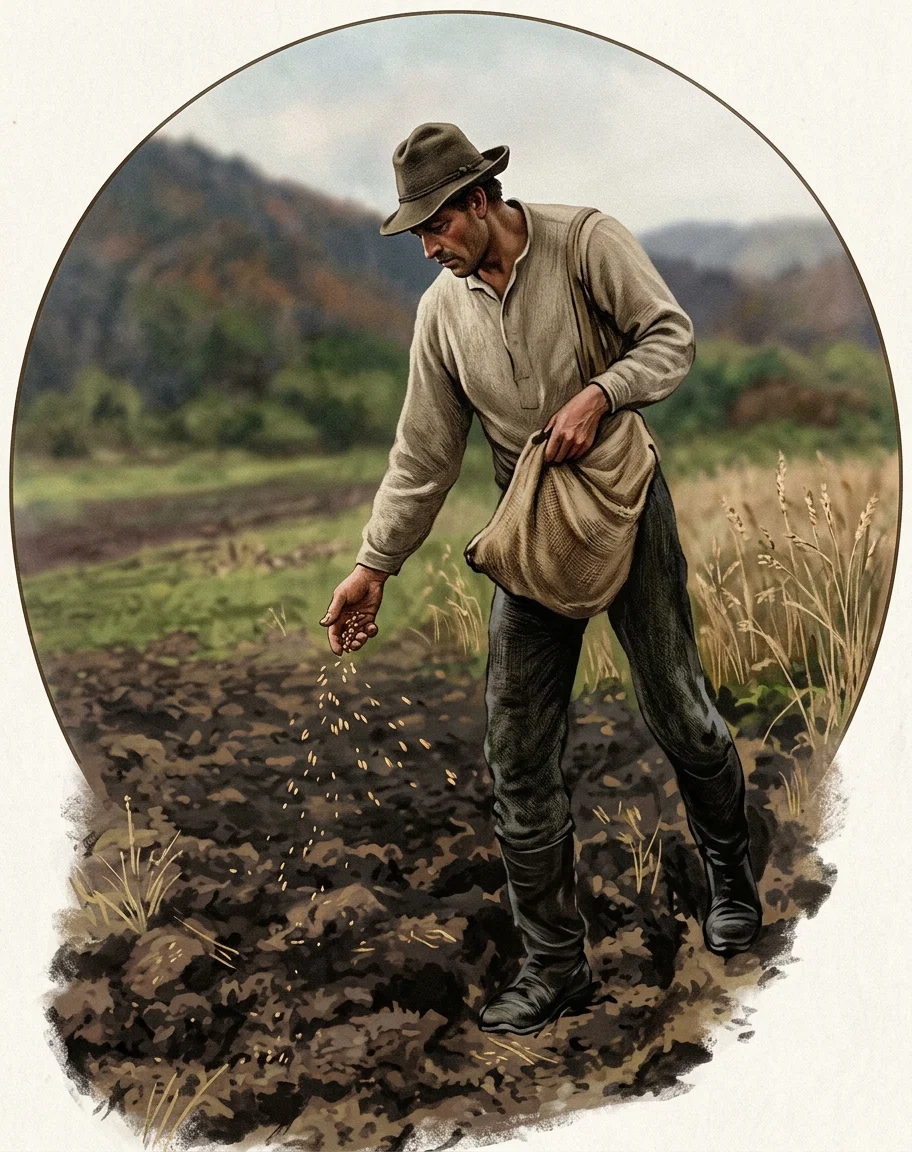
In the parable of the sower, Christ illustrates the things of the kingdom of heaven, and the work of the great Husbandman for His people. Like a sower in the field, He came to scatter the heavenly grain of truth. And His parable teaching itself was the seed with which the most precious truths of His grace were sown.
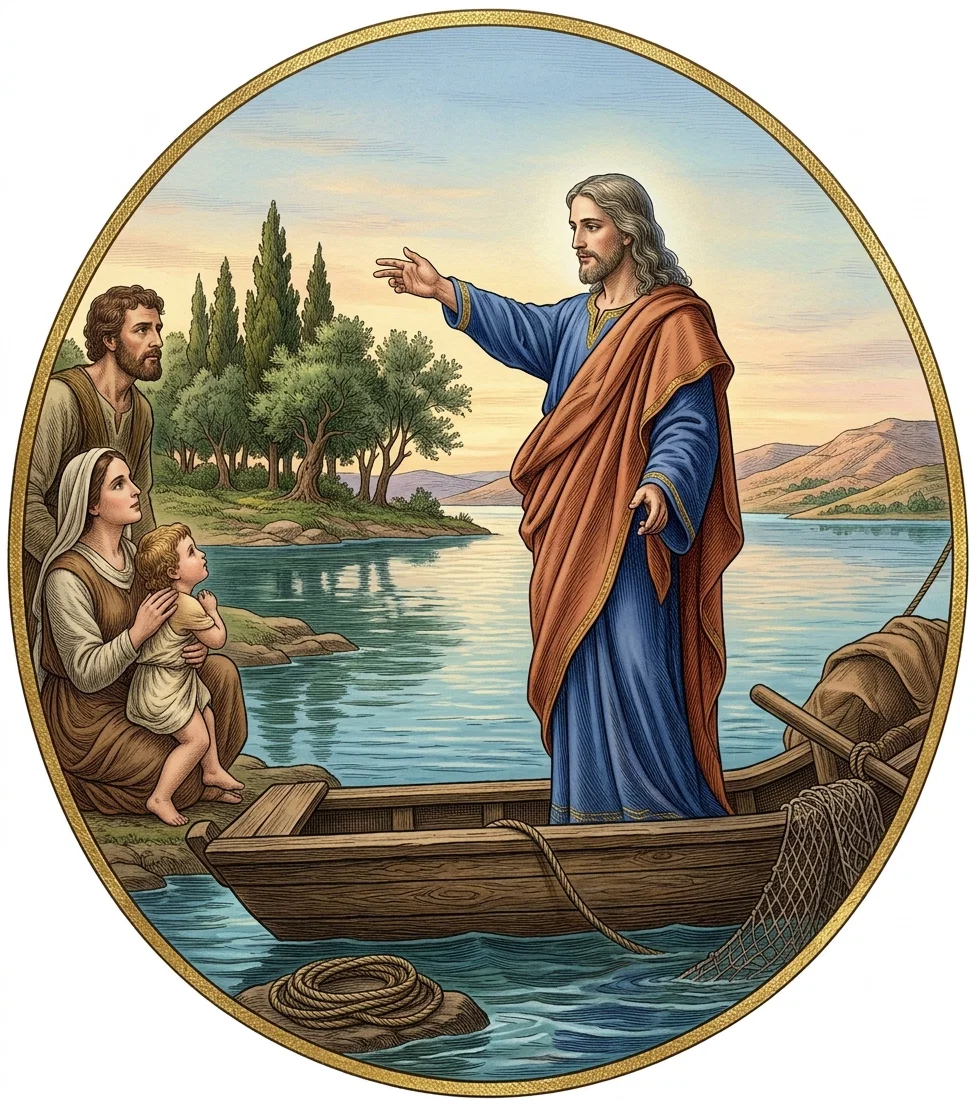
By the Sea of Galilee a company had gathered to see and hear Jesus,—an eager, expectant throng.

The Sower and the Lesson

Beside the sea lay the beautiful plain of Gennesaret, beyond rose the hills, and upon hillside and plain both sowers and reapers were busy, the one casting seed, and the other harvesting the early grain. Looking upon the scene, Christ said:
“Behold, the sower went forth to sow; and as he sowed, some seeds fell by the wayside, and the birds came and devoured them.” “Some fell upon stony places, where they had not much earth; and forthwith they sprung up, because they had no deepness of earth; and when the sun was up, they were scorched; and because they had no root, they withered away. And some fell among thorns; and the thorns sprung up, and choked them; but other fell into good ground, and brought forth fruit, some an hundredfold, some sixty-fold, some thirtyfold.”

Not by the Force of Arms

Christ’s mission was not understood by the people of His time. The manner of His coming was not in accordance with their expectations. They expected the Messiah to prove His claims by mighty deeds of conquest, to establish His empire on the ruins of earthly kingdoms. This expectation Christ answered in the parable of the sower. Not by force of arms, not by violent interpositions, was the kingdom of God to prevail, but by the implanting of a new principle in the hearts of men.
“He that soweth the good seed is the Son of man.” Christ had come, not as a king, but as a sower; not for the overthrow of kingdoms, but for the scattering of seed; not to point His followers to earthly triumphs and national greatness, but to a harvest to be gathered after patient toil, and through losses and disappointments.
The Pharisees perceived the meaning of Christ’s parable, but to them its lesson was unwelcome. They affected not to understand it. To the multitude, it involved in still greater mystery the purpose of the new Teacher, whose words had so strangely moved their hearts, and so bitterly disappointed their ambitions. The disciples themselves had not understood the parable, but their interest was awakened. They came to Jesus privately, and asked for an explanation.

Would Give More Definite Instruction

This was the desire which Christ wished to arouse, that He might give them more definite instruction. He explained the parable to them, as He will make plain His word to all who seek Him in sincerity of heart. All who come to Christ for a clearer knowledge of the truth, will receive it. He will unfold to them the mysteries of the kingdom of heaven, and these mysteries will be understood by the heart that longs to know the truth.
“The sower went forth to sow.” In the East, the state of affairs was so unsettled, and there was so great danger from violence, that the people dwelt chiefly in walled towns, and the husbandmen went forth daily to their labor outside the walls. So Christ, the heavenly Sower, went forth to sow. He left His home of security and peace, left the glory that He had with the Father before the world was, left His position upon the throne of the universe. He went forth, a suffering, tempted man; went forth in solitude, to sow in tears, to water with His blood, the seed of life for a world lost.

How His Servants Must Go

His servants in like manner must go forth to sow. When called to become a sower of the seed of truth, Abraham was bidden, “Get thee out of thy country, and from thy kindred, and from thy father’s house, unto a land that I will show thee.” “And he went out, not knowing whither he went.” So to the apostle Paul, praying in the temple at Jerusalem, came the message from God, “Depart: for I will send thee far hence unto the Gentiles.” So those who are called to unite with Christ must leave all, in order to follow Him. Old associations must be broken up, plans of life relinquished, earthly hopes surrendered. In toil and tears, in solitude, and through sacrifice, must the seed be sown.
That with which the parable of the sower chiefly deals is the effect produced on the growth of the seed by the soil into which it is cast. Explaining the seed that fell by the wayside, Christ said: “When any one heareth the word of the kingdom, and understandeth it not, then cometh the wicked one, and catcheth away that which was sown in his heart. This is he which received seed by the wayside.”

The Inattentive Hearer

The seed sowed by the wayside represents the word of God as it falls upon the heart of an inattentive hearer. Like the hard-beaten path, trodden down by the feet of men and beasts, is the heart that becomes a highway for the world’s traffic, its pleasures and sins. Absorbed in selfish aims and sinful indulgences, the soul is “hardened through the deceitfulness of sin.” The spiritual faculties are paralyzed. Men hear the word, but understand it not. They do not discern that it applies to themselves. They do not realize their need or their danger. They do not perceive the love of Christ, and they pass by the message of His grace as something that does not concern them.
As the birds are ready to catch up the seed from the wayside, so Satan is ready to catch away the seeds of divine truth from the soul. He fears that the word of God may awaken the careless, and take effect upon the hardened heart. Satan and his angels are in the assemblies where the gospel is preached. While angels of heaven endeavor to impress hearts with the word of God, the enemy is on the alert to make the Word of no effect.
Satan has many helpers. Many who profess to be Christians are aiding the tempter to catch away the seeds of truth from other hearts. Many who listen to the preaching of the word of God make it the subject of criticism at home. They sit in judgment on the sermon as they would on the words of a lecturer or a political speaker. The message that should be regarded as the word of the Lord to them is dwelt upon with trifling or sarcastic comment. The minister’s character, motives, and actions, and the conduct of fellow members of the church, are freely discussed. Severe judgment is pronounced, gossip or slander repeated, and this in the hearing of the unconverted. Often these things are spoken by parents in the hearing of their own children.
Thus are destroyed respect for God’s messengers, and reverence for their message. And many are taught to regard lightly God’s word itself.
Thus in the homes of professed Christians many youth are educated to be infidels. And the parents question why their children are so little interested in the gospel, and so ready to doubt the truth of the Bible. They wonder that it is so difficult to reach them with moral and religious influences. They do not see that their own example has hardened the hearts of their children. Thus the good seed finds no place to take root, and Satan catches it away.
The seed sown upon stony ground finds little depth of soil. The plant springs up quickly, but the root can not penetrate the rock to find nutriment to sustain its growth, and it soon perishes. It is not because men receive the word immediately, nor because they rejoice in it, that they fall away. As soon as Matthew heard the Saviour’s call, immediately he rose up, left all, and followed Him. As soon as the divine Word comes to our hearts, God desires us to receive it; and it is right to accept it with joy. “Joy shall be in heaven over one sinner that repenteth.” And there is joy in the soul that believes on Christ. But those who in the parable are said to receive the word immediately, do not count the cost. They do not consider whatthe word of God requires of them. They do not bring it face to face with all their habits of life, and yield themselves fully to its control.

Strengthens One, Destroys the Other

The hot summer sun, that strengthens and ripens the hardy grain, destroys that which has no depth of root. So he who “hath not root in himself,” “dureth for a while”; but “when tribulation or persecution ariseth because of the Word, by and by he is offended.” Many receive the gospel as a way of escape from suffering, rather than as a deliverance from sin. They rejoice for a season, for they think that religion will free them from difficulty and trial. While life moves smoothly with them, they may appear to be consistent Christians. But they faint beneath the fiery test of temptation. They can not bear reproach for Christ’s sake. When the word of God points out some cherished sin, or requires self-denial or sacrifice, they are offended. It would cost them too much effort to make a radical change in their life. They look at the present inconvenience and trial, and forget the eternal realities. Like the disciples who left Jesus, they are ready to say, “This is an hard saying; who can hear it?”

Would Follow Mere Inclination

There are very many who claim to serve God, but who have no experimental knowledge of Him. Their desire to do His will is based upon their own inclination, not upon the deep conviction of the Holy Spirit. Their conduct is not brought into harmony with the law of God. They profess to accept Christ as their Saviour, but they do not believe that He will give them power to overcome their sins. They have not a personal relation with a living Saviour; and their characters reveal defects both hereditary and cultivated.
True holiness is wholeness in the service of God. This is the condition of true Christian living. Christ asks for an unreserved consecration, for undivided service. He demands the heart, the mind, the soul, the strength. Self is not to be cherished. He who lives to himself is not a Christian.

The True Principle of Action

Love must be the principle of action. Love is the underlying principle of God’s government in heaven and earth, and it must be the foundation of the Christian’s character. This alone can make and keep him steadfast. This alone can enable him to withstand trial and temptation.
If we love Jesus, we shall love to live for Him, to present our thank offerings to Him, to labor for Him. For His sake we shall covet pain and toil and sacrifice. We shall sympathize with His longing for the salvation of men. We shall feel the same tender craving for souls that He has felt.
This is the religion of Christ. Anything short of it is a deception. No mere theory of truth or profession of discipleship will save any soul. We do not belong to Christ unless we are His wholly. It is by half-heartedness in the Christian life that men become feeble in purpose and changeable in desire. The effort to serve both self and Christ makes one a stony-ground hearer, and he will not endure when the test comes upon him.
Continue reading: Supreme Tests of the Power of Christ