Signs of the Times, Vol. 40, No. 30.

Resting in Faith

Signs of the Times

Aug 5, 1913

Pacific Press Publishing Association · Mountain View, California · Aug 5, 1913

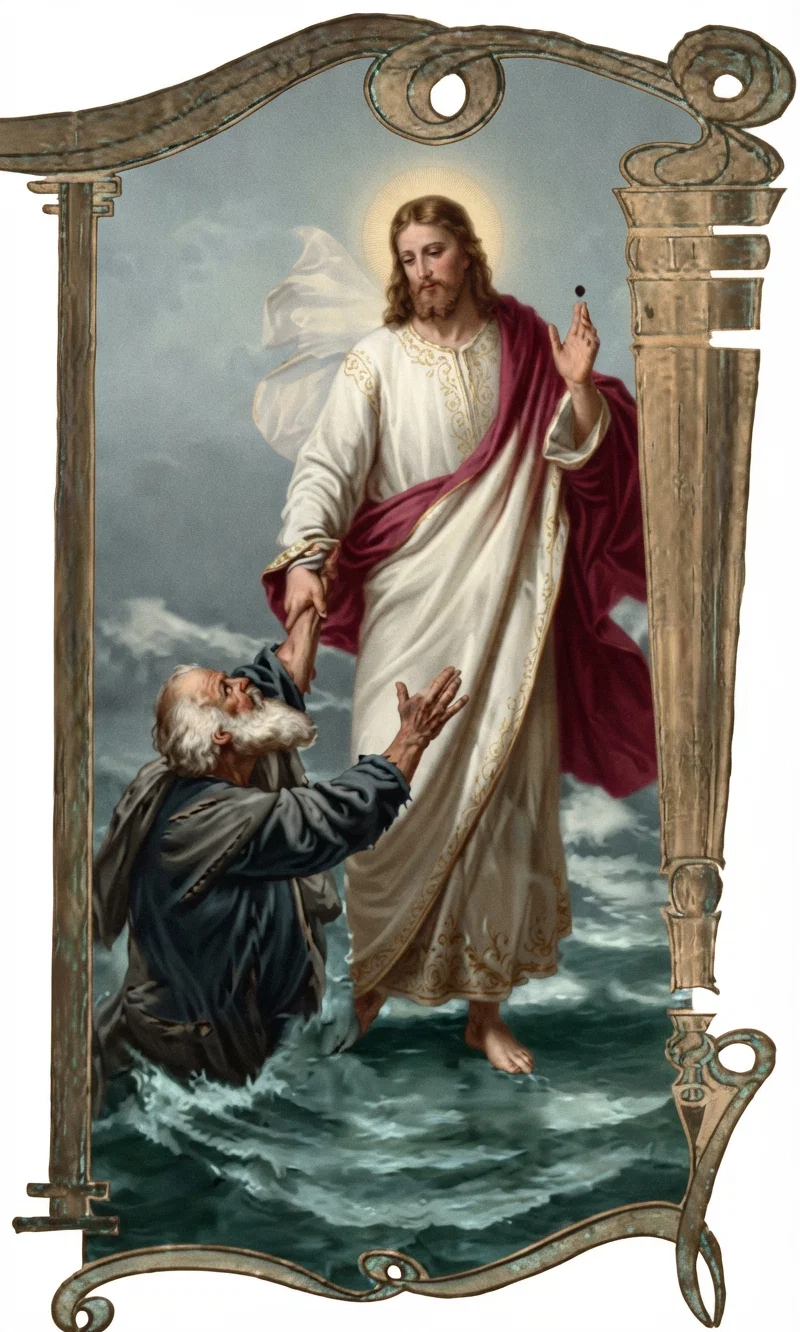
Resting in Faith
By Mrs. E. G. White
CHRIST THE CONSOLER AND COMFORTER
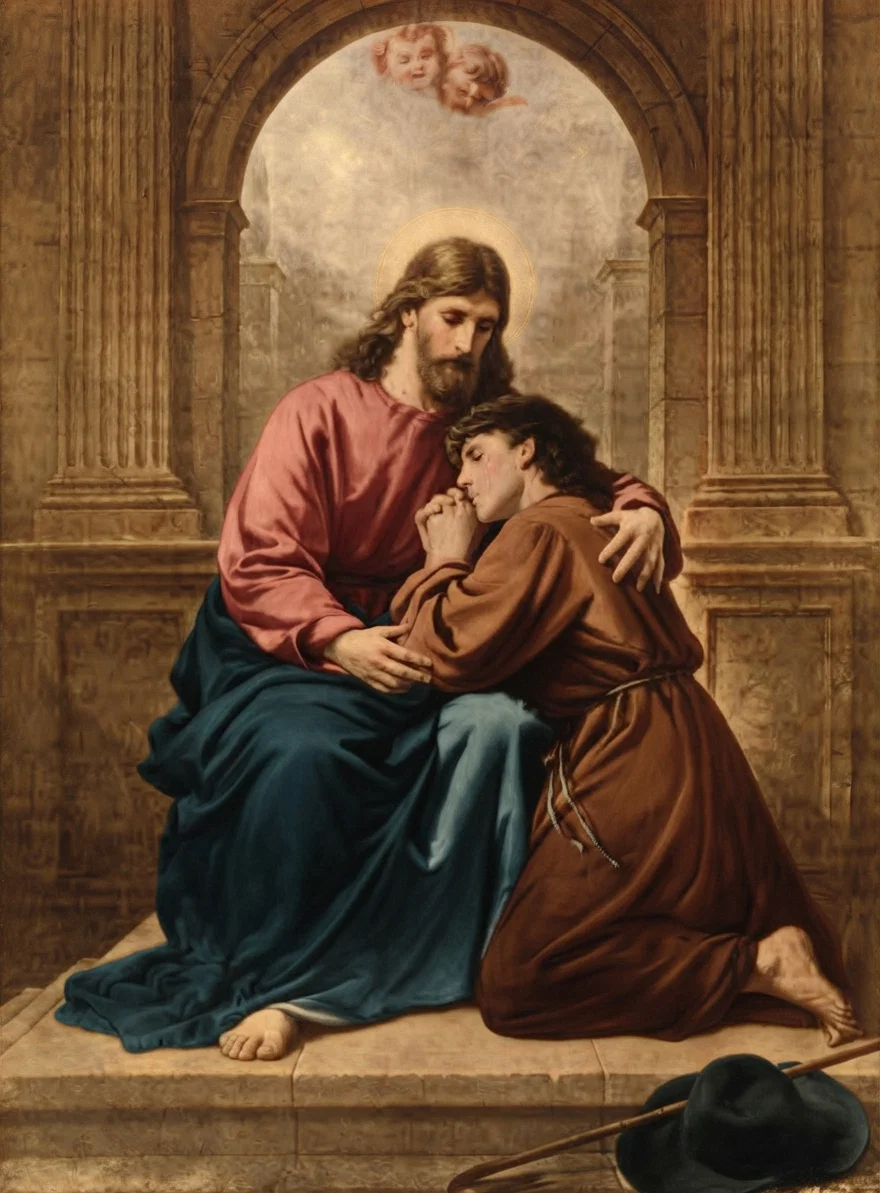
GOD does not ask you to feel that Jesus is your Saviour, but to believe that He died for you, and that His blood now cleanses you from all sin. You have been bitten by the serpent, and as the serpent was lifted up in the wilderness that the dying might look and live, so Christ was lifted up, that whosoever believeth in Him should not perish, but have eternal life. Saving faith is simplicity itself. You must cry no more; you must cease to hang your head as a bulrush. Look to the uplifted Saviour, and, however grievous may have been your sins, believe He saves you. All the remedies and medicines of the world would have failed to cure one soul who had been bitten by the venomous serpent; but God had provided a remedy that could not fail. "Believe on the Lord Jesus Christ, and thou shalt be saved." Be not among the number to whom the Saviour said, "Ye will not come to Me, that ye might have life." O, how He longed to save them! for while we were yet sinners—not waiting for us to make ourselves good—Christ died for us.
Believe now that God loves you, for He hath declared it; and when Satan tries to fasten the burden of sin and horror upon you, take your Bible, and read, "God so loved the world, that He gave His only-begotten Son, that whosoever believeth in Him should not perish, but have everlasting life." You can not repulse the enemy by relating your fearful doubts, by telling him that you are horrified by the thought that you are lost. All this is music in his ears. He wants to make you as miserable as he is himself, but you can answer him by proclaiming the promise that you believe in the Son, and therefore shall not perish. As you turn your eyes away to the Lamb of God, who taketh away the sins of the world, the controversy with the enemy will be ended for that season. You can repulse him by declaring that "Christ was wounded for my transgressions. He was bruised for my iniquities. The chastisement of my peace was upon Him, and with His stripes I am healed."
Take the word of Jesus Christ as more sure and valuable than any word that can come from the human agent. Thank God with your whole heart and soul and voice that you are barricaded with the rich promises of His infallible word, so that the wicked one shall not touch you. God will give you the Holy Spirit, even tho it may seem to you that it is too good to be true. "What shall we then say to these things? If God be for us, who can be against us? He that spared not His own Son, but delivered Him up for us all, how shall He not with Him also freely give us all things?"

The Life of Christ

Jesus Christ was born in a stable; He was obliged to fly into Egypt; thirty years of His life were spent in a workshop; He suffered hunger, thirst, and weariness; He was poor, despised, and miserable; He taught the doctrines of heaven, and no one would listen. The great and the wise persecuted and took Him, subjected Him to frightful torments, treated Him as a slave, and put Him to death between two malefactors, having preferred to give liberty to a robber, rather than to suffer Him to escape. Such was the life which our Lord

Humiliation and Contempt

chose; while we are horrified at any kind of humiliation, and can not bear the slightest appearance of contempt.—Fénelon.

"Perilous Times"

[The following is taken from an article by the Right Rev. John Charles Ryle, D.D., Lord Bishop of Liverpool, which appeared first in the "Young Men's Monthly Review," the organ of the English Young Men's Christian Association, and later reported in the Lowell "Daily Courier," Lowell, Massachusetts, June 14, 1887. J. B. C.]
TAKING for his text 2 Tim. 3: 1-5, the bishop said in part: "The subject which forms the title of this paper deserves very serious consideration. Are we in the 'last days' of which St. Paul speaks? Here is a picture of them, drawn by the unerring hand of an inspired apostle. Do we see nothing like it in the world around us? I have not the slightest hesitation in saying that we live in very 'perilous times.'"
"In the first place, I will show in what respect our times are specially 'perilous.' I am going to write things which will not please everybody. I am prepared for that. 'If I yet pleased men, I should not be the servant of Christ.' The times are perilous in the matter of religion. What are the facts? Infidelity abounds. Multitudes of people in every part of the country seem to have totally cast off religion. They go neither to church nor chapel. They openly sneer at the Bible as an old-fashioned, defective book, and give God no place in their thoughts. Is not this perilous? Romanism is increasing. Real popery has revived, and extreme ritualism is helping it. Multitudes are little better than papists. They scoff at Protestantism and the Reformation. They delight in the very popish ceremonial which our forefathers deliberately rejected. They avow their belief in the worst and most mischievous popish doctrines, and boldly preach, teach, and defend them. Is not this perilous?
"Indifferentism grows everywhere. Multitudes seem to care nothing about the distinctive doctrines of Christianity, and to perceive no difference between truth and error. Everybody is thought right, and nobody is thought wrong! Religion is 'only a matter of words and names;' and it does not signify a jot what a man believes! Is not this perilous? Religious divisions are painfully numerous. Every year they seem to increase and multiply. Between church and dissent—between Baptists and Pedobaptists—between Plymouth Brethren and all other Christians—how vast the gulfs of separation! Yet division is a sure sign of weakness. 'A house divided against itself can not stand.' English Christianity can not stand much longer in its present rent and torn and convulsed condition. Surely this is perilous.
"Look at the drunkenness of the times. In spite of Christianity, temperance, teetotalism, and education, we are a very intemperate people. The number of public houses, gin-palaces, and beer-shops in every large town tells a tale which can not be mistaken. The sums of money spent in spirits and beer every year are perfectly astonishing! The testimony of judges and magistrates about the effect of drinking, as a cause of crime, is enough to make one's blood run cold. Is not this perilous?
"Look at the neglect of the seventh commandment in our times. I do not allude only to the coarser forms of sin in this respect, when I say this, tho I might say much. I have in view the wide-spread decay of delicacy and nice feeling among young women of all classes. I challenge any one to deny that novels and romances are read nowadays in many a household, which contain scenes and descriptions that would not have been tolerated thirty years ago. There is a hideous familiarity with that which is 'fast' and indelicate. Is not this perilous?
"Look at the covetousness of our times. I do not speak so much of miserly habits, as of the intense love of money which overspreads all classes. To pile up a fortune in a few years, to speculate successfully, to obtain the power of every kind of self-indulgence at a bound—how thoroly this is the life of many people! The history of joint-stock companies, and banks, and railways, in the last few years, is a disgraceful tale, and shows how men will do anything to get money. Is not this perilous?
"I go a step further. I say that the times are perilous in a political point of view. What are the facts? The mad love of change seems to be carrying men of all parties before it like a flood. Clamor and murmurings are allowed to have all their demands gratified. Reason, and argument, and the lessons of experience are thrust aside in the face of any popular outcry. Highly educated statesmen do not try to lead the people, but allow the people to lead them. High statesmanship seems thrown to the winds, and expediency is the only principle of government. Is not this perilous?
"I go one step further. The times are perilous in a social point of view. What are the facts? The whole framework of society appears to be falling to pieces. The mutual respect that ought to exist between class and class, old and young, superior and inferior, seems to be fast melting away and disappearing. Between rulers and subjects, between parents and children, between masters and servants, between employers and employed, there no longer exist the healthy relations that once were. Every one wants his own selfish interests alone to be considered, and nobody thinks of his neighbor. A fierce intolerance of any opposition or interference may be observed on every side. Calm and dispassionate discussion is scouted. What may we learn from Fenianism, rattening, strikes, dynamite outrages, Irish murders, boycotting, anti-rent paying, and wholesale intimidation? These things all tell one tale. They show that the cement has fallen out of the walls of society. The whole machine is unscrewed and unpinned, and out of order. The very foundations of our social fabric are giving way. Is not this perilous?
"I touch on all these things very slightly. I might easily add dark colors to the picture. But I have said enough, I suspect, to set any sensible man thinking. I have brought forward facts, which I defy any one to dispute, about Romanism, morality, politics, and social order. I say confidently that the existence of these facts justifies the assertion with which I began. They prove that our times are 'perilous times.'"
"If things go on as they do much longer, the sun of old England will go down amidst a hurricane of confusion and trouble, such as the world has never yet seen. . . . Our . . . important duty is to be continually looking for the coming and kingdom of our Lord Jesus Christ. This is the great event which will wind up the affairs of all nations. Then, and then only, will sin, disorder, and superstition be put down completely, and come to an end. . . ."
"I bring before my readers a passage of Scripture which I commend to their special attention: 'There shall be signs in the sun, and in the moon, and in the stars; and upon the earth distress of nations, with perplexity; the sea and the waves roaring; men's hearts failing them for fear, and for looking after those things which are coming on the earth; for the powers of heaven shall be shaken. And then shall they see the Son of Man coming in a cloud with power and great glory. And when these things begin to come to pass, then look up, and lift up your heads; for your redemption draweth nigh.' Luke 21: 25-28."
"I make no comment on these words of my Master. I place them before my readers in their naked simplicity, and prefer letting them speak for themselves. If the words of the apostle which begin this paper, and the words of the Lord Jesus which I have just quoted, only set my readers thinking, I shall be abundantly thankful. We are in the last days, and perilous times have come!"

No Man Is of No Account

"No MAN has any right to say he is of no account."

Who Shall Assume to Speak for God?

In the Christian Statesman for April, the organ of the immanent International Christian Citizenship movement, there is a "special article" on "Theories Vanish, Principles Remain." Here are two sentences:
"To say that the divine will is the supreme law for nations and for citizens is fact, not theory. But to say that either the pope or the king ruling by divine right is the sole interpreter of that law is theory of the most dangerous kind."
But to what tribunal would the Christian Statesman appeal? If the divine will was expressed in the law of nations as the Christian Statesman would have it, who would interpret it? Would it be the legislative and judicial departments of the government? Would the Supreme Court be the final arbitrator? But now at the head of that august body is a Roman Catholic. Were he to frame the decision, conscientiously he would write it after his religious education and convictions. He would hold that the divine will was expressed in the Christian church, and that the only true Christian church was the Roman Catholic. How could he do otherwise? If the court of last resort in a nation were composed of Mohammedans, they would of course decide that the divine will was expressed in the Koran, and woe be to the subject who refused to acquiesce, howsoever good a Christian he might be.
But why develop the thought further? The simple fact is that no man nor body of men, either pope or National Reform Council, has been given authority to speak for God and interpret and enforce His will to men respecting their duty to Him. As soon as a human tribunal assumes this responsibility, it puts itself in the place of God, and the history of the past is a sad and forceful witness of the dire effects in the persecution and oppression of conscientious souls who dared differ with men, but not with God.

THE WITNESSING OF GOD

THE HEART OF THE ORION NEBULA

THE BASIS OF OUR CONFIDENCE

XII. Has God a Living Witness in the Gospel Age?

HAS God a living witness to His word, His gospel, now? Does He leave such a witness upon which we may depend, one to which we can invite the wanderers on life's sea so they can find their bearings?
The Roman Catholic Church claims to be such a witness as this. She declares that she has existed the one living witness from the days when our Lord walked upon earth to the present time. She declares that our Lord's word to Peter recorded in Matt. 16:16-19 was the founding of that church upon Peter, and that that church has been a living witness ever since.
In proof of this she presents the “unity,” the “holiness,” the “catholicity,” the “apostolicity,” the “perpetuity,” and the “infallible authority” of that church. Surely these qualities and prerogatives, if possessed by any religious body, demand attention. Such astounding claims are worthy of consideration.
We freely admit that the Roman Catholic Church is great, and wields tremendous influence in the world. She possesses a kind of unity of coercion and compulsion which holds together her great mass of people. She has existed for centuries. But is she God's witness? Does she meet the test of a twofold unimpeachable witness?
It does not seem to us that she does. For the place and position she assumes, she has only her own declaration.
She declares that our Lord's words to Peter apply to her and constitute her infallible. That is to say, she accepts this record of our Lord as fact, and assumes they apply to her. But if they apply to her, she is infallible. The second assumption logically follows the first. Assuming both of these to be true, she infallibly declares that the words do apply to her, and that she is the infallible church, and can not fail. But do you not see that these claims and declarations rest on one witness only — her own? Not to misrepresent her, we quote from the Catholic Mirror, at that time the organ of Cardinal Gibbons. In its issue of April 29, 1899, the editor attempts to prove that Catholics do not reason in a “vicious circle.” Here are his conclusions:
“We have availed ourselves of the writers known as evangelists as contemporary witnesses of what they narrate, as mere men, as would any thoughtful profane historians in their narration of facts when fully accredited as such.
“Through them, presupposing our common belief in the divinity of Christ, we reach with infallible certainty the existence of an institution [the church] created and formed by the Son of God, endowed with attributes which, if the Son of God speak the truth, place her above the possibility of ever teaching falsehood, thereby betraying the purpose of her existence. We here accept her as God who created and endowed her. We feel convinced that the abiding presence of the Creator and the Holy Spirit with her, while time lasts, precluded the possibility of her being smirched by contact with error. Hence we glory in the discovery of an infallible guide and teacher, whose deliveries are to us the teachings of the Son and the Holy Spirit.
THE SAVIOUR OF MEN
THE SAVIOUR OF MEN
“But this newly found, infallible teacher now informs us that the historians whose truthful narration of the Son of God are not only truthful historians, but were inspired by the Holy Spirit to furnish the world with what they have written as the amanuenses of the Holy Spirit in the premises. Thus after we have reached the church of Christ with all her divine prerogatives, through human writers endowed with the attribute of truth, we now learn from the church, as the mouthpiece of the Holy Ghost, that these writers were not actuated by merely human motives in their biographies of Christ, but were under the direct influence of the Holy Ghost in the prosecution of their narratives. Through them, as truthful human historians, we reached the infallible church of Christ, who in turn, by virtue of the permanent abiding of the Son of God and the Holy Spirit within her, pronounces the (to us) human writers as under the divine influence whilst indicting. . . .
“Hence the charge against the church of reasoning in a vicious circle has no foundation, when she proves the infallibility of herself from contemporary human, but fully accredited veracious historians, and then the inspiration of the same historians from the authority of an infallible tribunal, namely, herself.” (Bold-face ours.)

What Is Assumed

But these historians did not say that Jesus spoke of the Roman Catholic Church.
Our Lord does not say that His words referred or applied to the Roman Catholic Church.
It is pure assumption to say that they so apply, without clear evidence that they do.
It is assumed that our Lord's words picture such an institution as the Roman Catholic Church claims to be.
Then the assumption is taken as fact, and this assumed infallible church declares that the words do apply to her and that she is infallible.
According to this editor's own showing, the Roman Catholic Church has only her own “infallible”(!) testimony that she is the church of God.
For the testimony of apostles and evangelists, contemporaries of Jesus, merely speaks of a church, or the church, without designating what church.
A mere claim of being that church is not sufficient evidence. Mormonism claims that the true church is that of the Latter-day Saints; the Orthodox Church of Russia makes the same claim. Such claim is of itself, apart from other absolutely conclusive evidence, utterly worthless. Matthew may declare that Christ spoke of a church which should endure, which should not be conquered, with whom the Lord would be to the end; but Rome's claim to bethat church, must, to stand, have a more substantial basis than a mere claim.
The claim of Roman Catholics rests, it seems to us, on the same basis that the Mormon claim rests on — themselves. Of course, each claims that the Bible proves the claim; but with the Roman Catholic the church, whose status is involved, must interpret the testimony of the Bible, and exercise her power, if necessary, to change its very teaching. Her position is that of a claimant before a court for an estate demanding that only such witness should be presented as met his approval, and that should be understood according to his interpretation. Evidence will be given of this hereafter.
Mormonism is the same in principle. Those scriptures which disprove her claim she sets aside as imperfect, and substitutes a revelation of her own, built upon collusive testimony.
Neither does the proof of the inspiration of the Scriptures rest upon the declaration of any church. There is stronger evidence than this.

A Reversal of the Divine Method

The above Roman Catholic mold of reasoning or proving, reverses the divine procedure. God has substantiated all His word in the word itself. That is, by that word and in that word God will prove its infallibility to any one who will comply with its conditions, conditions withal so simple that any or all may put them to the test.
God's witness, let us repeat, is twofold at least, and the witnesses never collusive. 'In the mouth of two or three witnesses shall every word be established.' To put it in another way, God writes His word at least twice concerning everything of which He has spoken, in fiat, in precept, in promise, in prediction; and again in fulfilment; and the first must prove the second; the second is the complement of the first.
Our Lord did not say, 'The prophets as mere men spoke of Me, predicted My coming; and now I am the One they predicted, and I declare they prophesied of Me by inspiration.' Such a claim would have been worthless.
Jesus gave the two witnesses. One of these was the written word, covering a space of over two thousand years, the canon closing more than three centuries before, as a babe, He saw light in Bethlehem. He could say to the Jews, 'Ye search the Scriptures, because ye think that in them ye have eternal life; and these are they which bear witness of Me.'
This witness had been recorded for centuries. The man Jesus could not have given it nor altered the scrolls of the prophets. He could not, nor did He wish to, interpret this witness to fit Himself. He came to do God's will, and God would supply the second witness in the One whom He sent. 'For the works which the Father hath given Me to finish, the same works that I do, bear witness of Me, that the Father hath sent Me.'
Here are the two witnesses: God's word written in Moses, in the Psalms, in the prophets; God's word written in the life, the character, the works of Jesus Christ.
The two witnesses thus testifying need no infallible court to appeal to the candid mind. They are absolutely unimpeachable — God's word first, and then the witness which demonstrates the second writing of that word in character, in event, in life.
God has also testified concerning His church. He has spoken through our Lord, and prophet and apostle, of her origin, her character, on what conditions she should remain His, the vicissitudes through which she would pass, her prominence and obscurity, her prosperity and adversity, to the final triumph.
We continue this study in our next.

How Many Loaves Have Ye?

By L. A. Reed
JUST before the feeding of the four thousand with the few loaves and fishes, Jesus asked the question, "How many loaves have ye?" These words suggest a weighty truth, a wonderful lesson; namely, the strict continuity of the work of God in the natural and in the spiritual world. It is the lesson that to-morrow must, in some wise, come out of to-day; that the present has come out of the past, and is a product of the past. It is the truth that the future is to be formed from the present, that what is to be must come out of what has been. It may be that the old is to be enlarged or renewed, or is to receive great and startling changes, a revolution perhaps; but still from such, the little and insignificant and forever inefficient, God will make the greater things — the things more fully to His purpose.
Christ was the Builder of worlds, the Creator of the universe. Thus He stood with all the powers of those worlds, that universe, at His command. He might have swept aside the few loaves and the small fishes. Yes, when they were offered, He might have said, and no one could have questioned the pertinence of the saying, What are these? Think you they are sufficient? The disciples had even said, in dismay, "What are they among so many?" Yes, with infinite power at His command, Christ might have utterly ignored the few remnants of food offered, and have bidden the desert burst into a glory of orchards, and fish-pools, and crystal water flashing at the feet of the astonished multitude.
He could have done it. It were possible; but thus there would have been no lesson of hope and trust, no lesson for you and me. Instead, He takes the food, little as there is, — so little that no one thought of even mentioning it until He asks for it, — and with this little remnant He satisfies the hunger of these famished ones.
Take an illustration: Here is a man with a handful of corn. He says, Here is enough corn to fill the world. Here is enough to make the fields golden with a harvest of food. But he adds, When this is gone, I must starve. Boundless possibility bound up in a terrible fate! Corn enough for a possibility; but he has no soil, no soil to give this possibility reality.
Soil is mere dirt. It is the refuse and so-called waste of the ages, the last thing, were it not for opposite teaching, we should look to for possibility. But it is this very soil that life is seeking — seeking that it may there find its opportunity to burst into a fuller life.
And we, you and I, are only soil, dust, accumulation and remnant of six thousand years, the waste and relic of the ages. But even so we are soil, and thus a place for the seed of life, a place where God may burst into unbounded possibilities. This is the lesson of the parable of the sower. Some seed fell by the wayside, and the fowls devoured it — the seed found no soil; some seed fell upon stony places, where there was little earth (soil), sprang up, but soon withered away, because there was no soil for growth; some seed fell among thorns, — there was soil for thorns, but none for seed, — and the seed was choked out; but some seed fell on good ground, and brought forth fruit, thirty, sixty, a hundredfold.
Little as we may think ourselves, let us not regard ourselves as less than this — soil for the seed of God. It is soil for which God is seeking, and He is seeking only for soil. Our lives are small and insignificant; but because they are soil, He asks for them. And He asks for them because otherwise we would not think them worth offering. The disciples would not have thought of the small store of food, had not Christ asked, "How many loaves have ye?" So we would not think that of ourselves could come any good thing, were it not that God asks, What have ye? And by every means in His power He pleads with us to give Him this little, that out of it He may make much.

The Encamped Angels

ONE of the most beautiful and at the same time one of the most comforting statements in all of the word of God is that which tells us that "the angel of the Lord encampeth round about them that fear Him, and delivereth them," Ps. 34: 7. How good it is to know this! How good it is to have the knowledge enter into our experience that the mighty angels are with us! The individual who knows God and the blessed truth of His word, has a definite experience that enables him to understand that he has this protecting care from the infinite Father about him all the time.
The apostle, in writing the Hebrew letter, says of the angels, "Are they not all ministering spirits, sent forth to minister for them who shall be heirs of salvation?" And the psalmist gives added consolation and beauty of expression in these further words referring to the work that the holy angels do for those whose trust and hope is in God. He says: "The Lord hath prepared His throne in the heavens; and His kingdom ruleth over all. Bless the Lord, ye His angels, that excel in strength, that do His commands, harkening unto the voice of His word. Bless ye the Lord, all ye His hosts; ye ministers of His, that do His pleasure." Ps. 103: 19-21.
We may never know, in this life, the dangers from which we are shielded by these accompanying angels. We may never know of the accidents and misfortunes of every kind that would have overtaken us had we not been attended by these faithful sentinels. But we may know, from the blessed assurances of God's word, that they are ever present with us. They are there to shield and protect us, and to answer every sincere desire that goes out toward the infinite Father.
You will sometimes find men who will try to have you believe that such a thing as a belief in these ministering angels is nothing short of superstition. But these same individuals will invite you to go to a spiritualistic séance, and tell you that unseenspirits will visit them there. Thus they would endeavor to teach us that if we would follow them in seeking to the spirits that God's word forbids, there is no superstition; but that if we seek to be guided and kept under the influence and power of the ministering angels that God provides for each of us, we are superstitious. We prefer to avoid the superstitions that come to those who reject God's word, and to enter into the realities of the blessed experience known only to those who follow Him closely. T.

The Love That Brought Christ

But was there any secret thirst for pleasure, Or motive deeper than the eye could see — Perchance the love for fame or greater treasure — That brought the Christ from heaven's purity?
There was but one Pure motive grand — no shade of selfish reason — Could save from sin, and bring the Christ in season To bear the sins of men, and take sin's wages! As "God so loved the world" — so did His Son!
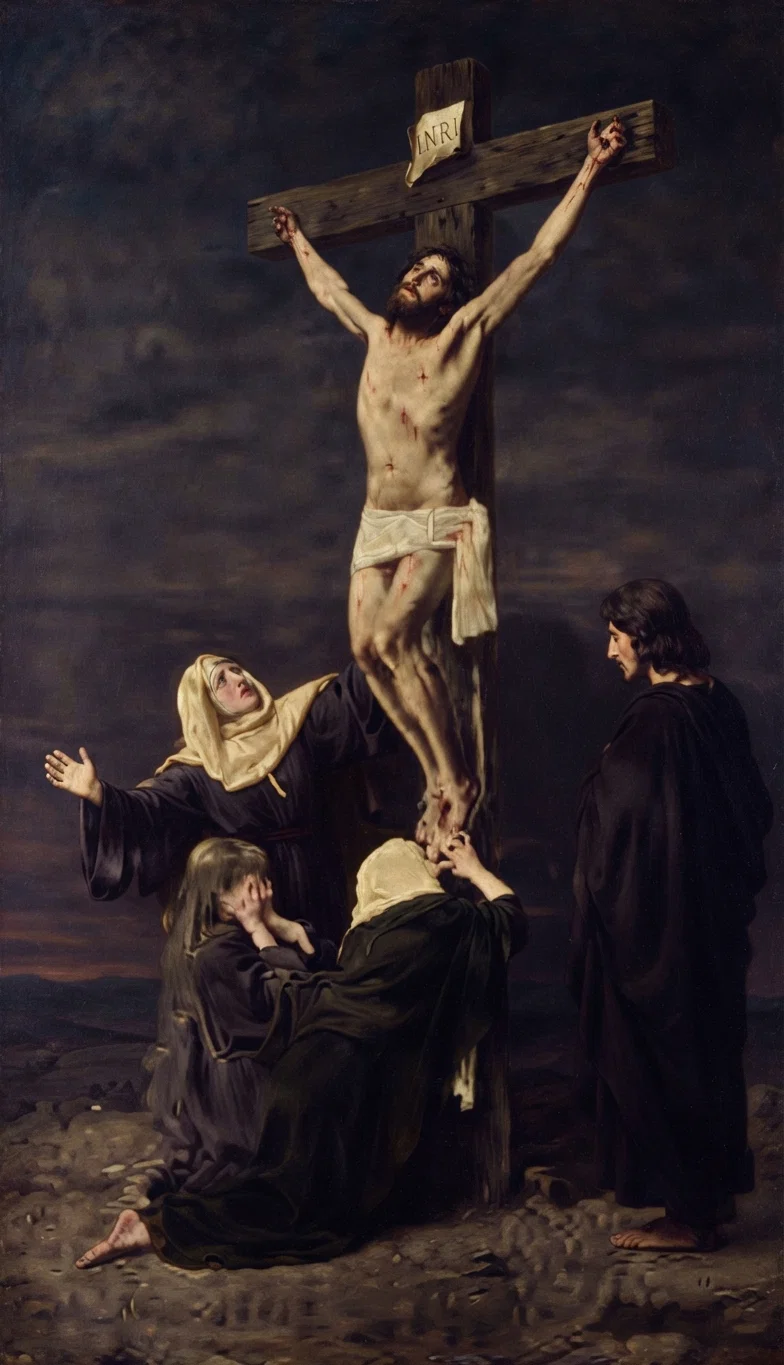
Did Jesus on the cross seek exaltation, In bearing thorns, and cruel taunts, and shame? Ah, they will read aright of His salvation, Who read the secret in His saving name. Give Jesus praise! He saw earth's need, and heard the hopeless sighing; And saw no man to save the lost and dying; And counted not His life the one most precious; He died — that all may live through endless days.
O sinful sin — that cost the blood of Jesus! O matchless love — that cared His blood to spill For every man, and from sin's bondage frees us! O depths of love — that brought to Calv'ry's hill The Crucified!
Rejoice, all ye who know Christ came to save you! Tell those who know it not — the love He gave you! Sing of His mighty love — the pow'r unfailing, That oped for all the gates of heaven wide!
Why did He love? Love is love's constant glory! Love lives to love — and loves its life to share! "Failure to love," is earth's sad, bitter story! But "God so loved" salvation to declare From sin's mad strife.
If light fail, is it yet the light? — No, never; And love — to live — must freely love forever. Love's constant choice is love — the joyous giving Of life received from love's great fount of life.

WHAT BROUGHT THE CHRIST?

BY FLORA E. WARREN
WHY did the Prince of Life leave courts of power And come to serve in this dark world of sin? Why did He choose to know death's dreaded hour? Did He thus seek some greater pow'r to win, Or glory wear? God's word makes known the truth — and all may know it: "For God so loved the world!" — that He might show it, He sent a door of life for all who perish: Christ is the door — who wills may enter there.
"For God so loved the world, that He gave His only-begotten Son, that whosoever believeth in Him should not perish, but have everlasting life." John 3:16.
"Greater love hath no man than this, that a man lay down his life for his friends." John 15:13. "But God commendeth His love toward us, in that, while we were yet sinners, Christ died for us." Rom. 5:8.
Why did He love? Love is life's joy and reason! Love's stream of life will never cease to flow! Failure to love is death — and highest treason! For "God is love." He wills that all may know Love's happiness; Unbounded love! no shade of death or sadness, But endless life of freedom, rest, and gladness. That all may know God's perfect love, and share it, Christ came to earth, and gave His life to bless.
Refreshing love! one draft from that great fountain Has made me thirst for more, that I may give. I would — like Him who died on Calv'ry's mountain — Be filled with love, and in His presence live Who reigns above. The love that saves from sin — who can compare it? And every weary child of earth may share it. The ransomed through the ages will declare it, The ceaseless wonders of redeeming love.

Christ’s Humiliation

"Let this mind be in you, which was also in Christ Jesus: who, being in the form of God, thought it not robbery to be equal with God: but made Himself of NO REPUTATION, and took upon Him the form of A SERVANT, and was made in the likeness of men: and . . . HUMBLED HIMSELF, and became obedient unto death, even the DEATH OF THE CROSS." Phil. 2:5-8.
"But ye denied the Holy One . . . and killed the PRINCE OF LIFE." Acts 3:14, 15.
Continue reading: Salvation Through Jesus Christ