Signs of the Times, Vol. 40, No. 43.

The Controversy of the Ages

Signs of the Times

Nov 11, 1913

Pacific Press Publishing Association · Mountain View, California · Nov 11, 1913

The Controversy of the Ages

Invisible Armies in Conflict—Whence Came the Devil, and Why Does Sin Exist?—The Controversy Begun
By MRS. E. G. WHITE
If the veil which separates the visible from the invisible world could be lifted, and the people of God could behold the controversy that is going on between Christ and holy angels, and Satan and his evil hosts, concerning the redemption of man; if they could understand the wonderful work of God for the rescue of souls from the bondage of sin, and the constant exercise of His power for their protection from the malice of the evil one, they would be better prepared to withstand the devices of Satan. Their minds would be solemnized in view of the vast extent and importance of the plan of redemption and the greatness of the work before them as colaborers with Christ. They would be humbled, yet encouraged, knowing that all heaven is interested in their salvation.
To many minds, the origin of sin and the reason for its existence are a source of great perplexity. They see the work of evil, with its terrible results of woe and desolation, and they question how all this can exist under the sovereignty of One who is infinite in wisdom, in power, and in love. Here is a mystery of which they can find no explanation. And in their uncertainty and doubt, they are blinded to truths plainly revealed in God's word and essential to salvation. There are those who, in their inquiries regarding the existence of sin, endeavor to search into that which God has never revealed. Hence they find no solution of their difficulties; and such as are actuated by a disposition to doubt and cavil, seize upon this as an excuse for rejecting the words of Holy Writ. Others, however, fail of a satisfactory understanding of the great problem ofevil, from the fact that tradition and misinterpretation have obscured the teachings of the Bible concerning the character of God, the nature of His government, and the principles of His dealing with sin.

Can Not Be Explained

It is impossible to explain the origin of sin so as to give a reason for its existence. Yet enough may be understood concerning both the origin and the final disposition of sin to make fully manifest the justice and the benevolence of God in all His dealings with evil. Nothing is more plainly taught in Scripture than that God was in no wise responsible for the entrance of sin; that there was no arbitrary withdrawal of divine grace, no deficiency in the divine government, that gave occasion for the uprising of rebellion. Sin is an intruder for whose presence no reason can be given. It is mysterious, unaccountable; to excuse it is to defend it. Could excuse for it be found, or cause be shown for its existence, it would cease to be sin. Our only definition of sin is that given in the word of God; it is “the transgression of the law”; it is the outworking of a principle at war with the great law of love which is the foundation of the divine government.
Before the entrance of evil, there was peace and joy throughout the universe. All was in perfect harmony with the Creator’s will. Love for God was supreme, love for one another impartial. Christ, the Word, the only-begotten of God, was one with the eternal Father,—one in nature, in character, and in purpose,—the only Being in all the universe that could enter into all the counsels and purposes of God. By Christ, the Father wrought in the creation of all heavenly beings. “By Him were all things created, that are in heaven, . . . whether they be thrones, or dominions, or principalities, or powers;” and to Christ, equally with the Father, all heaven gave allegiance.
The law of life being the foundation of the government of God, the happiness of all created beings depended upon their perfect accord with its great principles of righteousness. God desires from all His creatures the service of love,—homage that springs from an intelligent appreciation of His character.

First Note of Discord

But one chose to pervert this freedom. Sin originated with him who, next to Christ, had been most honored of God, and who stood highest in power and glory among the inhabitants of heaven. Before his fall, Lucifer was first of the covering cherubs, holy and undefiled. “Thus saith the Lord God; Thou sealest up the sum, full of wisdom, and perfect in beauty. Thou hast been in Eden the garden of God; every precious stone was thy covering.” “Thou art the anointed cherub that covereth; and I have set thee so: thou wast upon the holy mountain of God; thou hast walked up and down in the midst of the stones of fire. Thou wast perfect in thy ways from the day that thou wast created, till iniquity was found in thee.”

Exaltation of Self

Lucifer might have remained in favor with God, beloved and honored by all the angelic host, exercising his noble powers to bless others and to glorify his Maker. But, says the prophet, “Thine heart was lifted up because of thy beauty, thou hast corrupted thy wisdom by reason of thy brightness.” Little by little, Lucifer came to indulge a desire for self-exaltation. “Thou hast set thine heart as the heart of God.” “Thou hast said, . . . I will exalt my throne above the stars of God: I will sit also upon the mount of the congregation.” “I will ascend above the heights of the clouds; I will be like the Most High.” Instead of seeking to make God supreme in the affections and allegiance of His creatures, it was Lucifer’s endeavor to win their service and homage to himself. And, coveting the honor which the infinite Father had bestowed upon His Son, this prince of angels aspired to power which it was the prerogative of Christ alone to wield.
All heaven had rejoiced to reflect the Creator’s glory and to show forth His praise. And while God was thus honored, all had been peace and gladness. But a note of discord now marred the celestial harmonies. The service and exaltation of self, contrary to the Creator’s plan, awakened forebodings of evil in minds to whom God’s glory was supreme. The heavenly councils pleaded with Lucifer. The Son of God presented before him the greatness, the goodness, and the justice of the Creator, and the sacred, unchanging nature of His law. God Himself had established the order of heaven; and in departing from it, Lucifer would dishonor his Maker, and bring ruin upon himself. But the warning given in infinite love and mercy only aroused a spirit of resistance. Lucifer allowed jealousy of Christ to prevail, and he became the more determined.

Mysterious Secrecy

Leaving his place in the immediate presence of God, Lucifer went forth to diffuse the spirit of discontent among the angels. Working with mysterious secrecy, and for a time concealing his real purpose under an appearance of reverence for God, he endeavored to excite dissatisfaction concerning the laws that governed heavenly beings, intimating that they imposed an unnecessary restraint. Since their natures were holy, he urged that the angels should obey the dictates of their own will. He sought to create sympathy for himself by representing that God had dealt unjustly with him in bestowing supreme honor upon Christ. He claimed that in aspiring to greater power and honor, he was not aiming at self-exaltation, but was seeking to secure liberty for all the inhabitants of heaven, that by this means they might attain to a higher state of existence.
God in His great mercy bore long with Lucifer. He was not degraded from his exalted station when he first indulged the spirit of discontent, nor even when he began to present his false claims before the loyal angels. Again and again he was offered pardon on condition of repentance and submission. Such efforts as only infinite love and wisdom could devise were made to convince him of his error. The spirit of discontent had never before been known in heaven. Lucifer himself did not at first see whither he was drifting; he did not understand the real nature of his feelings. But as his dissatisfaction was proved to be without cause, Lucifer was convinced that he was in the wrong, that the divine claims were just, and that he ought to acknowledge them as such before all heaven. Had he done this, he might have saved himself and many angels. He had not at this time fully cast off his allegiance to God. Though he had forsaken his position as covering cherub, yet if he had been willing to return to God, acknowledging the Creator’s wisdom, and been satisfied to fill the place appointed him in God’s great plan, he would have been reinstated in his office. But pride forbade him to submit. He persistently defended his own course, maintained that he had no need of repentance, and fully committed himself, in the great controversy, against his Maker.

Satan Permitted to Work

God in His wisdom permitted Satan to carry forward his work until the spirit of disaffection ripened into active revolt. It was necessary for his plans to be fully developed that their true nature and tendency might be seen by all. Lucifer as the anointed cherub had been highly exalted; he was greatly loved by the heavenly beings, and his influence over them was strong. His power to deceive was very great; and by disguising himself in a cloak of falsehood, he had gained an advantage. Even the loyal angels could not fully discern his character, or see to what his work was leading.

His Character Must Be Unmasked—Justice and Love Revealed
In His dealing with sin, God could employ only righteousness and truth. Satan could use what God could not—flattery and deceit. He had sought to falsify the word of God, and had misrepresented the plan of government before the angels, claiming that God was not just in laying laws and rules upon the inhabitants of heaven; that in requiring submission and obedience from His creatures, He was seeking merely the exaltation of Himself. Therefore it must be demonstrated before the inhabitants of heaven, as well as of all the worlds, that God’s government was just, His law perfect. Satan had made it appear that he himself was seeking to promote the good of the universe. The true character of the usurper and his real object must be understood by all. He must have time to manifest himself by his wicked works.
Even when it was decided that he could no longer remain in heaven, infinite wisdom did not destroy Satan. Since the service of love can alone be acceptable to God, the allegiance of His creatures must rest upon a conviction of His justice and benevolence. The inhabitants of heaven and of other worlds, being unprepared to comprehend the nature or consequences of sin, could not then have seen the justice and mercy of God in the destruction of Satan. Had he been immediately blotted from existence, they would have served God from fear rather than from love. The influence of the deceiver would not have been fully destroyed, nor would the spirit of rebellion have been utterly eradicated. Evil must be permitted to come to maturity. For the good of the entire universe through ceaseless ages, Satan must more fully develop his principles, that his charges against the divine government might be seen in their true light by all created beings, that the justice and mercy of God and the immutability of His law might forever be placed beyond all question.
The illustration on the preceding page is from Mrs. White’s book “Patriarchs and Prophets,” in which the interesting subject of the above article is more fully presented.
Before the entrance of evil, there was peace and joy throughout the universe.

The People of the Valleys

The Heroism and Glory of the Waldenses

An Unbroken History from the Days of the Apostles
By H. H. HALL
THIS article on the Waldenses is one of six or eight that are to appear in our columns. Mr. Hall has given much study to the subject, and to many it will be new to learn that the history of this intensely interesting people is traced back to the days of the apostles. They held closely to the pure doctrine taught by Christ, and were in continuous conflict with the apostasy that sought to compel men, by cruel persecutions, to conform to bigoted religious decrees. The articles are a timely warning in this age when great religious majorities are seeking to combine for the control of the world.
EDITOR.
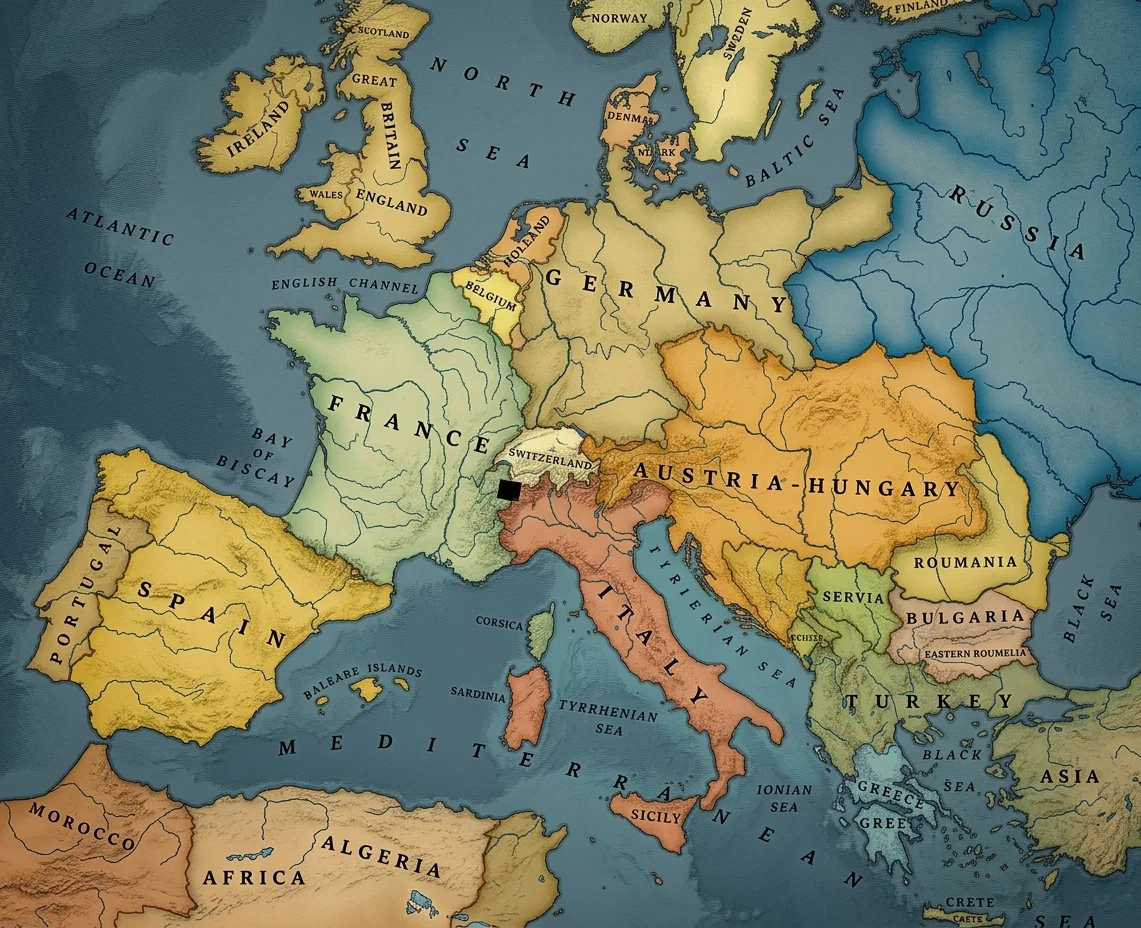
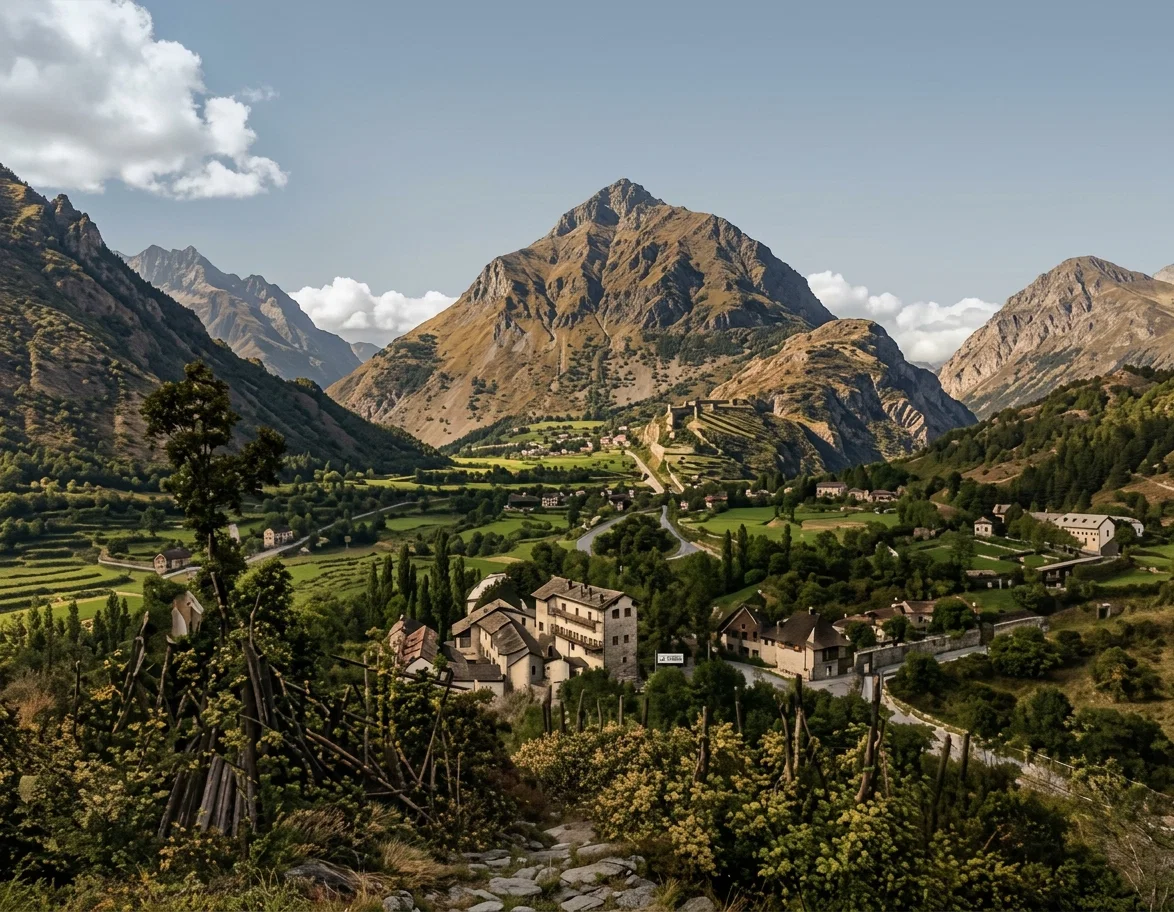
In the valleys of the high Alps which form the boundary between northwestern Italy and southeastern France, have lived from “time out of mind” the “men of the valleys”—for such is the meaning of the name “Vaudois,” or “Waldenses.” Their little territory, some eighteen miles long and fourteen wide, is deeply furrowed by seven valleys, each having its own gate of ingress and egress, and so opening into each other as to justify Leger, a veteran Waldensian pastor and historian, in saying, “The Eternal, our God, having destined this land to be the theater of His marvels and the bulwark of His ark, has by natural means most marvelously fortified it.” (Wylie’s “History of the Waldenses,” page 7.) These valleys, which are watered by mountain torrents formed by the melting of the mountain snows, rapidly narrow as one ascends them, and are soon lost in a series of deep and densely wooded ravines, accessible only to the practised foot of the mountaineer. Above are towering peaks, frightful precipices, and caverns of unknown depth, which so often were ways of escape to the “hunted men of the valleys.”
In this little district of less than three hundred square miles, with its limited crop-raising area, its long, severe winters, and their accompanying heavy snows and frequent avalanches, lived a people numbering at times 23,000 souls. Why should such a company as this live in these cramped quarters? Why did they not occupy the beautiful Piedmont Valley at the foot of their mountain? Let us see.

DESCENDANTS OF THE APOSTLES

First let us hear what they have to say through one of their leading pastors and military men, Henry Arnaud:
“Neither has their church been ever reformed, whence arises its title of evangelic. The Vaudois are, in fact, descended from those refugees from Italy, who, after St. Paul had there preached the gospel, abandoned their beautiful country, and fled, like the woman mentioned in the Apocalypse, to these wild mountains, where they have to this day handed down the gospel from father to son, in the same purity and simplicity as it was preached by St. Paul.”—“The Glorious Recovery by the Vaudois,” page 14 of preface, translated by Acland.
That this belief was common among them is shown by their petition to Philibert Emmanuel, duke of Savoy and prince of Piedmont, in 1659:
“We likewise beseech your royal highness to consider, that this religion we profess, is not only ours, nor hath it been invented by men of late years, as it is falsely reported, but it is the religion of our fathers, grandfathers, and great-grandfathers, and other yet more ancient predecessors of ours, and of the blessed martyrs, confessors, prophets, and apostles; and if any can prove the contrary, we are ready to subscribe and yield thereunto.”—Gilly’s “Waldensian Researches,” page 42.
This opinion is upheld by the following facts and citations.

EARLY CHRISTIANS DRIVEN TO THE MOUNTAINS BY PERSECUTION

We know that Paul’s ministry in Rome, some three hundred miles south of the Piedmont valleys, was very successful, enabling him to say, “All the saints salute you, chiefly they that are of Cæsar’s household.” Phil. 4:22. We know also of the terrible persecution of the Christians under Nero, to which Paul fell a victim; and of those which followed in the second and third centuries, “which drove many of the Christian fugitives from Milan on one side and from Lyons on the other, to the Alpine retreat.”

ADMISSIONS OF THEIR ENEMIES

Bernard of Clairvaux, whose death occurred in 1153, says:
“They are rustics, and laymen, and thoroughly contemptible. I am aware they boast that they and they alone are the body of Christ. They boast that they are the successors of the apostles, and call themselves Apostolicals.”—Bernard, sermon 66, Gilly’s “Waldensian Researches,” pages 43, 44.
Less than one hundred years later, about 1230, Reinerus the inquisitor takes the Waldensians to task as follows:
“The heresy of the Vaudois, or poor people of Lyons, is of great antiquity. Among all sects that either are or have been, there is none more dangerous to the church than that of the Leonists, and that for three reasons. The first is, because it is the sect of the longest standing of any; for some say that it hath been continued down ever since the time of Pope Sylvester; and others, ever since that of the apostles. The second is, because it is the most general of all sects; for scarcely is there any country to be found where this sect hath not spread itself. And the third, because it has the greatest appearance of piety; because, in the sight of all, these men are just and honest in their transactions, believe of God what ought to be believed, receive all the articles of the Apostles’ Creed, and only profess to hate the Church of Rome.”—Bib. Patr., tome 13, page 299, quoted on page 22, Gilly’s “Excursion.”
Thus we see their deadly enemy—and one who had been a Waldensian himself, by the way—admitting, in the thirteenth century, that the Waldensians—“Leonist” and “Waldensian” were used interchangeably—were said to have flourished from the time of Pope Sylvester, who is supposed to have baptized Constantine the Great, and who occupied the papal chair from 314 to 335 A.D.

OTHER EVIDENCES OF THEIR ANTIQUITY

In the beginning of the fourth century, under Constantine, the apostasy foretold by the apostle Paul in 2 Thess. 2:3, 4began to manifest itself. Worship of the saints, prayers and masses for the dead, the creation of purgatory, the reception of the partially converted multitude into the church, and the gradual substitution of traditions for the word of God, were all items in this apostasy, and were particularly manifested in the city of Rome. But these innovations were not so acceptable to the churches of the mountains and country, as is indicated by the following protest from a Roman bishop of the fourth century, Hilary of Poitiers:
“I caution you, beware of the antichrist. The pernicious love of walls has seduced you; you profanely venerate the church of God as if it consisted of constructions and edifices, and herein you expect to find your peace. Can it be doubted that this will be the stronghold of antichrist? To me, mountains, and forests, and lakes, and caverns, and gulfs, are far more safe; for in these the prophets, either dwelling among them, or condemned to them, prophesied in the Spirit of God.”—Gilly’s “Waldensian Researches,” page 63.
It is a significant fact that the diocese of Rome did not extend into northern Italy. But that section, including the Waldensian valleys, and southern France, the home of the Albigenses, was a part of the diocese of Milan, which is less than one hundred miles from the Waldensian capital. This diocese was entirely independent of its southern neighbors, until the middle of the eleventh century. In 555 A.D., Pope Pelagius complained that “the bishops of Milan do not come to Rome for ordination.” He further informs us “that this was an ancient custom of theirs.” (Wylie’s “History of Protestantism,” page 19; “Israel of the Alps,” by Muston, pages 17, 18; also “History of the Reformation in Italy,” by M’Crie, page 1.)
In 1059, when Pope Nicholas II compelled them to yield their independence, it “was not accomplished without a protest on the part of its clergy and a tumult on the part of its people. The former affirmed that ‘the Ambrosian church was not subject to the laws of Rome; that it had been always free, and could not with honor surrender its liberties.’” (Wylie’s “History of Protestantism,” page 18.)
It is a matter of record, however, that not all submitted to the demands of Rome, and they retreated into the more secluded valleys.

VALLEY AND MOUNTAIN DEFENDERS OF APOSTOLIC DOCTRINE
God did not leave Himself without witness during those evil days, and it is interesting to note that the men who most ably defended the apostolic doctrines were from the valleys and mountains of the diocese of Milan.
Vigilantius, the reformer of the Pyrenees, as he has been called, lived in southern France in the latter half of the fourth century. We have none of his books, and are indebted to his enemies for his teachings. These have been gathered by Dr. W. S. Gilly, an English clergyman and historian, and presented to us in a book entitled “Vigilantius and His Times.” It seems that Jerome, translator of the Vulgate, having read some of Vigilantius’s books, arraigned him most bitterly, in the process of which he refers to Vigilantius’s letters “from the Cottian Alps,” which was the section of the Alps in which the Waldensians lived. Jerome makes the following quotation, among others, from Vigilantius’s book, which shows his attitude toward the errors that were manifesting themselves in the church:
(a) Protested Against the Veneration of Relics
“Under the pretext of religion, we see a custom introduced into the churches, which approximates to the rites of the Gentiles; namely, the lighting of multitudes of tapers, while the sun is yet shining. And everywhere men kiss, in their adoration, a small quantity of dust, folded up in a little cloth, and deposited in a little vessel. Men of this stamp give great honor, forsooth, to the most blessed martyrs, thinking with a few insignificant wax tapers to glorify those whom the Lamb, who is in the midst of the throne, enlightens with all the brightness of His majesty.”—Vigilantius, page 395.
LA TORRE — THE WALDENSIAN CAPITAL
(b) Protested Against Prayers for the Dead
“So long as we are alive, we can mutually pray for each other; but that after we are dead, the prayer of none for another can be heard.”—Id., page 399.
(c) Against Intercession of Saints
“Do the souls of the martyrs, then, love their ashes, and hover around them, and are always present, lest if any suppliant should perchance happen to draw near, they could not hear him in consequence of their absence?”—Id., page 404.
That we may more perfectly understand the strength of the custom against which Vigilantius was so powerfully protesting, let us read a paragraph from Jerome’s reply:
“Was the emperor Constantius guilty of sacrilege when he translated to Constantinople the holy relics of Andrew, Luke, and Timothy, before which demons roar out? Is the present emperor Arcadius to be called sacrilegious, who, after a length of time, translated from Judea into Thrace the bones of the blessed Samuel? Are all bishops not only sacrilegious, but also to be accounted fools, who have carried in silk and in a golden vessel this worthless trash and these loose cinders? Are we to consider as fools the people of every church, who have met these holy relics, and with the utmost joy have acknowledged and received the prophet as if he were present and alive?”—Id., page 397.
In reading the foregoing, bear in mind that Jerome was the foremost writer and scholar of his day, and therefore his attitude toward relics may be considered representative of the church in general. But in spite of the hold these errors had upon the people, and the powerful opposition Vigilantius had to meet, his influence was wide-spread and effective, as is stated by Mr. Gilly.
“In the events of a gracious Providence, the districts where Vigilantius resided, or which he occasionally visited, namely, the recesses of the Pyrenees, and the Cottian Alps, and the plains of the south of Gaul and of Lombardy, from the date of his disappearance to the daybreak of the Reformation, were permitted to shed forth, from time to time, sparklings and glimmerings of the same light which illumined his path, and to show that the embers which he helped to keep alive were never extinguished. His adversary informs us that he declaimed between the Cottian Alps and the Adriatic Sea,—that he made incursions into the Gallic churches,—indoctrinated the parishes at the foot of the Pyrenees,—employed scribes and copyists, and circulated an overwhelming quantity of transcripts from sacred writings. Now connecting these two facts together, first that Vigilantius assailed these regions with his preaching and his books, and secondly, that these are the regions from which the so-called poison of his heresy has never been thoroughly banished, can we say that his protest died away, had no continuance, was premature or ineffectual?”—Id., pages 480, 481.
Ambrose, bishop of Milan from 374 to 397, and of whom authorities say, “No father of the church has a fame more wide, more beautiful, or more deserved,” contended for many of the same great principles as did Vigilantius. That he went even further in his reverence for the word of God is indicated by the following summing up of his teachings by a careful student of that period, Dr. Muston:
“St. Ambrose did not acknowledge any authority on earth as superior to that of the Bible; and he wished that for the study of it, men would recur to the original text. If any passage appeared obscure, he did not admit that the word of man should interfere with the word of God in order to determine its sense, but he recommended the Christian to endeavor to decide for himself the doctrinal import of obscure passages, by comparing them with other passages of Scripture relating to the same subject. The Bible was to be elucidated only by its own light. Moreover, he declared that nobody could pretend to call himself the successor of St. Peter, unless he had the faith of St. Peter; and he said with regard to a certain pope, Pope Liberius, that he was a decided Arian. The sinner, according to him, is justified only by the merits of Christ; we can derive no merit from our own works, the sacraments confer no grace of themselves, they are only the visible sign of that which we receive from the Saviour.”—“Israel of the Alps,” volume 1, pages 5, 6.
But the man whom the Roman Church charged with having separated the Waldenses from the mother organization is Claude, who was bishop of Turin, and therefore over the valley from 817-839. He was a scholar, a great preacher and writer, and was appointed to the bishopric of Turin by the emperor, because of his learning and his vigor. His books are as follows: three on Genesis, a commentary on Ephesians, a commentary on the epistle to the Galatians, a commentary upon Exodus in four volumes, another on Leviticus, another on Ruth. Peter Allix says of him, “As of the works of this great man, we may affirm that there were few in his time who took so much pains to explain the Scripture, or to oppose themselves against the torrent of superstition.” See page 14, appendix 3, Gilly’s “Excursion.”
A single quotation from this eminent man, on the supremacy of Peter and the intercession of saints, shows his familiarity with the words of Scripture and his ability to apply them quickly:
“We well know that this sentence of the gospel is ill understood, ‘Thou art Peter, and on this rock will I build My church; and I will give unto thee the keys of the kingdom of heaven.’ Under pretext of which words, a coarse and ignorant people, destitute of all spiritual knowledge, put their trust in Rome for the attainment of everlasting life. Whereas the ministry belongs to all the true superintendents and pastors of the church, who perform it as long as they are in this world; and when they have paid the debt of nature, are succeeded by others of equal authority and power. “Return, O ye blind, to your light; return to Him who enlightens every man that cometh into the world. For all you, who keep not to this light only, walk in darkness, and know not whither you go. For if God shall be believed when He promiseth, by how much the more when He sweareth! ‘Though Noah, Daniel, and Job were in it, as I live, saith the Lord, they shall deliver neither son nor daughter.’ And it is to this end that He makes this declaration, namely, that none should put their trust in the merits or intercession of saints.”—“The Glorious Recovery,” pages 24, 30, by Acland.
This brief sketch of Claude’s life will suffice to explain why the Waldenses point to his example as an authority for making the Bible their rule of faith and practice. Some of them even go further, and point to him as the one under whom they separated from the Church of Rome. This is indicated by the following dialogue between a Waldensian president or moderator, M. Peyrani, and Napoleon Bonaparte:
“N. How long have you formed an independent church? “P. Since the time of Claude, bishop of Turin, about the year 820.”—Gilly’s “Excursion,” pages 81, 82.
To this agrees the report of Rorenco published in 1632 at Turin:
“Marcus Aurelius Rorenco, the grand prior of St. Roch, when he was commissioned to make inquiries concerning them, under the title of ‘A Narrative of the Introduction of Heresy in the Valleys of Piedmont,’ delivered in a return which stated that ‘those Apostolicals, as they called themselves, were of an origin of which nothing certain could be said, furthermore than that Claude might have detached them from the church in the eighth century, and that they were not a new sect in the ninth and tenth centuries.’”—Gilly’s “Researches,” page 46.
As Rorenco lived in the valley, and was considered by the Roman Church to be one of their most able instruments in suppressing the doctrines of the Vaudois, and therefore had access to all the available documents, his conclusion is a significant one.

CONCLUSION

But time would fail us to tell of Peter de Bruys, Henri, Arnauld, and Waldo, who followed on in the path that had already been blazed. Passing over, for the time being, their work and persecution during the time intervening between the days of Claude and those of Luther, it will be intensely interesting to know that in 1526 Gonin, a Waldensian pastor, brought Luther’s writings from Germany. In 1530 they sent representatives to Switzerland and Germany with a Latin document containing an account of their discipline, worship, and doctrine. They were joyfully received by the Reformers, and in 1532 the famous synod or convention was held in the valleys, which was attended not only by the Waldensian representatives, but by Reformers from French Switzerland and even Bohemia. What a meeting of the old church and the new! The Vaudois decided to translate into French and print both the Old and the New Testament as their gift to the Reformation. Says Wylie:
“That book which the Waldenses had received from the primitive church—which their fathers had preserved with their blood—which their barbes had laboriously transcribed and circulated—they now put into the hands of the Reformers, constituting them along with themselves the custodians of this, the ark of the world’s hopes.”—Wylie’s “History of the Waldenses,” page 61.
From the foregoing, we may confidently conclude that while the Waldensians may not have had a separate organization until the ninth, tenth, or even the twelfth centuries,
(a) They were descendants from the original apostolic church.
(b) They resisted the corruptions that were successively introduced into the Roman Church.
(c) Men of God were their bishops and leaders.
(d) They held to the Bible as their rule of faith; and as the difference between them and their former associates became more and more marked, they withdrew into the mountains and valleys.
(e) They retained their identity and their faith until the time of the Reformation, when, by way of showing their appreciation of that Word which had made their history possible, this little and poor people collected fifteen hundred gold crowns for an edition of the Bible in French, which was published in the year 1535.
MAP SHOWING LOCATION OF THE WALDENSIAN VALLEYS
Continue reading: Am I My Brother's Keeper?