Signs of the Times, Vol. 57, No. 36.

HOT PEACH PIE *and the* *Sunday Sabbath

Signs of the Times

Sep 16, 1930

Pacific Press Publishing Association · Mountain View, California, U.S.A. · Sep 16, 1930

HOT PEACH PIE and the Sunday Sabbath
BENJAMIN M. GRANDY
Would you accept a substitute, knowing that it was just as easy to obtain the original? Of course not! Nevertheless, that is exactly what many are doing to-day.
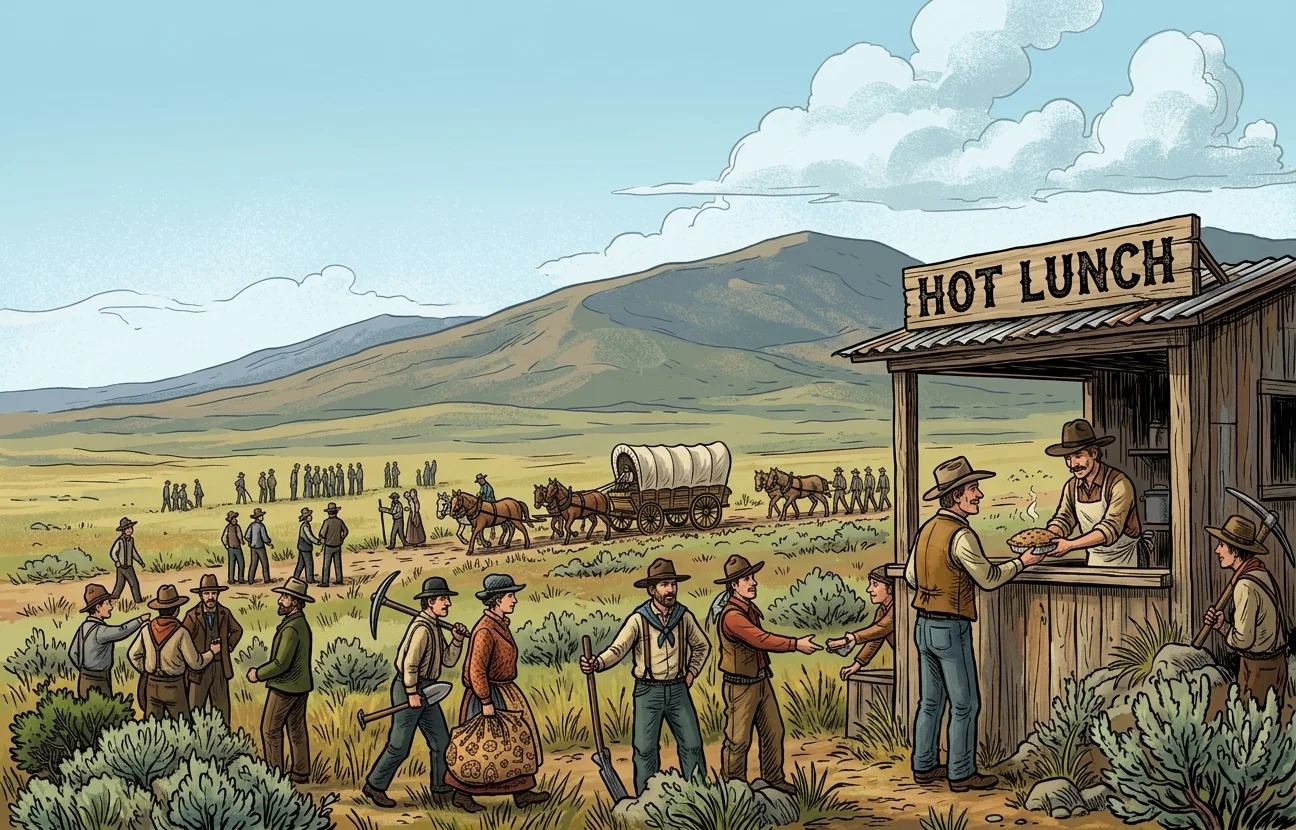
“Hot peach pie! Hot peach pie!” The inviting cry greeted the ears of a crowded busload of tired and dusty land seekers, who had been spending the day exploring the newly opened reservation. It was during one of those land drawings so popular a few years ago throughout the West. Every few years a great hunger for land possesses the souls of men. The cry of “Back to the farm” reechoes throughout the entire field of industry. Merchants, professional men, clerks, factory men, laborers and farmers even, suddenly develop a great yearning for land and more land.
This longing seems to come periodically, and sometimes ends disastrously. And yet, no doubt it is this innate love of the soil in the human heart that prompts the race to push out into new countries, to subdue the wilds, and to conquer the virgin places of the earth. The frontier has always beckoned to venturesome souls, and while the world stands will continue to do so. Man ever aspires for the unknown and the undiscovered.
A friend, a professional man, was one of this busload to whom the cry, “Hot peach pie,” was especially welcome. In telling about it, he said: “We had been out all day exploring the land, and an accident to our bus had delayed our return to camp. Most of our fellow land seekers had retired, and most of the hastily improvised lunch stands had closed for the night, so when I heard the cry, ‘Hot peach pie,’ I struck out as fast as my tired legs would carry me toward the place from which the cry emanated.
“A piece of pie and a glass of milk will do for me,” I addressed the young man in charge of the dingy counter.
“Sorry, mister, milk’s all gone; but I have some black coffee left; have a cup?”
“No, just a glass of water, and make it two pieces of pie, instead of one.”
“Hungrily I bit through the soggy crust. Peach pie being my favorite pie, I was silently congratulating myself on my good fortune. But, no peach pie I’d ever eaten tasted like this one. Something was radically wrong, either with the pie or with my taster. Upon examination I found that the pie was made of sour, dried apples, and I wasn’t fond of dried-apple pie.
“Say, fellow, what do you mean by selling me sour dried-apple pie when you are yelling, ‘Hot peach pie’?”
“Well, mister, it’s like this: The crowd about cleaned me out to-day, and all I had left is this lot of dried-apple pies. Yellin’ ‘Hot dried-apple pie’ didn’t get me anywhere, so I decided to yell ‘Hot peach pie,’ instead. These hungry land seekers are mostly city fellers, and good sports, and a lot of ’em can’t tell the difference, anyway; and them that can seem to enjoy the joke. Don’t you see I’m just callin’ ’em ‘hot peach pie,’ and even though they are made out of dried apples, there ain’t no law agin’ callin’ ’em ‘hot peach pie,’ is there?”
“So, while he continued to call ‘Hot peach pie! Hot peach pie!’ I swallowed my disappointment, and, being ravenously hungry, did the same with the counterfeit peach pie, even though I had to wash it down with copious gulps of alkali water.”
No, not really hot peach pie, just “callin’ ’em” that. Hot peach pie sounded more appetizing. A good sales talk, perhaps, and yet not quite honest. Such tactics, though, are quite common in the business world, and are not unknown even in the religious world. The well-advertised confection, “Chicken Dinner,” at five cents a bar, is an example of such tactics as are employed in the business world. They just call it that.
While perusing my daily paper a few days ago, I read an announcement, as follows: “The Reverend Mr. Blank next sabbath at 11:00 A. M. will speak on the subject, ‘Why I Keep Sunday Holy.’” Now the Reverend Mr. Blank is a popular preacher in a popular church in our little city, and no doubt would have something enlightening to say on this interesting question. The announcement itself struck me as being rather paradoxical. Notice it: “The Reverend Mr. Blank next sabbath at 11:00 A. M. will speak on the subject, ‘Why I Keep Sunday Holy.’” I wondered why it shouldn’t have been, “The Reverend Mr. Blank next Sunday at 11:00 A. M. will speak on the subject, ‘Why I Keep Sunday Holy,’” or “The Reverend Mr. Blank next Sabbath will speak on the subject, ‘Why I Keep Sabbath Holy.’”
I trust I shall not be considered irreverent if I say the announcement strangely reminded me of the hot-peach-pie incident already narrated. However, finding myself at leisure the following Sunday morning,—for after all it was Sunday morning,—I decided to go to church and hear the Reverend Mr. Blank tell why he kept Sunday holy.
Choosing his text from Exodus 20:8-11, he slowly and impressively read, “Remember the Sabbath day, to keep it holy. Six days shalt thou labor, and do all thy work: but the seventh day is the Sabbath of the Lord thy God: in it thou shalt not do any work, thou, nor thy son, nor thy daughter, thy manservant, nor thy maidservant, nor thy cattle, nor thy stranger that is within thy gates: for in six days the Lord made heaven and earth, the sea, and all that in them is, and rested the seventh day: wherefore the Lord blessed the Sabbath day, and hallowed it.” Inasmuch as he agreed with the text, his comments were brief and pointed. He next read Genesis 2:2, 3: “On the seventh day God ended His work which He had made; and He rested on the seventh day from all His work which . . . God created and made.” From these texts that plainly state why and when the Sabbath was made, he traced the Sabbath through the Old Testament. He stated that it was kept through the Old Testament times by Israel, the people of God. As Jesus and the apostles were Jews, they also kept the Bible, or creation, Sabbath. He next informed his hearers that, while the Sabbath is primarily an institution, all Bible characters and writers of both the Old and the New Testament observed it on the seventh day of the week.

INSUFFICIENT REASONS

However, for some reason (he did not seem to be altogether clear on this point), the early Christians began to observe Sunday, the first day of the week. He called attention to the resurrection,—a truly wonderful event,—which occurred on the first day of the week. Many Gentiles accepted Christianity in the early centuries of the Christian era, and these having a strong aversion for things Jewish, seemed to prefer to observe another day than the Jewish, or Bible, Sabbath.
These were some of the reasons, or explanations, given as to how Sunday came into the church. Just what effect the resurrection should have upon the Sabbath, an institution given to commemorate the creation, is more than he explained. It occurred, it is true, on a different day, but it also was an entirely different event.
It was several centuries later, the Reverend Mr. Blank informed us, that the Christians from the Gentile nations began to call Sunday the Sabbath, although quite early they had begun to call it the Lord’s day. After summing up these various points, the Reverend Mr. Blank concluded that inasmuch as the great majority of present-day Christians are keeping Sunday as holy time he thought it best to do likewise.
Now if the Bible itself (and I’d learned to love and respect the Scriptures) wasn’t so definite in regard to the seventh day of the week being the Sabbath, the Reverend Mr. Blank’s sermon might have sounded logical even as it was entertaining. But as I followed the scriptures presented and recalled some that were not used, I was forced to the conclusion that the Reverend Mr. Blank was wittingly or unwittingly employing the tactics of the dried-apple-pie vender. It is quite possible that the majority of his hearers did not know the difference, anyway. But why should this question be so perplexing? I recall an incident that illustrates its simplicity in a forceful way.

DID GOD LIE?

A little girl had been listening to a conversation between her mother and a caller. “Really, Mrs. Jones,” the caller had said, “you know the Sabbath is only an institution, and really not any particular day. Just so you keep one day in each week holy, you are obeying the spirit of the law if not the letter. So why be concerned about the Sabbath, anyway?”
Now was she right? and if so, then the first day of the week cannot be the Sabbath, and the Reverend Mr. Blank’s carefully worded reasons for keeping it were only lame excuses after all. In fact, he could not keep the first day of the week holy because God never made it holy. No, God did not lie. The seventh day of the week is still and ever will be the Sabbath of the Lord. Neither the Old nor the New Testament contains a hint or an intimation of any change of the Sabbath.

SABBATH THE ONLY TRUE DAY OF REST

The prophet foretold that a power would arise that would “think to change times and laws.” Daniel 7:25. The attempted change of the Sabbath is a witness to the truth of this prophecy that concerned an apostate power. The Sabbath, it is true, is an institution,but, like the Fourth of July, is inseparably connected with a definite day. What is better, it is also inseparably connected with the Creator, who made it as well as all other things. “By Him were all things created, that are in heaven, and that are in earth, visible and invisible, whether they be thrones, or dominions, or principalities, or powers: all things were created by Him, and for Him.” Colossians 1:16. And, somehow, as I read the wonderful promises in the Scriptures, many of them having to do with the Sabbath, I rejoice in knowing the difference between the reality and just “calling” it that. “If thou turn away thy foot from the Sabbath, from doing thy pleasure on My holy day; and call the Sabbath a delight, the holy of the Lord, honorable; and shalt honor Him, not doing thine own ways, nor finding thine own pleasure, nor speaking thine own words: then shalt thou delight thyself in the Lord; and I will cause thee to ride upon the high places of the earth, and feed thee with the heritage of Jacob thy father: for the mouth of the Lord hath spoken it.” Isaiah 58:13, 14. “Moreover also I gave them My Sabbaths, to be a sign between Me and them,
“that they might know that I am the Lord that sanctify them.” “And hallow My Sabbaths; and they shall be a sign between Me and you, that ye may know that I am the Lord your God.” Ezekiel 20:12, 20.
The word of God is plain, and sweet, and pleasant to the taste of hungry souls. “How sweet are Thy words unto my taste! yea, sweeter than honey to my mouth!” Psalm 119:103. The reason, my friend, the land seeker could discern the difference between peach pie and dried-apple pie was that he had eaten peach pie and found it good and to his liking. After tasting and knowing the genuine, it was difficult to swallow the imitation. So, as for me, I choose to believe and obey my Creator and my Lord, who says, “The seventh day is the Sabbath of the Lord thy God.” It has the genuine flavor. I like the way it tastes, and, what is still better, it satisfies.
Scintillating SENTENCES
CHARLES G. BELLAIR
Scintillating SENTENCES CHARLES G. BELLAIR

Every One a Hint on Soul Winning

A single soul is worth a long hunt.
To win some one, one must be winsome.
You can’t bunch soul saving at one time.
Remember big fish are often near the shore.
A life-saving crew is as good as a lighthouse.
I’d rather be a soul winner than anything else.
We are to win souls, not drag or compel them.
Praying for sinners is not enough. Go after them.
Take men for God. This is not the devil’s world.
We can’t save men through a speaking trumpet.
He who would catch fish must not make much noise.
Hitch your wagon to a star, but get some one aboard.
A good fisherman must do more than exhibit good tackle.
Lot was twenty years in Sodom, yet never got a convert.
No mistake in individual work is so bad as not doing anything.
Some soul winners will have more sheaves than they can carry home.
Winning one soul at a time results in winning a multitude in time.
Every Christian ought to win at least one soul a year, or go out of business.
If you were paid $1,000 for every soul you won, how many would you get? Why?
The wrecking crew has been working too long now. Put on the construction gang.

The Motive for Missions

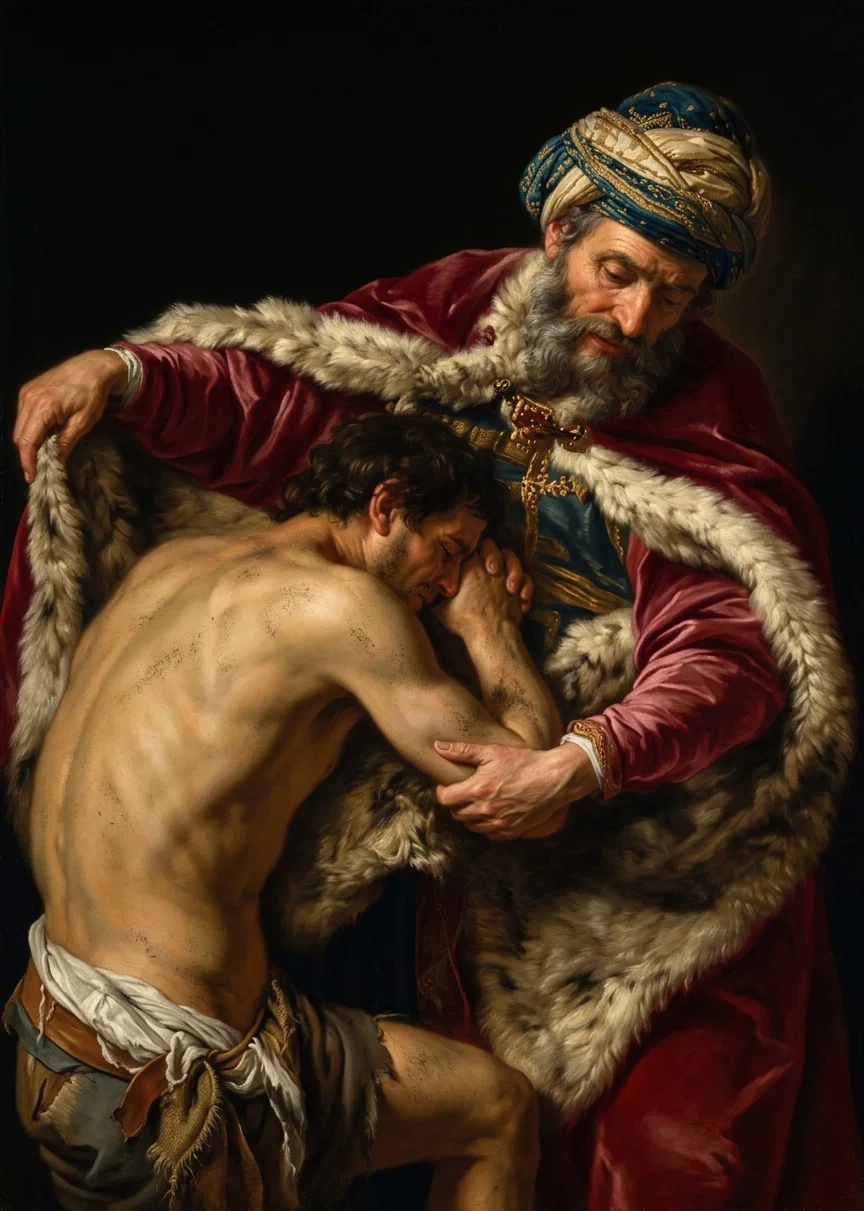
The prodigal son never imagined that his father could have such an intense love for him. Our heavenly Father is waiting with open arms; anxious to welcome us back home.
CARDINAL MANNING and Henry George were talking together, and the cardinal said, “I love men because Jesus loved them.” Mr. George replied, “And I love Jesus because He loved men.” The cardinal’s remark was almost apostolic. “In the face of Christ we ought, and in the grace of Christ we will.” That motive will be pure enough for missions to live in; it will also be large enough for missions to move in. Other motives are pure and large, but only one is redemptive. Other religions contain beautiful precepts, superb literature, but only one contains the power of God unto salvation.
How glad we ought to be for God’s unfailing pledge, “Herein is love,” that “God sent His Son”! Through Him God speaks to us; through Him we speak to God. Christ came because this pledge was true. He lives, and it is forever true. We owe Him more than our thanks; we owe Him our lives. Shall we not, then, do something for Him?
This pledge can easily be compared to a safe; let us say, “Break open the safe, and discover the will.” The story is told of a certain young man in America who was the son of a wealthy Christian man. He had become wayward in his habits, and, finally, quarreling with his father because he had been refused all the money he demanded, he had left home in anger and given himself up to a reckless life. For a long time he continued an abandoned wanderer. Becoming at one time very poor and being brought to the verge of desperation, he determined to break into his father’s house in the absence of the family, thinking that since he well knew where the valuables were kept, he could find means to relieve his necessity. “My father owes me a living,” he said to himself, “and I will have it.” He succeeded in effecting an entrance into the house and the safe, and amid the stillness of the house, began his search. Coming upon some valuable papers, he found his father’s will. With curious eye, he began reading that will. To his utter astonishment he found his name among the heirs and a large bequest set against it. At first he could hardly credit his eyes. The father with whom he had quarreled, against whom he had cherished such bitterness,—could it be possible that he had retained his name in his will, and was yet intending to give him his portion with the rest? “Can it be,” he said to himself, “that my father loves me in spite of all my hatred and bitterness toward him?” And such was the effect of these thoughts that they were the means of bringing him to repentance and reconciliation with his father.
How little that young man thought his father loved him! Has not that thought come to you? Has not your idea about God been along that trend of thought? Perhaps you have tried to shut God out of your life, but after breaking open the safe, you discovered the will that “God so loved the world, that He gave His only-begotten Son, that whosoever believeth in Him should not perish, but have everlasting life.” What a wonderful discovery! “He that heareth My word, and believeth on Him that sent Me, hath everlasting life.”
Yes, peace is found and can be found by all. Not alone by repenting, not by reforming, not by feeling, not by preaching, but by hearing and believing God’s message,—by simply seeing, realizing, and believing what Christ has done for you.
Beloved, if Christ so loved us, what then can we do? What then ought we to do, and what then are we going to do? We have a great opportunity. Yes, opportunity knocks at our door every day, and I fear that we miss a great many grand opportunities because we are not ready for them.
“They do me wrong who say I come no more When once I knock and fail to find you in, For every day I stand outside your door, And bid you wake, and rise to fight and win. Though deep in mire, wring not your hands and weep; I lend my arm to all who say, “I can;” No shame-faced outcast ever sank so deep, But he might rise and be again a man.” —Malone.
Opportunity is power. What we ought to do, we can do; and when God opens a door before His people, it is His command that they should enter. The great doors of the world are not often swung wide open. There are indeed many ways by which we can improve our opportunities. One day when James Brainerd Taylor, then a young man, was out driving, he stopped at a watering trough. Another young man was watering at the same trough. Taylor said: “I hope you love the Lord. If you do not, I want to commend Him to you as your best Friend.” The strangers went their ways. The young man was converted, entered the ministry, and went to Africa as a missionary. Many times he wished that he knew who the man was that spoke to him at the watering trough, but he never did until some one sent a box of books to him in Africa. Opening one of the books at the title page, he saw a portrait, and exclaimed, “Oh, that is the man! That is the man who preached to me at the watering trough.” It was the portrait of Brainerd Taylor.
Perhaps if we only speak an encouraging word to some one, it will help him along on life’s way. Faithful Christians, those who are the real children of God, are reminded by Paul in his letter to the Philippians that they shine as lights in the world, holding forth the word of life. Not all lights are of the same magnitude, but the nature is always the same. Even as the lighthouse sends forth its rays, so ought we to send forth our rays. The great purpose of preaching is to perfect Christian character. We Christians have the keys to God’s plans, to God’s house, to God’s home, but we are carrying them around in our pockets and do not use them, or we try them only on the front door when we should try them on the other doors as well.
Again I repeat, Beloved, if Christ so loved us, then what ought we to do? Obedience is the first test of love. Jesus has said, “Go ye therefore, and make disciples of all the nations, baptizing them into the name of the Father and of the Son and of the Holy Spirit: teaching them to observe all things whatsoever I have commanded you: and lo, I am with you always, even unto the end of the world.” This commission contains a promise that we all want to claim, but we have no right to the promise unless the command also is accepted and followed. The two questions that the most powerful men are ever asking themselves are these: “What needs to be done in the world? and how can I best help to do it?” The following stanzas are a good answer for each one of us to give:
“Take my feet, and let them be Swift and beautiful for Thee; Take my voice and let me sing Always, only, for my King. “Take my lips and let them be Filled with messages for Thee; Take my silver and my gold,— Not a mite would I withhold.”
(Continued on page 10)

Your Father’s Will

(Continued from page 3)
The great commission had given the early church its marching orders: “Go ye into all the world.” It was to a world task that the first gospel missionaries set themselves when— “Out from the doomed Jerusalem, in the days of long ago, By two and two they sallied forth to the lands of sun or snow.”
Most of them were schooled only in that wondrous school of three years and a half of association with Christ; but they bore a message of life and power that humbled the pride of all the gathered learning of the ages. “All power is given unto Me, in heaven and in earth,” Christ had said in the preface to the great commission. “Go ye therefore, and teach all nations.” With joy these believers told the message of hope to all.
The miracle of missions is a miracle of a changed life. It is the everyday experiences incidental to the upspringing of a new life. The story of missions is full of the marvels of God’s overruling providences and transforming grace. This is the message that the everlasting gospel of Christ’s redeeming love and grace and power is to proclaim to all mankind in this last time. We are to follow Jesus, who left us an example that we might follow His steps. There is much left for us to do.
A gentleman once said to Dr. Skinner, who was asking aid for foreign missions, “I don’t believe in foreign missions. I want what I give to benefit my neighbors.” “Who are your neighbors?” “Why, those around me.” “Do you mean those whose land joins yours?” “Yes.” “Well,” said Dr. Skinner, “How much land do you own?” “Five hundred acres.” “How far down do you own it?” “Why, I never thought of that before. I suppose halfway through.” “Exactly, and I want this money for the Chinese men whose land joins yours at the bottom.”
To a believer in Christ all men are neighbors.
The motive that constrained men and women to go out as missionaries at the beginning will be sufficient to continue the missionary enterprise in the desire to share our Saviour, the only Saviour, with a world that absolutely needs Him.
“Beloved, if God so loved us,” what then are we doing?
“Who’ll go? who’ll go whate’er the cost? Who’ll go? who’ll go to save the lost?”
“I go, I go, whate’er the cost; I go, I go to save the lost.”
Continue reading: The “BLACK HAND” *That* DESTROYS WITHOUT A WARNING