Your ShelfYour Projects

Signs of the Times, Vol. 26, No. 15.

THE WATER OF LIFE

Signs of the Times

Apr 11, 1900

Pacific Press Publishing Company · Oakland, California · Apr 11, 1900

THE WATER OF LIFE.
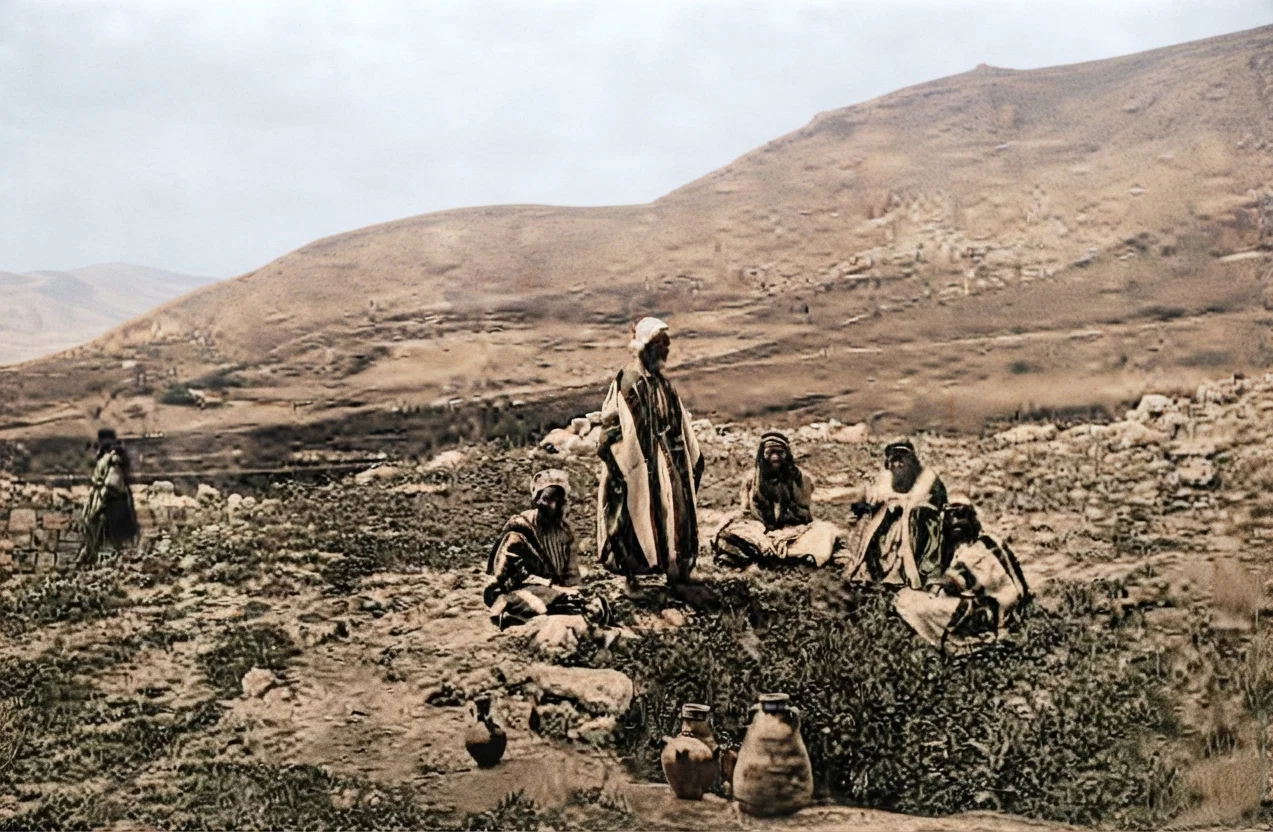
IT was at the side of the well-known well of Jacob that the Saviour gave utterance to the words: "Whosoever drinketh of this water shall thirst again; but whosoever drinketh of the water that I shall give him shall never thirst; but the water that I shall give him shall be in him a well of water springing up into everlasting life." John 4:13, 14.
At another time the Saviour said, "I am the bread of life; he that cometh to Me shall never hunger; and he that believeth on Me shall never thirst." John 6:35. The one who believes the words of Christ receives into his being the life and power of divinity. For the "words that I speak unto you, they are spirit, and they are life." John 6:63. "For the Word of God is living, and active, and sharper than any two-edged sword, and piercing even to the dividing of soul and spirit, of both joints and marrow, and quick to discern the thoughts and intents of the heart." Heb. 4:12, R.V.
Do not fail to note in the foregoing paragraph that the text says that the Word of God is both "living and active." God's Word lives, and therefore it acts, it is pervaded with power. The natural eye does not detect life in the Word of the Lord, and therefore many do not recognize the fact that it possesses such an attribute. But you can not see life in anything; then why should you ask to see it in the Word of God before you will believe that the life is there? Can you see the life in the grain of wheat, or of corn, or of any other seed?
Now Jacob's well was there.
Yet if the seed is planted in good soil and properly watered and given the right amount of heat, it will soon show what remarkable life powers it possesses.
God's words are seeds of truth and spiritual power, and if they are given the proper conditions, they will grow just as wonderfully and just as surely as the seeds of grain that we plant in the soil. The soil in which these words of the Lord are to be planted is the human mind and heart. And that which serves as heat and moisture to make them grow is faith. "He that believeth on Me shall never thirst." John 6:35. The words of the Lord can be received into any mind just as mere words. But they do not grow when received that way any more than seeds of grain grow without the proper heat and moisture. The soil may be ever so good, and the seeds may be planted ever so carefully, but with the heat and moisture lacking they will simply lie there, showing no signs of life. The fault is not with the seed.
Thus a great many men will receive the Word of God into their minds merely to make sport of it or to try to pick it to pieces. They make light of those who say that they are experiencing the realities of the life and power that the Word contains. They refuse to have faith in the Word, and yet think it strange that it does not act with power for them as well as it will for those who have confidence in it. What a strange inconsistency! O, that men would have faith in the living words of the Lord, so that they might experience its life-giving power!
The growth of the Word of God in the mind, and its consequent manifestations ofpower, is the development of one of the purest principles of scientific truth. It represents the positive action of spiritual life. The law that causes the Word to grow in the mind where it is received by faith, is as certain to act as the law of gravity. If you throw a stone into the air, it will always return to the earth again. We say that the stone does this by the law of gravity. And any one knows that this law has never failed except where its Author has temporarily overruled it; and that only proves more fully the power and security of the law. Nobody expects anything else when he throws something into the air but that it will surely come down again. We say that it can not possibly fail. This is a truth that is grandly fixed.
But of all the sublime truths that it is possible for us mortals to know, aye, or for even the angels to know, there is none so great and so gloriously helpful as the positive truth that God's Word lives and is clothed with power. Receive that Word reverently into your mind, and it will grow into all the fulness of its every promise, and it will do it in every particular and in every case. What more could we ask? What more could be given? Meditate upon the Word all the time. Think carefully of these sublime truths. Let the Word have a chance, and it will never fail to do its wonderful work.
"Let the Word of Christ dwell in you richly in all wisdom; teaching and admonishing one another in psalms and hymns and spiritual songs, singing with grace in your hearts to the Lord. And whatsoever ye do in word or deed, do all in the name of the Lord Jesus, giving thanks to God and the Father by Him." Col. 3:16, 17. T.

'PAUL, A PRISONER OF JESUS CHRIST.'

SOME thirty years before the date of this epistle to Philemon, Saul of Tarsus was actively engaged in the persecution of Christians, committing men and women to prison, thinking to do God service. But Jesus of Nazareth had revealed Himself to this fierce enemy, showing him how great things he must suffer for His name's sake. Henceforth Paul, the apostle of the Gentiles, fearlessly and faithfully preached the faith which once he destroyed.
"Paul the aged"—Paul the prisoner of Jesus Christ—bound by a Roman chain, confined behind the bars of a Roman prison, suffers for the faith of Jesus.
It is a matter of history that the members of the primitive church, with perhaps a few exceptions, suffered martyrdom, sealing their testimony with their blood.
Some have entertained the idea that persecution for righteousness' sake is a thing wholly of the past, but, in view of the prophecy of Rev. 13:15-17, we may know that in the last days the church of God will suffer persecution, and be brought into fearful straits, the decree of death being actually passed upon them.
Neither is this wholly a matter of prophecy, as once it was, for in the closing years of the nineteenth century, with all its boasted civilization, conscientious, God-fearing men have been arrested and served terms in jail or chain-gang, for obedience to the fourth commandment of God. Does it seem unreasonable that the faithful follower of Jesus should thus suffer?
Remember, then, the Saviour's words: "The servant is not greater than his lord. If they have persecuted Me, they will also persecute you." John 15:20.
Remember, also, the words of Peter: "Beloved, think it not strange concerning the fiery trial which is to try you, as tho some strange thing happened unto you; but rejoice, inasmuch as ye are partakers of Christ's sufferings; that, when His glory shall be revealed, ye may be glad also with exceeding joy." 1 Peter 4:12, 13.
Remember the words of Paul, the "prisoner of Jesus Christ:" "What mean ye to weep and to break mine heart? for I am ready not to be bound only, but also to die at Jerusalem for the name of the Lord Jesus."
AUGUSTA W. HEALD. Windham, N. H.

VICTORY OVER TEMPTATION.

[In Two Articles. This Is the Second.]
AGAIN, the devil taketh Him up into an exceeding high mountain, and showeth Him all the kingdoms of the world, and the glory of them; and saith unto Him, All these things will I give Thee, if Thou wilt fall down and worship me." Satan's expulsion from heaven had not reformed him. In this last temptation he touched on the subject of his fall from heaven. He had then become dissatisfied because Christ was preferred before him, and he now declared that if Christ would acknowledge him as supreme, he would relinquish his claim to the world.
Christ had heard Satan's taunting words of scorn regarding His claim to be the Son of God: "Thou the Son of God—born in a stable, hurried off to Egypt for fear of being destroyed by Herod, working as a carpenter in an obscure town of Galilee! If at Thy baptism a voice from heaven said, 'This is My beloved Son, in whom I am well pleased,' why art Thou now helpless and starving in this wilderness? Why is the illustrious Son of God wandering, unhonored and unattended, among the wild beasts? Where is Thy retinue of angels? Where are Thy glory and honor?"
Satan now presented to Christ the kingdoms of the world in all their glory. The view was the most extensive upon which the eye could rest, and as they looked upon it, Satan said: "All this power . . . is delivered unto me; and to whomsoever I will I give it. If Thou therefore wilt worship me, all shall be thine."
In the first temptation Satan had said, "If Thou art the Son of God." Evidence was now given him that Jesus was indeed all that He claimed to be. Divinity flashed through humanity as the Saviour said, "Get thee behind Me, Satan; for it is written, Thou shalt worship the Lord thy God, and Him only shalt thou serve." With such power were these words spoken that Satan left the battle-field a conquered foe.
Christ had gained the victory. Passing over the ground where Adam stumbled and fell, He had not yielded in a single point. The conflict was ended, and He was a conqueror. But the strain had been great, and He lay as one dying. "And, behold, angels came and ministered unto Him." Not only was food supplied to Him; supernatural restoration came. God sent His approval and commendation to revive His Son. How much the Saviour enjoyed the comfort brought to Him! His time of victory had come. He could accept the companionship and service of the angels, since they came unbidden by Himself, sent direct from the Father, whom He had honored by enduring the test under circumstances such as no human being will ever pass through. He had been given opportunity to take sides with the apostate foe of God, but He repulsed every temptation with the words, "It is written." Well might a voice from heaven declare, "This is My beloved Son, in whom I am well pleased."
The lesson taught by these temptations is for us all. The Captain of our salvation was made perfect through suffering. To-day the Lord tries men to see what characters they will develop. He tried the Israelites, that it might be seen what was in their hearts. Paul's character was perfected by trial. God is to-day trying the faith of every soul who claims to be in His service. When passing through trials, we may know that thus God is striving to lead us to know Him and place our trust in Him.
When we choose our own way, our own will, our own pleasure, when we follow our own impulses, we do not live as sons and daughters of God. We do not love God supremely or our neighbor as ourselves. We are robbing God. Our time, our service, our affection, our property, all belong to Him. When God's people bring to Him the willing offering of a faithful tithe, their faithfulness will be rewarded. But many who profess to give God all, make a reservation of themselves or of their property. God will accept nothing less than a spiritual priesthood who can bring Him an offering in righteousness. No selfishness is of Christ. Selfishness lies at the foundation of all sin. The time has come when it is for our present and eternal good to know the will of God forourselves. The path traveled by Christ is the only safe path for us to follow. The Saviour says, "He that will come after Me, let him deny himself, and take up his cross, and follow Me."
The prayer Christ offered to His Father, just before leaving His disciples, to be betrayed, rejected, and condemned, is for His disciples in all time. In this prayer He said: "Father, the hour is come; glorify Thy Son, that Thy Son also may glorify Thee; as Thou hast given Him power over all flesh, that He should give eternal life to as many as Thou hast given Him. And this is life eternal, that they might know Thee the only true God, and Jesus Christ, whom Thou hast sent. I have glorified Thee on the earth; I have finished the work which Thou gavest Me to do. And now, O Father, glorify Thou Me with Thine own self with the glory which I had with Thee before the world was."
It is not enough to have a theory of the truth. The mind must receive enlightenment from the Holy Spirit regarding the will of God. Then by his service man must bear witness to the light, according to his knowledge of God and of Christ. The Lord must be honored. His followers must trust in Him, believing that He is working in their behalf to bring them through trying places. In this God consults His own glory and their highest good. He seeks to give them an experience that will be of the greatest value to them.
Our knowledge of God and of Christ is altogether too meager. True knowledge of God is genuine and practical. Those who have this knowledge will not keep silent. They will communicate to others what they have received. They will make an entire surrender of the will to God, realizing that they are to reach higher and still higher, that they may give others the benefit of their experience as those who have been tried and proved through prayer and patience. We have been given to Christ by the Father, and no man can pluck us out of His hand. By Christ we are to be purified, made white, and tried. Our knowledge of God is to steadily increase. Christ says, "Ye are the salt of the earth." The leaven of righteousness in the life of believers is revealed by the words, the spirit, the deportment. True virtue is manifested in the daily life.
MRS. E. G. WHITE.

HE GIVETH PEACE.

ALONE at night with the Saviour When the toil of the day is done, My failures come flocking homeward Like birds at the set of sun— Home to a heart complaining, Home to a crowded nest, Home to a loft too welcome— They perch for a night of rest.
This flock of a thousand feather That nest in a heavy heart Is brooding many a fledgling, Its parents' counterpart, I who have failed so often, I who would fain do right, Welcome these birds of sorrow That nest in my heart to-night.
Kneeling there in the stillness Of the hall of eternity, A myriad recollections Come hurrying home to me: Here I forgot His presence, And there I was quick in wrong; Here I had shunned the weak one, Or joined with the gossip throng.
Strive tho I may to tell Him Of aught that my life has blessed, My fledgling failures rustle Deep down in their brooding nest. Distraught, I can only falter And cry in my soul's distress, "O Lord, I am nothing, nothing, I've nothing that Thou canst bless."
Hovering under the shadow Of the failures that shut me in, My soul cries out in anguish, Crushed down by a sense of sin. Tho still all I have to offer Is ruined with frost and blight, The peace of His holy presence Comes down like the dew to-night.
Trusting in self is failure, And weak grows the heart and cold, And farther our dark ways wander Away from the great home fold. But coming to Him in sorrow For sin and the faults we bring, We enter the hovering shadow Of His great protecting wing.
C. M. SNOW.

GETHSEMANE.

THEN cometh Jesus with them unto a place called Gethsemane, and saith unto the disciples, Sit ye here, while I go and pray yonder. And He took with Him Peter and the two sons of Zebedee, and began to be sorrowful and very heavy. Then saith He unto them, My soul is exceeding sorrowful, even unto death; tarry ye here, and watch with Me.
"And He went a little farther, and fell on His face, and prayed, saying, O My Father, if it be possible, let this cup pass from Me; nevertheless not as I will, but as Thou wilt.
"And He cometh unto the disciples, and findeth them asleep, and saith unto Peter, What, could ye not watch with Me one hour? Watch and pray, that ye enter not into temptation; the spirit is indeed willing, but the flesh is weak.
"He went away again the second time, and prayed, saying, O My Father, if this cup may not pass away from Me, except I drink it, Thy will be done. And He came and found them asleep again; for their eyes were heavy. And He left them, and went away again, and prayed the third time, saying the same words."
"And there appeared an angel unto Him from heaven, strengthening Him. And being in an agony He prayed more earnestly; and His sweat was as it were great drops of blood falling down to the ground."
"Then cometh He to His disciples, and saith unto them, Sleep on now, and take your rest; behold, the hour is at hand, and the Son of man is betrayed into the hands of sinners." See Matt. 26:36-45; Luke 22:39-47.
Here we have, in most solemn words, portrayed before us the awful conflict which the dear Son of God endured for us—the "just suffering for the unjust." And not only do we have a view of His suffering for us, but we are given bright hope that as He came off a conqueror, we too, through faith in the spilled blood, may conquer every besetting sin, and, having "suffered," "reign with Him."
Let us consider what Jesus here bore for us, and may we realize more than ever the cost of our redemption! Jesus had often visited this garden for prayer and meditation, but never with a heart so full of deep sorrow and loneliness as upon this occasion.
Throughout His life on earth He had walked in the light of God's presence. When in conflict with men who were inspired by the very spirit of Satan, He could say, "He that sent Me is with Me; the Father hath not left Me alone; for I do always those things that please Him."
But now He seemed to be shut out from the light of God's sustaining presence. Now He was remembered with the transgressors. The guilt of fallen humanity He must bear. Upon Him "who knew no sin," must be "laid the iniquity of us all." So dreadful does sin appear to Him, so great is the weight of guilt He must bear, that He is tempted to fear it will shut Him out forever from His Father's love. Feeling the terrible wrath of God against transgression, He exclaims, "My soul is exceeding sorrowful, even unto death."
Near the entrance of the garden He leaves all the disciples, except Peter, James, and John. These three seem to have been His closest companions. They had beheld His glory upon the mount of transfiguration; they had seen Moses and Elias talking with Him, and had heard the voice from heaven. And now in His great struggle He desires them to be near Him. But He could not bear that even they should witness His agony, so He said, "Tarry ye here, and watch with Me." Then He went a short distance, about a "stone's throw"—not so far but what they could both see and hear Him—and fell prostrate on the ground. He felt that He was being separated from the Father. The gulf was so black, so deep, so broad, that His Spirit shuddered before it.
But this agony He must not exert His divine power to escape. As man He must suffer the consequences of man's sin. As man He must endure the wrath of God against transgression. His sufferings are well described by the prophet, "Awake, O sword, against My Shepherd, and against the man that is My fellow, saith the Lord of hosts."
Christ was now standing in a far different attitude from that in which He had ever stood before. As the substitute and surety for sinful man, He was suffering under divine justice. He tasted of what justice meant. Heretofore He had been as an intercessor for others; now He longed to have an intercessor for Himself.
Where is Satan now? is he asleep?—Ah, no, he was putting forth his greatest efforts to destroy our Saviour! He now presses in every thorn to its fullest extent, and endeavors by every means within range of his supernatural possibilities to overthrow Christ. The conflict was terrible. Its measure was the guilt of His nation, of His accusers and betrayer, ay, the guilt of the whole world lying in wickedness. O! the sins of men, you and I included, weighing so heavily upon Jesus, were crushing out His life.
So terrible is the temptation to step aside, and let an ungrateful world bear its own guilt, that three times He uttered, in agony of mind and body, "Father, if it be possible, let this cup pass from Me." But this was not all the prayer. Had it closed here, man would have been instantly cut off from heaven. No; Jesus added, "Nevertheless not My will, but Thine, be done."
As the agony of soul came upon Jesus, "His sweat was as it were great drops of blood falling down to the ground."
How exquisite must this anguish have been, when it forced the very blood through the coats of the veins, and enlarged the pores, in such a preternatural manner as to cause them to empty it out in large, successive drops! Bloody sweats are mentioned by many authors; but none was ever such as this—where a person in perfect health (having never had any predisposing sickness to induce a debility of the system), and in the full vigor of life, about thirty-three years of age, suddenly, through mental pressure, without any fear of death, "sweat great drops of blood."—Clark.
It was now, during this fearful struggle, our Saviour having become weak, pale, and haggard in appearance, that the words apply, "His visage was so marred more than any man, and His form more than the sons of men."
In this awful crisis, when everything was at stake, when the destinies of the world trembled in the balance, the heavens opened, a light shone forth, and, amid the darkness of that solemn hour, a mighty angel came to the side of Christ. The angel came not to take the cup from Jesus, but to strengthen Him to drink it.
Where now are the disciples whom Jesus had sought twice for comforting words—when now He needs them to lift His fainting form and bathe His blood-stained brow—they who had just a short time before boldly affirmed that they were "ready to go with Him to prison and to death"?—Ah! they were asleep.
Let us search our hearts to see if we too are spiritually asleep. As with the disciples during those closing hours, this is the watching time. "Watch and pray, that ye enter not into temptation," is the admonition now given to God's people. But how many there are who, as were the disciples, are confident that they will pass through the times of trouble, who are now asleep! They are indifferent to the gracious calls being made. Time after time the gentle Spirit has appealed to them to awake, but they again fall back into the sleep of indifference.
Reader, erelong Jesus is coming to you, and may He not say, "Sleep on." For the disciples there was still hope, but when that word shall be spoken in this time, it shall mean eternal ruin; the angel of mercy will have taken her flight, never to return. Let us each take earnest heed to the words, "Watch and pray, that ye enter not into temptation."
BIRDIE WATSON.
Gladstone, Manitoba.

HOW TO KEEP THE SABBATH.

I SEE only one way to keep it, and that is God's way, from the going down of the sun to the going down of the sun. Timepieces are uncertain. The sun is faithful. God has so fixed it that if we move a hundred or a thousand miles east or west we know when the Sabbath begins and ends. If the day is longer or shorter, it makes no difference. How good God is, and how plain He has made Sabbath-keeping to poor ignorant human beings, who may not be educated and able to calculate latitude and longitude! The ways of God are plain to the heart which longs to walk in them.
S. A. CONNELL.

THE ORIGIN OF EVIL AND THE CHANGE OF THE SABBATH

THE FATHER OF LIES.

OF the first departure from truth among all God's creatures the Saviour gives the following testimony: "He [the devil] was a murderer from the beginning, and abode not in the truth, because there is no truth in him. When he speaketh a lie, he speaketh of his own; for he is a liar, and the father of it." John 8:44. And again, "I beheld Satan as lightning fall from heaven." Luke 10:18.
Thus we see that he who is the prince of evil in our world (because that with him all forms of iniquity have had their conception) was at one time in heaven, bright as the "lightning," "in the truth," whence he fell because by his own choice he departed from the station in which the all-wise Creator had placed him.
Before inquiring into the cause of Satan's fall it may be permitted us to examine a little further into the position he occupied in heaven. In Eze. 28:12-17, under the symbol of the king of Tyrus, we have the following description:—
"Thus saith the Lord God: Thou sealest up the sum, full of wisdom, and perfect in beauty. Thou hast been in Eden the garden of God; every precious stone was thy covering; . . . the workmanship of thy tabrets and of thy pipes was prepared in thee in the day that thou wast created. Thou art the anointed cherub that covereth; and I have set thee so; thou wast upon the holy mountain of God; thou hast walked up and down in the midst of the stones of fire. Thou wast perfect in thy ways from the day that thou wast created, till iniquity was found in thee. By the multitude of thy merchandise they have filled the midst of thee with violence, and thou hast sinned; therefore I will cast thee as profane out of the mountain of God; and I will destroy thee, O covering cherub, from the midst of the stones of fire. Thine heart was lifted up because of thy beauty; thou hast corrupted thy wisdom by reason of thy brightness."
In Isa. 14:12 we have this further statement:—
"How art thou fallen from heaven, O Lucifer ["morning star," Jewish translation], son of the morning! how art thou cut down to the ground, which didst weaken the nations!"
From these scriptures we learn the following facts concerning the place Satan occupied in heaven before he fell:—
  1. He was a created being.
  2. He was a cherub, an angel of high rank.
  3. He was full of wisdom and perfect in beauty.
  4. He was created perfect in all his ways, and remained so till iniquity was found in him, hence God was not responsible for his fall.
  5. He was given a place upon the holy mountain of God, to walk up and down with authority in the midst of the stones of fire.
  6. He was endowed with superior musical skill ("tabrets" and "pipes" were prepared in him) to lead the angel throng in their songs of praise in worshipful adoration before their great Creator. Thus when the foundation of the earth was laid, Lucifer, with his companion morning star, struck the joyful note, and "all the sons of God" followed in the shout of joy." Job 38:7.
  7. He was Lucifer, which means the "light-bringer." He was anointed to stand in the presence of God to cover the throne with light and glory ineffable.
  8. He was also a morning star in heaven. Christ was the Morning Star. "I Jesus have sent Mine angel to testify unto you these things in the churches. I am the Root and the Offspring of David, and the bright and morning Star." Rev. 22:16.

We see, then, that Lucifer was exalted in heaven more than any other angel, occupying a position second to God's only Son. That we may form a correct idea of Lucifer's exalted station let us here pause to notice the following facts: God said of Him, "Thou art the anointed cherub that covereth; and I have set thee so." When Moses received from God His law to guide and govern His people, at the divine command he made an ark expressly for its reception and safe keeping. Above, upon the ark, and serving as its cover, was the mercy-seat, a cherub standing on either end with outspread wings covering the mercy-seat, their faces looking inward and inclined reverentially toward the mercy-seat. "And thou shalt put the mercy-seat above upon the ark," was the command of God; "and in the ark thou shalt put the testimony that I shall give thee. And there I will meet with thee, and I will commune with thee from above the mercy-seat, from between the two cherubims which are upon the ark of the testimony." Ex. 25:21, 22.
The tabernacle, with its furnishings, was but a pattern of the things in heaven. Ex. 25:40; Heb. 8:5. Hence, while in the sanctuary on earth, God met with His people on the mercy-seat between the cherubim, so in God's dwelling-place in heaven, the true tabernacle, He sits upon the mercy-seat, the throne of grace, likewise between the cherubim. One of those cherubim covering God's throne was Lucifer, the light-bringer.
Let us next endeavor to learn the iniquity which was found in the heart of Lucifer, and the final act of transgression which caused his expulsion from the heavenly courts. It is not the purpose at this writing to attempt to fathom the depths of his iniquity, or to find a reason for its existence. Sin is an invader as unaccountable as it is unreasonable and dreadful. Our present object is simply, by the light which Inspiration sheds, to learn what we can concerning its workings, that we may be able the better to shun its foils in our own individual experience; for he in whose breast sin was first conceived is the "god of this world," in which we live, "the spirit that now worketh in the children of disobedience." Eph. 2:2.
And the same unholy ambition which lurked unrestrained in Lucifer's breast, and which led to his downfall, has, in the ages since, snatched millions, not alone of the children of earth, but from the inhabitants of heaven as well, from their God-given estate in a home of innocence, peace, and joy, and plunged them into misery and ruin as irretrievable as his own. Like the ignis fatuus hovering over some dismal swamp to decoy the unwary traveler, and ever receding as the unsuspecting victim advances, until his feet are hopelessly mired in its slimy depth, so at the present time are earth's teeming multitudes being lured on in the darkness by some phantom prospect of worldly gain, honor, or pleasure; and in the mad rush of the hopeless chase, they are, by the same desire for self-exaltation and self-pleasing, being beguiled into eternal night and oblivion. O, the mystery of iniquity! "What shall it profit a man, if he shall gain the whole world, and lose his own soul?"
That we have not misstated Lucifer's ambition let us note the further statement of the prophet in the scripture above cited: "For thou hast said in thine heart, I will ascend into heaven, I will exalt my throne above the stars of God; I will sit also upon the mount of the congregation, in the sides of the North; I will ascend above the heights of the clouds; I will be like the Most High." Isa. 14:13, 14. Note that Lucifer's desire was for the preferment of position without any regard to character. He did not say, "I will be like God,"—merciful and gracious, long-suffering, and abundant in goodness and truth. This desire to be like God in character is commendable, indeed it is the very essence of Christianity. Lucifer's determination was to be like the Most High in position, or, in other words, to occupy the throne of exaltation, which the Most High One holds, as the supreme Ruler of the universe. Alas! too often in the hearts of men does there arise the same selfish desire for self-aggrandizement and supremacy of position, and always, sooner or later, is it attended with the same disastrous result.
That Lucifer's desire was simply for the exaltation of position, note again the statement, "And I will sit also upon the mount of the assembly in the farthest end of the North." Isa. 14:13, Jewish translation. To realize the deep significance of this expression we have only to consider that the universal mode of indicating the direction north is up. We say, invariably, "Up north," "down south," etc. That is, north is used as an expression of exaltation; and the farthest end of the North would signify the highest degree of exaltation of which it is possible to conceive. Furthermore, the Scriptures abundantly prove that God's throne is in just that exalted place. "Great is the Lord, and highly praised, in the city of our God, in His holy mountain, a beautiful district, the joy of the whole earth is Mount Zion, the farthest north, the city of the Great King." Ps. 48:1, 2, Jewish translation. "For thus saith the high and lofty One that inhabiteth eternity, whose name is Holy: I dwell in the high and holy place." Isa. 57:15. Said the angels in their joyful announcement, heralding the birth of the Saviour, "Glory to God in the highest." Luke 2:14. The declaration of the angel Gabriel to the mother of our Lord concerning the child Jesus, was: "He shall be great, and shall be called the Son of the Highest. . . . The Holy Ghost shall come upon thee, and the power of the Highest shall overshadow thee." Luke 1:32-35.
That God's exaltation is simply the exaltation of goodness is clear from the Scriptures. "For thus saith the high and lofty One that inhabiteth eternity, whose name is Holy: I dwell in the high and holy place." Isa. 57:15. God dwells in the high place because He is holy. He is not merely high and holy, but He is high because He is holy. He alone is Most High because He alone is Most Holy.
THE ORIGIN OF EVIL AND THE CHANGE OF THE SABBATH

Remember God in Small Things

"REMEMBER God in all the small things of your life and He will not forget you in the great ones."

Ready When Opportunity Comes

The great secret of success in life is for man to be ready when his opportunity comes.—Disraeli.
Continue reading: THE NATURE OF MAN