Signs of the Times, Vol. 41, No. 10.

A GREAT AND SIGNIFICANT CONFERENCE

Signs of the Times

Mar 17, 1914

Pacific Press Publishing Association · Mountain View, California · Mar 17, 1914
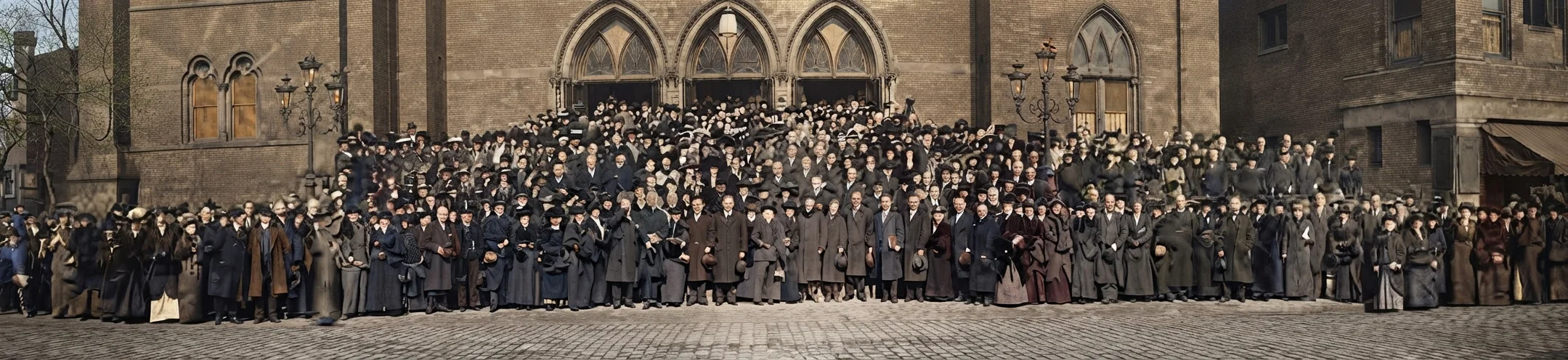
THE FIRST OF A SERIES OF SEVEN BIBLE CONFERENCES

A GREAT AND SIGNIFICANT CONFERENCE

Influential and Well-Known Men Have Enthusiastic Gathering to Study the Bible — The Good Old Book Still Has Power if Allowed to Speak — It Is More Essential in Producing Good Men than Is the Making of Human Laws
By M. ELLSWORTH OLSEN
No doubt ours is a skeptical age; and through the weakening influence of rationalism, even the pulpit has been largely shorn of its strength. But the Bible is still the living word of God; and those ministers of the gospel who believe in its inspiration, and uphold its authority, are the ones who have a vital message for the people of to-day.
We have been hearing from some of the most prominent ministers of this type in the city of Washington during the last few days. They have been holding the first of a series of seven Bible conferences. The meetings began in Poli’s Theater on Sunday afternoon, February 8, and continued throughout the week, closing with an afternoon service on February 15. The object of these conferences is to maintain the integrity and inspiration of the Bible, and show how vitally it is related to human needs.

COSMOPOLITAN BUT NOT ON PLEASURE BENT

The conference in Washington has been a marked success. It would have done the readers of the Signs good to see the people streaming into Poli’s Theater on that first Sunday afternoon. They represented all classes. There were senators and representatives; there were clergymen of every denomination, and Sunday-school teachers; there were society women who stepped out of their fine automobiles to rub shoulders with the wives of day-laborers. It was a cosmopolitan crowd in every sense of the word, but not one on pleasure bent; there was high seriousness from the start. These people had come to hear about the Book, and they were not disappointed.
When the chorister led out in the familiar tune, “I need Thee every hour,” and the vast audience reverently joined in, it was a beautiful thing. My mind reverted to the great centennial meeting of the British and Foreign Bible Society, held in London in 1904, when the Royal Albert Hall was filled to overflowing with people from all over England, while on the platform sat the most distinguished members of Parliament and other laymen, as well as veteran missionaries and the foremost clergymen of all denominations. Indeed, the Bible lives, and its influence even in this age of the world is far greater than we realize.

MAKING LAWS LESS IMPORTANT THAN THE MAKING OF GOOD MEN

Vice-President Marshall presided at the meeting. The making of laws, he said, is far less important than the making of good men. The welfare of the republic depends upon the moral sense of responsibility in the people. If this fails, then our whole civilization must fail. He was glad that a conference was to be held to promote the study of the Bible.

GREAT THINGS OF THE GOSPEL HELD THEM SPELLBOUND

Dr. Campbell Morgan, of London, England, was then introduced, and spoke for an hour. Dr. Morgan first came to this country at the urgent invitation of Dwight L. Moody. He was a young man then, and not very well known even in England. But during the intervening years, he has preached and written in defense of the Bible as the living word of God, and in thousands of homes his name is coming to be a household word. Tall and angular, and thin to a degree, he is anything but a typical Englishman in appearance; but he is a striking figure in the pulpit, and once he is well into his subject, the hearer loses sight of everything except the singularly clear and convincing exposition of the Word. Dr. Morgan is indeed a giant in the Scriptures, and at this opening meeting he held the large audience spellbound as he enlarged upon the great things of the gospel.
He was followed by Secretary Bryan, who in well-chosen words expressed his own personal belief in the ideals for which the conference stood, and wished it the best of success.
So much for the opening meeting. How shall I do justice to the rich feast that was spread daily — yes, hourly — during the week? A few words must suffice — a few crums from richly laden tables. The program began at 9 A.M., and, with short intermissions, meetings were held throughout the day.

SUCH STUDY SHOWS THE BIBLE INTERESTING

The morning hour was largely occupied by Dr. Frank N. Palmer, of the Winona Lake Bible School. He took up the stories of the Bible, and the study of Bible characters. He showed how interesting and fruitful study of the Bible by books may be made. Thus he outlined the book of Genesis: chapters 1–11, God’s dealings withthe human race; chapters 12-50, His dealings with the chosen race. He gave titles to the first ten chapters, as follows:
  1. The Revelation of God in the Creation of Matter.
  2. The First Home and the First Sabbath.
  3. The Temptation, the Fall, and the Promise.
  4. Cain and Abel.
  5. The Genealogy of Adam.
  6. Noah and the Ark.
  7. Noah and the Flood.
  8. Noah Leaving the Ark and Building the Altar.
  9. Law, Commandment, and Prophecy.
  10. The Genealogy of the Sons of Noah.
Going through any book of the Bible, and making out titles for each chapter, is an excellent means of retaining a knowledge of the contents, said Dr. Palmer. He also gave some excellent instruction in regard to the use of the blackboard, and showed how indispensable it is in all effective teaching.

TONE OF MINGLED MAJESTY AND SIMPLICITY
Dr. William Souper, of England, who is on his first preaching tour to America, gave a series of addresses bringing out the literary beauty of the Old and New Testaments, and showing the marvelous unity of the Bible as a whole — how the divine purpose runs all through the Book, from the law and the prophets of the Old Testament down through the Gospels and the epistles and the Apocalypse of the New. He also classified the contents of the Bible as to literary form, and speaking from a knowledge of all the great world literature, expressed it as his mature conviction that, regarded purely as literature, entirely apart from its unique position as containing a divine revelation, the Bible is supreme. As Milton put it, there is no poetry that compares with the songs of Zion, there is no oratory like that of the prophets. The tone of mingled majesty and simplicity that everywhere confronts us in the English Bible is unique in English literature, and if all other books were lost, that Book alone exhibits the whole range and power of the language.
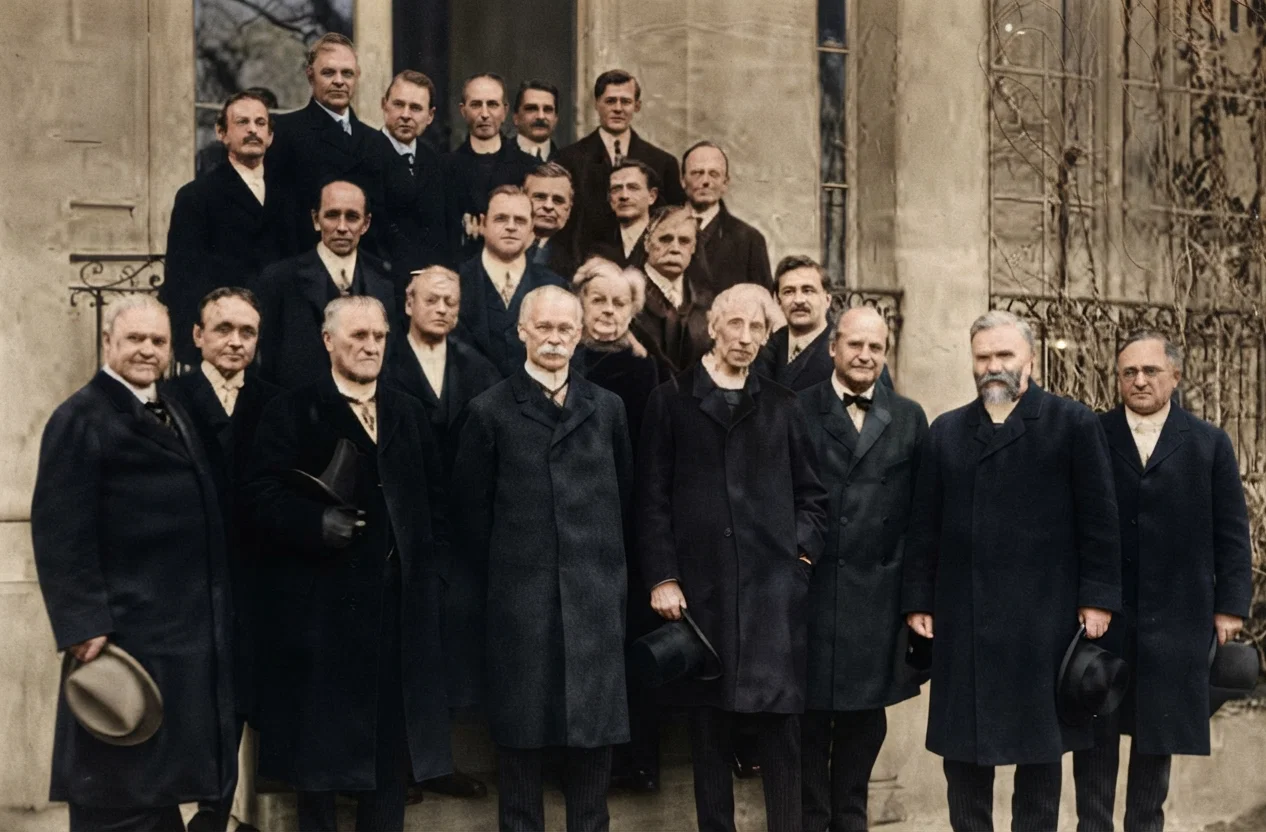
PROMINENT MEN IN BIBLE CONFERENCE, WASHINGTON, D. C.

WHEN WE GO QUIETLY

Mr. S. D. Gordon's deeply spiritual expositions of the Gospel of John were a marked feature of the conference. What the world needs to-day, said Mr. Gordon, is a fresh revealing of the glory of the gospel by folks living it. The glory is the goodness of character, and we reveal it most when we go along quietly where He would have us go.

HE RANG THE BELL OF THE UNIVERSE

Dr. John McNeill, originally of Scotland, but now the pastor of a large church in Toronto, is a very original and forcible speaker. In his stirring address on the healing of the lame man at the Gate Beautiful, he brought out effectively the virile qualities of the true preacher. "When God wanted
to gather an audience to hear the gospel concerning His crucified Son, He rang the great bell of the universe — He worked a miracle. And heaven rejoiced, and earth rejoiced, and hell shrank back defeated. The man lame from his mother's womb represented the whole problem of humanity. But Peter and John didn't discuss it as a problem. They didn't hold a conference over it. Too many of us ministers to-day are inclined that way.
"The young theological graduate, when he is inducted into office, modestly says to his new congregation, that he hopes to make his small contribution to the solution of the problems. But, my dear friends, the problem of sin and of the consequences of sin is solved — we have a Saviour. It was faith in His name that brought perfect soundness to the lame man, and the same faith will bring soundness and health of soul to every man to-day.

THE DEAD LIFT OF OMNIPOTENCE

"But the drift of thought seems to be that a solution is yet to be looked for. With all my soul I refute it. God has sent us His last and best. He has no more to say about the problem. So let us unbend our brows, and not look so prodigiously wise. In fact, nobody could possibly be as wise as some theological students look. Let us be humble and teachable. The problems that confront us are not to be solved by our wisdom. They call for the Bible solution. There is but one name under heaven whereby men may be saved. The man in our text could not be saved by a process of evolution. He needed the dead lift of Omnipotence, and he got it, because Peter and John were in touch with the power that saves."
Other speakers were Mr. Melvin Trotter and Mr. Sherwood Eddy, who largely occupied the noon hour, and the 4:45 hour in the afternoon, both of which were open to the general public. Mr. Trotter gave clear, forceful talks.

MIRACULOUS MISSIONARY ACTIVITY

Mr. Sherwood Eddy's setting forth of the missionary situation in the far East was most affecting. Speaking from a field experience of some seventeen years, he showed how wonderfully God has opened doors on every
side, till it is no longer a question of seeking openings, but rather mission boards to-day are able to enter only a few of the open doors that present themselves on every side.
"A hundred years ago," he said, "we had less than a hundred missionaries; to-day, 24,000. Then the Bible was translated into 65 languages; now it may be read in 500 tongues. Then there was not a hospital in the whole heathen world; to-day there are 675 hospitals, and they are ministering to the needs of millions yearly. Then there was a little handful of missionary schools; to-day there are 30,000 such schools. Then there was not one Protestant Christian in Japan, less than ten in China, and only a handful in India. Now we have hundreds of thousands in these countries.
"But even during the seventeen years of my experience, great changes have occurred. Then we had almost none of the educated
classes in India, the great revival had not occurred in Korea, and China stood out against our efforts as the great Gibraltar of the heathen world. The storm was even then gathering for the Boxer uprising.

EAGER AUDIENCES HEAR THE STORY

"How things have changed in these few years! In all these countries, eager audiences are hearing the story of Jesus. In Korea, on a rainy Sunday, I saw an audience of fifteen hundred Christians. That church has already divided twice, sending out two branch churches. I asked, 'How do you do it?' They replied, 'Every Christian is a witness, and the gospel is still good news in Korea.'"
"In China I stood before an audience of 2,000 Confucianists, and spoke to them for an hour on 'Christ the Only Hope of China.' When I called for volunteers who would join our Bible class, and study the subject further, 430 of them responded, and 119 of these have since been baptized."
There was much more of the same vital character, presented with eloquence born of true earnestness and perfect knowledge of the subject; but we must pass on to consider a few of the helpful thoughts presented by Dr. J. H. Jowett, late of Carr's Lane Chapel, Birmingham, England, now of New York.
Dr. Jowett emphasized personal purity and holiness. His discourse on Eph. 6:16, "Above all, taking the shield of faith," etc., will not be forgotten by those who heard it.

DID HE HIMSELF WEAR IT?

"Is the counsel Paul gives," he asked, "based on personal experience? Did this person himself wear the shield? And how did it protect him? Did he live a cloistered life? Did he spend his days in a garden full of sweet and pleasant things?
"Let us look at the record. Five times he received forty stripes save one — yet he was wearing the shield; a night and a day he was# A Great and Significant Conference (Continued from page 2) in the deep — yet he was wearing the shield; in watchings and fastings often — yet he was wearing the shield. It did not save him from labor, — labor to the point of pain and weariness. It did not save him from defeats. The churches he raised up departed from his teachings. His followers left him — 'Demas hath forsaken me.' He had a thorn in the flesh; the shield did not protect him against that.
"No, but Paul wasn't thinking of these things. His eyes were never on circumstances. He thought of the life of the soul. We live in circumstances, and want to be shielded to make us comfortable; and because the shield of faith doesn't do this, we become discouraged. Paul lived the inner life, and he wanted the shield within — not the shield against circumstances, but the one that no kind of circumstances could interfere with."

PERSONAL FRIENDSHIP WITH CHRIST

"What is the life of faith? It is the constant cultivation of the personal friendship with Christ. It has been defined as a walk with God. There is a sense of intimate companionship. There is communion in prayer. There is also silent communion. Just as in wedded life, the deeper fellowship of love is a fellowship of silence — husband and wife sitting on either side of the fireside in perfect communion of silent love — so it is a glorious experience when we can walk with
the Lord, and not even need to talk with Him. This sense of fellowship is the shield that Paul speaks of.
"It is indeed a protection, though not from outward circumstances. But it takes the sting away from all labors, anxieties, and griefs when they find us wrapped in close communion with the Infinite One."
And now I must bring this paper to a close. These few paragraphs can give only a very slight idea of the conference; but if they are the means of encouraging each reader to approach his Bible anew with a view to gaining from it the help it is so well able to bestow, the effort will not be vain. If, furthermore, some faithful souls are encouraged to know that there are yet men of distinguished ability who are upholding the word of God as the supreme guide in all matters of faith and practise, that also is well.

SIX OTHERS TO BE HELD

The conferences of which this was the first, are under the direction of Dr. S. Dickey, of the Winona Lake Bible School. There will be six others, to be held successively in the following cities: Columbus, Ohio; Nashville, Tennessee; Atlanta, Georgia; Springfield, Illinois; Pittsburg, Pennsylvania; and Philadelphia. Each of these will last a week, the one in Philadelphia closing March 29. Judging from the effects of the Washington conference, the result can not but be highly beneficial.
To us who take the Bible as our only creed, and endeavor to render cheerful obedience to its requirements, such a series of conferences can not but make a strong appeal. In fact, they are a clarion call to any who are reading the cheap magazines and newspapers, to turn from these, and study their Bibles with renewed zeal and earnestness, in order that they may attain to greater heights of holiness, and be able to do a far greater work for the needy world that lies about us.

Signs of the Times

ARE CALLED TO A SPECIAL WORK

BARNABAS MAKES A MISSIONARY TRIP AS FAR AS ANTIOCH—THE TALENTED, EDUCATED PAUL GOES TO HELP HIM—BOTH ARE ORDAINED AS AMBASSADORS TO THE GENTILE WORLD—THE CHURCH DIRECTED TO PROCEED IN ORDERLY, ORGANIZED WAY
By MRS. E. G. WHITE
THE gospel message spread rapidly through the regions lying beyond the limits of Palestine, and many small companies of believers were formed in important centers. The gospel was publicly taught in Antioch, the metropolis of Syria, by certain disciples from Cyprus and Cyrene, who came "preaching the Lord Jesus." "The hand of the Lord was with them," and their earnest labors were productive of fruit. "A great number believed, and turned unto the Lord."

THE SERVICES OF PAUL SECURED

"Tidings of these things came unto the ears of the church which was in Jerusalem; and they sent forth Barnabas, that he should go as far as Antioch." His labors were richly blessed, and many were added to the number of believers there. As the work developed, Barnabas felt the need of suitable help, in order to advance in the opening providences of God; and he therefore secured the services of Paul, who, after a sojourn in Arabia and a visit to Jerusalem, had been laboring for some time in "the regions of Syria and Cilicia," proclaiming "the faith which once he destroyed."
In the populous city of Antioch, Paul found an excellent field of labor. His learning, wisdom, and zeal exerted a powerful influence over the inhabitants and frequenters of that city of culture, and he proved just the help that Barnabas needed. For a year the two disciples labored unitedly in faithful ministry, bringing to many, a saving knowledge of Jesus of Nazareth, the world's Redeemer.

FIRST CALLED CHRISTIANS, AND WHY

It was in Antioch that the disciples were first called Christians. The name was given them because Christ was the main theme of their preaching, their teaching, and their conversation. Continually they were recounting the incidents that had occurred during the days of His earthly ministry, when His disciples were blessed with His personal presence. Untiringly they dwelt upon His teachings and His miracles of healing. With quivering lips and tearful eyes they spoke of His agony in the garden, His betrayal, trial, and execution, the forbearance and humility with which He had endured the contumely and torture imposed upon Him by His enemies, and the godlike pity with which He had prayed for those who persecuted Him. His resurrection and ascension, and His work in heaven as the Mediator for fallen man, were topics on which they rejoiced to dwell. Well might the heathen call them Christians, since they preached Christ, and addressed their prayers to God through Him.

GOD GAVE THE NAME

It was God who gave to them the name of Christian. This is a royal name, given to all who join themselves to Christ. It was of this name that James wrote later: "Do not rich men oppress you, and draw you before the judgment-seats? Do not they blaspheme that worthy name by the which ye are called?" And Peter declared: "If any man suffer as a Christian, let him not be ashamed; but let him glorify God on this behalf." "If ye be reproached for the name of Christ, happy are ye; for the spirit of glory and of God resteth upon you."
Paul's labors at Antioch, in association with Barnabas, strengthened him in his conviction that the Lord had called him to do a special work for the Gentile world. At the time of Paul's conversion, the Lord had declared that he was to be made a minister to the Gentiles, "to open their eyes, and to turn them from darkness to light, and from the power of Satan unto God, that they may receive forgiveness of sins, and inheritance among them which are sanctified by faith that is in Me." Later in his Christian experience, while praying in the temple at Jerusalem, he had been visited by an angel from heaven, who bade him, "Depart: for I will send thee far hence unto the Gentiles."

"I WAS MADE A MINISTER"

Thus the Lord had given Paul his commission to enter the broad missionary field of the Gentile world. To prepare him for this extensive and difficult work, God had brought him into close connection with Himself, and had opened before his enraptured vision views of the beauty and glory of heaven. To him had been given the ministry of making known "the mystery," which had been "kept secret since the world began,"—"the mystery of His will," "which in other ages was not made known unto the sons of men, as it is now revealed unto His holy apostles and prophets by the Spirit; that the Gentiles should be fellow heirs, and of the same body, and partakers of His promise in Christ by the gospel: whereof," declares Paul, "I was made a minister."

LABORS GREATLY BLESSED

God had abundantly blessed the labors of Paul and Barnabas during the year they remained with the believers in Antioch. But neither of them had as yet been formally ordained to the gospel ministry. They had now reached a point in their Christian experience when God was about to entrust them with the carrying forward of a difficult missionary enterprise, in the prosecution of which they would need every advantage that could be obtained through the agency of the church.

ORDAINED AND AUTHORIZED

"There were in the church that was at Antioch certain prophets and teachers; as Barnabas, and Simeon that was called Niger, and Lucius of Cyrene, and Manaen, . . . and Saul. As they ministered to the Lord, and fasted, the Holy Ghost said, Separate Me Barnabas and Saul for the work whereunto I have called them." Before being sent forth as missionaries to the heathen world, these apostles were solemnly dedicated to God by fasting and prayer and the laying on of hands. Thus they were authorized by the church, not only to teach the truth, but to perform the rite of baptism, and to organize churches, being invested with full ecclesiastical authority.

MIDDLE WALL OF PARTITION

The Christian church was at this time entering upon an important era. The work of proclaiming the gospel message among the Gentiles was now to be prosecuted with vigor; and as a result, the church was to be strengthened by a great ingathering of souls. The apostles who had been appointed to lead out in this work would be exposed to suspicion, prejudice, and jealousy. Their teachings concerning the breaking down of the "middle wall of partition" that had so long separated the Jewish and the Gentile world, would naturally subject them to the charge of heresy; and their authority as ministers of the gospel would be questioned by many zealous, believing Jews. God foresaw the difficulties that His servants would be called to meet; and in order that their work should be above challenge, He instructed the church by revelation to set them apart publicly to the work of the ministry. Their ordination was a public recognition of their divine appointment to bear to the Gentiles the glad tidings of the gospel.
Both Paul and Barnabas had already received their commission from God Himself, and the ceremony of the laying on of hands added no new grace or virtual qualification. It was an acknowledged form of designation to an appointed office, and a recognition of one's authority in that office. By it the seal of the church was set upon the work of God.
Paul regarded the occasion of his formal ordination as marking the beginning of a new and important epoch in his life-work. Itwas from this time that he afterward dated the beginning of his apostleship in the Christian church.

Are Called to a Special Work

(Continued from page 3)

COURAGEOUS THOUGH IN JEOPARDY

While the light of the gospel was shining brightly at Antioch, an important work was continued by the apostles who had remained in Jerusalem. Every year, at the time of the festivals, many Jews from all lands came to Jerusalem to worship at the temple. Some of these pilgrims were men of fervent piety, and earnest students of the prophecies. They were looking and longing for the advent of the promised Messiah, the hope of Israel. While Jerusalem was filled with these strangers, the apostles preached Christ with unflinching courage, though they knew that in so doing they were placing their lives in constant jeopardy. The Spirit of God set its seal upon their labors. Many converts to the faith were made; and these, returning to their homes in different parts of the world, scattered the seeds of truth through all nations, and among all classes of society.
Prominent among the apostles who engaged in this work were Peter, James, and John, who felt confident that God had appointed them to preach Christ among their countrymen at home. Faithfully and wisely they labored, testifying of the things they had seen and heard, and appealing to “a more sure word of prophecy,” in an effort to persuade “the house of Israel . . . that God hath made that same Jesus, whom” the Jews “crucified, both Lord and Christ.”
Continue reading: A WORLD-EMBRACING MESSAGE