Pacific Press Publishing Association · Mountain View, California · Jan 27, 1914
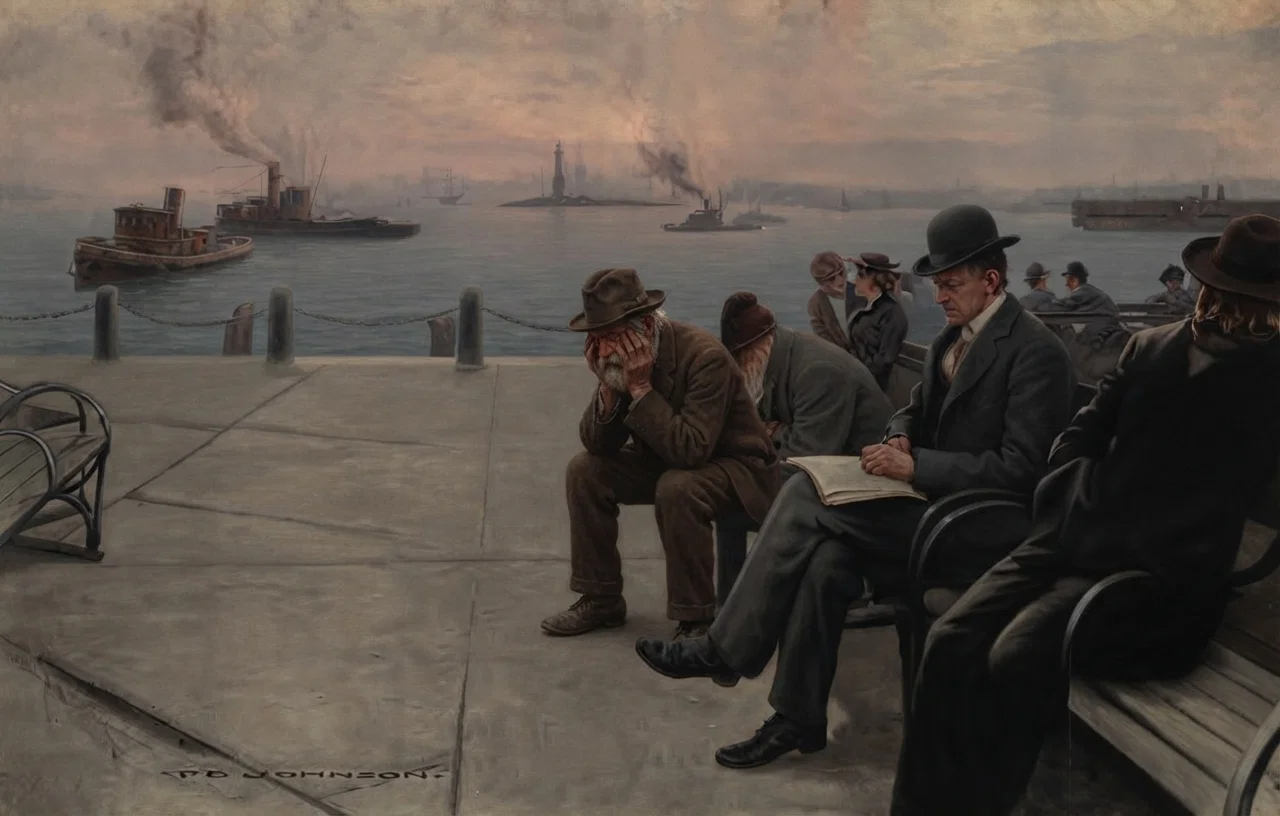
THE WASTES OF EXTRAVAGANCE, CRIMES, AND WAR ARE FILLING THE WORLD WITH DISCONSOLATE AND DESPAIRING MEN.
The Burdens of Criminality, Vice, and War
By LUCAS ALBERT REED
The World Being Pauperized by the Enormous Toll—Socialism Proposes a Cure—Is It Possible for Their Plans to Succeed?
By LUCAS ALBERT REED
We recognize the fact that there are hundreds of noble-hearted men and women enlisted among the socialistic workers. We know that conditions among the laboring classes in many places are absolutely intolerable. We are thoroughly in sympathy with anything that will uplift the downtrodden. We wholly believe in fulfilling the divine admonition, ‘Break every yoke,’ and ‘let the oppressed go free.’ If laws can improve conditions, let laws be passed. If education can better conditions, let the light shine. But let all this be done without hatred or class embitterment. In the following paragraphs, however, we speak only of one phase of Socialism,—the impossibility of its ever re-creating the earth. We know that it will not do this, but we know it solely because of what the word of God predicts for the days that are to come.
HIGH COST OF LIVING AND EXTRAVAGANT EXPENDITURES
We hear much, these days, about the cost of living. We have not seen, in connection with this discussion of the cost of living, much reference to some of the greatest drains made upon the pocketbook to-day. We quote the following34from the San Francisco Star to show one of the leaks from the great financial treasury of the people:
‘Let us for one little minute consider the costs of what is called ‘crime’ in these United States. It comes to $4,500,000,000 annually, according to Hammond’s estimates,—the latest available. Think of this total. Compare it with what we spend for education, for pensions, for army and navy, for the entire costs of our state and national governments. What shall we do?’
‘For one thing, Hammond suggests, ‘Take from the courts the power to sentence men for definite terms.’ Make every sentence indeterminate—to run until the convicted person becomes a safe member of society. Then help him to get there, but have him go before a ‘rehabilitation court’ in order to get out of prison.’
‘Does it not look as if we could find some better way of dealing with criminals? Suppose we begin to study the larger causes of wrong-doing which lie deep in our social order. Many a well-meaning but weak brother is ‘shoved over the line’ by things beyond his control. Let us try to stop making criminals.’
In connection with this tremendous expense due to the suppression of crime and vice, remember, also, that six nations spent in 1913 a round $1,000,000,000 in preparation for war. Here are multiplied billions of dollars due to vice, crime, and war, flowing in a mighty torrent out from the people’s treasury. This tremendous sum must be paid for by you and me and the rest of peace-loving, law-abiding toilers of the earth, and there is no use to rant and declaim and orate over the thing, for that won’t help matters one particle.
There is only one means of preventing sin, which is at the heart of the vice and the crime and the war preparation in the world to-day. The only cure for sin is the gospel of the Lord Jesus Christ. Men reject this, and therefore there is no cure, only as they do accept it, or in so far as they accept it.
COMFORT FOR ALL, WERE IT NOT FOR THIS WASTE
But there is a profitable theme for consideration in this connection. To bring the matter home, suppose that you have an income of $200 a month, but that $150 of this is wasted, is lost, so that you receive no benefit from it. Then you really have but $50 a month. It would require some pinching on your part to get along.
In the world to-day there are many who are laboring as producers. They are builders of the wealth of the world. On the other hand, there are thousands who are wasting a portion of the money thus earned.
We think next of the millions of dollars that some have secured unlawfully and hoarded unnecessarily, and which they use to no profit; then of the millions that are wasted in war, crime, and vice; and we think finally of an ideal world, where all this will be stopped, the great money waste will be no more, and the wickedly unequal distribution of wealth will not exist. What an amount of means this would place in the hands of all! There would be comfort and prosperity, and no necessity to toil more than a few hours or perhaps an hour or two a day,—just enough for exercise.
THE FALSE HOPES OF SOCIALISM
Socialism sees the force of all this, and therefore demands an industrial commonwealth, where all shall labor and none be idle, where all shall ideally treat one another according to the Golden Rule, and all who will not thus labor nor behave shall be starved into submission. It is an ideal conception, possible only in an ideal world. But the gospel alone can produce ideal people, and place them in an ideal kingdom, among ideal conditions. And it will do it, because it is able to change the heart, and fill with love those who are to enter into that kingdom, and God is powerful enough and just and true enough to see that none others get in. But Socialism has no means nor facilities for doing any such work. It will never accomplish its self-appointed task.
SOCIALISM VERSUS THE BIBLE
The word of God is plain in telling us that there is no hope in earthly power. For example, in the fifth chapter of James, where it speaks of the unjust social conditions of these last days, it points out as our only hope the coming of the Lord. James 5:7. In the second of Daniel this setting up of God's kingdom is likened to a stone cut out of a mountain without hand — that is, without any human instrumentality. In the second psalm, speaking of the destruction of the present social order, it describes it under the figure of pottery smashed by an iron rod. And in the second chapter of Daniel, already referred to, it declares that this present order shall become like the chaff of the summer thrashing-floor, blown away until not a vestige of it remains.
The prophecy thus plainly shows that the change will be by a cataclysm, or catastrophe, and not by a development of any process of evolution. It tells us that only the pure in heart shall enter into that government, and that there shall in no wise enter into it anything that defiles, neither whatsoever loves or makes a lie. Rev. 21:27; 22:14, 15.
SOCIALISM CAN NOT STEM THE TIDE
Socialism also hopes for peace on earth — no war. But the prophecies plainly tell us that the spirit of war will increase until it concentrates in the awful battle of Armageddon, with the destruction of those who participate, when God appears to take charge of the world thus gone to wreck.
THE IDEAL KINGDOM TO COME
But let our minds go forward to that ideal kingdom to be established when Jesus comes. There the earth will produce with an abundance that is not possible now under the curse of sin and transgression that rests upon it. There the righteous shall be immortal, and the body which is sown in weakness at the close of this mortal life appears there in might and power. And as there will be no extravagance and no waste, no unequal distribution of wealth, with what ease and pleasure will life be sustained! There will be no worrying about the month's rent, for there will be no renters. There will be no trouble about clothing or food, or means of transportation, for all these will be perfectly provided for. And there will be no exacting and grinding toil, and no suffering. Disappointment and unfulfilled desires can not enter there. The prospering hand of God will be upon His children, and success will crown their slightest efforts.
WHAT SOCIALISM ACCOMPLISHES
The propaganda of Socialism is but stirring up the wrath of men, and embittering the masses against the classes. It but increases the unrest that is in the world, and intensifies the strife that will culminate in civil and international warfare during the closing days of this world. Truly, "in the last days perilous times shall come." 2 Tim. 3:1. And there are those whom God admonishes not to desire the day of the Lord, for it is a day of darkness. "Wo unto you that desire the day of the Lord! to what end is it for you? the day of the Lord is darkness, and not light. As if a man did flee from a lion, and a bear met him; or went into the house, and leaned his hand on the wall, and a serpent bit him. Shall not the day of the Lord be darkness, and not light? even very dark, and no brightness in it?" Amos 5:18-20. But for some it will be a warning. Peter tells us to give heed to prophecy, which is as "a light that shineth in a dark place, until the day dawn, and the day-star arise in your hearts." And the watchman, when importuned, "What of the night?" cried, "The morning cometh, and also the night." It will be a morning dawn for the child of God, a night of darkness for the incorrigibly rebellious and wicked.
These are the forecasts of the Bible — God's sure word. They are no rosy pictures of some impossible realization. And let us remember the admonition of that Word, that "cursed be the man that trusteth in man, and maketh flesh his arm." While some may trust in chariots, and some in horses, let us trust in the Lord our God. No human confederacy, or relationship, or commonwealth, or alliance can ever hold the world together and save it from its doom.
Millions at the last will be disappointed, because they have put their trust in a false hope.
The Grand Old Book
By Le Roy E. Froom
"THE grass withereth, the flower fadeth: but the word of our God shall stand forever." Isa. 40:8.
YONDER at the entrance to the Mediterranean stands Gibraltar. And the swellings of the sea with majestic sweep have for ages surged up, up, up, against the giant rock, only and always to be hurled back into their own watery depths.
Even thus has the grand old Book weathered the blasts of ages. Like a mighty Gibraltar it stands. Infidels, skeptics, and higher critics have appeared on the stage of action, and passed into silence. The great of earth's past have done their utmost to destroy the Bible, but death has claimed them all. Thrones have fallen. Dynasties have perished. Empires have disappeared in the march of nations. Death has characterized the passing years, but the Rock of the eternal ages lives on forever.
"And so the Bible, anvil of God's word,
For ages skeptic blows have beat upon;
And though the noise of Paine, Voltaire, was heard,
The anvil is unworn — the hammers gone."
Its precepts are binding. Its decisions are immutable. Christ is its grand theme. Our salvation is its supreme object. It reveals the one disease, sin. It points out the one remedy, the blood of Jesus Christ. Shall we not give its words the consideration their vital, far-reaching consequences demand?
LE ROY E. FROOM.
The Depths of God’s Wisdom
"O THE depth of the riches both of the wisdom and knowledge of God! how unsearchable are His judgments, and His ways past finding out!"
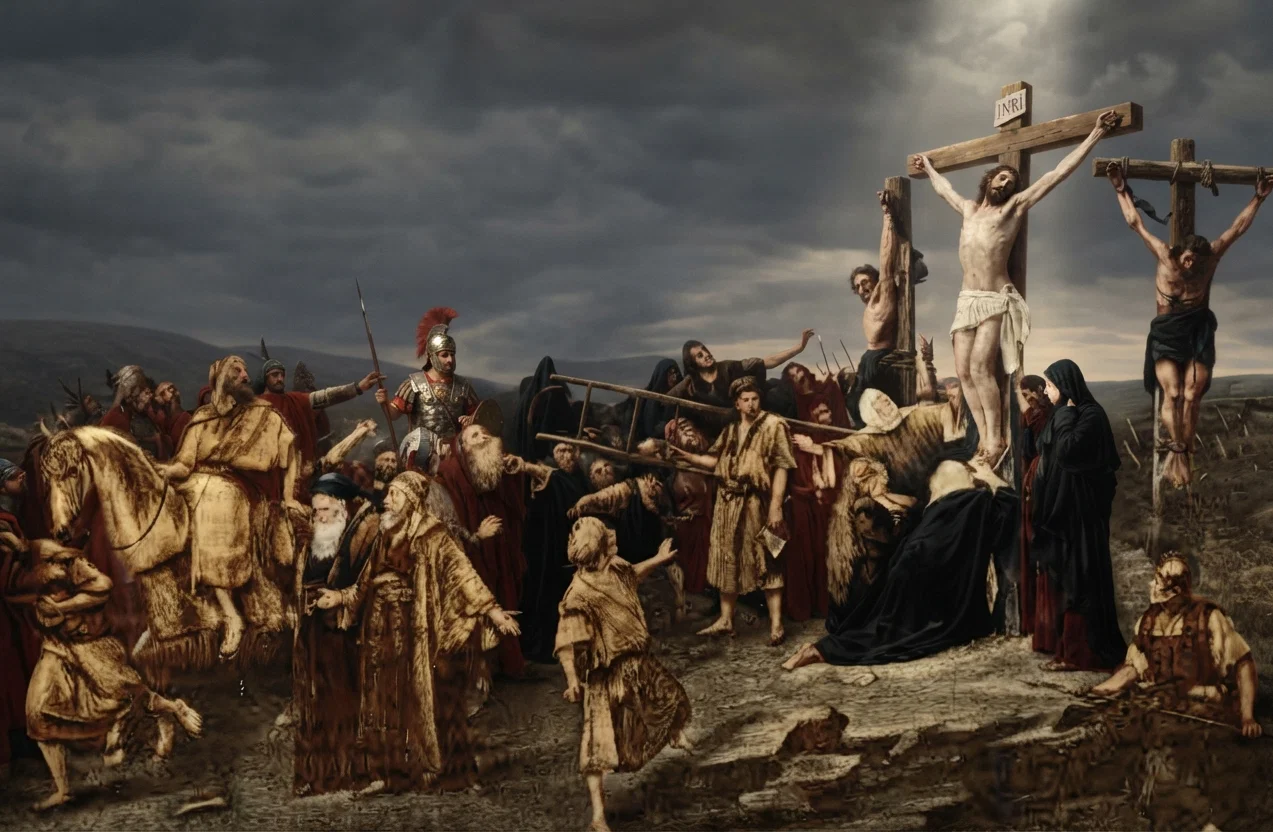
Munkacsy
Through Suffering Death He Triumphed
By Ellen G. White
Unfallen Worlds Join with Angels in Rejoicings of Victory — Evil Men and Fallen Angels in Human Form Hurl Their Furies Against the Man of Calvary, but to No Effect — The Sublime Climax Proclaimed, "It Is Finished"
By MRS. E. G. WHITE
THAT He might sanctify the people with His own blood," Christ "suffered without the gate." "And when they were come to the place, which is called Calvary, there they crucified Him." For transgression of the law of God, Adam and Eve were banished from Eden. Christ, our Substitute, was to suffer without the boundaries of Jerusalem. He died outside the gate, where felons and murderers were executed. Full of significance are the words, "Christ hath redeemed us from the curse of the law, being made a curse for us."
In Agonies of Suffering He Prays for His Tormentors
At the place of execution, the prisoners were bound to the instruments of torture. The two thieves wrestled in the hands of those who placed them on the cross; but Jesus made no resistance. His face remained calm and serene, but great drops of sweat stood upon His brow. There was no pitying hand to wipe the death-dew from His face, nor words of sympathy and unchanging fidelity to stay His human heart. While the soldiers were doing their fearful work, Jesus prayed for His enemies. "Father, forgive them; for they know not what they do." His mind passed from His own suffering to the sin of His persecutors, and the terrible retribution that would be theirs. No curses were called down upon the soldiers who were handling Him so roughly. No vengeance was invoked upon the priests and rulers, who were gloating over the accomplishment of their purpose. Christ pitied them in their ignorance and guilt. He breathed only a plea for their forgiveness,—"for they know not what they do."
Had they known that they were putting to torture One who had come to save the sinful race from eternal ruin, they would have been seized with remorse and horror. But their ignorance did not remove their guilt; for it was their privilege to know and accept Jesus as their Saviour. Some of them would yet see their sins, and repent and be converted. Some by their impenitence would make it an impossibility for the prayer of Christ to be answered for them. Yet, just the same, God's purpose was reaching its fulfilment. Jesus was earning the right to become the Advocate of men in the Father's presence.
The Raging of Men, and of Demons in Human Form
The enemies of Jesus vented their rage upon Him as He hung upon the cross. Priests, rulers, and scribes joined with the mob in mocking the dying Saviour. "If Thou be the Son of God," they said, "come down from the cross." "Let Him save Himself, if He be Christ, the chosen of God." In the wilderness of temptation Satan had declared, "If Thou be the Son of God, command that these stones be made bread." "If Thou be the Son of God, cast Thyself down" from the pinnacle of the temple. And Satan with his angels, in human form, was present at the cross. The arch-fiend and his hosts were cooperating with the priests and rulers. The teachers of the people had stimulated the ignorant mob to pronounce judgment against One upon whom many of them had never looked, until urged to bear testimony against Him. Priests, rulers, Pharisees, and the hardened rabble were confederated together in a satanic frenzy. Religious rulers united with Satan and his angels. They were doing his bidding.
Jesus, suffering and dying, heard every word as the priests declared, "He saved others; Himself He can not save. Let Christ the King of Israel descend now from the cross, that we may see and believe." Christ could have come down from the cross. But it is because He would not save Himself that the sinner has hope of pardon and favor with God.36
The Prince of Sufferers and His Abhorrence of Sin
The Lord of glory was dying, a ransom for the race. In yielding up His precious life, Christ was not upheld by triumphant joy. All was oppressive gloom. It was not the dread of death that weighed upon Him. It was not the pain and ignominy of the cross that caused His inexpressible agony. Christ was the Prince of sufferers; but His suffering was from a sense of the malignity of sin, a knowledge that through familiarity with evil, man had become blinded to its enormity. Christ saw how deep is the hold of sin upon the human heart, how few would be willing to break from its power. He knew that without help from God, humanity must perish, and He saw multitudes perishing within reach of abundant help.
Upon Christ as our substitute and surety was laid the iniquity of us all. He was counted a transgressor, that He might redeem us from the condemnation of the law. The guilt of every descendant of Adam was pressing upon His heart. The wrath of God against sin, the terrible manifestation of His displeasure because of iniquity, filled the soul of His Son with consternation. All His life Christ had been publishing to a fallen world the good news of the Father's mercy and pardoning love. Salvation for the chief of sinners was His theme. But now with the terrible weight of guilt He bears, He can not see the Father's reconciling face. The withdrawal of the divine countenance from the Saviour in this hour of supreme anguish pierced His heart with a sorrow that can never be fully understood by man. So great was the agony that His physical pain was hardly felt.
His Sense of Sin Was the Bitterness in the Cup
Satan with his fierce temptations wrung the heart of Jesus. The Saviour could not see through the portals of the tomb. Hope did not present to Him His coming forth from the grave a Conqueror, or tell Him of the Father's acceptance of His sacrifice. He feared that sin was so offensive to God that their separation was to be eternal. Christ felt the anguish which the sinner will feel when mercy shall no longer plead for the guilty race. It was the sense of sin, bringing the Father's wrath upon Him as man's substitute, that made the cup He drank so bitter, and broke the heart of the Son of God.
Inanimate Nature and Unfallen Beings Aghast
With amazement angels witnessed the Saviour's despairing agony. The hosts of heaven veiled their faces from the fearful sight. Inanimate nature expressed sympathy with its insulted and dying Author. The sun refused to look upon the scene. Its full, bright rays were illuminating the earth at midday, when suddenly it seemed to be blotted out. Complete darkness, like a funeral pall, enveloped the cross. "There was darkness over all the land unto the ninth hour." There was no eclipse or natural cause for this darkness, which was as deep as midnight, without moon or stars. It was a miraculous testimony given by God that the faith of after generations might be confirmed.
In that thick darkness God's presence was hidden. He makes darkness His pavilion, and conceals His glory from human eyes. God and His holy angels were beside the cross. The Father was with His Son. yet His presence was not revealed. Had His glory flashed forth from the cloud, every human beholder would have been destroyed. And in that dreadful hour Christ was not to be comforted with the Father's presence, therefore He trod the wine-press alone, and of the people there was none with Him.
Struck with Awe and Terror
The silence of the grave seemed to have fallen upon Calvary. A nameless terror held the throng that was gathered about the cross. The cursing and reviling ceased in the midst of half-uttered sentences. Men, women, and children fell prostrate upon the earth. Vivid lightnings occasionally flashed forth from the cloud, and revealed the cross and the crucified Redeemer. Priests, rulers, scribes, executioners, and the mob, all thought that their time of retribution had come. After a while some whispered that Jesus would now come down from the cross. Some attempted to grope their way back to the city, beating their breasts and wailing in fear.
At the ninth hour the darkness lifted from the people, but still enveloped the Saviour. It was a symbol of the agony and horror that weighed upon His heart. No eye could pierce the gloom that surrounded the cross, and none could penetrate the deeper gloom that enshrouded the suffering soul of Christ. The angry lightnings seemed to be hurled at Him as He hung upon the cross. Then "Jesus cried with a loud voice, saying, Eloi, Eloi, lama sabachthani?" "My God, My God, why hast Thou forsaken Me?" As the outer gloom settled about the Saviour, many voices exclaimed, "The vengeance of Heaven is upon Him. The bolts of God's wrath are hurled at Him, because He claimed to be the Son of God." Many who believed on Him heard His despairing cry. Hope left them. If God had forsaken Jesus, in what could His followers trust?
Mocking Priests Refuse Him Water
When the darkness lifted from the oppressed spirit of Christ, He revived to a sense of physical suffering and said, "I thirst." One of the Roman soldiers, touched with pity as he looked at the parched lips, took a sponge on a stalk of hyssop, and dipping it in a vessel of vinegar, offered it to Jesus. But the priests mocked at His agony. When darkness covered the earth, they had been filled with fear; as their terror abated, the dread returned that Jesus could escape them. His words, "Eloi, Eloi, lama sabachthani," they had misinterpreted. With bitter contempt and scorn they said, "This man calleth for Elias." The last opportunity to relieve His sufferings they refused. "Let be," they said, "let us see whether Elias will come to save Him."
In the silence the beholders watched for the end of the fearful scene. The sun shone forth; but the cross was still enveloped in darkness. Priests and rulers looked toward Jerusalem; and lo, the dense cloud had settled over the city and the plains of Judea. The Sun of righteousness, the Light of the world, was withdrawing His beams from the once favored city of Jerusalem. The fierce lightnings of God's wrath were directed against the fated city.
The Triumphant Proclamation, "It Is Finished"
Suddenly the gloom lifted from the cross, and in clear, trumpet-like tones that seemed to resound throughout creation, Jesus cried, "It is finished." "Father, into Thy hands I commend My spirit." A light encircled the cross, and the face of the Saviour shone with a glory like the sun. He then bowed His head upon His breast and died.
Amid the awful darkness, apparently forsaken of God, Christ had drained the last dregs in the cup of human wo. In those dreadful hours He had relied upon the evidence of His Father's acceptance heretofore given Him. He was acquainted with the character of His Father; He understood His justice, His mercy, and His great love. By faith He rested in Him whom it had ever been His joy to obey. And as in submission He committed Himself to God, the sense of the loss of His Father's favor was withdrawn. By faith Christ was victor.
The Conqueror Plants His Banner on the Heights of Eternity
Christ did not yield up His life till He had accomplished the work which He came to do, and with His parting breath He exclaimed, "It is finished." The battle had been won. His right hand and His holy arm had gotten the victory. As a conqueror He planted His banner on the eternal heights. Was not there joy among the angels? All heaven triumphed in the Saviour's victory. Satan was defeated, and knew that his kingdom was lost.
To the angels and the unfallen worlds the cry, "It is finished," had a deep significance. It was for them as well as for us that the great work of redemption had been accomplished. They with us share the fruits of Christ's victory.
Satan's Character Now Fully Revealed
Not until the death of Christ was the character of Satan clearly revealed to the angels or to the unfallen worlds. The arch-apostate had so clothed himself with deception that even holy beings had not understood his principles. They had not clearly seen the nature of his rebellion. Had Satan and his host been left to reap the full result of their sin, they would have perished, but it would not have been apparent to heavenly beings that this was the inevitable result of sin. A doubt of God's goodness would have remained in their minds as evil seed, to produce its deadly fruit of sin and wo.
But not so when the great controversy shall be ended. Then, the plan of redemption having been completed, the character of God is revealed to all created intelligences. The precepts of His law are seen to be perfect and immutable. Then sin has made manifest its nature, Satan his character. Then the extermination of sin will vindicate God's love and establish His honor before a universe of beings who delight to do His will, and in whose heart is His law.
Well, then, might the angels rejoice as they looked upon the Saviour's cross; for though they did not then understand all, they knew that the destruction of sin and Satan was forever made certain, that the redemption of man was assured, and that the universe was made eternally secure. Christ Himself fully comprehended the results of the sacrifice made upon Calvary. To all these He looked forward when upon the cross He cried out, "It is finished."
What Will Become of the Sinner?
By Charles Thompson
He May Have Eternal Life if He Chooses—Not Compelled to Accept It
Against His Will—Love, Mercy, Faithfulness, and Justice
Are Blended in Paying His Wages
By CHARLES THOMPSON
"For the time is come that judgment must begin at the house of God: and if it first begin at us, what shall the end be of them that obey not the gospel of God?" 1 Peter 4: 17.
INSPIRATION does not notice an unimportant question, nor does it raise one and leave man in the field of speculation concerning its answer. The question raised is, "What shall the end be of them that obey not the gospel of God?" The gospel "is the power of God unto salvation," the plan of God by and through which man may have life. If one rejects the proffered plan, what is his end to be? The only place we can take our readers for the answer is into the Book of God.
It is both Scriptural and reasonable that God will settle with the finally impenitent and incorrigible from the standpoint of His declared character—"God is love." "For as the Father hath life in Himself; so hath He given to the Son to have life in Himself; and hath given Him authority to execute judgment also, because He is the Son of man." John 5: 26, 27.
FAITHFULNESS AND MERCY BLENDED
Why did Jesus become the Son of man? "Wherefore in all things it behooved Him to be made like unto His brethren, that He might be a merciful and faithful High Priest in things pertaining to God, to make reconciliation for the sins of the people." Heb. 2: 17. He has given to Him authority to execute judgment because He is the Son of man, and He is the Son of man in order that He might be merciful as well as faithful. Therefore it will be expected that in the final disposition of sinners, we will see faithfulness and mercy properly blended.
LOVE AND JUSTICE DIRECT THE PUNISHMENT
Love, the character of God, does not deal with the subjects of adoration from the standpoint of gratification of self, but from the standpoint of their best good. "God so loved the world, that He gave His only-begotten Son, that whosoever believeth in Him should not perish, but have everlasting life." John 3: 16. God so loved, that He gave. The gift is the evidence of the love. "God commendeth His love toward us, in that, while we were yet sinners, Christ died for us." God loves the world. He loves sinners. He made provision that they might be saved, but He does not force any to accept.
NONE COMPELLED TO COME
Whosoever will may come; but if one refuses to accept, and thus decides to perish in his sins, God does the next best thing He can for him. Justice forbids his escaping punishment, mercy forbids continued unhappiness or torment. Therefore when justice and mercy meet upon the case, they decide to let him after the punishment be as though he had not been. Obadiah 16.
JUSTICE DEMANDS THE RESURRECTION OF ALL
"As in Adam all die, even so in Christ shall all be made alive." All men, because of the sin of Adam, have a dying nature transmitted to them. They are not responsible for this death, neither is it in any sense the punishment for sins committed by the individual. Justice therefore demands a resurrection from the Adamic death, "so in Christ shall all be made alive." "Marvel not at this: for the hour is coming, in the which all that are in the graves shall hear His voice, and shall come forth; they that have done good, unto the resurrection of life; and they that have done evil, unto the resurrection of damnation." John 5: 28, 29.
THE WAGES RECEIVED FOR SIN
The Scriptures declare by contrast that "the wages of sin is death; but the gift of God38is eternal life through Jesus Christ our Lord." Rom. 6: 23. "Blessed and holy is he that hath part in the first resurrection: on such the second death hath no power." Rev. 20: 6. The punishment for sin is death — the second death, the death from which there is no resurrection. Hence it is eternal. "These shall go away into everlasting punishment [not punishing]: but the righteous into life eternal." Matt. 25: 46.
THE ELEMENT USED IN PUNISHMENT
The element chosen by the Lord to bring this punishment upon the wicked is fire.
"For, behold, the day cometh, that shall burn as an oven; and all the proud, yea, and all that do wickedly, shall be stubble: and the day that cometh shall burn them up, saith the Lord of hosts, that it shall leave them neither root nor branch." Mal. 4: 1.
Thus we find what the end shall be. Utter destruction is the doom of the ungodly. The escape is found in accepting the gospel of Jesus Christ. The terms are most liberal: "If ye be Christ’s, then are ye Abraham’s seed, and heirs according to the promise." Gal. 3: 29.
May God help all to accept of life, is the humble prayer of the writer.
NO PLANS FOR SELF
By Eliza H. Morton
By ELIZA H. MORTON
OUR Saviour made no plans for self;
But day by day
God planned His work, and gave to Him
Strength to obey.
And thus should we depend on God,
As flowers grow,
And as the stars keep in their course,
And trade-winds blow.
All, all is planned by One divine.
Our wills should be
Surrendered to the will of Christ
Eternally.
Angels Commissioned for Significant Work
By A. S. Booth
We are told in the fifteenth chapter of Luke, verse ten, "Likewise, I say unto you, there is joy in the presence of the angels of God over one sinner that repenteth." Angels are deeply interested in the plan of salvation. When the Master was born on the plains of Bethlehem, they shouted the praise of the Lord, "Glory to God in the highest, and on earth peace, good will toward men."
However, while they always have been interested that souls be born into the kingdom of God and saved with an everlasting salvation, yet in the book of Revelation the thought is clearly made manifest that their interest deepens as the controversy draws to a close. In the seventh chapter four angels are represented as "standing on the four corners of the earth, holding the four winds of the earth," while the servants of God are sealed in their foreheads. In the fourteenth chapter, three angels are seen carrying the last messages that will go to the world before the Master can come to receive His saints home to Himself.
After the three angels accomplish their work, and the last soul has made its choice and been sealed, the angels cease their work of salvation. The four angels loose the four winds, and the seven return to heaven. Then comes the command from the temple, or sanctuary, to the seven angels, "Go your ways, and pour out the vials of the wrath of God upon the earth." The seven angels come back on the mission of destruction to those that despised the grace of God and counted the blood of Christ of little worth.
Thus it is clearly seen that probation ceases before the seven plagues are poured out. During the plagues, angels protect God's children, and at the coming of Christ "He shall send His angels with a great sound of a trumpet, and they shall gather together His elect from the four winds, from one end of heaven to the other." Angels that are strong to deliver now, will be strong to destroy when the Spirit of God ceases to plead, and mercy is no longer extended, while the wrath of God is poured out. The arm that is made bare and mighty to save now, will strike terror and death when Christ ceases to be man's intercessor in the sanctuary above.
Those who heed the admonition of God by the mouth of Isaiah, will have an eternity of years to thank God for their righteous choice: "Seek ye the Lord while He may be found, call ye upon Him while He is near: let the wicked forsake his way, and the unrighteous man his thoughts; and let him return unto the Lord, and He will have mercy upon him; and to our God, for He will abundantly pardon."
A. S. BOOTH.
God’s Guidance and Blessing
"If thou draw out thy soul to the hungry, and satisfy the afflicted soul; then shall thy light rise in obscurity, and thy darkness be as the noonday: and the Lord shall guide thee continually, and satisfy thy soul in drought, and make fat thy bones."