Your ShelfYour Projects

Signs of the Times, Vol. 31, No. 43.

Practical Lessons from the Experiences of Israel

Signs of the Times

Oct 25, 1905

Pacific Press Publishing Company · Mountain View, California · Oct 25, 1905

Practical Lessons from the Experiences of Israel

By F. C. Gilbert, a converted Jew. The central thought of this book is to present Jesus Christ as He is, Saviour, Messiah, Prophet, Priest, King, which was the specific mission God had for the Jewish nation. The customs and traditions of the Jews are given, as well as many of their laws and commandments to which Christ so often referred. Especial attention, however, is given to the Sanctuary and its services, as is evident from the following chapter headings:
God's Purpose in Building the Sanctuary, Why the Law Was Given on Sinai, The Articles of Furniture in the Sanctuary, The Priesthood and the Offerings, The Festivals and the Fasts, The Festivals and the Feasts.
The book contains 400 pages, and is fully illustrated. Cloth, plain edges, $1.00; Cloth with gilt edges, $1.25.

Looking unto Jesus

Or Christ in Type and Antitype
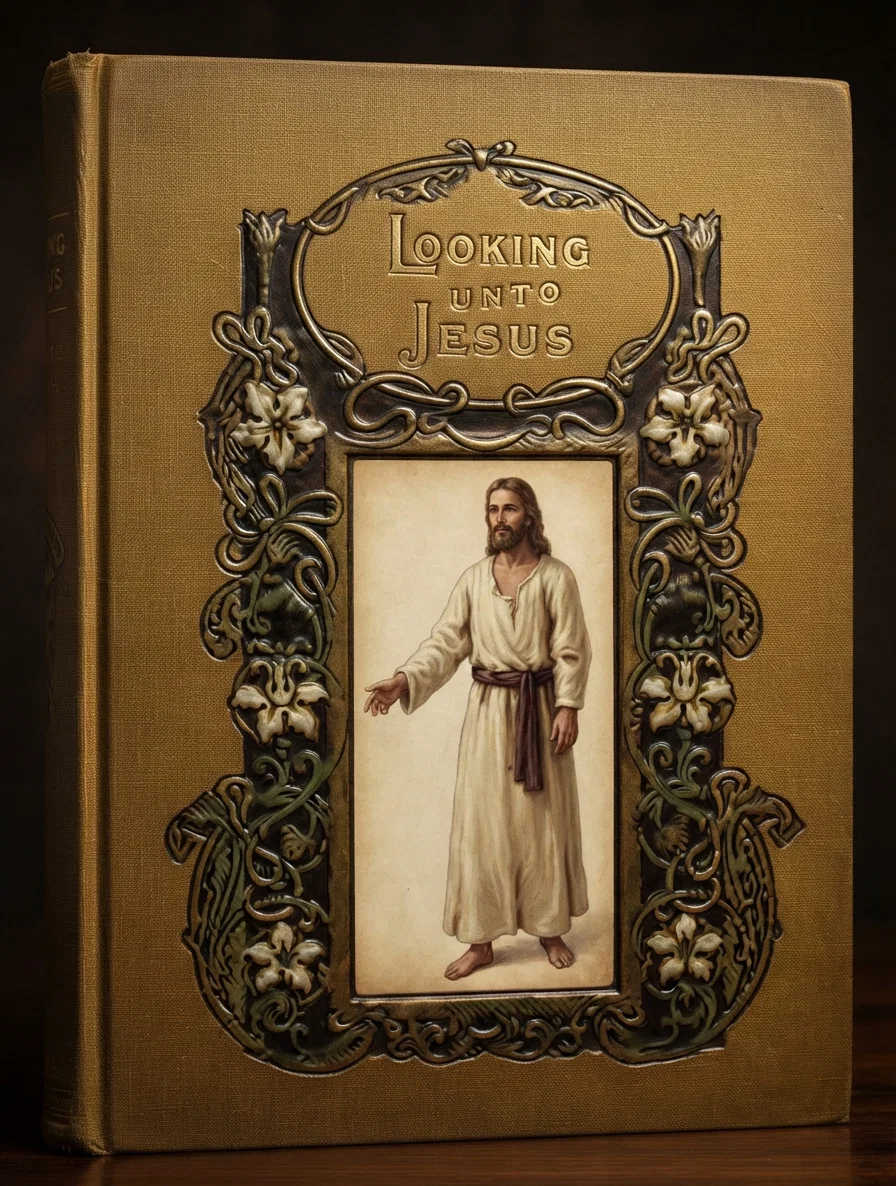
Another work of merit is the one with the above title, by the late Uriah Smith. He goes deeply into the Sanctuary Question, showing clearly what the great sacrificial system symbolized, and explaining in detail the priesthood, service, and offerings. Some of the points particularly interesting, as used in connection, are the atonement, the incarnation, the cleansing of the sanctuary, work of the judgment, finishing the mystery of God, the close of probation, the seven last plagues, and the end of sin. Fully illustrated, and will prove most interesting and highly profitable to the reader. 290 pages. Cloth, plain edges, $1.00; paper covers, 25 cents.

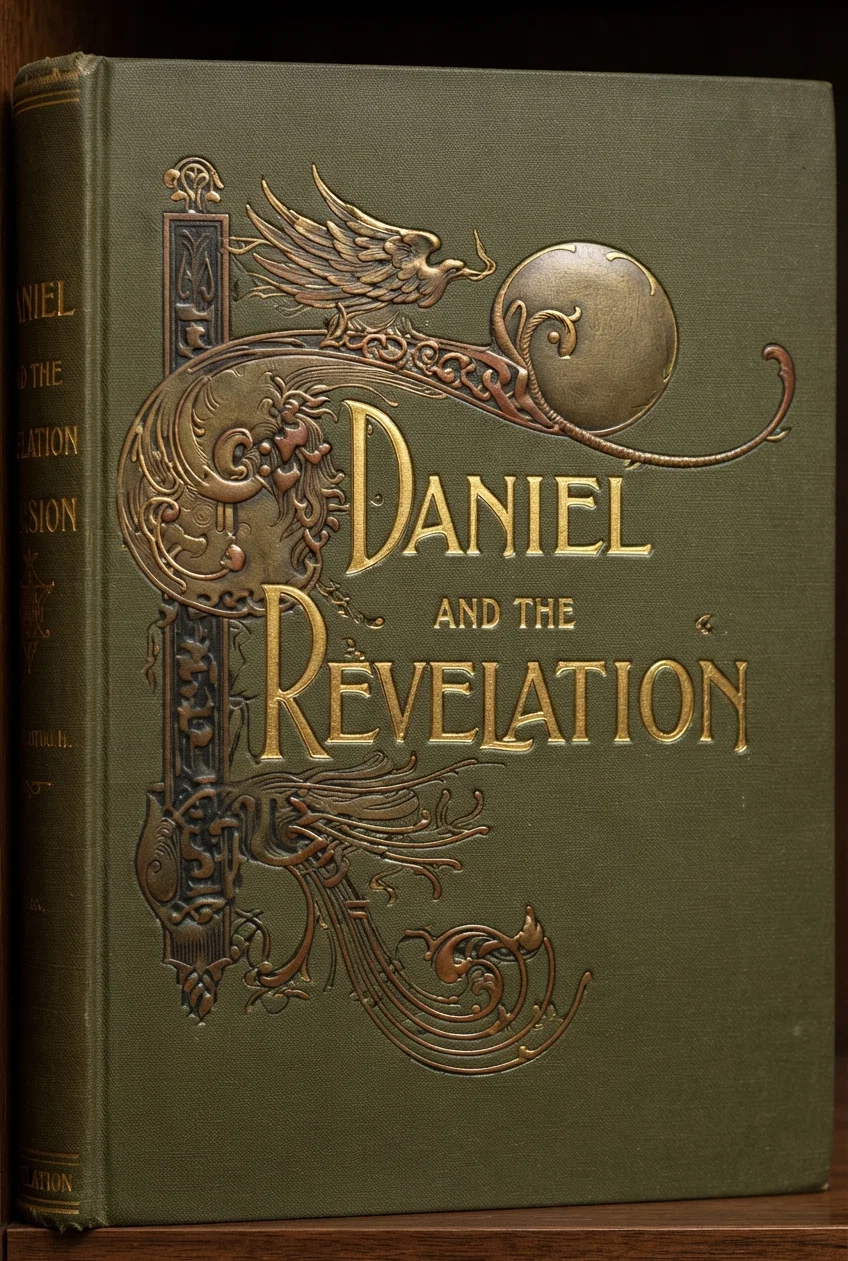
Daniel and the Revelation

The Sanctuary Question is so closely interwoven with the prophecies that to study one you must study the other. Therefore we recommend Elder Uriah Smith's book with the above title. In it he presents the response of history to the voice of prophecy. He takes up these important prophetic books verse by verse and studies them with the reader in a way that invites his confidence and compels his closest attention from the beginning. It is a volume of 757 pages, exclusive of numerous full page engravings. The price is $2.50, in cloth.

Christ Our Advocate

His Work in the True Tabernacle

This pamphlet, by M. H. Brown, treats the Sanctuary Question in a very clear and comprehensive way. It tells all about the sanctuary service as conducted anciently, the priesthood, high priest, the various offerings and their significance, the meaning of the cleansing of the sanctuary, and gives an interpretation of the 2,300 days. It shows how all the earthly service was a type of the work now going on in heaven by our Great High Priest, where He is interceding in our behalf. Besides the numerous illustrations, there are several very valuable diagrams, explaining periods of time given in connection with the Sanctuary Question. 112 pages. Price, 10 cents.

PUBLISHED WEEKLY

(Entered September 15, 1904, as second-class matter at the Mountain View, Cal., post-office, under act of Congress of March 3, 1879.)
H. H. HALL, - - - - - BUSINESS MANAGER.

Terms of Subscription.

Per Year, post-paid . . . . . . . . . . . . . . . . . . . . . . . . . . . . . . . . . . . . . . . . . . . . . . . . . . . . . . . . . . . . . . . . . . . . . . . . . . . . . . . . . . . . . . . $1.50
Six Months, 75 cts. Three Months, 40 cts.
To Foreign Countries, per year, $1.75.

SPECIAL TERMS.

1. One new yearly subscription and one renewal, or two new yearly subscriptions, sent at one time, $2.50.
2. Two new yearly subscriptions and one renewal, or three new yearly subscriptions, sent at one time, $3.25.
3. Three new yearly subscriptions and one renewal, or four new yearly subscriptions, sent at one time, $4.00.
Sample copies sent on application.

OUR NEXT SPECIAL NUMBER

We give below a reduced facsimile of the cover page that will appear on our next Special Number of the SIGNS OF THE TIMES. You have perhaps noticed that this paper which you have just read is number two in a series of four special issues. Their titles are as follows:
No. 1.—PROPHECY AND CHRIST'S COMING. No. 2.—THE SANCTUARY—THE GOSPEL IN TYPE AND ANTITYPE. No. 3.—LAW, GOSPEL, AND THE SABBATH. No. 4.—THE CHURCH TRIUMPHANT.
Have you read the preceding number? If not, we suggest that you ask the person from whom you received this paper

Prices for Signs of the Times Papers

to secure it for you, or send direct to the publishers for the set. The price is 20 cents.
If you have friends to whom you would like to send these papers, the prices are as follows:
1 to 4 sets to one or more addresses Per set $0.20
5 or more sets to single addresses " .15
25 to 500 sets to one address " .10
500 and upward " .09
SIGNS OF THE TIMES, Mountain View, Cal.

Pacific Press Publishing Company

Mountain View, Cal. 285 Salmon St., Portland, Ore. 44 Crocker Building, San Francisco, Cal.

Review & Herald Publishing Association

222 N. Capitol St., Washington, D. C. Battle Creek, Mich.

Southern Publishing Association

1025 Jefferson St., Nashville, Tenn. 204 W 12th., Fort Worth, Texas

Human Expression of Hopes

"The book of life of the Lamb slain from the foundation of the world." Rev. 13:8. "God will provide Himself a Lamb for a burnt-offering." Gen. 22:8.

Human Expression of Hopes

IN the earliest surviving records of vanished ages we discern the attempt of men by rune, hieroglyph, or Babylonian symbolism, to express the mystic meaning of the world, human life, and history. Never have thoughtful souls been able to persuade themselves that time is filled with a mere succession of fortuitous events. Any interpretation of the cosmos that finds therein no purpose deeper than a passing show, no wisdom more profound than words, is not the creed to satisfy the human heart. What with the mind of man slave to the flesh, yet conscious of nobler ends than appetites, mere animal propensities; with conscience judging by the law of love, somehow discerned within, and prophetic of ill for its transgression; with a capacity for happiness which the sad old world is powerless to give; with a sense of justice demanding that sometime, somewhere, wrongs here left unreproved shall be avenged; with motives which, waiving here the vindication of their rectitude, must needs adjourn to an ideal court their justification; what with an instinct for life that ever stares in the face of death, and with a restlessness to probe the mystery of both; with man but a helpless atom amidst the mighty stream of the ever-changing world, powerless to halt the ceaseless flow which bears him steadily on to sure oblivion;—can we wonder that he should hope, and express its dim foreshadowings in rite and symbol?

Why a Lamb?

But why the first of these should be a lamb, no human record gives us answer. But, when from Abel's bleeding sacrifice to the closing chapter of a perished world, we see this sign of all that life and hope and faith implied to the infant race growing mightier in significance until the Lamb slain from the foundation of the world is exalted to the throne of the Supreme, we can not doubt that God has found Himself a Lamb; and that in Him are hidden all the treasures of wisdom and knowledge. This, surely, is the type enfolding the meaning of this mighty maze—the true riddle of the universe. If here we have no key, there is none. Let us, then, apply ourselves to its interpretation.
Why came the consuming fire from heaven upon Abel's altar, while his brother's offering was quite ignored?—"By faith," we read in answer, "Abel offered unto God a more excellent sacrifice than Cain, by which he obtained witness that he was righteous, God testifying of his gifts." Heb. 11:4.
Faith, sacrifice, righteousness; these are not the words of some fair apothegm in which philosophy has sought to sum all laws in one. There is here no logical connection with natural law—"not with enticing words of man's wisdom." 1 Cor. 2:4. Is beauty, the god of classic Greece, the import of a smoking altar and a crucifixion scene? Reeking gore and suffering please not the eye. "When we shall see Him, there is no beauty that we should desire Him." Isa. 53:2. Deeper yet the problem proves. How fully Abel understood the significance of his act, no scripture records. How much of "the mystery, . . . which in other ages was not made known unto the sons of men" (Eph. 3:3-5), to Abel was not revealed, we may not know. But this we know, he wrought in faith, and "faith is the substance of things hoped for." Heb. 11:1.

What Hoped He?

Just yonder in his sight stood Eden, that blest abode from which he was excluded. There stood the angel with a flaming sword to guard its entrance. Within was the tree of life; without was the reign of death. There was Paradise, with all the name implies; here was the curse, weariness, and thorns. How sad the contrast! Was man no more to have access to that glorious place? Was his beauteous home forever lost to him? Brief was the promise, but it was enough: The seed of the woman shall bruise the serpent's head. Gen. 3:15. As by man the first dominion (Gen. 1:26; Micah 4:8) had been lost, so by man it should be restored. This was the hope; but such was not all that Abel's lamb implied. What has a creature slain and burnt upon an altar to do with restoration to a lost estate? Again the Sacred Record leaves us not in doubt. Cain brought no lamb; his offering was of fruit. God did not accept it, but reasoned with him thus: "If thou doest well, shalt thou not be accepted? and if thou doest not well, sin lieth at the door." Gen. 4:7. Not to bring a lamb was to choose sin; to bring one was an act of faith; and thus, and thus only, could man "obtain witness that he was righteous."

God's Appointed Way

So the divine symbol grows in meaning, a meaning which points to human conduct. The Lamb of God is God's appointed way of restoration. No other way will do. And this being God's chosen means, only obedience by faith, as manifested by Abel, and not the disobedience and self-will of Cain, can find acceptance with God. Hence we see that with the Lamb slain from the foundation of the world was bound up faith, obedience to God, righteousness, salvation. Human duty has been plain from the beginning.
That the lamb was, of all offerings possible, the one selected by God, must have been clear from the days of Adam. The account speaks of the practise of offering sacrifices in the days of Cain and Abel, not as something newly established, but as well-known and customary each Sabbath day ("at the end of days," margin). There can be no reasonable doubt that, with the institution of the service, Jehovah had given also some explanation of its meaning. From that time until the coming of the great Antitype, Jesus, there was no change in the central figure in all types and ceremonies. The great key that unlocks them all is Jesus. The altar and its victim expressed the hope of the soul from Abel to Calvary. Every form of sacrificial offering among heathen nations is doubtless a perversion of a practise first established by God Himself. Man fell from his high estate, from purity, holiness, and dominion. He was driven from his Eden home, shut out from the tree of life. But God who had in love created him, God who could not be satisfied (to speak as men) without man—an object on which to bestow His affection—God left His creatures not to despair. With the fall came the promise, and the promise was kept alive by the ceremony.
The case of Cain and Abel shows the custom of the antediluvian church. After the Flood, the first act of the pious Noah was to build an altar, and offer sacrifices. Gen. 8:20. Whether it was that his great gratitude prompted the fulness of his offering, which consisted of victims from every clean beast and fowl; whether he foresaw by the rite prefigured "that the creation itself also shall be delivered from the bondage of corruption" (Rom. 8:21, R. V.), or whether the plenitude of his sacrifice was but the generous expression of his spiritual affections through a positive ordinance with no explicit limits, we may not tell from the narrative: but this we know, that it was the appointed way; that God accepted and was pleased; and the implication seems to be that Noah's offering was typical of the completeness, both to man and nature, of the redemption to come; for "the Lord said in His heart, I will not again curse the ground any more for man's sake; . . . neither will I again smite any more everything living." Gen. 8:21.

The Faith of Abraham and Job

The direst judgments seem to be powerless to curb the wicked hearts of men. Soon after the Deluge the world was again groveling in idolatry. God chose Abram to keep alive the true faith and worship. Where Abram sojourned his altar rose. Gen. 12:7, 8; 13:4. To him it was given, not only to appropriate the righteousness which is of faith, but to learn by the fearful experience of offering Isaac something of the profound significance to theheart of Love in the Lamb whose antitype is an "only" Son. Gen. 22:1-19.
To the patriarchal period belongs also the perfect Job. In the pages of that mighty spiritual tragedy which bears his name, tho the great problem of human suffering was still obscure, as it is to most of the world to-day, yet we find the fact of sin, its bearing upon one's relation to God, and the means of acceptance, were clearly recognized, and formed the chief concern of sincere souls. Of the patriarch's solicitude for the moral rectitude of his sons we read that he "rose up early in the morning, and offered burnt-offerings according to the number of them all; for Job said, that may be that my sons have sinned, and cursed God in their hearts. Thus did Job continually." Job 1:5. The slain lamb was still the chosen way, and the completeness of such an offering seems indicated in the seven bullocks and seven rams (ancient symbols of perfection) which God commanded Job's friends to sacrifice for themselves. Job 42:8.

The Levitical Period

Thus for twenty-five hundred years were faith and hope and reconciliation expressed. Then came Moses and the Exodus from Egypt and the church-nation and a fuller symbolism. Types, rites, ceremonies, were greatly multiplied, but still the only approach to the Presence, whose dwelling-place was the holy of holies, the second apartment of the sanctuary, was by the altar of burnt-offering and its victim's blood. Leviticus 1 to 8. A cure for sin, a healing of conscience, peace with God—this was the purpose of all. Amidst the terror of Egypt's darkest night, while the destroying angel wrought in silence its appalling slaughter of the first-born, Israel learned the one great lesson, including all that followed, namely, that in the blood of the passover Lamb alone was safety.
Vaguely, through succeeding years, the seers caught glimpses of the grander time when type should meet Antitype. David hinted it; Isaiah almost described it; Daniel affirmed it, and told its times; the minor prophets had twilight visions of the brighter day—a dead monotony of four hundred voiceless years to make the nation feel its need, years cheered only by the sad traditions of a glory gone and a hope of dawn engendered by the deepening night of political subjugation.

Then Broke the Morning

with an angel song, "Unto you is born this day in the city of David a Saviour, which is Christ the Lord." Thirty years, and the Seed of the woman, who should bruise the serpent's head, wrestles in the wilderness with the ruler of this world, and conquers him. "Behold the Lamb of God, which taketh away the sin of the world," exclaims the prophet John. "This is My beloved Son, in whom I am well pleased," says a voice from heaven. Three and a half tremendous years, and on the rocky crest of yonder Calvary rises a cross bearing the bleeding form of the Lamb slain from the foundation of the world. The sun is smitten. The people look upon that form and beat their breasts, and a terror-stricken cry goes up from the gathered throng, "Truly this was the Son of God."
Then follows the mightiest miracle the world has seen—a Man self-raised from the dead. "I have power to lay it [My life] down, and I have power to take it again." John 10:18. He shatters the shackles of death and avows Himself the Prince of Life. And now "Him did God exalt with His right hand to be a Prince and a Saviour, for to give repentance to Israel, and remission of sins." Acts 5:31.
Shall it avail for you and me? We alone must answer.

THE WAY, THE TRUTH, THE LIFE

Thou art the Way; to Thee alone From sin and death we flee; And he who would the Father seek Must seek Him, Lord, by Thee.
Thou art the Truth; Thy word alone True wisdom can impart; Thou only canst inform the mind, And purify the heart.
Thou art the Life; the rending tomb Proclaims Thy conquering arm; And those who put their trust in Thee Nor death nor hell shall harm.
Thou art the Way, the Truth, the Life; Grant us that way to know, That truth to keep, that life to win, Whose joys eternal flow. —Anon.

THE SANCTUARY AND ITS LESSONS

The Great Power-House

THE heavenly sanctuary is the center of Christ's work for the human family. It is the great "power-house" of strength to the Christian. Every one who by living faith is connected with the heavenly sanctuary, can, in the strength imparted from that center of light and power, overcome every temptation that falls athwart his pathway. I fancy I hear some one saying, "If I knew more of that heavenly sanctuary I could have stronger faith to claim the power emanating from it; but there is so little said about it in the Bible." True, there are not many texts that definitely describe the heavenly sanctuary; for man, sunken in sin, can not appreciate heavenly things. But there is no other subject that the Lord has taken as much pains to define clearly to the human mind. A large portion of the Bible is devoted almost wholly to this subject.
The key that unlocks the whole subject of the sanctuary is found in Heb. 8:1-5. There we are told that the heavenly sanctuary was built by the Lord Himself; that Christ, our "Elder Brother" officiates there in our behalf, and then, as the soul goes out in an earnest longing to know more of the mighty Priest and that holy place, Paul adds: "For if He were on earth, He should not be a priest, seeing there are priests that offer gifts according to the law; who serve unto the example and shadow of heavenly things, as Moses was admonished of God when he was about to make the tabernacle; for, See, saith He, that thou make all things according to the pattern showed to thee in the mount."

An Object-Lesson

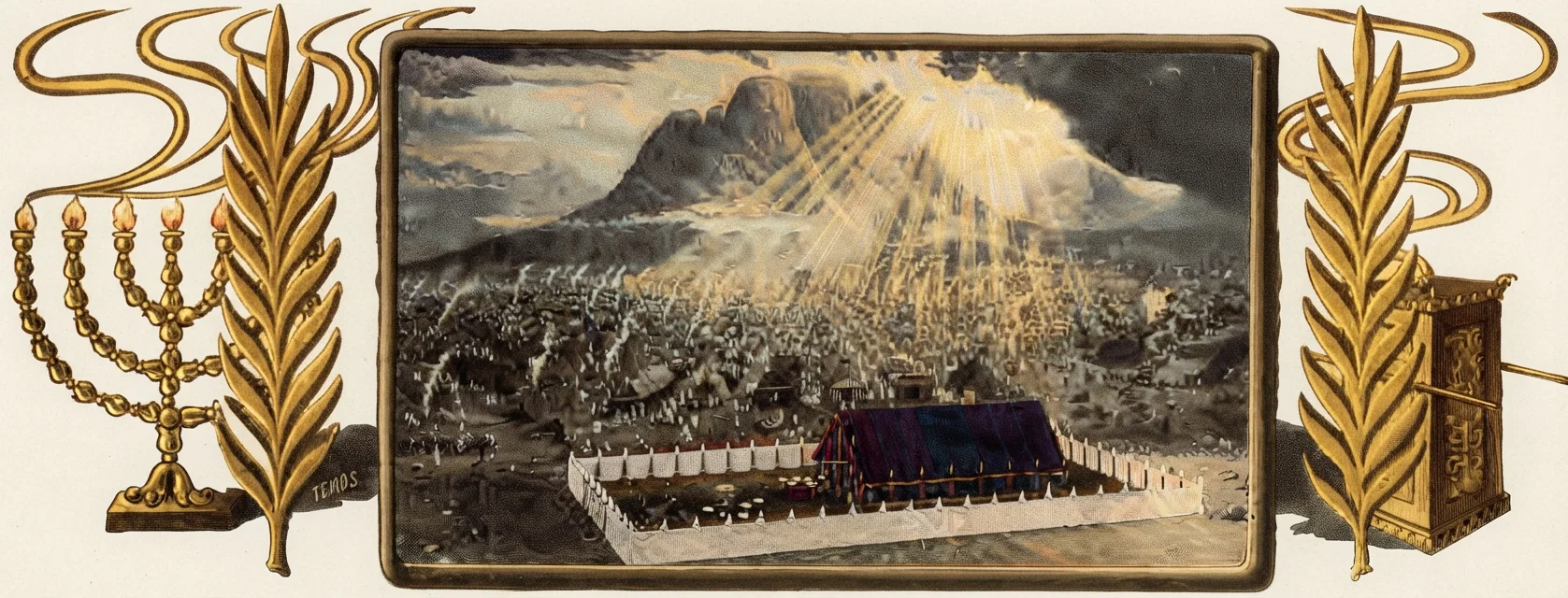
Do you long to know more of the heavenly sanctuary? If so, study prayerfully and carefully the description given of the tabernacle built by Moses in the wilderness; for Moses was admonished by the Lord to make it according to the pattern he was caused to see upon the mount. Ex. 25:40(margin).
Moses, the only man favored by being allowed to speak "mouth to mouth" with God, was given a view of the heavenly sanctuary, and commanded to build an earthly one as a shadow of the heavenly one.
Many years ago the writer was driving through the streets of London in company with a friend who had always been a deep student. Neither of us had ever been in the city before; but as we entered the heart of London my friend began to recognize places. He pointed out the "Old Bailey," "Newgate Prison," and other places of interest as we passed them; finally he said, "Now we shall soon see the dome of St. Paul's Cathedral," and sure enough, a turn of the road brought us in full view of the massive dome of St. Paul.
In surprise I said, "You have been in London before."
"No," he replied, "this is my first visit to London." "But," I persisted, "how do you know all the places of interest?"
His reply was, "All my life I have loved to read of these places noted in sacred and profane history, and from a child I have loved to study pictures of noted places, and they are all in my mind. I know the city altho I have never seen it."
In like manner the Christian that studies the word-pictures and descriptions given of the earthly tabernacle will have clear, well-defined ideas of the real building, the heavenly sanctuary.

Examples and Shadows

The individual who studies prayerfully and carefully the work of the priest in the earthly sanctuary will know of a surety the work of our High Priest in the heavenly sanctuary; for those earthly priests "served unto the example and shadow of heavenly things." In the shadowy service the sinner who realized that the "wages of sin is death" brought an innocent lamb to the door of the tabernacle, and, by confessing his sins over the head of the innocent lamb, and taking its life, he showed his faith in the "Lamb of God that taketh away the sin of the world." The lamb was slain, and the priest presented that blood before the Lord within the sanctuary. The sinner was forgiven; not through any virtue in the blood of the lamb, but because by bringing the lamb and taking its life he showed faith in the real "Lamb of God," whose blood does have power to cleanse even the deepest-dyed sins.
As we study of the earthly priest presenting that blood before the Lord in the earthly sanctuary, our faith can more fully grasp the fact that when we claim Jesus as our Lamb, our Sacrifice, and confess our sin to Him, He will plead His blood before the Father in our behalf, and we go free in Him; because, "by His own blood He entered in once into the holy place, having obtained eternal redemption for us."

THE SANCTUARY

1. THAT God might dwell with Israel, He instructed them to build Him a sanctuary.
"Let them make Me a sanctuary, that I may dwell among them." Ex. 25:8. (See as to the building and particulars, chapters 25 to 31 and 36 to 40.)
2. That sanctuary was divided into the holy and the most holy places, in the first of which were the table of the presence bread, the golden candlestick, and the altar of incense; in the most holy place the chief object was the ark of the covenant crowned with the mercy-seat, in which were the tables of the Decalogue.
"For there was a tabernacle prepared, the first, wherein were the candlestick, and the table, and the showbread; which is called the Holy Place. And after the second veil, the tabernacle which is called the Holy of Holies; having a golden censer, and the ark of the covenant overlaid round about with gold, wherein was a golden pot holding the manna, and Aaron's rod that budded, and the tables of the covenant." Heb. 9:2-4. See also Ex. 26:31-35.
3. All these were made from a pattern which God gave to Moses.
"And thou shalt rear up the tabernacle according to the fashion thereof which hath been showed thee in the mount." Ex. 26:30. See also Heb. 8:5.
4. The earthly sanctuary, its priesthood and services, were not the true; they were types and examples of the true in heaven.
"Now in the things which we are saying the chief point is this: We have such a High Priest, who sat down on the right hand of the throne of the Majesty in the heavens, a Minister of the sanctuary, and of the true tabernacle, which the Lord pitched, not man." "Who serve that which is a copy and shadow of the heavenly things, even as Moses is warned of God when he is about to make the tabernacle; for, See, saith He, that thou make all things according to the pattern that was showed thee in the mount." Heb. 8:1, 2, 5.
5. The daily ministration in the sanctuary was in the holy place throughout the year.
"Now these things having been thus prepared, the priests go in continually into the first tabernacle, accomplishing the services." Heb. 9:6. See also Num. 28:3, 9.
6. The ministration in the most holy place, the cleansing of the sanctuary, came on the very last day of the yearly ministration.
"But into the second the high priest alone, once in the year, not without blood, which he offereth for himself, and for the errors of the people." Heb. 9:7. See also Lev. 16:2-22.
7. This was called the Day of Atonement, the yearly judgment day of Israel.
"Howbeit on the tenth day of this seventh month is the Day of Atonement; it shall be a holy convocation unto you, and ye shall afflict your souls; and ye shall offer an offering made by fire unto Jehovah. And ye shall do no manner of work in that same day; for it is a day of atonement, to make atonement for you before Jehovah your God. For whatsoever soul it be that shall not be afflicted in that same day; he shall be cut off from his people." Lev. 23:27-29. See also verses 30-32.
8. This yearly round of services, which occurred in their full once each year on account of the short lives of the priests, typified Christ's entire work as priest once for all.
"And they indeed have been made priests many in number, because that by death they are hindered from continuing." "But Christ having come a high priest of the good things to come, through the greater and more perfect tabernacle, not made with hands, that is to say, not of this creation, nor yet through the blood of goats and calves, but through His own blood, entered in once for all into the holyplace, having obtained eternal redemption." Heb. 7:23; 9:11, 12.
9. These holy places where Christ ministers "once for all," are in heaven, where John saw the altar of incense (Rev. 8:3), the golden candlestick (Rev. 4:5), and the ark of the covenant (Rev. 11:12), seen only in further opening of the temple.
10. At the end of the 2,300 year-days of Dan. 8:14 (See article, "The Closing Work of Our High Priest"), the cleansing of the heavenly sanctuary from its record of sin begins (Heb. 9:23-28); the great antitypical Day of Atonement is upon the world; the solemn hour of God's judgment has begun (Rev. 14:6, 7; 1 Peter 4:17); and it will soon be determined whose names are blotted out of the book of life (Rev. 3:5); whose sins are blotted out (Acts 3:19); who are "accounted worthy to attain to that world, and the resurrection out from among the dead" (Luke 20:35), and then Christ will come. The subject is all-important.
Continue reading: The Priesthood In Type and Antitype