Your ShelfYour Projects

Signs of the Times, Vol. 30, No. 9.

LESSONS FROM POMPEII

Signs of the Times

Mar 2, 1904

Pacific Press Publishing Company · Oakland, California · Mar 2, 1904

LESSONS FROM POMPEII.
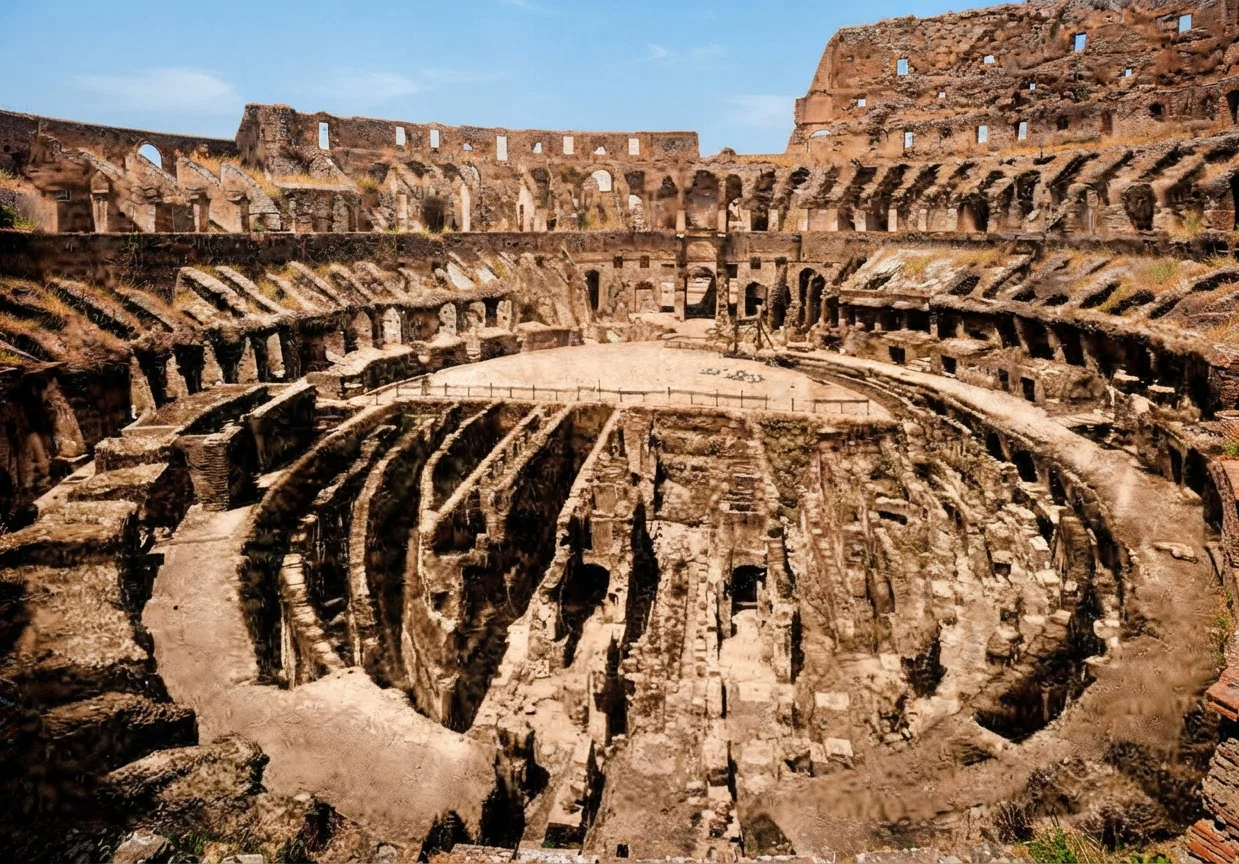
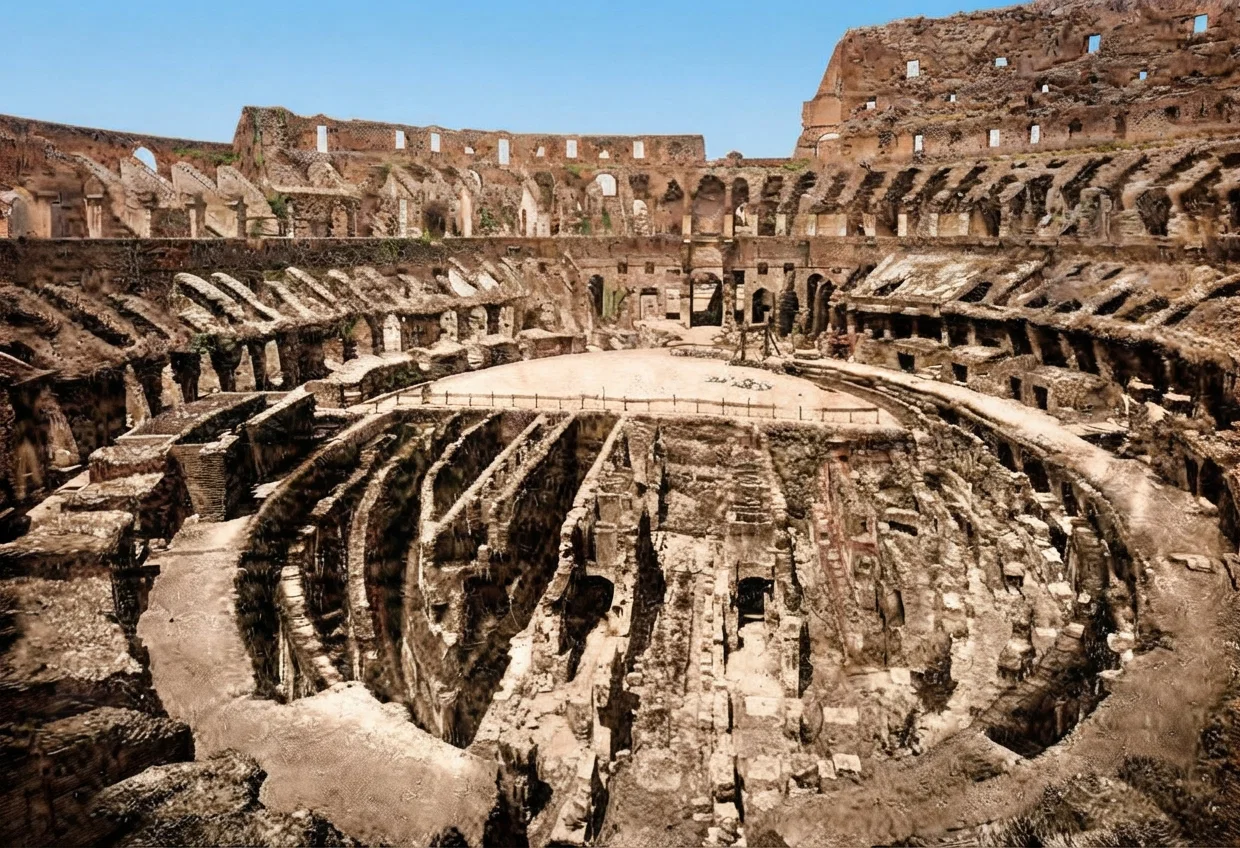
THE ancient city of Pompeii, which lies buried at the base of Mount Vesuvius, and which once was on the shore of the Bay of Naples, at the mouth of the Sarnus River, owes its fame to the suddenness and completeness of its interment. It was not a great city, altho the seaport for several other towns in Campania. But its sudden burial while yet at its best was the means of preserving until modern times the most perfect illustrations of ancient arts and customs that are to be found in the world.
POMPEII and the neighboring town of Herculaneum were buried by an eruption of Mount Vesuvius in the year A. D. 79, nine years after the destruction of Jerusalem by Titus. Yet so changed was the contour and topography of the country in that vicinity, as also the course and mouth of the river, that the site of the city was unknown for nearly seventeen hundred years. While it was once on the shore of the bay, it is now about two miles distant.
IT is evident that the people of those days were superstitious in regard to localities thus devastated, and did not venture to settle there again for some generations, or perhaps the land was unfit for culture for a long time. At any rate, those who came afterward and cultivated the ground were unconscious of what was under them. It was the more modern spirit of research for things ancient, and the spirit of speculation in relics of the past, that finally uncovered the secret. Even a prominent author of the long ago (Pliny the younger) wrote of an eruption of Mount Vesuvius, but did not mention Pompeii or Herculaneum.
Ruins of the Amphitheater at Pompeii.
THE city was deluged first with cinder and small volcanic stones, on top of which was a deep covering of fine ashes. This top layer was eventually hardened by the action of water, and, in time, became a rich soil. So in 1748, when the discovery of the buried city was made, the region was covered with vineyards and mulberry grounds. Were it not known definitely when so great an accumulation of matter fell suddenly on that region, and the source whence it came, as also something of the history of the cities themselves, "geologists" would, no doubt, be computing millions of years for the changed condition, and classing the buried cities as older than Adam. But there is no reason why any other of the mysterious things of earth, supposed to be the work of untold millenniums, could not easily have come to pass within the six thousand years of history recorded in the Bible.
IT was not known when Mount Vesuvius had been in active eruption before this disastrous occurrence. Altho there were evidences of its being a volcanic mountain, it was supposed to be an extinct volcano, and the people in its vicinity never dreamed of danger from that source. There had been an earthquake sixteen years before this eruption, which had donemuch damage in Pompeii and other towns in that region; but the researches show that reconstruction and other extensive improvements were going on at the time of the eruption in a manner that indicated a feeling of perfect security. Like the antediluvians, and the people of Sodom, they were going on with business and pleasure, and "knew not" until their destruction came suddenly. So it will be to the wicked at the coming of the Lord "as a thief in the night." The Scripture tells us that "when they shall say, Peace and safety; then sudden destruction cometh upon them, as travail upon a woman with child; and they shall not escape."
THE sudden outburst of Vesuvius is an illustration of the pent-up forces in the earth, which the Lord may call forth at any time when, in His wisdom and in the progress of His purpose, judgment is called for in any locality or upon the whole earth. In the judgment of the antediluvian world the waters from beneath and from above united to fulfil His purpose. "All the fountains of the great deep were broken up, and the windows of heaven were opened." On Sodom and Gomorrah and the cities of the plain God rained fire and brimstone. And we learn from the New Testament that the earth as it is now is "reserved unto fire against the day of judgment and perdition of ungodly men." In the earth are reserves of fire and the various kinds of fuel in great abundance. These, lit up with the fire that comes "down from God out of heaven," will quickly put in motion the flames that will cause the elements to "melt with fervent heat."
THE illustration given herewith represents one of the theaters of Pompeii, capable of seating about five thousand people. History shows the theater to have been the outgrowth of wealth, luxury, idleness, and a general desire to be entertained. The drama, in all of its extremes and excesses, has always been at its height when kingdoms and empires fell into decay. The extent to which the theater is patronized is a fair gauge of the moral temperature of the populace, and, therefore, of the real power of the government. The rage for the fictitious, or the thrilling, or the debauchery of amusement, is always evidence of a loss of moral self-control, hence a loss of power. Just before the fall of the Roman Republic, Pompeii became a favorite resort for leading nobles of Rome, many of whom acquired villas in its neighborhood.
TACITUS says that in A. D. 59 (only twenty years before its destruction) "a tumult took place in the amphitheater of Pompeii between the citizens of the place and the visitors from the neighboring colony of Nuceria, which led to a violent affray, in which many persons were killed and wounded on both sides. The Pompeians were punished for this violent outbreak by the prohibition of all gladiatorial and theatrical exhibitions for ten years." A painting found on a wall in one of the houses by the excavators, gives a representation of this event.
ONE of the signs of popular corruption in our own day, in our own land, is the growing craze for "shows" of various kinds, especially for the cheap theater. It is to the grown people what the "dime novel" is to the boy—it lures them on and on. We have an illustration in our home city, whose people often boast of it as "the city of churches." Where two or three years ago there was but one "vaudeville" playhouse on the main business street, there are now four within a range of four blocks, and the last one is crowded to overflowing, even as the first. This is but a straw, showing the trend of popular taste in the matter of mental food and, therefore, of the lapse of moral power. The present outlook leaves no room for doubt as to the outcome,—"Evil men and seducers shall wax worse and worse, deceiving and being deceived."
W. N. GLENN.

Missing Text

“THE CHIEF CORNER STONE.”

BY MATTIE E. PRICE.
“BEHOLD, I lay in Zion for a foundation a Stone, a tried Stone, a precious Corner Stone, a sure foundation; he that believeth shall not make haste.” Isa. 28:16.
In coming to Jesus, the “chosen of God,” we are adopted into the family of heaven. To those who “believe, He is precious,” and to these will He give power to draw others to Him. Of Himself and that drawing power He says, “And I, if I be lifted up from the earth, will draw all men unto Me.” John 12:32.
In the great spiritual house, of which Jesus, the precious One, is the “Corner Stone,” are laid the “lively stones,” the sons and daughters of the Most High, purchased by the precious blood of Him who was “lifted up.” The “lively stones” are given a part in this work of drawing men and women to this great spiritual house. In lifting up the precious One before the perishing, they are compelled to come in. By every word and act of our daily lives we are either “gathering with Christ or scattering abroad.” He is worthy to be exalted. His name is a safe defense, and those who have crowned Him King of their lives, will He make “lively stones” in His Father’s house. “Jesus Christ Himself being the chief Corner Stone,” He will shine brightly in His Father’s glory, and around Him will be gathered the purchase of His precious blood, and God Himself will dwell in that house “through the Spirit.” Eph. 2:22.
Our daily lives show whether or not we are “lively stones” in God’s house. Let us heed the admonition of the Sacred Word: “Having your conversation honest among the Gentiles; that, whereas they speak against you as evildoers, they may by your good works, which they shall behold, glorify God in the day of visitation.” 1 Peter 2:12.
Ingersoll, Okla.

THE BUILDERS

(Continued.)
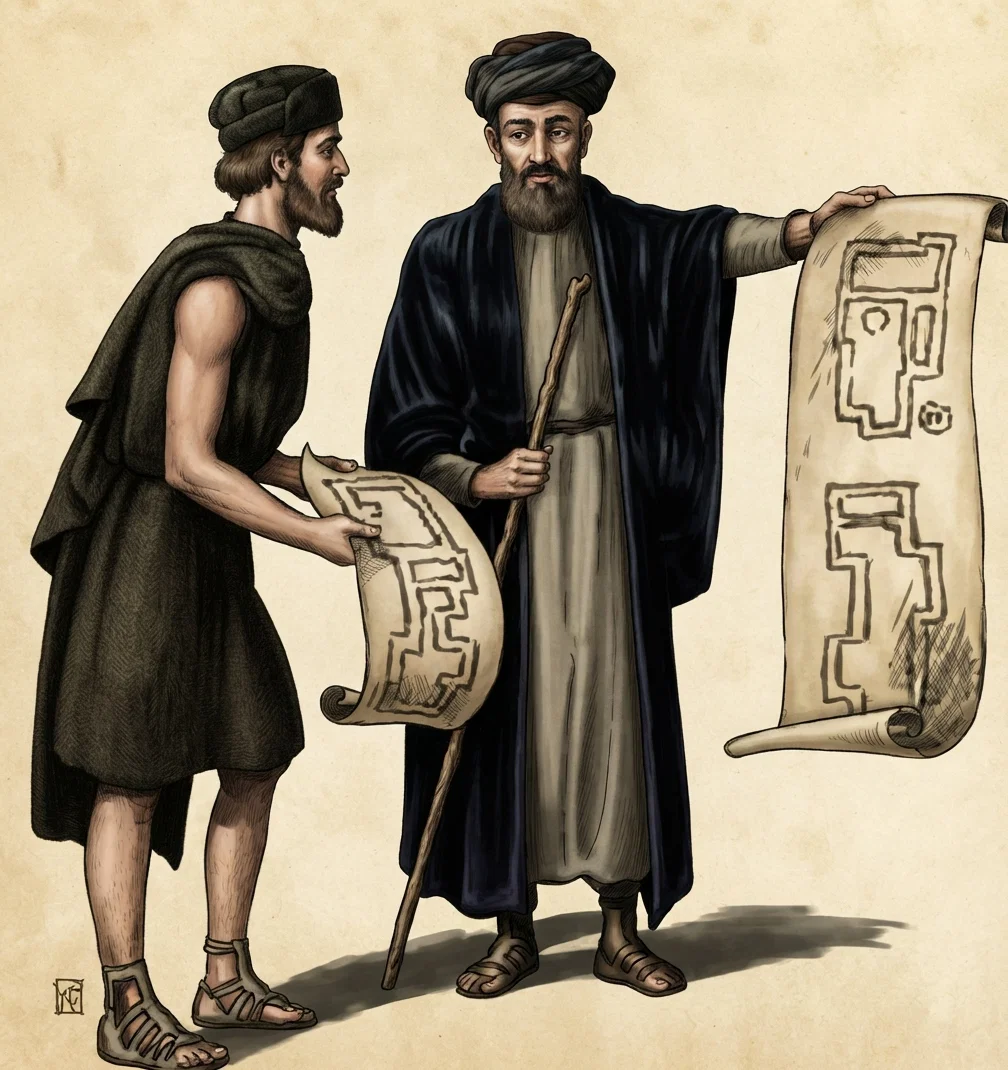
BUT the builders compared plans now and then, and as a result some were persuaded to change from one association to another. This led to the erection of some very queer houses, so that it was difficult to tell which plan they were following; in fact, some looked as if they were not built after any plan at all.
After a time, the main features of their houses being completed, they had more leisure to visit and to make comparisons. I will here relate a conversation which took place between two neighbors during such a visit. The visiting one, after being cordially received, said:—
“I have often thought of calling upon you, but we have been very busy building our own house, which still lacks a great deal of being finished. But the desire to visit you has been greatly increased of late, as I have been told that your house contains some novel features. Indeed, some say that it differs quite materially from most others in our neighborhood. I shall therefore be pleased if you will kindly explain this matter to me.”
“I shall do so with pleasure,” was the reply; “but first let me say that I have been very careful to follow the King’s Book of plans in every particular; I have tried to pay no heed to any other. In this, however, I was not fully successful, as you will see later on. Now I suppose you prefer to visit those rooms where you can see the peculiarities of my house, and this you shall do. First I wish to show you a room which, doubtless, is very much like one of yours; but, as it has been reported that my building contains no such room, I wish to correct this notion, and also to relate to you my experience. I lived for a long time in a room adjoining this, which I was induced to build by reading a neighbor’s guide-book, but which I now see must be torn down. In this tower of carnal security there are a number of easy chairs, such as natural morality, self-dignity, inherent manhood, self-justification, etc. A more careful study of my Guide-book, however, has taught me that none of these are pleasing to the King.
“One day I came into this room and began to notice this chair. You see that it is set so as to face that scroll on the wall. You will notice that the chair has a circular framework under it, upon which it can be turned so as to face exactly the opposite way, or so as to face this window over here. You will notice thatbeside this window is a beautiful fount of clear water. Well, I sat down in the chair and began to look at the scroll. The pictures were dim, and I could hardly see them; Conviction but just then a bright light from the small window directly overhead fell upon the scroll, making the pictures clear and distinct.
'I then saw that the scroll contained pictures of my life, and I could not bear to look at them. So I sprang from the Carnal Security chair and ran into the other room with great haste. I then determined never again to visit that room where the scroll hung, but I did, and with exactly the same result. Each Devil time as I came out, a very obliging inmate of the room (carnal security), Doubt handed me a pair of clouded spectacles, which he said would greatly relieve my eyes after such a strain on them as had been caused by the light of conviction falling upon the pictures of the scroll.
'I now began to view in the light of this room (carnal security), and with the aid of these glasses (doubt), the pictures on the scroll. As I remembered them now they all seemed greatly exaggerated, while some seemed utterly false. So the matter stood for some time. At length a friend of mine told me that the greatest blessing of her life came to her as a result of her experience in Bible that room. I then studied my Guide-book, and found that the King considered that room one of the most important in the house, and that all must visit it. So I determined that I would do so, even tho the ordeal should take my life.
'I entered, took my seat in the chair, and looked upon the scroll. The pictures of my life began to appear, while the light of conviction grew brighter and brighter. O, how my soul was harrowed with remorse! I felt that I could not bear to look at the unfolding of the scroll, and still I desired not to turn away. I now cried out in my agony, 'O Lord, have mercy upon me!' A pillow was Confession placed behind my head, and I said, 'The pictures are true, all true.' I did it all, and more; but I am sorry, so sorry.'
The builders
The builders
'At this moment the darkness of death seemed to settle over me, and I said, 'Surely I am dying; but let me die, I am not fit to live.' Now all seemed lost to view. Even the scroll faded from my vision. The Old Man I ceased to struggle for life. Some one said, 'He is losing his old life. Give him a new one.'
Immediately a ray of light pierced the darkness, and a sweet voice whispered the words, 'Look up.' I did so, and was then told to touch the knob and turn the chair about. I touched the knob and the chair Repentance swung around on the frame-work Baptism and I faced the fount. I was taken by loving hands and borne to the water, into which I was lowered. As I was thus buried a scene opened before me.
Calvary Rom. 6:4 There was a rugged hill, all around upon the sides of which there surged a maddened crowd, clamoring for blood. I heard them shout, 'Away with Him! Crucify Him!' I looked to the summit of the mount, and there I saw a cross, with a victim nailed upon it. I looked upon that face, and such an expression of sorrow I had never seen—such love, such tenderness, such pity. From the pale brow the blood was oozing and slowly trickling down over the emaciated face.
'As I gazed upon the scene, the thin, quivering lips moved, and the words, 'Father, forgive them, for they know not what they do,' were spoken with great earnestness. I was filled with indignation, and turned to face the mocking crowd, thinking to shower upon them words of bitterest reproach for the deed they were doing; when, lo! among Zech. 12:10 them I saw myself. The pictures I had seen upon the scroll were nothing as compared to this. Could it be true? I looked again. It was true, and I sobbed aloud. I turned again to the face of the sufferer, and while I gazed, a pained, anxious, questioning look took possession of the face. The eyes were slightly raised and expressed deep agony; then there came a cry of grief which chilled my very soul: 'My God, My God, why hast Thou forsaken Me?' A moment more, and with the words, 'It is finished,' the head fell forward upon the bosom, the limbs relaxed and became limp and motionless. The sufferer was dead!
Gal. 2:20 A great throb of sympathy convulsed my frame. My heart was broken, and I expired. All was gone.
(To be continued.)

HE LEADETH ME.

BY MRS. CARRIE K. BUTCHER.
Why should I fear life's stormy tide, When Christ my Lord is by my side To lead the way? He walks with me; He holds my hands; And while He guides through desert lands I can not stray.
Above life's din I hear His voice, I walk this "narrow way" from choice, And, O, 'tis sweet His precious promises to hear, To feel His touch, and know Him near To guide my feet!
And when I reach my journey's end, I know on whom I can depend, His name is Love! His own dear feet marked out the way, Through death to life, and endless day, In heaven above.
If I must tarry in the tomb— My Lord has stripped it of its gloom— Sweet be my rest Until He comes—'twill not be long, Then I shall wake, and join the throng, Forever blest!

THE PROPHECY OF HOSEA.

BY G. C. TENNEY.
It is certainly not unnatural that we should form in our own minds a comparative estimate of the peculiar interest, or perhaps, of the intrinsic value, of different portions of the Word of God. But oftentimes this estimate will be found to rest upon some prejudice or misunderstanding of the real value of the portions that are least esteemed.
I am led to speak of the book of Hosea as a portion of the Bible that is generally overlooked and not given its proper standing in the sacred volume. There are some reasons for this, one of which probably lies in the fact that the introductory chapters are formed along a line of thought that is not pleasant to the mind, but presents a monstrosity in social and moral life. Another reason why the book is passed by in casual reading is that the style of the writer seems disordered, and his object rendered obscure by the seemingly incoherent way in which figures, facts, metaphors, and maxims, startling charges, plaintive exhortations, and beautiful sentiments flow from the pen of the writer. But this is only an evidence of the intense feelings which were aroused in the mind of the inspired seer as he beheld the woful condition of God's professed people at that time.
It is not positively known who Hosea was beyond the brief word that introduces him to the reader as "the son of Beeri." From the point of view which he evidently occupied it is easy to conclude that he belonged to the ranks of Judah, tho the principal burden he bore was in behalf of "Ephraim," a title used to designate that branch of God's professed people known as the ten tribes. The fact stated in the beginning of his testimony that he wrote in the "days of Uzziah, Jotham, Ahaz, and Hezekiah, kings of Judah, and in the days of Jeroboam the son of Joash, king of Israel," is sufficient to account for the unusual ardor exhibited in his style. With few exceptions, each succeeding king in those days seemed to concentrate into his life all the evils of his predecessors, and as many original ones as he could study up by the aid of evil spirits, to whose control he fully yielded himself.
The soul of Hosea was stirred within him as he saw the condition of the people. He declared that the Lord had a controversy with them "because there is no truth, nor mercy, nor knowledge of God in the land. By swearing, and lying, and killing, and stealing, and committing adultery, they break out, and blood toucheth blood."
Judah does not go unreproved, for "the Lord hath also a controversy with Judah" (ch. 12:2); but the comparisons are against the other house. In the first chapter the Lord declares that He will have mercy upon Judah, tho Ephraim had sinned beyond recall. In another passage we read, "Ephraim compasseth me about with lies, and the house of Israel with deceit; but Judah yet ruleth with God, and is faithful with the saints."
In the figures introduced in the first three chapters we have a representation of the repugnant conduct of the people whom God had "married" and claimed as His own. If these representations offend our sense let us know how much more offensive is spiritual unfaithfulness to God, who has loved His people with an everlasting love. Under the figure of this unholy alliance and its fruits we have a terrible reminder of the awful character of sin and apostasy, and their dire consequences. The first figurative offspring of shame was to be called Jezreel. Jezreel was the name of the place where the blood of Naboth, the owner of a vineyard, was shed through the intrigue of the wicked Jezebel. The word of the Lord was that there the dogs should lick the blood of his murderers, king Ahab and his even more wicked queen. This word was fulfilled; and not only so, but afterward, there in Jezreel, the awful Jehu cut off the seed of Ahab from the earth by an indiscriminate slaughter. There was a terrible significance in that word to the apostate tribes of Israel. And this was to be the first reaping of their evil course. Continuing in this course of rebellion, the second child of apostasy would bear an even more terrible name. It was to be called "Lo-ruhamah," which meant the cutting off of mercy. "For I will no more have mercy on the house of Israel; but I will utterly take them away." And persistence in the evil way would bring to them Lo-ammi, when they would cease to be acknowledged or recognized as the people of God, "for ye are not My people, and I will not be your God."
And yet, in this deplorable state of things, the heart of God yearns after His beloved people. He speaks of them and to them in the most endearing terms. In one chapter we read, "Ephraim is joined to idols; let him alone." And soon after that God mourns over His lost children with these words: "O Ephraim, what shall I do unto thee? O Judah, what shall I do unto thee? for your goodness is as a morning cloud, and as the early dew it goeth away. Therefore have I hewed them by the prophets; I have slain them by the words of My mouth; and thy judgments are as the light that goeth forth. For I desired mercy, and not sacrifice;

God’s Enduring Love for Israel

and the knowledge of God more than burnt-offerings.'
Still later we read, 'My God will cast them away, because they did not hearken unto Him; and they shall be wanderers among the nations.' Then again His Father's heart yearned over His wandering children. In a tone heavy with sorrow and love the Lord says: 'When Israel was a child, then I loved him, and called My son out of Egypt. . . . I taught Ephraim also to go, taking them by their arms; but they knew not that I healed them. I drew them with cords of a man, with bands of love; and I was to them as they that take off the yoke on their jaws, and I laid meat unto them.' Then, as if His pity overcame His sense of justice, the Lord cries out: 'How shall I give thee up, Ephraim? how shall I deliver thee, Israel? how shall I make thee as Admah? how shall I set thee as Zeboim? Mine heart is turned within Me; My repentings are kindled together. I will not execute the fierceness of Mine anger, I will not return to destroy Ephraim; for I am God, and not man; the Holy One in the midst of thee.'
The condition of Israel at this time was most grievous to God, and they had far exceeded the ordinary bounds of forbearance. The Lord hewed them by prophets and slew them by His word, but His heart yearned over them with inexpressible anguish. His love for them bore away the purposes of His righteous wrath.
In chapter six words are put into the lips of the apostate people: 'Come, and let us return unto the Lord; for He hath torn, and He will heal us; He hath smitten, and He will bind us up. After two days He will revive us; in the third day He will raise us up and we shall live in His sight. Then shall we know, if we follow on to know the Lord: His going forth is prepared as the morning; and He shall come unto us as the rain, as the latter and former rain.' And the last chapter is a most precious expression of the wonderful compassion of a long-suffering Saviour. Here are some portions of it: 'O Israel, return to the Lord thy God; for thou hast fallen by thine iniquity. Take with you words, and turn to the Lord; say unto Him, Take away all iniquity, and receive us graciously; so will we render the calves of our lips.'
Then, after teaching the people what to say, the Lord tells them how He will respond: 'I will heal their backsliding, I will love them freely; for Mine anger is turned away from him. I will be as the dew unto Israel; he shall grow as the lily, and cast forth his roots as Lebanon.'
There is nothing that so delights the heart of our Heavenly Father as the opportunity to forgive a repentant child. How greatly is mercy His delight! It is His will that His children should exhibit to all beholders the grace, the purity, the beauty of the lily, that most beautiful symbol of innocence. But the fragile nature of the flower is to be replaced by the firmness and stability of a mountain. 'They that trust in the Lord shall be as Mount Zion, which can not be removed, but abideth forever.'
Looking forward, the Lord saw His poor wayward children captive in death. Still His mercy follows them, and He declares: 'I will ransom them from the power of the grave; I will redeem them from death; O death, I will be thy plagues; O grave, I will be thy destruction; repentance shall be hid from Mine eyes.' Yes; grace and infinite love will penetrate the grave; and the helplessness of His children stirs the heart of the great Father of us all.
Throughout the book of Hosea we see flashing forth the most exquisite examples of sublimity, pathos, and wisdom. Many of these expressions have passed into current use as gems of thought. Perhaps there is no other book of equal length that furnishes so many examples of familiar quotations. Here are a few of them, besides those already quoted: 'The valley of Achor [weeping] for a door of hope.' 'Hedge up thy way with thorns.' 'My people are destroyed for lack of knowledge.' 'Like people, like priest.' 'Ephraim is joined to idols; let him alone.' 'I desired mercy, and not sacrifice; and the knowledge of God more than burnt-offerings.' 'Ephraim is a cake not turned.' 'Ephraim also is like a silly dove without heart.' 'For they have sown the wind, and they shall reap the whirlwind.' 'Sow to yourselves in righteousness, reap in mercy.' 'Ye have plowed wickedness, ye have reaped iniquity; ye have eaten the fruit of lies.'
This remarkable book closes with these words of grace: 'Who is wise, and he shall understand these things? prudent, and he shall know them? for the ways of the Lord are right, and the just shall walk in them; but the transgressors shall fall therein.'
Continue reading: History of Government