Your ShelfYour Projects

Review and Herald, Vol. 88, No. 38.

Redeem the Time

Review and Herald

Sep 21, 1911

Review and Herald Publishing Association · Tacoma Park Station, Washington, D. C. · Sep 21, 1911

Redeem the Time

THE time is short! If thou wouldst work for God, it must be now; If thou wouldst win the garland for thy brow, Redeem the time!
Shake off earth’s sloth! Go forth with staff in hand while yet ’tis day; Set out with girdled loins upon the way. Up! Linger not!
Fold not thine hands! What has the pilgrim of the cross and crown To do with luxury or couch of down? On, pilgrim, on!
With His reward He comes; He tarries not; His day is near; When men least look for Him, He will be here. Prepare for Him!
Let not the flood Sweep thy firm feet from the eternal rock; Face calmly, solemnly the billow’s shock. Fear not the storm!
Withstand the foe! Die daily, that forever thou mayest live; Be faithful unto death! The Lord will give The crown of life.
—Horatius Bonar.

“World-Wide Symposium” Number of

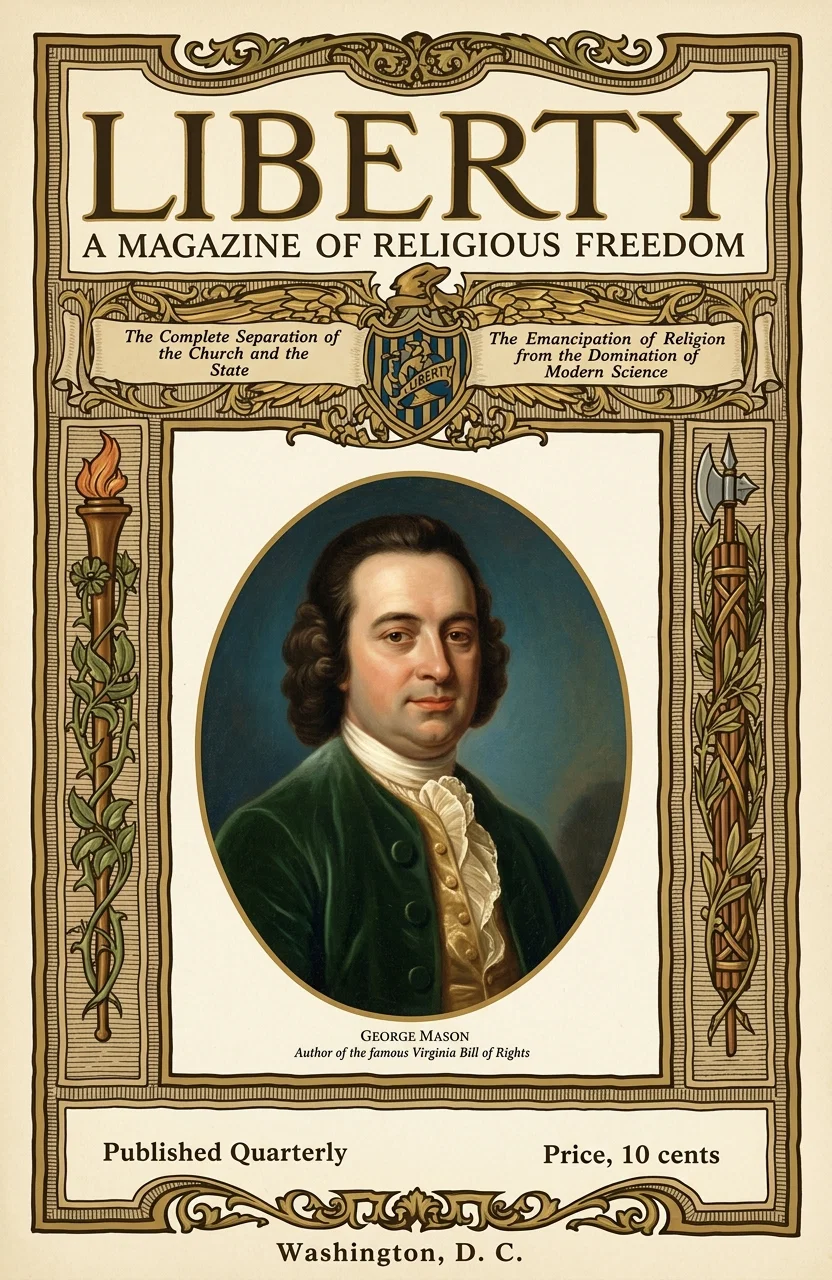
LIBERTY (Call for No. 3)

Profusely Illustrated; Discusses 26 Subjects of Interest to Every Lover of Freedom
Religious liberty conditions vividly described by our correspondents in England, Germany, Switzerland, Italy, Argentina, Austria, Portugal, Finland, China, Russia, and Sweden. These eleven articles are well worth one dollar. In fact, the speech of Mayor Nathan, of Rome, Italy, the Pope’s reply, and his reply to the Pope’s rejoinder, is regularly sold at fifty cents a copy. Present status of the Johnston Sunday Bill, recently before Congress — an article of vital importance to every loyal American citizen.

“Liberty” Agents Wanted Everywhere!

Since 1908, our army of “Liberty” agents has been increased to 1,242. More recruits are wanted everywhere! This magazine sells well. It appeals to the common people as well as to the professional classes. One of our lady agents in California sold 333 copies in one day, as follows: 140 in Grass Valley; 150 in Nevada City (in 2 1-2 hours); 42 in Colfax. She would have sold more had she not been obliged to travel so much. On four different days she sold 223, 257, 269, and 333 copies respectively — a total of 1,082 copies. During another period of seven days she sold 1,150 copies, at a net profit of $64.92, or $9.27 a day.
Send $1.00 for 20 — To get money back, sell 10 — Profit on 20, $1.00 Send $2.00 for 50 — To get money back, sell 20 — Profit on 50, $3.00 Send $4.00 for 100 — To get money back, sell 40 — Profit on 100, $6.00
One year, 25 cents; single copy, 10 cents; 5 to 40 copies, 5 cents a copy; 50 or more copies, 4 cents a copy.

SEND ALL ORDERS THROUGH YOUR CONFERENCE TRACT SOCIETY
GEORGE FOX
Founder of the Society of Friends
GEORGE FOX Founder of the Society of Friends
Help us to reach 19,977,820 public-school pupils and college students through their 534,450 teachers and instructors. Send $1.50 for mailing “Liberty” for one year to 10 of these teachers. Single copies mailed by us for you to 5 or more addresses, 5 cents each.
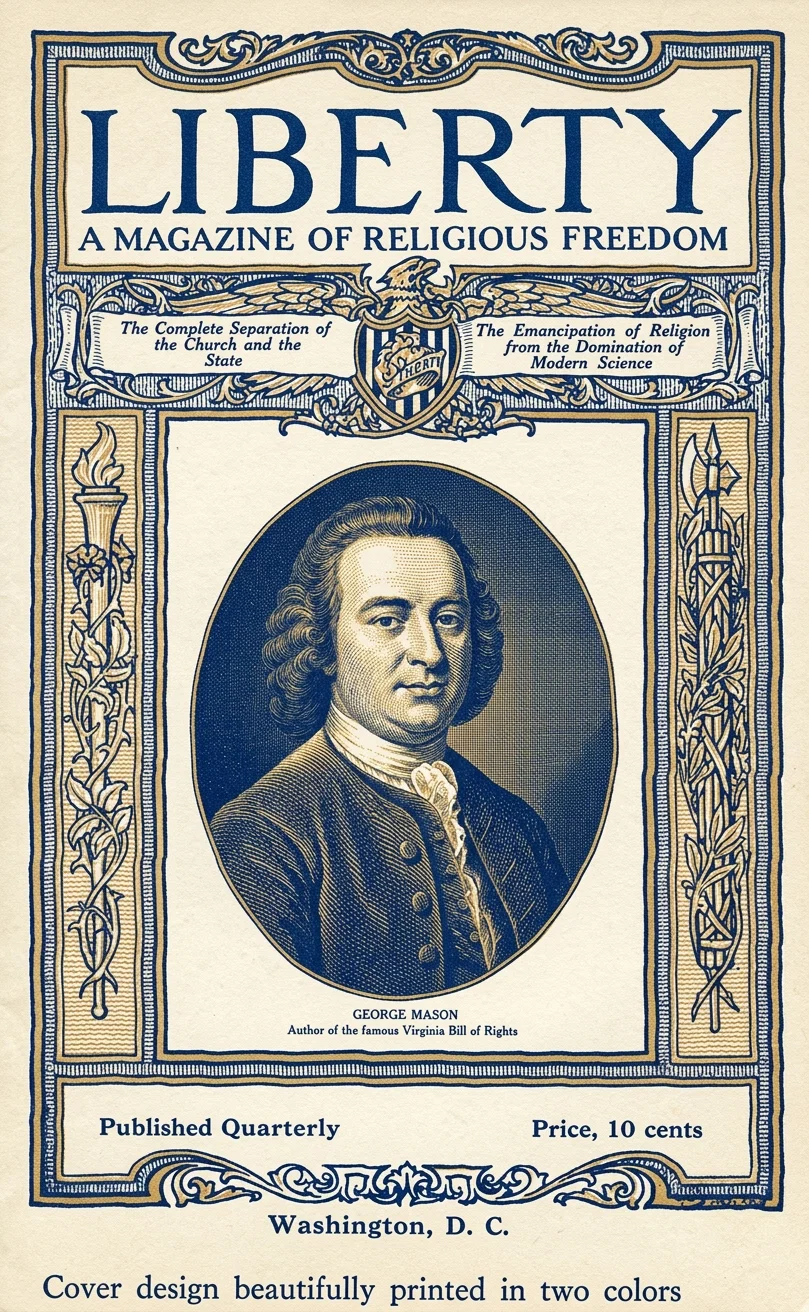
Cover design beautifully printed in two colors

LIFE & HEALTH

Cover Design Printed in Three Colors
The October Number of

LIFE & HEALTH

Special Autumn Number Brim Full of Good Things
Sixty-five timely articles well worth ten times the price of this number

This Magazine Tells You

How to keep well. How to get well. How to treat yourself at home without drugs. How to sleep, cook, eat, and dress for health.
It is read each month by over 300,000 people

NOTE THESE FOURTEEN ARTICLES

What Are We Coming To? (Why the increase in our death-rate?) Effects of Home Water Treatment. How to Cure Insomnia. Autumn's Antidote for Physical Ills. Our Inside Enemies (the bacteria). How to Can Vegetables. Vice in Large Cities.
How to Cook in Paper Bags. What I Saw at the Dresden Hygiene Exhibition. The Danger of Flueless Heaters. A Defense of Dr. Wylie. Upton Sinclair on Fasting. The Care of the Cellar. How to Prevent a Cold in the Head.
And fifty-one others which we have not space to mention.
Our 2,000 agents are selling from 100 to 2,000 copies per month
$1.00 a year; 10 cents a copy; 5 to 40 copies, 5 cents each; 50 or more copies, 4 cents each

PLEASE ORDER THROUGH YOUR CONFERENCE TRACT SOCIETY
Cover Design Printed in Three Colors

Heart Longings

Tune: “Will There Be Any Stars?”
A. M. A. HARPER
I AM longing to-night for a glimpse of God's love, And the river of life over there, For the beautiful mansions and home far above, And the glories of Eden to share.
If I'm faithful, I'll sing when all sorrow is o'er, Of God's love; and in heaven shall meet The dear friends I love, to be parted no more, And we'll worship at Jesus' dear feet.
In the home of his love we forever shall dwell, And a tribute of praise we shall bring; And the songs of the ransomed in glory will swell, While the arches of heaven will ring. On the evergreen hills, where no evil shall come, With the prophets and sages of old, All the weary will rest in that beautiful home, When its glorious gates shall unfold.
O, I long for my Saviour, to lean on his breast; Where with angels and seraphs we'll sing, When with all the dear martyrs we ever shall rest In the fragrance and sunshine of spring!
I am longing for home,—O, that beautiful home!— And the joys so heart-thrilling to feel, When the ransomed shall gather to nevermore roam, And the Saviour our sorrows shall heal.
I am longing to-night for the sweet by and by, And the hills where the angels have trod; For the glorified mansions, to them would I fly, To the beautiful city of God.
O, I long now to go to the kingdom of rest, There to eat of the health-giving tree, And forever with Jesus and loved ones so blest In the heavenly Canaan to be!
Shaftsburg, Mich.

The Birthright

S. N. HASKELL
The Abrahamic birthright consisted of three parts,—a double portion of the father's estate; the family priesthood; and last, but not by any means least, the great honor of becoming the progenitor of Christ. Isaac retained the entire birthright, but Esau sold his birthright to Jacob to satisfy his appetite (Gen. 25: 29-34), and Jacob possessed all the birthright except the double portion of the parental estate.
Reuben, Jacob's first-born, forfeited his right to all of the birthright. Jacob denounced him as “unstable as water.” He was guilty of a sin which showed plainly that he had no regard for the honor of the family from whom the Messiah was to come. Gen. 49: 4. On account of Reuben's grievous sin, the birthright was taken from him. But to whom should it be given? Among all the twelve sons of Jacob there was not one worthy of the entire birthright, not one with the integrity of character of their fathers, Abraham, Isaac, and Jacob; therefore the birthright was divided between Judah, Joseph, and Levi, giving to each one portion; and from that time on down to the birth of the Messiah “the genealogy is not to be reckoned after the birthright.” 1 Chron. 5: 1, 2; Num. 8: 14-16; Gen. 49: 10-12.
These three men developed Christian characters under entirely different circumstances. Judah “prevailed above his brethren, and of him came the chief ruler,” or prince. 1 Chron. 5: 2. In the home life, surrounded by the same temptations as his brethren, Judah prevailed above them. By integrity of character he gained the confidence of all; so that Jacob, on his death-bed could say: “Judah, thou art he whom thy brethren shall praise: thy hand shall be in the neck of thine enemies; thy father's children shall bow down before thee.” Gen. 49: 8.
This confidence in Judah was shown when the ten brethren brought word to Jacob that the ruler in Egypt demanded that they bring Benjamin into Egypt. Jacob refused to let Benjamin go. Reuben said to his father: “Slay my two sons, if I bring him [Benjamin] not to thee: deliver him into my hand, and I will bring him to thee again.” Gen. 42: 37. His words had no effect upon Jacob; but when Judah said, “I will be surety for him,” Jacob consented for Benjamin to go. Gen. 43: 9-13.
When Jacob and his household neared Egypt, the aged patriarch, fearing lest his posterity might be swallowed up by the Egyptians, and remembering that shepherds were “an abomination unto the Egyptians,” saw that the only safe place for his household was in a grazing country, where they could follow an occupation that would separate them from the Egyptians. For this reason he “sent Judah before him unto Joseph, to direct his face unto Goshen.” Gen. 46: 28-34. Judah could be trusted by the entire family; he had prevailed above his brethren in the same surroundings where they had failed.
Joseph also was one before whom his brethren bowed down, but under entirely different circumstances. They bowed before Joseph on account of the position which he held, not because they loved and respected him. Joseph developed a Christian character among strangers. In the midst of Egyptian idolatry, he proved true to God. When tempted to sin, he replied: “How then can I do this great wickedness, and sin against God?” Gen. 39: 9. He leaned upon God alone, and developed a Christian character when surrounded by heathen darkness. He had no earthly friend to whom he could turn for godly counsel in time of perplexity. God alone was his help. His father, Jacob, on his death-bed gave the secret of Joseph's strength in the following words: “His bow abode in strength, and the arms of his hands were made strong by the hands of the mighty God of Jacob.” Gen. 49: 24. Joseph knew what it was to reach up by faith and take hold of the hand of the Infinite One reaching over the battlements of heaven to clasp the hand of struggling humanity. Judah developed a Christian characterat home with his brothers, while Joseph gained his victories separated from all kindred ties, and Levi won the mastery in the time of a great crisis. Levi's impetuous, fearless nature had led him to deceive and slay all the men of Shechem. Gen. 34: 1-31. Jacob was so grieved by the course of Levi that on his death-bed he said: “O my soul, come not thou into their secret; unto their assembly, mine honor, be not thou united.” His last words to Levi were more like a curse than a blessing. Gen. 49: 5-7.
The same fearless nature that, when directed by Satan, led Levi to murder the men of Shechem, enabled the Levites, when consecrated to God, to stand true to him in a time of crisis. It is comparatively easy to be true when everything moves smoothly; but when there is confusion, and the majority are on the wrong side of the controversy, and the honor of God is trampled in the dust, it requires a fearless trust in God to come forward, and, like the Levites of old, stand upon the Lord's side. It is such characters that God can trust. Just before his death, Moses, in blessing Levi, said:— “Let thy Thummim and thy Urim be with thy holy one, whom thou didst prove at Massah, and with whom thou didst strive at the waters of Meribah; who said unto his father and to his mother, I have not seen him; neither did he acknowledge his brethren, nor knew his own children: for they have observed thy word, and kept thy covenant. They shall teach Jacob thy judgments, and Israel thy law: they shall put incense before thee, and whole burnt sacrifice upon thine altar.” Deut. 33: 8-10. The Levites regarded the honor of God and his cause above every earthly tie, and for that reason they were chosen by the Lord to perform the service of the sanctuary.
The characters developed by Judah, Joseph, and Levi, which entitled them to the birthright, represent the Christian character needed by all in the last days. “The days are fast approaching when there will be great perplexity and confusion. Satan, clothed in angel robes, will deceive, if possible, the very elect. There will be gods many and lords many. Every wind of doctrine will be blowing.”—“Testimonies for the Church,” Vol. V, page 80.
The individual who lives a good life at home and among his neighbors, and yet in a crisis allows his sympathy to be on the wrong side, can never be trusted with responsibility in the cause of God. God wants men who will live a godly life in the home, represent him to the outside world, and in a crisis stand fearless for the right, in the face of death if necessary. This was the character of the patriarchs Abraham, Isaac, and Jacob, who possessed the entire birthright. If we are Abraham's children, we shall do the works of Abraham,—represent our beloved Master at home and abroad, and fearlessly stand true to God in every crisis.
Portland, Maine.

The Judgment and the Judgment Message; the Cleansing of the Sanctuary, or the Work of Judgment at the End of the 2300 Days

Many Voices—No. 6

The Judgment and the Judgment Message; the Cleansing of the Sanctuary, or the Work of Judgment at the End of the 2300 Days

GEO. I. BUTLER
If there is any doctrine clearly taught in the Scriptures it is that the “cleansing of the sanctuary” at the close of the 2300 days is the same as the investigative judgment, which must precede the coming of Christ.
The Scriptures show how the sins of the people were transferred in figure to the earthly sanctuary during the whole year preceding the day of atonement, and how on that day the high priest proceeded to remove those sins by means of the blood of the Lord’s goat, placing them upon the scapegoat. Thus really the cleansing of the sanctuary, in the type, was simply the removal of those sins which, during the year, had been brought there through the ministration of the priest. So in the antitype, the cleansing of the heavenly temple is simply the removal and final disposal of the sins of the whole world, brought to the heavenly temple through the records chronicled by the angels. When at last the judgment is set, and the books are opened (Dan. 7: 9, 10), and the case of every man is settled forever, the saved have their sins all blotted out, and their names retained in the Lamb’s book of life. During the thousand years God, Christ, the angels, and all the saints will sit in judgment upon the wicked, and their final punishment will be allotted as this grand tribunal shall decide is just and right.
The important question now to be considered is, When does the investigative judgment begin? Did it begin when Christ ascended, or in 1844, when Seventh-day Adventists aver it began? There can be no escape from the conclusion that the cleansing of the heavenly sanctuary and the investigative judgment are precisely the same thing. Has the investigative judgment been going on for nearly nineteen centuries, or is it a last-day work, beginning at the close of the long period, the 2300 prophetic days, when it is declared the sanctuary shall be cleansed?
Is there a single scripture that intimates that the judgment began at Christ’s ascension?—No, indeed. In the type the ministry in the second apartment on the great day of atonement pertained solely to the cleansing of the sanctuary. The special services for this one day were only for the removal of sin. So in the antitype, the one great work is the final settlement of the cases of all men, the consideration of their life records, the decision of the cases of all, and the final removal and disposal of the sins of the whole world. There is but one antitypical cleansing of the heavenly sanctuary; i. e., one great day (or period) of the judgment. It is referred to many times, yet there is but one grand assize, one final session of the supreme court of the universe.
Did the work of Christ in the second apartment, which in the type pertained solely to the work of cleansing the sanctuary, begin when he ascended, as some contend, or did he enter this apartment at the time when the Bible tells us that the sanctuary should be cleansed, at the close of the greatest prophetic period found in all the Bible, the 2300 years of Daniel’s prophecy, beginning in 457 B. C., and closing in 1844 A. D., when the mighty, thrilling message went forth to the whole world, “The hour of his judgment is come”?
Did such a message as this go forth at the time of Christ’s ascension?—No. Did the apostles ever preach that the hour of God’s judgment had come in their day? In the Snook and Brinkerhoff movement some taught for years that the first angel’s message was preached by the apostles, and the secondmessage by Martin Luther and his co-laborers; we have never learned from them who preached the third message. It would seem that others have been discovering some of the same kind of light. Certainly if Christ, our great High Priest, began his ministration in the most holy place at his ascension, there was where the first angel’s message was due; for the work of the great High Priest in the most holy is the cleansing of the sanctuary; i. e., the work of the great judgment day.
What strange and wonderful conclusions this would involve,—the great judgment day in progress for about nineteen centuries; the first angel’s message as taught in the great world-wide message of 1836-44 and onward, announcing the hour of God’s judgment come, some nineteen centuries behind time! But, dear brethren, let us not be alarmed at the contemplation of such a tremendous farce as it would be to believe the doctrine that Christ commenced his work in the most holy eighteen hundred years ago. One consideration is enough to spoil all such theorizing,—the Lord places the cleansing of the sanctuary, the true work of judgment, at the end of the 2300 year-day period, i. e., in 1844. Then, and not till then, did the judgment work begin. Those who argue otherwise are mistaken. They are about nineteen centuries too early. Strange deductions would necessarily follow this position. It would cause confusion concerning some of the clearest Bible doctrines.
Let us clinch this argument still further. Did Paul teach that the judgment had come in his day? The apostle, in that wonderful speech before Felix (Acts 24: 25), ‘reasoned of righteousness, temperance, and judgment to come.’ Felix trembled, as well he might. He there had his warning from God. The judgment had not yet come. It was to come, yet future. In Paul’s discourse to the Athenian philosophers (Acts 17: 30, 31) a most interesting fact is stated: ‘And the times of this ignorance God winked at; but now commandeth all men everywhere to repent: because he hath appointed a day in the which he will judge the world in righteousness by that man whom he hath ordained; whereof he hath given assurance unto all men, in that he hath raised him from the dead.’ ‘Appoint’ is defined, ‘to fix the time and place of.’ It also means, ‘to assign, designate, or set apart by authority.’ Paul here tells us, according to these definitions, that God had fixed the time and place of the great judgment, and set it apart by his own proper authority. He also clearly states that it was in his day a future event. This scripture is very significant to all true Seventh-day Adventists who stop to consider that the commencement of the judgment period had already been appointed several hundred years before Paul’s time, and appointed so plainly that it afforded a basis for a great world-wide movement. That movement was heralded to the world by the first angel’s message, ‘The hour of his judgment is come.’ There was the appointment of which Paul speaks. It was just where John placed it when the door of the holy place was closed, and the entrance into the most holy was opened, and where, with the eye of faith, we behold Christ engaged in his grand and final work of human redemption.
These conclusions are corroborated by other most forcible and wonderful scriptures. We read in Daniel’s most thrilling words the same grand facts: ‘I beheld till thrones were placed [A. R. V.], and the Ancient of days did sit, whose garment was white as snow, and the hair of his head like the pure wool: his throne was like the fiery flame, and his wheels as burning fire. A fiery stream issued and came forth from before him: thousand thousands ministered unto him, and ten thousand times ten thousand stood before him: the judgment was set, and the books were opened.’ Dan. 7: 9, 10.
Ah, the grand assize of the great judgment day is here brought to view. What could be more sublime, more solemn, more soul searching? Every one of us has a case pending there. All heaven is absorbed in this scene; the day of days, the final day for which all other days in the history of this world were made, has now come. The books are being examined, passed upon, and the decisions rendered. The life record of every one having sufficient intelligence to know right from wrong will be considered in that investigation.
Where does the prophet place this scene? At the height of the power of the fourth beast, the Roman empire, close to the time of Christ’s ascension?—O, no! not by any means. He places it away down in the end of the ages, after the Papacy has done its dreadful work, just before the man of sin puts forth his greatest of all boasts, claiming actual infallibility; right in the closest connection with another event of interest, when one like the Son of man comes before the Ancient of days and receives the everlasting kingdom, and just before he comes to put down all rebellion and iniquity. Here is where God has placed this judgment scene, the ministry in the most holy, and here is where Seventh-day Adventists have always placed it. Upon this truth, fortified by the whole body of Scripture teaching and the ‘sure word of prophecy,’ let us rest securely.
Bowling Green, Fla.

He Careth for Me

WHAT can it mean? Is it aught to Him That the days are long, and the nights are dim? Can he be touched by the griefs I bear, Which sadden the heart and whiten the hair? About his throne are eternal calms, And strong, glad music of happy psalms, And bliss unruffled by any strife— How can he care for my little life?
And yet I want him to care for me While I live in this world where sorrows be. When the lights die down from the path I take, When strength is feeble, and friends forsake, And love and music, which once did bless, Have left me to silence and loneliness,— Then my heart song changes to sobbing prayers, And my heart cries out for a God who cares.
When shadows hang o’er the whole day long, And my spirit is bowed with shame and wrong, And I am not good, and the bitter shade Of conscious sin makes my soul afraid; And the busy world has too much to do To stay in its courses and help me through; And I long for a Saviour,—can it be That the God of the universe cares for me?
O, wonderful story of deathless love, Each child is dear to that heart above! He fights for me when I can not fight; He comforts me in the gloom of night; He lifts the burden, for he is strong; He stills the sigh and wakes the song; The sorrows that bear me down he shares, And loves and pardons because he cares.
Let all who are sad take heart again. We are not alone in our hours of pain; Our Father looks from his throne above To soothe and comfort us with his love. He leaves us not when the storms are high; And we have safety, for he is nigh. Can that be trouble which he doth share? O, rest in peace, for the Lord will care!
—Selected.

Tyndale’s English New Testament

THE first known complete printed New Testament in English was Tyndale's, which was produced at Worms in 1525. Of the original issue of 3,000 copies, only two are known to exist, and even these are incomplete. One beautifully illustrated copy is preserved in the Baptist College library at Bristol, and the other in St. Paul's Cathedral library. As showing the care with which the work of translation has always been carried out, it has been calculated that even in the Revised Version of 1881 at least eighty per cent of the words are precisely the same as in Tyndale's Testament of 1525.

What Strange Contradictions!

I HAVE been much interested in the attitude of many Protestant leaders toward the various movements of the Catholic Church. Any sign whatever of an effort on the part of Catholics to secure legislation in favor of that church is enough to arouse Protestant leaders to a frenzy over what they regard as a step toward uniting church and state. More than once in the Federal Council committee meeting held at Washington did a noted bishop raise the cry of alarm because the Catholics were trying to get a bill through Congress appropriating lands in the far West to their use.
I hear his positive and outspoken warnings yet, as he pleaded for steps to be taken to head off any effort that looked like bringing about a union of church and state. He felt that all legislative bodies should be watched closely by Protestants in order to guard against the passing of laws tending to establish religion. In denominational and religious matters legislators should keep hands off.
Why is it so heinous for Catholic Christians to besiege Congress in behalf of church legislation, while it is regarded as commendable for Protestant Christians to crowd legislative halls for the same purpose? Why is it a dangerous step in regard to religious freedom for the Catholic people to seek favorable laws to sustain them in their belief, and yet a commendable step for Protestants to petition Congress to compel men to keep Sunday? Why is not the latter a step toward union of church and state as well as the former?
I know very well that the bishop referred to would be in the front ranks of those who urge Congress to pass Sunday laws, if such a measure were, at any time, pending before that body.
One other strange contradiction always impresses me. That the very ones among Protestants who can see no good in the Catholic Church, who protest strongly against everything belonging to Catholicism, should at the same time accept as a sabbath the very day the Catholics claim to have put in place of the Sabbath of Jehovah, and so help them in the enthronement of error, makes a contradiction hard to understand. Here are Protestant followers of the Christ—the Christ who kept the Sabbath of the fourth commandment—rejecting his holy day, and accepting in its stead the Catholic Sunday of Constantine, pagan in its origin, for which no word of Bible authority can be found!
No wonder that men whose practise is so squarely against the commandments of Jehovah, and who are put to their wit's end to harmonize Sunday-keeping with the Bible, should now desire to “revise the ten commandments”!—Sabbath Recorder.

Hailing and Helping Others

I THINK we should cross no man’s path without hailing him, and, if he needs, giving him supplies.—Beecher.

Editorial

The Lord's Doings

OUR missionary reports continually bear witness to the Lord’s intervening power in changing hearts and breaking down barriers. Three incidents in last month’s second-Sabbath missionary program illustrate this:—
1. Our evangelist Emanuel, of Sumatra, tells of changes wrought in Battakland, in northern Sumatra, since his first visit and expulsion two years ago:—
There is another wonder that has been wrought in the Battak country by the power of God. When I visited the country in company with Elder Jones, the German missionaries, who had long taught the people there, were very angry with us, and drove us, as it were, out of the country, persuading the people to hate us, and requesting even the government officials and the rajahs not to suffer any man to hold intercourse with us.
But on this my second visit, God gave me abundant liberty and great success in setting before the people the words of this life. He prepared the way before me by keeping the missionaries and the rajahs perfectly quiet.
And a remarkable experience our evangelist had, truly, with village after village begging him to remain or to send a teacher of this message.
2. The large house of a Mohammedan widow was opened for meetings in one town in Battakland. Formerly, this woman, zealous for Islam, had tried to kill her husband, because he was interested in Christianity. Brother Emanuel says:—
But on the occasion of my recent visit, when this woman heard that true Christians must be pure and holy in their lives, pure in heart, pure in person, pure in spirit, she straightway came and began to examine into the truth. When I had fully explained to her the way of salvation, there was a change in both her heart and countenance.
Every day and night, and especially on Sunday, that big house was filled with people, Christians mingling with Mohammedans for the one purpose of learning the truth. I took up new subjects every day until I had covered practically the whole ground of the message. My heart rejoiced exceedingly during that visit, and so must have the angels in heaven, to see the earnestness manifested by all those people in investigating the truth.
3. Among the Indians of the Peruvian Andes, where Elders J. W. Westphal and A. N. Allen recently visited Brother Stahl and his mission, a mob was stirred up by the priests against us. They set out in a mad frenzy to kill our Indian Brother Camacho. But friendly Indians met the mob, spoke with its members a little time, and the crowd dispersed with the cry of, “Long live Camacho! Long live the gospel!” The report adds:—
Then the priest persuaded the officials that we were teaching the Indians not to obey the officers. This enraged them, and another crowd was raised; but Senator Toba heard of it, and sent the subprefect to forbid any abuses and to call the people together and tell them we had the true religion, and any one molesting our people here would be severely punished. The curious part is that this subprefect is the same man who imprisoned Camacho a few years ago.
Thus our workers send us month by month these evidences that the Lord is leading the missionary advance. His angels are on the ground, actually doing things on earth, and the Holy Spirit is swaying human hearts and hastening on the work. The reports from the fields in our papers and in the missionary programs with which all the churches are supplied, are more than reports of what our workers are doing; they are reports of what the Lord is doing before our eyes in the cutting short of the gospel work. Let us read and study them in this light. W. A. S.
Continue reading: The Reason for Our Existence