Your ShelfYour Projects

Signs of the Times, Vol. 40, No. 1.

A Happy New Year

Signs of the Times

Jan 7, 1913

Pacific Press Publishing Association · Mountain View, California · Jan 7, 1913

A Happy New Year
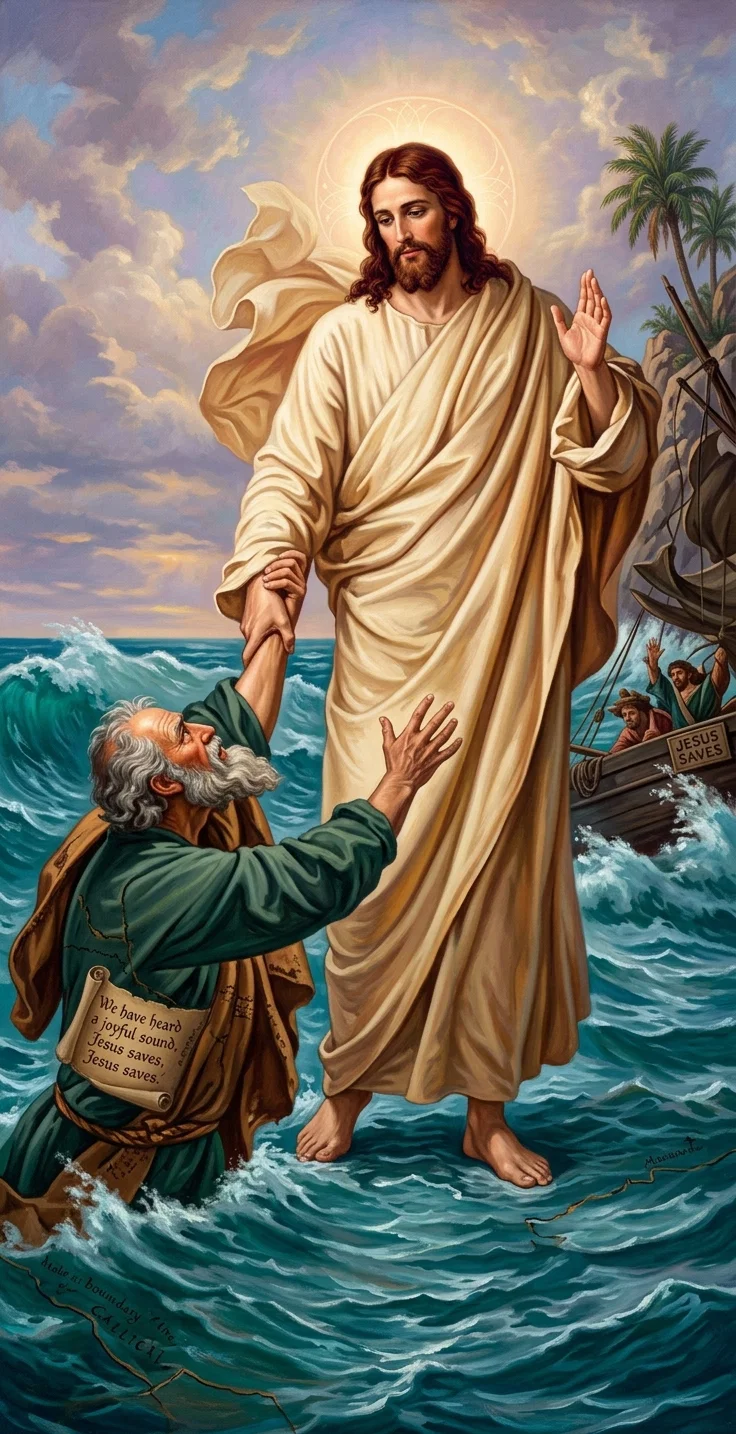
SAVING PETER
SAVING PETER
LOGICALLY, the years of each of us begin with our birthday and its anniversaries; but to us all together, the civil year marks a common beginning, a new point of time from which we all reckon. It is a time of stock-taking in many institutions, of balancing of books, of ascertaining just how the ledger stands in its debit and credit accounts.
TO many individuals, it is the same. The very thought of the passing of the Old Year brings reflection, oftentimes regret, sometimes deep sorrow and repentance, because of mistakes, and blunders, and misspent time, and wasted opportunities, and moral weaknesses, and neglected duties, and wrongs to our fellows, and sins against the great, good God who has preserved us and given us every good thing we enjoy. The evil, the curses, are the perversions of His blessings. Few there are who will find in their stock-taking much or anything to bring satisfaction, especially with the divine search-light shining God’s perfect standards upon the soul. There may be great rejoicings because of His mercies and blessings; there can be no self-gratification because of our self-righteousness in His sight. Rather the conscientious soul will feel—
“What saith the past to thee?—Weep; Truth is departed, Beauty hath died like the dream of a sleep, Love is faint-hearted. Trifles of sense, the unholy, unreal, Scare from our spirits God’s holy ideal. So, as a funeral bell, slowly and deep, So tolls the past to thee, Weep.”
YET the brave, hopeful soul will not dwell in the Valley of Defeat nor sit disconsolate in the Caves of Discouragement. There is death in despair. There is life in action. “Hope springs eternal in the human breast.” And God is a “present help.” Jesus the Christ is a present Saviour. He does not reject you for your failures—He pleads with you still. He sternly speaks, “If any man draw back, My soul shall have no pleasure in him.” He sends by His earthly messengers, who have proved Him, lest we should be overpowered at His presence. “Jehovah taketh pleasure in them that fear Him, in those that hope in His loving-kindness;” “He delighteth in mercy.” Take home the message to your heart with joy, dear soul. He will cast all your sins behind His back; He will bury them in the depths of the sea.
THEN in this new year of 1913, fraught, as it promises to be, with such trials and conflicts as earth never before saw, take new hold of God. Make new acquaintance with Him. Let every day bring to you fresh manna from above, new drafts from the deep welling fountain of His infinite fulness of life and love. “Forgetting the things which are behind, and stretching forward to the things which are before,” “press on toward the goal unto the prize of the high calling of God in Christ Jesus.” In Christ Jesus, live the new life in the new year, and so, whatever may be without, make it the truest, most useful, happiest year of all of your life.
“What saith the present hour?—Act. Walk, upward glancing; So shall thy footsteps in glory be traced, Slow, but advancing. Scorn not the smallness of daily endeavor, Let the great meaning ennoble it ever, Droop not o’er efforts expended in vain, Work as believing that labor is gain.
“What doth the Future say?—Hope. Turn thy face sunward, Look where light fringes the far-rising slope, Day cometh onward.”
In a little while, the King will come. The glad New Year of heaven’s unending cycles will break refulgent and clear over a world in the murk of sin and death. May our readers forever enjoy those eternal years of gladness.

Perpetuity of Spiritual Gifts

THESE “spiritual gifts,” or gifts of the Spirit of God, are especially set forth in Rom. 12: 6-8; 1 Cor. 12: 8-10, 28, 29; Eph. 4: 8-13. These gifts and offices may be named, as follows: apostles, prophets, evangelists, pastors, teachers, miracles, gifts of healings, helps, governments, diversities of tongues, interpretation of tongues, the word of wisdom, the word of knowledge, discerning of spirits, faith, ministry, exhortation, giving, etc.
We are expressly told that “God hath set,” fixed, placed, appointed, these gifts “in the church.” See 1 Cor. 12: 18, 28. Yet notwithstanding all that is said we are told that God set them in the church immediately to take them away; and to support this, 1 Cor. 13: 8-10 is quoted: “Charity never faileth: but whether there be prophecies, they shall fail; whether there be tongues, they shall cease; whether there be knowledge, it shall vanish away. For we know in part, and we prophesy in part. But when that which is perfect is come, then that which is in part shall be done away.”
But the perfect will not come until Christ shall appear, and His church is complete. Note the following Scripture passages, which show who gave the gifts, what they are, what their purpose, and for how long:
Who gave the gifts?—“Wherefore He saith, When He [Christ] ascended up on high, He led captivity captive, and gave gifts unto men.” Eph. 4: 8.
What are the most important of these gifts?—“And He gave some, apostles; and some, prophets; and some, evangelists; and some, pastors and teachers.” Verse 11.
For what purpose?—“For the perfecting of the saints, for the work of the ministry, for the edifying [building up] of the body of Christ.” Verse 12.
For how long were they given?—“Till we all come in the unity of the faith, and of the knowledge of the Son of God, unto a perfect man, unto the measure of the stature of the fulness of Christ.” Verse 13.
The saints are not yet perfected, the work of the ministry is not yet done, the body—the church—still needs building up; for the perfect man is not yet come, nor will he come till the appearing of Jesus Christ. What then?—The gifts are now needed, and the true church should possess them.

Courage and Duty

THIS is the feeling that gives a man true courage — the feeling that he has a work to do at all costs; the sense of duty.— Kingsley.

Christian Unity

By Mrs. E. G. White
“I beseech you, brethren, by the name of our Lord Jesus Christ, that ye all speak the same thing, and that there be no divisions among you; but that ye be perfectly joined together in the same mind and in the same judgment.”
UNION is strength; division is weakness. When those who believe present truth are united, they exert a telling influence. Satan well understands this. Never was he more determined than now to make of none effect the truth of God, by causing bitterness and dissension among the Lord’s people.
That union and love might exist among His disciples, was the burden of our Saviour’s last prayer for them prior to His crucifixion. With the agony of the cross before Him, His solicitude was not for Himself, but for those whom He should leave to carry forward His work in the earth. The severest trials awaited them; but Jesus saw that their greatest danger would be from a spirit of bitterness and division. Hence He prayed:
“Sanctify them through Thy truth: Thy Word is truth. As Thou hast sent Me into the world, even so have I also sent them into the world. And for their sakes I sanctify Myself, that they also might be sanctified through the truth. Neither pray I for these alone, but for them also which shall believe on Me through their word; that they all may be one; as Thou, Father, art in Me, and I in Thee, that they also may be one in Us: that the world may believe that Thou hast sent Me.”
That prayer of Christ embraces all His followers, to the close of time. Our Saviour foresaw the trials and dangers of His people. He is not unmindful of the dissensions and divisions that distract and weaken His church. He is looking upon us with deeper interest and more tender compassion than moves an earthly parent’s heart toward a wayward, afflicted child. He bids us learn of Him. He invites our confidence. He bids us open our hearts to receive His love. He has pledged Himself to be our helper.
When Christ ascended to heaven, He left the work on earth in the hands of His servants, the under-shepherds. “And He gave some, apostles; and some, prophets; and some, evangelists; and some, pastors and teachers; for the perfecting of the saints, for the work of the ministry, for the edifying of the body of Christ: till we all come in the unity of the faith, and of the knowledge of the Son of God, unto a perfect man, unto the measure of the stature of the fulness of Christ.”
In sending forth His ministers, our Saviour gave gifts unto men, for through them He communicates to the world the words of eternal life. This is the means which God has ordained for the perfecting of the saints in knowledge and true holiness. The work of Christ’s servants is not merely to preach the truth; they are to watch for souls, as they that must render account to God. They are to reprove, rebuke, exhort with long-suffering and doctrine.
All who have been benefited by the labors of God’s servant, should, according to theirability, unite with him in working for the salvation of souls. This is the work of all true believers, ministers and people. They should keep the grand object ever in view, each seeking to fill his proper position in the church, and all working together in order, harmony, and love.
There is nothing selfish or narrow in the religion of Christ. Its principles are diffusive and aggressive. It is represented by Christ as the bright light, as the saving salt, as the transforming leaven. With zeal, earnestness, and devotion, the servants of God will seek to spread far and near the knowledge of the truth; yet they will not neglect to labor for the strength and unity of the church. They will watch carefully, lest opportunity be given for diversity and division to creep in.
Teachers of the truth, missionaries, officers in the church, can do a good work for the Master, if they will but purify their own souls by obeying the truth. Every living Christian will be a disinterested worker for God. The Lord has given us a knowledge of His will, that we may become channels of light to others. If Christ is abiding in us, we can not help working for Him. It is impossible to retain the favor of God, and enjoy the blessing of a Saviour’s love, and yet be indifferent to the danger of those who are perishing in their sins. “Herein is My Father glorified, that ye bear much fruit.”
Paul urges the Ephesians to preserve unity and love:
“I therefore, the prisoner of the Lord, beseech you that ye walk worthy of the vocation wherewith ye are called, with all lowliness and meekness, with long-suffering, forbearing one another in love; endeavoring to keep the unity of the Spirit in the bond of peace. There is one body, and one Spirit, even as ye are called in one hope of your calling; one Lord, one faith, one baptism, one God and Father of all, who is above all, and through all, and in you all.”
The apostle exhorts his brethren to manifest in their lives the power of the truth which he had presented to them. By meekness and gentleness, forbearance and love, they were to exemplify the character of Christ and the blessings of His salvation. There is but one body, one Spirit, one Lord, one faith. As members of the body of Christ, all believers are animated by the same spirit and the same hope. Divisions in the church dishonor the religion of Christ before the world, and give occasion to the enemies of truth to justify their course. Paul’s instructions were not written alone for the church in his day. God designed that they should be sent down to us. What are we doing to preserve unity in the bonds of peace?
When the Holy Spirit was poured out upon the early church, the brethren loved one another. “They . . . did eat their meat with gladness and singleness of heart, praising God, and having favor with all the people. And the Lord added to the church daily such as should be saved.” Those primitive Christians were few in numbers, without wealth or honor, yet they exerted a mighty influence. The light of the world shone out from them. They were a terror to evil-doers wherever their character and their doctrines were known. For this cause they were hated by the wicked, and persecuted even unto death.
The standard of holiness is the same today as in the days of the apostles. Neither the promises nor the requirements of God have lost aught of their force. But what is the state of the Lord’s professed people as compared with the early church? Where is the Spirit and power of God which then attended the preaching of the gospel? Alas, “how is the gold become dim! how is the most fine gold changed!”
The Lord planted His church as a vine in a fruitful field. With tenderest care He nourished and cherished it, that it might bring forth the fruits of righteousness. His language is, “What could have been done more to My vineyard, that I have not done in it?” But this vine of God’s planting has inclined to the earth, and entwined its tendrils about human supports. Its branches are extended far and wide, but it bears the fruit of a degenerate vine. The Master of the vineyard declares, When I looked that it should bring forth grapes, it brought forth wild grapes.
The Lord has bestowed great blessings upon His church. Justice demands that she return these talents with usury. As the treasures of truth committed to her keeping have increased, her obligations have increased. But instead of improving upon these gifts and going forward unto perfection, she has fallen away from that which she had attained in her earlier experience. The change in her spiritual state has come gradually, and almost imperceptibly. As she began to seek the praise and friendship of the world, her faith diminished, her zeal grew languid, her fervent devotion gave place to dead formality. Every advance step toward the world was a step away from God. As pride and worldly ambition have been cherished, the Spirit of Christ has departed, and emulation, dissension, and strife have come in to distract and weaken the church.
Paul writes to his Corinthian brethren: “Ye are yet carnal: for whereas there is among you envying, and strife, and divisions, are ye not carnal, and walk as men?” It is impossible for minds distracted by envy and strife to comprehend the deep spiritual truths of God’s Word. “The natural man receiveth not the things of the Spirit of God: for they are foolishness unto him: neither can he know them, because they are spiritually discerned.” We can not rightly understand or appreciate divine revelation without the aid of that Spirit by whom the Word was given.

The Coming of Our Lord

The First Advent

By L. A. Reed

Promise, Prophecy, Fulfilment

At the time of the first advent, there were comparatively few who were looking for the appearance of Christ. Yet that event had been carefully prepared for through years of teaching, admonition, and warning. That many were not looking for Christ, was due to their failure to heed what God had said.
Let us notice some of the very definite things which had been announced concerning the coming of the Messiah.

The Promised Seed, the Nation, the Tribe

Immediately after the fall of man, as soon as sin had entered and the need of a Saviour had presented itself, a coming of Christ as a Redeemer was announced. This word came to the first man Adam. “And I will put enmity between thee and the woman, and between thy seed and her Seed; it shall bruise thy head, and thou shalt bruise His heel.” Gen. 3:15. In this announcement, taken by faith, lay salvation in that very time for him who believed it. So the world lived in hope and faith, if it would have it, for many years.
Unto Abraham, “the father of the faithful,” came another specification regarding the advent of the Christ. The nation in which He was to appear was definitely announced. “In thy seed shall all the nations of the earth be blessed; because thou hast obeyed My voice.” Gen. 22:18.
A few years later, came still a further specification and an additional announcement. The first announcement had told us that Christ was to appear as a member of the human race; the second had told us the nation in which we would find Him; but the third announcement gave us the tribe, or division in that nation, where He would be found. “The scepter shall not depart from Judah, nor a lawgiver from between his feet, until Shiloh come; and unto Him shall the gathering of the people be.” Gen. 49:10.

The Family, the City

In the days of Isaiah, however, additional information was given through that prophet. The family now in the tribe was designated. “And there shall come forth a rod out of the stem of Jesse, and a Branch shall grow out of his roots: and the Spirit of the Lord shall rest upon Him, the spirit of wisdom and understanding, the spirit of counsel and might, the spirit of knowledge and of the fear of the Lord; and shall make Him of quick understanding in the fear of the Lord: and He shall not judge after the sight of His eyes, neither reprove after the hearing of His ears: but with righteousness shall He judge the poor, and reprove with equity for the meek of the earth: and He shall smite the earth with the rod of His mouth, and with the breath of His lips shall He slay the wicked. And righteousness shall be the girdle of His loins, and faithfulness the girdle of His reins.” Isa. 11:1-5.
Following out the truth of that declaration which says that “Surely the Lord God will do nothing, but He revealeth His secret unto His servants the prophets,” to Micah came the announcement of the town in which the Messiah was to be born. “But thou, Bethlehem Ephratah, tho thou be little among the thousands of Judah, yet out of thee shall He come forth unto me that is to be ruler in Israel; whose goings forth have been from of old, from everlasting.” Micah 5:2.

Definite Time

Further in the prophetic time period given to Daniel the prophet (Dan. 9:25), the time of the anointing and death of Christ are pointed out, as to the year, so that a definiteness came in with reference to the time when to expect His appearance.
And as the time drew near as foretold by the prophet Daniel, an announcement was made as to the parentage of the Coming One. Mary was to be His mother. (Luke 1:30.)
And the night of His birth the angel announced to the waiting shepherds: “Unto you is born this day in the city of David a Saviour, which is Christ the Lord.” Luke 2:11. By this there was no mistaking the very day of His appearance.

The Star

But even more definitely yet, was the Coming One announced, for to the wise men a star appeared, and this star led them over hill and vale, going “before them, till it came and stood over where the young Child was.” Matt. 2:9. Hence the very spot where the Babe lay, and the very Babe Himself, was thus pointed out to those who were ready to receive Him.
And when the Child was nothing but a Babe, and had been brought into the temple by His parents, according to the custom of the times, Simeon entering in saw and recognized the promised Messiah. “And Simeon blessed them, and said unto Mary His mother, Behold, this Child is set for the fall and rising again of many in Israel; and for a sign which shall be spoken against.” Luke 2:34. But he was not the only one, for Anna, a prophetess, a woman of great age—more than eighty years old—“coming in that instant gave thanks likewise unto the Lord, and spake of Him to all them that looked for redemption in Jerusalem.” Luke 2:38.
Thus clearly was the coming of the Messiah announced. Thus plainly might all know that this was Jesus when He appeared. But thousands did not know nor recognize Him. The matter had no personal interest to them. They did not heed the warning, nor the Word of God. And the world has not changed.
As definite as was the announcement of the first advent, just so definite is to be the announcement of the second advent; and as there were those waiting for Christ when He came the first time, so will there be those who will be waiting, and recognize Him when He comes the second time. And, sad to say, there will be also those who will not be looking for Him nor expecting Him.
Are you among those who believe God’s Word, are in touch with all the movements of His providence, and waiting with expectation for His Coming One?

Not in Strength, but Faith

RECEIVE instruction, then, my dear friends. If you are less strong than Jesus, your God is not less strong than the God of Jesus. Let this rock be your rock, and His strength shall be your strength. For Jesus, for Adam, for yourselves, the question here is not a question of strength; it is one of faith. As your own strength could not deliver you without faith, so neither can your own weakness injure you with faith. Nay, if advantage be taken of it, this weakness may be of service to you; and a sense of it driving you, it may be, to seek God’s help, you will experience the truth of this word: “When I am weak, then am I strong.” Strange paradox! sublime truth! Instead of stopping to discuss it, believe it, live upon it.—Adolphe Monod.

Better than No Obedience

If we can not obey God cheerfully and willingly, it is better to obey Him anyway than to continue to disobey His commands. Miss Slattery at Northfield told of seeing a little girl making mud pies in the street and hearing her mother calling to her to take a nap. The child replied, “I don’t want a nap; I want to make pies.” Several times more the mother called, until finally the child left her play, unwillingly, but slowly walking toward her mother, and said, “I ain’t comin’; I ain’t comin’.” Miss Slattery smiled at the mother in the window, who said, “I can wait patiently as long as she comes toward me.” So God deals with His children, lovingly and patiently, even tho in our hearts we may say, “I’m not coming, Lord,” but all the time obeying, even unwillingly.—Mary E. Watson.

A Separated Life

I BELIEVE that a Christian man should lead a separated life. The line between the church and the world is almost obliterated to-day. I have no sympathy with the idea that you must hunt up an old musty church record in order to find out whether a man is a member of the church or not. A man ought to live so that everybody will know he is a Christian. If there are certain things in your university which are detrimental to your Christian profession, you say, “No, sir.”
In London they used to have a good deal of drinking among church-members. Some time ago, when I was there, I was invited to a late supper at the house of a Christian man prominent in the Sunday-school. I was going to meet some Sunday-school friends, and I expected a real religious time. To my amazement, they had seven kinds of liquor, and they drank until I should call them drunk, but they would have considered it a great insult if I had said so. There was a lady sitting next to me who kept refusing, and the deacon kept urging it upon her until her cheeks became quite red.
I finally said that they would have to excuse me. I left the table, and the host followed me up-stairs. He wanted to know the trouble. I said, “There is too much drinking; I can’t stand it.”
He said, “You’re not a gentleman.”
I went out of the house; and the next time I went to London, I heard it whispered around what an ungentlemanly thing I had done. But I tell you, when I had an opportunity of speaking in London, I thundered against that thing until they put it away—when I was about, at least.
The Bible tells us to lead a separate life. You may lose influence, but you will gain it at the same time. I suppose Daniel was the most unpopular man in Babylon at a certain time; but, thank God, he has outlived all the other men of his time. Who were the chief men of Babylon? When God wanted any work done in Babylon, He knew where to find some one to do it.
You can be in the world, but not of it. Christ didn’t take His disciples out of the world, but He prayed that they might be kept from evil. A ship in the water is all right; but when the water gets into the ship, then look out. The world in a Christian is just like a wrecked vessel at sea.—D. L. Moody.

The Law of God—What It Is

By H. W. Cottrell
In His wisdom, the immortal principles of God’s law are couched in the very existence and organization of both matter and spirit. These principles are fundamental to all divine law, both natural and spiritual.
The Lord, recognizing in creation the fundamental, universal law of coöperation, said to the Son, “Let Us make man in Our image, . . . so God created man in His own image, in the image of God created He him.” The spirit of coöperation is one of the essential principles in the law of divine government; and as the Father and the Son wrought coöperatively in the creation of man and all things, so God requires the coöperation of man, and that it be made manifest in his recognition and unselfish obedience to the divine governmental law as adapted to his needs on earth.

Man Amenable to the Law

Thus man, the creature, was placed here upon earth amenable to the Lord, his Creator, and as truly amenable to the divine governmental law of his God. He should have recognized that divine law directs all organic bodies in their action throughout the universe, and that he was not an exception to the rule. Failing to appreciate his relation to God, and to His law—adapted to man’s spiritual and physical development—and not discerning that through perfect obedience to the requirements of the hitherto unbroken law, limitless extension of life was his, also that of his posterity; he, by disobedience, sinned.

The Law an Expression of His Will

The law of God is an expression of His will pertaining to the welfare of His created intelligences, both angels and men. It is therefore of universal application, and is designed to regulate the conduct of all men; for all come under His authority as Creator and Redeemer. The law of God is summarily and concisely comprehended in the law of Ten Commandments which reads (Ex. 20: 2-17):

I

“I am the Lord thy God, which have brought thee out of the land of Egypt, out of the house of bondage. Thou shalt have no other gods before Me.”

II

“Thou shalt not make unto thee any graven image, or any likeness of anything that is in heaven above, or that is in the earth beneath, or that is in the water under the earth: thou shalt not bow down thyself to them, nor serve them: for I the Lord thy God am a jealous God, visiting the iniquity of the fathers upon the children unto the third and fourth generation of them that hate Me; and showing mercy unto thousands of them that love Me, and keep My commandments.”

III

“Thou shalt not take the name of the Lord thy God in vain; for the Lord will not hold him guiltless that taketh His name in vain.”

IV

“Remember the Sabbath day, to keep it holy. Six days shalt thou labor, and do all thy work: but the seventh day is the Sabbath of the Lord thy God: in it thou shalt not do any work, thou, nor thy son, nor thy daughter, thy man servant, nor thy maid servant, nor thy cattle, nor thy stranger that is within thy gates: for in six days the Lord made heaven and earth, the sea, and all that in them is, and rested the seventh day: wherefore the Lord blessed the Sabbath day, and hallowed it.”

V

“Honor thy father and thy mother: that thy days may be long upon the land which the Lord thy God giveth thee.”

VI

“Thou shalt not kill.”

VII

“Thou shalt not commit adultery.”

VIII

“Thou shalt not steal.”

IX

“Thou shalt not bear false witness against thy neighbor.”

X

“Thou shalt not covet thy neighbor’s house, thou shalt not covet thy neighbor’s wife, nor his man servant, nor his maid servant, nor his ox, nor his ass, nor anything that is thy neighbor’s.”

The Law Ordained

When God placed our first parents upon this earth, He ordained that if the principles of His law were strictly complied with, man would be in constant possession of the Lord’s righteousness, testified to by the law, which is a divine portrayal of His character. Paul affirms that “the commandment which was ordained to life,” he through transgression, “found to be unto death.”
When the Lord reiterated His code of moral law—the Ten Commandments—in the hearing of all the people of Israel, we read, “And He added [spoke] no more. And He wrote them in two tables of stone.” Deut. 5: 22. Paul, making reference to the event of the Lord speaking His law at Sinai, says, “And the sound of a trumpet, and the voice of words; which voice they that heard entreated that the word should not be spoken to them any more.” Heb. 12: 19.
God calls the Ten Commandments the law. “And Jehovah said unto Moses, Come up to Me into the mount, and be there: and I will give thee the tables of stone, and the law and the commandment, which I have written, that thou mayest teach them.” Ex. 24: 12, A.R.V.
When the Ten Commandments were spoken by God, the law was complete. He needed not speak—add—more; so, “spake no more.” The Ten Commandments, therefore, constitute the law of God. They compose the eternal ten, which is the rule of moral conduct for man. “What shall we say then? Is the law sin? God forbid. Nay, I had not known sin, but by the law: for I had not known lust, except the law had said, Thou shalt not covet.” Rom. 7: 7. In this utterance, the apostle makes specific reference to the seventh and tenth commandments of the law of God, the only law that makes sin known.
The beloved, faithful, law-abiding John, gives corroborative evidence: “Whosoever committeth sin transgresseth also the law: for sin is the transgression of the law.” 1 John 3: 4.
The law of God is the law of our heavenly King, and James thus defines it: “If ye fulfil the royal [kingly] law according to the scripture, Thou shalt love thy neighbor as thyself, ye do well. . . . For He that said, Do not commit adultery, said also, Do not kill. Now if thou commit no adultery, yet if thou kill, thou art become a transgressor of the law.” James 2: 8, 11. The law to which James refers, is evidenced by his quotation of the sixth and seventh commandments of the moral law.

The Law Detects Sin in Embryo

It detects sin both in the motive and thought, as well as in the act. Matt. 5: 21, 22, 27, 28. It determines the sinfulness of sin; for “by the law is the knowledge of sin” (Rom. 3: 20); for “where no law is, there is no transgression.” The law of God detected sin in the “one man” (Adam) through whom it entered into this world. It detected it in “Cain,” who slew his brother. It has detected it in every human being who has lived from Adam’s day until now; so that every mouth has been stopped, and all the world found guilty before God; “for all have sinned, and come short of the glory of God.” Rom. 3: 19, 23.

The Law Witnesseth

Man can not be justified by a violated law; not even by the law which was “ordained to life.” “Therefore by the deeds of the law there shall no flesh be justified in His sight: for by the law is the knowledge of sin. But now the righteousness of God . . . is manifested, being witnessed by the law and the prophets; even the righteousness of God which is by faith of Jesus Christ unto all and upon all them that believe.” Rom. 3: 20-23. It witnesses that the righteousness of God is manifestly a free gift through Jesus Christ, to all who repent of the violation of God’s law, believe, and receive the gift of His Son.
It witnesses to the sinfulness of sin, irrespective of the social standing of men. The law of God enters the secret recesses of every soul, whether rich or poor, learned or unlearned, whether it be the king on his throne, or the criminal behind the prison bars; for all are alike amenable to God and to His law; and no sin, however hoary and moss-covered by the lapse of ages, can be concealed from His moral search-light—the law of God.
“So speak ye, and so do, as they that shall be judged by the law of liberty.” James 2: 12.

How Brainerd Prayed

[Minnie F. Abrams, in “Triumphs of Faith”]
DAVID BRAINERD, who in a few short years poured out his life for the American Indians to whom God called him, often went into the forest, knelt in the snow, and became oblivious to time and circumstances, so intense was his prayer for the salvation of that people. Often he spent whole nights, so mightily wrestling in the Spirit, against the powers of darkness, that when he arose from his snowy prayer-place, his clothing was wet and steaming from the physical exertion in prayer. In these days, some seem to think that all such demonstration is from Satan. Results tell. You have only to read of the wonderful work God wrought through David Brainerd, to be convinced that he was moved by the Spirit of God. In that short lifetime, he accomplished more than most people do in many years.
Continue reading: Turkey and His End